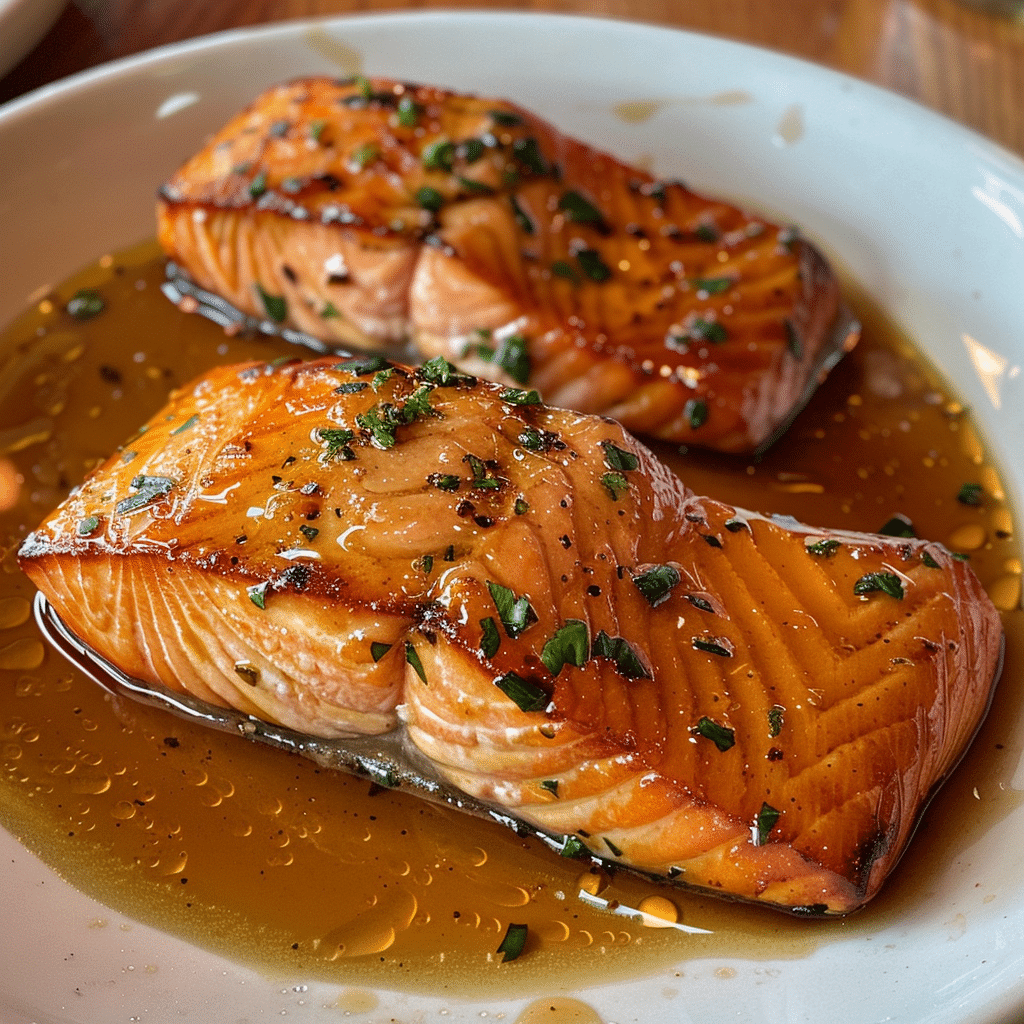
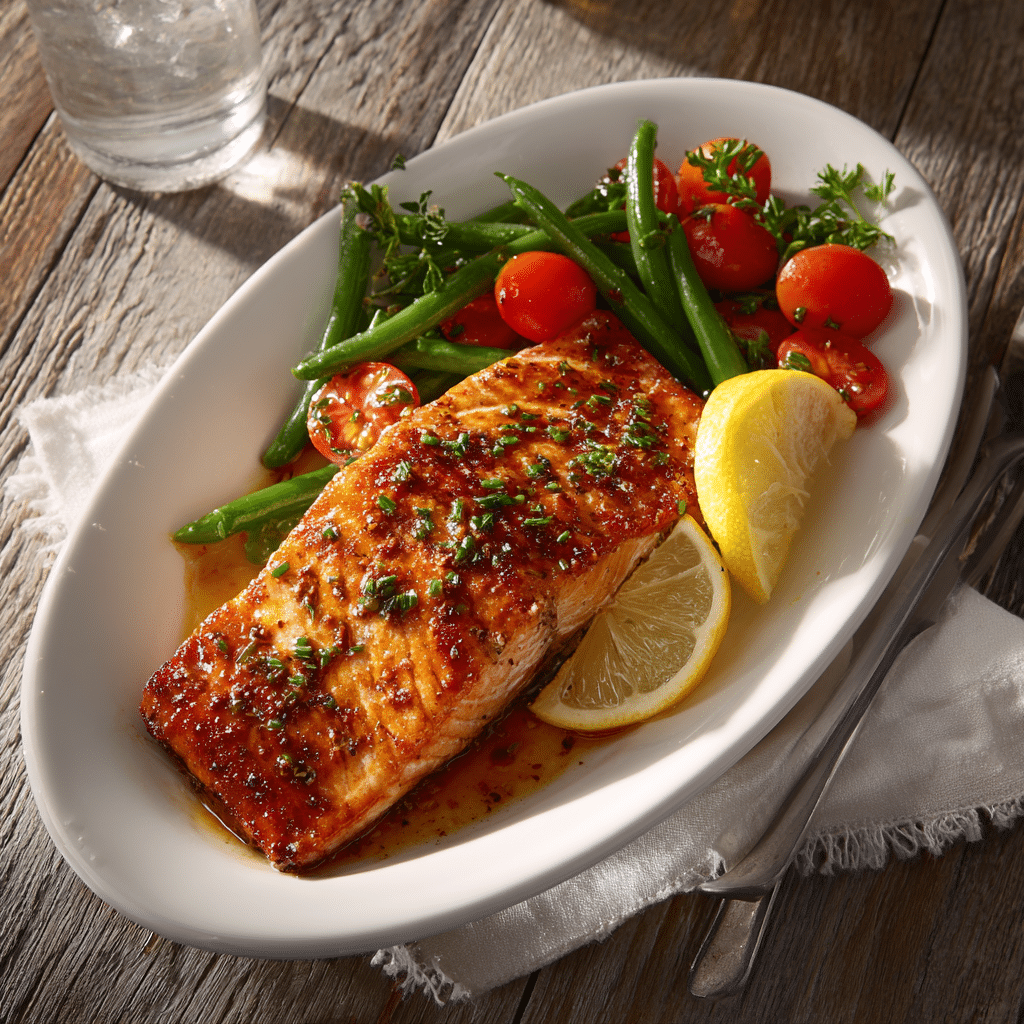
Texas Roadhouse Salmon is a flavorful and tender seafood dish characterized by its sweet and savory glaze, typically prepared with a combination of honey, lemon, and a blend of spices. This preparation method ensures a moist interior with a subtly caramelized crust. This recipe delivers a restaurant-quality salmon experience at home with minimal effort.

Why You’ll Love This Recipe
You will love this recipe due to its exceptional taste profile, balancing sweet, tangy, and savory notes perfectly. The salmon emerges incredibly moist and flaky, rivaling your favorite restaurant version.
Its simplicity makes it an ideal weeknight meal, requiring minimal prep and cook time. This dish quickly becomes a family favorite, appealing to both seafood enthusiasts and those new to preparing fish.
Print
Texas Roadhouse Salmon
- Total Time: 20–25 minutes
- Yield: 2–4 servings
Description
Texas Roadhouse Salmon delivers a sweet, tangy, and savory flavor with a caramelized glaze. This recipe creates moist, flaky salmon with a restaurant-quality finish using simple ingredients and quick cooking methods.
Ingredients
2–4 salmon fillets
2–4 tbsp olive oil
2–4 tbsp lemon juice
1–2 tbsp honey or maple syrup
1 tsp garlic powder
1 tsp onion powder
1 tsp paprika
Salt to taste
Black pepper to taste
Fresh parsley (optional)
Lemon wedges for serving
Instructions
1. Pat salmon fillets dry with paper towels
2. Whisk olive oil, lemon juice, honey, garlic powder, onion powder, paprika, salt, and pepper until smooth
3. Brush the marinade evenly over the salmon
4. Let the salmon sit for 10–15 minutes
5. Cook using preferred method: grill 4–5 minutes per side, pan-sear 3–4 minutes per side, or bake at 400°F (200°C) for 10–12 minutes
6. Remove from heat once salmon flakes easily
7. Garnish with parsley and serve with lemon wedges
Notes
Pat salmon dry to achieve a better sear
Do not marinate longer than 30 minutes
Cook until internal temperature reaches 145°F (63°C)
Use fresh lemon juice for best flavor
Use skin-on salmon to prevent overcooking
- Prep Time: 10 minutes
- Cook Time: 10–12 minutes
- Category: Dinner
- Method: Grilling, Pan-Seared, Baking
- Cuisine: American
Ingredient List
- 2–4 salmon fillets
- 2–4 tbsp olive oil
- 2–4 tbsp lemon juice
- 1–2 tbsp honey (or maple syrup)
- Garlic powder
- Onion powder
- Paprika
- Salt & black pepper
- Fresh parsley (optional, garnish)
- Lemon wedges (for serving)
Why These Ingredients Work
Salmon fillets serve as the perfect canvas for flavor, offering a rich, healthy fat content that keeps the fish moist and tender during cooking. Their firm texture holds up beautifully to various cooking methods, ensuring a satisfying bite every time.
The combination of olive oil and lemon juice creates the foundational liquid for the marinade, providing moisture and a bright, acidic counterpoint to the rich salmon. Olive oil helps distribute flavors evenly and promotes a nice sear, while lemon juice tenderizes the fish and adds essential zest.
Honey introduces a delightful sweetness that caramelizes beautifully during cooking, forming a glaze that locks in moisture and adds a subtle richness. When combined with the lemon, it creates a balanced sweet-and-sour profile that is incredibly appealing.
Garlic powder, onion powder, and paprika contribute a robust, savory depth and warmth to the dish, enhancing the salmon’s natural flavor without overpowering it. This spice blend forms the core of the signature Texas Roadhouse taste, adding complexity and a touch of smokiness.
Essential Tools and Equipment
- Mixing bowl
- Whisk or fork
- Measuring spoons
- Paper towels
- Basting brush (optional, for even coating)
- Baking sheet with parchment paper (for oven method)
- Oven-safe skillet or cast iron pan (for pan-sear method)
- Grill or grill pan (for grill method)
- Meat thermometer (optional, for precision)
- A sharp knife (for slicing lemon wedges and chopping parsley)
How To Make Texas Roadhouse Salmon Recipe
Step 1: Prep the Salmon
Begin by gently patting the salmon fillets dry on all sides using paper towels. This crucial step removes excess moisture from the surface of the fish, which is essential for achieving a desirable sear or a beautiful caramelized crust during cooking. Dry salmon cooks more evenly and prevents steaming.
Step 2: Make the Marinade / Glaze
In a medium-sized mixing bowl, combine the olive oil, fresh lemon juice, and honey (or maple syrup). Add the garlic powder, onion powder, paprika, salt, and black pepper to the wet ingredients. Whisk all the components together thoroughly until they are well combined and form a smooth, uniform glaze. This ensures even distribution of flavors.
Step 3: Season or Marinate
Carefully brush or coat each salmon fillet evenly with the prepared marinade mixture, ensuring all surfaces are covered. Allow the salmon to sit with the marinade for approximately 10–15 minutes at room temperature, allowing the flavors to penetrate the fish. For a more pronounced and deeper flavor, you can extend the marinating time up to 30 minutes in the refrigerator.
Step 4: Cook the Salmon
Choose your preferred cooking method. If grilling, preheat your grill to medium-high heat and cook for 4–5 minutes per side. For pan-searing, heat a skillet over medium-high heat with a little extra olive oil, then cook for 3–4 minutes per side. If baking, preheat your oven to 400°F (200°C) and bake for 10–12 minutes. The salmon is perfectly cooked when it flakes easily with a fork.
Step 5: Finish & Serve
Once the salmon is cooked to your liking, remove it from the heat. You can optionally drizzle a bit of extra lemon juice or garlic butter over the fillets for added moisture and flavor. Garnish generously with freshly chopped parsley, which adds a vibrant color and fresh aroma. Serve immediately with lemon wedges on the side for an extra burst of citrus.
Chef Tips for Perfect Results
- Always pat salmon fillets completely dry before seasoning; moisture on the surface prevents browning and can lead to a steamed, rather than seared, texture.
- Do not over-marinate the salmon, especially with lemon juice, as the acidity can begin to “cook” the fish and alter its texture if left too long.
- Cook salmon to an internal temperature of 145°F (63°C) for optimal safety and flakiness; a meat thermometer inserted into the thickest part ensures perfect doneness every time.
- To achieve a beautiful caramelized crust, ensure your cooking surface (grill or pan) is adequately hot before placing the salmon skin-side down first if applicable.
- Rest the cooked salmon for a few minutes before serving; this allows the juices to redistribute, resulting in a moister and more tender fillet.
You Must Know
Always ensure your salmon is fully cooked through to 145°F (63°C) to prevent foodborne illness, though it should still be moist and flaky inside. Avoid overcooking, as this will result in dry, tough fish.
The quality of your salmon significantly impacts the final taste and texture, so choose fresh, firm fillets with a vibrant color for the best results. Utilize fresh lemon juice for maximum brightness and flavor impact.
Pro Tips & Cooking Hacks
- Shortcut: Prepare the marinade up to 2 days in advance and store it in an airtight container in the refrigerator to save time on busy weeknights.
- Upgrade: Add a pinch of smoked paprika to the spice blend for an extra layer of depth and a subtle smoky flavor.
- Mistake to Avoid: Do not overcrowd the pan or grill, as this lowers the cooking temperature and prevents proper searing, leading to unevenly cooked salmon.
- Smart Substitution: If you don’t have fresh lemons, bottled lemon juice can be used, though fresh is always preferred for its vibrant taste.
- Flavor Boost: Whisk in a tablespoon of minced fresh dill or chives into the marinade for an herbaceous twist that complements the salmon beautifully.
Flavor Variations & Suggestions
For a spicy kick, add a pinch of cayenne pepper or a dash of hot sauce to the marinade mixture. This introduces a pleasant heat that contrasts well with the sweet and savory notes of the glaze.
Introduce an Asian-inspired twist by swapping honey for maple syrup and adding a tablespoon of soy sauce and a teaspoon of freshly grated ginger to the marinade. This creates a savory umami depth.
For an herb-crusted salmon, finely chop fresh rosemary and thyme and mix them into the glaze before coating the salmon. The herbs will form a fragrant crust during cooking.
Make-Ahead Options
The marinade can be prepared up to 2 days in advance and stored in an airtight container in the refrigerator. This allows for quick assembly when you’ ready to cook the salmon.
While salmon is best cooked fresh, you can pre-chop the parsley and slice the lemon wedges a day in advance. Store them separately in airtight containers in the refrigerator.
Avoid marinating the salmon for longer than 30 minutes if using lemon juice, as the acid can begin to cure the fish rather than just flavor it. This will alter the texture.
Recipe Notes & Baker’s Tips
- Use skin-on salmon fillets if possible; the skin helps protect the flesh from overcooking and becomes delightfully crispy.
- Freshly ground black pepper provides a more potent and aromatic flavor than pre-ground pepper.
- Adjust the amount of honey to your preference; less for a savory profile, more for a sweeter glaze.
- Experiment with different types of paprika, such as sweet, smoked, or hot, to vary the flavor profile.
- Always start with room-temperature salmon for more even cooking results.
Serving Suggestions
Serve this delicious Texas Roadhouse Salmon with a simple side of steamed green beans or asparagus, lightly seasoned with salt and pepper. The fresh vegetables provide a healthy and vibrant contrast to the rich salmon.
Creamy mashed potatoes or fluffy rice make an excellent accompaniment, soaking up the flavorful juices and complementing the texture of the fish. A baked sweet potato also offers a delightful, naturally sweet pairing.
Consider a fresh garden salad with a light vinaigrette to add a refreshing, crisp element to your meal. The acidity of the dressing brightens the richness of the salmon.
For a complete meal, pair with a crusty artisan bread to sop up any leftover glaze. Non-alcoholic sparkling cider or iced tea make refreshing beverage choices.
Storage & Reheating
Store leftover cooked salmon in an airtight container in the refrigerator for up to 2-3 days. To reheat, gently warm the salmon in a preheated oven at 275°F (135°C) for 10-15 minutes, or until just heated through, to prevent drying it out.
You can also microwave on low power in short bursts, though this method may alter the texture. Freezing cooked salmon is not recommended as it significantly affects the texture and flavor.
Allergy Information
This recipe contains fish (salmon), which is a common allergen. Individuals with fish allergies should avoid this dish. For those with soy allergies, if substituting soy sauce, ensure it is a gluten-free and soy-free tamari alternative.
This recipe is naturally gluten-free and dairy-free as written. Always check labels on spices and other ingredients to ensure they are free from cross-contamination or hidden allergens.
For individuals sensitive to sulfites, ensure fresh lemon juice is used, as some bottled varieties may contain sulfites. If you have a honey allergy, maple syrup is an excellent alternative.
Questions I Get Asked A Lot
Can I use frozen salmon fillets for this recipe?
Yes, you can use frozen salmon fillets, but ensure they are thoroughly thawed in the refrigerator overnight and then patted dry before marinating and cooking for the best results.
How do I know when my salmon is perfectly cooked?
Salmon is perfectly cooked when it reaches an internal temperature of 145°F (63°C) at its thickest part and flakes easily with a fork, displaying a pale pink, opaque color throughout.
My salmon is drying out during cooking; what am I doing wrong?
Salmon often dries out from overcooking or cooking at too high a temperature; ensure you are monitoring the cooking time carefully and using a meat thermometer to avoid exceeding the target internal temperature.
Can I prepare the salmon ahead of time?
You can prepare the marinade ahead of time, but it is best to marinate the salmon for no more than 30 minutes before cooking to maintain its optimal texture and prevent the acid from curing the fish.
What are some good side dishes to serve with Texas Roadhouse salmon?
Excellent side dishes for Texas Roadhouse salmon include roasted asparagus, herb-garlic mashed potatoes, a fresh garden salad, or steamed rice to complement its rich flavors.
💭 Tried this recipe? Leave a comment and rating below!