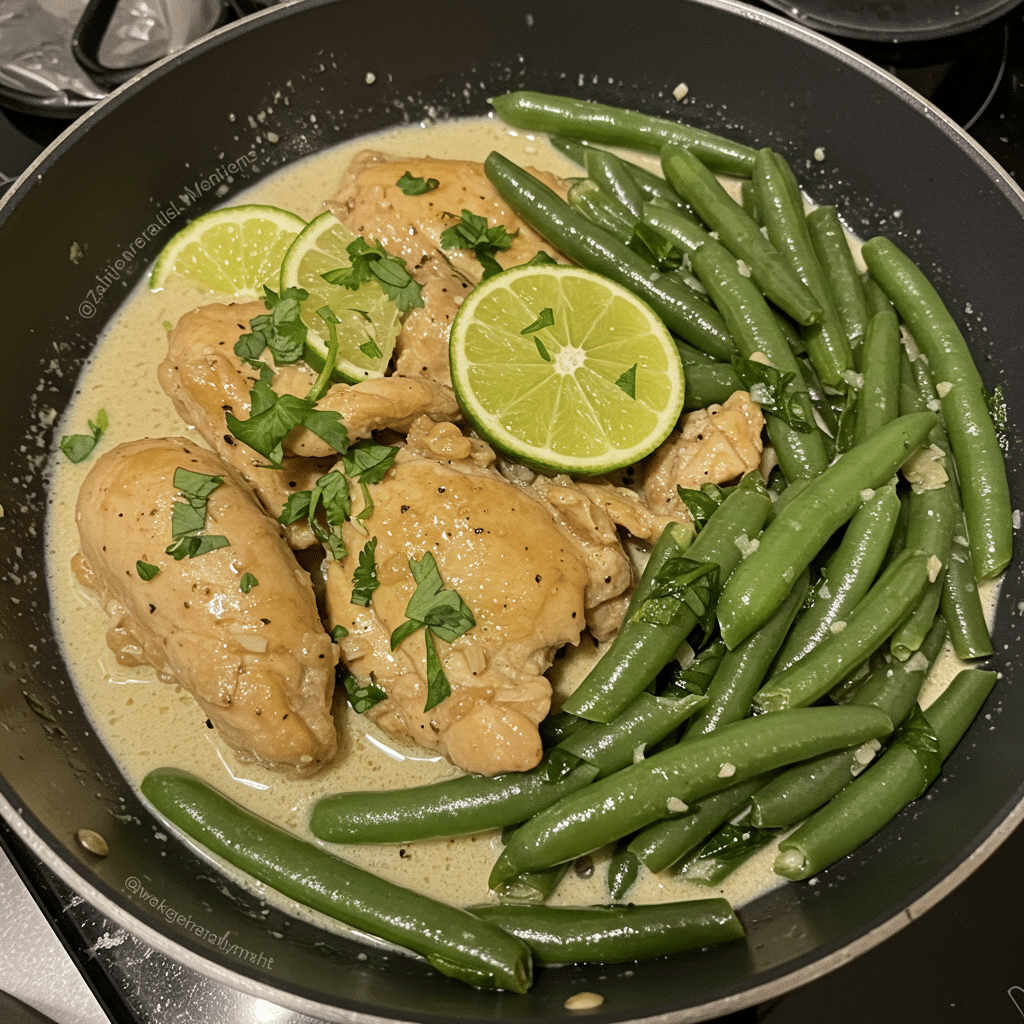
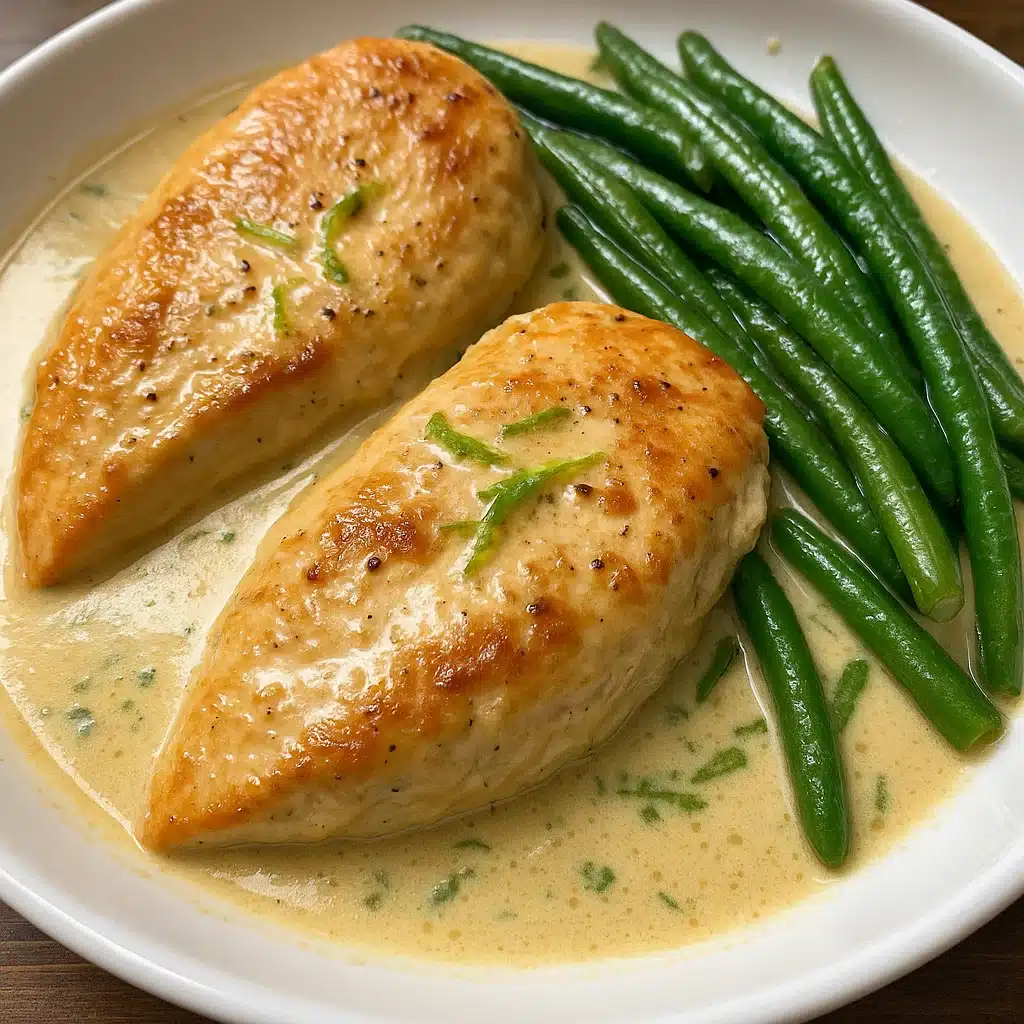
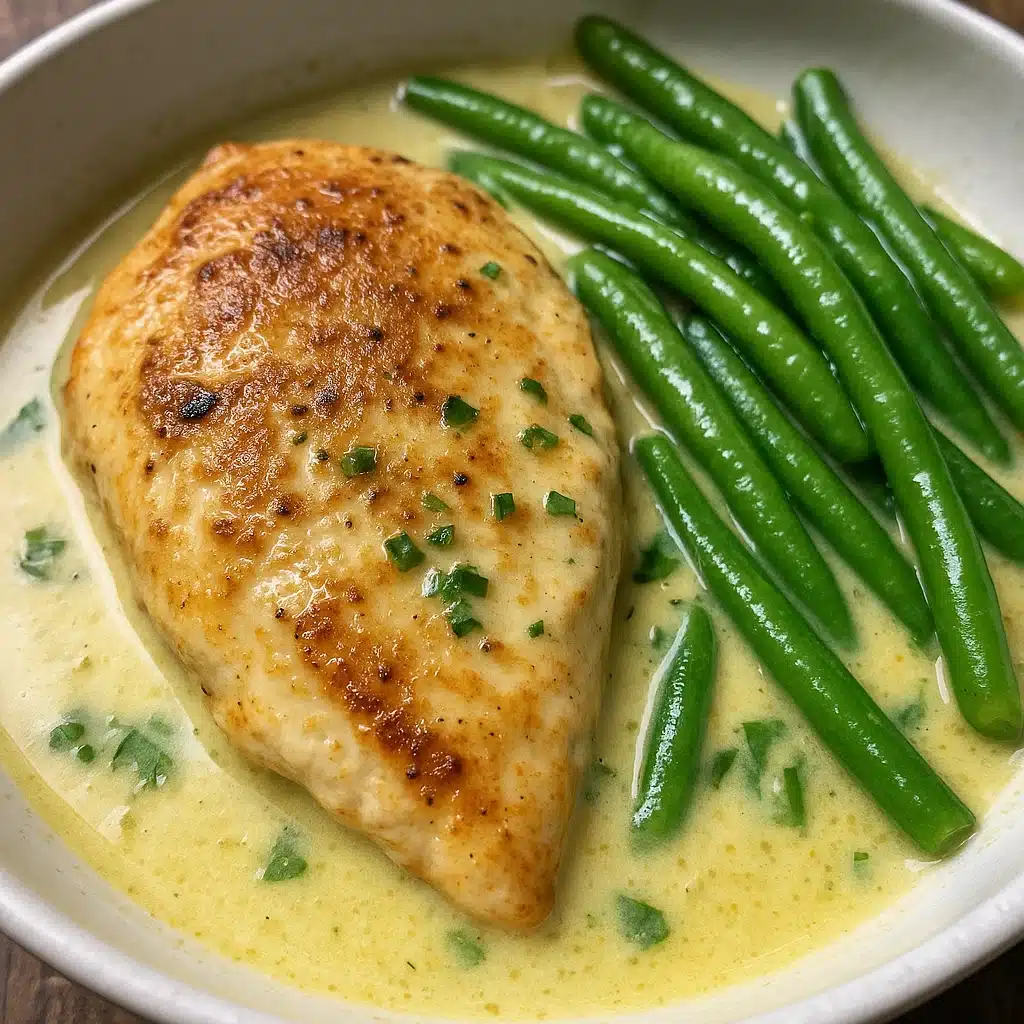
Coconut Lime Chicken with Green Beans is bright, creamy, and absolutely irresistible! This easy one-pan dinner features golden seared chicken breasts, tender green beans, and a luscious coconut cream sauce brightened with fresh lime zest and juice. It’s tropical comfort food that comes together in about 30 minutes!
Love More Chicken Recipes? Try My Cheesy Chicken Broccoli Orzo or this One Pan Chicken with Buttered Noodles next.
Why You’ll Love This Recipe
This Coconut Lime Chicken has become my go-to weeknight dinner when I want something special without the fuss. The coconut cream creates this silky, rich sauce that’s naturally dairy-free, and the lime adds the perfect pop of brightness that keeps you coming back for more.
PrintCoconut Lime Chicken with Green Beans
- Total Time: 35 minutes
- Yield: 4 chicken breasts with sauce and vegetables
Description
This Coconut Lime Chicken recipe is a one-pan wonder featuring juicy seared chicken breasts and green beans in a rich, creamy coconut sauce brightened with fresh lime zest and juice. It’s naturally dairy-free, comes together in about 30 minutes
Ingredients
For the Chicken & Base:
2 tablespoons refined coconut oil or olive oil (divided)
4 skinless, boneless chicken breasts (1½ to 2 lbs total)
1¾ teaspoons kosher salt, divided
For the Vegetables & Aromatics:
2 large shallots, sliced
12 oz fresh green beans, trimmed
3 garlic cloves, minced
1½ teaspoons grated or finely minced fresh ginger
For the Sauce:
¾ cup low-sodium chicken broth
1 (13.5-ounce) can coconut cream, shaken well
1 heaping teaspoon lime zest (from ~2 limes)
1 tablespoon fresh lime juice (from 1–2 limes), plus more to taste
For Serving (Optional):
Fresh cilantro, for garnish
Lime wedges
Toasted coconut
Steamed rice
Instructions
Heat up 1½ tablespoons oil in your biggest skillet on medium-high. While that’s warming up, salt both sides of your chicken with 1 teaspoon of the salt. When the oil’s shimmering but not smoking, lay your chicken in there. And here’s the thing that took me forever to learn—don’t touch them. Just leave them alone. I used to constantly poke and flip and move them around and wonder why they never got that nice brown crust. They need to sit undisturbed for 4-6 minutes until they’re golden and release easily when you try to flip them. If they’re sticking they’re not ready yet. Flip them, give the other side about 4 minutes, then take them out and tent some foil over them. Yeah they look underdone and pink in the middle—that’s on purpose. They’re finishing in the sauce later and this way they won’t dry out. Trust me on this.
Don’t you dare wash that pan. All those brown crusty bits stuck to the bottom are flavor. Add the last ½ tablespoon oil and your sliced shallots with the remaining ¾ teaspoon salt. Push them around for a minute or two until they get soft and translucent. Then add the green beans and garlic and toss everything together. Your kitchen should smell really good right now. After about a minute add the ginger and let it cook for like 30 seconds. You’ll smell when it’s ready, the smell kind of changes and gets more intense.
Pour the chicken broth in and use your spoon to scrape all those stuck bits off the bottom of the pan. Get in there and really scrape—that’s pure flavor you’re releasing into the sauce. It’s weirdly satisfying watching it all come up and dissolve.
Shake your coconut cream can. No really, shake it hard for like 10 seconds. It separates in the can—thick cream on top, watery stuff on bottom—and if you don’t shake it you’ll pour out either all liquid or all solid and your sauce will be wrong. I know this because I’ve done it wrong many times. Pour it in and stir until it’s all mixed with the broth. Put your chicken back in the pan so they’re kind of half-submerged with green beans around them. Bring it to a simmer then turn the heat down to medium-low. You want gentle bubbles, not crazy boiling. Let it all cook for 7-10 minutes, flipping the chicken once or twice. Stick your meat thermometer in the thickest part—you want 165°F. And keep that heat gentle because if you let it boil hard the coconut cream breaks and gets grainy and weird looking. I’ve done that too and it still tastes fine but it looks ugly.
Take the pan completely off the heat before you add the lime. This matters because if you add lime to a hot pan it can get bitter. Stir in the lime zest and juice. Now taste it—this is important. Sometimes it needs more lime, sometimes more salt. Every time I make this it’s a little different depending on my limes. Usually I end up squeezing in another half lime. Top with cilantro if you’re into that , serve with lime wedges and toasted coconut if you’re feeling fancy. Put this over rice because that sauce is too good to let any of it go to waste.
Notes
For thicker sauce: Let it simmer an extra 2–3 minutes without the lid, stirring occasionally. The sauce will reduce and coat the back of a spoon beautifully.
For thinner sauce: Add chicken broth 1 tablespoon at a time until you reach your desired consistency.
Avoid dry chicken: Pound your chicken breasts to even thickness before cooking, or butterfly really thick ones. This helps them cook evenly and prevents the thin parts from overcooking while the thick parts catch up.
Make it spicier: Add sliced jalapeño or serrano chile when you cook the shallots, or stir in red pepper flakes with the ginger.
Fresh ginger hack: Keep fresh ginger in the freezer! It grates like a dream when frozen, and you don’t have to peel it first.
- Prep Time: 10 minutes
- Cook Time: 25 minutes
- Category: Main Dish
- Method: Stovetop
- Cuisine: Thai-Inspired
Ingredient List
For the Chicken & Base:
- 2 tablespoons refined coconut oil or olive oil (divided)
- 4 skinless, boneless chicken breasts (1½ to 2 lbs total)
- 1¾ teaspoons kosher salt, divided
For the Vegetables & Aromatics:
- 2 large shallots, sliced
- 12 oz fresh green beans, trimmed
- 3 garlic cloves, minced
- 1½ teaspoons grated or finely minced fresh ginger
For the Sauce:
- ¾ cup low-sodium chicken broth
- 1 (13.5-ounce) can coconut cream, shaken well
- 1 heaping teaspoon lime zest (from ~2 limes)
- 1 tablespoon fresh lime juice (from 1–2 limes), plus more to taste
For Serving (Optional):
- Fresh cilantro, for garnish
- Lime wedges
- Toasted coconut
- Steamed rice
Why These Ingredients Work
Okay so coconut cream versus coconut milk confused me for like two years. Coconut cream is thicker because it’s got way more fat and less water. That’s literally it. That’s why your sauce comes out all silky instead of watery. I kept using coconut milk and wondering why my sauce was thin and sad.
Fresh lime changed this recipe for me. I used to be that person buying the squeeze bottle of lime juice at the store thinking I was being smart and saving time. Then one day I had actual limes and used those and oh my god. It’s not even the same flavor. The zest especially—it’s got all these oils that make your whole kitchen smell amazing. Now I always buy real limes and I’m sorry to past me for wasting so much time with fake lime juice.
Shallots are just sweeter onions that don’t make you cry as much and kind of disappear into the sauce. My sister-in-law who claims she hates onions eats this all the time and doesn’t know they’re in there. I’m definitely not telling her.
Fresh ginger is that ingredient where you’re eating and you’re like “what IS that” in a good way. It’s warm and zingy but not spicy-spicy. Works really well with the coconut and lime somehow. I keep mine in the freezer now which I’ll explain later because it’s a game changer.
Chicken broth is doing two jobs—first it picks up all those brown crusty bits stuck to your pan which is where half the flavor lives, then it turns into the base of your sauce. I use low-sodium because I can always make things saltier but I can’t un-salt them. Learned that lesson with a batch of soup I had to throw out last month.
Green beans aren’t just sitting there looking pretty—they’re actually soaking up the sauce while they cook. They stay a little crispy which I like. My kids will eat them this way but won’t touch them any other way so I’m not asking questions.
Essential Tools and Equipment
- Big skillet and I mean BIG, like 11 or 12 inches minimum
- Meat thermometer (if you don’t have one get one, they’re cheap and will save you from so much dry chicken)
- Microplane grater or whatever you use for zesting
- Tongs because spatulas are annoying
- Foil for covering the chicken
How To Make Coconut Lime Chicken
Step 1: Sear the Chicken
Heat up 1½ tablespoons oil in your biggest skillet on medium-high. While that’s warming up, salt both sides of your chicken with 1 teaspoon of the salt. When the oil’s shimmering but not smoking, lay your chicken in there. And here’s the thing that took me forever to learn—don’t touch them. Just leave them alone. I used to constantly poke and flip and move them around and wonder why they never got that nice brown crust. They need to sit undisturbed for 4-6 minutes until they’re golden and release easily when you try to flip them. If they’re sticking they’re not ready yet. Flip them, give the other side about 4 minutes, then take them out and tent some foil over them. Yeah they look underdone and pink in the middle—that’s on purpose. They’re finishing in the sauce later and this way they won’t dry out. Trust me on this.
Step 2: Cook the Aromatics & Vegetables
Don’t you dare wash that pan. All those brown crusty bits stuck to the bottom are flavor. Add the last ½ tablespoon oil and your sliced shallots with the remaining ¾ teaspoon salt. Push them around for a minute or two until they get soft and translucent. Then add the green beans and garlic and toss everything together. Your kitchen should smell really good right now. After about a minute add the ginger and let it cook for like 30 seconds. You’ll smell when it’s ready, the smell kind of changes and gets more intense.
Step 3: Deglaze with Broth
Pour the chicken broth in and use your spoon to scrape all those stuck bits off the bottom of the pan. Get in there and really scrape—that’s pure flavor you’re releasing into the sauce. It’s weirdly satisfying watching it all come up and dissolve.
Step 4: Add Coconut Cream & Simmer
Shake your coconut cream can. No really, shake it hard for like 10 seconds. It separates in the can—thick cream on top, watery stuff on bottom—and if you don’t shake it you’ll pour out either all liquid or all solid and your sauce will be wrong. I know this because I’ve done it wrong many times. Pour it in and stir until it’s all mixed with the broth. Put your chicken back in the pan so they’re kind of half-submerged with green beans around them. Bring it to a simmer then turn the heat down to medium-low. You want gentle bubbles, not crazy boiling. Let it all cook for 7-10 minutes, flipping the chicken once or twice. Stick your meat thermometer in the thickest part—you want 165°F. And keep that heat gentle because if you let it boil hard the coconut cream breaks and gets grainy and weird looking. I’ve done that too and it still tastes fine but it looks ugly.
Step 5: Finish with Lime & Garnish
Take the pan completely off the heat before you add the lime. This matters because if you add lime to a hot pan it can get bitter. Stir in the lime zest and juice. Now taste it—this is important. Sometimes it needs more lime, sometimes more salt. Every time I make this it’s a little different depending on my limes. Usually I end up squeezing in another half lime. Top with cilantro if you’re into that , serve with lime wedges and toasted coconut if you’re feeling fancy. Put this over rice because that sauce is too good to let any of it go to waste.
You Must Know
Shake the coconut cream can or I guarantee your sauce will be wrong. I’ve gotten so many messages from people saying their sauce was watery or their sauce was too thick and every single time it’s because they didn’t shake the can. The cream and liquid separate and settle into layers. You need them mixed together. Shake it like you’re angry at it.
Personal Secret: I zest my limes directly over the pan at the very end instead of doing it ahead into a bowl. When you zest a lime you’re releasing all these aromatic oils from the peel, and if you do it right over the hot sauce those oils spray directly in. The whole dish just smells incredible. If you zest it ahead and let it sit on your cutting board you lose some of that. It’s a tiny detail but I swear I can tell the difference.
Pro Tips & Cooking Hacks
Sauce too thin? Let it keep simmering for a few more minutes without the lid. It’ll reduce down and get thicker.
Sauce too thick? Add chicken broth one tablespoon at a time. Easy fix.
Here’s what changed my chicken game completely—pound the breasts to even thickness before you cook them. I put mine in a plastic bag and whack them with whatever’s heavy. Can of tomatoes, small pot, bottom of a wine bottle. One time I accidentally used my phone which was stupid. But even thickness means everything cooks at the same rate and you don’t have those thick parts that are raw while the thin parts are overcooked and dry.
Want it spicy? Slice up a jalapeño or serrano and throw it in with the shallots. Or just dump in some red pepper flakes with the ginger. Both work great. I do both sometimes when I’m in a spicy mood.
Ginger hack that legitimately changed my life: keep ginger in your freezer. Like just buy a chunk of ginger, stick it in a ziplock, throw it in the freezer. When you need to grate it for a recipe, take it out frozen and grate it on your microplane. It grates perfectly and you don’t even have to peel it. I don’t know why this works but it does. Haven’t bought fresh ginger in probably a year, I just keep frozen ginger.
Flavor Variations & Suggestions
Thai version is really good—add about a teaspoon of lemongrass paste when the ginger goes in (you can buy it in a tube at most grocery stores now), use a little splash of fish sauce instead of some of the salt (be careful, fish sauce is STRONG), and finish with fresh basil and mint instead of cilantro. My neighbor lived in Bangkok for three years and she says this version tastes legit.
Spicy coconut lime is my favorite when my husband’s traveling: stir in one or two tablespoons of red curry paste when the coconut cream goes in. Your sauce turns this gorgeous orange-red color and gets a nice kick of heat. He can’t handle spice so I only make this version when he’s gone.
Different vegetables work totally fine. I’ve thrown in broccoli, snap peas, bell peppers, zucchini, baby bok choy, asparagus, whatever I have. Just remember timing matters—snap peas cook super fast so add them later, carrots take forever so either add them way earlier or cut them really small. Last week I just dumped in a bag of frozen stir fry vegetables because that’s what I had and honestly it was fine.
Orange zest mixed with the lime is interesting and good. Or half lime half lemon works too. I tried all lemon once and it was too sharp and sour—the lime is better.
This sauce is amazing on salmon if you’re not a chicken person. My sister makes it with shrimp. My vegetarian friend uses tofu and swears it’s delicious. Just adjust cooking times depending on what you’re using.
Make-Ahead Options
You can do all the annoying prep work the night before—trim the beans, slice the shallots, mince garlic and ginger, zest the limes. Stick everything in separate little containers in the fridge. Then the next day when you’re tired and don’t feel like cooking, dinner basically makes itself. Takes maybe 20 minutes instead of 35.
If you want you can salt the chicken up to 2 hours ahead and keep it covered in the fridge. It’ll be more flavorful. I do this sometimes when I remember but honestly I usually forget.
Don’t freeze this. I tried once because I made a double batch thinking I’d be smart and have future dinners ready. The coconut cream sauce does not freeze well—when you thaw it it’s all separated and grainy and just sad. This is definitely a make-it-fresh or keep-leftovers-in-the-fridge situation. But the leftovers are good for like 4 days so that works fine.
Recipe Notes & Baker’s Tips
Pan size really matters. If your skillet’s too small everything gets crowded together and steams instead of browning properly and you lose so much flavor. I use my 12-inch and there’s enough room for everything to have space.
If you have those massive chicken breasts from Costco that are like 8 or 10 ounces each, they’re gonna need longer to cook through. Just use your thermometer and don’t go by time.
The sauce gets thicker as it sits in the fridge overnight. If you’re reheating leftovers, splash in a little chicken broth to loosen it back up. Otherwise it’s kind of pasty.
Fresh lime at the end is mandatory. I’ve tried skipping it when I was being lazy and the dish just falls flat without it. You need the lime flavor both cooked into the sauce and fresh at the end. They taste different and you need both.
Serving Suggestions
This needs rice. Like it really needs rice. I use jasmine or basmati and the rice soaks up all that amazing sauce. Sometimes I make extra rice just so I can have more vehicle for the sauce. But I’ve also done it with cauliflower rice when I’m trying to be good about carbs, rice noodles which is fun and different, quinoa when I’m feeling virtuous, and naan bread which makes zero sense culturally but scooping sauce with naan is delicious so I don’t care.
Don’t skip the garnishes even though they’re “optional.” Fresh cilantro makes it prettier and adds flavor. Lime wedges are essential because everyone needs to squeeze more lime over their serving—that’s where the magic happens. Toasted coconut adds a nutty crunch that’s really good. And sometimes I throw sliced scallions on top just because they look pretty and add a fresh onion bite.
How to Store Your Coconut Lime Chicken
Stick leftovers in whatever container you have that fits, shove it in the fridge, good for 4 days. The flavors actually get better after sitting overnight which is wild. My husband says day-two coconut lime chicken is better than day-one coconut lime chicken and honestly he might be right. I make it on Sunday sometimes specifically for easy lunches all week.
Reheat it gently in a skillet on medium-low with a splash of broth to thin out the sauce a bit. Or microwave it but do short bursts—30 seconds, stir, 30 seconds, stir—so the chicken doesn’t turn into rubber. I learned that one the hard way when I nuked it on high for 3 minutes and it came out like shoe leather.
I already said this but don’t freeze it. The sauce gets weird and grainy when you thaw it. Just keep it in the fridge and eat it within a few days. Still super convenient.
Allergy Information
This is dairy-free which is great if you’re dairy-free but honestly I just think coconut cream tastes better than regular cream in this recipe anyway. It’s lighter somehow even though it’s still rich.
It’s gluten-free too as long as your chicken broth is gluten-free. Most brands are but check the label if you’re cooking for someone with celiac.
Coconut is technically a fruit not a tree nut so most people with tree nut allergies can eat it. But I’m not a doctor so check with your actual doctor if you’re unsure. If coconut’s completely off the table you could use heavy cream instead—obviously not dairy-free anymore but the recipe would still work.
For garlic and onion issues (like if you’re low-FODMAP), you can put whole garlic cloves and shallot chunks in the oil to infuse it with flavor, then fish them out before adding the vegetables. Use green parts of scallions for flavor instead. My cousin has IBS and does this and says it works fine for her.
Questions I Get Asked A Lot
What’s the difference between coconut cream and coconut milk?
This confused me forever so I’m glad you asked. Coconut cream is thicker—it’s got way more coconut fat and way less water. That’s what makes this sauce thick and creamy. Coconut milk has more water so it’s thinner. If you can only find coconut milk, get the full-fat kind (never the light stuff) and your sauce will just be thinner. Still tastes good though. Or my friend taught me this trick: put a can of full-fat coconut milk in the fridge overnight, then scoop out just the thick cream part that rises to the top. That’s basically coconut cream. Smart right?
My sauce looks separated or curdled—what happened?
Your heat was too high after adding the coconut cream. I did this probably the first five times I made this recipe. If it boils too hard the coconut cream breaks and looks grainy or curdled. Not gonna lie, it looks ugly. But it still tastes fine so if this happens just eat it anyway. Next time drop the heat to medium-low once the coconut cream goes in and keep it at a gentle simmer. You can also try whisking it really hard to bring it back together but sometimes it’s too late.
How do I prevent the chicken from being dry?
Don’t overcook it. That’s literally the entire secret. Use a meat thermometer and pull it at exactly 165°F. It’ll also keep cooking a bit after you take it off the heat (carryover cooking) so you can even pull it at 160-162°F if you’re worried. And pound it to even thickness.
💬 Made this? Tell me everything! Did it work? Did you change anything? What did you serve it with? Any total disasters I should know about? I love hearing how other people’s versions turn out!