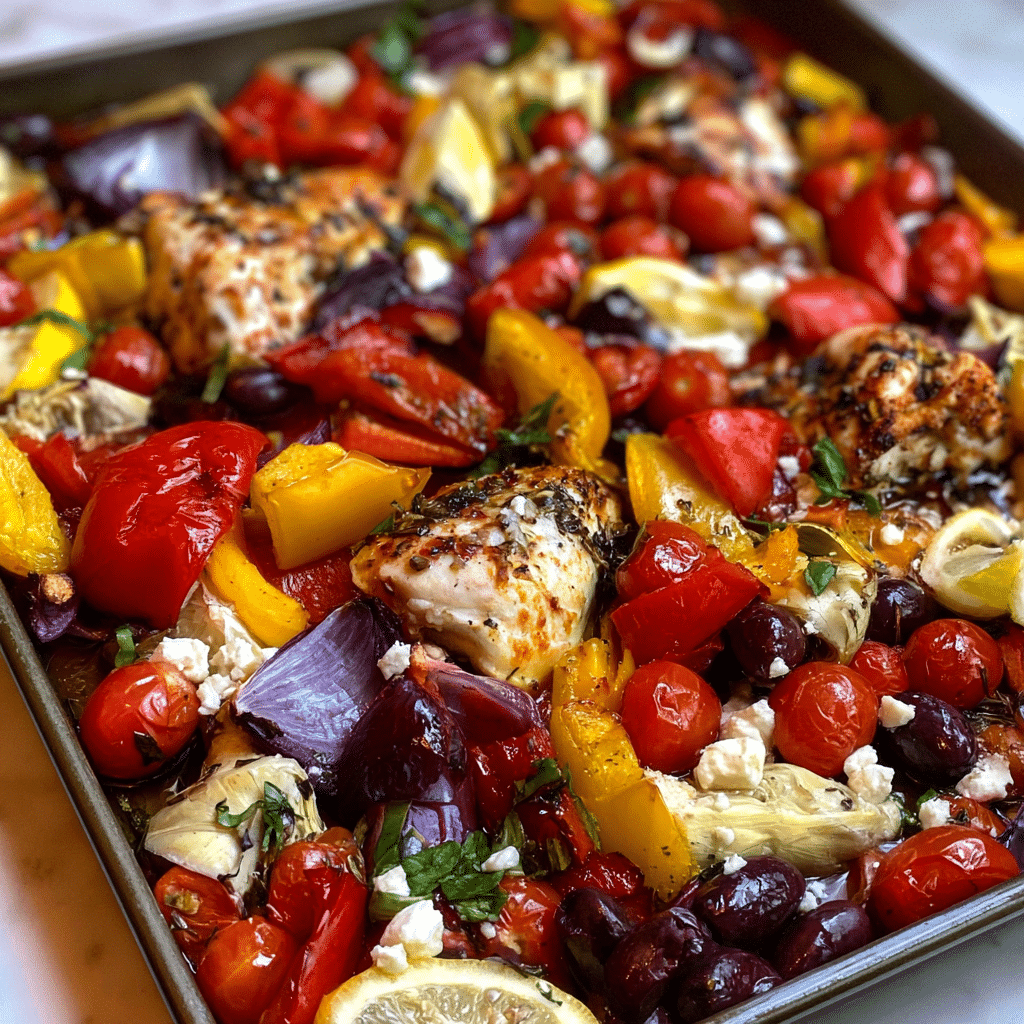
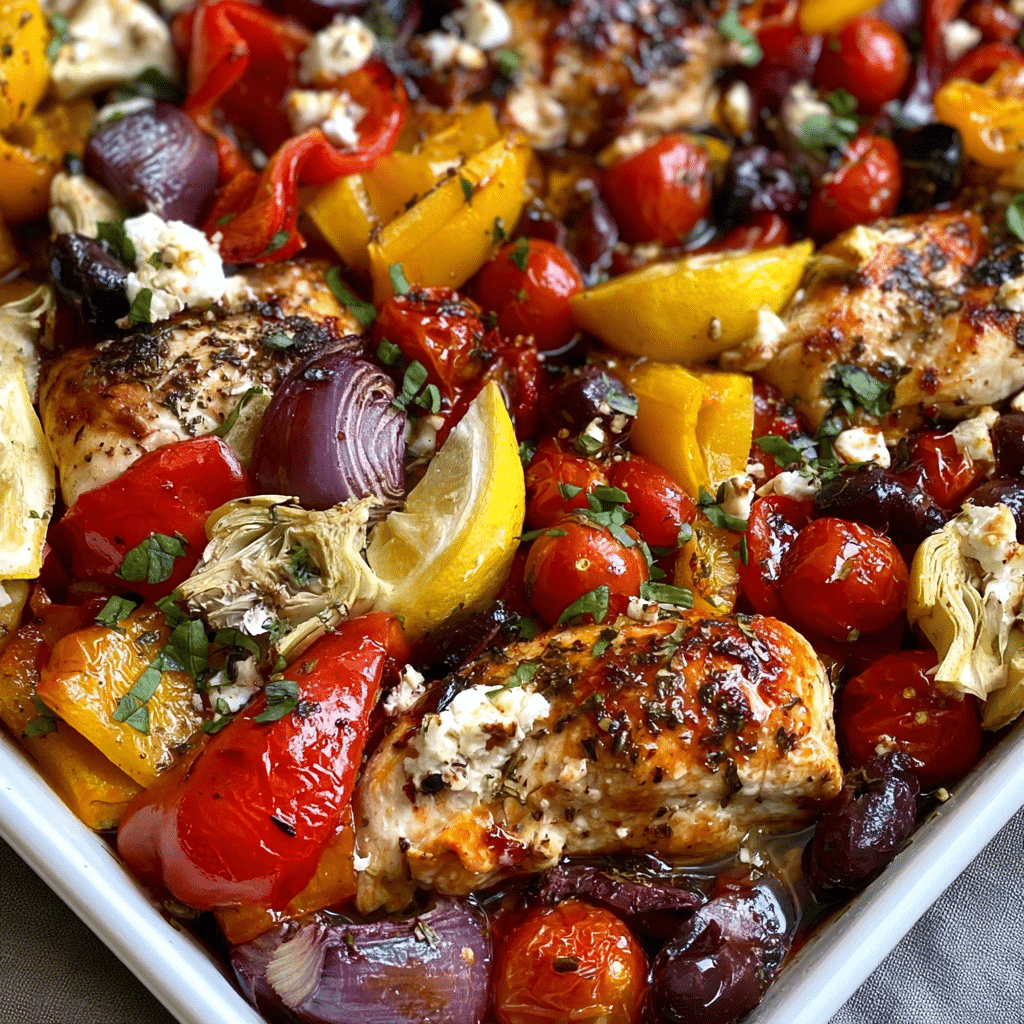
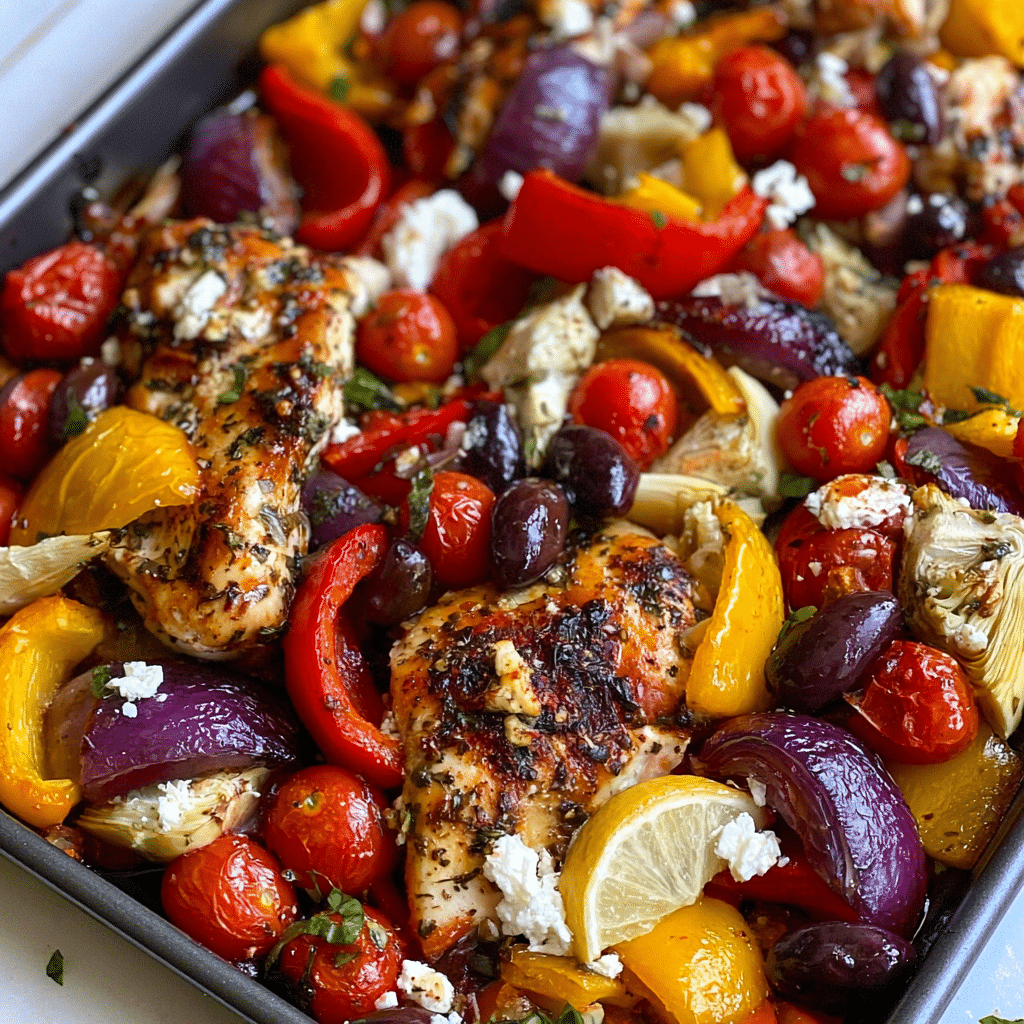
Sheet Pan Greek Chicken Traybake is a vibrant Mediterranean dinner of chicken, two bell peppers, red onion, cherry tomatoes, artichoke hearts, and lemon wedges roasted in a garlic-balsamic-oregano dressing at 400°F, then finished with Kalamata olives, crumbled feta, and fresh basil.
Why You’ll Love This Recipe
The garlic-balsamic-oregano dressing applied at three separate stages — first on the vegetables, then on the chicken before roasting, then drizzled over everything at the 25-minute mark — builds a complexity and depth of flavor that a single-coat recipe cannot achieve. Every component gets its own direct contact with the dressing at the right moment.
This recipe delivers the full flavor profile of a Greek taverna plate — roasted peppers, burst cherry tomatoes, blistered lemon, Kalamata olives, and crumbled feta — built entirely on one pan in the oven. The smell of balsamic, oregano, and roasting garlic fills the kitchen the entire time it cooks.
Two bowls for the dressing and one pan for everything — the only active work is whisking the dressing and tossing the vegetables before the oven handles the full 30–35 minutes. The olives, feta, and basil go on at the 25-minute mark and that is the last step until plating.
The combination of bell peppers, cherry tomatoes, artichoke hearts, and Kalamata olives makes this pan visually striking and gives every person at the table a variety of textures and flavors to work through. The feta on top finishes it with a creamy, briny layer that brings everyone back for more.
A 45-minute dinner that looks like it took twice as long — the colorful vegetables, the golden chicken, and the crumbled feta across the top produce a restaurant-quality presentation from a single home oven without any plating technique required.
Ingredient List
- 1 red bell pepper, cut into 2-inch pieces
- 1 yellow bell pepper, cut into 2-inch pieces
- 1 red onion, cut into eighths
- 2 cups cherry tomatoes
- ½ cup artichoke hearts, drained
- 1 lemon, cut into wedges
- 2 large boneless, skinless chicken breasts (halved) or 4 boneless, skinless chicken thighs
- 2 cloves garlic, minced
- ¼ cup olive oil
- 1½ tablespoons balsamic vinegar
- ½ teaspoon smoked paprika
- 1 teaspoon dried oregano
- ¼ teaspoon salt
- ½ teaspoon black pepper
- 2 tablespoons fresh basil, chopped
- ⅔ cup Kalamata olives, pitted
- ¼ cup crumbled feta cheese (omit for dairy-free or Whole30)
Why These Ingredients Work
Chicken breasts halved or thighs gives this recipe its most important flexibility. Halved chicken breasts cook to a flat, even thickness that matches the roasting time of the vegetables and produces a lean, clean result. Boneless chicken thighs are a slightly fattier alternative that stays moist and forgiving even with a minute or two of extra roasting time — either cut works within the same 30–35 minute window, and the choice comes down to preference rather than technique.
The three-part garlic-balsamic-oregano dressing is the structural element that makes this recipe more than a simple one-pan roast. Whisked together from olive oil, balsamic vinegar, garlic, smoked paprika, and dried oregano, it is applied in three deliberate stages — one-third tossed with the vegetables before roasting, one-third brushed directly onto the chicken, and one-third drizzled over everything at the 25-minute mark alongside the olives, feta, and basil. Each application serves a different role: the first penetrates the vegetables as they roast, the second builds a seasoned surface on the chicken, and the third refreshes the balsamic-oregano flavors across the entire pan after the first round of heat has softened the initial coating.
Artichoke hearts bring a distinctive, earthy-briny texture to the vegetable base that no other vegetable in this recipe replicates. Drained well before going on the pan, they absorb the dressing during roasting, soften at the edges, and add the specific Mediterranean character that separates this traybake from a generic roasted chicken and pepper dish. Marinated artichoke hearts from a jar add extra herby depth if substituted for plain.
Kalamata olives and crumbled feta added at the 25-minute mark are the two ingredients that define this as Greek rather than generically Mediterranean. Kalamata olives carry a deep, fruity, wine-cured brininess that blooms when warmed briefly in the oven without shriveling. Feta crumbles warm and soften into creamy, salty pockets over the final 5–10 minutes without fully melting — they retain their crumble character while releasing their brine into the pan juices beneath them, enriching the entire pan sauce in the final minutes of roasting.
Essential Tools and Equipment
- Large sheet pan or roasting tray (18×13 inches recommended)
- Small bowl for whisking the dressing
- Whisk
- Sharp chef’s knife and cutting board
- Pastry brush for applying dressing to the chicken
- Colander or paper towels for draining the artichoke hearts
- Instant-read meat thermometer
- Tongs for serving
How To Make Sheet Pan Greek Chicken Traybake
Phase 1: Build the Dressing and Prep the Vegetables
- Preheat the oven to 400°F (200°C).
- Whisk together the minced garlic, olive oil, balsamic vinegar, smoked paprika, and dried oregano in a small bowl until fully combined.
- Arrange the red pepper, yellow pepper, red onion, cherry tomatoes, artichoke hearts, and lemon wedges on a large sheet pan or roasting tray.
- Pour one-third of the dressing over the vegetables. Season with the salt and black pepper, then toss until every piece is evenly coated.
Phase 2: Add the Chicken and Roast
- Place the chicken on top of the vegetables and brush it with another one-third of the dressing, covering all exposed surfaces.
- Bake for 25 minutes.
Phase 3: Add the Greek Finishing Elements
- Remove the tray from the oven. Add the Kalamata olives, crumbled feta, and chopped fresh basil across the pan. Drizzle the remaining one-third of the dressing evenly over everything.
- Return the tray to the oven and bake for another 5–10 minutes, until the chicken reaches an internal temperature of 165°F (74°C).
Phase 4: Serve
- Serve immediately with the roasted vegetables and all the pan juices spooned over each portion.
Chef Tips for Perfect Results
- Drain the artichoke hearts thoroughly before adding them to the pan — excess brine from the jar dilutes the dressing, adds unwanted liquid that steams the vegetables rather than roasting them, and washes the olive oil coating off the other vegetables.
- Apply the dressing in its three separate stages without combining them — each application serves a distinct purpose at a distinct moment; pouring all of it over the vegetables at the start produces a wetter, less layered result.
- Squeeze the roasted lemon wedges over the finished pan at serving — lemon that has roasted and caramelized on the pan for 30 minutes produces a concentrated, sweet-tart juice that is fundamentally more complex than fresh lemon squeezed over the dish.
- Place the chicken on top of the vegetables rather than beside them — the chicken bastes the vegetables beneath it with its cooking juices throughout the roasting period, enriching everything underneath with flavor.
- Crumble feta from a block rather than using pre-crumbled — block feta contains more moisture, more flavor, and holds its shape better during the final 5–10 minutes of roasting without drying out.
- Check for 165°F at the 30-minute mark — the 5–10 minute final bake varies by chicken cut and thickness; an instant-read thermometer removes all guessing.
You Must Know
The feta, Kalamata olives, and fresh basil go in only after the first 25 minutes of roasting, never at the start — this is the most critical timing detail in the entire recipe. Feta added at the beginning dries into rubbery, flavorless crumbles over 30+ minutes of heat. Kalamata olives exposed to the full roasting time shrivel, lose their fruity brine character, and turn bitter. Fresh basil placed in a 400°F oven at the start burns black within minutes and contributes nothing to the finished dish. All three are added at the 25-minute mark and receive only 5–10 more minutes of gentle heat, which is exactly the right amount.
The dressing divides into thirds intentionally, and each third serves a different purpose at a different stage. The first third penetrates the vegetables during the initial roast and becomes part of the pan sauce. The second third builds a seasoned surface coat directly on the chicken before it goes in. The final third — drizzled over everything at the 25-minute mark alongside the feta, olives, and basil — acts as a finishing layer that refreshes the balsamic-oregano flavor across the entire pan after the first round of roasting has cooked off some of the initial coating. Do not skip this third application.
Pro Tips & Cooking Hacks
- Use marinated artichoke hearts in oil instead of plain — the herb-and-garlic marinade from the jar adds an extra layer of Mediterranean flavor to the pan juices during roasting.
- Add ½ cup of canned chickpeas to the vegetable layer for a heartier, more filling traybake that works well as a standalone meal without any grain side dish.
- Broil for 2 minutes at the very end after the feta goes on for a more deeply caramelized surface on the chicken and lightly blistered tomato skins — watch the feta carefully as it can brown quickly.
- Reserve a small extra handful of fresh basil to add after the pan comes out of the oven — the combination of the basil that warmed in the oven and the raw fresh leaves on top produces both cooked herb depth and fresh herb brightness simultaneously.
- Pitted Kalamata olives save significant prep time and produce a better eating experience — if using unpitted, make sure to mention it to guests before serving.
- Double the dressing batch and store the extra in a sealed jar in the refrigerator for up to a week — it works as a salad dressing, a marinade for fish, and a dipping sauce for warm pita.
Flavor Variations & Suggestions
Full Greek with tzatziki: Serve the finished traybake alongside a bowl of homemade or store-bought tzatziki for dipping the roasted chicken and warm pita. The cool, creamy cucumber-yogurt sauce against the warm, balsamic-glazed chicken and blistered vegetables is one of the most cohesive pairings in the Greek flavor palette.
Lemon-garlic intensity: Double the garlic to 4 cloves and add the zest of one full lemon to the dressing along with an extra tablespoon of fresh lemon juice. The result is a brighter, more aggressively citrus-forward version of the same traybake that leans further toward a classic Greek lemon chicken flavor.
Whole30 and paleo version: Omit the feta cheese entirely — all other ingredients are Whole30 compliant. Verify the balsamic vinegar label (some commercial brands add sulfites or sugar); substitute with red wine vinegar plus a teaspoon of date paste if strict Whole30 compliance is required. The dish loses its briny creaminess without the feta but remains fully flavored and satisfying.
Spicy Greek traybake: Add ½ teaspoon of red pepper flakes to the dressing before dividing it into thirds, and add a sliced red chili to the vegetable layer alongside the peppers. The heat builds gradually against the balsamic sweetness and the briny feta, creating a version of the dish with significantly more assertive flavor from the first bite.
Make-Ahead Options
Garlic-balsamic-oregano dressing: Whisk the full batch of dressing up to 5 days in advance and store in a sealed jar in the refrigerator. The garlic infuses into the olive oil as it sits, producing a more aromatic, cohesive dressing than a freshly made batch. Shake or stir well before dividing into thirds.
Marinated chicken: Brush the chicken with the second-stage portion of the dressing, cover tightly, and refrigerate for up to 24 hours before roasting. Overnight marinating produces noticeably more flavorful, deeply seasoned chicken with the balsamic-oregano coating penetrating beyond the surface.
Prepped vegetables: Cut all the peppers, onion, and lemon wedges and halve the cherry tomatoes up to 2 days in advance. Store in separate airtight containers in the refrigerator. Drain and store the artichoke hearts separately. Do not toss with the dressing until you are ready to roast.
Feta, olives, and basil: These three go on fresh at the 25-minute mark and should never be added ahead of time or stored on the pan — feta crumbles lose moisture in advance prep, olives absorb other flavors if combined too early, and fresh basil wilts immediately once cut.
Recipe Notes & Baker’s Tips
- Halved chicken breasts and boneless thighs both finish within the same 30–35 minute window at 400°F — halved breasts produce a leaner, firmer result and thighs produce a juicier, more forgiving one; the dressing quantity covers either cut equally well.
- Parchment paper under the vegetables prevents the balsamic vinegar from caramelizing permanently onto bare metal and simplifies cleanup significantly.
- The roasted lemon wedges on the pan are edible and their juice is the best finishing condiment for this dish — squeeze them directly over the plated portions.
- Block feta packed in brine produces more flavor and better texture than pre-crumbled varieties; drain the brine and crumble it yourself just before adding to the pan.
- If using canned artichoke hearts, drain and pat them dry before adding — the excess liquid from the can will steam the surrounding vegetables and prevent the caramelization the dressing builds.
Serving Suggestions
Warm pita bread or flatbread: Warm pita is the natural companion for this traybake — it scoops up the balsamic-tomato pan juices and the warm feta crumbles and turns the meal into a hands-on, shareable dinner in the spirit of a Greek meze spread.
Couscous or orzo pasta: A bowl of plain couscous or lemon-dressed orzo served alongside soaks up the concentrated balsamic-oregano pan juices and turns the traybake into a fully complete grain-and-protein meal. The mild grain base also balances the intensity of the Kalamata olives and feta.
Tzatziki and hummus: Set out small bowls of both tzatziki and hummus alongside the tray for dipping the roasted chicken and vegetables. The cool, acidic tzatziki contrasts with the warm balsamic glaze, while the hummus adds a rich, earthy element that grounds the brighter Greek flavors.
Chilled Assyrtiko or Pinot Grigio: A glass of chilled Greek Assyrtiko — dry, mineral, and citrus-forward — is the most authentic pairing for this dish and mirrors the oregano, lemon, and olive oil backbone of the dressing. An unoaked Pinot Grigio provides a comparable crisp, acid-driven pairing for those who cannot find Assyrtiko.
Storage & Reheating
- Refrigerator: Store leftovers in an airtight container for up to 4 days; keep the feta crumbles and olives with the chicken and vegetables — they continue to season the pan juices overnight.
- Oven reheating (recommended): Reheat at 375°F for 10–12 minutes until warmed through; add a small amount of fresh feta after reheating to restore the creamy, briny topping.
- Freezer: Freeze the cooked chicken and roasted vegetables without the feta or fresh basil for up to 2 months; thaw overnight in the refrigerator, reheat in a 375°F oven for 12–15 minutes, then add fresh feta and basil before serving.
Allergy Information
Dairy: The feta cheese is the only dairy ingredient in this recipe. Omit it entirely for a fully dairy-free and Whole30-compliant version — the traybake is fully flavored without it. A plant-based feta alternative also works for a vegan-adjacent version that retains the briny, crumbly topping element.
Gluten: This recipe contains no gluten-containing ingredients as written. Verify that your balsamic vinegar and smoked paprika are certified gluten-free if serving guests with celiac disease — both are occasionally processed in facilities that handle wheat products.
Low-sodium needs: The Kalamata olives, artichoke hearts, and feta all contribute meaningful sodium. Reduce overall sodium by rinsing the olives and artichoke hearts in cold water before using, choosing low-sodium artichoke hearts, and reducing the feta quantity by half — the dish retains its character with these adjustments at a significantly lower sodium level.
Questions I Get Asked A Lot
Should I use chicken breasts or chicken thighs for this traybake?
Both work within the same timing window — halved chicken breasts produce a leaner, firmer result while boneless thighs stay juicier and are more forgiving if left in the oven a few extra minutes; choose based on preference and check for 165°F (74°C) either way.
Why does the feta go in after 25 minutes instead of at the start?
Feta added at the beginning dries into rubbery, flavorless crumbles over 30+ minutes of roasting heat — added at the 25-minute mark it warms and softens into creamy, briny pockets over just 5–10 minutes while retaining its crumble texture and its full flavor.
Can I use green olives instead of Kalamata?
Yes, pitted green olives work in this recipe but produce a milder, less fruity result — Kalamata olives carry a deeper, wine-cured brine character that is more distinctly Greek; Castelvetrano olives are a buttery, mild alternative that pairs well with the feta if you prefer a less assertive olive flavor.
Can I make this Whole30-compliant?
Yes — omit the feta cheese and verify your balsamic vinegar label; most balsamic is Whole30 compliant but some brands add caramel coloring or sulfites that fall outside the guidelines. All other ingredients are Whole30 approved as written.
Do the lemon wedges actually get eaten, or are they just for garnish?
The lemon wedges roast on the pan and caramelize over 30 minutes — squeeze them directly over each serving at the table for a concentrated, sweet-tart juice that is far more complex and flavorful than fresh lemon squeezed over the finished dish; they are functional, not decorative.
💬 Tried this recipe? Leave a comment and rating below!
Print
Sheet Pan Greek Chicken Traybake
- Total Time: 50 minutes
- Yield: 4 servings
- Diet: Gluten Free
Description
Sheet Pan Greek Chicken Traybake is a vibrant Mediterranean dinner of chicken, two bell peppers, red onion, cherry tomatoes, artichoke hearts, and lemon wedges roasted in a garlic-balsamic-oregano dressing at 400°F, then finished with Kalamata olives, crumbled feta, and fresh basil.
Ingredients
1 red bell pepper, cut into 2-inch pieces
1 yellow bell pepper, cut into 2-inch pieces
1 red onion, cut into eighths
2 cups cherry tomatoes
½ cup artichoke hearts, well drained
1 lemon, cut into wedges
2 large boneless, skinless chicken breasts (halved) or 4 boneless, skinless chicken thighs
2 cloves garlic, minced
¼ cup olive oil
1½ tablespoons balsamic vinegar
½ teaspoon smoked paprika
1 teaspoon dried oregano
¼ teaspoon salt
½ teaspoon black pepper
⅔ cup Kalamata olives, pitted
¼ cup crumbled feta cheese (omit for dairy-free or Whole30)
2 tablespoons fresh basil, chopped
Instructions
1. Preheat the oven to 400°F (200°C).
2. Whisk together the minced garlic, olive oil, balsamic vinegar, smoked paprika, and dried oregano in a small bowl until fully combined.
3. Arrange the red pepper, yellow pepper, red onion, cherry tomatoes, artichoke hearts, and lemon wedges on a large sheet pan or roasting tray.
4. Pour one-third of the dressing over the vegetables. Season with the salt and black pepper, then toss until every piece is evenly coated.
5. Place the chicken on top of the vegetables and brush it with another one-third of the dressing, covering all exposed surfaces.
6. Bake for 25 minutes.
7. Remove the tray from the oven. Add the Kalamata olives, crumbled feta, and chopped fresh basil across the pan. Drizzle the remaining one-third of the dressing evenly over everything.
8. Return the tray to the oven and bake for another 5–10 minutes, until the chicken reaches an internal temperature of 165°F (74°C).
9. Serve immediately with the roasted vegetables and all the pan juices spooned over each portion. Squeeze the roasted lemon wedges over the top before serving.
Notes
The feta, Kalamata olives, and fresh basil go in only after the first 25 minutes of roasting — never at the start. Feta dries into rubbery crumbles over 30+ minutes of heat; olives shrivel and turn bitter; fresh basil burns black within minutes at 400°F. All three need just 5–10 minutes of gentle finishing heat.
The dressing divides into thirds intentionally — the first third penetrates the vegetables during roasting, the second builds a seasoned coat on the chicken, and the final third refreshes the balsamic-oregano flavor across the entire pan at the 25-minute mark alongside the olives, feta, and basil.
Drain the artichoke hearts thoroughly before adding — excess brine dilutes the dressing and steams the vegetables rather than roasting them.
Squeeze the roasted lemon wedges over each serving at the table — lemon that has caramelized on the pan for 30 minutes produces a sweeter, more concentrated juice than fresh lemon squeezed over the finished dish.
Crumble feta from a block rather than using pre-crumbled — block feta has more moisture, more flavor, and holds its shape better during the final roasting minutes without drying out.
| Storage method | Duration | Reheating instructions |
|---|---|---|
| Refrigerator | Up to 4 days | Reheat at 375°F for 10–12 minutes; add a small amount of fresh feta after reheating to restore the creamy, briny topping |
| Freezer (without feta and basil) | Up to 2 months | Thaw overnight in the refrigerator; reheat at 375°F for 12–15 minutes, then top with fresh feta and basil before serving |
| Microwave | Use within 4 days | Reheat in 60-second intervals on medium power — oven reheating produces significantly better texture for the vegetables and the balsamic glaze |
- Prep Time: 15 minutes
- Cook Time: 35 minutes
- Category: Dinner
- Method: Roasting
- Cuisine: Greek