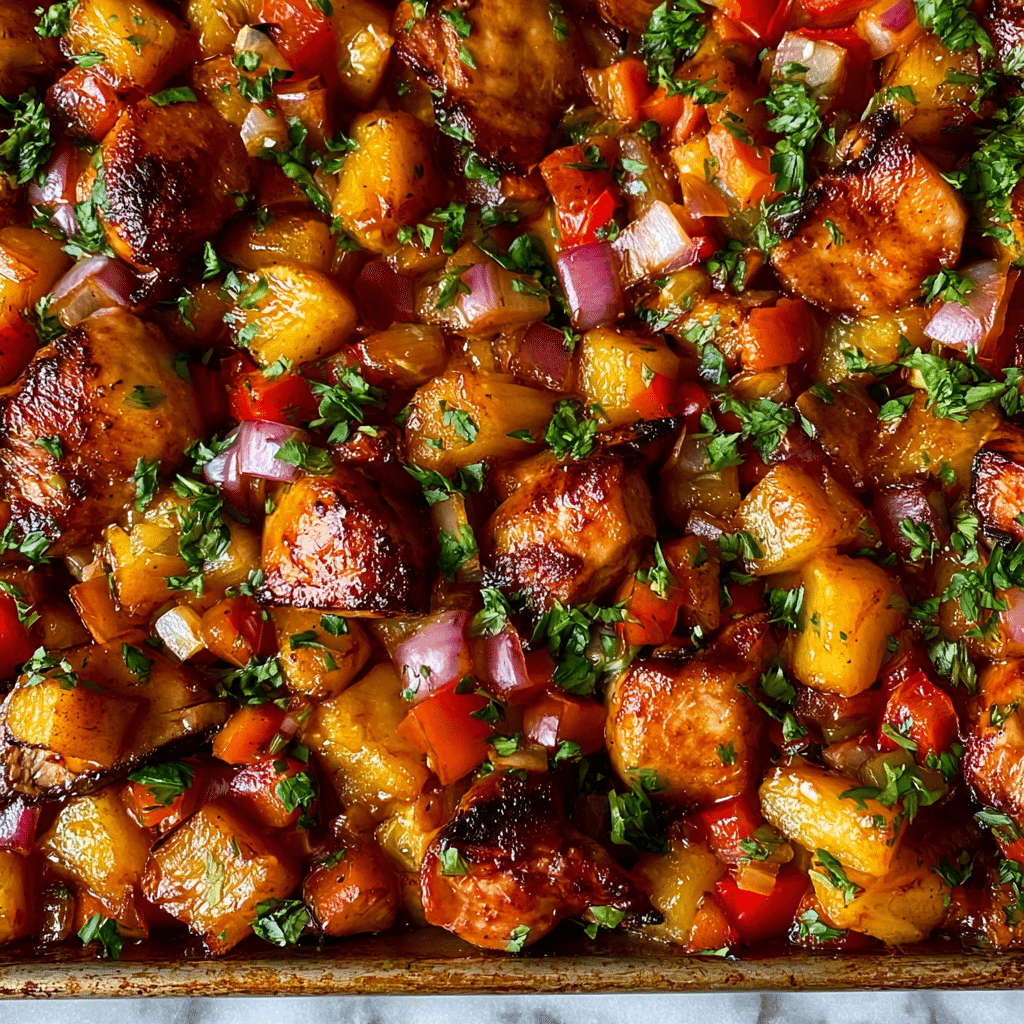
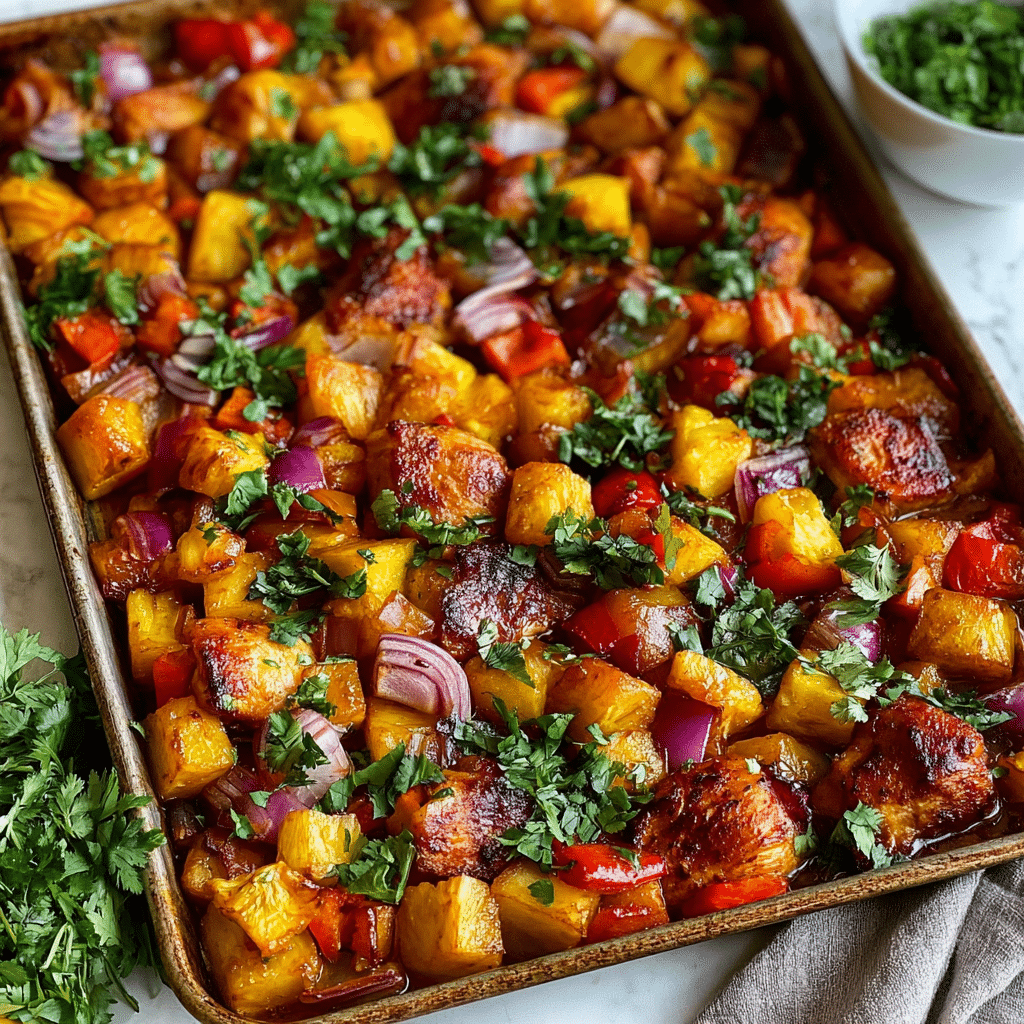
Sheet Pan Hawaiian Chicken is a sweet-savory dinner of bite-sized chicken pieces, two bell peppers, red onion, and pineapple chunks tossed in a soy-teriyaki-honey-ginger Hawaiian sauce and roasted at 400°F on a single pan.
Why You’ll Love This Recipe
The soy-teriyaki-honey-ginger Hawaiian sauce caramelizes around the pineapple and chicken at 400°F, building a sticky, glossy coating that hits every flavor note simultaneously — sweet from the honey and pineapple, savory and umami from the soy and teriyaki, and warm and aromatic from fresh garlic and ginger. The broil step locks it all into a lacquered finish.
Hawaiian chicken is one of those sweet-savory-tropical flavor combinations that triggers immediate recognition and appetite — now built into a sheet pan dinner that puts the same boldly caramelized flavors of a Hawaiian BBQ restaurant directly onto your table in under 40 minutes.
One bowl for the sauce, one bowl for the toss, one pan for roasting — the entire dish requires under 10 minutes of active prep and the oven handles the remaining 25 minutes without any attention from you beyond the halfway stir.
The sweetness of the caramelized pineapple and honey makes this a dish that brings picky eaters on board immediately, and the vivid combination of bell peppers, golden pineapple, and glistening glazed chicken makes the finished pan look as impressive as it tastes.
From prep to table in under 40 minutes, this delivers a complete protein-and-vegetable dinner over steamed rice that tastes like something from a Hawaiian-inspired restaurant without the wait, the cost, or the cleanup.
Ingredient List
For the Chicken:
- 1½ pounds boneless, skinless chicken breasts, cut into bite-sized pieces
- 1 tablespoon olive oil
- Salt, to taste
- Black pepper, to taste
For the Vegetables and Fruit:
- 1 red bell pepper, chopped
- 1 green bell pepper, chopped
- 1 red onion, cut into chunks
- 2 cups fresh pineapple chunks (or canned pineapple chunks, well drained)
Hawaiian Sauce:
- ¼ cup soy sauce
- 2 tablespoons teriyaki sauce
- 2 tablespoons honey
- 2 cloves garlic, minced
- 1 teaspoon fresh grated ginger (or ½ teaspoon ground ginger)
Optional Garnish:
- 2 tablespoons sliced green onions
- 1 tablespoon sesame seeds
For Serving:
- Steamed jasmine rice, cauliflower rice, or quinoa
Why These Ingredients Work
Chicken breasts cut into bite-sized pieces roast faster and develop more caramelized surface area per serving than whole or halved breasts at this temperature. Every piece gets direct contact with the Hawaiian sauce from all sides, and because the pieces are small and uniform, they finish cooking at exactly the same moment as the vegetables and caramelized pineapple — without any component waiting for another to catch up.
Fresh pineapple chunks are the ingredient that transforms this from a standard teriyaki-style dinner into a genuinely Hawaiian-style sheet pan. Fresh pineapple contains natural bromelain enzymes that begin to tenderize the chicken during the toss, and its natural sugars caramelize aggressively at 400°F, building a jammy, concentrated sweetness around each piece that raw or briefly sautéed pineapple cannot replicate. Canned pineapple works as a substitute but must be drained and dried far more thoroughly than seems necessary — excess syrup creates a watery pan and prevents caramelization.
The Hawaiian sauce — soy sauce, teriyaki sauce, honey, garlic, and ginger combined — operates as a complete flavor system rather than a single note. Soy sauce delivers the deep, fermented umami backbone. Teriyaki adds sweetness and a thicker body that helps the sauce cling to the chicken and vegetables. Honey provides the caramelizing sugar that builds the sticky, glossy glaze under oven heat. Garlic and fresh ginger together bring the aromatic sharpness that lifts the heavy soy-and-sweet base and gives the finished sauce its warm, complex edge.
Red and green bell peppers together provide both flavor contrast and visual balance. Red peppers are sweeter and more fully ripened; green peppers are sharper and slightly bitter. The combination produces a more balanced, interesting vegetable base than either color alone, and both caramelize well at 400°F without turning mushy over the 20–25 minute roasting period.
Essential Tools and Equipment
- Large rimmed sheet pan (18×13 inches)
- Parchment paper or nonstick spray
- Small bowl for the Hawaiian sauce
- Large bowl for tossing
- Whisk
- Sharp chef’s knife and cutting board
- Fine grater or microplane for fresh ginger
- Instant-read meat thermometer
- Tongs or a spatula for the halfway stir
How To Make Sheet Pan Hawaiian Chicken
Phase 1: Build the Hawaiian Sauce
- Preheat the oven to 400°F (200°C) and line a large sheet pan with parchment paper or lightly grease it.
- Whisk together the soy sauce, teriyaki sauce, honey, minced garlic, and grated ginger in a small bowl until smooth and well combined.
Phase 2: Toss Everything Together
- Combine the chicken pieces, chopped bell peppers, red onion chunks, and pineapple chunks in a large bowl.
- Drizzle with the olive oil and season with salt and black pepper. Pour the full Hawaiian sauce over the mixture and toss until every piece is evenly and thoroughly coated.
Phase 3: Roast
- Spread the chicken and vegetables in a single, even layer on the prepared sheet pan.
- Bake for 20–25 minutes, stirring once at the halfway mark, until the chicken reaches an internal temperature of 165°F (74°C) and the pineapple and vegetables are caramelized.
Phase 4: Broil and Serve
- For a sticky, lacquered finish, switch the oven to broil and cook for 2–3 minutes, watching carefully at all times to prevent burning.
- Garnish with sliced green onions and sesame seeds, if desired.
- Serve immediately over steamed jasmine rice, cauliflower rice, or quinoa.
Chef Tips for Perfect Results
- Drain canned pineapple far more thoroughly than seems necessary — after straining, pat the pieces dry with paper towels; excess syrup creates a watery pan that steams everything rather than caramelizing it, and the sauce never builds the sticky glaze it needs.
- Stir at the exact halfway mark every time — the honey and soy sauce in the Hawaiian sauce bond to the parchment as they heat; stirring at 10–12 minutes redistributes them, prevents scorching on the bottom, and exposes the un-caramelized faces of the chicken and pineapple to the oven heat.
- Stand at the oven during the full broil step — the honey and teriyaki sugar content means this dish transitions from perfectly caramelized to scorched in under 60 seconds under a broiler; remove the pan the moment the surface turns glossy and spotted with golden-brown.
- Cut chicken pieces to a consistent bite-sized dimension — uneven pieces produce some dry, overcooked bits and some undercooked pieces at the same time; uniform sizing means everything reaches 165°F together.
- Use fresh grated ginger when possible — the sharp, zingy aromatic brightness of fresh ginger is noticeably more vivid and complex than ground ginger; substitute ½ teaspoon ground only when fresh is unavailable.
- Line the pan with parchment paper every time — the caramelized honey-soy mixture bonds aggressively to bare sheet pan metal and requires significant scrubbing; parchment lifts cleanly with zero effort.
You Must Know
The combined sugar load in this recipe — honey, teriyaki sauce, and the natural sugars in the pineapple — makes this dish burn significantly faster than most sheet pan recipes. The 400°F roasting temperature is the correct balance between caramelization and control, but the 2–3 minute broil at the end requires your complete, undivided attention from the moment the broiler switches on. Stand at the oven. Do not set a timer and walk away. The dish goes from glossy and caramelized to scorched in under 60 seconds under direct broiler heat and cannot be recovered once burned.
Canned pineapple must be drained and dried with far more care than the recipe instruction implies if you want the same caramelized result as fresh. The syrup that canned pineapple sits in is thick with added sugar and water — it releases into the pan during roasting, dilutes the Hawaiian sauce, and creates a braising liquid around the chicken rather than the concentrated, sticky glaze that defines this dish. Drain in a colander for at least 5 minutes, then spread the pineapple on paper towels and press firmly before adding to the bowl.
Pro Tips & Cooking Hacks
- Add 1 teaspoon of sriracha or chili garlic sauce to the Hawaiian sauce for a sweet-heat version — the slow burn of the chili against the honey-pineapple sweetness makes this version significantly more addictive than the original.
- Marinate the chicken in the full Hawaiian sauce for up to 24 hours in the refrigerator — the soy and teriyaki penetrate deeply overnight and the ginger tenderizes the chicken throughout rather than just at the surface.
- Reserve 2 tablespoons of Hawaiian sauce before adding it to the raw chicken — heat it briefly in a small saucepan and drizzle it over the finished pan as a concentrated finishing glaze rather than using it all in the marinade.
- Add a cup of snap peas or edamame in the final 8 minutes of roasting — both stay crisp and bright green and add a fresh vegetable crunch that contrasts with the sticky, caramelized pineapple.
- Toss the steamed rice with 1 tablespoon of the Hawaiian sauce before plating — it ties the rice and the chicken-pineapple topping together into a cohesive bowl rather than two separate elements on the same plate.
- Use coconut aminos instead of soy sauce for a lower-sodium, slightly sweeter version that is also soy-free and compatible with paleo and Whole30 diets.
Flavor Variations & Suggestions
Spicy Hawaiian: Add 1–2 teaspoons of sriracha and ½ teaspoon of red pepper flakes directly to the Hawaiian sauce before tossing. The heat builds slowly against the honey-and-pineapple sweetness and produces a version with a satisfying slow burn that lingers well past the last bite.
Coconut Hawaiian: Add 2 tablespoons of full-fat coconut milk to the Hawaiian sauce and replace 1 tablespoon of the honey with coconut sugar. The coconut milk enriches the sauce with a tropical creaminess and the coconut sugar adds a deeper, more complex caramel note under the oven heat.
Mango Hawaiian: Replace half the pineapple chunks with fresh mango chunks cut to the same size. Mango caramelizes slightly less aggressively than pineapple but adds a softer, more floral tropical sweetness that pairs especially well with the ginger and garlic in the Hawaiian sauce.
BBQ Hawaiian: Whisk 2 tablespoons of your favorite BBQ sauce into the Hawaiian sauce before tossing. The tomato-and-vinegar backbone of the BBQ sauce adds a smoky, tangy layer beneath the honey-soy sweetness and leans the dish toward a more familiar American-tropical hybrid flavor.
Make-Ahead Options
Hawaiian sauce: Whisk the full sauce batch up to 5 days in advance and store in a sealed jar in the refrigerator. The garlic and ginger infuse more deeply into the soy and honey as it sits, producing a more cohesive, rounded sauce than a freshly made batch. Stir well before using.
Marinated chicken and vegetables: Toss the chicken, bell peppers, onion, and pineapple with the olive oil, salt, pepper, and the full Hawaiian sauce, then cover tightly and refrigerate for up to 24 hours before roasting. Overnight marinating produces significantly deeper soy-and-ginger flavor throughout every piece.
Prepped vegetables: Chop the bell peppers, cut the onion into chunks, and cut the fresh pineapple up to 2 days in advance. Store the pineapple separately from the vegetables in airtight containers in the refrigerator to prevent the pineapple’s enzymes from affecting the vegetables’ texture.
Freezing cooked leftovers: Cool the cooked chicken and vegetables completely and store in a sealed freezer-safe container for up to 2 months. The caramelized pineapple loses its texture after freezing but retains its flavor — thaw overnight in the refrigerator and reheat in a 350°F oven for 12 minutes. The Hawaiian glaze re-caramelizes slightly during reheating.
Recipe Notes & Baker’s Tips
- The soy sauce in this recipe contributes the majority of the sodium per serving; use low-sodium soy sauce to reduce the overall sodium content by approximately 40% without altering the flavor profile significantly.
- Fresh pineapple caramelizes more dramatically and produces a more concentrated, jammy result than canned — use fresh when available, particularly in summer and spring when pineapple is at its best.
- The sesame seeds and green onion garnish are optional but add important textural contrast and visual brightness to the finished pan; do not add sesame seeds before roasting — they burn at oven temperature.
- Ground ginger at ½ teaspoon integrates more evenly throughout the sauce but produces a less vivid aromatic result; fresh ginger at 1 teaspoon adds brightness and a sharp, zingy note that makes the sauce taste noticeably more complex.
- The dish serves 4 over rice; if serving 6, increase the pineapple by 1 cup and add one more bell pepper — the sauce quantity covers the additional ingredients without adjustment.
Serving Suggestions
Steamed jasmine rice: A bowl of fluffy jasmine rice beneath this dish captures every drop of the caramelized Hawaiian pan glaze and the pineapple juices that pool at the bottom of the pan. Jasmine rice’s faint floral note pairs naturally with the honey-pineapple tropical sweetness of the sauce.
Pineapple fried rice: For a fully Hawaiian-inspired bowl, serve the chicken and vegetables over a simple pineapple fried rice — stir leftover rice in a hot pan with scrambled egg, soy sauce, and a handful of pineapple chunks for a side that mirrors every flavor element on the main pan.
Cauliflower rice: A bowl of cauliflower rice keeps the dish lower-carb and lighter without sacrificing any of the flavor — the Hawaiian pan juices soak into cauliflower rice equally well and the whole bowl remains under 400 calories per serving without the grain.
Chilled pineapple juice with sparkling water or a cold lager: Sparkling pineapple water mirrors the tropical sweetness of the caramelized pineapple glaze and provides a refreshing, non-alcoholic contrast to the soy-forward umami of the sauce. A cold, light lager cuts through the sticky sweetness of the glaze with its mild bitterness and pairs naturally with the Hawaiian flavor profile.
Storage & Reheating
- Refrigerator: Store leftovers in an airtight container for up to 4 days; store the rice separately to prevent it from absorbing all the Hawaiian pan glaze overnight.
- Oven reheating (recommended): Reheat at 350°F for 10–12 minutes — the same moderate temperature prevents the honey and soy glaze from burning during reheating and restores the sticky, caramelized texture.
- Freezer: Store in a sealed container for up to 2 months; thaw overnight in the refrigerator before reheating at 350°F for 12 minutes.
Allergy Information
Soy: Both the soy sauce and the teriyaki sauce in the Hawaiian sauce are soy-based, making this recipe unsuitable for soy allergies as written. Substitute both with coconut aminos in a 1:1 ratio — coconut aminos are slightly sweeter and less salty than soy sauce but produce a comparable caramelized glaze and are completely soy-free.
Gluten: Most commercial soy sauce and teriyaki sauce contain wheat. Use certified gluten-free tamari in place of soy sauce and a gluten-free teriyaki sauce to make this recipe fully gluten-free — all other ingredients contain no gluten-containing components.
Low-sodium needs: The ¼ cup of soy sauce is the primary sodium driver in this recipe. Switch to low-sodium soy sauce or coconut aminos and choose a low-sodium teriyaki sauce to reduce the per-serving sodium by up to 50% without altering the core flavor profile of the Hawaiian sauce.
Questions I Get Asked A Lot
Can I use chicken thighs instead of chicken breasts?
Yes, boneless skinless chicken thighs cut into bite-sized pieces work well and stay juicier than breasts — they are more forgiving if left in the oven an extra minute or two and produce a richer, slightly more flavorful result with the Hawaiian sauce; check for 165°F (74°C) at the 20-minute mark.
Does it matter whether I use fresh or canned pineapple?
Fresh pineapple caramelizes more dramatically and produces a more concentrated, jammy sweetness under oven heat; canned pineapple works but must be drained in a colander and then patted completely dry with paper towels — any residual syrup makes the pan watery and prevents the glaze from forming properly.
Can I make this recipe gluten-free?
Yes — substitute the soy sauce with certified gluten-free tamari in the same quantity and use a gluten-free teriyaki sauce; all other ingredients in the recipe are naturally gluten-free as written.
Why does the pineapple go in from the start rather than being added later?
Pineapple that roasts the full 20–25 minutes caramelizes and develops a concentrated, jammy, deeply sweet character that raw or briefly warmed pineapple cannot replicate — the full roasting time is what converts fresh pineapple from a fruit garnish into a functional, caramelized component of the sauce.
Can I skip the broil step?
Yes, the broil step is optional and the dish is fully cooked without it — the broil adds the glossy, lacquered finish and the slightly charred edges that make the finished pan look restaurant-quality; without it the chicken and vegetables are fully caramelized and ready to serve after the 20–25 minute roast.
💬 Tried this recipe? Leave a comment and rating below!
Print
Sheet Pan Hawaiian Chicken Recipe
- Total Time: 38 minutes
- Yield: 4 servings
Description
Sheet Pan Hawaiian Chicken is a sweet-savory dinner of bite-sized chicken pieces, two bell peppers, red onion, and pineapple chunks tossed in a soy-teriyaki-honey-ginger Hawaiian sauce and roasted at 400°F on a single pan.
Ingredients
1½ pounds boneless, skinless chicken breasts, cut into bite-sized pieces
1 tablespoon olive oil
Salt, to taste
Black pepper, to taste
1 red bell pepper, chopped
1 green bell pepper, chopped
1 red onion, cut into chunks
2 cups fresh pineapple chunks (or canned pineapple chunks, well drained and patted dry)
¼ cup soy sauce
2 tablespoons teriyaki sauce
2 tablespoons honey
2 cloves garlic, minced
1 teaspoon fresh grated ginger (or ½ teaspoon ground ginger)
2 tablespoons sliced green onions (optional garnish)
1 tablespoon sesame seeds (optional garnish)
Instructions
1. Preheat the oven to 400°F (200°C) and line a large sheet pan with parchment paper or lightly grease it.
2. Whisk together the soy sauce, teriyaki sauce, honey, minced garlic, and grated ginger in a small bowl until smooth and well combined.
3. Combine the chicken pieces, chopped bell peppers, red onion chunks, and pineapple chunks in a large bowl.
4. Drizzle with the olive oil and season with salt and black pepper. Pour the full Hawaiian sauce over the mixture and toss until every piece is evenly and thoroughly coated.
5. Spread the chicken and vegetables in a single, even layer on the prepared sheet pan.
6. Bake for 20–25 minutes, stirring once at the halfway mark, until the chicken reaches an internal temperature of 165°F (74°C) and the pineapple and vegetables are caramelized.
7. For a sticky, lacquered finish, switch the oven to broil and cook for 2–3 minutes, watching carefully at all times to prevent burning.
8. Garnish with sliced green onions and sesame seeds, if desired.
9. Serve immediately over steamed jasmine rice, cauliflower rice, or quinoa.
Notes
Drain canned pineapple far more thoroughly than seems necessary — after straining, pat the pieces completely dry with paper towels. Excess syrup releases into the pan during roasting, dilutes the Hawaiian sauce, and prevents the sticky glaze from forming.
Stand at the oven during the entire broil step — the honey, teriyaki, and pineapple sugars transition from perfectly caramelized to scorched in under 60 seconds under direct broiler heat; remove the pan the moment the surface turns glossy and spotted with golden-brown.
Stir at the halfway mark every time — the honey and soy sauce bond to the parchment as they heat; stirring at 10–12 minutes redistributes the glaze, prevents scorching on the bottom, and exposes the un-caramelized surfaces to the oven heat.
Use fresh grated ginger when possible — the sharp, zingy brightness of fresh ginger is noticeably more vivid than ground ginger and gives the Hawaiian sauce a noticeably more complex and aromatic edge.
Cut all chicken pieces to the same consistent bite-sized dimension — uneven pieces cook at different rates and leave smaller bits dry while larger pieces lag behind at the 20-minute mark.
| Storage method | Duration | Reheating instructions |
|---|---|---|
| Refrigerator | Up to 4 days | Reheat at 350°F for 10–12 minutes — the moderate temperature prevents the honey-soy glaze from burning during reheating and restores the sticky, caramelized texture |
| Freezer | Up to 2 months | Thaw overnight in the refrigerator; reheat at 350°F for 12 minutes. Note: pineapple texture softens after freezing but retains its flavor. |
| Microwave | Use within 4 days | Reheat in 60-second intervals on medium power; store rice separately to prevent it from absorbing the full Hawaiian glaze overnight |
- Prep Time: 10 minutes
- Cook Time: 28 minutes
- Category: Dinner
- Method: Baking
- Cuisine: Hawaiian