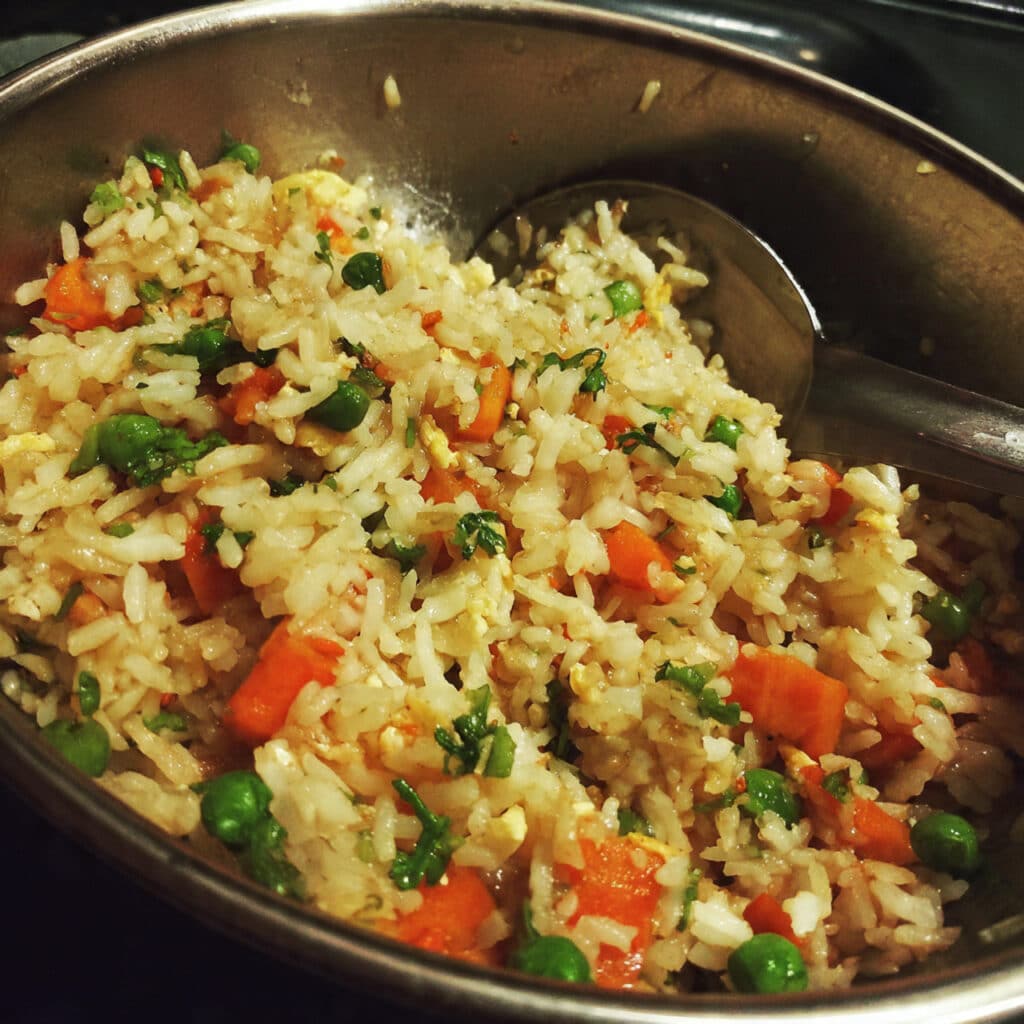
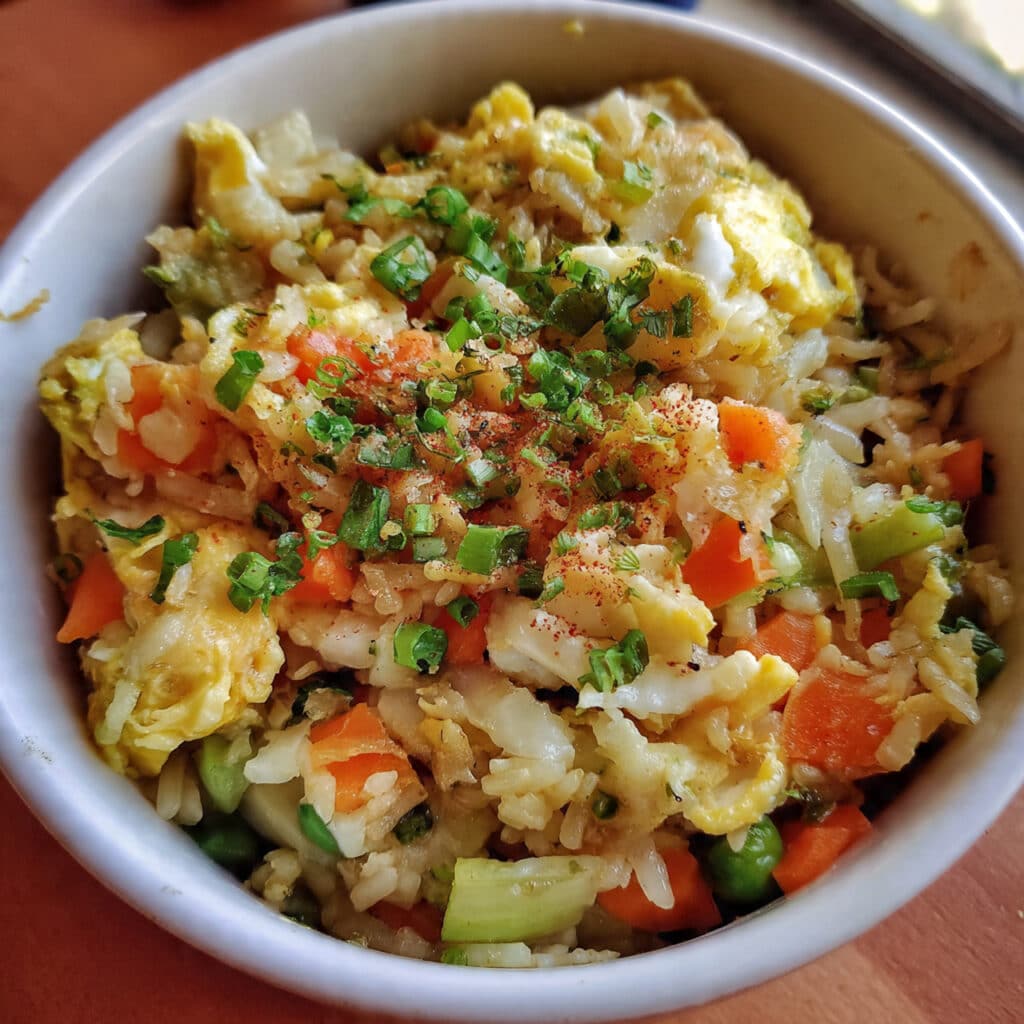
Vegetable fried rice is a quick, satisfying, and makes use of whatever vegetables you have in your crisper drawer. This homemade version is healthier than takeout, comes together in about 30 minutes, and tastes even better than what you would get in a restaurant. With nutty brown rice, crisp-tender vegetables, fluffy scrambled eggs, and the perfect balance of savory tamari and toasted sesame oil.
Love More Dinner Recipes? Try My Oven Baked Coconut Rice or this Sweet Potato Black Bean and Rice next.
Why You’ll Love This Recipe
- Ready in 30 minutes – Perfect for busy weeknights when you need dinner fast
- Healthier than takeout – You control the oil, salt, and ingredients, plus it’s packed with nutritious vegetables
- Budget-friendly – A few cups of rice and veggies stretch into a satisfying meal for the whole family
- Kid-approved comfort food – Even picky eaters love this colorful, flavorful dish
- Incredibly flexible – Use whatever vegetables you have on hand; it’s a fantastic way to clean out the fridge

Vegetable Fried Rice
- Total Time: 30-35 minutes
- Yield: 3 Servings
Description
This healthy vegetable fried rice recipe is loaded with colorful vegetables, fluffy scrambled eggs, and nutty brown rice, all tossed in savory tamari and toasted sesame oil. It’s quick, customizable, and tastes better than takeout. Use whatever vegetables you have on hand for an easy weeknight dinner the whole family will love.
Ingredients
For the Eggs:
- 2 eggs, whisked
- 1 1/2 teaspoons avocado oil or safflower oil
For the Vegetables:
- 1 small white onion, finely chopped (about 1 cup)
- 2 medium carrots, finely chopped (about 1/2 cup)
- 2 cups additional veggies, cut into very small pieces (snow peas, asparagus, broccoli, cabbage, bell pepper, or fresh/frozen peas)
- 1/4 teaspoon salt, plus more to taste
- 1 tablespoon oil
For the Rice:
- 2 cups cooked brown rice (from about 1 cup dry rice)
- 1 tablespoon fresh ginger, grated or finely minced
- 2 large garlic cloves, pressed or minced
- Pinch of red pepper flakes
- 1 tablespoon oil
To Finish:
- 1 cup greens (optional) – spinach, baby kale, or tatsoi
- 3 green onions, chopped
- 1 tablespoon reduced-sodium tamari or soy sauce
- 1 teaspoon toasted sesame oil
- Chili-garlic sauce or sriracha for serving (optional)
Instructions
Have all your ingredients prepped, chopped, and within arm’s reach before you start cooking. Fried rice comes together fast, so you don’t want to be scrambling to chop vegetables while your pan is heating. Keep an empty bowl nearby for transferring cooked eggs and veggies.
Warm your large cast iron or stainless steel skillet over medium-high heat. Add 1 1/2 teaspoons of oil and swirl the pan to coat the bottom evenly.
Pour in your whisked eggs and immediately swirl the pan so they spread across the bottom in a thin layer. Let them cook without stirring for about 30 seconds until they start to set, then flip or stir gently to scramble. Transfer the eggs to your empty bowl and give the pan a quick wipe with a paper towel.
Return the pan to medium-high heat and add 1 tablespoon of oil. Add your chopped onion and carrots first since they take the longest to cook. Stir often and let them cook until the onions turn translucent and the carrots are tender, about 3-5 minutes.
Toss in your remaining 2 cups of vegetables and the 1/4 teaspoon of salt. Stir to combine, then resist the urge to stir too often—let them sit in the hot pan for 30-45 seconds at a time so they can develop some golden, caramelized spots. Cook until they’re tender and starting to turn golden on the edges, about 3-5 minutes. While they cook, break up your scrambled eggs into smaller, bite-sized pieces.
Once your vegetables are beautifully cooked and golden in spots, transfer everything to the bowl with your eggs. This might seem like an extra step, but it prevents overcooking and keeps everything crisp-tender.
Return your pan to the heat and add the remaining 1 tablespoon of oil. Add your grated ginger, minced garlic, and a pinch of red pepper flakes. Stir constantly, which takes about 30 seconds.
Add your cooked brown rice to the pan, breaking up any clumps with your spoon. Mix it with the ginger and garlic, then spread it out in an even layer. Repeat this process; cook, let it sit, stir for about 3-5 minutes total until the rice is heated through and starting to get golden and slightly crispy on the edges.
If you’re using greens like spinach or baby kale, add them now along with the chopped green onions. Stir everything together and let the greens wilt for about a minute.
Add your cooked vegetables and scrambled eggs back to the pan. Stir gently to combine everything evenly, letting it all heat through for about a minute.
Remove the pan from the heat and stir in the tamari (or soy sauce) and toasted sesame oil.
Give it a taste! Add more tamari if you want it saltier or more savory. Sometimes I add an extra pinch of salt or another drizzle of sesame oil.
Divide your gorgeous vegetable fried rice into bowls and serve right away while it’s hot. Put some chili-garlic sauce or sriracha on the side for anyone who wants a little heat.
Notes
- Don’t overcrowd the pan: If you’re doubling this recipe, use two pans or cook in batches—too much food in the pan lowers the temperature and you’ll end up steaming instead of frying
- Uniform veggie sizes matter: Cut all your vegetables roughly the same size so they cook evenly; smaller pieces work better because they cook faster and incorporate more easily
- Let things sit: When you’re cooking the rice, resist constantly stirring—letting it sit in contact with the hot pan for 30-60 seconds creates those crispy, golden bits that make fried rice so special
- Use high-quality sesame oil: Toasted sesame oil has a strong, nutty flavor, so a little goes a long way—don’t skip it, but also don’t overdo it or the dish will taste bitter
- Prep Time: 15 minutes
- Cook Time: 15-20 minutes
- Category: Main Dish
- Method: Stir-fry
- Cuisine: Asian-Inspired
Ingredients You’ll Need
For the Eggs:
- 2 eggs, whisked
- 1 1/2 teaspoons avocado oil or safflower oil
For the Vegetables:
- 1 small white onion, finely chopped (about 1 cup)
- 2 medium carrots, finely chopped (about 1/2 cup)
- 2 cups additional veggies, cut into very small pieces (snow peas, asparagus, broccoli, cabbage, bell pepper, or fresh/frozen peas)
- 1/4 teaspoon salt, plus more to taste
- 1 tablespoon oil
For the Rice:
- 2 cups cooked brown rice (from about 1 cup dry rice)
- 1 tablespoon fresh ginger, grated or finely minced
- 2 large garlic cloves, pressed or minced
- Pinch of red pepper flakes
- 1 tablespoon oil
To Finish:
- 1 cup greens (optional) – spinach, baby kale, or tatsoi
- 3 green onions, chopped
- 1 tablespoon reduced-sodium tamari or soy sauce
- 1 teaspoon toasted sesame oil
- Chili-garlic sauce or sriracha for serving (optional)
Why These Ingredients Work
The beauty of vegetable fried rice is how each ingredient plays its part in creating that restaurant-quality dish right at home.
Brown rice gives you a nutty, wholesome base with more fiber and nutrients than white rice. Using day-old or cooled rice is the secret to getting that perfect texture—it’s drier, so it fries up instead of turning mushy.
The eggs add protein and create those golden, fluffy ribbons that make every bite more satisfying.
Fresh ginger and garlic are the aromatic backbone of this dish. They give it that unmistakable fragrance and warmth that makes your kitchen smell like your favorite takeout spot.
The tamari brings essential savory, umami-rich flavor. The toasted sesame oil adds a nutty finish that takes everything to the next level—just a teaspoon is all you need!
Using a variety of colorful vegetables makes the dish prettier and adds different textures and nutrients. The key is chopping them small so they cook quickly and evenly.
Here’s a little trick: cooking everything in stages means each component gets its moment to shine. A hot pan develops that slight caramelization that makes homemade fried rice taste so much better than soggy takeout.
Essential Tools and Equipment
- Large cast iron or stainless steel skillet (non-stick doesn’t get hot enough for that perfect golden color)
- Wooden spoon or spatula for stirring
- Small bowl for setting aside cooked eggs and vegetables
- Sharp knife and cutting board
- Grater or microplane for fresh ginger
- Whisk for eggs
Step-by-Step Instructions
Step 1: Prep Everything First
Have all your ingredients prepped, chopped, and within arm’s reach before you start cooking. Fried rice comes together fast, so you don’t want to be scrambling to chop vegetables while your pan is heating. Keep an empty bowl nearby for transferring cooked eggs and veggies.
Step 2: Cook the Eggs
Warm your large cast iron or stainless steel skillet over medium-high heat. Add 1 1/2 teaspoons of oil and swirl the pan to coat the bottom evenly.
Step 3: Scramble and Set Aside
Pour in your whisked eggs and immediately swirl the pan so they spread across the bottom in a thin layer. Let them cook without stirring for about 30 seconds until they start to set, then flip or stir gently to scramble. Transfer the eggs to your empty bowl and give the pan a quick wipe with a paper towel.
Step 4: Start with Onions and Carrots
Return the pan to medium-high heat and add 1 tablespoon of oil. Add your chopped onion and carrots first since they take the longest to cook. Stir often and let them cook until the onions turn translucent and the carrots are tender, about 3-5 minutes.
Step 5: Add Your Veggie Mix
Toss in your remaining 2 cups of vegetables and the 1/4 teaspoon of salt. Stir to combine, then resist the urge to stir too often—let them sit in the hot pan for 30-45 seconds at a time so they can develop some golden, caramelized spots. Cook until they’re tender and starting to turn golden on the edges, about 3-5 minutes. While they cook, break up your scrambled eggs into smaller, bite-sized pieces.
Step 6: Transfer Veggies to Bowl
Once your vegetables are beautifully cooked and golden in spots, transfer everything to the bowl with your eggs. This might seem like an extra step, but it prevents overcooking and keeps everything crisp-tender.
Step 7: Build the Flavor Base
Return your pan to the heat and add the remaining 1 tablespoon of oil. Add your grated ginger, minced garlic, and a pinch of red pepper flakes. Stir constantly, which takes about 30 seconds.
Step 8: Fry the Rice
Add your cooked brown rice to the pan, breaking up any clumps with your spoon. Mix it with the ginger and garlic, then spread it out in an even layer. Repeat this process; cook, let it sit, stir for about 3-5 minutes total until the rice is heated through and starting to get golden and slightly crispy on the edges.
Step 9: Add the Greens
If you’re using greens like spinach or baby kale, add them now along with the chopped green onions. Stir everything together and let the greens wilt for about a minute.
Step 10: Bring It All Together
Add your cooked vegetables and scrambled eggs back to the pan. Stir gently to combine everything evenly, letting it all heat through for about a minute.
Step 11: Season to Perfection
Remove the pan from the heat and stir in the tamari (or soy sauce) and toasted sesame oil.
Step 12: Taste and Adjust
Give it a taste! Add more tamari if you want it saltier or more savory. Sometimes I add an extra pinch of salt or another drizzle of sesame oil.
Step 13: Serve Immediately
Divide your gorgeous vegetable fried rice into bowls and serve right away while it’s hot. Put some chili-garlic sauce or sriracha on the side for anyone who wants a little heat.
You Must Know
The single most important thing about making perfect fried rice is using rice that’s not too wet.
Freshly cooked rice that’s still steaming contains too much moisture. It will turn into a sticky, mushy mess when you try to fry it. That’s why day-old refrigerated rice is ideal—it’s had time to dry out.
If you’re using freshly cooked rice, spread it out on a baking sheet and let it cool completely for at least 5-10 minutes. You can even pop it in the fridge for a bit. Before adding it to your pan, break up any clumps with your hands or a fork.
Another critical step is cooking in stages. I know it seems like extra work to cook the eggs, then the vegetables, then the rice separately. But this technique ensures everything gets properly cooked and develops that beautiful caramelization.
If you throw everything in at once, you’ll end up with steamed vegetables and soggy rice instead of that restaurant-quality texture with crispy golden bits.
Personal Secret: My secret weapon is a screaming-hot pan. Cast iron or stainless steel holds heat so much better than non-stick. This means you get those gorgeous golden edges and that slightly smoky flavor that makes restaurant fried rice so addictive.
If at any point you smell burning, just reduce the heat to medium. But don’t be afraid of high heat—it’s your friend here!
Pro Tips & Cooking Hacks
- The rice trick: Short-grain brown rice has the best texture for fried rice because it holds together without getting mushy, but medium-grain brown rice or even jasmine rice works beautifully too
- Don’t overcrowd the pan: If you’re doubling this recipe, use two pans or cook in batches—too much food in the pan lowers the temperature and you’ll end up steaming instead of frying
- Uniform veggie sizes matter: Cut all your vegetables roughly the same size so they cook evenly; smaller pieces work better because they cook faster and incorporate more easily
- Let things sit: When you’re cooking the rice, resist constantly stirring—letting it sit in contact with the hot pan for 30-60 seconds creates those crispy, golden bits that make fried rice so special
- Use high-quality sesame oil: Toasted sesame oil has a strong, nutty flavor, so a little goes a long way—don’t skip it, but also don’t overdo it or the dish will taste bitter
- Add frozen veggies straight from the freezer: No need to thaw frozen peas or mixed vegetables; just add them directly to the pan (they might need an extra minute of cooking time)
Flavor Variations & Suggestions
This recipe is wonderfully flexible and welcomes your creativity!
For a protein boost, stir in some shredded rotisserie chicken, cooked shrimp, or crispy baked tofu during the final step. Leftover meat from last night’s dinner works perfectly.
If you want to make it vegan, simply omit the eggs and the oil used for cooking them. Add a cup of edamame or cubed tofu for protein and substance.
Try a Thai-inspired version by adding a squeeze of lime juice at the end, some chopped fresh cilantro, and a splash of fish sauce in place of some of the tamari.
For a sweeter take, add some diced pineapple chunks and a handful of cashews. It might sound unusual, but the sweet-savory combination is absolutely delicious.
You can also make it more indulgent by stirring in some frozen peas and corn for a classic veggie combination that kids especially love.
Want more heat? Double the red pepper flakes or add some diced fresh jalapeño when you cook the vegetables.
For an umami bomb, stir in a teaspoon of white or yellow miso paste along with the tamari.
And if you have leftover roasted vegetables like Brussels sprouts or sweet potato, chop them up small and toss them in. Fried rice is truly the most forgiving recipe in your weeknight rotation.
Make-Ahead Options
This vegetable fried rice is actually perfect for meal prep, which makes it an even smarter weeknight choice.
You can cook your brown rice up to four days ahead and store it in the refrigerator. In fact, that’s exactly what you want for the best texture. Just let it cool completely before transferring to an airtight container.
You can also prep all your vegetables up to two days in advance. Just chop everything and store in separate containers in the fridge so they stay fresh and crisp.
The finished fried rice keeps beautifully in the refrigerator for 3-4 days in a covered container. Honestly, some people think it tastes even better the next day once all the flavors have had time to meld.
For longer storage, you can freeze individual portions in freezer-safe containers or bags for up to three months. Just let the rice cool completely before freezing, and try to remove as much air as possible from the container to prevent freezer burn.
When you’re ready to eat, defrost overnight in the refrigerator, then reheat in the microwave or quickly in a hot skillet with a tiny splash of water or oil to refresh it.
If you know you’ll want fried rice later in the week, you can even cook a double batch of brown rice at the beginning of the week specifically for this purpose. It’s one of those dishes that makes meal planning so much easier because it comes together in minutes when you’ve got the components ready to go.
What to Serve With Vegetable Fried Rice
This fried rice is hearty enough to stand on its own as a complete meal, especially if you’ve added eggs or tofu for protein.
But if you’re feeding a crowd or want to make it feel more special, it pairs beautifully with some simple additions. A bowl of hot and sour soup or a light miso soup on the side makes it feel like a full Chinese restaurant experience at home.
For something fresh and crunchy, serve it alongside a simple cucumber salad dressed with rice vinegar, a pinch of sugar, and sesame seeds. The cool, tangy crunch is the perfect contrast to the warm, savory rice.
Steamed or sautéed bok choy drizzled with a little oyster sauce (or more tamari to keep it vegetarian) adds extra vegetables and feels elegant. Spring rolls or pot stickers make great appetizers if you’re turning this into a bigger dinner.
And don’t forget the condiments! Set out small bowls of sriracha, chili-garlic sauce, extra tamari, and maybe some pickled ginger or kimchi for everyone to customize their bowl.
Sometimes I even add a fried egg on top for extra richness. That runny yolk mixed into the rice is pure comfort food heaven.
Allergy Information
This vegetable fried rice recipe contains eggs and soy (in the tamari/soy sauce), which are common allergens.
If you need to make it egg-free or vegan, simply omit the eggs and use an extra cup of vegetables or add protein-rich edamame, chickpeas, or tofu instead. The dish will still be delicious and satisfying.
For soy allergies, you can substitute coconut aminos for the tamari. It has a similar savory, slightly sweet flavor and works beautifully in fried rice. Just start with a bit less since coconut aminos can be sweeter than soy sauce, then add more to taste.
The sesame oil does contain sesame, so if that’s an allergen for you, substitute with a neutral oil and add extra garlic or ginger for flavor.
To make this gluten-free, use certified gluten-free tamari instead of regular soy sauce. Tamari is naturally wheat-free, but always check the label to be sure. The rest of the ingredients are naturally gluten-free.
This recipe is also naturally nut-free, dairy-free, and can easily be made completely plant-based, making it quite accommodating for various dietary needs.
Storage & Reheating
Store your leftover vegetable fried rice in an airtight container in the refrigerator for 3-4 days. It reheats beautifully!
For the microwave, add a tablespoon of water to the container, cover loosely, and heat in 1-minute intervals, stirring between each, until heated through. The little bit of water creates steam and helps the rice stay moist instead of drying out.
For stovetop reheating (my preferred method), heat a skillet over medium-high heat with a teaspoon of oil or a splash of water. Add the fried rice and stir frequently, breaking up any clumps, until heated through and slightly crispy again. This takes about 5 minutes and really brings back that fresh-cooked texture.
You can also freeze individual portions in freezer-safe containers for up to three months. Defrost overnight in the refrigerator before reheating using either method above.
Questions I Get Asked A Lot
What’s the difference between tamari and soy sauce?
Tamari is a Japanese sauce that’s similar to soy sauce but typically wheat-free and has a slightly richer, less salty flavor. You can use them interchangeably in this recipe. Just check labels if you need gluten-free, as regular soy sauce contains wheat.
My fried rice turned out mushy, what happened?
This usually means the rice was too wet when you added it to the pan. Make sure you’re using day-old refrigerated rice or rice that’s been spread out to cool completely. Also, avoid adding too many wet vegetables at once, and make sure your pan is hot enough so the rice fries rather than steams.
Can I make this without eggs?
Yes! Simply omit the eggs and the oil used to cook them. Add an extra cup of vegetables, some edamame, or cubed tofu to keep it hearty. Crumbled firm tofu scrambled in a little turmeric actually makes a great egg substitute and adds protein.
Can I add meat to this recipe?
Of course! Cooked chicken, shrimp, pork, or beef are all delicious additions. Add about 1-2 cups of cooked, diced meat when you add the vegetables and eggs back to the pan. Leftover rotisserie chicken or takeout protein works wonderfully here.
💬 Tried this recipe? I’d love to hear how it turned out! Leave a comment and rating below, and share your favorite veggie combinations.