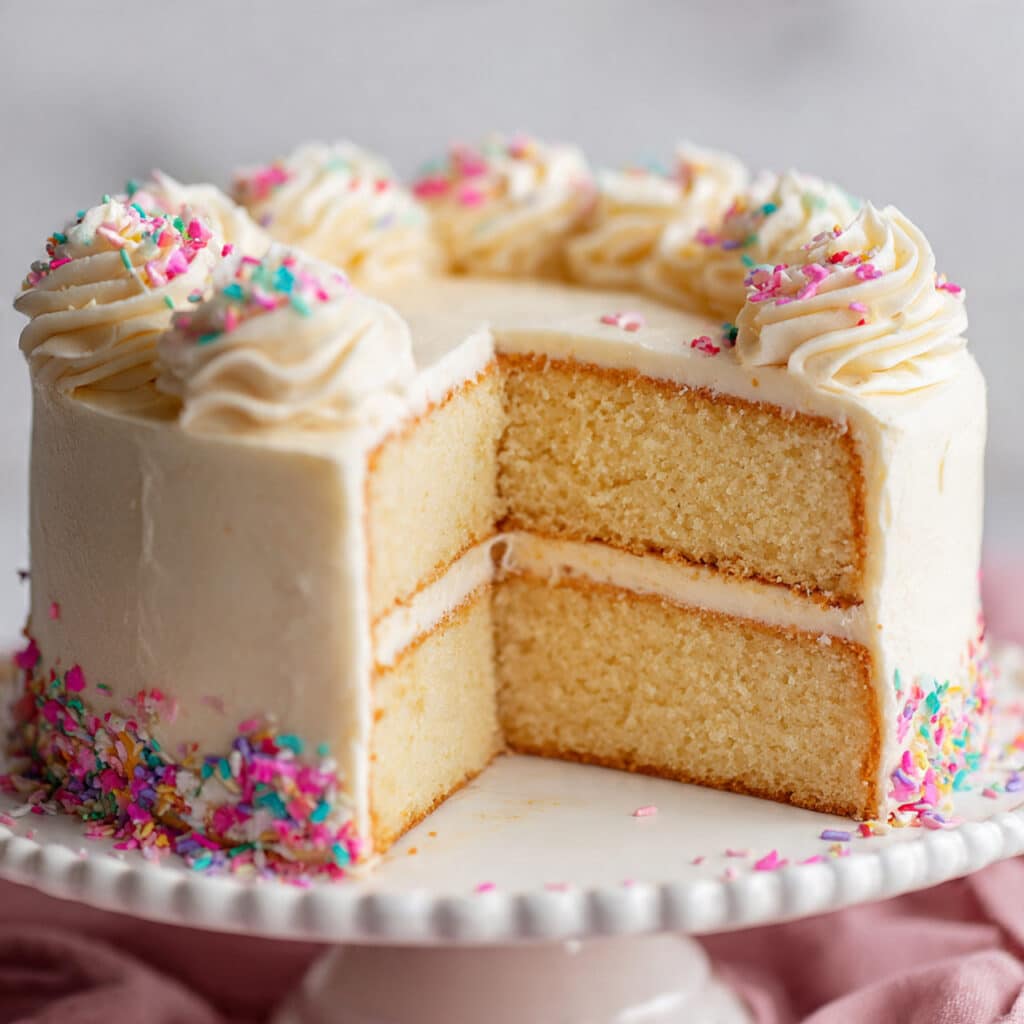
Vanilla cake is soft, buttery, and wrapped in that unmistakable vanilla warmth we all grew up loving. Whether you’re celebrating a birthday, a Sunday dinner, or just because it’s Tuesday and you deserve cake, this recipe delivers a tender, moist crumb and that nostalgic homemade flavor.
Love More Dessert Recipes? Try My Classic Almond Cake or this Black Forest Cake next.
Why You’ll Love This Recipe
- Pure comfort in cake form – That classic vanilla flavor never goes out of style, and it tastes like childhood memories and family gatherings all in one bite.
- Foolproof and forgiving – With simple pantry ingredients and straightforward steps, even beginner bakers can nail this cake on the first try.
- Incredibly versatile – This cake is a beautiful blank canvas for any frosting, filling, or flavor twist you can dream up.
- Light, fluffy, and moist – Thanks to the perfect ratio of butter, milk, and a gentle mixing method, every slice is tender and delicious.

Vanilla Cake
- Total Time: 50 minutes
Description
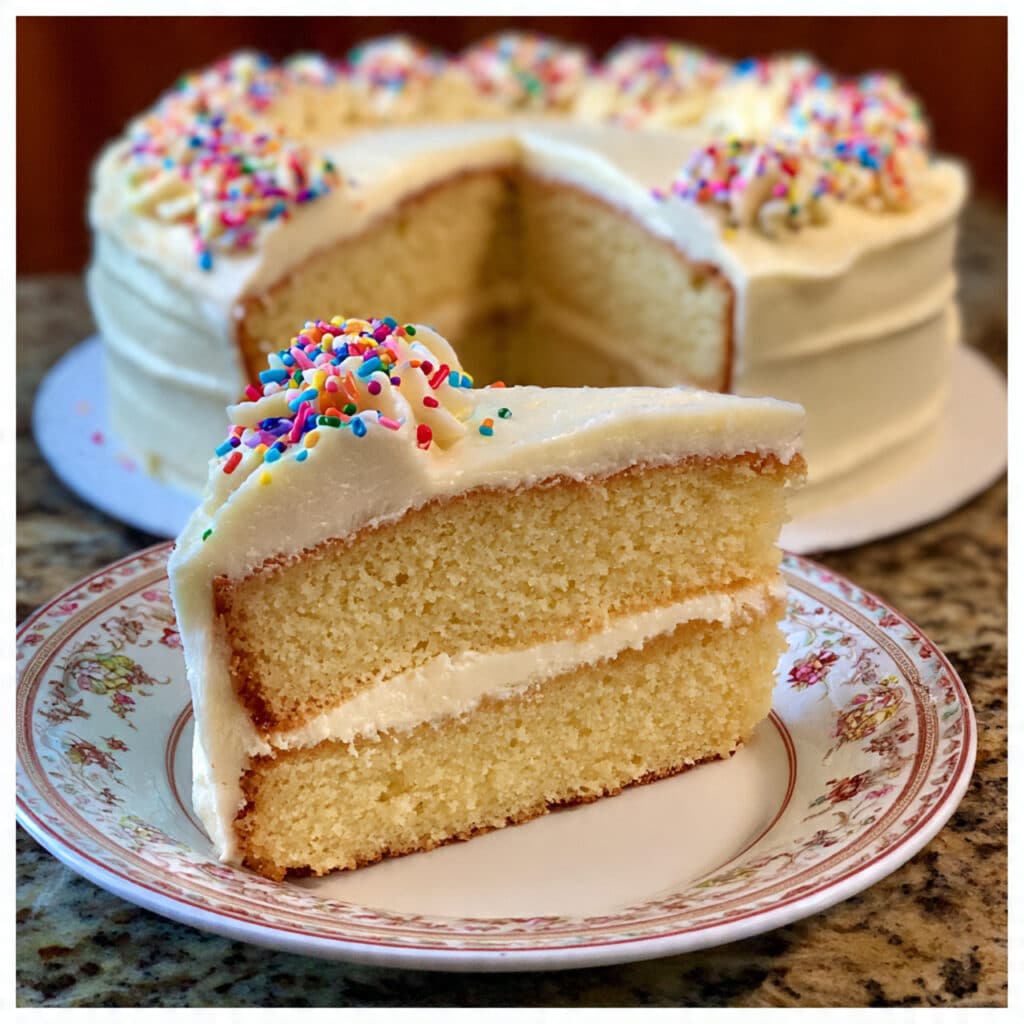
Learn how to make the best classic vanilla cake from scratch! This easy recipe creates a tender, moist two-layer cake with rich buttercream frosting. Perfect for birthdays and celebrations.
Ingredients
Dry Ingredients:
- 2¾ cups (345 g) all-purpose flour – The foundation of your cake’s structure
- 1 tablespoon baking powder – This is what gives your cake that beautiful rise
- ½ teaspoon salt – Just enough to balance the sweetness and enhance all the flavors
Wet Ingredients:
- 1 cup (226 g) unsalted butter, softened – Use real butter for that rich, tender crumb (no shortcuts here!)
- 1¾ cups (350 g) granulated sugar – Sweetness and moisture in one
- 4 large eggs, room temperature – These add structure and help create a light, airy texture
- 1 tablespoon vanilla extract – The star of the show! Use pure vanilla extract, not imitation
- 1¼ cups (300 ml) whole milk, room temperature – Whole milk keeps everything moist and tender
For the Vanilla Buttercream Frosting (optional but oh-so-classic):
- 1 cup (226 g) unsalted butter, softened
- 4 cups (480 g) powdered sugar
- 1–2 teaspoons vanilla extract
- 2–4 tablespoons heavy cream or milk
- Pinch of salt (optional, to balance sweetness)
Instructions
Preheat your oven to 350°F (175°C) and get those pans ready. Grease and flour two 8-inch or 9-inch cake pans generously, or my personal favorite trick, line the bottoms with parchment paper circles.
Trust me, this little step saves so much heartache when it’s time to get those cakes out of the pans. Set them aside while you mix up your batter.
In a medium bowl, whisk together your all-purpose flour, baking powder, and salt until everything’s evenly distributed.
Here’s where the magic starts! In a large bowl, using an electric mixer on medium speed, beat that softened butter and granulated sugar together until the mixture is light, fluffy, and almost cloud-like. This should take about 3 to 4 minutes.
Don’t rush it! You’re incorporating air into the batter, which helps create that tender crumb we’re after. The mixture should look pale and feel soft.
Add your eggs one at a time, beating well after each addition. This helps them incorporate smoothly without scrambling or deflating your fluffy butter-sugar mixture.
After all four eggs are in and the batter looks smooth and creamy, mix in that tablespoon of vanilla extract. Take a moment to breathe in that gorgeous vanilla scent.
Now we’re bringing it all together. Turn your mixer down to low speed. Add your dry ingredients in three parts, alternating with the milk, and always start and end with the flour mixture. So it goes: flour, milk, flour, milk, flour.
Mix just until everything is combined and you don’t see any more streaks of flour. Here’s the key: do not overmix! Overmixing develops too much gluten and makes your cake dense instead of tender. A few gentle stirs with a spatula at the end will make sure everything’s incorporated.
Divide your batter evenly between your two prepared pans. I like to use a kitchen scale to make sure they’re exactly even, but eyeballing it works too. Smooth the tops gently with a spatula.
Pop them in your preheated oven and bake for 25 to 30 minutes. You’ll know they’re done when a toothpick inserted in the center comes out clean or with just a few moist crumbs. The cakes should also spring back lightly when you touch the top.
Let them cool in the pans for about 10 minutes, then carefully invert them onto a wire rack to cool completely before frosting.
Notes
- Freeze your layers before frosting – Pop those cooled cake layers in the freezer for 15 to 20 minutes. They’ll be firmer and easier to frost without crumbs getting everywhere.
- Invest in pure vanilla extract – Imitation vanilla has a chemical aftertaste. Pure extract costs more, but the flavor difference is absolutely worth it.
- Don’t skip the parchment paper – Those little circles at the bottom of your pans are insurance against stuck cakes. Just trace your pan on parchment, cut it out, and press it into the greased pan.
- Avoid these common mistakes – Opening the oven too early, using cold ingredients, and overmixing the batter are the top three cake killers. Avoid them and you’re golden!
- Prep Time: 20 minutes
- Cook Time: 30 minutes
- Category: Dessert
- Method: Baking
- Cuisine: American
Ingredients You’ll Need
Dry Ingredients:
- 2¾ cups (345 g) all-purpose flour – The foundation of your cake’s structure
- 1 tablespoon baking powder – This is what gives your cake that beautiful rise
- ½ teaspoon salt – Just enough to balance the sweetness and enhance all the flavors
Wet Ingredients:
- 1 cup (226 g) unsalted butter, softened – Use real butter for that rich, tender crumb (no shortcuts here!)
- 1¾ cups (350 g) granulated sugar – Sweetness and moisture in one
- 4 large eggs, room temperature – These add structure and help create a light, airy texture
- 1 tablespoon vanilla extract – The star of the show! Use pure vanilla extract, not imitation
- 1¼ cups (300 ml) whole milk, room temperature – Whole milk keeps everything moist and tender
For the Vanilla Buttercream Frosting (optional but oh-so-classic):
- 1 cup (226 g) unsalted butter, softened
- 4 cups (480 g) powdered sugar
- 1–2 teaspoons vanilla extract
- 2–4 tablespoons heavy cream or milk
- Pinch of salt (optional, to balance sweetness)
Why These Ingredients Work
Let me tell you why each ingredient in this cake earns its place.
The all-purpose flour gives you just the right amount of structure without making things tough or heavy. Baking powder is your leavening hero, creating those tender air pockets that make each bite melt in your mouth.
Real butter brings a richness that margarine just can’t match, and when you cream it with sugar, you’re building in air and moisture from the very start. Room-temperature eggs blend smoothly into your batter without deflating all that beautiful volume you just whipped up.
The vanilla extract is non-negotiable for true vanilla cake, so splurge on the good stuff. And whole milk? That’s what keeps your cake soft and prevents it from drying out, even a day or two later.
Essential Tools and Equipment
- Two 8-inch or 9-inch round cake pans – For those classic layers
- Electric mixer (stand or handheld) – Makes creaming butter and sugar so much easier
- Mixing bowls (medium and large) – One for dry, one for wet
- Whisk – For combining your dry ingredients
- Rubber spatula – Perfect for scraping down the bowl and folding gently
- Parchment paper circles – Optional, but they make removing cakes from pans absolutely foolproof
- Wire cooling rack – So your cakes cool evenly without getting soggy bottoms
- Toothpick or cake tester – For checking doneness
- Offset spatula – Makes frosting smooth and professional-looking
Step-by-Step Instructions
Step 1: Prep Your Oven and Pans
Preheat your oven to 350°F (175°C) and get those pans ready. Grease and flour two 8-inch or 9-inch cake pans generously, or my personal favorite trick, line the bottoms with parchment paper circles.
Trust me, this little step saves so much heartache when it’s time to get those cakes out of the pans. Set them aside while you mix up your batter.
Step 2: Mix the Dry Ingredients
In a medium bowl, whisk together your all-purpose flour, baking powder, and salt until everything’s evenly distributed.
Step 3: Cream the Butter and Sugar
Here’s where the magic starts! In a large bowl, using an electric mixer on medium speed, beat that softened butter and granulated sugar together until the mixture is light, fluffy, and almost cloud-like. This should take about 3 to 4 minutes.
Don’t rush it! You’re incorporating air into the batter, which helps create that tender crumb we’re after. The mixture should look pale and feel soft.
Step 4: Add the Eggs and Vanilla
Add your eggs one at a time, beating well after each addition. This helps them incorporate smoothly without scrambling or deflating your fluffy butter-sugar mixture.
After all four eggs are in and the batter looks smooth and creamy, mix in that tablespoon of vanilla extract. Take a moment to breathe in that gorgeous vanilla scent.
Step 5: Combine Wet and Dry Ingredients
Now we’re bringing it all together. Turn your mixer down to low speed. Add your dry ingredients in three parts, alternating with the milk, and always start and end with the flour mixture. So it goes: flour, milk, flour, milk, flour.
Mix just until everything is combined and you don’t see any more streaks of flour. Here’s the key: do not overmix! Overmixing develops too much gluten and makes your cake dense instead of tender. A few gentle stirs with a spatula at the end will make sure everything’s incorporated.
Step 6: Bake the Cakes
Divide your batter evenly between your two prepared pans. I like to use a kitchen scale to make sure they’re exactly even, but eyeballing it works too. Smooth the tops gently with a spatula.
Pop them in your preheated oven and bake for 25 to 30 minutes. You’ll know they’re done when a toothpick inserted in the center comes out clean or with just a few moist crumbs. The cakes should also spring back lightly when you touch the top.
Let them cool in the pans for about 10 minutes, then carefully invert them onto a wire rack to cool completely before frosting.
You Must Know
The single most important thing about this recipe is making sure your ingredients are at room temperature before you start mixing. Cold eggs and milk won’t blend smoothly into your batter, and cold butter won’t cream properly with the sugar.
I usually set everything out on the counter about an hour before I start baking. If you’re in a hurry, you can place the eggs in warm water for about 10 minutes, and microwave the milk for just 15 to 20 seconds until it loses its chill.
Another critical point: resist the urge to open that oven door during the first 20 minutes of baking. Every time you peek, you let out heat, and your cakes might sink in the middle.
Personal Secret: Here’s my grandmother’s trick that I swear by—after you’ve mixed your batter and divided it into the pans, gently tap each pan on the counter a few times. This releases any large air bubbles that could create holes or uneven texture in your finished cake.
Pro Tips & Cooking Hacks
- Use cake strips for perfectly flat layers – Wet fabric cake strips wrapped around your pans help cakes bake more evenly without doming in the center.
- Freeze your layers before frosting – Pop those cooled cake layers in the freezer for 15 to 20 minutes. They’ll be firmer and easier to frost without crumbs getting everywhere.
- Invest in pure vanilla extract – Imitation vanilla has a chemical aftertaste. Pure extract costs more, but the flavor difference is absolutely worth it.
- Don’t skip the parchment paper – Those little circles at the bottom of your pans are insurance against stuck cakes. Just trace your pan on parchment, cut it out, and press it into the greased pan.
- Avoid these common mistakes – Opening the oven too early, using cold ingredients, and overmixing the batter are the top three cake killers. Avoid them and you’re golden!
- Quick buttercream fix – If your frosting gets too soft, pop it in the fridge for 10 minutes. Too stiff? Add a teaspoon of milk at a time until it’s spreadable.
Flavor Variations & Suggestions
This vanilla cake is wonderfully versatile, and once you’ve mastered the basic recipe, the world is your oyster!
For a citrus twist, add the zest of one lemon or orange right into your batter along with the vanilla—it brightens everything up beautifully. If you’re a chocolate lover, fold in a cup of mini chocolate chips or swirl in some chocolate ganache between the layers.
Almond extract is another lovely addition; swap out half the vanilla for almond extract and you’ve got an almond-vanilla dream cake. Want to make it extra special for a celebration? Add a quarter cup of rainbow sprinkles to the batter for a fun funfetti-style cake that kids and adults both adore.
You can also brush the cooled layers with a simple syrup flavored with vanilla, coffee, or even a splash of rum for an incredibly moist and flavorful result. And don’t feel locked into buttercream—this cake is just as delicious with cream cheese frosting, Swiss meringue buttercream, chocolate ganache, or even fresh whipped cream and berries for a lighter finish.
Make-Ahead Options
This cake is actually wonderful for make-ahead baking, which is perfect when you’re planning for a birthday party or holiday gathering.
You can bake the cake layers up to two days in advance. Just let them cool completely, wrap them tightly in plastic wrap, and store them at room temperature. They’ll stay moist and fresh, and some bakers even say the flavor develops and improves overnight.
If you want to get even further ahead, these layers freeze beautifully for up to three months. Wrap each cooled layer individually in plastic wrap, then again in aluminum foil, and pop them in the freezer.
When you’re ready to use them, let them thaw in the refrigerator overnight, still wrapped, so they don’t dry out. The buttercream frosting can also be made a week ahead and stored in the refrigerator in an airtight container. Just bring it back to room temperature and give it a good beating with your mixer before using to restore that fluffy texture.
What to Serve With Classic Vanilla Cake
This vanilla cake is a natural partner for so many delicious things. Serve it with a scoop of vanilla bean ice cream or fresh strawberry ice cream for a classic pairing that never disappoints.
A bowl of fresh berries—strawberries, raspberries, or blueberries—on the side adds a bright, fruity contrast to the rich cake. For a special occasion, pour some raspberry or chocolate sauce over each slice for an elegant touch.
If you’re serving this at a party, consider putting out a hot beverage bar with coffee, tea, or hot chocolate so guests can enjoy their cake with a warm drink. Vanilla cake also pairs beautifully with champagne or sparkling cider for celebrations, or a cold glass of milk for a nostalgic, comforting treat any day of the week.
And if you’re looking for a fun twist, turn individual slices into a deconstructed dessert by layering cake pieces with whipped cream and fresh fruit in parfait glasses.
Allergy Information
This classic vanilla cake contains several common allergens you should be aware of. It contains gluten from the all-purpose flour, dairy from the butter and milk, and eggs. If you’re baking for someone with dietary restrictions, here are some substitutions that can help.
For a gluten-free version, replace the all-purpose flour with a good-quality gluten-free flour blend that contains xanthan gum. Bob’s Red Mill 1-to-1 Baking Flour works beautifully.
For dairy-free needs, you can substitute the butter with an equal amount of dairy-free butter or coconut oil, and use your favorite non-dairy milk like almond, oat, or soy milk in place of the whole milk. Just make sure whatever you choose is unsweetened and unflavored.
Egg allergies are trickier in cake baking since eggs provide so much structure, but you can try using a commercial egg replacer or flax eggs—one tablespoon of ground flaxseed mixed with three tablespoons of water per egg. The texture won’t be exactly the same as the traditional version, but it can still be delicious.
Always make sure to inform guests about any substitutions you’ve made so they can make informed choices.
Storage & Reheating
Once your cake is frosted and assembled, store it in an airtight cake container or cover it loosely with plastic wrap. It will keep beautifully at room temperature for up to three days.
If your kitchen is very warm or your frosting contains cream cheese or fresh cream, you’ll want to refrigerate it instead. The cake will stay fresh in the refrigerator for up to five days, though it’s best if you let it come to room temperature for about 30 minutes before serving so the texture softens up again.
If you have leftover slices, wrap them individually in plastic wrap and freeze for up to three months. They thaw quickly at room temperature, and you can even enjoy a slice partially frozen for a cool, creamy treat on a hot day.
Unfrosted cake layers can be wrapped tightly and frozen for up to three months as well. There’s no need to reheat this cake since it’s meant to be enjoyed at room temperature, but if you prefer it slightly warm, you can pop a slice in the microwave for 10 to 15 seconds—just don’t overdo it or the frosting will melt.
Questions I Get Asked A Lot
Can I use cake flour instead of all-purpose flour?
Absolutely! Cake flour will actually give you an even more tender, delicate crumb. If you want to use it, replace the all-purpose flour with an equal amount of cake flour by weight. Just keep in mind that cake flour is more delicate, so be extra gentle when mixing.
My cake layers came out domed in the middle. How do I fix this?
Don’t worry—this happens to everyone! You can simply level them off with a long serrated knife before frosting. Hold the knife parallel to your work surface and carefully slice off the domed top. Save those scraps for snacking or crumble them over ice cream! To prevent doming next time, try using baking strips around your pans or lowering your oven temperature by 25 degrees and baking a bit longer.
Can I make this as a sheet cake instead of layers?
Yes! Pour all the batter into a greased and floured 9×13-inch pan and bake for 35 to 40 minutes. It’s perfect for potlucks and casual gatherings, and you can frost it right in the pan for easy serving.
Why did my cake turn out dense instead of fluffy?
The most common culprits are overmixing the batter once you add the flour, using cold ingredients, or not creaming the butter and sugar long enough. Make sure you’re following the instructions carefully, especially that 3 to 4-minute creaming time—it really does make a difference!
Can I cut this recipe in half to make just one layer?
You sure can! Cut all the ingredients in half and bake in a single 8-inch or 9-inch pan. The baking time will be roughly the same, around 25 to 30 minutes. This is perfect when you want cake but don’t need quite as much.
💬 Tried this recipe? Leave a comment and rating below! I love hearing about your baking adventures, and your feedback helps other home bakers know what to expect.