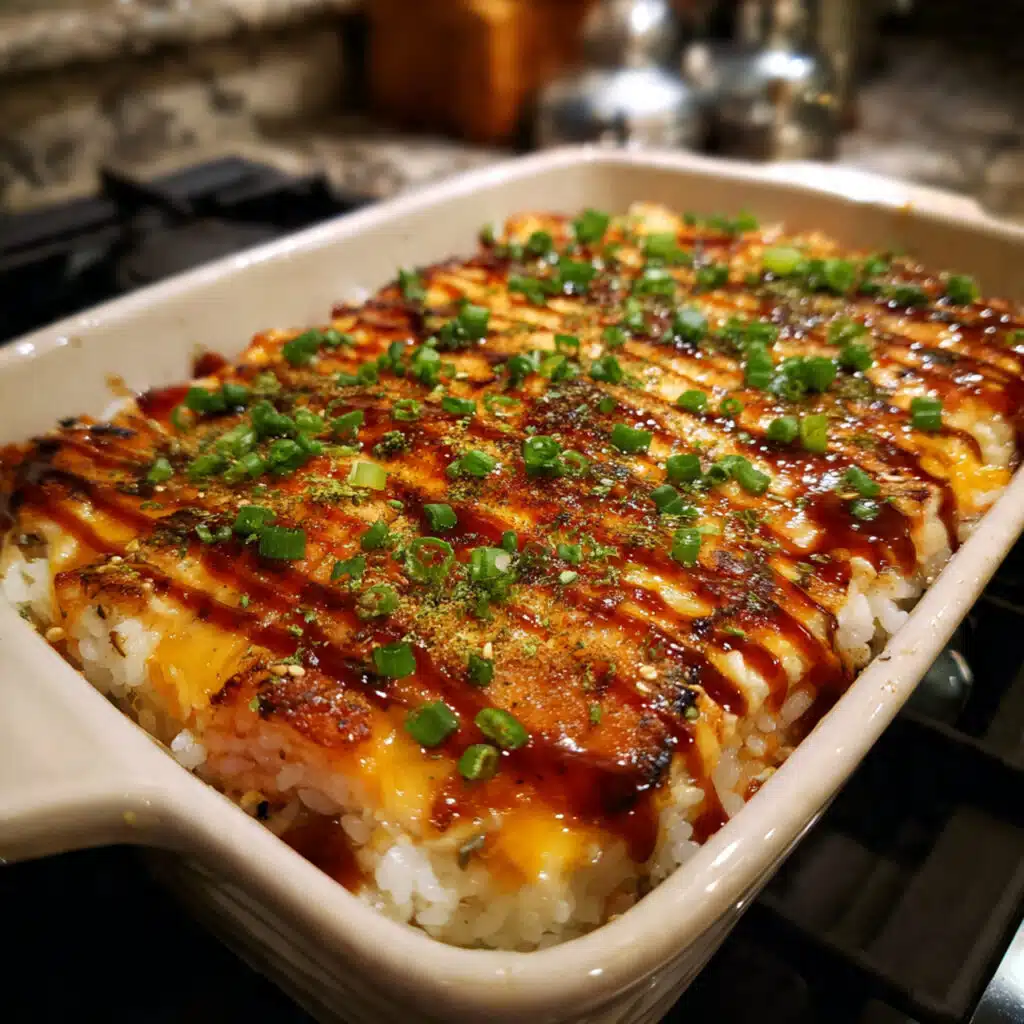
Spicy Salmon Sushi Bake is creamy, comforting, and packed with all those sushi flavors you crave without the rolling! This warm, bubbling casserole layers seasoned sushi rice with flaky baked salmon mixed into a luscious blend of Japanese mayo, cream cheese, and just the right kick of sriracha. Perfect for weeknight dinners or potlucks, this recipe turns sushi into a shareable, family-style feast that’s as easy as it is irresistible.
Why You’ll Love This Recipe
- All the sushi vibes, zero rolling required – You get that perfect balance of creamy salmon, seasoned rice, and savory-sweet toppings without any fussy technique.
- Warm and comforting – There’s something magical about enjoying sushi flavors in a hot, bubbling casserole straight from the oven.
- Crowd-pleaser perfection – Whether it’s family dinner or game day, everyone loves scooping their own portions and customizing their bites.
- Simple ingredients, big flavor – With pantry staples and a few Japanese favorites, you’ll have an impressive dish on the table in under an hour.
- Endlessly customizable – Adjust the spice level, swap in your favorite seafood, or pile on extra toppings to make it your own.

Spicy Salmon Sushi Bake
- Total Time: 50 minutes
- Yield: 1 casserole
Description
Spicy Salmon Sushi Bake is a deconstructed sushi roll baked into a comforting casserole. Layers of seasoned sushi rice and creamy, spicy salmon topped with eel sauce, furikake, and green onions create a dish that’s perfect for potlucks, weeknight dinners, or any time you’re craving sushi without the rolling. Serve with seaweed sheets for scooping and customize with your favorite toppings!
Ingredients
Rice Layer:
- 4 cups cooked short-grain white rice (sushi rice) – The sticky base that holds everything together
- Optional: 2–3 tablespoons rice vinegar + ¼ teaspoon sugar + pinch of salt – This gives your rice that authentic sushi flavor
Salmon Layer:
- 1 lb (about 450 g) salmon fillets, boneless and skinless – Fresh or frozen works beautifully
- Salt, black pepper & garlic powder – Simple seasonings that let the salmon shine
- ½ cup Japanese mayonnaise (Kewpie or similar) – Creamier and slightly sweeter than regular mayo
- ½ cup cream cheese, softened – Adds richness and helps bind everything together
- 2 tablespoons sriracha – Adjust to your spice preference, or skip it for a milder version
Sauce & Toppings:
- ½ cup eel sauce – That sweet, savory glaze you love on sushi rolls (find it in the Asian aisle)
- ¼ cup furikake – Japanese rice seasoning with sesame seeds, seaweed, and umami goodness
- 2 green onions, sliced – Fresh, bright, and pretty
- Optional: Extra sriracha and mayo for drizzling
- Optional for serving: Roasted seaweed sheets (nori), sliced cucumber, sliced avocado
Instructions
Preheat your oven to 425°F (220°C). Place your salmon fillets on a baking sheet and season them generously with salt, black pepper, and garlic powder—don’t be shy here, this is where your salmon gets its flavor foundation. Slide the pan into the oven and bake for about 20 minutes, until the salmon is cooked through and flakes easily with a fork.
Once it’s done, let it cool for just a few minutes so you can handle it comfortably, then use a fork to gently flake it into bite-sized pieces. It’s okay if some chunks are bigger than others—that texture is part of the charm.
While your salmon is baking, get your rice ready. If you’re using leftover rice, gently warm it so it spreads more easily. For that authentic sushi taste, mix the warm rice with rice vinegar, sugar, and a pinch of salt, stirring gently until it’s well combined. This step is totally optional, but it really does make a difference.
Spread the rice evenly across the bottom of your 9×13-inch baking dish, pressing it down just a bit so it forms a nice, even layer. This is your foundation, so take a moment to make sure it reaches all the corners.
In a medium bowl, combine your flaked salmon with the Japanese mayo, softened cream cheese, and sriracha. Stir everything together gently—you want it well mixed, but it’s perfectly fine to leave some texture and chunks of salmon.
This isn’t baby food; those little pieces of salmon make every bite more interesting. Taste it at this point and adjust the sriracha if you want more heat or skip it entirely if you’re keeping things mild for the family.
Now comes the fun part. Spread your creamy salmon mixture evenly over the rice layer, using the back of a spoon or spatula to smooth it out. Sprinkle the furikake generously over the top—this adds so much flavor and a delightful crunch. Then grab your eel sauce, mayo, and sriracha (if using) and drizzle them in ribbons or zigzags across the top. Don’t worry about making it perfect; those messy drizzles will look gorgeous when everything’s baked and bubbling.
Pop your assembled dish into the oven, now heated to 450°F (230°C), and bake for 10 minutes. This gives all those flavors time to meld together and warms everything through. After 10 minutes, switch your oven to broil and let the top go for about 3 minutes, keeping a close eye on it.
Pull your beautiful creation from the oven and immediately sprinkle the sliced green onions over the top while it’s still hot. The colors, the aroma, the way it’s all bubbling at the edges.
Serve it right in the baking dish, family-style, with a stack of roasted seaweed sheets on the side so everyone can scoop up portions and make their own little wraps.
Notes
- Don’t overbake the salmon in step one – Overcooked salmon gets dry and chalky. Stop right when it flakes easily; it’ll cook a bit more in the final bake anyway.
- Line your baking sheet with foil – Salmon can stick and make cleanup a nightmare. A quick sheet of foil saves you scrubbing later.
- Make your own spicy mayo – Just mix regular mayo with sriracha to taste. It’s cheaper than buying it pre-made and you control the heat level.
- Avoid common mistake: cold ingredients – Cold cream cheese won’t mix smoothly, and cold rice won’t spread evenly. Everything should be at least room temperature before assembly.
- Prep Time: 15 minutes
- Cook Time: 35 minutes
- Category: Main Dish
- Method: Baking
- Cuisine: Japanese-American
Ingredients You’ll Need
Rice Layer:
- 4 cups cooked short-grain white rice (sushi rice) – The sticky base that holds everything together
- Optional: 2–3 tablespoons rice vinegar + ¼ teaspoon sugar + pinch of salt – This gives your rice that authentic sushi flavor
Salmon Layer:
- 1 lb (about 450 g) salmon fillets, boneless and skinless – Fresh or frozen works beautifully
- Salt, black pepper & garlic powder – Simple seasonings that let the salmon shine
- ½ cup Japanese mayonnaise (Kewpie or similar) – Creamier and slightly sweeter than regular mayo
- ½ cup cream cheese, softened – Adds richness and helps bind everything together
- 2 tablespoons sriracha – Adjust to your spice preference, or skip it for a milder version
Sauce & Toppings:
- ½ cup eel sauce – That sweet, savory glaze you love on sushi rolls (find it in the Asian aisle)
- ¼ cup furikake – Japanese rice seasoning with sesame seeds, seaweed, and umami goodness
- 2 green onions, sliced – Fresh, bright, and pretty
- Optional: Extra sriracha and mayo for drizzling
- Optional for serving: Roasted seaweed sheets (nori), sliced cucumber, sliced avocado
Why These Ingredients Work
The magic of this dish starts with short-grain sushi rice—it’s stickier and more tender than regular rice, creating the perfect base that holds together when you scoop. Seasoning it with rice vinegar, sugar, and salt isn’t required, but it adds that familiar tangy-sweet flavor you’d find in any sushi roll.
The salmon gets simply seasoned and baked until flaky, then transformed into something luxurious when mixed with Japanese mayo and cream cheese. Kewpie mayo is creamier and has a subtle sweetness that regular mayo just can’t match, and the cream cheese adds body and richness without feeling heavy. A touch of sriracha brings warmth and a gentle kick that makes each bite exciting.
The toppings are where this dish really comes alive. Eel sauce drizzled over the top adds that glossy, sweet-savory finish, while furikake sprinkled on brings crunch, nuttiness, and a hit of umami. Green onions add freshness and color, making the whole casserole look as good as it tastes. And those seaweed sheets? They’re not just for show—they turn every spoonful into a little hand roll you can customize as you go.
Essential Tools and Equipment
- 9×13-inch baking dish – The perfect size for layering and serving family-style
- Baking sheet – For roasting your salmon to flaky perfection
- Medium mixing bowl – To combine the creamy salmon mixture
- Fork – For flaking the cooked salmon
- Spatula or spoon – For spreading layers evenly
- Aluminum foil (optional) – If you want to cover the dish while it bakes
Step-by-Step Instructions
Step 1: Bake the Salmon
Preheat your oven to 425°F (220°C). Place your salmon fillets on a baking sheet and season them generously with salt, black pepper, and garlic powder—don’t be shy here, this is where your salmon gets its flavor foundation. Slide the pan into the oven and bake for about 20 minutes, until the salmon is cooked through and flakes easily with a fork.
Once it’s done, let it cool for just a few minutes so you can handle it comfortably, then use a fork to gently flake it into bite-sized pieces. It’s okay if some chunks are bigger than others—that texture is part of the charm.
Step 2: Prepare the Rice
While your salmon is baking, get your rice ready. If you’re using leftover rice, gently warm it so it spreads more easily. For that authentic sushi taste, mix the warm rice with rice vinegar, sugar, and a pinch of salt, stirring gently until it’s well combined. This step is totally optional, but it really does make a difference.
Spread the rice evenly across the bottom of your 9×13-inch baking dish, pressing it down just a bit so it forms a nice, even layer. This is your foundation, so take a moment to make sure it reaches all the corners.
Step 3: Mix the Salmon Topping
In a medium bowl, combine your flaked salmon with the Japanese mayo, softened cream cheese, and sriracha. Stir everything together gently—you want it well mixed, but it’s perfectly fine to leave some texture and chunks of salmon.
This isn’t baby food; those little pieces of salmon make every bite more interesting. Taste it at this point and adjust the sriracha if you want more heat or skip it entirely if you’re keeping things mild for the family.
Step 4: Layer & Sauce
Now comes the fun part. Spread your creamy salmon mixture evenly over the rice layer, using the back of a spoon or spatula to smooth it out. Sprinkle the furikake generously over the top—this adds so much flavor and a delightful crunch. Then grab your eel sauce, mayo, and sriracha (if using) and drizzle them in ribbons or zigzags across the top. Don’t worry about making it perfect; those messy drizzles will look gorgeous when everything’s baked and bubbling.
Step 5: Bake & Broil
Pop your assembled dish into the oven, now heated to 450°F (230°C), and bake for 10 minutes. This gives all those flavors time to meld together and warms everything through. After 10 minutes, switch your oven to broil and let the top go for about 3 minutes, keeping a close eye on it.
Step 6: Garnish & Serve
Pull your beautiful creation from the oven and immediately sprinkle the sliced green onions over the top while it’s still hot. The colors, the aroma, the way it’s all bubbling at the edges.
Serve it right in the baking dish, family-style, with a stack of roasted seaweed sheets on the side so everyone can scoop up portions and make their own little wraps.

You Must Know
The single most important thing about this recipe is making sure your cream cheese is fully softened before you mix it with the salmon. If it’s cold and hard, you’ll end up with lumps that won’t blend smoothly, and nobody wants little cream cheese chunks in their sushi bake. Take it out of the fridge at least 30 minutes before you start cooking, or give it a quick 10-second zap in the microwave if you’re in a hurry.
Don’t skip the broiling step at the end, even if you’re tempted. Those few minutes under the broiler transform the top from just warm to beautifully toasted with crispy edges that contrast perfectly with the creamy layers underneath. Just stay close and peek through the oven door—broilers can go from golden to burnt in seconds.
Personal Secret: I always make extra of the creamy salmon mixture and keep it on the side. Some people love piling on extra portions, and there’s nothing sadder than running out of that luscious, spicy topping.
Pro Tips & Cooking Hacks
- Use day-old rice if you have it – Freshly cooked rice can be too moist and mushy. Day-old refrigerated rice has dried out just enough to create better texture and hold up under all those creamy toppings.
- Don’t overbake the salmon in step one – Overcooked salmon gets dry and chalky. Stop right when it flakes easily; it’ll cook a bit more in the final bake anyway.
- Line your baking sheet with foil – Salmon can stick and make cleanup a nightmare. A quick sheet of foil saves you scrubbing later.
- Make your own spicy mayo – Just mix regular mayo with sriracha to taste. It’s cheaper than buying it pre-made and you control the heat level.
- Avoid common mistake: cold ingredients – Cold cream cheese won’t mix smoothly, and cold rice won’t spread evenly. Everything should be at least room temperature before assembly.
- Toast your seaweed sheets lightly – A quick pass over a gas flame or a few seconds in a dry pan makes them crispier and more flavorful.
Flavor Variations & Suggestions
If salmon isn’t your thing or you want to switch things up, this recipe is incredibly forgiving. Swap in imitation crab for a sweeter, milder flavor that kids often prefer, or use cooked shrimp for a different seafood twist. You can even combine salmon and crab together for the best of both worlds.
For those who love heat, double the sriracha or add a drizzle of chili crisp oil on top before serving. If you’re serving little ones or anyone sensitive to spice, leave the sriracha out entirely and let people add hot sauce to their own portions at the table. You can also fold in some finely diced cucumber or avocado right into the salmon mixture for extra freshness and texture.
Want to make it feel more like a deconstructed poke bowl? Top the finished bake with diced mango, edamame, or pickled ginger. For a richer version, add a layer of thinly sliced avocado between the rice and salmon before baking. And if you’re feeling adventurous, try mixing in a tablespoon of miso paste with the cream cheese for an extra layer of umami depth.
Make-Ahead Options
This dish is a meal-prepper’s dream. You can cook and flake your salmon up to two days ahead, storing it covered in the fridge until you’re ready to mix it with the mayo and cream cheese. The rice can also be made ahead and refrigerated; just let it come to room temperature or warm it slightly before assembling so it spreads easily.
If you want to prep the entire casserole in advance, assemble everything except the final toppings and drizzles, cover tightly with plastic wrap, and refrigerate for up to 24 hours. When you’re ready to bake, let it sit at room temperature for about 20 minutes, then add your drizzles and bake as directed, adding an extra 5 minutes to the baking time since it’s starting cold.
Freezing works too, though the texture of the rice may change slightly. Assemble the dish completely, wrap it tightly in plastic wrap and then aluminum foil, and freeze for up to one month. Thaw overnight in the refrigerator before baking, and expect it to need a few extra minutes in the oven.
What to Serve With Spicy Salmon Sushi Bake
This dish is filling and rich, so it pairs beautifully with light, crisp sides. A simple cucumber salad dressed with rice vinegar, sesame oil, and a touch of sugar cuts through the creaminess perfectly. Miso soup is always a classic companion to anything sushi-inspired, and it takes just minutes to whisk together. Edamame sprinkled with sea salt makes an easy, protein-packed side that everyone can nibble on while the casserole bakes.
For drinks, cold Japanese beer, sake, or even a crisp white wine like Sauvignon Blanc complements the flavors wonderfully. If you’re keeping things non-alcoholic, try cold green tea or sparkling water with a squeeze of yuzu or lime. And if you want to round out the meal with dessert, keep it simple and refreshing—mochi ice cream, sliced fresh fruit, or matcha cookies are all perfect endings that won’t weigh you down.
Allergy Information
This recipe contains several common allergens, but with a few swaps, you can make it work for different dietary needs. The biggest allergens here are fish (salmon), dairy (cream cheese), eggs (in the mayo), soy (in the eel sauce and furikake), and wheat (if your eel sauce contains wheat).
For a dairy-free version, replace the cream cheese with vegan cream cheese or mashed avocado mixed with a bit of coconut cream. Use vegan mayo instead of regular or Kewpie mayo. If gluten is a concern, check your eel sauce label carefully—many brands contain wheat, but gluten-free versions are available. Tamari-based eel sauce or homemade versions using gluten-free soy sauce work perfectly.
For those avoiding fish, you can use the same technique with cooked shrimp, canned tuna (drained well), or even baked tofu that’s been crumbled and seasoned. The method stays the same; only the protein changes.
Storage & Reheating
Store any leftovers in an airtight container in the refrigerator for up to three days. The flavors actually deepen and meld overnight, making leftovers especially delicious. To reheat, you have a couple of options depending on how much time you have and what texture you’re after.
For the best results, reheat individual portions in the oven at 350°F for about 10-15 minutes until warmed through. You can pop it under the broiler for the last minute to crisp up the top again. If you’re in a hurry, the microwave works fine—heat in 30-second intervals, stirring gently between each round, until it’s hot throughout. The texture won’t be quite as crispy, but it’ll still taste wonderful. Add a fresh drizzle of eel sauce and a sprinkle of green onions to brighten it back up, and you’d never know it was day-old.
Questions I Get Asked A Lot
Can I use regular mayonnaise instead of Japanese mayo?
You absolutely can! Japanese mayo like Kewpie has a richer, slightly sweeter flavor and creamier texture, but regular mayo works just fine in a pinch. If you want to get closer to that Kewpie taste, add a tiny splash of rice vinegar and a pinch of sugar to your regular mayo.
My rice layer is falling apart when I scoop it—what did I do wrong?
This usually means the rice wasn’t sticky enough or you didn’t press it down firmly into the dish. Make sure you’re using short-grain sushi rice, not long-grain or jasmine rice, which won’t hold together as well. Press the rice layer down gently but firmly with the back of your spoon to compact it a bit before adding the salmon layer.
Can I make this without eel sauce?
Of course! Eel sauce adds that signature sweet-savory glaze, but if you can’t find it, you can make a quick substitute by mixing equal parts soy sauce and honey with a splash of mirin or rice vinegar. Teriyaki sauce also works in a pinch, though it has a slightly different flavor profile.
How spicy is this recipe?
With 2 tablespoons of sriracha mixed into the salmon, it has a gentle, medium heat—more warm than fiery. If you’re sensitive to spice, start with just 1 tablespoon or leave it out entirely. You can always let people add hot sauce to their own portions. The eel sauce and furikake don’t add heat, just savory-sweet flavor.
Can I prep this in individual ramekins instead of one big dish?
What a lovely idea! Individual portions are perfect for dinner parties or meal prep. Divide everything among 4-6 ramekins depending on the size, and reduce the baking time to about 8 minutes plus 2 minutes under the broiler. Keep an eye on them since smaller portions heat faster.
💬 Tried this recipe? Leave a comment and rating below! I’d love to hear how your Spicy Salmon Sushi Bake turned out and what toppings you loved most.