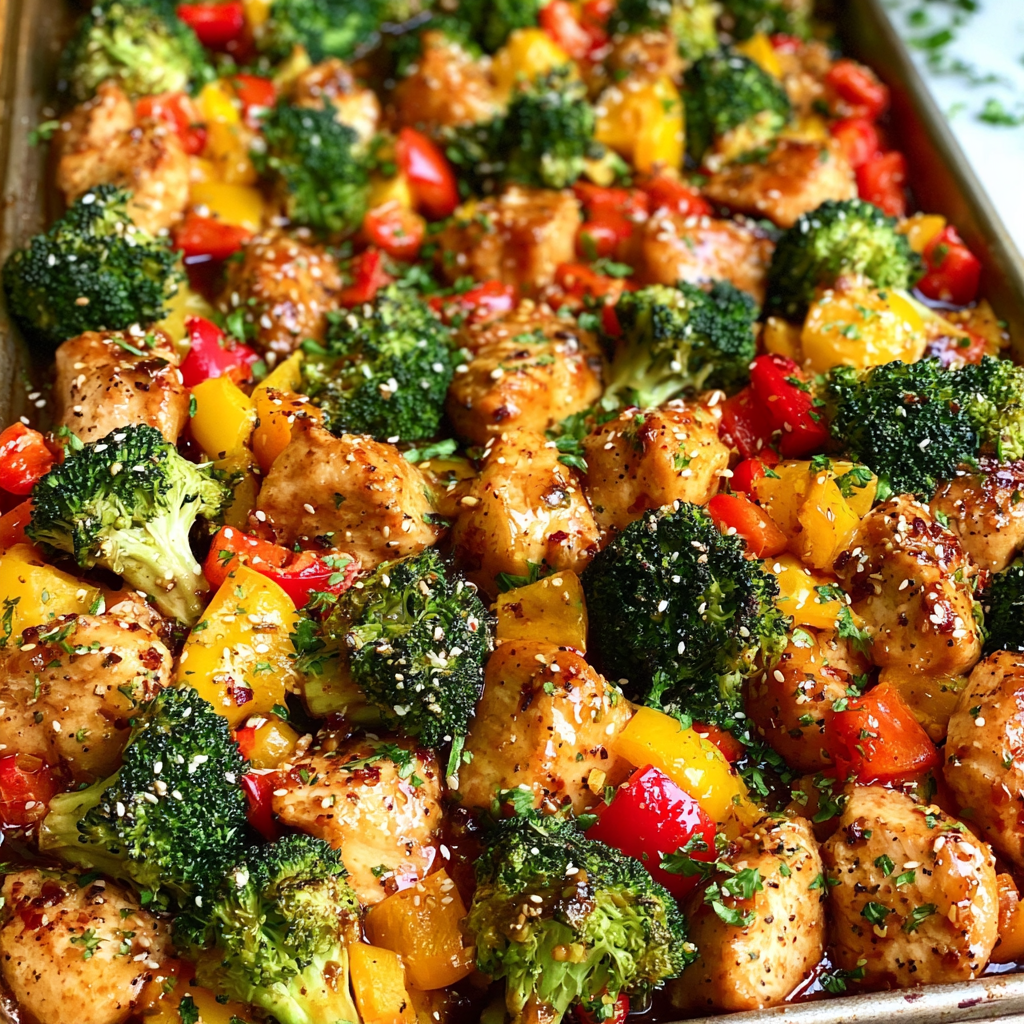
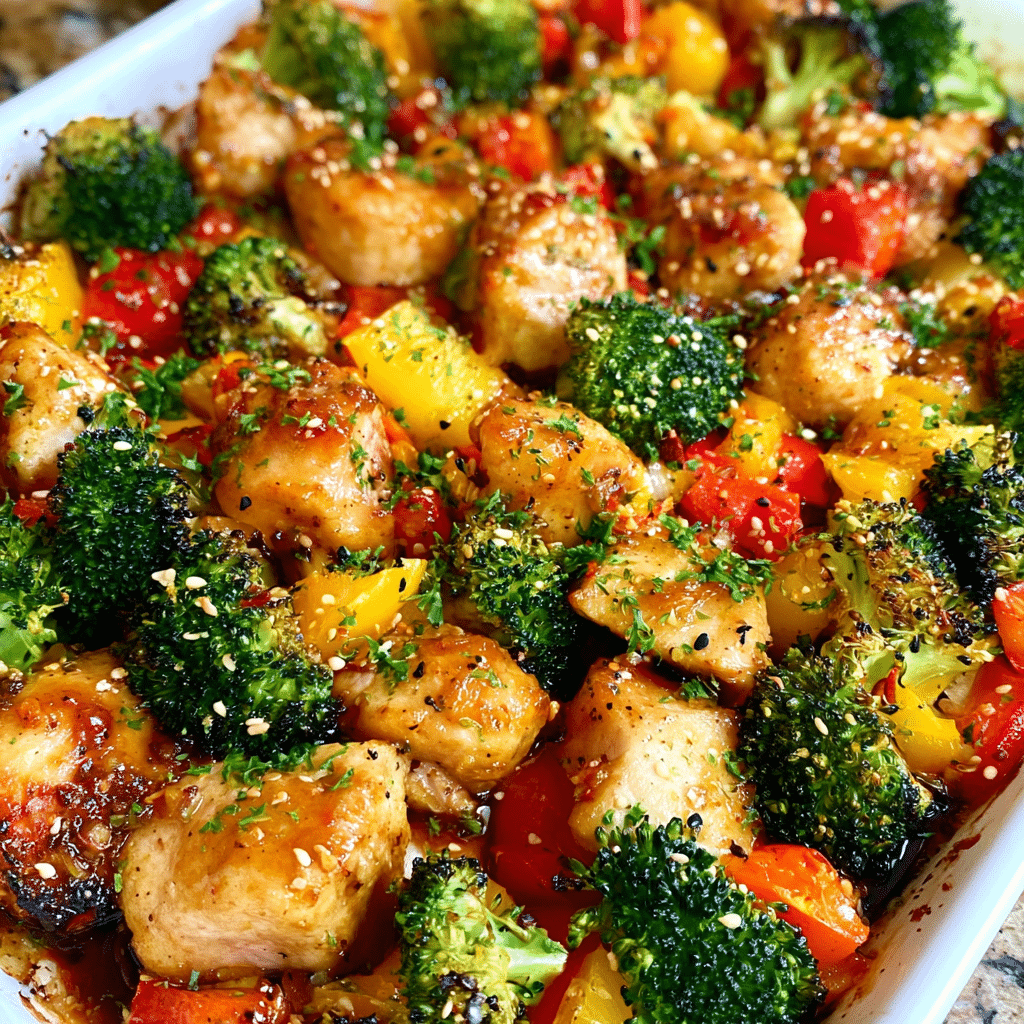
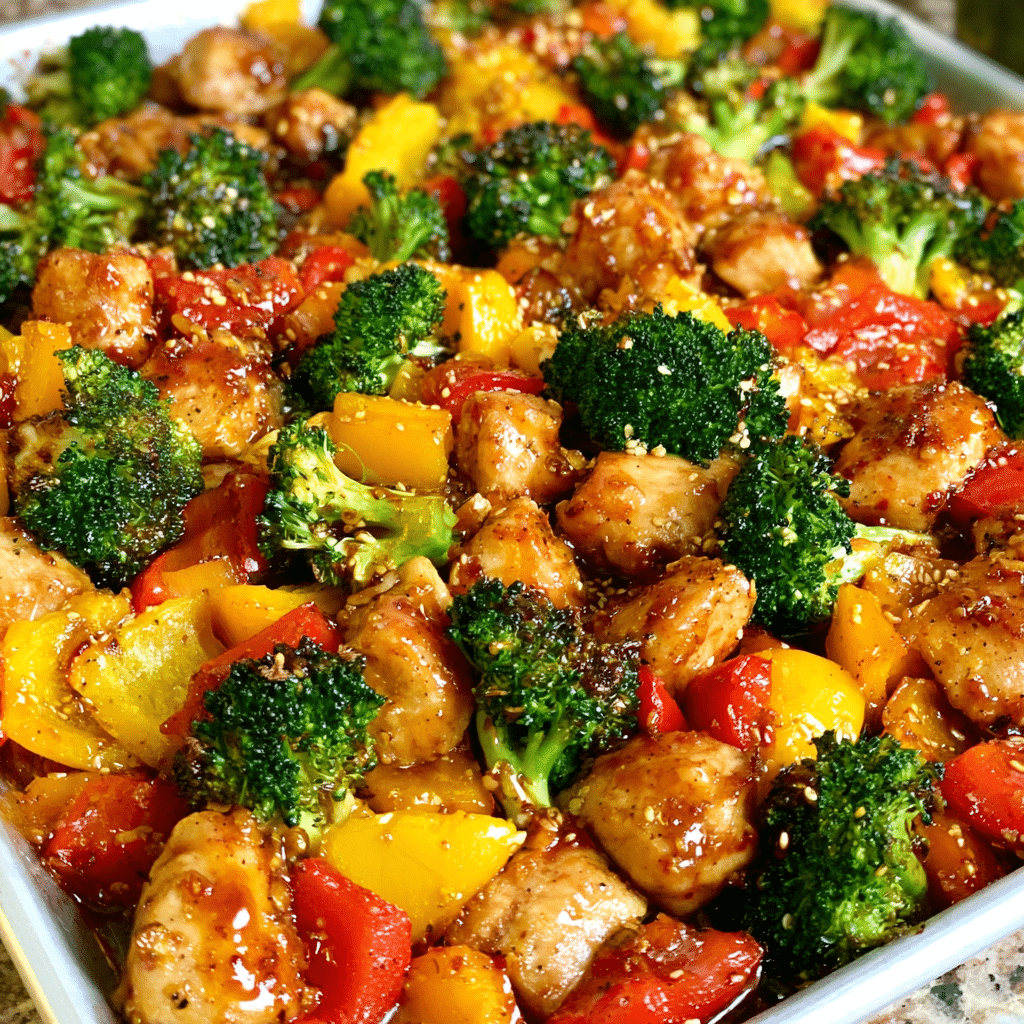
Sheet Pan Teriyaki Ginger Sesame Chicken and Broccoli is a bold Asian-inspired dinner of bite-sized chicken pieces and colorful vegetables tossed in a sweet, spicy, ginger-forward teriyaki marinade and roasted on a single pan until caramelized and tender. The reserved marinade drizzles over everything straight from the oven in under 40 minute.
Why You’ll Love This Recipe
The teriyaki-ginger marinade delivers a layered hit of sweet, savory, and spicy in every bite — honey caramelizes against the teriyaki base, ginger adds a warm, sharp aromatic punch, and red pepper flakes build a slow heat that lingers on the finish. Every piece of chicken and vegetable carries it fully.
This recipe brings the flavor profile of a takeout teriyaki bowl directly onto a sheet pan — the same glossy glaze, the same caramelized vegetables, the same sesame finish — at a fraction of the cost and without waiting for delivery.
One bowl for the marinade, one bowl for the tossing, one pan for roasting — the entire dish comes together in 40 minutes with virtually no technique required and nothing but the pan to clean when it is done.
The tri-color combination of broccoli, yellow bell pepper, and red bell pepper roasts into a vivid, restaurant-quality presentation that makes this dish look far more impressive than the effort it takes to produce. Everyone at the table reaches for seconds.
From marinade to table in under 40 minutes, this recipe hits a complete weeknight meal in the same time a delivery order would spend sitting in transit.
Ingredient List
For the Chicken & Vegetables:
- 2 pounds boneless, skinless chicken breasts, cut into bite-sized pieces
- 8 ounces broccoli florets
- 1 yellow bell pepper, chopped
- 1 red bell pepper, chopped
- 1½ tablespoons sesame seeds
For the Teriyaki Ginger Marinade:
- ½ cup teriyaki sauce
- 3 tablespoons oil
- 3 tablespoons honey
- 1 tablespoon ground ginger
- 2 teaspoons garlic powder
- 1 teaspoon red pepper flakes
- Salt, to taste
- Black pepper, to taste
Why These Ingredients Work
Boneless, skinless chicken breasts cut into bite-sized pieces are the ideal format for this roasting method. Small, uniform pieces have significantly more surface area exposed to both the marinade and the oven heat than a whole breast, which means faster cooking, deeper flavor penetration, and more caramelized edges per bite. The compact size also means every piece sits in the same single layer as the vegetables, ensuring everything finishes at exactly the same time.
Teriyaki sauce is the foundation of the marinade and brings the core umami-sweet-savory profile that defines this dish. It contains soy sauce for deep, fermented salinity, mirin or sugar for sweetness, and often sake or vinegar for acidity — a complete flavor base that the additional honey, ginger, and spices build directly on top of rather than having to construct from scratch.
Honey and ground ginger together are what elevate this marinade from a standard teriyaki into something distinctly more complex. The honey caramelizes against the sugars in the teriyaki sauce during roasting and builds the thick, glossy lacquer that coats every surface of the chicken and vegetables. Ground ginger adds a warm, sharp, slightly peppery aromatic depth that cuts through the sweetness and gives the marinade its signature forward bite.
Sesame seeds are the finishing element that add textural contrast, a faint nutty flavor, and the visual marker that signals a restaurant-quality Asian-style dish. Applied after roasting rather than before, they retain their full crunch and their natural oils rather than toasting into bitterness under the oven heat.
Essential Tools and Equipment
- Large rimmed sheet pan (18×13 inches recommended)
- Nonstick cooking spray
- Large mixing bowl
- Small mixing bowl for the marinade
- Whisk
- Sharp chef’s knife and cutting board
- Tongs or a spatula for stirring halfway
- Instant-read meat thermometer
- Serving bowls or plates for rice or quinoa
How To Make Sheet Pan Teriyaki Ginger Sesame Chicken and Broccoli
Phase 1: Build the Marinade
- Preheat the oven to 350°F (175°C).
- Whisk together the teriyaki sauce, oil, honey, ground ginger, garlic powder, red pepper flakes, salt, and black pepper in a small bowl until smooth and well combined.
Phase 2: Marinate the Chicken and Vegetables
- Combine the chicken pieces, broccoli florets, chopped yellow bell pepper, and chopped red bell pepper in a large bowl.
- Pour exactly half of the marinade over the chicken and vegetables, reserving the remaining half in the small bowl. Toss until every piece is evenly and thoroughly coated.
- Let the mixture marinate for 10 minutes at room temperature.
Phase 3: Roast
- Lightly grease a large sheet pan with cooking spray and spread the chicken and vegetables into a single, even layer.
- Bake for 20–25 minutes, stirring everything halfway through at the 10–12 minute mark, until the vegetables are tender and the chicken reaches an internal temperature of 165°F (74°C).
Phase 4: Finish and Serve
- Remove the sheet pan from the oven and drizzle the reserved marinade evenly over the chicken and vegetables.
- Sprinkle with sesame seeds and serve immediately over steamed rice or quinoa, if desired.
Chef Tips for Perfect Results
- Keep the oven at 350°F without adjusting higher — the high sugar content in both the teriyaki sauce and the honey burns aggressively at temperatures above 375°F, producing bitter, blackened spots rather than the caramelized glaze this dish requires.
- Stir at the halfway mark every time — the sugars in the marinade bond to the pan surface during the first half of roasting; stirring redistributes them, prevents scorching on the bottom, and exposes the uncaramelized tops of each piece to the oven heat.
- Reserve the marinade before any contact with raw chicken — the reserved half stays food-safe because it never touched raw meat and can be drizzled directly over the finished dish as a finishing sauce without any additional cooking.
- Cut all chicken pieces to the same uniform bite-sized dimensions — uneven pieces finish at different times and leave smaller bits dry and overcooked while larger pieces lag behind at the 20-minute mark.
- Add the sesame seeds only after the pan leaves the oven — sesame seeds burn and turn bitter quickly under oven heat; applying them to the hot pan after roasting toasts them gently with the residual heat and keeps them crunchy.
- Spread everything in a strict single layer — pieces that overlap or stack steam against each other and lose the caramelization that the teriyaki glaze depends on.
You Must Know
350°F is intentionally lower than most sheet pan recipes, and it is not adjustable for this dish. The teriyaki sauce, honey, and garlic powder all contain high concentrations of sugar that caramelize beautifully at moderate heat but burn rapidly at 400°F or above. Higher heat produces a bitter, scorched crust on the outside of the chicken before the inside reaches temperature — the lower oven temperature is the specific reason this recipe produces a glossy glaze instead of a blackened coating.
Reserve the marinade before any of it contacts the raw chicken and vegetables, and keep that reserved portion completely separate throughout the entire cooking process. The reserved marinade is food-safe precisely because it never touched raw meat — it functions as a finishing sauce drizzled over the fully cooked dish and builds the final layer of glossy, bold teriyaki flavor. If you accidentally combine all the marinade with the raw chicken, you must cook any sauce drizzled over the finished dish before serving.
Pro Tips & Cooking Hacks
- Marinate the chicken overnight in the full sauce batch — double the marinade, use half to marinate overnight and half as the reserved finishing drizzle; overnight marinating produces significantly deeper ginger and teriyaki penetration throughout the meat.
- Line the pan with parchment paper — the sugar-heavy marinade caramelizes onto bare metal and requires serious scrubbing; parchment lifts cleanly and makes cleanup effortless.
- Add snap peas or edamame in the final 10 minutes — both are delicate enough to overcook in the full 20–25 minute window; adding them halfway through produces the best texture.
- Use toasted sesame oil in place of neutral oil in the marinade for a significantly deeper, more complex sesame aroma throughout the entire dish rather than just on the surface.
- Serve over cauliflower rice for a lower-carb version that absorbs the teriyaki drizzle just as well as white rice without the starch.
- Reserve an extra tablespoon of the teriyaki glaze to toss with the steamed rice before plating — it ties the rice and the topping together into a cohesive dish.
Flavor Variations & Suggestions
Pineapple teriyaki: Add ½ cup of fresh or canned pineapple chunks to the pan alongside the vegetables. The pineapple caramelizes and releases its natural juices into the marinade during roasting, adding a tropical sweetness and a slight acidity that balances the soy-forward teriyaki base.
Spicy sesame: Double the red pepper flakes to 2 teaspoons and add 1 tablespoon of chili oil to the marinade in place of 1 tablespoon of the neutral oil. The result is a noticeably hotter, more aggressively spiced version of the same dish with a deep, oil-carried heat that builds with each bite.
Orange teriyaki ginger: Add the zest of one orange and 2 tablespoons of fresh orange juice to the marinade. The citrus brightens the entire flavor profile, reduces the heaviness of the soy base, and adds a fragrant, fruity note that pairs especially well with the ginger.
Coconut teriyaki: Replace 2 tablespoons of the teriyaki sauce with coconut aminos for a slightly sweeter, less sodium-heavy base, and add 1 tablespoon of full-fat coconut cream to the marinade. The result is a milder, softer version of the teriyaki flavor with a subtle tropical richness.
Make-Ahead Options
Teriyaki ginger marinade: Whisk the full batch of marinade up to 5 days in advance and store it in a sealed jar in the refrigerator. The ginger and garlic infuse more deeply into the liquid as it sits, producing a more complex and assertive marinade than a freshly mixed batch.
Marinated chicken and vegetables: Toss the chicken and vegetables with half of the marinade, cover tightly, and refrigerate for up to 24 hours before roasting. Overnight marinating produces noticeably deeper flavor throughout every piece of chicken and vegetable. Keep the reserved half of the marinade in a separate sealed container.
Prepped vegetables: Chop the bell peppers and cut the broccoli into florets up to 2 days in advance and store in separate airtight containers in the refrigerator. Do not combine with the chicken or marinade until you are ready to marinate and roast.
Freezing cooked leftovers: Cool the fully cooked chicken and vegetables completely, then store in a freezer-safe container for up to 2 months. Thaw overnight in the refrigerator and reheat in a 350°F oven for 12–15 minutes. The teriyaki glaze softens during freezing but re-caramelizes slightly under the oven heat during reheating.
Recipe Notes & Baker’s Tips
- Ground ginger is more concentrated than fresh ginger — if substituting fresh, use 1 tablespoon of finely grated fresh ginger in place of the full tablespoon of ground ginger.
- The teriyaki sauce brand matters significantly in this recipe — choose a thick, restaurant-style teriyaki rather than a thin, vinegar-forward version; thicker teriyaki produces a better glaze and a more pronounced final flavor.
- Sesame seeds toast gently from the residual heat of the pan when added immediately after roasting — no separate toasting step is required.
- Serve with steamed jasmine rice, brown rice, or quinoa; the grain soaks up the reserved marinade drizzle and ties the entire bowl together.
- The recipe serves 4 generously over rice — if serving 6, the grain stretches the dish without reducing any ingredient quantities.
Serving Suggestions
Steamed jasmine rice or brown rice: A bowl of fluffy jasmine rice underneath this dish captures every drop of the reserved teriyaki drizzle and the caramelized pan juices, turning the combination into a complete, deeply satisfying grain bowl.
Sesame cucumber salad: A quick side of thinly sliced cucumber dressed with rice vinegar, sesame oil, and a pinch of sugar provides a cool, crisp, acidic counterpoint to the warm, caramelized richness of the teriyaki chicken and cuts through the sticky glaze cleanly.
Miso soup: A small bowl of warm miso soup alongside this dish grounds the meal in the broader Japanese flavor palette and adds a warming, umami-rich element that bridges the teriyaki glaze and the steamed rice perfectly.
Chilled sake or sparkling yuzu lemonade: A glass of chilled junmai sake complements the soy-and-mirin teriyaki base with complementary fermented grain notes, while a sparkling yuzu lemonade provides a citrusy, aromatic non-alcoholic pairing that brightens the richness of the glaze.
Storage & Reheating
- Refrigerator: Store leftovers in an airtight container for up to 4 days; keep the rice and the chicken-vegetable mixture stored separately to prevent the rice from absorbing too much of the teriyaki glaze overnight.
- Oven reheating (recommended): Reheat at 350°F for 10–12 minutes — the same moderate temperature prevents the teriyaki glaze from burning during reheating and restores the sticky, glazed texture.
- Freezer: Store in a sealed freezer-safe container for up to 2 months; thaw overnight in the refrigerator before reheating in the oven.
Allergy Information
Soy: Teriyaki sauce is soy-based and represents a significant allergen in this recipe. Substitute with coconut aminos in a 1:1 ratio for a soy-free version — coconut aminos are slightly sweeter and less salty than soy-based teriyaki but produce a comparable glaze under roasting conditions.
Sesame: Sesame seeds are a top allergen in many countries and appear both as seeds on the finished dish and potentially in the teriyaki sauce depending on the brand. Omit the sesame seed garnish entirely and choose a sesame-free teriyaki sauce for an allergen-safe version.
Gluten: Most commercial teriyaki sauces contain soy sauce derived from wheat. Use a certified gluten-free teriyaki sauce or substitute with coconut aminos plus a splash of rice vinegar and a pinch of sugar to build a comparable flavor base without gluten.
Questions I Get Asked A Lot
Can I use chicken thighs instead of chicken breasts?
Yes, boneless skinless chicken thighs cut into bite-sized pieces work well and stay juicier than chicken breasts throughout the full roasting time — use the same quantity and check for 165°F (74°C) at the 20-minute mark, as thighs may cook slightly faster depending on size.
Why does this recipe bake at 350°F when most sheet pan recipes use 400°F or higher?
The teriyaki sauce and honey both contain high concentrations of sugar that burn at temperatures above 375°F — 350°F allows the sugars to caramelize gradually into a sticky glaze rather than scorching into a bitter, blackened coating on the surface of the chicken and vegetables.
Is the reserved marinade safe to drizzle over the cooked dish without heating it first?
Yes, because the reserved marinade never contacted raw chicken or raw meat — it was separated from the batch before any raw ingredients were added and remained uncontaminated throughout the entire process, making it safe to use directly as a finishing drizzle.
Can I use fresh ginger instead of ground ginger?
Yes, substitute 1 tablespoon of freshly grated ginger for the 1 tablespoon of ground ginger called for — fresh ginger produces a brighter, more aromatic and less earthy result, while ground ginger integrates more evenly throughout the marinade; both work in this recipe.
What other vegetables can I add to the pan?
Snap peas, edamame, mushrooms, zucchini, and baby corn all roast well with this marinade; add delicate vegetables like snap peas and edamame only in the final 10 minutes of roasting to prevent overcooking, and maintain a single layer across the full pan regardless of which vegetables you choose.
💬 Tried this recipe? Leave a comment and rating below!
Print
Sheet Pan Teriyaki Ginger Sesame Chicken and Broccoli
- Total Time: 40 minutes
- Yield: 4 servings
Description
Sheet Pan Teriyaki Ginger Sesame Chicken and Broccoli is a bold Asian-inspired dinner of bite-sized chicken pieces and colorful vegetables tossed in a sweet, spicy, ginger-forward teriyaki marinade and roasted on a single pan until caramelized and tender.
Ingredients
2 pounds boneless, skinless chicken breasts, cut into bite-sized pieces
8 ounces broccoli florets
1 yellow bell pepper, chopped
1 red bell pepper, chopped
1½ tablespoons sesame seeds
½ cup teriyaki sauce
3 tablespoons oil (neutral or toasted sesame oil for deeper flavor)
3 tablespoons honey
1 tablespoon ground ginger
2 teaspoons garlic powder
1 teaspoon red pepper flakes
Salt, to taste
Black pepper, to taste
Instructions
1. Preheat the oven to 350°F (175°C).
2. Whisk together the teriyaki sauce, oil, honey, ground ginger, garlic powder, red pepper flakes, salt, and black pepper in a small bowl until smooth and well combined.
3. Combine the chicken pieces, broccoli florets, chopped yellow bell pepper, and chopped red bell pepper in a large bowl.
4. Pour exactly half of the marinade over the chicken and vegetables, reserving the remaining half in the small bowl. Toss until every piece is evenly and thoroughly coated.
5. Let the mixture marinate for 10 minutes at room temperature.
6. Lightly grease a large sheet pan with cooking spray and spread the chicken and vegetables into a single, even layer.
7. Bake for 20–25 minutes, stirring everything at the halfway mark (10–12 minutes), until the vegetables are tender and the chicken reaches an internal temperature of 165°F (74°C).
8. Remove the sheet pan from the oven and drizzle the reserved marinade evenly over the chicken and vegetables.
9. Sprinkle with sesame seeds and serve immediately over steamed rice or quinoa, if desired.
Notes
Keep the oven at 350°F without adjusting higher — the teriyaki sauce and honey both contain high concentrations of sugar that burn aggressively at temperatures above 375°F, producing bitter char rather than the caramelized glaze this recipe builds.
Stir at the halfway mark every single time — the sugars in the marinade bond to the pan surface during the first half of roasting; stirring redistributes them, prevents scorching, and exposes the tops of each piece to the oven heat.
Reserve the marinade before any contact with raw chicken — the reserved half stays food-safe because it never touched raw meat and functions as a safe finishing drizzle over the fully cooked dish.
Add the sesame seeds only after the pan leaves the oven — sesame burns and turns bitter quickly under oven heat; the residual pan heat toasts them gently and keeps them crunchy.
Use a thick, restaurant-style teriyaki sauce rather than a thin, vinegar-forward variety — thicker teriyaki produces a better glaze and a more pronounced, caramelized final flavor on the chicken and vegetables.
| Storage method | Duration | Reheating instructions |
|---|---|---|
| Refrigerator | Up to 4 days | Reheat at 350°F for 10–12 minutes — the same moderate temperature prevents the glaze from burning during reheating |
| Freezer | Up to 2 months | Thaw overnight in the refrigerator, then reheat in a 350°F oven for 12–15 minutes until warmed through |
| Microwave | Use within 4 days | Reheat in 60-second intervals on medium power — store rice separately to prevent it from absorbing all the glaze overnight |
- Prep Time: 15 minutes
- Cook Time: 25 minutes
- Category: Dinner
- Method: Baking
- Cuisine: Asian-Inspired