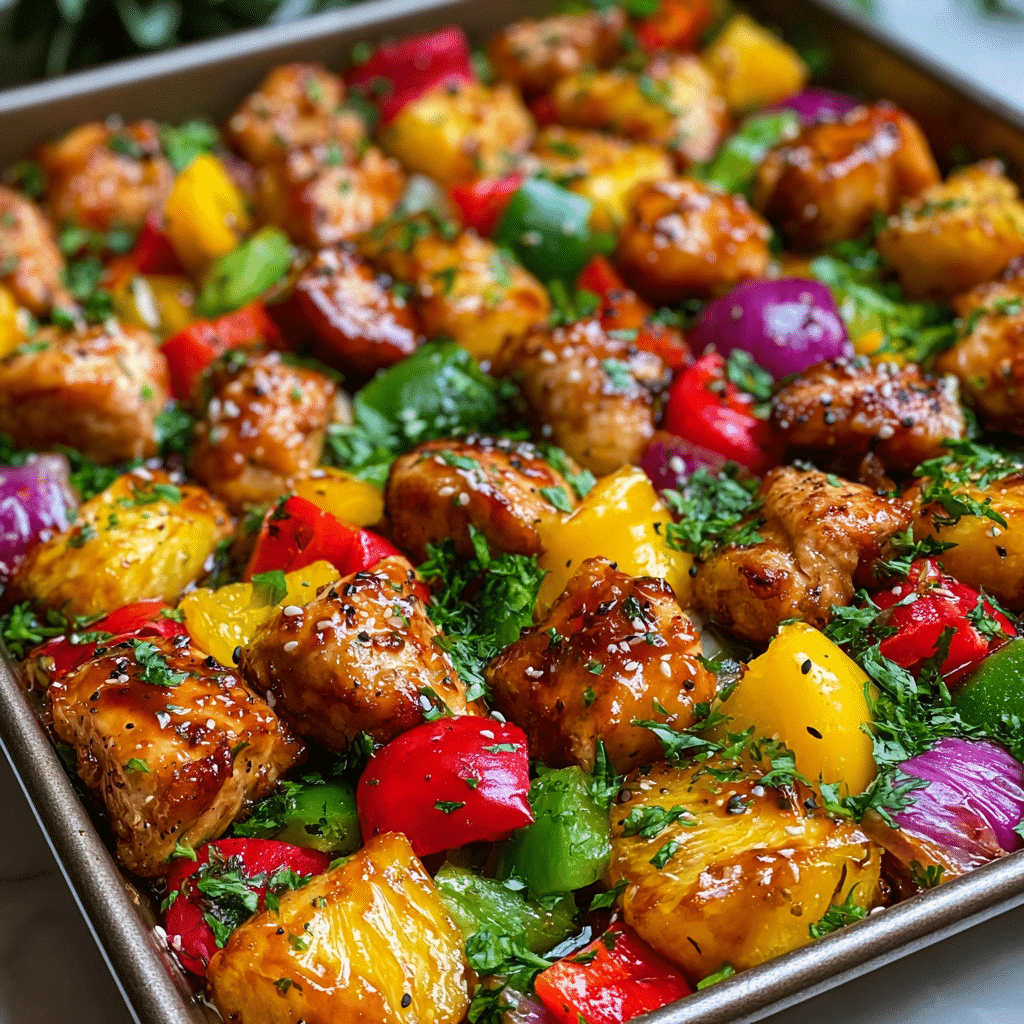
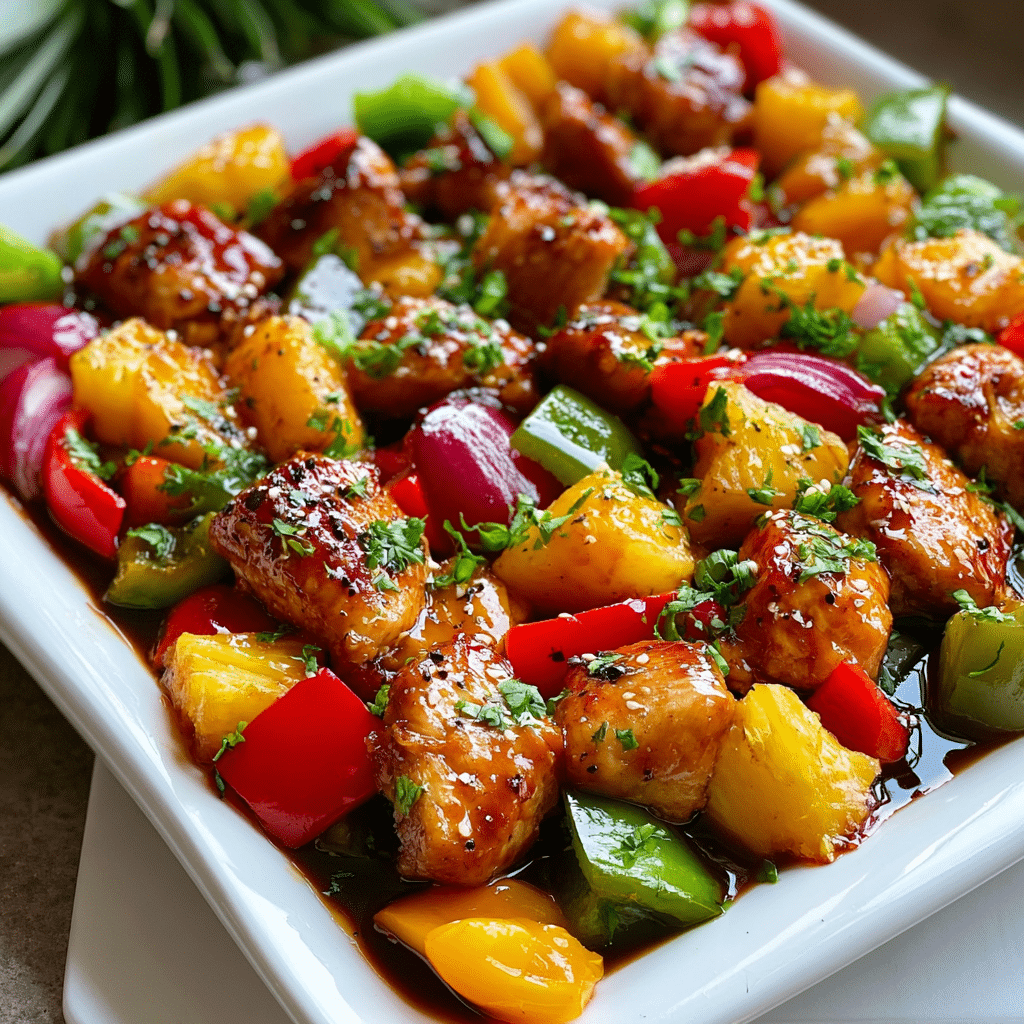
Sheet Pan Teriyaki Chicken and Pineapple is a bold, sweet-savory dinner made on one pan in under 35 minutes. Juicy chicken pieces and colorful bell peppers roasted alongside caramelized fresh pineapple, all glazed in rich teriyaki sauce until sticky, golden, and deeply fragrant.
Why You’ll Love This Recipe
The teriyaki sauce caramelizes directly on the chicken during roasting, building a sticky, glossy glaze with savory-sweet depth that clings to every piece and intensifies with the heat of the broiler in the final minutes.
It delivers that crave-worthy sweet-and-savory combination — the umami richness of teriyaki against the bright, tropical sweetness of fresh caramelized pineapple creates a flavor pairing that feels exciting and satisfying every single time.
You marinate the chicken in one bowl, toss the fruit and vegetables in another, spread everything on one pan, and the oven handles the rest entirely with no stovetop required at any stage.
This is the kind of colorful, vibrant dinner that the whole family rushes to the table for — the pineapple makes it feel like a treat, the teriyaki makes it taste like a restaurant, and the single pan makes cleanup genuinely painless.
From fridge to table in under 35 minutes including marinating time, this recipe fits into even the most packed weeknight schedule and never once compromises on flavor or visual impact.
Ingredient List
For the Chicken
- 1½–2 pounds boneless, skinless chicken breasts or chicken thighs, cut into bite-sized pieces
- ½ cup teriyaki sauce
- 1 teaspoon garlic powder
- Salt, to taste
- Black pepper, to taste
For the Vegetables and Pineapple
- 1 medium fresh pineapple, cut into chunks
- 1 red bell pepper, chopped
- 1 yellow bell pepper, chopped
- 1 small red onion, cut into chunks (optional)
- 1 tablespoon olive oil
Optional Garnish
- 1 tablespoon sesame seeds
- 2 green onions, sliced
Why These Ingredients Work
Teriyaki sauce is the flavor engine of the entire dish. It is a blend of soy sauce, mirin, sugar, and ginger that delivers sweet, salty, and umami notes in every drop. As it roasts on the pan it reduces and concentrates, coating the chicken in a lacquered, glossy glaze that caramelizes further under the broiler into the sticky, restaurant-quality finish this recipe is built around.
Fresh pineapple is what separates this recipe from every other teriyaki chicken dish. Fresh pineapple contains natural enzymes and sugars that caramelize beautifully under high oven heat, developing golden, lightly charred edges and a concentrated tropical sweetness that canned pineapple cannot replicate. The caramelized juice that pools from the pineapple on the pan also blends with the teriyaki glaze and creates a natural sweet sauce beneath everything.
Red and yellow bell peppers contribute vivid color, natural sweetness, and a satisfying crisp-tender texture that contrasts the juicy chicken and soft pineapple on the pan. Together the two colors make this one of the most visually striking sheet pan dinners in any rotation, which matters as much as flavor when you want a dinner the family actually wants to eat.
Sesame seeds and green onions as a finishing garnish add the textural and visual details that transform a home-cooked pan dinner into something that looks intentional and finished. The sesame seeds add a nutty crunch; the green onions add fresh, sharp bite that cuts through the sweetness of the teriyaki and pineapple.
Essential Tools and Equipment
- Large rimmed sheet pan (18×13 inch recommended)
- Parchment paper or non-stick spray
- Large mixing bowl (for chicken marinade)
- Medium mixing bowl (for vegetables and pineapple)
- Instant-read meat thermometer
- Sharp chef’s knife
- Cutting board
- Tongs or spatula
How To Make Sheet Pan Teriyaki Chicken and Pineapple
Phase 1: Marinate the Chicken
- Cut the chicken into evenly sized bite-sized pieces, approximately 1¼ inches each.
- Place the chicken in a large bowl and pour the teriyaki sauce over it.
- Add the garlic powder, salt, and black pepper, then toss until every piece is evenly coated.
- Marinate for 10–30 minutes at room temperature or in the refrigerator.
Phase 2: Prep and Season the Fruit and Vegetables
- Preheat the oven to 400°F (200°C) and line a large sheet pan with parchment paper or lightly grease it.
- Combine the pineapple chunks, chopped red bell pepper, chopped yellow bell pepper, and red onion chunks (if using) in a large bowl.
- Drizzle with olive oil and season lightly with salt, pepper, and garlic powder, then toss until evenly coated.
Phase 3: Build and Roast
- Arrange the marinated chicken, pineapple chunks, and seasoned vegetables in a single even layer on the prepared sheet pan.
- Roast for 20–25 minutes, until the chicken reaches an internal temperature of 165°F (74°C) and the pineapple begins to caramelize around the edges.
Phase 4: Broil, Garnish, and Serve
- Switch the oven to broil for the final 2–3 minutes for extra caramelization, watching carefully to prevent burning.
- Remove from the oven and garnish with sesame seeds and sliced green onions if desired.
- Serve immediately over steamed rice, brown rice, quinoa, or cauliflower rice.
Chef Tips for Perfect Results
- Cut the chicken to a uniform 1¼-inch size — pieces that are too large stay raw in the center while everything else finishes; pieces that are too small dry out before the pineapple caramelizes.
- Use fresh pineapple, not canned — canned pineapple releases excess water onto the pan that prevents caramelization and waters down the teriyaki glaze; fresh pineapple caramelizes and concentrates instead.
- Spread everything in a true single layer — the teriyaki sauce is sugar-based and creates steam when pieces overlap, which keeps everything pale and wet rather than glazed and golden.
- Do not skip the broil step — the final 2–3 minutes under the broiler is what transforms the teriyaki glaze from glossy to deeply caramelized and gives the pineapple the golden, charred edges that define this dish visually and in flavor.
- Watch the broiler every 30 seconds — teriyaki sauce and pineapple both contain high concentrations of sugar and move from caramelized to burnt faster than almost any other ingredient at broiler temperatures.
- Marinate for the full 30 minutes when possible — even a short 30-minute marinade dramatically improves the depth of teriyaki flavor in the finished chicken compared to an immediate roast.
You Must Know
Never use canned pineapple in this recipe. Canned pineapple is packed in juice or syrup that it releases onto the sheet pan during roasting. This liquid dilutes the teriyaki glaze, prevents caramelization on both the pineapple and the chicken, and turns the pan into a steaming, soupy environment rather than a dry roasting surface. Fresh pineapple caramelizes at 400°F and develops the golden, sticky-sweet edges that make this dish exceptional.
Always watch the pan during the broil phase without stepping away. The combination of teriyaki sauce, pineapple sugars, and high broiler heat creates conditions where the pan goes from perfectly caramelized to burnt in under 60 seconds. Stay at the oven for the entire 2–3 minute broil and pull the pan the moment the edges of the chicken and pineapple develop deep golden-brown color.
Pro Tips & Cooking Hacks
- Shortcut: Buy pre-cut fresh pineapple chunks from the produce section and pre-sliced bell pepper strips to reduce prep time to under 5 minutes.
- Upgrade: Brush an extra tablespoon of teriyaki sauce directly over the chicken pieces in the final 2 minutes of broiling for an additional lacquered glaze layer that makes the chicken look and taste restaurant-quality.
- Mistake to avoid: Do not marinate the chicken in teriyaki sauce for longer than 2 hours — the salt in the soy sauce begins to break down the protein structure and produces a slightly mushy texture instead of a clean, tender bite.
- Smart substitution: Replace the teriyaki sauce with a homemade version (soy sauce, honey, rice vinegar, ginger, garlic) for a lower-sodium, more deeply flavored alternative that caramelizes even better than most store-bought versions.
- Hack: Line the pan with foil under the parchment for cleanup that requires zero soaking — teriyaki glaze burns onto unlined pans and is one of the most stubborn residues to scrub off.
- Upgrade: Add a drizzle of sriracha or chili garlic sauce over the finished pan for a spicy-sweet teriyaki variation that complements the pineapple’s tropical sweetness with real heat.
Flavor Variations & Suggestions
Spicy Teriyaki: Whisk 1–2 teaspoons of sriracha or sambal oelek into the teriyaki marinade before coating the chicken for a spicy-sweet glaze with building heat that pairs perfectly with the cooling sweetness of the caramelized pineapple.
Ginger Teriyaki: Add 1 teaspoon of freshly grated ginger and 1 teaspoon of sesame oil to the teriyaki marinade for a warmer, more aromatic version with a distinctly Japanese-inspired flavor profile.
Coconut Teriyaki: Replace the olive oil on the vegetables with coconut oil and add ¼ teaspoon of coconut extract to the teriyaki marinade for a subtle tropical coconut note that deepens the Hawaiian-inspired character of the dish.
Mango Teriyaki: Replace half the pineapple with fresh mango chunks for a softer, creamier tropical sweetness that caramelizes at a slightly lower rate and adds a beautiful golden color contrast to the bell peppers.
Make-Ahead Options
Marinate the chicken overnight: Pour the teriyaki sauce and seasonings over the chicken pieces, cover, and refrigerate for up to 2 hours before roasting for maximum flavor absorption — do not exceed 2 hours as the soy salt begins to affect the chicken texture beyond that point.
Make the teriyaki sauce from scratch ahead: Combine soy sauce, honey, rice vinegar, garlic, and ginger in a jar and refrigerate for up to 1 week. The flavors meld and deepen as it sits, and the sauce is ready to use straight from the fridge whenever needed.
Prep the fruit and vegetables ahead: Cut the fresh pineapple, chop the bell peppers, and chunk the red onion up to 24 hours in advance. Store them in an airtight container in the refrigerator and toss with olive oil and seasoning right before building the sheet pan.
Freeze cooked chicken: Cool the cooked chicken pieces completely and freeze in an airtight bag for up to 2 months. Thaw overnight in the refrigerator and reheat on a sheet pan at 375°F (190°C) for 8–10 minutes. Do not freeze the cooked pineapple or bell peppers — both lose their texture completely after freezing and thawing.
Recipe Notes & Baker’s Tips
- Chicken thighs are more forgiving than breasts at 400°F and stay juicier if left in the oven slightly past the 165°F (74°C) mark; use thighs if you prefer a more forgiving margin of error.
- The red onion is listed as optional but adds a savory, slightly sweet caramelized note that balances the tropical sweetness of the pineapple — include it when you have it.
- Low-sodium teriyaki sauce is the better choice here — the sauce reduces and concentrates during roasting, and a full-sodium version can result in a noticeably salty finished glaze.
- Serve this dish the moment it comes off the pan — the teriyaki glaze and caramelized pineapple juices begin to stiffen as they cool, and the dish is at its most spectacular in the first few minutes after leaving the oven.
- Leftovers work exceptionally well in rice bowls the next day — the teriyaki flavor deepens overnight and the caramelized pineapple tastes even better cold straight from the refrigerator.
Serving Suggestions
Serve this dish over steamed jasmine rice to absorb the teriyaki glaze and caramelized pineapple juices that pool on the pan — every grain soaks up the sweet-savory sauce and turns the side dish into the most anticipated part of the meal.
Brown rice or quinoa underneath the teriyaki chicken and pineapple adds a nutty, slightly chewy base that complements the sticky glaze and adds wholesome substance to what is already a lean, colorful plate.
Cauliflower rice is the ideal low-carb base for this dish — its mild flavor stays neutral beneath the bold teriyaki glaze and pineapple sweetness, and it absorbs the pan juices beautifully without adding competing flavors.
Finish the meal with a scoop of coconut ice cream or fresh mango sorbet — both continue the tropical flavor thread from the pineapple on the pan and provide a cool, refreshing close to a bold, sweet-savory dinner.
Storage & Reheating
Store leftovers in an airtight container in the refrigerator for up to 3 days. Reheat on a sheet pan at 375°F (190°C) for 8–10 minutes to revive the teriyaki glaze and restore some caramelization to the pineapple and bell peppers. If reheating in the microwave, cover loosely with a damp paper towel and heat in 30-second bursts on medium power — the sugar in the teriyaki glaze heats unevenly and scorches at full power, leaving hot spots on the chicken while the center stays cold.
Allergy Information
Soy (teriyaki sauce): Most teriyaki sauces contain soy as the primary ingredient. Use coconut aminos as a direct 1-for-1 substitute for a soy-free version that delivers comparable sweetness and umami depth with a slightly milder, less salty profile.
Gluten (teriyaki sauce, soy sauce): Standard teriyaki sauce contains wheat-based soy sauce. Use a certified gluten-free tamari-based teriyaki sauce or make a quick homemade version with gluten-free tamari, honey, rice vinegar, garlic, and ginger.
Sesame (garnish): The sesame seed garnish is optional — skip it entirely or replace it with toasted sunflower seeds for a similar nutty crunch without the sesame allergen.
Nightshades (bell peppers): Replace the red and yellow bell peppers with sliced zucchini, snap peas, or broccoli florets for a nightshade-free version that roasts in the same time window and absorbs the teriyaki glaze just as well.
Questions I Get Asked A Lot
Can I use canned pineapple instead of fresh?
No — canned pineapple releases excess liquid onto the pan that dilutes the teriyaki glaze and prevents caramelization; always use fresh pineapple for the sticky, golden edges this recipe requires.
How do I prevent the teriyaki sauce from burning on the pan?
Line the pan with parchment paper and pull the pan the moment the chicken hits 165°F (74°C) — broil for 2–3 minutes maximum and stay at the oven the entire time since teriyaki and pineapple sugars burn very quickly.
Can I use store-bought teriyaki sauce?
Yes — choose a low-sodium version with a short ingredient list; brands that list soy sauce, mirin, and sugar as the first three ingredients produce the best caramelized glaze on the pan.
Can I make this recipe ahead for meal prep?
Yes — portion cooked chicken, pineapple, and vegetables into airtight containers and refrigerate for up to 3 days; the teriyaki flavor deepens overnight and the meal reheats well on a sheet pan at 375°F (190°C).
What is the best base to serve this over?
Steamed jasmine rice is the classic choice and absorbs the teriyaki-pineapple pan juices best; brown rice and quinoa both work for a higher-fiber option, and cauliflower rice works perfectly for a low-carb version.
💬 Tried this recipe? Leave a comment and rating below!
Print
Sheet Pan Teriyaki Chicken and Pineapple
- Total Time: 35 minutes
- Yield: 4 servings
Description
Sheet Pan Teriyaki Chicken and Pineapple is a bold, sweet-savory dinner made on one pan in under 35 minutes. Hawaiian-inspired flavor, one pan, zero complicated steps.
Ingredients
For the Chicken:
1½–2 pounds boneless, skinless chicken breasts or chicken thighs, cut into bite-sized pieces
½ cup teriyaki sauce
1 teaspoon garlic powder
Salt, to taste
Black pepper, to taste
For the Vegetables and Pineapple:
1 medium fresh pineapple, cut into chunks
1 red bell pepper, chopped
1 yellow bell pepper, chopped
1 small red onion, cut into chunks (optional)
1 tablespoon olive oil
Optional Garnish:
1 tablespoon sesame seeds
2 green onions, sliced
Instructions
1. Cut the chicken into evenly sized bite-sized pieces, approximately 1¼ inches each.
2. Place the chicken in a large bowl, pour the teriyaki sauce over it, and add the garlic powder, salt, and black pepper. Toss until every piece is evenly coated and marinate for 10–30 minutes.
3. Preheat the oven to 400°F (200°C) and line a large sheet pan with parchment paper or lightly grease it.
4. Combine the pineapple chunks, red bell pepper, yellow bell pepper, and red onion (if using) in a large bowl. Drizzle with olive oil, season lightly with salt, pepper, and garlic powder, and toss until evenly coated.
5. Arrange the marinated chicken, pineapple chunks, and seasoned vegetables in a single even layer on the prepared sheet pan.
6. Roast for 20–25 minutes, until the chicken reaches an internal temperature of 165°F (74°C) and the pineapple begins to caramelize around the edges.
7. Switch the oven to broil for the final 2–3 minutes for extra caramelization, watching carefully to prevent burning.
8. Remove from the oven and garnish with sesame seeds and sliced green onions if desired.
9. Serve immediately over steamed rice, brown rice, quinoa, or cauliflower rice.
Notes
Use fresh pineapple, not canned — canned pineapple releases excess water that dilutes the teriyaki glaze and prevents caramelization; fresh pineapple concentrates and chars beautifully at 400°F.
Cut the chicken to a uniform 1¼-inch size — inconsistent pieces mean some dry out while others stay undercooked.
Spread everything in a true single layer — teriyaki sauce is sugar-based and creates steam when pieces overlap, preventing the glaze from caramelizing properly.
Do not skip the broil step — the final 2–3 minutes transforms the teriyaki glaze from glossy to deeply caramelized and gives the pineapple its golden, charred edges.
Watch the broiler every 30 seconds — teriyaki and pineapple sugars move from caramelized to burnt faster than almost any other ingredient under broiler heat.
Store leftovers in an airtight container in the refrigerator for up to 3 days. Reheat on a sheet pan at 375°F (190°C) for 8–10 minutes to revive the teriyaki glaze.
VariationHow to Make It
Spicy TeriyakiWhisk 1–2 teaspoons of sriracha or sambal oelek into the teriyaki marinade before coating the chicken.
Ginger TeriyakiAdd 1 teaspoon freshly grated ginger and 1 teaspoon sesame oil to the teriyaki marinade.
Coconut TeriyakiReplace olive oil with coconut oil on the vegetables and add ¼ teaspoon coconut extract to the marinade.
Mango TeriyakiReplace half the pineapple with fresh mango chunks for a softer, creamier tropical sweetness.
- Prep Time: 10 minutes
- Cook Time: 25 minutes
- Category: Dinner
- Method: Roasting
- Cuisine: Asian-American