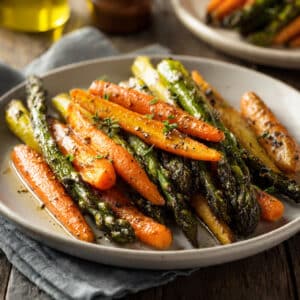
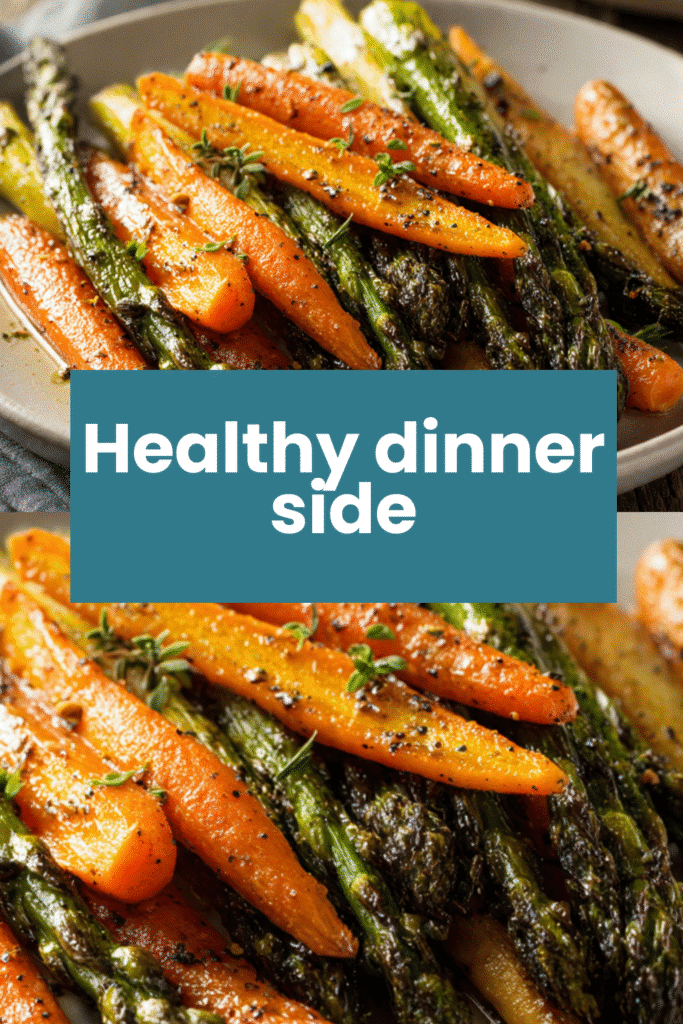
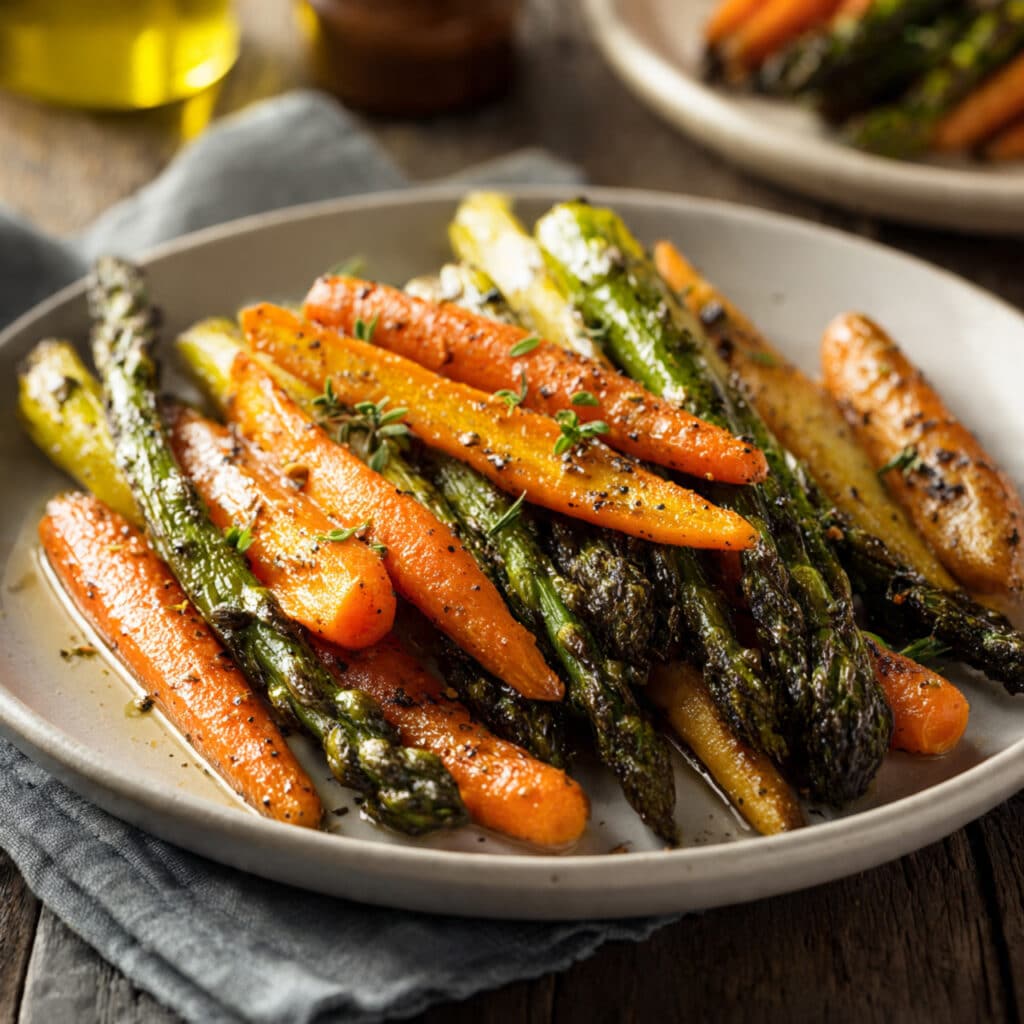
Roasted Asparagus and Carrots is one of those side dishes that instantly brightens up the whole table. The deep green asparagus next to the warm orange carrots looks almost too pretty to be this simple, and a hot oven brings out the best in both. The carrots turn tender and sweet with lightly caramelized edges, while the asparagus gets those slightly crisp, nutty tips that make you go back for another serving.
Why You’ll Love This Recipe
- Stunning on the table — the orange and green color contrast looks festive and intentional with zero extra effort.
- Double the vegetable nutrition — carrots and asparagus together give you a meaningful dose of vitamins A, C, K, and folate in one serving.
- One pan, minimal dishes — everything roasts together, and cleanup takes about two minutes.
- Flexible and forgiving — works beautifully as a weeknight side or on a holiday table without any tweaking.
- Naturally vegan and gluten-free — no substitutions needed for most dietary preferences.
Roasted Asparagus and Carrots
- Total Time: 35 minutes
- Yield: 4 servings
Description
This sheet pan roasted asparagus and carrots turns two everyday vegetables into a colorful, caramelized side dish that looks stunning and tastes even better. High heat coaxes the natural sweetness out of the carrots and crisps the asparagus tips to perfection
Ingredients
- 1 lb fresh asparagus, woody ends trimmed
- 1 lb baby carrots — or regular carrots, peeled and cut into sticks matching the width of the asparagus spears
- 3 tbsp extra-virgin olive oil
- 1 tsp garlic powder
- ½ tsp kosher salt, plus more to taste after roasting
- ¼ tsp freshly ground black pepper
- 1 tsp dried thyme (optional but recommended)
- Fresh lemon juice for finishing (optional)
- Drizzle of honey or maple syrup over the carrots before roasting for extra caramelization (optional)
Instructions
1. Preheat oven to 400°F. Position the rack in the center. Place it there before you start prepping — a fully preheated oven roasts vegetables while a half-warm oven steams them.
2. Wash both vegetables and pat completely dry with paper towels. Trim the woody ends from the asparagus. Peel the carrots if using whole ones and cut them into sticks that match the width of your asparagus spears. Matching thickness is what gets both vegetables done at exactly the same time.
3. Add the asparagus and carrots to a large bowl. Drizzle olive oil over them, then sprinkle on garlic powder, salt, pepper, and thyme. Toss with your hands until every single piece has an even coat of oil and seasonings — no dry spots.
4. Spread the seasoned vegetables in a single layer on a large rimmed baking sheet. Give every piece its own space — no overlapping. Crowding the pan causes steaming, not roasting.
5. Roast for 20–25 minutes. At the halfway mark (about 12 minutes), pull the pan and flip or toss the vegetables for even browning on all sides.
6. Remove from the oven when the carrots are fork-tender with caramelized golden edges and the asparagus tips look slightly crispy. Taste and add a pinch more salt if needed. Squeeze lemon juice over the top if desired and serve immediately.
Notes
Matching size matters: Cut carrots to the same width as the asparagus spears so both vegetables reach perfect doneness at the same time — this is the most important step in this recipe.
Head start for thick carrots: If your carrots are thicker than ½ inch, give them a 10-minute head start alone in the oven, then add the asparagus for the final 15 minutes.
Dry everything: Wet vegetables steam instead of roast. Pat both dry with paper towels before seasoning, even if they look dry already.
Dark pan tip: A dark-colored metal baking sheet gives better caramelization than a shiny aluminum one — dark pans absorb and conduct heat more efficiently.
Make-ahead: Season and arrange the vegetables on the pan up to 24 hours ahead. Cover and refrigerate, then roast fresh when you need them.
Storage: Refrigerate in an airtight container up to 3–4 days. Reheat in a skillet, air fryer, or 350°F oven. Avoid the microwave. Do not freeze — both vegetables lose their texture after thawing.
- Prep Time: 10 minutes
- Cook Time: 25 minutes
- Category: Side Dish
- Method: Roasting
- Cuisine: American
Ingredients You’ll Need
- 1 pound fresh asparagus, woody ends trimmed
- 1 pound baby carrots or regular carrots, peeled and cut into sticks similar in width to the asparagus spears
- 3 tablespoons extra-virgin olive oil
- 1 teaspoon garlic powder (garlic powder works better at high heat than fresh minced garlic, which can burn)
- ½ teaspoon kosher salt, plus more to taste after roasting
- ¼ teaspoon freshly ground black pepper
- 1 teaspoon dried thyme (optional, but lovely)
- A drizzle of honey or maple syrup over the carrots before roasting for extra caramelization (optional)
- A squeeze of fresh lemon juice right after pulling the pan from the oven (optional but brightening)
Why These Ingredients Work
The most important thing to understand about roasting two different vegetables at the same time is that they cook at different speeds — and cutting your carrots into sticks that are roughly the same diameter as the asparagus is what solves that problem entirely. When both vegetables are similar in thickness, they reach perfect tenderness and caramelization at roughly the same moment, and you do not end up with crunchy raw carrots next to overcooked limp asparagus.
Garlic powder is specifically called for here rather than fresh garlic because at 400°F, fresh minced garlic browns very quickly and can turn bitter and acrid before the vegetables are fully cooked through.
Garlic powder distributes more evenly, adds that warm savory note throughout, and will not burn. The thyme — dried or fresh — adds an earthy, slightly floral depth that makes both carrots and asparagus taste more complex without requiring any real effort.
Essential Tools and Equipment
- Large rimmed baking sheet (the bigger the better — crowding is the enemy of roasting)
- Vegetable peeler
- Sharp knife and cutting board
- Paper towels
- Large mixing bowl or large zip-top bag for tossing
Step-by-Step Instructions
Step 1: Preheat the Oven
Preheat your oven to 400°F and make sure the racks are in the right position before you start prepping. A fully preheated oven is non-negotiable here: putting vegetables into a half-warm oven means they spend too long in a low-heat environment and steam rather than roast, which gives you soft and pale instead of caramelized and beautiful.
Step 2: Prep and Dry the Vegetables
Wash both the asparagus and the carrots, then dry them thoroughly with paper towels — every drop of surface moisture you remove means better browning in the oven. Trim the woody ends from the asparagus and peel the carrots if using whole ones, then cut them into sticks that are roughly the width and length of your asparagus spears. If your carrots are on the thicker side, cut them a little thinner so they cook at the same rate as the asparagus.
Step 3: Season Everything
Add the asparagus and carrots to a large bowl, drizzle the olive oil over them, and sprinkle on the garlic powder, salt, pepper, and thyme if using. Toss everything together with your hands — your hands are the best tool here because you can feel whether every piece is lightly coated in oil and spices — and then spread the vegetables out on the baking sheet in a single layer, making sure no pieces are stacked on top of each other.
Step 4: Roast and Flip
Roast for 20 to 25 minutes, pulling the pan out at the halfway mark (around 12 minutes) to toss or flip the vegetables for even browning on all sides. The carrots are done when a fork pierces them easily and the edges look golden and slightly caramelized. The asparagus tips should be a little crispy and the spears just barely tender when you press them.
Step 5: Finish and Serve
Pull the pan from the oven, taste a carrot and a spear of asparagus, and add a pinch more salt if needed. A squeeze of lemon juice over the top right now will brighten all those roasted flavors beautifully. Serve immediately while everything is still glistening and hot — this is genuinely a dish that is at its best the moment it comes out of the oven.
You Must Know
Do not skip drying the vegetables before they go onto the pan. Water and high heat in a confined space equals steam, and steamed vegetables do not caramelize no matter how long you leave them in the oven. Even a quick blot with paper towels makes a real difference.
Personal Secret: Use a dark-colored metal baking sheet rather than a shiny aluminum one. Dark pans absorb and conduct heat more efficiently, which means better caramelized edges on both vegetables
Pro Tips & Cooking Hacks
- Give the carrots a 10-minute head start in the oven if they are thicker than ½ inch, then add the asparagus for the final 15 minutes.
- Use two baking sheets if cooking a larger batch — crowding causes steaming, which kills the caramelization.
- A drizzle of balsamic glaze over the finished vegetables right before serving adds a tangy, slightly sweet finish that pairs particularly well with carrots.
- Sprinkle a handful of grated Parmesan over the vegetables during the last 5 minutes of roasting for a richer, more indulgent version.
- Fresh herbs scattered over the hot vegetables as they come out of the oven — thyme, rosemary, or flat-leaf parsley — add a burst of freshness that makes the dish feel more vibrant.
Flavor Variations & Suggestions
For a slightly sweet and spicy take, whisk together 1 tablespoon of honey with ½ teaspoon of cayenne or chili flakes and drizzle it over the vegetables during the last 5 minutes of roasting. The honey caramelizes onto the carrots in a way that is genuinely irresistible, and the heat from the spice keeps things interesting rather than just sweet.
If you are serving this at a holiday dinner and want something that looks a little more dressed up, toss a handful of dried cranberries and ¼ cup of chopped pecans over the finished vegetables right before serving. The cranberries add a pop of color and a chewy sweetness, the pecans add crunch, and the whole thing looks like you spent way more time on it than you actually did.
Make-Ahead Options
The vegetables can be prepped and seasoned up to a day in advance — just spread them out on the baking sheet, cover the pan tightly with plastic wrap, and refrigerate until you are ready to roast.
This makes weeknight dinners genuinely fast since the hardest part is already done. Roasted leftovers keep in an airtight container in the refrigerator for 3 to 4 days and reheat well in a skillet over medium heat or in a 350°F oven for about 5 minutes.
Freezing is not recommended as both vegetables become watery and lose their texture after thawing.
What to Serve With Roasted Asparagus and Carrots
This vibrant side dish was practically made to go alongside a Sunday roast chicken — the sweetness of the roasted carrots complements the savory, herby bird perfectly, and the asparagus adds a fresh green element that makes the whole plate feel more balanced and less heavy than the typical roast-and-potato combination.
For a lighter weeknight dinner, serve these vegetables over a bowl of cooked quinoa or farro with a drizzle of tahini and a squeeze of lemon — it becomes a satisfying, genuinely nourishing meal that comes together in about 30 minutes and feels much more interesting than a plain grain bowl. Add a fried egg on top if you want a little extra protein.
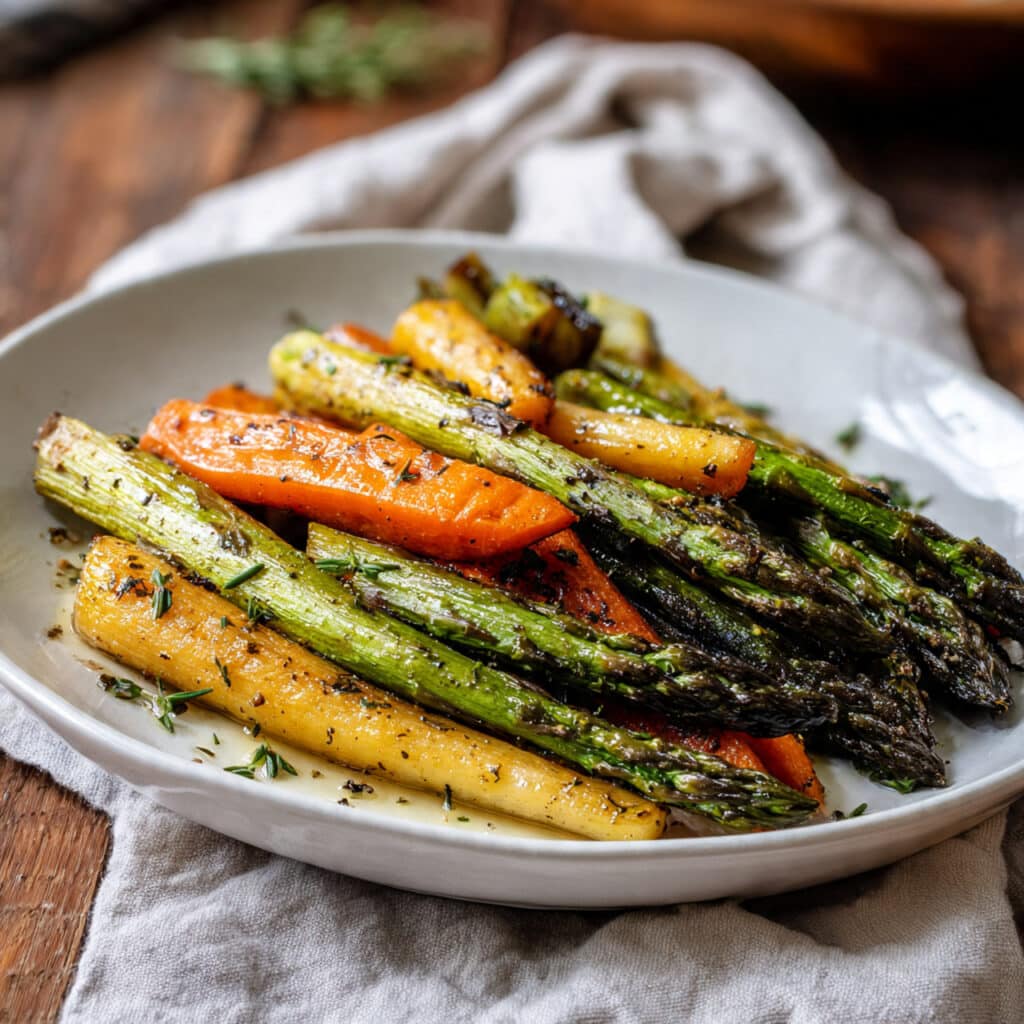
The orange and green color combination also makes this a natural fit at holiday tables — Thanksgiving, Easter, or Christmas — where the fresh colors contrast beautifully with the heavier, browner foods that tend to dominate those menus. A little sprinkle of fresh herbs and it looks festive and intentional.
Allergy Information
- Gluten-free: Yes, naturally gluten-free as written.
- Vegan: Yes, naturally vegan as written.
- Nut-free: Yes, naturally nut-free as written. (Omit pecans if using that variation.)
- Nightshade-free: Yes, naturally free of nightshades.
Storage & Reheating
Store leftovers in an airtight container in the refrigerator for up to 3 to 4 days.
Reheat in a skillet over medium heat for a few minutes, tossing occasionally, or in a 350°F oven or air fryer for 5 minutes to restore some of the roasted texture.
The microwave is the least ideal option as it makes both vegetables soft and a little watery, but it works when you are in a hurry.
FAQs
My carrots are always still crunchy when the asparagus is done. What can I do?
Cut your carrots into thinner sticks so they are roughly the same diameter as the asparagus, and if they are still thicker, give them a 10-minute head start in the oven alone before adding the asparagus to the pan.
Can I use frozen asparagus or frozen carrots?
Fresh vegetables will always roast much better than frozen ones, which release a lot of water and end up steamed rather than caramelized. If you must use frozen, thaw and dry them as thoroughly as possible and add an extra 5 to 10 minutes of roasting time.
Can I add other vegetables to this sheet pan?
Absolutely — broccoli florets, halved Brussels sprouts, and red onion wedges all roast beautifully alongside asparagus and carrots at the same temperature. Just keep the pieces in a similar size range so everything finishes cooking at the same time.
Is this recipe good for meal prep?
It is a solid meal prep option — roasted vegetables hold up well in the fridge for several days and are easy to add to grain bowls, wraps, pasta, or eggs throughout the week. The texture softens after refrigerating, but the flavor stays delicious.
What if I do not have garlic powder? Can I use fresh garlic?
You can use 2 minced garlic cloves, but toss them in with the vegetables and keep a close eye on them near the end of roasting — fresh garlic can burn at high heat and turn bitter. Adding the fresh garlic during the last 10 minutes of roasting rather than at the start reduces that risk significantly.
💬 Tried this recipe? Leave a comment and rating below!