
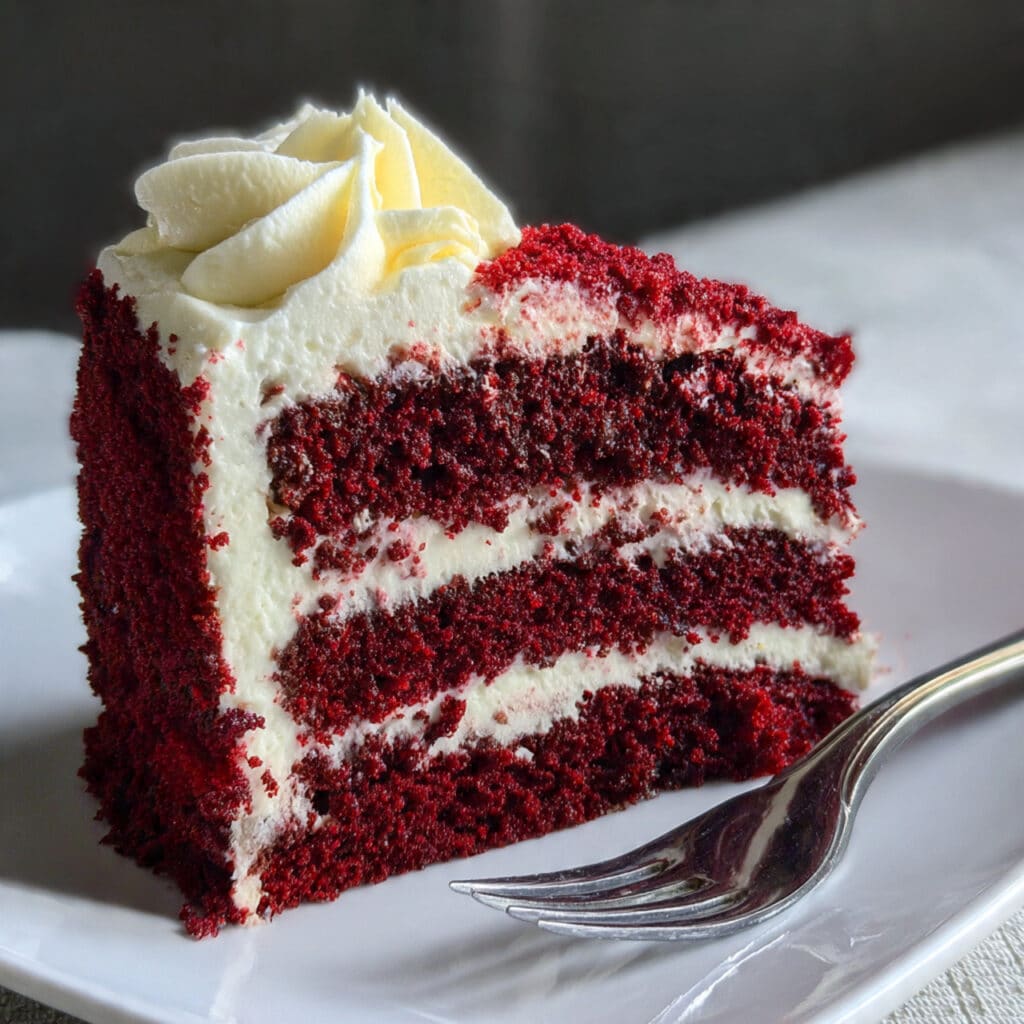
Red velvet cake is a stunning, velvety-smooth celebration cake that never fails to impress! With its gorgeous crimson color, subtle chocolate flavor, and cloud-like cream cheese frosting, this classic Southern dessert is perfect for birthdays, holidays, or any time you want to make something truly special.
Love More Red Velvet Cake Desserts? Try My Red Velvet Cinnamon Rolls or this Hershey’s Red Velvet Blossoms Cookies next.
Why You’ll Love This Recipe
Soft, moist, and beautifully vibrant, this Red Velvet Cake is a timeless classic. With its subtle cocoa flavor, tender crumb, and luscious cream cheese frosting, every slice is rich, elegant, and perfect for any celebration.
Print
The Best Red Velvet Cake Recipe
- Total Time: 2 hours (plus decorating time)
- Yield: One 2-layer 8-inch cake
Description
This classic red velvet cake recipe creates a tender, moist cake with the perfect subtle chocolate flavor and stunning red color. Topped with tangy cream cheese buttercream, it’s an impressive dessert that’s easier to make than you think!
Ingredients
Red Velvet Cake:
- 2.25 cups (275 g) all-purpose flour
- 3 tablespoons (18 g) cornflour (cornstarch)
- 3 tablespoons (14 g) unsweetened cocoa powder
- 1/2 teaspoon baking soda
- 1 teaspoon baking powder
- 1/2 teaspoon salt (omit if using salted butter)
- 6 tablespoons (86 g) unsalted butter, room temperature
- 3/4 cup (141 g) unflavored vegetable oil (such as canola)
- 1.75 cups (344 g) white granulated sugar
- 3 large eggs, room temperature
- 1 tablespoon (12 g) vanilla essence/extract
- 1.5 teaspoons white vinegar
- 3.5 tablespoons (38 g) red liquid food coloring
- 3/4 cup (158 g) buttermilk, room temperature
Cream Cheese Buttercream:
- 1 batch of cream cheese buttercream frosting (make 1.5x batch if piping rosettes like in the photos)
Instructions
Preheat your oven to 160°C (320°F) fan forced. If your oven doesn’t have a fan option, bump it up to 175°C (347°F). Grease and line two 8-inch cake pans with parchment paper. I like to grease the pans, add a parchment circle to the bottom, then grease again – this ensures your cakes will release perfectly!
In a bowl, sift together the flour, cornflour, cocoa powder, baking soda, baking powder, and salt. This step is important – sifting removes any lumps and aerates the flour for a lighter cake. Use a whisk or fork to mix everything together really well, then set it aside.
In another large bowl, add the butter, vegetable oil, and sugar. Using your electric mixer, cream them together for 2-3 minutes until the mixture is light, fluffy, and creamy. Don’t rush this step! Proper creaming incorporates air into the batter, which means a lighter, fluffier cake.
Add the eggs one at a time, mixing well between each addition – about 10-15 seconds per egg. This helps everything emulsify properly so your batter stays smooth and doesn’t separate. You’ll see the mixture get lighter and fluffier with each egg.
Add the vanilla, vinegar, and red liquid food coloring, and mix until everything is beautifully combined and evenly colored. Now set your mixer aside – we’re going low-tech from here to avoid overmixing!
Here’s where gentle hands make all the difference! Add half of your premixed dry ingredients to the wet mixture and gently fold it in with a spatula until just combined. Add all of the buttermilk and fold until just combined. Finally, add the remaining dry ingredients and fold gently until you can’t see any more flour streaks.
Important: Do NOT overmix! Overmixing develops gluten and makes the cake tough instead of tender. A few small lumps are totally fine.
Distribute the batter evenly between your two prepared 8-inch cake pans. A kitchen scale makes this super easy – just weigh each pan to make sure they’re equal! Bake for 30 minutes or until a toothpick inserted into the center comes out clean or with just a few moist crumbs.
Pro tip: Resist the urge to open the oven door before the 25-minute mark! Opening it too early can cause your cake layers to sink in the middle.
Let the cakes cool in their pans for 15-20 minutes. This cooling time helps them firm up so they won’t break when you remove them. Then turn them out onto a wire rack to cool completely before frosting. And I mean COMPLETELY cool – if there’s even a hint of warmth, your frosting will melt!
Once your cakes are completely cool, it’s decorating time! Place one layer on your serving plate, add a generous amount of cream cheese buttercream on top, and spread it evenly. Place the second layer on top, then frost the entire cake – top and sides.
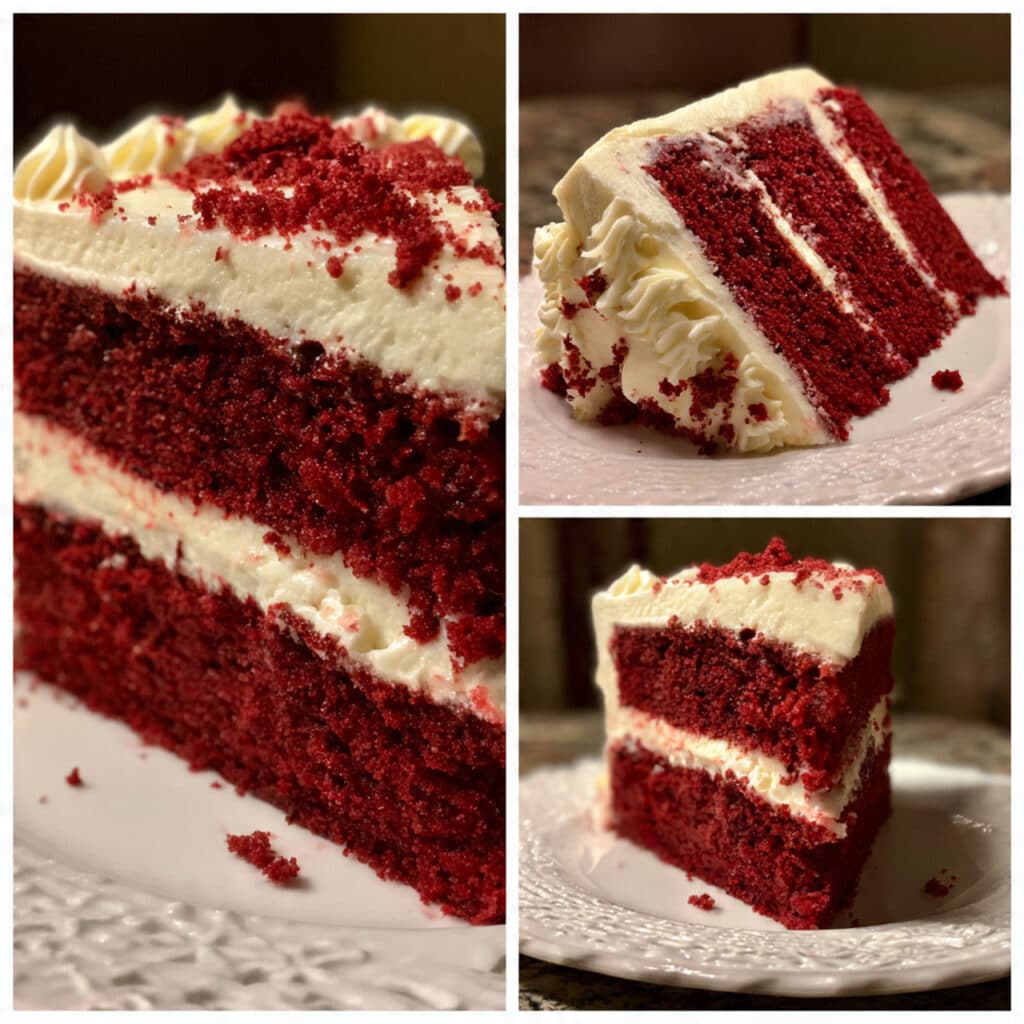
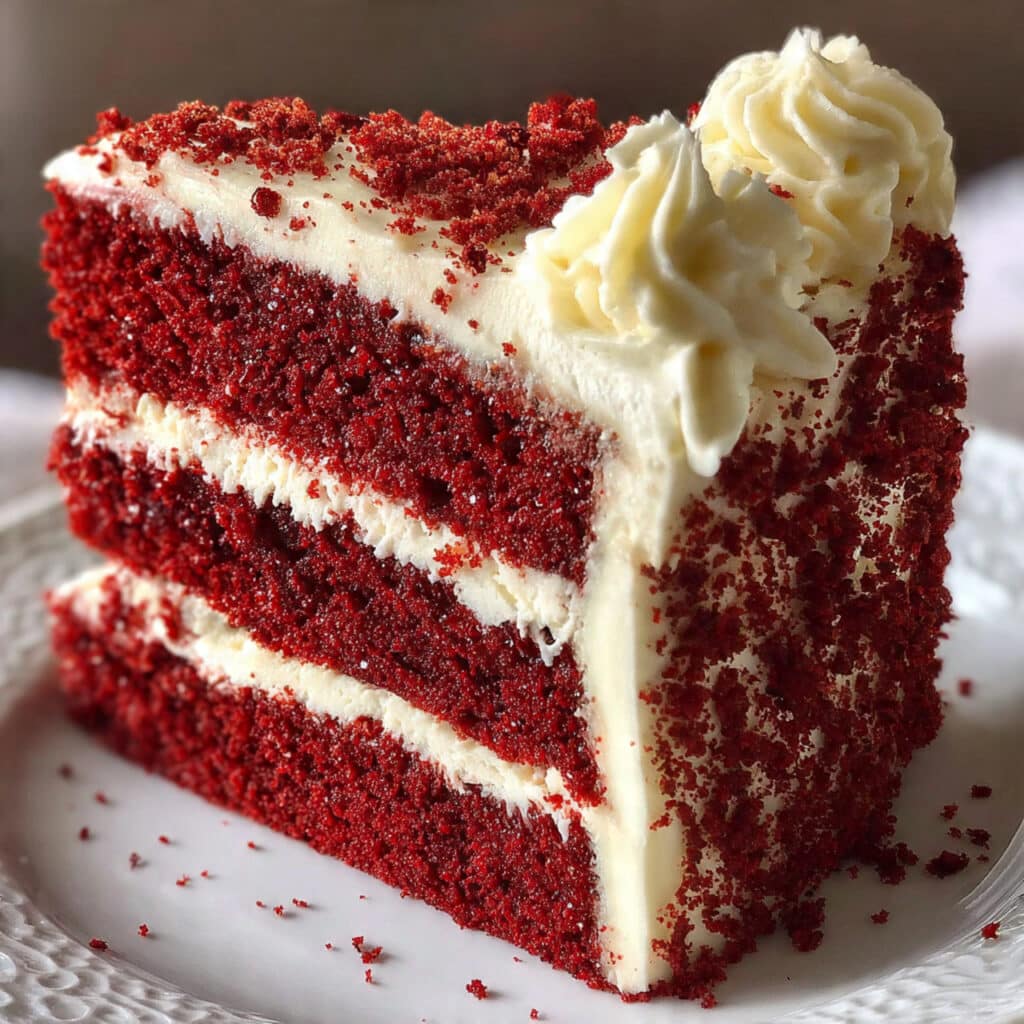
If you’re feeling fancy and want to pipe rosettes like I do in the photos, you’ll need about 1.5x the frosting recipe. Use a 1M piping tip and pipe in a circular motion from the outside in. It looks impressive but it’s actually super easy!
Pop your beautifully decorated cake into the fridge to firm up – this makes slicing so much cleaner! Bring it out about an hour before serving to let it come to room temperature. Trust me, the flavor and texture are so much better when it’s not cold from the fridge.
Notes
- Use cake strips (or make DIY ones with wet towels and foil) around your pans for perfectly flat layers that don’t need trimming.
- Weigh your flour if you can! Too much flour is the #1 reason cakes turn out dry. Spooning and leveling works too, but weighing is most accurate.
- For the deepest red color, let your batter sit for 5 minutes after mixing. The color develops and deepens as it sits!
- Level your cakes with a serrated knife or cake leveler if they dome. But honestly, with the lower temperature, mine rarely need it.
- Common mistake to avoid: Don’t overmix once you add the flour! Mix just until you can’t see dry flour anymore, then STOP.
- Prep Time: 20 minutes
- Cook Time: 30 minutes + Cooling Time: 1 hour
- Category: Dessert
- Method: Baking
- Cuisine: American
Ingredient List
Red Velvet Cake:
- 2.25 cups (275 g) all-purpose flour
- 3 tablespoons (18 g) cornflour (cornstarch)
- 3 tablespoons (14 g) unsweetened cocoa powder
- 1/2 teaspoon baking soda
- 1 teaspoon baking powder
- 1/2 teaspoon salt (omit if using salted butter)
- 6 tablespoons (86 g) unsalted butter, room temperature
- 3/4 cup (141 g) unflavored vegetable oil (such as canola)
- 1.75 cups (344 g) white granulated sugar
- 3 large eggs, room temperature
- 1 tablespoon (12 g) vanilla essence/extract
- 1.5 teaspoons white vinegar
- 3.5 tablespoons (38 g) red liquid food coloring
- 3/4 cup (158 g) buttermilk, room temperature
Cream Cheese Buttercream:
- 1 batch of cream cheese buttercream frosting (make 1.5x batch if piping rosettes like in the photos)
Friendly Notes:
- Room temperature ingredients are KEY here! They blend together so much better and create a smoother batter.
- If you don’t have buttermilk, make your own by adding 2 teaspoons of white vinegar or lemon juice to 3/4 cup of regular milk. Let it sit for 5 minutes before using.
- I always use liquid gel food coloring for the most vibrant red color. The cheap stuff from the grocery store works, but professional gel colors give you that WOW factor!
Why These Ingredients Work
Let me break down the magic behind this recipe! The cornflour (cornstarch) is my secret weapon – it makes the cake incredibly tender and gives it that “velvet” texture we’re after. The combination of butter and oil gives you the best of both worlds: butter for flavor and oil for moisture that lasts for days.
The buttermilk and vinegar react with the baking soda to create a super light, fluffy texture while adding a subtle tang that balances the sweetness perfectly. And that tiny bit of cocoa powder? It’s not enough to make it taste like chocolate cake, but it enhances the color and adds depth to the flavor.
The cream cheese frosting is non-negotiable for red velvet cake – the tangy creaminess is the perfect complement to the sweet, tender cake layers.
Essential Tools and Equipment
Here’s what you’ll need to make this beauty:
- Two 8-inch round cake pans
- Parchment paper and/or cooking spray
- Electric mixer (hand or stand mixer – either works great!)
- Large mixing bowls (at least 2)
- Sifter or fine-mesh strainer
- Whisk or fork
- Rubber spatula
- Wire cooling rack
- Toothpick for testing doneness
- Offset spatula for frosting (optional but helpful)
- Piping bag and 1M tip (if you want those gorgeous rosettes)
How To Make Red Velvet Cake
Step 1 – Preheat Oven
Preheat your oven to 160°C (320°F) fan forced. If your oven doesn’t have a fan option, bump it up to 175°C (347°F). Grease and line two 8-inch cake pans with parchment paper. I like to grease the pans, add a parchment circle to the bottom, then grease again – this ensures your cakes will release perfectly!
Step 2 – Prepare Dry Ingredients
In a bowl, sift together the flour, cornflour, cocoa powder, baking soda, baking powder, and salt. This step is important – sifting removes any lumps and aerates the flour for a lighter cake. Use a whisk or fork to mix everything together really well, then set it aside.
Step 3 – Cream Butter, Oil, and Sugar
In another large bowl, add the butter, vegetable oil, and sugar. Using your electric mixer, cream them together for 2-3 minutes until the mixture is light, fluffy, and creamy. Don’t rush this step! Proper creaming incorporates air into the batter, which means a lighter, fluffier cake.
Step 4 – Add Eggs
Add the eggs one at a time, mixing well between each addition – about 10-15 seconds per egg. This helps everything emulsify properly so your batter stays smooth and doesn’t separate. You’ll see the mixture get lighter and fluffier with each egg.
Step 5 – Add Flavorings and Color
Add the vanilla, vinegar, and red liquid food coloring, and mix until everything is beautifully combined and evenly colored. Now set your mixer aside – we’re going low-tech from here to avoid overmixing!
Step 6 – Combine Wet and Dry Ingredients
Here’s where gentle hands make all the difference! Add half of your premixed dry ingredients to the wet mixture and gently fold it in with a spatula until just combined. Add all of the buttermilk and fold until just combined. Finally, add the remaining dry ingredients and fold gently until you can’t see any more flour streaks.
Important: Do NOT overmix! Overmixing develops gluten and makes the cake tough instead of tender. A few small lumps are totally fine.
Step 7 – Bake
Distribute the batter evenly between your two prepared 8-inch cake pans. A kitchen scale makes this super easy – just weigh each pan to make sure they’re equal! Bake for 30 minutes or until a toothpick inserted into the center comes out clean or with just a few moist crumbs.
Pro tip: Resist the urge to open the oven door before the 25-minute mark! Opening it too early can cause your cake layers to sink in the middle.
Step 8 – Cool
Let the cakes cool in their pans for 15-20 minutes. This cooling time helps them firm up so they won’t break when you remove them. Then turn them out onto a wire rack to cool completely before frosting. And I mean COMPLETELY cool – if there’s even a hint of warmth, your frosting will melt!
Step 9 – Frost and Decorate
Once your cakes are completely cool, it’s decorating time! Place one layer on your serving plate, add a generous amount of cream cheese buttercream on top, and spread it evenly. Place the second layer on top, then frost the entire cake – top and sides.
If you’re feeling fancy and want to pipe rosettes like I do in the photos, you’ll need about 1.5x the frosting recipe. Use a 1M piping tip and pipe in a circular motion from the outside in. It looks impressive but it’s actually super easy!
Step 10 – Chill and Serve
Pop your beautifully decorated cake into the fridge to firm up – this makes slicing so much cleaner! Bring it out about an hour before serving to let it come to room temperature. Trust me, the flavor and texture are so much better when it’s not cold from the fridge.
You Must Know
Room temperature ingredients are CRUCIAL. Cold eggs and buttermilk will cause your butter to seize up and create a lumpy batter. Take everything out of the fridge at least 30 minutes before you start baking.
Don’t skip the sifting! It might seem like an extra step, but it prevents lumps in your cocoa powder and ensures your dry ingredients are evenly distributed.
Personal Secret: I always bake my red velvet cake at a slightly lower temperature than most recipes call for. This slower bake creates a more even, tender crumb and prevents those pesky domed tops. Flat layers = easier frosting!
Pro Tips & Cooking Hacks
- Use cake strips (or make DIY ones with wet towels and foil) around your pans for perfectly flat layers that don’t need trimming.
- Weigh your flour if you can! Too much flour is the #1 reason cakes turn out dry. Spooning and leveling works too, but weighing is most accurate.
- For the deepest red color, let your batter sit for 5 minutes after mixing. The color develops and deepens as it sits!
- Level your cakes with a serrated knife or cake leveler if they dome. But honestly, with the lower temperature, mine rarely need it.
- Common mistake to avoid: Don’t overmix once you add the flour! Mix just until you can’t see dry flour anymore, then STOP.
Flavor Variations / Suggestions
Want to shake things up? Here are some fun twists:
- Red Velvet Cupcakes: Use the same batter and bake in lined muffin tins for 18-22 minutes. Perfect for parties!
- Chocolate Cream Cheese Frosting: Add 1/4 cup of cocoa powder to your cream cheese frosting for a chocolate twist.
- Red Velvet Brownies: Pour the batter into a 9×13 pan and bake for 35-40 minutes for fudgy brownies.
- Add chocolate chips: Fold in 1 cup of white or dark chocolate chips for extra decadence.
- Peppermint Red Velvet: Add 1/2 teaspoon peppermint extract to the batter for a holiday version!
- Raspberry filling: Spread raspberry jam between the layers before adding frosting for a fruity surprise.
Make-Ahead Options
This cake is perfect for planning ahead! Here’s what you can do:
The cake layers can be baked up to 2 days in advance. Once completely cool, wrap them tightly in plastic wrap and store at room temperature. They’ll actually be easier to frost this way!
To freeze the layers: Wrap each cooled layer in plastic wrap, then foil, and freeze for up to 3 months. Thaw in the fridge overnight before frosting.
The frosting can be made up to 3 days ahead and kept in the fridge in an airtight container. Just bring it to room temperature and give it a quick whip with the mixer before using.
Fully frosted cake can be assembled and refrigerated up to 2 days before serving. Just keep it covered so it doesn’t absorb fridge odors!
Recipe Notes & Baker’s Tips
- The batter will be quite thick – that’s perfect! It should be pourable but not runny.
- Red velvet cake tastes even better the next day after the flavors have had time to meld together.
- If your cake layers are sticking to the pans, run a knife around the edges and let them sit for a few more minutes before trying again.
- The vinegar might seem weird, but you won’t taste it! It reacts with the baking soda for lift and tenderness.
- Always let your cream cheese and butter soften naturally at room temperature for the frosting. DON’T microwave them – it makes the frosting grainy!
Serving Suggestions
Red velvet cake is a showstopper all on its own, but here are some ways to make it even more special:
- Serve with a dollop of extra cream cheese frosting on the side
- Add fresh berries (strawberries or raspberries are gorgeous!)
- Sprinkle with red velvet cake crumbs for a fancy bakery look
- Dust with a tiny bit of cocoa powder for contrast
- Serve with vanilla ice cream or whipped cream
- Pair with a cup of coffee or a glass of cold milk
- For parties, add some edible flowers or gold leaf for an elegant touch
This cake is perfect for birthdays, Valentine’s Day, Christmas, anniversaries, or honestly any Tuesday when you need something special!
How to Store Your Red Velvet Cake
Room Temperature: If you’re eating the cake within 1-2 days, you can keep it covered at room temperature. Just make sure it’s in a cool spot away from direct sunlight!
Refrigerator: Because of the cream cheese frosting, this cake is best stored in the fridge. Cover it with a cake dome or loosely with plastic wrap (so you don’t mess up your pretty frosting!). It’ll keep beautifully for up to 5 days.
Freezer: You can freeze slices or the whole cake! Wrap individual slices in plastic wrap, then foil, and freeze for up to 3 months. Thaw in the fridge overnight. For the whole cake, freeze it uncovered until the frosting is firm, then wrap well.
Reheating: No need! Just bring to room temperature for the best flavor and texture. If you must warm it, microwave individual slices for about 10 seconds.
Allergy Information
Contains: Wheat (gluten), eggs, dairy (butter, buttermilk, cream cheese in frosting)
Substitution Suggestions:
- Gluten-Free: Use a 1:1 gluten-free flour blend in place of regular flour and cornflour
- Dairy-Free: Use dairy-free butter and plant-based buttermilk (mix non-dairy milk with vinegar). Use dairy-free cream cheese for the frosting
- Egg-Free: This one’s tricky with 3 eggs! Try flax eggs (1 tablespoon ground flaxseed + 3 tablespoons water per egg) but note the texture will be different
- Vegan: Combine dairy-free and egg-free substitutions above
Questions I Get Asked A Lot
Why is my red velvet cake brown instead of red?
This usually means either not enough food coloring or your cocoa powder is overpowering the color. Use the full amount of food coloring (don’t be shy!) and make sure you’re using regular unsweetened cocoa powder, not dark/Dutch-processed cocoa which is much darker.
Why did my cake sink in the middle?
The most common reasons are: opening the oven door too early (wait at least 25 minutes!), overmixing the batter which deflates it, or your oven temperature being off. An oven thermometer is a great investment!
Do I have to use both butter and oil?
You could use all butter if you prefer, but the oil keeps the cake incredibly moist for days. The combination really does give the best texture and flavor – trust me on this one!
My frosting is too soft/runny – help!
Pop it in the fridge for 15-20 minutes to firm up, then give it another quick mix. Make sure your cream cheese and butter were properly softened (not melted!) when you made it. If it’s still too soft, beat in a little extra powdered sugar.
💬 Tried this recipe? Leave a comment and rating below! I’d absolutely love to hear how your red velvet cake turned out! Did you pipe rosettes or go for a rustic look? Share your experience and any tweaks you made.