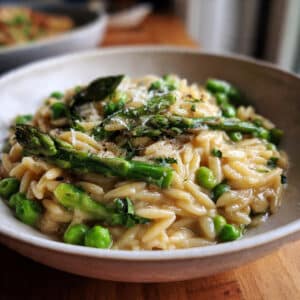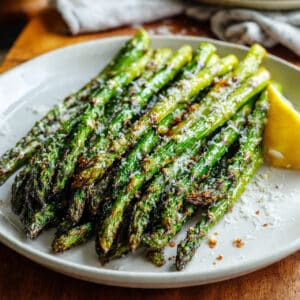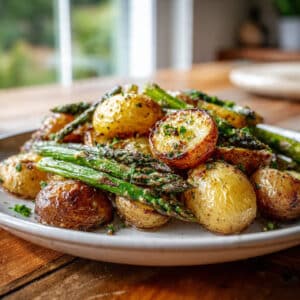
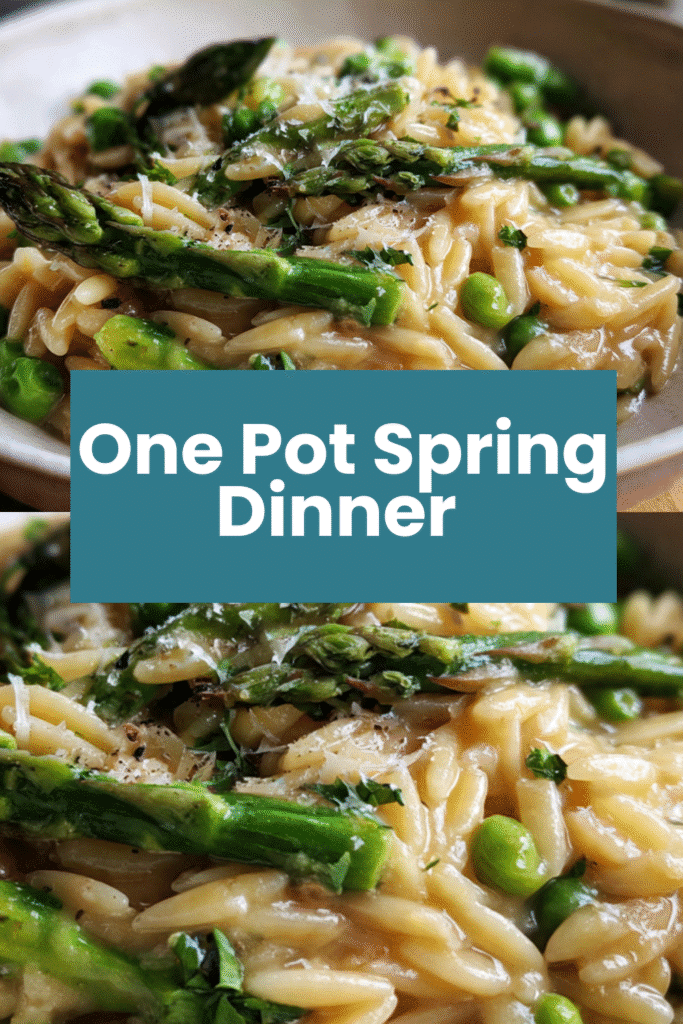
One Pot Orzo with Asparagus and Peas is the kind of dinner that makes a busy night feel surprisingly under control. It’s ready in about 30 minutes, uses just one pot, and turns out creamy and satisfying. Fresh asparagus and sweet peas get folded in at the end, a generous handful of Parmesan melts over the top, and just like that, dinner is simple, comforting, and done.
Why You’ll Love This Recipe
- One pot, one cleanup — from start to finish, everything happens in a single skillet or pot, which means very little to wash afterward.
- Weeknight-fast — 30 minutes from cold stove to warm bowl, including chopping and simmering time.
- That creamy, cheesy texture — it has all the cozy satisfaction of pasta with a saucy, almost risotto-like finish that feels genuinely indulgent.
- Packed with spring vegetables — asparagus and peas make it feel fresh and seasonal without requiring any extra side dishes.
- Endlessly adaptable — add shrimp, chicken, or swap the vegetables based on what is already in your refrigerator.
Orzo with Asparagus and Peas
- Total Time: 30 minutes
- Yield: 4 servings
- Diet: Vegetarian
Description
This one pot orzo with asparagus and peas delivers a creamy, risotto-like pasta dinner using a single skillet and exactly 30 minutes. The orzo absorbs garlicky, savory broth as it simmers, fresh asparagus and sweet peas fold right in, and a generous finish of lemon zest and Parmesan ties everything into a bowl that feels both light and deeply satisfying.
Ingredients
- 2 tbsp unsalted butter (or olive oil)
- 1 medium red onion, diced
- 2 garlic cloves, thinly sliced
- ¾ lb (12 oz) fresh asparagus, trimmed and cut into bite-size pieces
- 1½ cups dry orzo pasta
- 1 cup frozen peas (add straight from the freezer — no thawing needed)
- 3½ cups vegetable broth
- ¼ tsp kosher salt
- ¼ tsp ground black pepper
- Juice and zest of ½ lemon
- ⅓ cup freshly grated Parmesan cheese, plus more for serving
Instructions
1. Melt butter in a large deep skillet or wide saucepan over medium heat. Add the diced onion and cook, stirring occasionally, for 2–3 minutes until softened and slightly translucent. Add the sliced garlic and cook for 1 more minute until fragrant. Watch the garlic closely — it turns bitter the moment it browns.
2. Add the asparagus pieces and stir to coat them in the butter. Cook for 2–3 minutes, tossing occasionally, until the spears deepen in color and pick up the garlic-butter flavor. You are not cooking them all the way through yet — they finish in the broth.
3. Add the dry orzo to the pan and stir for about 1 minute until a few pieces look very lightly golden. This toasting step builds a subtle nuttiness in the finished dish — do not skip it.
4. Pour in the frozen peas and vegetable broth. Stir everything together and bring to a boil over medium-high heat. Once boiling, reduce to a gentle simmer and cook for 10 minutes, stirring every 2 minutes to prevent the orzo from sticking to the bottom of the pan.
5. At the 9-minute mark, taste an orzo piece — it should be al dente with a very slight bite remaining. Remove from heat. Stir in salt, pepper, lemon juice, and lemon zest. Fold in the grated Parmesan until it melts into the hot orzo and the sauce looks silky. Serve immediately with extra Parmesan grated over each bowl.
Notes
Check orzo early: Taste at 9 minutes — orzo keeps cooking from the residual heat after the pan leaves the stove. It goes from perfectly al dente to mushy very quickly, so pull it early rather than late.
Stir regularly: Every 2 minutes while simmering, and more often in the final minutes when most of the liquid has absorbed and the pasta sits in direct contact with the pan.
Toast the orzo: That 60-second toasting step in the butter before adding liquid adds genuine nuttiness you can taste in the finished bowl. It takes almost no extra time and makes a real difference.
Add protein: Stir in shredded rotisserie chicken or cooked shrimp in the last 2 minutes for a complete one-bowl dinner with almost no extra work.
Liquid adjustments: If the orzo absorbs the broth before it reaches al dente, add a splash more broth or water and continue simmering.
Storage: Refrigerate in an airtight container up to 3–4 days. Reheat in a skillet over medium-low heat with a splash of broth or water to loosen the sauce back to its original consistency. Do not freeze — the texture changes significantly after thawing.
- Prep Time: 10 minutes
- Cook Time: 20 minutes
- Category: Pasta
- Method: Stovetop
- Cuisine: American, Italian
Ingredients You’ll Need
- 2 tablespoons unsalted butter (olive oil works as a substitute)
- 1 medium red onion, diced (shallots or regular yellow onion also work)
- 2 garlic cloves, thinly sliced
- ¾ lb (about 12 oz) fresh asparagus, trimmed and cut into bite-size pieces
- 1½ cups dry orzo pasta
- 1 cup frozen peas (no need to thaw — straight from the freezer is fine)
- 3½ cups vegetable broth (chicken broth works if you do not need it vegetarian)
- ¼ teaspoon kosher salt
- ¼ teaspoon ground black pepper
- Juice and zest of ½ lemon
- ⅓ cup freshly grated Parmesan cheese, plus more for serving
Why These Ingredients Work
Orzo is the secret weapon of this recipe. It looks like large grains of rice, but it is actually a small pasta shape, which means it absorbs the surrounding liquid as it cooks and releases starch in the process — creating that creamy, saucy texture that makes the whole dish feel rich without adding any heavy cream or thick sauce.
Toasting the dry orzo in butter for about a minute before adding the liquid adds a subtle nutty depth that takes the flavor a step further without any extra work.
The lemon here — both juice and zest — is doing something really important. Without it, this dish can taste a little flat and heavy from all the starchy pasta and salty broth and cheese. A half lemon’s worth of brightness pulls all those flavors into focus and makes the asparagus and peas taste greener and more vibrant. Do not skip it, and add it at the very end so the freshness does not cook off.
Essential Tools and Equipment
- Large deep skillet or wide saucepan with a lid (3-quart or larger)
- Wooden spoon or silicone spatula for stirring
- Knife and cutting board
- Microplane or fine grater for the Parmesan and lemon zest
- Measuring cups and spoons
Step-by-Step Instructions
Step 1: Sauté the Aromatics
Melt the butter in a large skillet or wide saucepan over medium heat. Add the diced red onion and cook, stirring occasionally, for 2 to 3 minutes until it softens and becomes slightly translucent. Add the sliced garlic and keep cooking for another minute
Step 2: Cook the Asparagus
Add the asparagus pieces to the butter and onion mixture and stir to coat. Cook for 2 to 3 minutes, tossing occasionally, until the asparagus turns a slightly deeper green and picks up a little of that buttery, garlicky flavor from the pan. You are not trying to cook it all the way through at this point
Step 3: Toast the Orzo
Add the dry orzo to the pan and stir it around for about a minute, letting it toast lightly in the butter and vegetables. You might see a few pieces turn just barely golden. This toasting step is easy to skip, but it adds a subtle nuttiness to the finished dish that makes a real difference in the depth of flavor.
Step 4: Add the Peas and Broth
Pour in the frozen peas and all of the vegetable broth, then stir everything together and bring the mixture to a boil over medium-high heat. Once it reaches a boil, reduce the heat to a gentle simmer and cook for about 10 minutes, stirring every couple of minutes to prevent the orzo from sticking to the bottom.
Step 5: Season and Finish
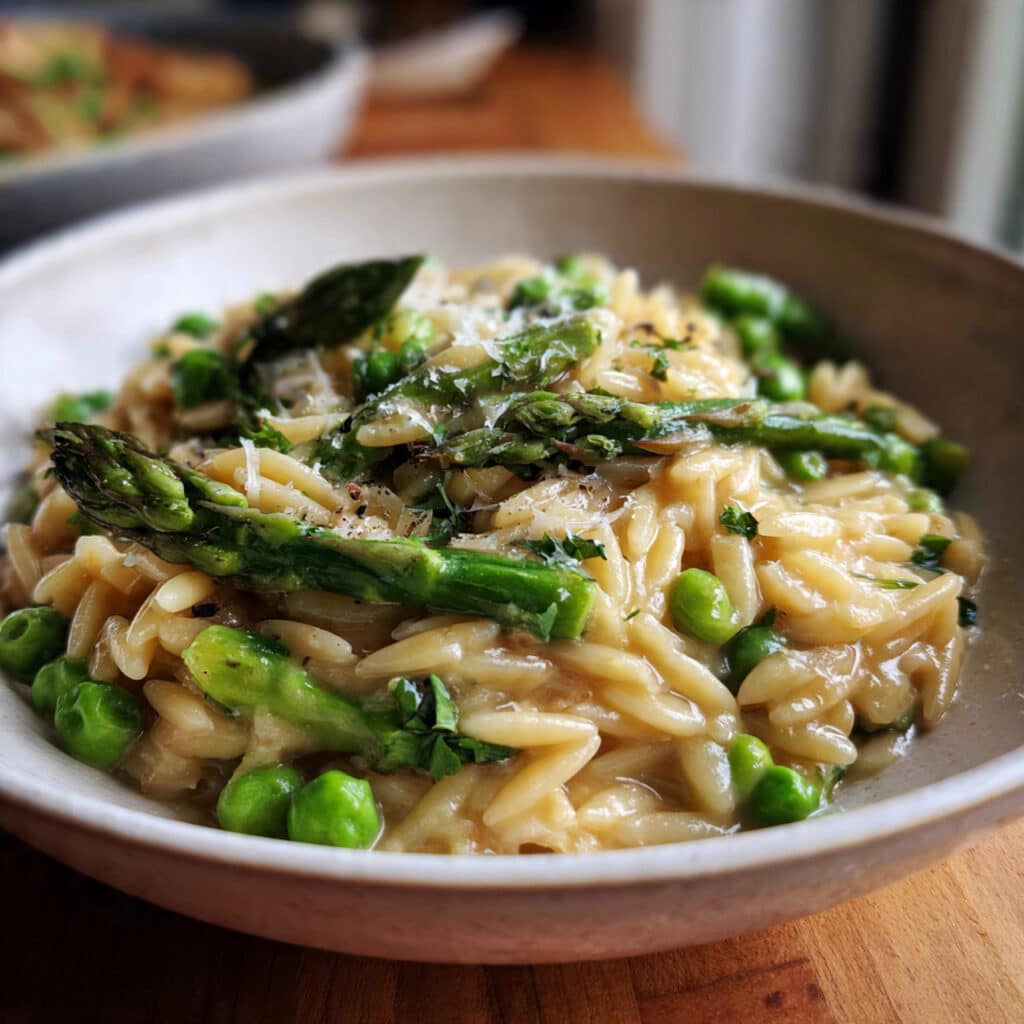
Taste the orzo at the 9-minute mark. Stir in the salt, pepper, lemon juice, and lemon zest and taste again, adjusting the seasoning as needed. Remove the pan from the heat and fold in the grated Parmesan, which will melt into the warm orzo and give the whole dish a silky, cohesive finish. Serve immediately with extra Parmesan grated over each bowl.
You Must Know
Overcooked orzo in this dish becomes mushy and clumpy rather than creamy and separate, and there is no fixing it once it has gone too far. Also, stir the orzo regularly while it simmers to make sure nothing sticks to the bottom of the pan, especially toward the end when the liquid is mostly absorbed and the heat is touching the pasta directly.
Personal Secret: Do not skip toasting the dry orzo in butter before adding the broth. It takes about 60 seconds and adds a nutty, almost toasty flavor to the finished dish that most people cannot quite identify but definitely notice
Pro Tips & Cooking Hacks
- Check your orzo 1 to 2 minutes before the package’s suggested cooking time to prevent overcooking — it goes from perfect to mushy faster than you expect.
- Stir regularly during the simmering stage, especially in the last few minutes, to keep the orzo from sticking to the bottom.
- Save a cup of broth on the side and stir in a splash at the end if the dish looks thicker than you would like.
- Fresh herbs stirred in at the end — parsley, basil, or dill — add a bright herby freshness that takes this to another level.
- Leftover rotisserie chicken shredded over the top right before serving adds protein and makes this a complete one-bowl meal.
- Swap the Parmesan for crumbled feta and the lemon for a little white wine vinegar for a tangier, Mediterranean-style variation.
Flavor Variations & Suggestions
For a heartier, more substantial meal, stir in 1 cup of cooked shredded chicken or a handful of peeled shrimp during the last 2 minutes of simmering. The shrimp will cook through quickly in the hot broth without becoming tough, and the chicken just needs to warm through — either way, you have a genuinely complete one-pot dinner rather than a side dish.
To make this dairy-free, simply leave out the butter and Parmesan and use olive oil instead for sautéing. A tablespoon of nutritional yeast stirred in at the end adds a savory, cheesy depth that does a surprisingly good job standing in for the Parmesan, and a little extra lemon keeps everything tasting bright and fresh.
Make-Ahead Options
This orzo is really best served immediately, straight from the pan, when the creamy texture is at its peak. If you need to make components ahead, you can sauté the onion, garlic, and asparagus up to a day in advance and refrigerate them, then add the orzo, peas, and broth and finish the dish in about 15 minutes when you are ready to eat.
Leftovers keep in an airtight container in the refrigerator for 3 to 4 days — the orzo will absorb the remaining liquid as it sits, so reheat it gently in a skillet with a splash of broth or water to loosen the texture back up. Freezing is not recommended as the orzo becomes gummy after thawing.
What to Serve With One Pot Orzo with Asparagus and Peas
This orzo is filling enough to stand on its own as a light spring dinner, but it also makes a lovely side dish next to a simple piece of grilled or baked salmon. The lemon in the orzo echoes the citrus that usually accompanies fish, and the creaminess of the pasta balances the clean flavor of the salmon without overpowering it.
A simple green salad dressed with lemon vinaigrette and a piece of crusty bread for soaking up the sauce is all you need to turn this into a complete, satisfying meal that feels seasonal and fresh. A glass of crisp white wine — Pinot Grigio or an unoaked Chardonnay — pairs beautifully with the lemon and Parmesan notes in the dish.
Allergy Information
- Gluten: Contains orzo (wheat pasta). Use a certified gluten-free small pasta or rice instead.
- Dairy: Contains butter and Parmesan. Use olive oil and nutritional yeast or a dairy-free Parmesan alternative.
- Nut-free: Yes, naturally nut-free as written.
- Vegan: Swap butter for olive oil and Parmesan for nutritional yeast to make it fully vegan.
Storage & Reheating
Refrigerate leftovers in an airtight container for up to 3 to 4 days. Reheat gently in a skillet over medium-low heat with a splash of broth or water, stirring until loosened and warmed through — the orzo firms up significantly in the refrigerator and needs the extra liquid to become creamy again.
Individual portions can be microwaved with a tablespoon of water stirred in before heating.
FAQs
Can I use chicken broth instead of vegetable broth?
Absolutely — chicken broth adds a slightly richer, more savory base and works just as well as vegetable broth in this recipe. Use whichever you have on hand.
My orzo keeps sticking to the bottom of the pan. What am I doing wrong?
The fix is stirring more frequently — every 2 minutes or so while it simmers, and more often in the final few minutes when most of the liquid has absorbed. A slightly lower heat also helps prevent sticking without extending the cooking time significantly.
Can I use fresh peas instead of frozen?
Yes, fresh peas work beautifully and cook in about the same amount of time as frozen. Add them at the same point in the recipe — they do not need any pre-cooking.
How do I make this recipe more filling for a full dinner?
Stir in shredded rotisserie chicken, cooked shrimp, or white beans during the last couple of minutes of cooking. Any of these additions add protein without requiring much extra prep work.
Can I make this recipe gluten-free?
Yes — substitute the orzo with a certified gluten-free small pasta, such as gluten-free ditalini or rice-based orzo. Cooking times may vary slightly, so check for doneness by tasting a few minutes before the recommended time.
💬 Tried this recipe? Leave a comment and rating below!