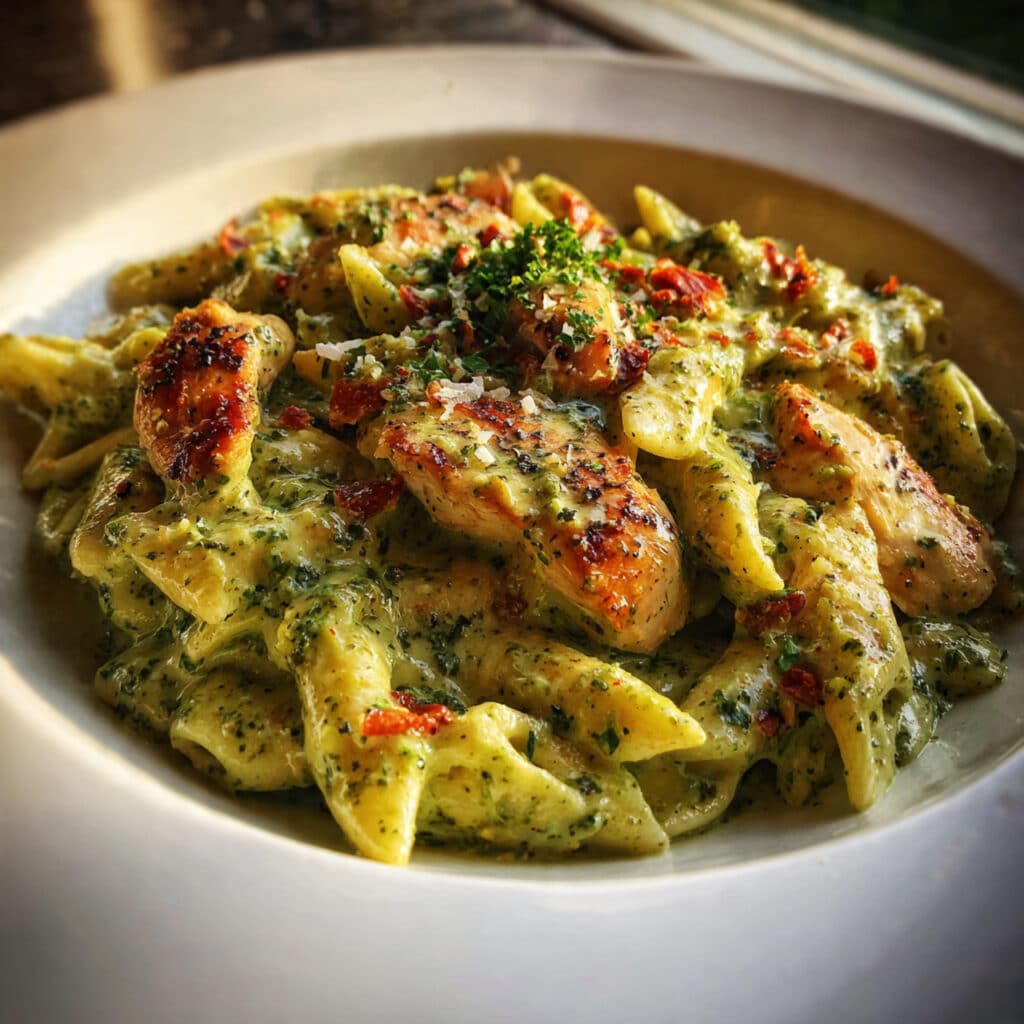
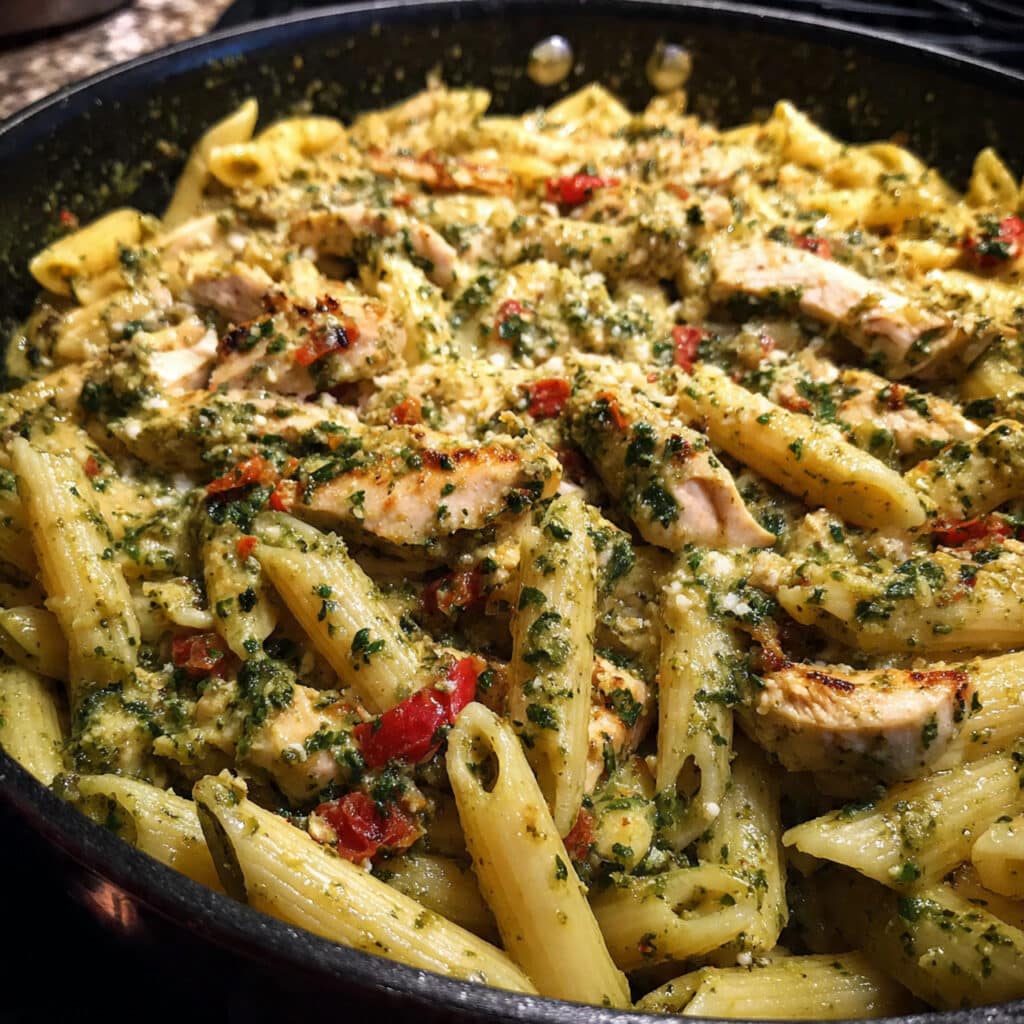
One pot chicken pesto pasta is easy, irresistible, and the ultimate weeknight comfort food! It has simple ingredients like tender chicken, penne pasta, cream cheese, and aromatic basil pesto—all cooked together in one skillet for minimal cleanup and maximum flavor.
Love More Chicken Pasta Recipes? Try My One Pot Cheeseburger Macaroni or this Cajun Chicken Pasta next.
Why You’ll Love This Recipe
Fresh, creamy, and bursting with flavor, this One Pot Chicken Pesto Pasta is a quick and delicious meal that’s perfect for busy nights. Tender chicken and pasta simmer together in a rich pesto sauce for a dish that’s both simple and satisfying. Every bite is filled with herby, cheesy goodness and comforting warmth.
Print
One Pot Chicken Pesto Pasta
- Total Time: 30 minutes
- Yield: 4 servings
Description
This one pot chicken pesto pasta is a quick and easy weeknight dinner with tender chicken, penne pasta, and a creamy basil pesto sauce all cooked together in one skillet. Ready in 30 minutes with minimal cleanup!
Ingredients
Main Ingredients
- 1 pound boneless, skinless chicken breast, cut into 1-inch pieces
- 2 tablespoons butter (salted or unsalted works fine)
- 2 cloves garlic, minced
- 1/2 pound penne pasta (8 ounces)
- 1 1/2 cups chicken broth (low-sodium is best so you can control the salt)
- 1 cup milk (whole or 2% – don’t go skim, trust me!)
- 3 ounces cream cheese, cut into chunks (let it soften a bit on the counter)
- 1/3 cup basil pesto (homemade or store-bought – I love Costco’s Kirkland brand!)
- 1/4 cup grated Parmesan cheese (freshly grated melts better than the pre-shredded stuff)
- Freshly cracked black pepper, to taste
- Pinch of crushed red pepper flakes (optional, but highly recommended!)
Optional Add-Ins (But So Good!)
- 3 cups fresh spinach (adds color and nutrition without changing the flavor)
- 1/4 cup sliced sun-dried tomatoes (the oil-packed ones add amazing depth)
- Sautéed mushrooms (cook these separately and stir in at the end)
Friendly Notes:
- If you can’t find penne, farfalle (bowties) or rotini work beautifully too!
- Store-bought pesto is totally fine here. Save yourself the extra work unless you’re really feeling ambitious.
- Full-fat dairy is key—the sauce gets silky and luscious. Low-fat versions can get grainy.
Instructions
Cut your chicken into chunks about the same size so they cook evenly. Melt the butter in your skillet over medium heat, add the chicken, and let it cook for 5 or 6 minutes until it’s got some color on it.
It doesn’t need to be cooked through yet. Toss in the garlic, stir it around for a minute until it smells amazing, and you’re good.
Dump in the uncooked pasta and pour in the chicken broth. Stir everything around—make sure you scrape up those browned bits on the bottom.
Put the lid on, turn the heat up to medium-high, and let it come to a full boil. Once it’s boiling, give it a quick stir, put the lid back on, and turn the heat down to medium-low. Let it simmer for about 8 minutes, stirring every 2 minutes. The pasta should be tender and most of the broth should be gone.
Add the milk, cream cheese, and pesto. Stir everything over medium heat until the cream cheese melts completely. This takes a couple minutes.
Stir in the Parmesan until it’s all combined. If it looks too thick, add a splash more milk. If it’s too thin, let it cook another minute.
If you’re using spinach or sun-dried tomatoes, stir them in now. The spinach wilts in like 30 seconds. Take it off the heat, add some cracked pepper and red pepper flakes, and you’re done.
Notes
Pasta stick-prevention hack: After you add the pasta and broth, give it a really good stir before putting the lid on. Run your spoon along the bottom of the pan to make sure no pasta is stuck. Then stir every 2 minutes. This is non-negotiable if you want perfectly cooked pasta that’s not clumped together!
Even cooking secret: Make sure your burner size matches your pan size. If you use a huge pan on a tiny burner, the edges won’t heat properly and your pasta will cook unevenly.
Invest in good cookware: I know, I know—not everyone wants to buy expensive pans. But a heavy, thick-bottomed skillet with even heat distribution makes ALL the difference in one-pot pasta recipes. It’s worth saving up for if you make these kinds of dishes often.
The two-minute stir rule: Set a timer! It’s so easy to get distracted and forget to stir. Those two-minute intervals are the sweet spot—frequent enough to prevent sticking, but not so often that you’re letting out all the steam.
Common mistake to avoid: Don’t add the cream cheese and pesto too early! If you add them while there’s still a lot of liquid broth in the pan, they’ll separate and get oily. Wait until the pasta has absorbed most of the broth first.
Time-saving shortcut: Use rotisserie chicken instead of raw chicken breast! Just shred it and add it at the very end with the spinach. You skip the whole browning step and dinner’s done even faster.
- Prep Time: 5 minutes
- Cook Time: 25 minutes
- Category: Main Dish
- Method: One Pot
- Cuisine: Italian-American
Ingredients You’ll Need
Main Ingredients
- 1 pound boneless, skinless chicken breast, cut into 1-inch pieces
- 2 tablespoons butter
- 2 cloves garlic, minced
- 1/2 pound penne pasta (8 ounces)
- 1 1/2 cups chicken broth
- 1 cup milk (whole or 2%)
- 3 ounces cream cheese, cut into chunks
- 1/3 cup basil pesto
- 1/4 cup grated Parmesan cheese
- Freshly cracked black pepper, to taste
- Pinch of crushed red pepper flakes
Optional Add-Ins
- 3 cups fresh spinach
- 1/4 cup sliced sun-dried tomatoes
- Sautéed mushrooms
Why These Ingredients Work
The chicken broth does double duty. It cooks the pasta and turns into part of your sauce as the noodles release their starch. That’s what makes everything creamy without needing a ton of heavy cream.
Cream cheese melts into this silky texture that’s rich but not heavy. Way easier than making a traditional cream sauce, and honestly, it tastes better. The pesto brings all the herby, garlicky flavor, and the Parmesan ties it together with that salty, nutty finish.
Butter and garlic at the start? That’s your flavor base. Those little browned bits that stick to the pan end up dissolving into the sauce later, and that’s where a lot of the depth comes from.
Essential Tools and Equipment
You need a deep skillet with a lid. That’s pretty much it. Mine’s 12 inches and I use it for everything.
A wooden spoon for stirring, a knife to cut the chicken, and measuring cups. Nothing complicated. If your pan’s on the thin side, just watch the heat—thin pans get hot spots and the pasta can stick.
How To Make One Pot Chicken Pesto Pasta
Step 1: Brown the Chicken
Cut your chicken into chunks about the same size so they cook evenly. Melt the butter in your skillet over medium heat, add the chicken, and let it cook for 5 or 6 minutes until it’s got some color on it.
It doesn’t need to be cooked through yet. Toss in the garlic, stir it around for a minute until it smells amazing, and you’re good.
Step 2: Add Pasta and Broth
Dump in the uncooked pasta and pour in the chicken broth. Stir everything around—make sure you scrape up those browned bits on the bottom.
Put the lid on, turn the heat up to medium-high, and let it come to a full boil. Once it’s boiling, give it a quick stir, put the lid back on, and turn the heat down to medium-low. Let it simmer for about 8 minutes, stirring every 2 minutes. The pasta should be tender and most of the broth should be gone.
Step 3: Create the Creamy Sauce
Add the milk, cream cheese, and pesto. Stir everything over medium heat until the cream cheese melts completely. This takes a couple minutes.
Stir in the Parmesan until it’s all combined. If it looks too thick, add a splash more milk. If it’s too thin, let it cook another minute.
Step 4: Add Extras and Finish
If you’re using spinach or sun-dried tomatoes, stir them in now. The spinach wilts in like 30 seconds. Take it off the heat, add some cracked pepper and red pepper flakes, and you’re done.
You Must Know
Keep that simmer going steady. If the heat’s too low and the broth’s barely bubbling, your pasta will get mushy. You want consistent gentle bubbles the whole time.
Don’t cook the chicken all the way in step one. It’s going to keep cooking with the pasta, and if you overdo it early, it’ll be dry and tough by the end.
Here’s what I always do: I keep about 1/4 cup of the pasta water before I add the dairy. If the sauce gets too thick or looks weird, I stir in a spoonful of that water and it fixes everything.
Personal Secret: Cold cream cheese melts smoother than room temperature. I know it sounds backwards, but trust me on this one. Room temp cream cheese can get stringy.
Pro Tips & Cooking Hacks
Stir every 2 minutes. Set a timer if you need to. I get distracted easily and if I forget to stir, the pasta sticks to the bottom and I end up with a mess.
Your burner should match your pan size. Big pan on a tiny burner means uneven heat and unevenly cooked pasta.
Don’t add the cream cheese and pesto too early. Wait until most of the broth is absorbed. If there’s too much liquid when you add them, they separate and get oily.
Want to save time? Use rotisserie chicken. Just shred it and toss it in at the end. You skip the whole browning step.
Flavor Variations & Suggestions
Add lemon zest with the pesto and squeeze in some juice at the end. It cuts through the richness.
Throw in some zucchini or bell peppers before you add the chicken. Set them aside and stir them back in later.
Want more heat? Double the red pepper flakes or add some diced jalapeños.
Swap half the broth for white wine if you want it a little fancier.
Protein swaps: Chicken thighs won’t dry out as easily. Shrimp works great—just sear it quick, take it out, and add it back at the end so it doesn’t get rubbery.
Pasta swaps: Bowties, rotini, fusilli all work. Different shapes might need a bit more broth or cooking time.
Make-Ahead Options
I’ll be honest—this is best right when you make it. The pasta keeps soaking up the sauce as it sits, so leftovers aren’t quite as creamy.
You can prep the chicken ahead. Cut it up and keep it in the fridge for a day. That saves you a few minutes when you’re ready to cook.
Leftovers keep in the fridge for 3 days. You can freeze it for up to 3 months, but the sauce might separate when you thaw it. Still tastes good, just doesn’t look as pretty.
Recipe Notes & Baker’s Tips
Store-bought pesto’s usually thicker than homemade. If yours is really loose, add an extra tablespoon.
If you’re using regular chicken broth instead of low-sodium, go easy on the salt. The Parmesan and pesto are already salty.
Your pan should be 12 inches. Too small and the pasta cooks unevenly. Too big and the liquid evaporates too fast.
There should still be a little broth in the pan when you add the dairy. Don’t cook it until it’s bone dry.
Serving Suggestions
Make garlic bread. You need something to soak up the sauce.
I usually throw together a quick salad—mixed greens, cherry tomatoes, balsamic dressing. The acid cuts through the richness.
Roasted vegetables are good too. Mushrooms, asparagus, carrots—whatever you’ve got.
I just serve it straight from the skillet. Put it on a trivet in the middle of the table and let everyone dig in.
Top it with extra Parmesan, fresh basil, or toasted pine nuts if you want to get fancy. A drizzle of olive oil looks nice too.
This is the kind of dinner that makes me feel like I have my life together, even when I definitely don’t. Hope it does the same for you!
How to Store Your One Pot Chicken Pesto Pasta
Don’t leave this sitting out more than 2 hours. Refrigerate it in an airtight container for up to 3 days.
You can freeze it for 3 months. Let it cool completely first and leave some room at the top of the container.
Reheating: Add a couple tablespoons of broth or milk before you reheat it. Microwave in 1-minute bursts, stirring in between, until it’s hot. Or put it in a skillet over low heat with a splash of liquid and stir until it’s warmed through.
Stovetop’s better—it brings back some of that creamy texture. Just don’t overheat it or the sauce can separate.
Allergy Information
Contains: Dairy, tree nuts (pesto has pine nuts), wheat
Dairy-free: Use vegan butter, almond or oat milk, dairy-free cream cheese, and nutritional yeast instead of Parmesan. Check that your pesto’s dairy-free.
Gluten-free: Use gluten-free pasta. You’ll need way more broth and longer cooking time. Start with an extra 1/2 cup broth and check it constantly. Chickpea or lentil pasta works best.
Nut-free: Get nut-free pesto or make it with sunflower seeds instead of pine nuts.
Questions I Get Asked A Lot
My sauce looks broken or oily—what happened?
Heat was too high when you added the dairy. Turn it down to medium and stir constantly. If it happens, take it off the heat and whisk in a spoonful of pasta water. That usually fixes it.
The bottom of my pan is burning—help!
Heat’s too high. Turn it down to medium-low and stir every 2 minutes. Make sure you’re seeing steady bubbles. If your pan has hot spots, rotate it on the burner.
Why is my pasta mushy and overcooked?
Broth wasn’t simmering enough. If the heat’s too low, the pasta just sits in the liquid and gets gummy. Keep it at a steady simmer—you should see bubbles consistently. And stir every 2 minutes.
💬 Tried this recipe? Leave a comment and rating below! Did you add spinach? Try any variations?