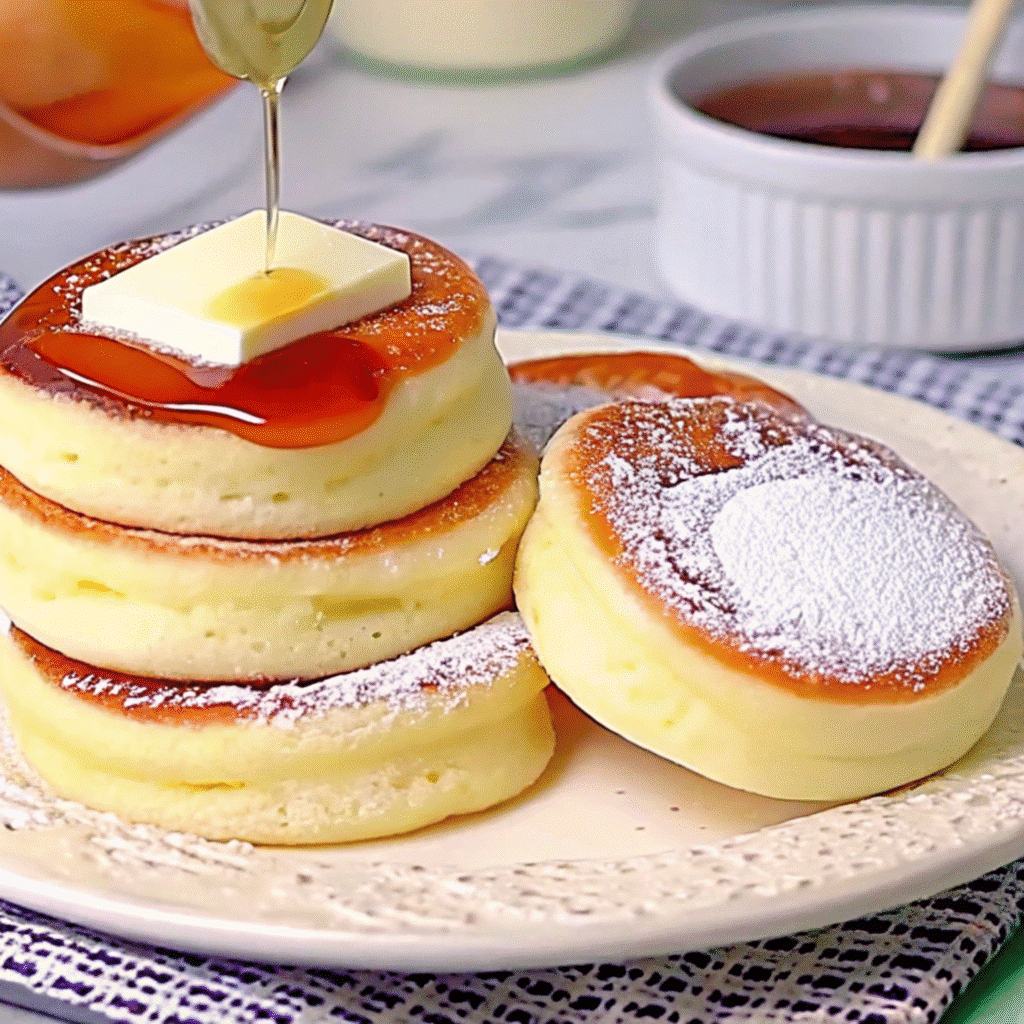
Japanese pancakes are fluffy, jiggly, and absolutely magical. These soufflé style pancakes are made with whipped egg whites that create tall, airy stacks that wobble when you plate them. They’re a little fancy, sure, but the ingredients are simple and the joy they bring is worth every gentle fold.
Love More Recipes? Try My Greek Yogurt Pancakes or this Blueberry Buttermilk Pancake Casserole next.
Why You’ll Love This Recipe
- Sky-high and impressive: These pancakes tower over regular flapjacks and look like they came straight from a Tokyo café.
- Surprisingly simple ingredients: Just eggs, sugar, milk, flour, and a little patience—no exotic ingredients needed.
- Fun to make: There’s something so satisfying about watching these puff up in the pan like little edible clouds.
- Pure comfort: They’re sweet, delicate, and melt-in-your-mouth tender—perfect for a special weekend breakfast.
- A memorable experience: Your family will talk about these pancakes long after the syrup’s been licked off the plate.
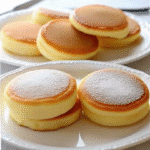
Fluffy Japanese Pancakes
- Total Time: 25 minutes
- Yield: 3 pancakes
Description
Light, airy, and impossibly fluffy Japanese soufflé pancakes made with whipped egg whites for sky-high stacks that wobble on the plate. Perfect for special weekend breakfasts!
Ingredients
For the Yolk Batter:
- 1 egg yolk
- 1 tablespoon sugar
- 2 tablespoons milk (whole milk works best for richness)
- 3 tablespoons all-purpose flour
- ¼ teaspoon baking powder
For the Meringue:
- 2 large egg whites (room temperature is key!)
- 1½ tablespoons sugar
- ⅛ teaspoon cream of tartar (optional, but it helps stabilize the whites)
For Cooking:
- Neutral oil or butter for greasing the pan (I prefer a light coating of butter for flavor)
Instructions
In a medium bowl, whisk together the egg yolk and 1 tablespoon of sugar until the mixture turns pale yellow and slightly thick—this takes about a minute. Pour in the milk and whisk until smooth.
Add the flour and baking powder, then whisk gently until you have a smooth, lump-free batter. It’ll be thick, almost like cake batter. Set this aside while you work your meringue magic.
In a completely clean, dry bowl, beat the egg whites with the cream of tartar (if using) on medium speed until they start looking foamy and white.
Now gradually add the 1½ tablespoons of sugar, about a teaspoon at a time, while continuing to beat. Increase the speed to medium-high and keep beating until you have stiff, glossy peaks—when you lift the beaters, the peaks should stand straight up without drooping. This is your pancake’s foundation, so don’t rush it!
Here’s where patience pays off. Scoop about one-third of those beautiful egg whites into your yolk batter and fold gently with a rubber spatula—this lightens the base so the rest of the whites incorporate more easily.
Now add the remaining egg whites and fold very carefully, using a swooping motion from the bottom of the bowl up and over. You want to keep as much air in there as possible. A few white streaks are okay—better that than deflated batter!
Place your non-stick skillet over the lowest heat setting your stove has—seriously, lower than you think. Let it warm up for about 2 minutes, then lightly grease it with a bit of butter or oil. You want just a whisper of fat, not a pool.
Scoop generous mounds of batter into the pan—think tall and proud, not flat and wide. You’ll probably fit 2-3 pancakes depending on your pan size.
Cover with the lid and let them cook for 4–5 minutes. About halfway through, you can add a tablespoon of water around the edges of the pan (not on the pancakes!) and quickly cover again—this creates steam that helps cook the fluffy centers.
This is the moment of truth! Slide your spatula under each pancake very carefully—they’re delicate and jiggly, so be gentle.
Flip them over (take a deep breath, you’ve got this!), cover the pan again, and cook for another 4–6 minutes until they’re cooked through and lightly golden. You can gently press the top—if it springs back, they’re done.
Slide these beauties onto plates right away and watch them wobble! They’re at their peak fluffiness fresh off the stove.
Notes
- Use a ring mold or cookie cutter if you want perfectly round, uniform pancakes—just grease the inside and spoon batter into it while it sits in the pan.
- Check your baking powder’s freshness—if it’s old, your pancakes won’t have that extra lift they need.
- Don’t overmix when folding—a few white streaks are better than deflated batter. Stop as soon as things look mostly combined.
- Steam is your friend—adding that splash of water to the pan creates a humid environment that cooks the center without drying out the edges.
- Make one test pancake first to get your heat right—every stove is different, and it’s better to learn on one pancake than a whole batch.
- Prep Time: 15 minutes
- Cook Time: 10 minutes
- Category: Breakfast
- Method: Stovetop
- Cuisine: Japanese
Ingredients You’ll Need
For the Yolk Batter:
- 1 egg yolk
- 1 tablespoon sugar
- 2 tablespoons milk (whole milk works best for richness)
- 3 tablespoons all-purpose flour
- ¼ teaspoon baking powder
For the Meringue:
- 2 large egg whites (room temperature is key!)
- 1½ tablespoons sugar
- ⅛ teaspoon cream of tartar (optional, but it helps stabilize the whites)
For Cooking:
- Neutral oil or butter for greasing the pan (I prefer a light coating of butter for flavor)
This recipe makes about 3 gloriously tall pancakes—perfect for a cozy breakfast for two, or one very happy person!
Why These Ingredients Work
The magic of Japanese pancakes is all in the technique and balance. The egg yolk creates a tender, slightly rich base that holds the structure together, while the sugar adds just enough sweetness without overpowering. Milk keeps everything moist and helps create that signature soft texture.
The flour and baking powder work together to give the pancakes gentle lift and structure—not too much, just enough to support all that airy meringue.
And speaking of meringue, those whipped egg whites are the real stars here. When you beat them to stiff, glossy peaks, you’re trapping thousands of tiny air bubbles that expand when heated, creating those sky-high, jiggly pancakes.
The cream of tartar is your insurance policy—it stabilizes the egg whites so they don’t deflate before you get them in the pan. Think of it as a little kitchen safety net. The very low heat is crucial too; it lets the inside cook through without burning the outside, so you get golden edges and a perfectly fluffy center.
Essential Tools and Equipment
- Two mixing bowls (one for yolks, one for whites—make sure the white bowl is completely clean and dry)
- Whisk or electric hand mixer (for beating those egg whites to perfection)
- Rubber spatula (for gentle folding)
- Non-stick skillet with a lid (8-inch works beautifully)
- Large spoon or ice cream scoop (for portioning the batter)
- Offset spatula or thin turner (for the delicate flip)
Step-by-Step Instructions
Step 1: Make the Yolk Batter
In a medium bowl, whisk together the egg yolk and 1 tablespoon of sugar until the mixture turns pale yellow and slightly thick—this takes about a minute. Pour in the milk and whisk until smooth.
Add the flour and baking powder, then whisk gently until you have a smooth, lump-free batter. It’ll be thick, almost like cake batter. Set this aside while you work your meringue magic.
Step 2: Whip the Egg Whites
In a completely clean, dry bowl, beat the egg whites with the cream of tartar (if using) on medium speed until they start looking foamy and white.
Now gradually add the 1½ tablespoons of sugar, about a teaspoon at a time, while continuing to beat. Increase the speed to medium-high and keep beating until you have stiff, glossy peaks—when you lift the beaters, the peaks should stand straight up without drooping. This is your pancake’s foundation, so don’t rush it!
Step 3: Fold the Batter Together
Here’s where patience pays off. Scoop about one-third of those beautiful egg whites into your yolk batter and fold gently with a rubber spatula—this lightens the base so the rest of the whites incorporate more easily.
Now add the remaining egg whites and fold very carefully, using a swooping motion from the bottom of the bowl up and over. You want to keep as much air in there as possible. A few white streaks are okay—better that than deflated batter!
Step 4: Heat Your Pan
Place your non-stick skillet over the lowest heat setting your stove has—seriously, lower than you think. Let it warm up for about 2 minutes, then lightly grease it with a bit of butter or oil. You want just a whisper of fat, not a pool.
Step 5: Cook the First Side
Scoop generous mounds of batter into the pan—think tall and proud, not flat and wide. You’ll probably fit 2-3 pancakes depending on your pan size.
Cover with the lid and let them cook for 4–5 minutes. About halfway through, you can add a tablespoon of water around the edges of the pan (not on the pancakes!) and quickly cover again—this creates steam that helps cook the fluffy centers.
Step 6: The Gentle Flip
This is the moment of truth! Slide your spatula under each pancake very carefully—they’re delicate and jiggly, so be gentle.
Flip them over (take a deep breath, you’ve got this!), cover the pan again, and cook for another 4–6 minutes until they’re cooked through and lightly golden. You can gently press the top—if it springs back, they’re done.
Step 7: Serve Immediately
Slide these beauties onto plates right away and watch them wobble! They’re at their peak fluffiness fresh off the stove.

You Must Know
The single most important thing about Japanese pancakes is that the egg whites must be beaten to stiff, glossy peaks. If they’re underbeaten, your pancakes won’t rise. If they’re overbeaten, they’ll be dry and grainy.
You’re looking for that sweet spot where the peaks stand up straight and look shiny and smooth. Also, never skip the low heat—I know it’s tempting to turn it up to speed things along, but high heat will give you burnt outsides and raw, gooey insides. Trust the process!
Personal Secret: I always let my eggs sit out for about 30 minutes before starting. Room temperature egg whites whip up faster and create more stable meringue than cold ones straight from the fridge.
Pro Tips & Cooking Hacks
- Use a ring mold or cookie cutter if you want perfectly round, uniform pancakes—just grease the inside and spoon batter into it while it sits in the pan.
- Check your baking powder’s freshness—if it’s old, your pancakes won’t have that extra lift they need.
- Don’t overmix when folding—a few white streaks are better than deflated batter. Stop as soon as things look mostly combined.
- Steam is your friend—adding that splash of water to the pan creates a humid environment that cooks the center without drying out the edges.
- Make one test pancake first to get your heat right—every stove is different, and it’s better to learn on one pancake than a whole batch.
- Resist peeking—every time you lift that lid, you release precious steam. Trust the timing and keep it covered!
Flavor Variations & Suggestions
While these pancakes are absolutely perfect in their classic form, there are some lovely ways to make them your own. Try adding a quarter teaspoon of vanilla extract to the yolk batter for a subtle sweetness, or fold in a tablespoon of cocoa powder to create chocolate cloud pancakes that kids go wild for.
For a citrusy twist, add a tiny bit of lemon or orange zest to the yolk mixture—just a pinch is enough to make them sing. You can also experiment with matcha powder for beautiful green pancakes with an earthy flavor, or add a spoonful of mascarpone cheese to the yolk batter for extra richness.
Some folks like to place fresh blueberries or chocolate chips on top of the batter right after scooping it into the pan—just press them in gently before covering. The possibilities are endless, but honestly, sometimes simple is best.
Make-Ahead Options
I’ll be straight with you—these pancakes are absolutely best made and eaten immediately. They’re like little soufflés, and they start to deflate as they cool, losing that magical height and texture.
However, you can prep some things ahead to make morning cooking easier. Separate your eggs the night before and keep the whites in an airtight container in the fridge, then bring them to room temperature before whipping. You can also whisk together your dry ingredients and measure out everything else, so all you have to do is mix and cook.
If you do end up with leftovers (which is rare in my house!), store them in an airtight container in the fridge for up to two days. They won’t be as tall or fluffy when you reheat them, but they’ll still taste good—just think of them as tender, thick pancakes.
What to Serve With Japanese Pancakes
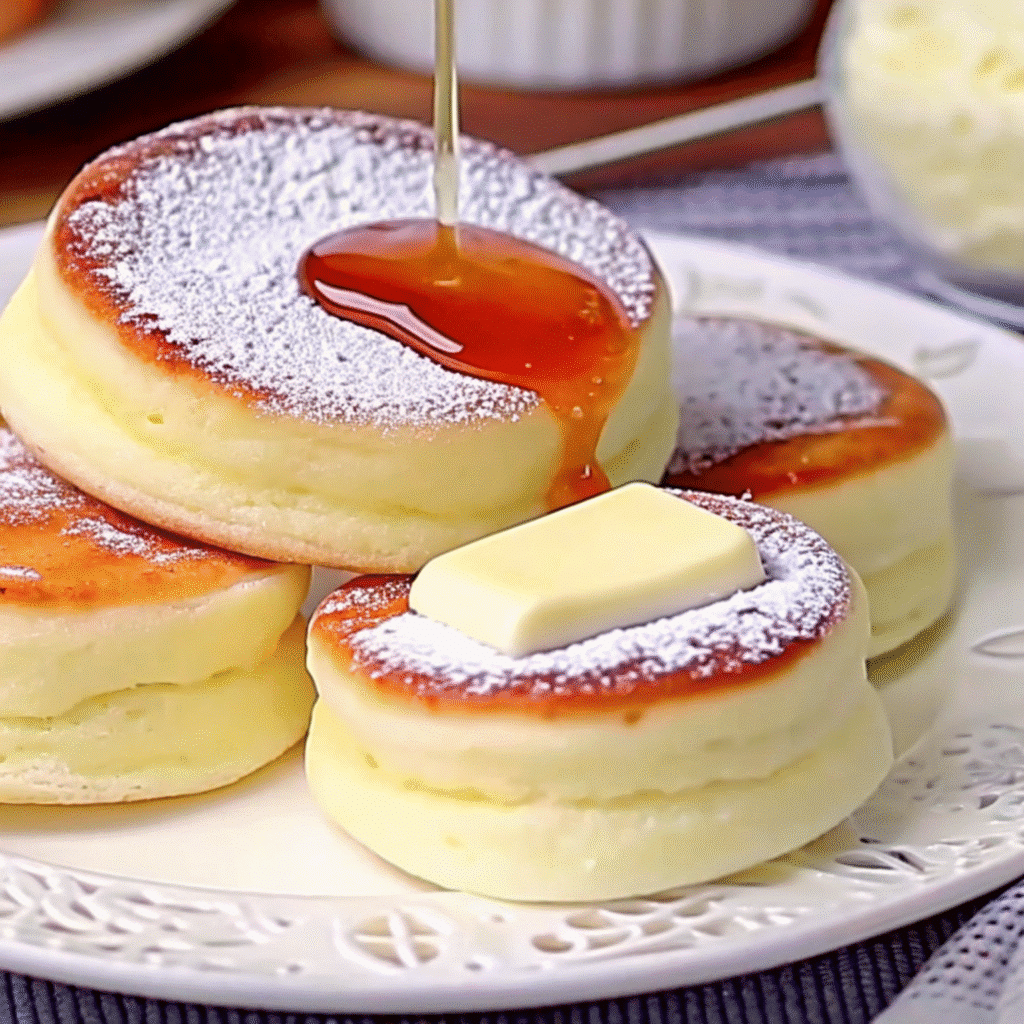
These pancakes are so light and fluffy that they pair beautifully with simple, classic toppings. A generous pat of butter that melts into a golden puddle and a drizzle of pure maple syrup is honestly all you need.
But if you want to make breakfast feel extra special, add a dollop of fresh whipped cream and a handful of mixed berries—strawberries, blueberries, and raspberries all work wonderfully. I love serving these with a dusting of powdered sugar for a snowy, elegant look, or sometimes I’ll drizzle warm caramel sauce over the top for something more indulgent.
A side of crispy bacon adds a nice salty contrast to all that sweetness. For drinks, pair them with hot coffee, a matcha latte, or fresh orange juice. Keep the sides light since these pancakes are quite rich and filling—one or two is usually plenty!
Allergy Information
These pancakes contain eggs, dairy, and wheat, which are common allergens. For a dairy-free version, you can substitute the milk with almond milk, oat milk, or any plant-based milk you prefer—the texture will be nearly identical.
Unfortunately, eggs are the star of this recipe and can’t easily be substituted since both the yolks and whites play crucial structural roles. For gluten-free pancakes, you can try using a 1-to-1 gluten-free flour blend in place of the all-purpose flour, though the texture may be slightly different—possibly a bit more delicate.
Make sure your baking powder is also gluten-free. If you have concerns about specific allergies or dietary needs, always double-check your ingredient labels to ensure they meet your requirements.
Storage & Reheating
Store any leftover pancakes in an airtight container in the refrigerator for up to 2 days. I’ll warn you though—they lose their signature height and become denser as they sit.
To reheat, place them on a microwave-safe plate and warm on medium power for 15-20 seconds, or reheat in a 300°F oven for about 5 minutes. They won’t be quite as fluffy as when they were fresh, but they’ll still be tender and delicious.
These don’t freeze particularly well since the texture changes dramatically, so I’d recommend making only what you plan to eat.
Kitchen Secret: If you want to keep pancakes warm while you finish cooking the batch, place them on a baking sheet in a 200°F oven. They’ll stay warm and won’t deflate as quickly, though they’re truly at their best the moment they leave the pan—still wobbling and impossibly fluffy.
Questions I Get Asked A Lot
Why did my pancakes deflate right away?
This usually means the egg whites weren’t whipped to stiff enough peaks, or you deflated them too much when folding. Make sure those whites stand up straight and glossy before folding, and use a gentle hand when combining everything. Also, undercooking can cause collapse—make sure they’re fully set in the center before removing from heat.
Can I make these without cream of tartar?
Absolutely! Cream of tartar helps stabilize the egg whites, but it’s not essential. You can substitute it with an equal amount of lemon juice or white vinegar, or simply leave it out altogether. Your meringue might be slightly less stable, so just work a bit more carefully when folding.
My pancakes are browning too fast but still raw inside—help!
Your heat is too high! These pancakes need very low, gentle heat to cook through without burning. Turn your burner down as low as it will go, and don’t be afraid to adjust even lower if needed. The steam from covering the pan does most of the cooking work.
Do these taste like regular pancakes?
Not exactly! They’re much lighter, airier, and almost custard-like in texture—somewhere between a pancake and a soufflé. The flavor is more delicate and less sweet than traditional American pancakes. They’re special-occasion pancakes that feel luxurious and impressive, perfect for when you want breakfast to feel like an event!
💬 Tried this recipe? Leave a comment and rating below! I’d love to hear how your fluffy Japanese pancakes turned out, and if you tried any fun flavor variations.