
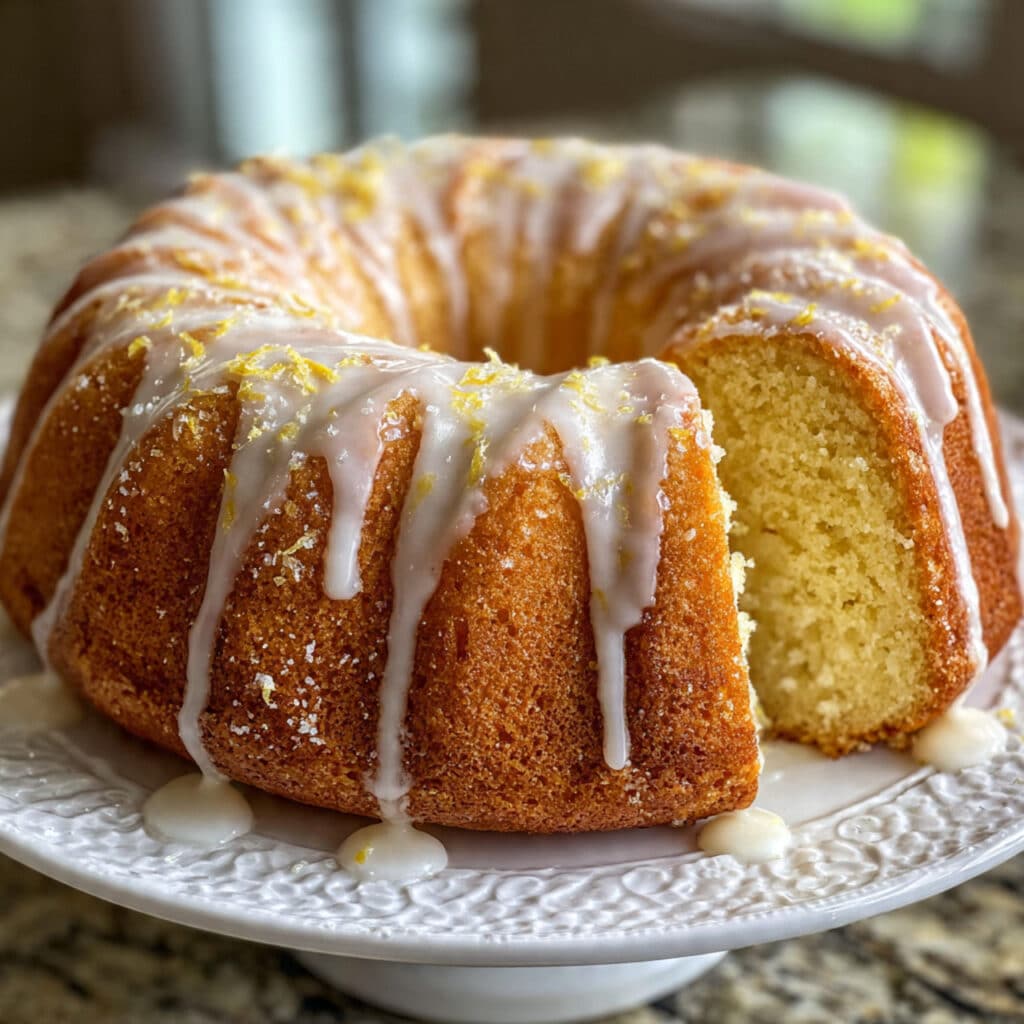
Italian Lemon Pound Cake is sunshine baked into a loaf, buttery, tender, and bursting with bright lemon flavor in every slice. This nostalgic recipe uses simple pantry staples like fresh lemon zest, sour cream, and a sweet citrus glaze that makes it utterly irresistible.
Why You’ll Love This Recipe
- Incredibly moist and tender – Thanks to sour cream and the perfect butter-to-flour ratio, every slice melts in your mouth
- Bright, authentic lemon flavor – Real lemon zest and juice (no artificial extracts here!) give you that true Italian citrus taste
- Simple enough for weeknight baking – No fancy techniques or hard-to-find ingredients required
- Beautiful presentation – That gorgeous glaze dripping down the sides makes it look bakery-perfect
- Perfect for any occasion – Brunch, afternoon tea, gift-giving, or just because you deserve something sweet

Moist Italian Lemon Pound Cake
- Total Time: 1 hour 45 minutes (including cooling)
- Yield: 1 loaf cake
Description
This Italian Lemon Pound Cake is a classic recipe featuring a tender, buttery crumb infused with fresh lemon zest and juice, topped with a sweet-tart lemon glaze. Made with simple ingredients like sour cream, butter, and real lemons, this moist pound cake is perfect for brunch, dessert, or gift-giving. Easy to make and absolutely delicious!
Ingredients
For the Cake:
- 3 cups all-purpose flour (the foundation of our tender crumb)
- 1 teaspoon baking powder (just enough lift without making it cakey)
- ½ teaspoon salt (balances the sweetness)
- 1 cup unsalted butter, room temperature (must be soft—this is key!)
- 1½ cups granulated sugar
- 3 large eggs, room temperature (cold eggs can cause the batter to curdle)
- Zest of 2 lemons (where most of the lemony magic lives)
- ¼ cup fresh lemon juice (adds brightness and moisture)
- ½ cup sour cream or plain Greek yogurt (the secret to that velvety texture)
- ½ cup milk, room temperature
- 2 teaspoons vanilla extract (complements the lemon beautifully)
For the Lemon Glaze (optional but highly recommended!):
- 1–1¼ cups powdered sugar
- 2–3 tablespoons fresh lemon juice
- 1–2 teaspoons milk (for adjusting consistency)
- Optional: a pinch of lemon zest (for extra pizzazz)
Instructions
Preheat your oven to 325°F (165°C). Grease and flour your 9×5-inch loaf pan thoroughly, or line it with parchment paper for easy removal.
In a medium bowl, whisk together the 3 cups of all-purpose flour, 1 teaspoon baking powder, and ½ teaspoon salt. Set this aside
In your large mixing bowl, beat the room-temperature butter and granulated sugar together until the mixture is light, fluffy, and pale in color—this takes about 3 to 4 minutes. Don’t rush this step!
Add your eggs one at a time, beating well after each addition. This helps them incorporate smoothly. Then stir in the lemon zest and vanilla extract.
Here’s the key to a tender crumb: add your dry ingredients in three additions, alternating with the sour cream and milk. Start with dry, then sour cream, then dry, then milk, then finish with dry.
After that final addition, mix just until everything is combined—no more! Overmixing develops gluten and makes the cake tough.
Gently fold in the ¼ cup of fresh lemon juice until it’s just incorporated. The batter might look a tiny bit curdled—that’s perfectly normal and nothing to worry about.
Pour the batter into your prepared loaf pan and smooth the top with your spatula. Bake for 60 to 70 minutes, or until a toothpick inserted in the center comes out clean or with just a few moist crumbs.
If the top starts browning too quickly (usually around the 45-minute mark), tent it loosely with aluminum foil for the remaining baking time.
Let the cake cool in the pan for about 15 to 20 minutes—this helps it set up properly. Run a knife gently around the edges, then carefully remove the cake from the pan and transfer it to a wire rack to cool completely before glazing.
In a small bowl, whisk together the powdered sugar with 2 to 3 tablespoons of fresh lemon juice. Add milk a little at a time until you reach a lovely drizzle-able consistency—not too thick, not too thin.
Pour this glossy glaze over your completely cooled cake, letting it cascade down the sides in beautiful drips. For an extra touch, sprinkle a bit more lemon zest on top while the glaze is still wet.
Notes
- Don’t skip the salt – It seems small, but that half teaspoon balances the sweetness and makes the lemon flavor pop
- Test for doneness early – Ovens vary, so start checking at the 60-minute mark to avoid overbaking
- Rotate the pan halfway through – This ensures even baking, especially if your oven has hot spots
- Make extra glaze – You can always use less, but there’s nothing worse than running out halfway through drizzling
- Brush the warm cake with lemon syrup – Before glazing, try brushing the warm cake with a mixture of equal parts lemon juice and sugar for extra moisture and flavor
- Prep Time: 20 minutes
- Cook Time: 65 minutes
- Category: Dessert
- Method: Baking
- Cuisine: Italian
Ingredients You’ll Need
For the Cake:
- 3 cups all-purpose flour (the foundation of our tender crumb)
- 1 teaspoon baking powder (just enough lift without making it cakey)
- ½ teaspoon salt (balances the sweetness)
- 1 cup unsalted butter, room temperature (must be soft—this is key!)
- 1½ cups granulated sugar
- 3 large eggs, room temperature (cold eggs can cause the batter to curdle)
- Zest of 2 lemons (where most of the lemony magic lives)
- ¼ cup fresh lemon juice (adds brightness and moisture)
- ½ cup sour cream or plain Greek yogurt (the secret to that velvety texture)
- ½ cup milk, room temperature
- 2 teaspoons vanilla extract (complements the lemon beautifully)
For the Lemon Glaze (optional but highly recommended!):
- 1–1¼ cups powdered sugar
- 2–3 tablespoons fresh lemon juice
- 1–2 teaspoons milk (for adjusting consistency)
- Optional: a pinch of lemon zest (for extra pizzazz)
Why These Ingredients Work
The butter and sugar cream together to create thousands of tiny air pockets that make the cake light yet rich. Room-temperature eggs blend smoothly into the batter without deflating those precious air bubbles.
Fresh lemon zest releases aromatic oils that infuse every bite with authentic citrus flavor—far more than juice alone could ever do. The sour cream (or Greek yogurt) adds tang and keeps the crumb incredibly moist for days.
Alternating the dry ingredients with the wet ingredients prevents overmixing and ensures a tender texture instead of a tough, dense cake. That splash of fresh lemon juice at the end brightens everything up and gives you that true Italian lemon cake experience.
And the glaze? Well, that’s pure heaven drizzled over the top—sweet, tangy, and absolutely irresistible.
Essential Tools and Equipment
- 9×5-inch loaf pan – The classic size for pound cakes
- Stand mixer or hand mixer – Makes creaming butter and sugar a breeze
- Medium mixing bowl – For whisking your dry ingredients
- Large mixing bowl – For the main batter
- Whisk – To combine dry ingredients evenly
- Rubber spatula – Perfect for folding and scraping down the bowl
- Parchment paper or cooking spray – Prevents sticking
- Wire cooling rack – Essential for proper cooling
- Zester or microplane – For getting that beautiful lemon zest
- Toothpick – Your trusty doneness tester
Step-by-Step Instructions
Step 1: Preheat & Prep Your Pan
Preheat your oven to 325°F (165°C). Grease and flour your 9×5-inch loaf pan thoroughly, or line it with parchment paper for easy removal.
Step 2: Whisk Together the Dry Ingredients
In a medium bowl, whisk together the 3 cups of all-purpose flour, 1 teaspoon baking powder, and ½ teaspoon salt. Set this aside
Step 3: Cream the Butter and Sugar
In your large mixing bowl, beat the room-temperature butter and granulated sugar together until the mixture is light, fluffy, and pale in color—this takes about 3 to 4 minutes. Don’t rush this step!
Step 4: Add Eggs and Flavorings
Add your eggs one at a time, beating well after each addition. This helps them incorporate smoothly. Then stir in the lemon zest and vanilla extract.
Step 5: Alternate Wet and Dry Ingredients
Here’s the key to a tender crumb: add your dry ingredients in three additions, alternating with the sour cream and milk. Start with dry, then sour cream, then dry, then milk, then finish with dry.
After that final addition, mix just until everything is combined—no more! Overmixing develops gluten and makes the cake tough.
Step 6: Fold in the Lemon Juice
Gently fold in the ¼ cup of fresh lemon juice until it’s just incorporated. The batter might look a tiny bit curdled—that’s perfectly normal and nothing to worry about.
Step 7: Bake to Golden Perfection
Pour the batter into your prepared loaf pan and smooth the top with your spatula. Bake for 60 to 70 minutes, or until a toothpick inserted in the center comes out clean or with just a few moist crumbs.
If the top starts browning too quickly (usually around the 45-minute mark), tent it loosely with aluminum foil for the remaining baking time.
Step 8: Cool Completely
Let the cake cool in the pan for about 15 to 20 minutes—this helps it set up properly. Run a knife gently around the edges, then carefully remove the cake from the pan and transfer it to a wire rack to cool completely before glazing.
Step 9: Make and Apply the Lemon Glaze
In a small bowl, whisk together the powdered sugar with 2 to 3 tablespoons of fresh lemon juice. Add milk a little at a time until you reach a lovely drizzle-able consistency—not too thick, not too thin.
Pour this glossy glaze over your completely cooled cake, letting it cascade down the sides in beautiful drips. For an extra touch, sprinkle a bit more lemon zest on top while the glaze is still wet.

You Must Know
Your ingredients absolutely must be at room temperature—this isn’t just a suggestion! Cold eggs and cold butter won’t blend smoothly, and you’ll end up with a dense, uneven cake. Set everything out about an hour before you start baking.
The batter should look smooth and creamy, not curdled or separated. When you’re folding in that final addition of flour, stop mixing the second you don’t see any more white streaks. Those extra 10 seconds of mixing can be the difference between a tender, melt-in-your-mouth cake and a dry, tough one.
And please, please, please wait until the cake is completely cool before you glaze it. I know it’s tempting, but a warm cake will melt that beautiful glaze right off and you’ll end up with a soggy mess instead of a gorgeous finish.
Personal Secret: I always add a tiny pinch of lemon zest to my glaze and let it sit for about 5 minutes before drizzling. This gives the glaze an extra burst of fresh lemon flavor that makes people ask, “What’s your secret?”
Pro Tips & Cooking Hacks
- Use a kitchen scale if you have one – Measuring flour by weight (about 360g for 3 cups) gives you more consistent results than scooping
- Don’t skip the salt – It seems small, but that half teaspoon balances the sweetness and makes the lemon flavor pop
- Test for doneness early – Ovens vary, so start checking at the 60-minute mark to avoid overbaking
- Rotate the pan halfway through – This ensures even baking, especially if your oven has hot spots
- Make extra glaze – You can always use less, but there’s nothing worse than running out halfway through drizzling
- Brush the warm cake with lemon syrup – Before glazing, try brushing the warm cake with a mixture of equal parts lemon juice and sugar for extra moisture and flavor
- Line your pan with parchment – Let it hang over the edges like handles for the easiest cake removal ever
Flavor Variations & Suggestions
This recipe is wonderfully flexible and begs to be played with! For a sweeter, more dessert-like version, try adding a half cup of white chocolate chips to the batter.
If you love the combination of lemon and herbs, a teaspoon of finely chopped fresh rosemary or thyme adds an elegant, sophisticated twist that’s perfect for spring brunches. You can swap the lemon for lime or orange zest and juice for a completely different citrus experience—Meyer lemons are especially dreamy if you can find them.
For a cream cheese glaze instead, beat together 4 ounces of softened cream cheese with the powdered sugar and lemon juice. Want to make it extra indulgent? Serve slices with fresh whipped cream and berries.
And if you’re feeling fancy, a tablespoon of limoncello in the glaze gives it an authentic Italian liqueur touch that grown-ups will absolutely adore.
Make-Ahead Options
This is one of those beautiful recipes that actually gets better with time, making it perfect for planning ahead. You can bake the cake up to two days in advance—just wrap it tightly in plastic wrap once it’s completely cooled and store it at room temperature. The flavors meld and deepen, and the texture becomes even more tender.
If you want to freeze it, wrap the unglazed cake in plastic wrap and then aluminum foil, and freeze for up to three months. Thaw it overnight in the refrigerator, bring it to room temperature, and then add your fresh glaze.
The glaze itself is best made fresh, but you can mix your dry and wet ingredients separately up to a day ahead and just whisk them together when you’re ready to drizzle. For big events or gift-giving, I often bake three or four of these loaves over a weekend, freeze them, and pull them out as needed throughout the month.
What to Serve With Italian Lemon Pound Cake
For a beautiful brunch spread, serve it alongside fresh fruit salad, crispy bacon, and mimosas or sparkling lemonade. It’s absolutely divine with a cup of hot coffee or Earl Grey tea in the afternoon—the bergamot in Earl Grey complements the lemon beautifully.
For dessert, a dollop of vanilla bean ice cream or fresh whipped cream takes it over the top. Fresh berries like raspberries, blueberries, or sliced strawberries add a lovely pop of color and tartness that balances the sweetness.
I love serving it with a simple berry compote made from frozen mixed berries simmered with a bit of sugar and lemon juice. And don’t forget about breakfast—a thick slice toasted with butter is pure morning magic.
Allergy Information
This recipe contains common allergens including dairy (butter, milk, sour cream), eggs, and gluten (all-purpose flour). For a dairy-free version, you can substitute the butter with an equal amount of dairy-free butter or coconut oil (though the flavor will change slightly), use dairy-free yogurt instead of sour cream, and swap the milk for your favorite non-dairy alternative like almond or oat milk.
For gluten-free baking, use a 1:1 gluten-free baking flour blend—though the texture may be slightly more crumbly. Unfortunately, the eggs are essential for structure and moisture, so this isn’t easily made egg-free without significant recipe changes.
Always check your baking powder and other ingredients for hidden allergens if you’re baking for someone with severe sensitivities.
Storage & Reheating
Store your Italian Lemon Pound Cake at room temperature, wrapped in plastic wrap or stored in an airtight container, for up to 4 days. The glaze helps seal in moisture, so glazed cake actually keeps slightly better than unglazed.
If you need to store it longer, refrigerate it for up to a week—just bring it back to room temperature before serving for the best texture and flavor. For freezing, wrap individual slices or the whole loaf (without glaze) tightly in plastic wrap and then aluminum foil. Frozen cake keeps beautifully for up to 3 months.
To reheat, you don’t really need to since this cake is delicious at room temperature, but if you want it warm, microwave individual slices for about 15 seconds or warm the whole loaf in a 300°F oven for 10 minutes.
Questions I Get Asked A Lot
Can I use bottled lemon juice instead of fresh?
You can, but I really don’t recommend it. Fresh lemon juice and especially fresh lemon zest give this cake its bright, authentic Italian flavor. Bottled juice often tastes flat or artificial. Since you need the zest anyway, just squeeze those fresh lemons!
My cake cracked on top—did I do something wrong?
Not at all! A crack down the center is actually the classic look for a pound cake and means it rose beautifully in the oven. It’s a badge of honor, not a mistake. Embrace that rustic charm!
Can I make this in a bundt pan instead of a loaf pan?
Absolutely! A 10-cup bundt pan works wonderfully. Just reduce the baking time to about 45-55 minutes and check for doneness with a toothpick. The glaze looks absolutely stunning drizzled over a bundt cake!
Why is my cake dense instead of light and fluffy?
The most common culprit is overmixing the batter after adding the flour, which develops too much gluten. Also make sure your baking powder is fresh (check the expiration date), your butter and sugar were creamed long enough, and all your ingredients were truly at room temperature.
How do I know when the cake is done?
A toothpick or cake tester inserted in the center should come out clean or with just a few moist crumbs—but no wet batter. The cake should also pull away slightly from the sides of the pan and spring back when gently pressed on top.
💬 Tried this Italian Lemon Pound Cake? I’d love to hear how it turned out! Leave a comment and rating below, and don’t forget to share a photo—it makes my day to see your beautiful creations!