
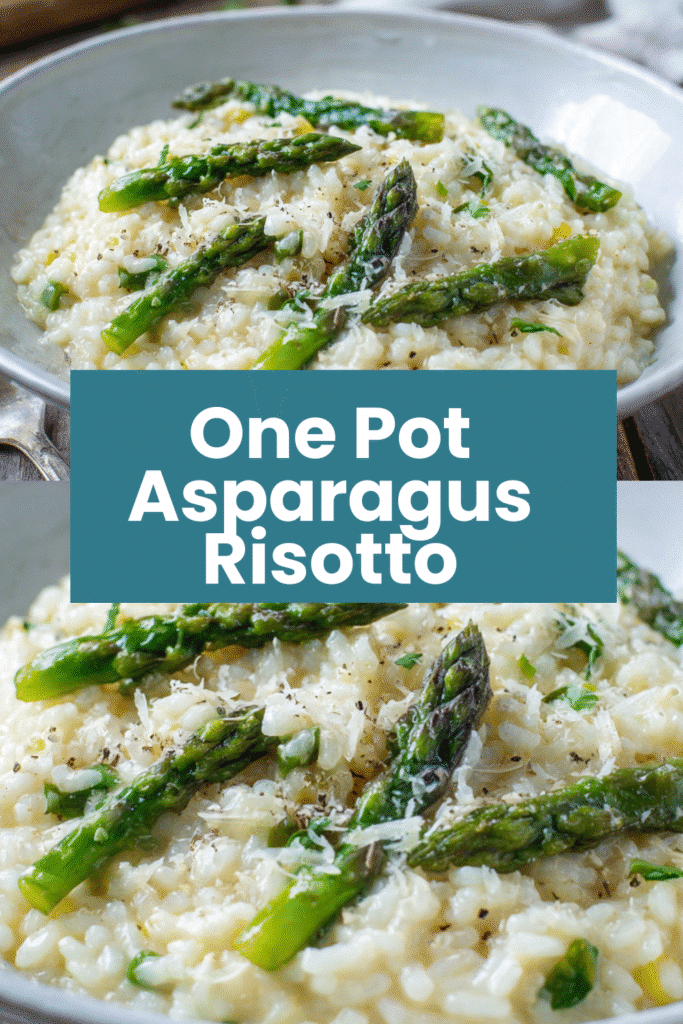
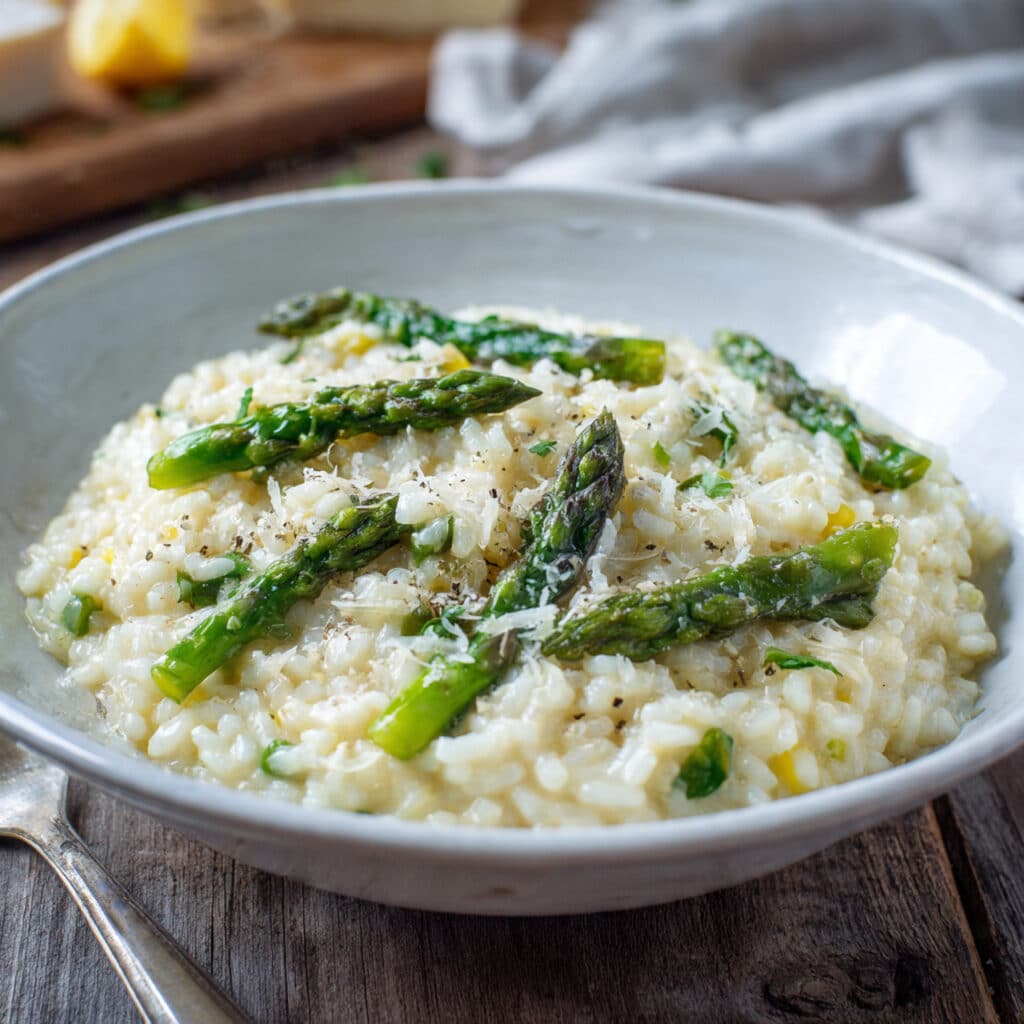
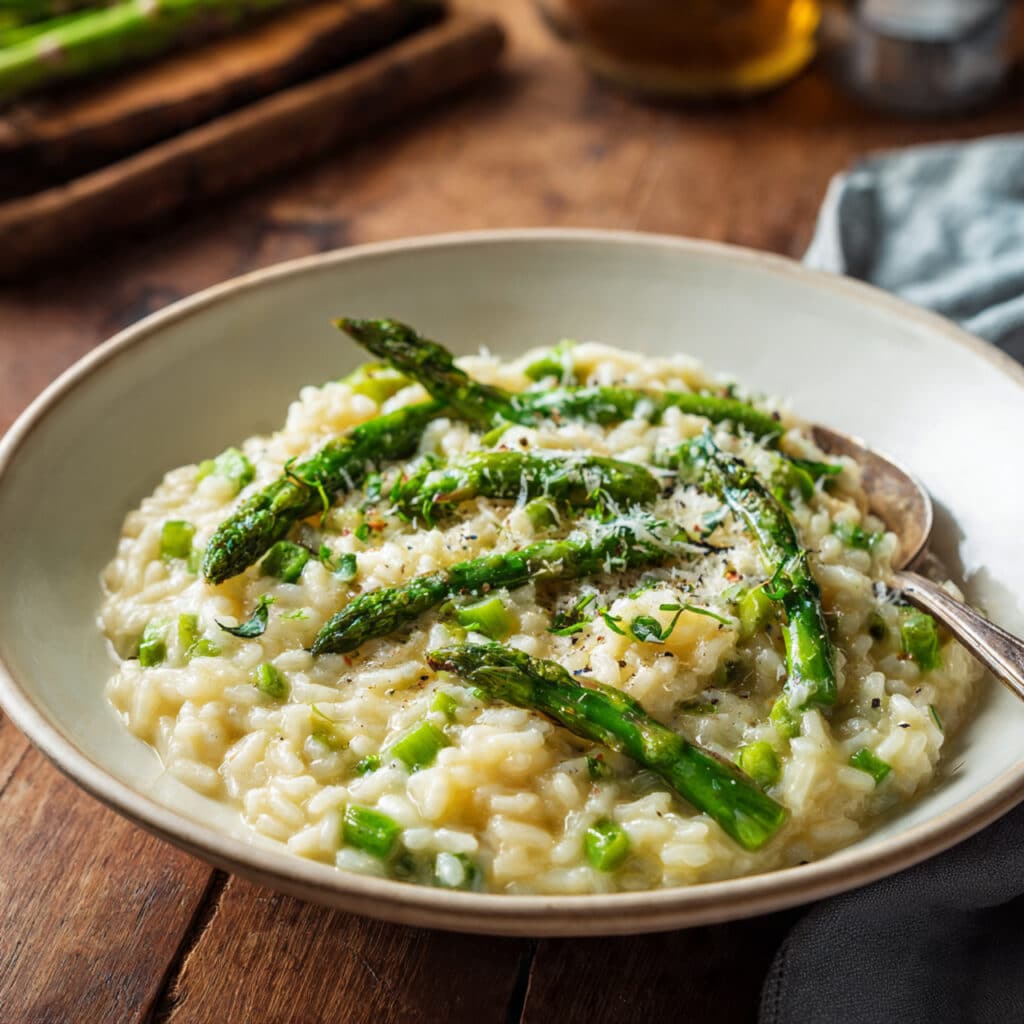
Italian Asparagus Risotto is one of those dishes that feels like a warm hug on a chilly spring evening. You only need a handful of simple ingredients, Arborio rice, fresh asparagus, a good splash of white wine, and real Parmesan to create something that tastes like it came straight out of a little trattoria in northern Italy.
Love More Recipes? Try My Parmesan Orzo with Chicken and Asparagus or this One Pot Orzo with Asparagus and Peas next.
Why You’ll Love This Recipe
- Rich, creamy, and cheesy — every single bite is pure comfort food bliss.
- Brings back the warmth of family dinners without needing hours in the kitchen.
- Only a handful of everyday ingredients you probably already have on hand.
- Vegetarian and easy to adapt — kids and picky eaters love it every time.
- Ready in about 45 minutes, start to finish — no special skills needed.

Italian Asparagus Risotto
- Total Time: 45 minutes
- Yield: 4 servings
- Diet: Vegetarian
Description
Creamy Arborio rice is slow-cooked with fresh asparagus, fragrant shallots, dry white wine, and a generous finish of real Parmesan. This classic northern Italian dish feels special enough for a dinner party but is completely achievable on any weeknight.
Ingredients
- 1½ cups Arborio rice (do not rinse)
- 1 lb fresh asparagus, woody ends trimmed
- 2 shallots, finely chopped
- 3 cloves garlic, minced
- ½ cup dry white wine
- 5 cups vegetable broth, kept warm
- 3 tablespoons extra virgin olive oil, divided
- 2 tablespoons unsalted butter
- ¾ cup freshly grated Parmesan cheese
- Salt and freshly ground black pepper to taste
Instructions
1. Slice asparagus stalks into thin rounds and keep tips whole. Heat 1 tablespoon olive oil in a skillet over medium heat. Add asparagus with salt and pepper, sauté 5 minutes until just tender. Set aside.
2. Keep vegetable broth warm in a small saucepan over low heat throughout cooking.
3. Heat remaining 2 tablespoons olive oil in a large heavy-bottomed pot over medium heat. Add shallots and cook 3 minutes until softened. Add garlic and cook 1 minute more.
4. Add Arborio rice and stir 2 minutes to toast. Pour in white wine and stir until fully absorbed, about 1 minute.
5. Add warm broth one ladle at a time, stirring frequently, adding more only when each addition is absorbed. Continue 18 to 20 minutes until rice is al dente and creamy.
6. Remove from heat. Stir in butter and Parmesan until glossy. Fold in asparagus. Taste, adjust seasoning, and serve immediately.
Notes
Never wash Arborio rice before cooking – the starch is what creates the creamy texture.
Always keep your broth warm – cold broth shocks the rice and disrupts even cooking.
Add Parmesan off the heat to ensure a smooth, silky finish without graininess.
Leftover risotto makes incredible arancini (fried rice balls) the next day.
Substitute asparagus with spring peas, baby spinach, or a mix of both.
- Prep Time: 10 minutes
- Cook Time: 35 minutes
- Category: Dinner
- Method: Stovetop
- Cuisine: Italian
Ingredients You’ll Need
For the Risotto
- 1½ cups Arborio rice (do not rinse — the starch is what makes it creamy)
- 1 lb fresh asparagus, woody ends trimmed (sub frozen if needed)
- 2 shallots, finely chopped (sub ½ medium yellow onion)
- 3 cloves garlic, minced
- ½ cup dry white wine (sub extra broth if preferred)
- 5 cups vegetable broth, kept warm
- 3 tablespoons extra virgin olive oil, divided
- 2 tablespoons unsalted butter
- ¾ cup freshly grated Parmesan (sub Grana Padano or nutritional yeast for vegan)
- Salt and freshly ground black pepper to taste
Why These Ingredients Work
Arborio rice is the heart of any great risotto. Its high starch content is what creates that signature creamy texture — so never rinse it before cooking, or you’ll wash away all that beautiful starch.
Fresh asparagus brings a bright, grassy flavor and a tender bite that cuts right through the richness of the cheese and butter. Sautéing it separately first locks in its color and keeps it from going mushy in the pot.
A splash of dry white wine is what gives this risotto its subtle tang and depth of flavor. It lifts the whole dish and makes every bite taste just a little more special than you’d expect from a weeknight dinner.
Real Parmesan — ideally Parmigiano Reggiano or Grana Padano — is the finishing touch that brings everything together. Its savory, nutty richness coats the rice beautifully and makes this dish taste like it took far more effort than it did.
Essential Tools and Equipment
- Large, wide heavy-bottomed pot or Dutch oven
- Small saucepan to keep broth warm
- Non-stick skillet for asparagus
- Ladle
- Wooden spoon or silicone spatula
- Microplane or box grater for Parmesan
- Sharp knife and cutting board
Step-by-Step Instructions
Step 1: Prep the Asparagus
Snap or slice off the woody ends of the asparagus and discard them — or toss them into your warming broth for extra flavor. Slice the stalks into thin rounds and keep the tips whole. Heat 1 tablespoon of olive oil in a skillet over medium heat, add the asparagus with a pinch of salt and pepper, and sauté for about 5 minutes until just tender. Set aside.
Step 2: Warm the Broth
Pour your vegetable broth into a small saucepan and keep it over low heat throughout the whole cooking process. Adding cold broth to the rice will shock it and slow everything down — warm broth is the secret to perfectly cooked risotto every time.
Step 3: Build the Flavor Base
In your large pot, warm the remaining 2 tablespoons of olive oil over medium heat. Add the shallots and cook, stirring gently, for about 3 minutes until soft and translucent. Add the garlic and cook for one minute more — your kitchen will smell incredible right about now.
Step 4: Toast the Rice
Add the Arborio rice directly to the pot and stir for about 2 minutes until the edges of each grain look translucent. This toasting step builds a nutty depth that makes a real difference. Pour in the white wine and stir until it has completely absorbed — this usually takes about 1 minute.
Step 5: Add Broth One Ladle at a Time
Add warm broth one ladle at a time, stirring frequently and waiting until each addition is mostly absorbed before adding the next. This process takes about 18 to 20 minutes — don’t rush it. The rice should be al dente with a creamy, flowing consistency when you’re done. If it looks too thick, add a little more broth.
Step 6: Finish and Serve
Remove the pot from the heat and stir in the butter and Parmesan until everything is glossy and melted. Fold in the sautéed asparagus. Taste and adjust salt and pepper. Serve immediately in warm bowls — risotto waits for no one, and it’s always best right off the stove.
You Must Know
Never wash your Arborio rice before cooking. That starch is everything — it’s what makes risotto creamy instead of just soupy. Keep your broth hot at all times; cold broth will cause the rice to seize and cook unevenly. Stir frequently, but you don’t have to stir every single second — just enough to keep things moving and prevent sticking.
Risotto will continue to thicken as it sits, so if it looks slightly looser than you’d like when you pull it off the heat, trust the process. It will firm up perfectly by the time it hits the bowl.
Personal Secret: Always add your Parmesan off the heat. This keeps it from becoming grainy and ensures you get that beautiful, silky finish.
Pro Tips & Cooking Hacks
- Use a wide, shallow pot — more surface area means more even cooking and faster evaporation.
- Add the woody asparagus ends to the broth for a deeper, more savory base flavor.
- Don’t skip the wine — it adds brightness that makes every other flavor pop.
- Taste the rice 2 to 3 minutes before the expected cook time — it should be tender but still have a tiny bit of bite.
- Leftover risotto makes incredible arancini (fried rice balls) the next day.
Flavor Variations & Suggestions
Swap asparagus for fresh spring peas, baby spinach, or a mix of both for a different take on this classic. A squeeze of fresh lemon juice stirred in at the very end brings a lovely brightness that complements the Parmesan beautifully.
For a heartier version, stir in shredded rotisserie chicken or pan-seared shrimp during the last few minutes of cooking. If you love mushrooms, sauté a cup of sliced cremini alongside the asparagus — the earthy flavor pairs wonderfully with the creamy rice.
Make-Ahead Options
Risotto is at its absolute best the moment it’s made, but you can get a head start by prepping your asparagus, chopping your shallots, and keeping your broth ready to go. If you have leftover cooked risotto, store it in an airtight container in the refrigerator for up to 3 days.
To reheat, add a splash of warm broth or water and stir over low heat until it comes back to life — it will never be quite the same as fresh, but it is still absolutely delicious. Risotto does not freeze well.
What to Serve With Italian Asparagus Risotto
A simple green salad with a light lemon vinaigrette is the perfect companion here — something fresh and crisp to balance all that creamy richness. Add a basket of crusty Italian bread to mop up every last bit from the bowl.
For drinks, a chilled glass of dry white wine like Pinot Grigio or Sauvignon Blanc is a classic pairing. Sparkling water with a slice of lemon works beautifully too if you’re keeping things alcohol-free.
For dessert, keep it light and Italian-inspired — a scoop of lemon sorbet, fresh strawberries with whipped cream, or a simple panna cotta rounds out the meal perfectly without overwhelming what came before it.
Allergy Information
- Dairy: Contains butter and Parmesan. Substitute with vegan butter and nutritional yeast or vegan Parmesan for a dairy-free version.
- Gluten: Naturally gluten-free as written. Always check that your broth is certified gluten-free.
- Alcohol: Recipe uses white wine. Substitute with extra vegetable broth for a completely alcohol-free dish.
Storage & Reheating
Store cooled risotto in an airtight container in the refrigerator for up to 3 days. To reheat, place it in a small saucepan over low heat with a splash of warm broth or water and stir until heated through and creamy again. Avoid the microwave if you can — it tends to dry things out. Do not freeze.
FAQs
Can I use regular long-grain rice instead of Arborio?
You can, but the result won’t be nearly as creamy. Arborio rice has a specific high-starch content that’s essential for getting that signature risotto texture.
Do I have to use wine in risotto?
Not at all. Simply replace the white wine with an equal amount of warm vegetable broth. The flavor is slightly different but still absolutely delicious.
Why does my risotto get thick and gluey?
This usually means the heat was too high or too much broth was added at once. Keep the heat at medium and add broth gradually — patience really is everything with risotto.
Can I make this vegan?
Absolutely. Swap the butter for vegan butter, use vegetable broth, skip the wine or use more broth, and replace the Parmesan with nutritional yeast or a good vegan Parmesan alternative.
Can I use frozen asparagus?
Yes. Thaw and pat dry before sautéing to avoid excess water. The texture won’t be quite as firm but the flavor is still lovely.
💬 Tried this recipe? Leave a comment and rating below!