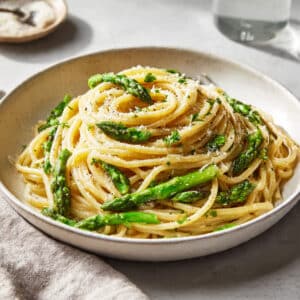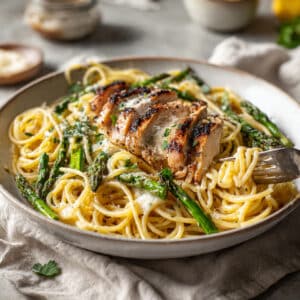
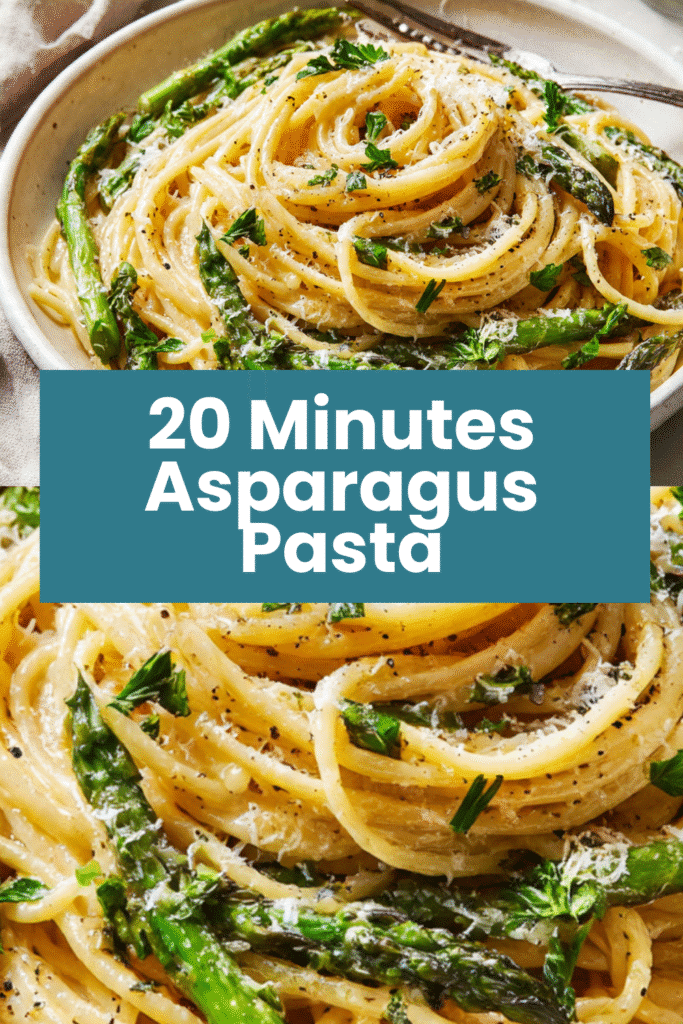
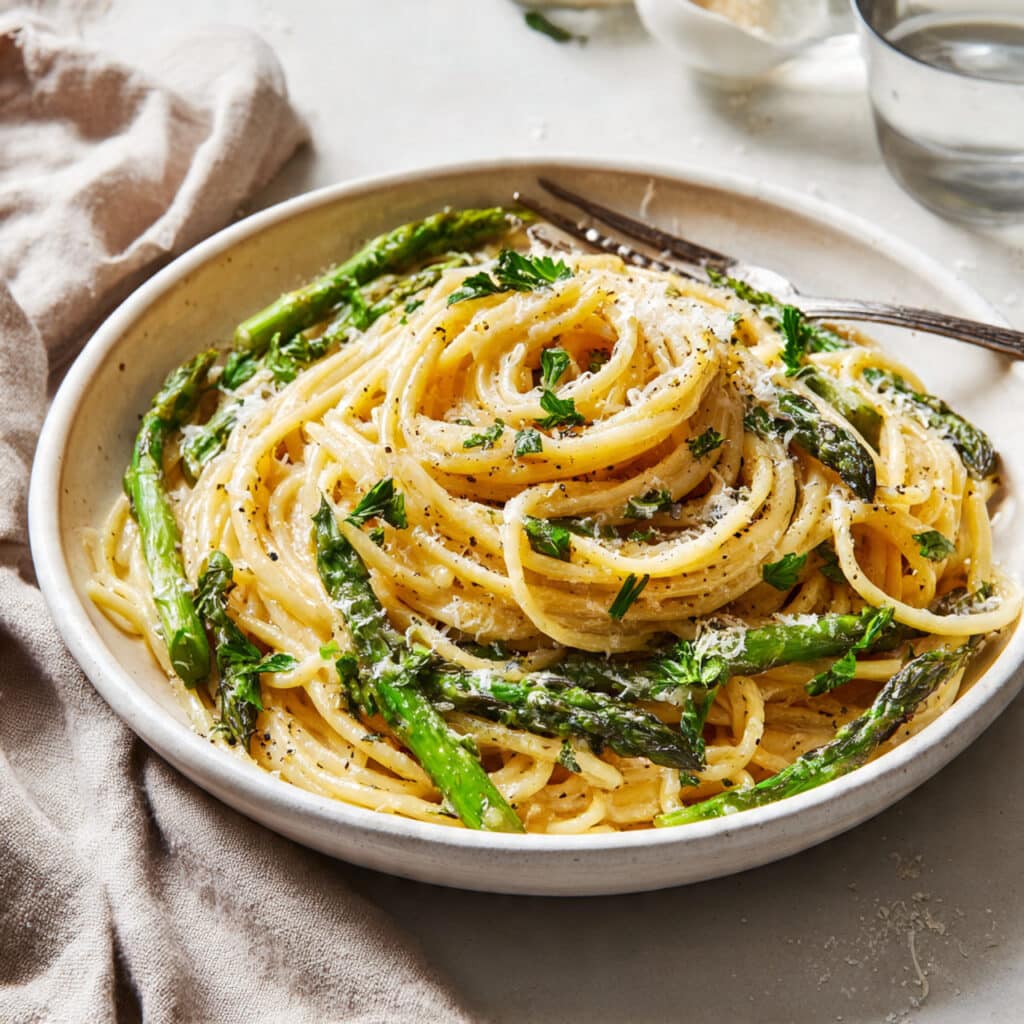
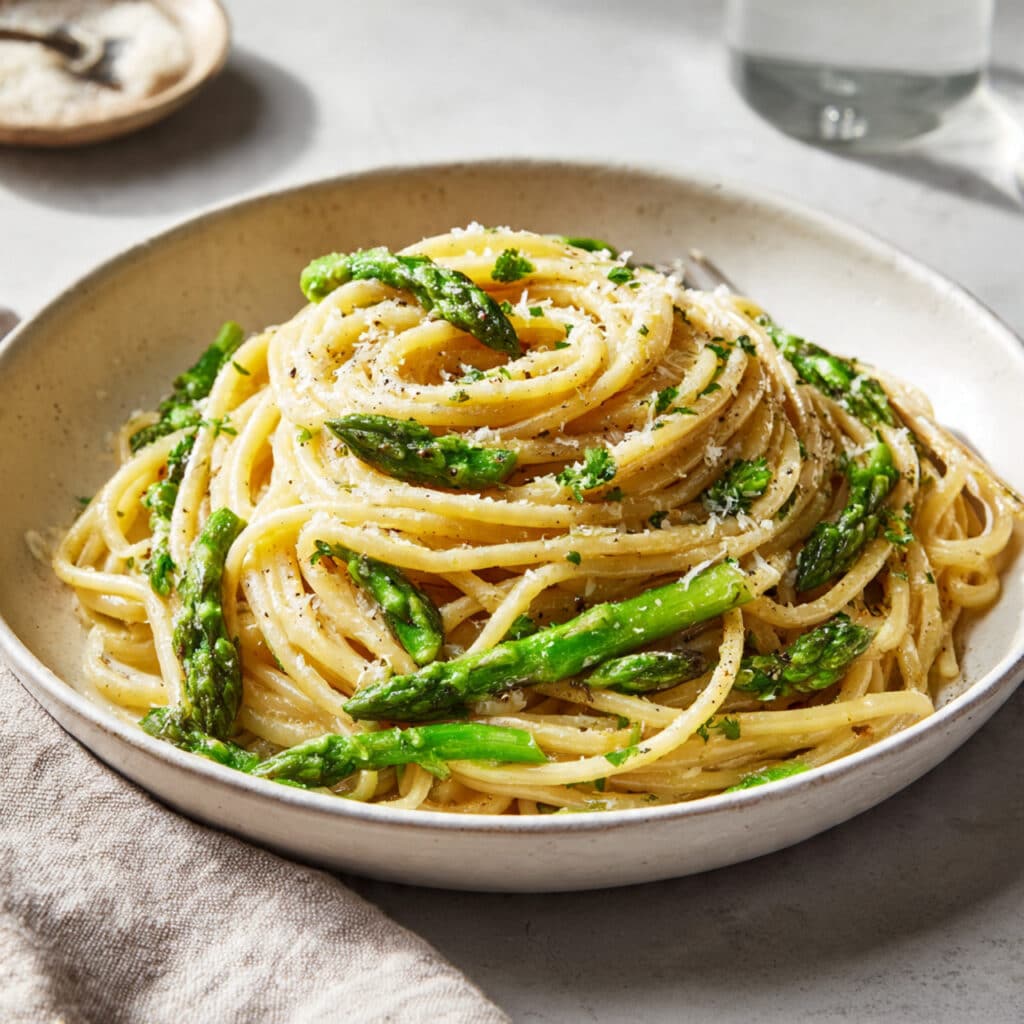
Asparagus Pasta turns simple pantry ingredients into restaurant-worthy comfort food right in your own kitchen. Fresh asparagus meets garlicky olive oil sauce and Parmesan cheese in under 30 minutes. This dish brings bright spring flavors to your table without hours of prep work or fancy techniques.
Love More Recipes? Try My Fettuccine with Spinach and Asparagus or this Mushroom and Asparagus Chicken Penne next.
Why You’ll Love This Recipe
- Ready in just 20 minutes from start to finish
- Uses simple ingredients you probably have on hand
- Tender asparagus adds fresh vegetable nutrition
- Light yet satisfying meal perfect for busy weeknights
- Kids actually ask for seconds of their vegetables
Garlic Asparagus Pasta
- Total Time: 25 minutes
- Yield: 4 servings
- Diet: Vegetarian
Description
Garlic Asparagus Pasta turns simple pantry ingredients into restaurant-worthy comfort food right in your own kitchen. Fresh asparagus meets garlicky olive oil sauce and Parmesan cheese in under 30 minutes.
Ingredients
- 1 pound spaghetti
- 1 pound fresh asparagus, cut into 1–2 inch pieces
- 1/4 cup olive oil
- 4 cloves garlic, minced
- 1 cup Parmesan cheese, freshly grated
- 1/4 teaspoon red pepper flakes
- Salt and black pepper to taste
- 1 cup reserved pasta water
Instructions
1. Wash asparagus under cold water and snap off woody ends. Cut stalks into pieces about 1 to 2 inches long.
2. Bring a large pot of salted water to rolling boil. Add spaghetti and cook according to package directions until al dente. Save one cup of pasta water before draining.
3. Add asparagus to boiling pasta water during the last 2 minutes of cooking. Remove asparagus with slotted spoon when bright green and tender-crisp. Drain pasta but keep it near your pan.
4. Heat olive oil in large skillet over medium heat. Add minced garlic and cook for about 1 minute until fragrant but not brown.
5. Toss blanched asparagus into the garlic oil. Stir gently to coat everything with flavor. Let asparagus warm through for about 2 minutes.
6. Use tongs to transfer hot pasta directly into skillet with asparagus. Add reserved pasta water gradually while tossing. Sprinkle in Parmesan cheese, red pepper flakes, salt, and pepper.
7. Keep tossing pasta over low heat until cheese melts and sauce coats every strand. Serve immediately while hot with extra Parmesan on top.
Notes
Never rinse your pasta after draining. The starch on the surface helps sauce stick properly.
Reserve pasta water before you dump anything down the drain. This magical starchy liquid makes restaurant-quality sauce at home.
Add a tablespoon of butter right at the end for extra silky richness.
Salt your pasta water generously until it tastes like the sea.
Keep heat medium-low when combining to prevent cheese from clumping.
Store leftovers in airtight container for up to 3 days in the fridge.
- Prep Time: 10 minutes
- Cook Time: 15 minutes
- Category: Main Course
- Method: Stovetop
- Cuisine: Italian
Ingredients You’ll Need
For the Pasta:
- 1 pound spaghetti (linguine or angel hair work beautifully too)
- 1 pound fresh asparagus (look for firm stalks with tight tips)
- 1/4 cup olive oil (extra virgin adds best flavor)
- 4 cloves garlic, minced (jarred garlic works in a pinch)
- 1 cup Parmesan cheese, freshly grated (pre-grated works but fresh melts smoother)
- 1/4 teaspoon red pepper flakes (adjust for your heat preference)
- Salt and black pepper to taste
- 1 cup reserved pasta water
Why These Ingredients Work
Fresh asparagus brings tender-crisp texture and earthy spring flavor that pairs beautifully with pasta. The stalks soften just enough while keeping that satisfying bite.
Olive oil creates a light coating that lets every strand of pasta shine. Unlike heavy cream sauces, it keeps the dish feeling fresh and bright.
Garlic infuses the oil with savory depth that makes your whole kitchen smell incredible. Mincing it fine helps distribute flavor throughout every bite.
Parmesan cheese adds salty richness and helps the sauce cling to the pasta. Freshly grated melts into silky smoothness that store-bought can never match.
Essential Tools and Equipment
- Large pot for boiling pasta
- Large skillet or sauté pan
- Sharp knife and cutting board
- Box grater for cheese
- Slotted spoon or spider strainer
- Tongs for tossing pasta
- Measuring cups and spoons
Step-by-Step Instructions
Step 1: Prep Your Asparagus
Wash asparagus under cold water and snap off woody ends. Cut stalks into pieces about 1 to 2 inches long. The tips cook faster than stems, so keep pieces similar in size for even cooking.
Step 2: Boil the Pasta
Bring a large pot of salted water to rolling boil. Add spaghetti and cook according to package directions until al dente. Save one cup of pasta water before draining.
Step 3: Blanch the Asparagus
Add asparagus to boiling pasta water during the last 2 minutes of cooking. Remove asparagus with slotted spoon when bright green and tender-crisp. Drain pasta but keep it near your pan.
Step 4: Make the Garlic Oil
Heat olive oil in large skillet over medium heat. Add minced garlic and cook for about 1 minute until fragrant but not brown. Burnt garlic tastes bitter, so watch it carefully.
Step 5: Add Asparagus to Skillet
Toss blanched asparagus into the garlic oil. Stir gently to coat everything with flavor. Let asparagus warm through for about 2 minutes while keeping pasta close by.
Step 6: Combine Everything
Use tongs to transfer hot pasta directly into skillet with asparagus. Add reserved pasta water gradually while tossing. Sprinkle in Parmesan cheese, red pepper flakes, salt, and pepper.
Step 7: Toss and Serve
Keep tossing pasta over low heat until cheese melts and sauce coats every strand. The starchy pasta water helps everything come together into creamy perfection. Serve immediately while hot with extra Parmesan on top.
You Must Know
Never rinse your pasta after draining. The starch on the surface helps sauce stick properly. Rinsing washes away this natural coating and leaves you with slippery noodles.
Reserve pasta water before you dump anything down the drain. Once it goes, you cannot recreate that magical starchy liquid that makes restaurant-quality sauce at home.
Personal Secret: Add a tablespoon of butter right at the end for extra silky richness. It melts into the sauce and gives that professional restaurant finish your family will notice.
Pro Tips & Cooking Hacks
- Salt your pasta water generously until it tastes like the sea
- Use tongs instead of a spoon to transfer pasta with some water clinging
- Keep heat medium-low when combining to prevent cheese from clumping
- Double the garlic if your family loves bold flavor
- Add lemon zest at the end for bright, fresh citrus notes
- Toast pine nuts in a dry pan for crunchy texture contrast
- Never let garlic brown or it turns bitter and ruins everything
Flavor Variations & Suggestions
Toss in cherry tomatoes during the last minute of cooking for burst of sweetness. They soften slightly while keeping their shape and add gorgeous pops of red color.
Stir in fresh baby spinach right before serving for extra greens. The residual heat wilts spinach perfectly without overcooking it into mush.
Add cooked chicken breast or shrimp to make this a complete protein-packed meal. Leftover rotisserie chicken works wonderfully and saves tons of time.
Swap Parmesan for Pecorino Romano if you prefer sharper, saltier cheese flavor. Both work beautifully but Pecorino has more punch.
Make-Ahead Options
You can blanch asparagus up to one day ahead and store in the fridge. Just refresh in the hot garlic oil when ready to serve so everything stays vibrant green.
Grate your Parmesan cheese the morning of or even the night before. Store in an airtight container in the fridge so dinner comes together even faster.
This pasta tastes best fresh but leftovers keep for 2 days in the fridge. Reheat gently with a splash of water or broth to bring back the creamy texture.
What to Serve With Garlic Asparagus Pasta
Crusty garlic bread makes the perfect companion for soaking up every drop of garlicky oil. Toast it under the broiler with butter and fresh garlic for five minutes.
A simple green salad with lemon vinaigrette keeps things light and refreshing. The acidic dressing cuts through the richness beautifully.
Grilled chicken or salmon turns this into a complete dinner plate. Both proteins pair wonderfully with the asparagus and garlic flavors.
Pour a glass of crisp white wine like Pinot Grigio or Sauvignon Blanc. The citrus notes complement the dish without overpowering delicate asparagus.
Allergy Information
Contains: Wheat (pasta), Dairy (Parmesan cheese)
Gluten-Free Option: Use gluten-free pasta made from rice or chickpeas. They cook similarly and taste just as delicious.
Dairy-Free Option: Skip the Parmesan and use nutritional yeast for cheesy flavor. Add extra red pepper flakes and lemon juice to boost taste.
Vegan Option: Replace Parmesan with cashew parmesan or nutritional yeast. The pasta becomes completely plant-based and still incredibly satisfying.
Storage & Reheating
- Fridge: Store in airtight container for up to 3 days
- Freezer: Not recommended as asparagus gets mushy when frozen
- Reheating: Warm in skillet with splash of water or olive oil over medium heat
- Microwave: Heat in 30-second intervals, stirring between, adding water as needed
FAQs
Can I use frozen asparagus instead of fresh?
Fresh asparagus works best because frozen tends to release too much water and turns mushy. If you must use frozen, thaw completely and pat very dry before adding to the pan.
What if I don’t have red pepper flakes?
Just leave them out entirely or add a pinch of black pepper for mild heat. The dish still tastes amazing without any spice at all.
How do I know when asparagus is done cooking?
Asparagus should be bright green and bend slightly but not flop over completely. Pierce with a fork and it should slide in easily while still offering some resistance.
Can I make this with different pasta shapes?
Absolutely use penne, rigatoni, or bow tie pasta if that’s what you have. Long noodles like spaghetti toss best with the asparagus but any shape works.
Why does my cheese get clumpy instead of creamy?
Heat was probably too high when you added the cheese. Always reduce to low heat and toss constantly while adding cheese gradually for smooth, creamy results.
💬 Tried this recipe? Leave a comment and rating below!