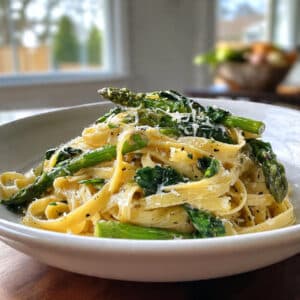
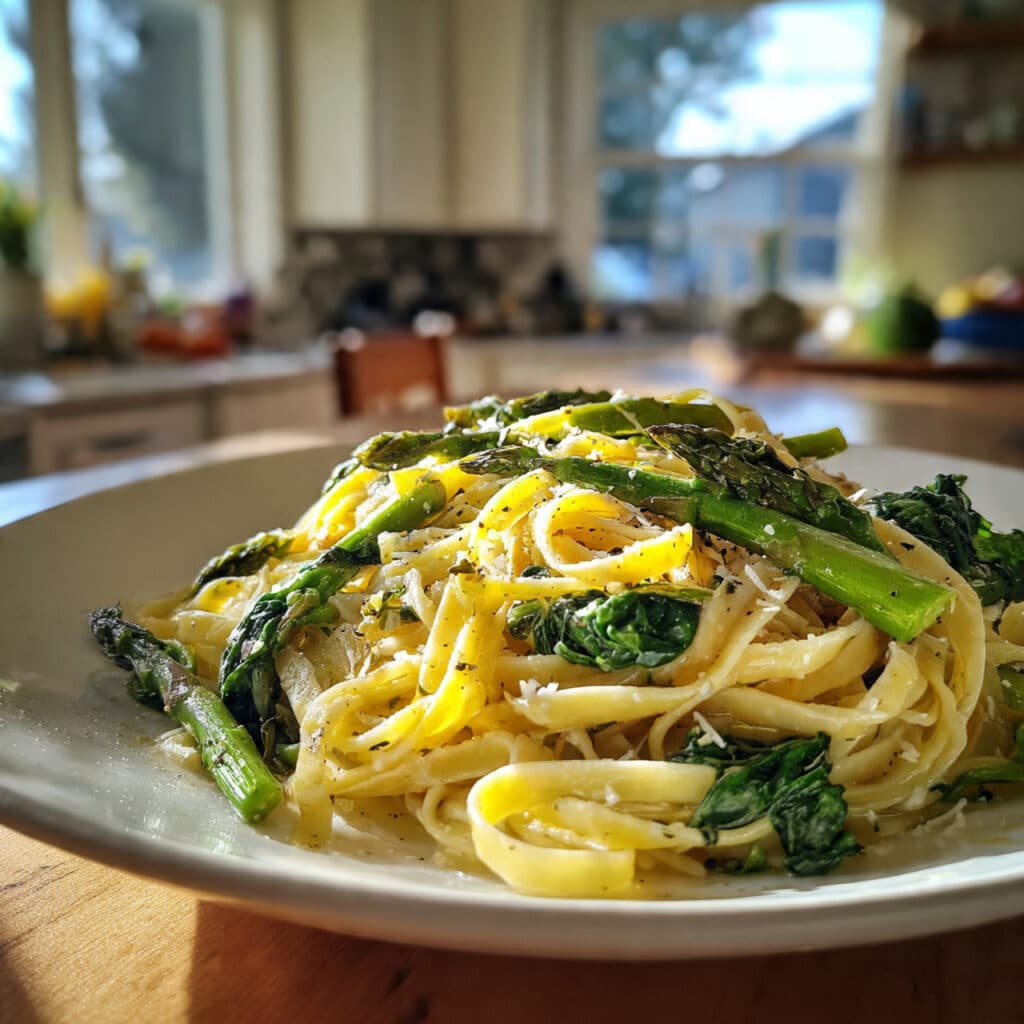
Fettuccine with Spinach and Asparagus is the kind of pasta that brings a little bit of spring straight to your kitchen. A silky, creamy green sauce clings to every ribbon of fettuccine, tender asparagus adds a satisfying bite, and sweet peas pop with flavor throughout the dish.
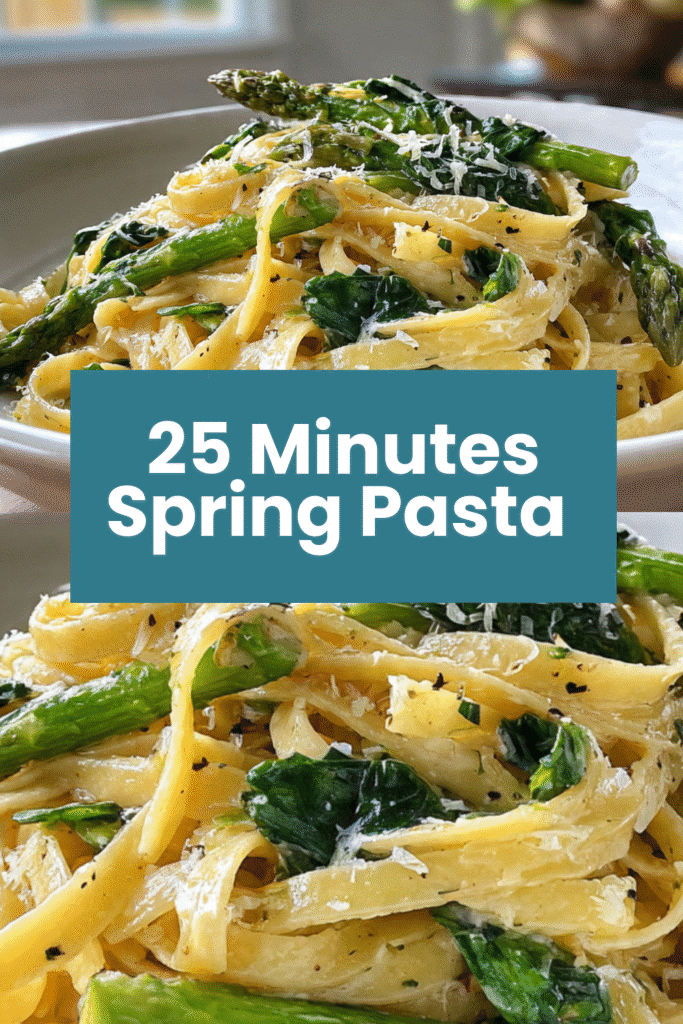
Why You’ll Love This Recipe
- Gorgeous, naturally green sauce — the blended spinach cream is silky and vibrant without food coloring or anything artificial.
- Ready in under 30 minutes — from first pot of boiling water to full bowls on the table.
- Feels fancy but is genuinely easy — a blender does most of the work for the sauce.
- Packed with vegetables — spinach, asparagus, and peas in every bite.
- Easily adaptable — swap the pasta, adjust the greens, make it dairy-free, or add protein with almost no extra effort.
Fettuccine with Spinach and Asparagus
- Total Time: 25 minutes
- Yield: 4 servings
- Diet: Vegetarian
Description
This creamy spinach fettuccine wraps silky pasta ribbons in a vibrant blended green sauce made from fresh spinach, garlic, and Parmesan, then layers in blanched asparagus and sweet peas for a spring pasta that looks restaurant-elegant and comes together in under 25 minutes.
Ingredients
Pasta
12 oz fettuccine
Generous pinch of kosher salt for the boiling water
Creamy Spinach Sauce
2 tbsp extra-virgin olive oil
3 cloves garlic, minced
4 cups fresh baby spinach, roughly chopped (do not substitute frozen)
1 cup heavy cream (or full-fat coconut cream for a dairy-free version)
½ cup freshly grated Parmesan cheese (or nutritional yeast for a vegan version)
½ tsp kosher salt
¼ tsp freshly ground black pepper
Pinch of freshly grated nutmeg (optional but highly recommended)
1 tbsp fresh lemon juice
Vegetables
1 bunch fresh asparagus, trimmed and cut into 2-inch pieces
1 cup green peas, fresh or frozen
For Serving
2 tbsp fresh basil leaves, chopped
2 tbsp toasted pine nuts or slivered almonds (optional)
Extra freshly grated Parmesan and fresh lemon zest
Instructions
1. Bring a large pot of water to a rolling boil. Add a generous pinch of salt — the water should taste pleasantly salty. Cook the fettuccine until just al dente per package instructions. Before draining, scoop out ½ cup of the starchy pasta water and set it aside in a small cup. Drain the pasta and toss with a small drizzle of olive oil to prevent sticking. Set aside.
2. Use the still-hot pasta water (or bring a small separate pan of water to a boil) and blanch the asparagus pieces for exactly 2 minutes. Add the peas and blanch for 1 more minute. Drain immediately and set aside. Blanching locks in the bright green color and keeps both vegetables crisp-tender rather than olive-colored and soft.
3. Heat olive oil in a large skillet over medium heat. Add the minced garlic and cook for 1 minute, stirring constantly, until fragrant but not browned at all. Add the chopped fresh spinach with a small pinch of salt. Cook for 2–3 minutes, stirring continuously, until the spinach wilts down completely. The volume drops dramatically — this is exactly right.
4. Transfer the wilted spinach and garlic to a blender. Add the heavy cream, grated Parmesan, salt, pepper, lemon juice, and the pinch of nutmeg if using. Blend on high for 30–45 seconds until completely smooth and the sauce looks vibrantly, deeply green. Return the sauce to the skillet over the lowest heat setting. If it looks thicker than you want, stir in a splash of the reserved pasta water to loosen it to a pourable consistency.
5. Add the blanched asparagus and peas into the warm sauce and stir gently. Add the drained fettuccine and toss with tongs for 1–2 minutes until every ribbon of pasta picks up a full coat of green sauce and the vegetables distribute evenly throughout. Add more pasta water a tablespoon at a time if the sauce thickens too much. Divide into bowls immediately. Top each portion with fresh chopped basil, toasted pine nuts, a generous amount of freshly grated Parmesan, and a little lemon zest. Serve right away.
Notes
Save pasta water before draining: Set a measuring cup next to the colander before the pasta finishes cooking. The starch in that water is what helps the blended sauce coat the pasta silkily — plain water cannot replicate it.
Blend the sauce completely: Do not stir wilted spinach into the cream without blending. Blending is the step that transforms the greens into a velvety, vibrantly colored sauce. Skipping it gives a watery, uneven result.
Nutmeg trick: A single pinch of nutmeg deepens the entire flavor of a cream sauce. It does not taste like nutmeg in the finished bowl — it just makes everything taste richer and more complete.
Use only fresh spinach: Frozen spinach releases too much water and makes the sauce grainy and dull-colored. Fresh baby spinach is the only choice for this sauce.
Make the sauce ahead: The spinach sauce keeps in the refrigerator up to 2 days. Reheat it gently on the stove and cook fresh pasta to serve — the sauce reheats beautifully.
Storage: Refrigerate leftover pasta in an airtight container up to 3 days. Reheat in a skillet over low heat with a splash of cream or water to loosen the sauce. Do not freeze — the cream-based sauce separates when thawed.
- Prep Time: 10 minutes
- Cook Time: 15 minutes
- Category: Pasta
- Method: Stovetop
- Cuisine: Italian-American
Ingredients You’ll Need
For the Pasta
- 12 oz fettuccine (or linguine, or your favorite long pasta)
- Generous pinch of salt for the boiling water
For the Creamy Spinach Sauce
- 2 tablespoons extra-virgin olive oil
- 3 cloves garlic, minced
- 4 cups fresh baby spinach, roughly chopped
- 1 cup heavy cream (substitute coconut cream for a dairy-free version)
- ½ cup freshly grated Parmesan cheese (or nutritional yeast for vegan)
- ½ teaspoon kosher salt
- ¼ teaspoon black pepper
- A pinch of freshly grated nutmeg (optional but lovely)
- 1 tablespoon fresh lemon juice
For the Vegetables
- 1 bunch fresh asparagus, trimmed and cut into 2-inch pieces
- 1 cup green peas, fresh or frozen
For Serving
- 2 tablespoons fresh basil, chopped
- 2 tablespoons toasted pine nuts or slivered almonds (optional, for crunch)
- Extra Parmesan and a little lemon zest for finishing
Why These Ingredients Work
Blending the spinach directly into warm heavy cream with garlic and Parmesan is what transforms this from a plain cream sauce with some vegetables stirred in into something that looks and tastes genuinely distinctive.
The spinach gives the sauce its beautiful deep green color, its slightly earthy flavor, and a nutritional boost, while the cream provides the body and richness that makes it cling to every strand of pasta instead of sliding off. T
he reserved pasta water is the final touch — the starch it contains helps emulsify the sauce and creates a silky, restaurant-quality texture that plain cream alone cannot achieve.
Blanching the asparagus rather than sautéing it preserves that vivid bright green color and keeps a satisfying crunch in every piece — overcooked asparagus turns army-green and limp, which is a shame in a dish that is otherwise this beautiful. Two minutes in boiling water, then straight into the sauce, is all the asparagus needs to be perfectly cooked and visually stunning alongside the green pasta.
Essential Tools and Equipment
- Large pot for boiling pasta
- Large deep skillet or wide saucepan for the sauce
- Blender or immersion blender (a regular countertop blender gives the smoothest result)
- Colander for draining pasta
- Heatproof liquid measuring cup for reserving pasta water
- Knife and cutting board
Step-by-Step Instructions
Step 1: Cook the Pasta
Bring a large pot of well-salted water to a rolling boil and cook the fettuccine according to the package instructions until just al dent. Before draining, scoop out at least ½ cup of the pasta water and set it aside. Drain the pasta, toss it with a tiny drizzle of olive oil to prevent sticking, and set aside.
Step 2: Sauté the Garlic and Wilt the Spinach
Heat the olive oil in a large skillet over medium heat. Add the minced garlic and cook for about 1 minute, stirring constantly, until it smells fragrant but has not taken on any color. Add the spinach, season with a small pinch of salt, and stir until it wilts down completely.
Step 3: Blend the Sauce
Transfer the wilted spinach and garlic into a blender. Add the heavy cream, grated Parmesan, salt, pepper, lemon juice, and nutmeg if using, then blend until the sauce is completely smooth and beautifully green. Pour the sauce back into the skillet and warm it gently over low heat, stirring occasionally.
Step 4: Blanch the Asparagus and Peas
Use the still-hot pasta water (before fully draining the pot, or in a separate small saucepan) to blanch the asparagus pieces for exactly 2 minutes, then add the peas and cook for just 1 minute more. Drain and immediately add them to the skillet with the warm spinach sauce. The brief blanching keeps both vegetables bright green and crisp rather than olive-drab and soft.
Step 5: Toss and Serve
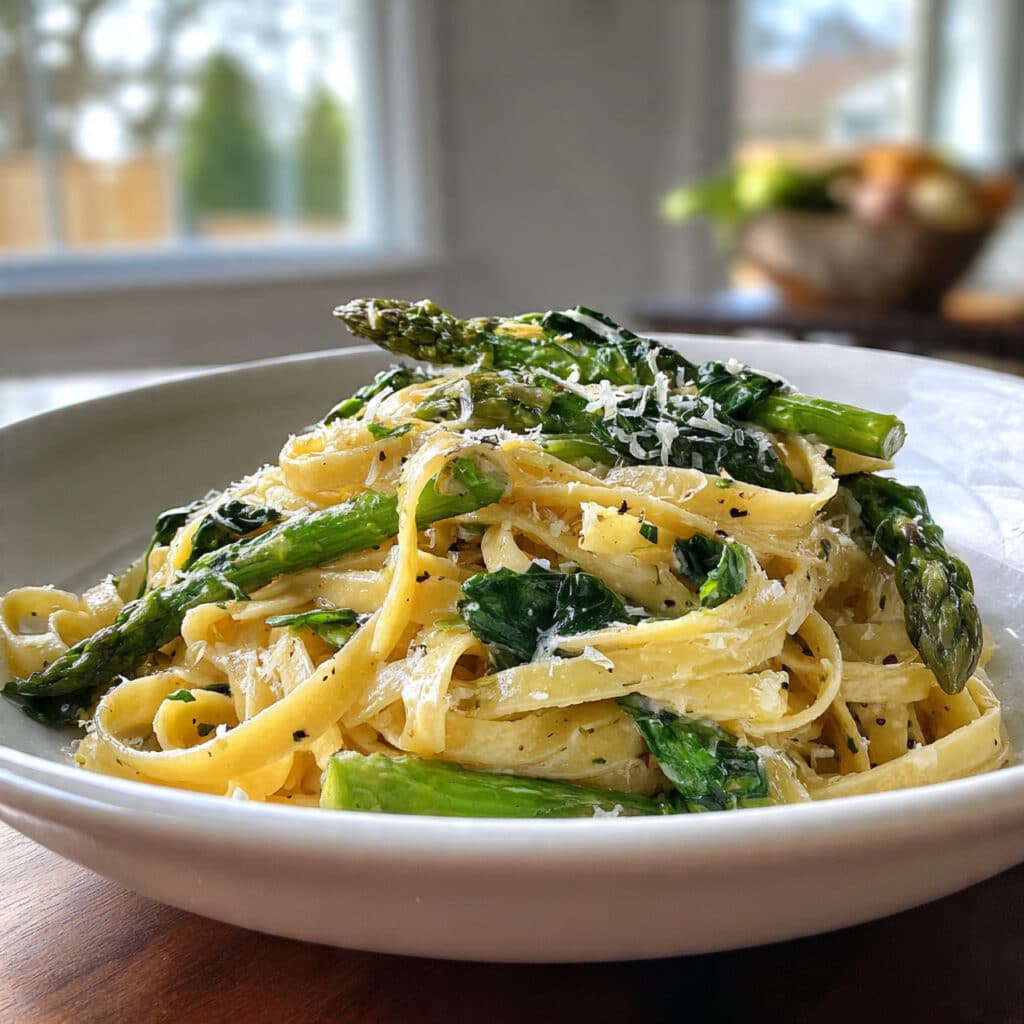
Add the drained fettuccine to the skillet and toss everything together with tongs until every strand of pasta is coated in that beautiful green sauce and the vegetables are evenly distributed throughout. Divide into bowls, top with chopped basil, toasted pine nuts if using, and a generous shower of extra Parmesan, then serve immediately.
You Must Know
Save the pasta water before you drain the pasta. It is very easy to forget this in the moment, and without it you will have a hard time achieving that glossy, emulsified sauce texture. Set a measuring cup right next to your colander as a reminder before you even put the pasta in the pot.
Personal Secret: Add a pinch of freshly grated nutmeg to the blended sauce. It sounds like a strange addition to a pasta dish, but nutmeg has a remarkable ability to deepen the flavor of creamy sauces
Pro Tips & Cooking Hacks
- Blanch the asparagus in the same pot of pasta water right before you drain the pasta — one less pot to wash and the water is already perfectly salted.
- Prepare the spinach sauce while the pasta cooks so everything finishes at the same time and the pasta does not sit and clump while you wait for the sauce.
- Use fresh spinach rather than frozen for the sauce — frozen spinach releases a lot of water and makes the sauce grainy and less vibrantly green.
- Whole wheat pasta or zucchini noodles work as substitutes for those who want something lighter or gluten-free.
- Stir a tablespoon of ricotta or mascarpone into the sauce just before adding the pasta for an extra-creamy, restaurant-style finish.
- Top bowls with crispy fried shallots or toasted breadcrumbs tossed in a little garlic and olive oil for a wonderful crunchy contrast to the silky sauce.
Flavor Variations & Suggestions
For a spicier version, stir ¼ teaspoon of red pepper flakes into the sauce just before blending — the heat is gentle but persistent throughout the dish and pairs beautifully with the richness of the cream and the freshness of the green vegetables. A squeeze of extra lemon over each bowl right before serving amplifies all the green flavors in a way that feels very bright and spring-like.
For a more substantial meal, add a handful of sautéed shrimp or sliced grilled chicken directly on top of each bowl before serving — either protein takes about 5 minutes to cook in the same skillet used for the sauce, and both complement the spinach and asparagus flavors naturally without needing any additional seasoning.
Kale or Swiss chard can replace the spinach for a more robust, slightly earthier sauce if that is what you have available — just blanch the tougher leaves first before blending so the sauce comes out smooth.
Make-Ahead Options
The spinach cream sauce can be made up to 2 days ahead and stored in an airtight container in the refrigerator — it actually deepens in flavor as it sits. Reheat it gently in a skillet over low heat with a splash of cream or pasta water to loosen it before tossing with freshly cooked pasta.
The blanched asparagus and peas can also be prepared a day ahead and refrigerated. The full assembled dish is best eaten right away, but leftovers keep in the refrigerator for up to 3 days and reheat well with a little liquid added to bring the sauce back to its original consistency.
Freezing is not recommended as both the sauce and the pasta change texture after thawing.
What to Serve With Fettuccine with Spinach and Asparagus
A piece of crusty sourdough bread or a soft garlic knot served alongside this pasta is essentially perfect — the bread soaks up the green sauce at the bottom of the bowl in a way that is deeply satisfying and means you do not waste a drop. A simple arugula salad dressed with lemon vinaigrette and shaved Parmesan plays off all the same flavors as the pasta without competing with them.
For a dinner party, this pasta makes a beautiful vegetarian main course when served in wide shallow bowls with a drizzle of high-quality olive oil, extra Parmesan, and a few shavings of lemon zest on top. A glass of crisp, dry white wine — Sauvignon Blanc or Vermentino — is the ideal pairing and echoes the lemon and green herb notes in the dish.
For a lighter finish, serve small portions as a first course followed by simply prepared fish or chicken, letting the pasta play the elegant appetizer role it is perfectly suited for rather than the main event. The rich, creamy sauce means a little goes a long way, and starting with a small bowl always gets the table excited for what comes next.
Allergy Information
- Gluten: Contains fettuccine (wheat). Use certified gluten-free pasta for a gluten-free version.
- Dairy: Contains heavy cream and Parmesan. Substitute full-fat coconut cream and nutritional yeast for a completely dairy-free version.
- Nuts: Pine nuts or almonds are optional garnishes — omit entirely for a nut-free dish.
- Vegan: Use coconut cream, nutritional yeast, and omit the nuts or use seeds instead to make this fully plant-based.
Storage & Reheating
Store leftovers in an airtight container in the refrigerator for up to 3 days. Reheat gently in a skillet over medium-low heat with a splash of cream, water, or broth to loosen the sauce, stirring until everything is warmed through and cohesive.
Individual portions can be microwaved in 45-second intervals, stirring between each, with a tablespoon of water added before starting to prevent the sauce from seizing up.
FAQs
Can I use frozen spinach for the sauce?
Fresh spinach is strongly preferred here because frozen spinach releases a lot of water when thawed, which can make the sauce grainy and less vibrantly green. If frozen is all you have, squeeze out as much liquid as possible before adding it to the skillet.
What can I use instead of heavy cream?
Full-fat coconut cream is the best dairy-free substitute and blends beautifully with the spinach — it adds a very subtle sweetness that actually works well with the green vegetables and lemon. Cashew cream is another excellent option for a neutral-flavored alternative.
My sauce is too thick — how do I fix it?
Add the reserved pasta water a tablespoon at a time, tossing the pasta as you go, until the sauce reaches your preferred consistency. The starch in the pasta water helps the sauce stay creamy and cohesive rather than separating when diluted.
Can I make this ahead for a dinner party?
Make the spinach sauce and blanch the vegetables up to a day ahead, then cook the pasta fresh right before serving — the whole process takes about 15 minutes, and the sauce reheats in the same skillet in about 5 minutes. This is actually a very dinner-party-friendly recipe once the prep work is done in advance.
What pasta shapes work besides fettuccine?
Linguine and tagliatelle are the most similar alternatives and work equally well. Penne or rigatoni are great if you want something that holds more sauce in each bite — short tubular pastas capture the creamy green sauce beautifully and make every forkful feel very satisfying.
💬 Tried this recipe? Leave a comment and rating below!