
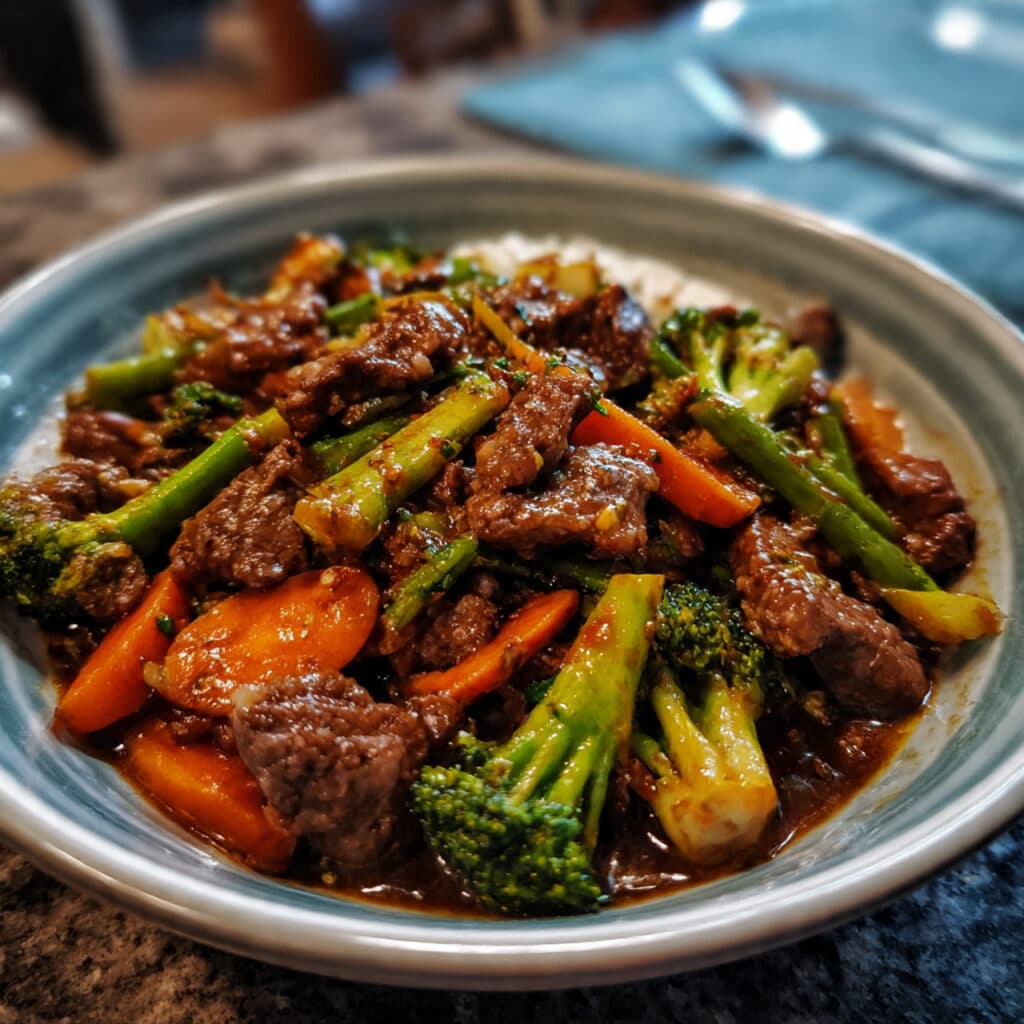
Ground beef stir fry is one of those weeknight miracles that feels like you ordered takeout but tastes even better because you made it yourself. It’s got tender ground beef, crispy-tender vegetables, and a sweet-savory sauce that clings to everything just right. This recipe comes together in 30 minutes flat, uses one skillet, and turns simple ingredients into something your whole family will ask for again and again.
Why You’ll Love This Recipe
- Ready in 30 minutes – Faster than ordering delivery and way more satisfying
- One-pan wonder – Less cleanup means more time to actually enjoy dinner
- Better than takeout – You control the ingredients and the flavor is absolutely spot-on
- Meal prep friendly – Make it on Sunday and thank yourself all week long
- Budget-friendly comfort – Ground beef and everyday veggies never tasted so good

Easy Ground Beef Stir Fry
- Total Time: 30 minutes
- Yield: 4 generous portions
Description
This quick and easy ground beef stir fry combines seasoned ground beef with colorful vegetables and a homemade stir fry sauce that’s better than any takeout. Ready in just 30 minutes, it’s perfect for busy weeknights and meal prep. The sauce is made with coconut aminos, fresh ginger, garlic, and sesame oil for authentic flavor. Serve over rice, cauliflower rice, or in lettuce wraps for a delicious family dinner everyone will love.
Ingredients
For the Stir Fry:
- 1 pound ground beef (85/15 blend recommended – that little bit of fat makes all the difference in flavor)
- 1 tablespoon extra virgin olive oil
- 1 red bell pepper, chopped (adds a pop of sweetness and color)
- 1 large carrot, cut into matchsticks (or just slice thin if matchsticks feel fancy)
- ½ pound asparagus, ends trimmed, chopped (snap off the woody ends first)
- 8 ounces mushrooms, sliced or quartered (use whatever you’ve got – button, cremini, or baby bellas)
- ½ large yellow onion, chopped
For the Stir Fry Sauce:
- 3 tablespoons coconut aminos (or substitute tamari or soy sauce if that’s what’s in your pantry)
- 1 teaspoon minced garlic (fresh is best, but jarred works in a pinch)
- 1 teaspoon minced fresh ginger (this is where the magic happens)
- 1 teaspoon sriracha (adjust up or down depending on your heat tolerance)
- 1 teaspoon rice vinegar (adds a little brightness)
- 1 tablespoon toasted sesame oil (don’t skip this – it’s the secret ingredient)
- 1½ tablespoons maple syrup (balances everything out beautifully)
- 2 tablespoons water
- 1 tablespoon arrowroot powder (or cornstarch or tapioca starch for thickening)
For Garnish:
- Sesame seeds (white, black, or both for that restaurant look)
- Chopped scallions (green onions add the perfect finishing touch)
For Serving:
- Cooked white rice, brown rice, cauliflower rice, or lettuce wraps (whatever fits your mood or diet)
Instructions
Place your large skillet over medium-high heat and let it get nice and hot. Add the ground beef and let it sizzle. Use your wooden spoon to break it up into bite-sized crumbles as it cooks. You want it browned all over, with those crispy golden bits that add so much flavor.
Add the olive oil to the same skillet and let it shimmer for a few seconds. Toss in all your prepared vegetables – the bell pepper, carrot, asparagus, mushrooms, and onion. Give them a good stir to coat them in the oil, then let them cook for about 5 minutes.
While those vegetables are sizzling away, grab a small bowl and whisk together all your sauce ingredients – coconut aminos, garlic, ginger, sriracha, rice vinegar, sesame oil, maple syrup, water, and arrowroot powder.
Add the browned beef back to the skillet with the vegetables. Use your spoon to toss everything together so the beef and veggies are evenly distributed. It should look beautiful and colorful and smell absolutely incredible at this point.
Give your sauce one more quick stir, then pour it all over the beef and vegetable mixture. Immediately start stirring to coat everything evenly. The sauce will start to thicken almost instantly as it hits the hot pan. Keep tossing for about 30 seconds to a minute, then turn off the heat.
Plate your stir fry over a bed of fluffy white rice, nutty brown rice, or whatever base you’re using. Sprinkle the top with sesame seeds and chopped scallions for that final restaurant-worthy touch.
Notes
Keep your vegetables cut into similar-sized pieces so they all cook at the same rate. Nothing’s worse than crunchy carrots next to mushy mushrooms. If you’re in a time crunch or just don’t feel like chopping, frozen stir fry vegetables work too. Just adjust your cooking time slightly to let them thaw and release their moisture.
Fresh garlic and ginger really do make a difference in stir fry, but I get it, life gets busy. Jarred minced garlic is a perfectly acceptable shortcut. Just know that fresh ginger has this bright, zingy quality that’s hard to replicate. If you can swing it, keep that frozen ginger trick in your back pocket.
The arrowroot powder is what gives this sauce that glossy, thick, cling-to-everything texture you get from your favorite takeout spot. Make sure you whisk it thoroughly into the sauce before adding it to the pan.
- Prep Time: 15 minutes
- Cook Time: 15 minutes
- Category: Main Dish
- Method: Stir Fry
- Cuisine: Asian-Inspired
Ingredients You’ll Need
For the Stir Fry:
- 1 pound ground beef (85/15 blend recommended – that little bit of fat makes all the difference in flavor)
- 1 tablespoon extra virgin olive oil
- 1 red bell pepper, chopped (adds a pop of sweetness and color)
- 1 large carrot, cut into matchsticks (or just slice thin if matchsticks feel fancy)
- ½ pound asparagus, ends trimmed, chopped (snap off the woody ends first)
- 8 ounces mushrooms, sliced or quartered (use whatever you’ve got – button, cremini, or baby bellas)
- ½ large yellow onion, chopped
For the Stir Fry Sauce:
- 3 tablespoons coconut aminos (or substitute tamari or soy sauce if that’s what’s in your pantry)
- 1 teaspoon minced garlic (fresh is best, but jarred works in a pinch)
- 1 teaspoon minced fresh ginger (this is where the magic happens)
- 1 teaspoon sriracha (adjust up or down depending on your heat tolerance)
- 1 teaspoon rice vinegar (adds a little brightness)
- 1 tablespoon toasted sesame oil (don’t skip this – it’s the secret ingredient)
- 1½ tablespoons maple syrup (balances everything out beautifully)
- 2 tablespoons water
- 1 tablespoon arrowroot powder (or cornstarch or tapioca starch for thickening)
For Garnish:
- Sesame seeds (white, black, or both for that restaurant look)
- Chopped scallions (green onions add the perfect finishing touch)
For Serving:
- Cooked white rice, brown rice, cauliflower rice, or lettuce wraps (whatever fits your mood or diet)
Why These Ingredients Work
The 85/15 ground beef gives you just enough fat to keep everything juicy and flavorful without being greasy. Leaner beef can taste a bit dry in stir fry, so this blend is the sweet spot. The rainbow of vegetables isn’t just pretty, they each bring something different to the table.
Bell peppers add sweetness, carrots bring a slight crunch, asparagus gives it that special-occasion feel, mushrooms soak up all that delicious sauce, and onions tie everything together with their savory depth.
Now let’s talk about that sauce. Coconut aminos are a little less salty and slightly sweeter than soy sauce, which makes the flavor more balanced and complex. The garlic and ginger are absolutely essential, they’re the backbone of any good stir fry.
Fresh ginger has this bright, zingy quality that jarred just can’t match, but I won’t judge you if you use the shortcut. The sriracha adds just enough heat to wake everything up without setting your mouth on fire. Rice vinegar brings acidity to cut through the richness, and that toasted sesame oil? It’s like liquid umami magic.
The maple syrup might seem unexpected, but it rounds out all those savory and spicy notes perfectly. And the arrowroot powder is your secret weapon for getting that glossy, thick, coat-every-bite texture that makes you feel like you’re eating restaurant takeout.
Essential Tools and Equipment
- Large skillet or wok (12-inch is ideal for this amount of food)
- Wooden spoon or spatula (for breaking up the beef and tossing everything together)
- Sharp knife and cutting board (for all that vegetable prep)
- Small bowl (for mixing the sauce)
- Whisk or fork (to get that sauce smooth and combined)
- Measuring spoons and cups (because eyeballing stir fry sauce is risky business)
Step-by-Step Instructions
Step 1: Brown the Beef
Place your large skillet over medium-high heat and let it get nice and hot. Add the ground beef and let it sizzle. Use your wooden spoon to break it up into bite-sized crumbles as it cooks. You want it browned all over, with those crispy golden bits that add so much flavor.
Step 2: Cook the Vegetables
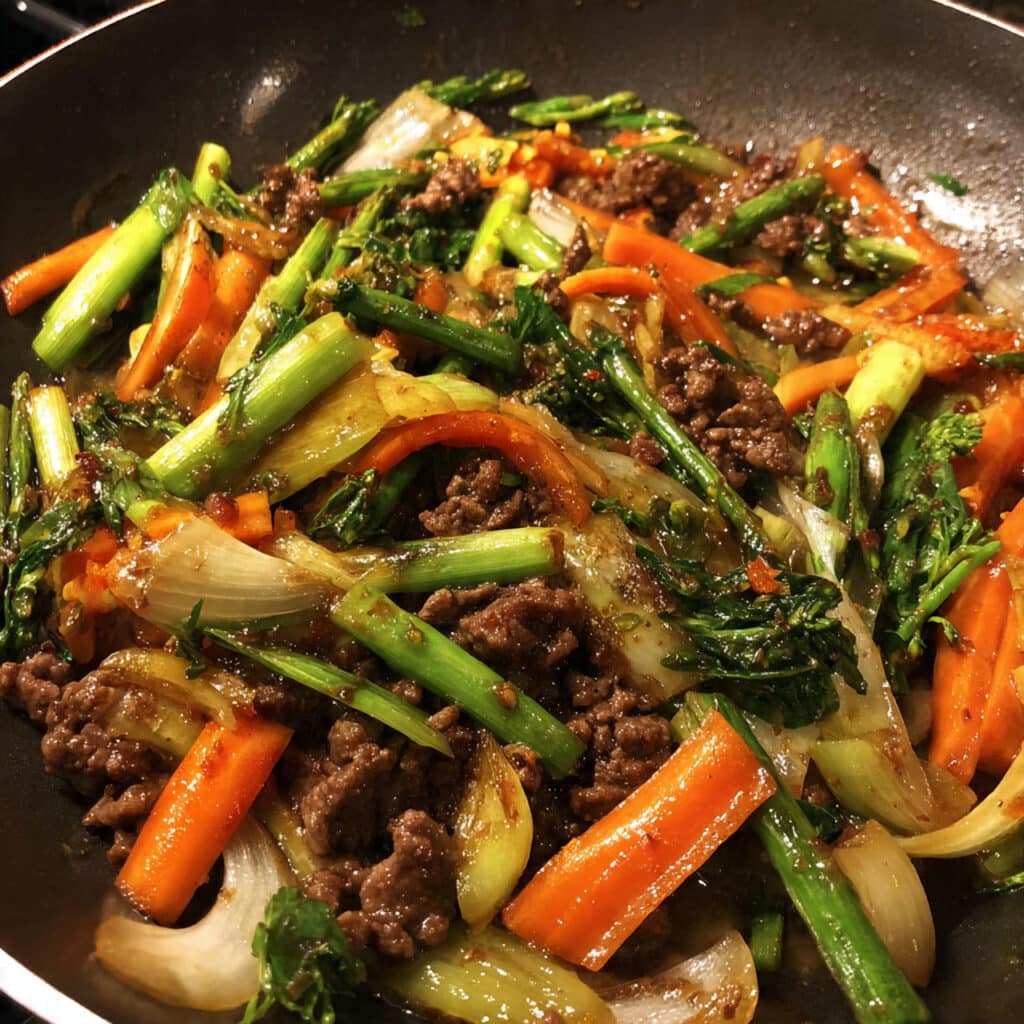
Add the olive oil to the same skillet and let it shimmer for a few seconds. Toss in all your prepared vegetables – the bell pepper, carrot, asparagus, mushrooms, and onion. Give them a good stir to coat them in the oil, then let them cook for about 5 minutes.
Step 3: Make the Sauce
While those vegetables are sizzling away, grab a small bowl and whisk together all your sauce ingredients – coconut aminos, garlic, ginger, sriracha, rice vinegar, sesame oil, maple syrup, water, and arrowroot powder.
Step 4: Combine Everything
Add the browned beef back to the skillet with the vegetables. Use your spoon to toss everything together so the beef and veggies are evenly distributed. It should look beautiful and colorful and smell absolutely incredible at this point.
Step 5: Add the Sauce
Give your sauce one more quick stir, then pour it all over the beef and vegetable mixture. Immediately start stirring to coat everything evenly. The sauce will start to thicken almost instantly as it hits the hot pan. Keep tossing for about 30 seconds to a minute, then turn off the heat.
Step 6: Serve It Up
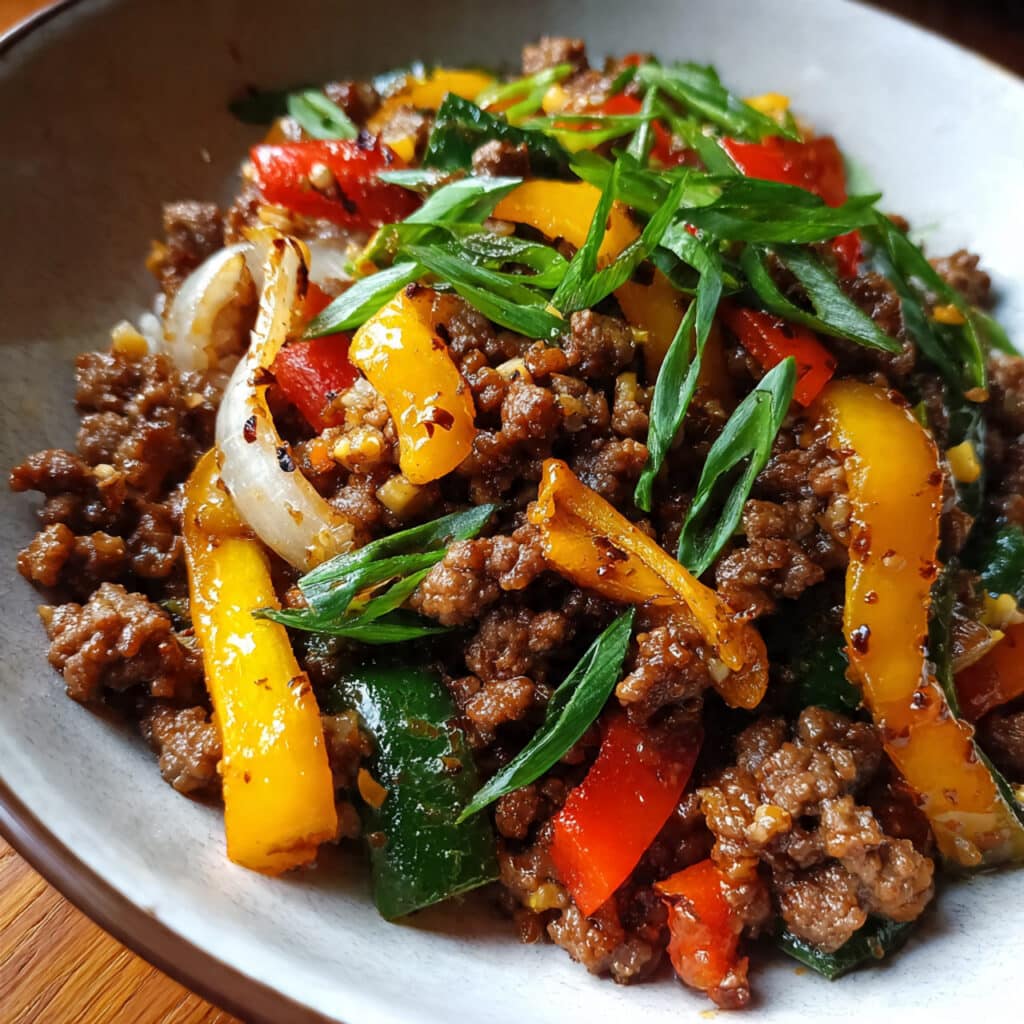
Plate your stir fry over a bed of fluffy white rice, nutty brown rice, or whatever base you’re using. Sprinkle the top with sesame seeds and chopped scallions for that final restaurant-worthy touch.
You Must Know
The key to a great stir fry is having everything prepped and ready before you start cooking. Once that pan is hot, things move lightning fast, and you don’t want to be chopping vegetables while your beef burns. This is what chefs call mise en place, and it’s a game changer for home cooks too. Get all your vegetables chopped, your sauce mixed, and your tools lined up. Then cooking becomes a breeze.
Personal Secret: I keep a knob of fresh ginger in the freezer at all times. When you need it, you can grate it straight from frozen using a microplane or fine grater. It’s so much easier than trying to peel and mince fresh ginger, and it lasts forever.
Pro Tips & Cooking Hacks
Use an 85/15 ground beef blend for the best balance of flavor and texture. The fat content is just right. Leaner beef can turn out dry and crumbly, while fattier blends might leave your stir fry swimming in grease. If you do end up with excess fat after browning the beef, just drain most of it off but leave a little behind for flavor.
Keep your vegetables cut into similar-sized pieces so they all cook at the same rate. Nothing’s worse than crunchy carrots next to mushy mushrooms. If you’re in a time crunch or just don’t feel like chopping, frozen stir fry vegetables work too. Just adjust your cooking time slightly to let them thaw and release their moisture.
Fresh garlic and ginger really do make a difference in stir fry, but I get it, life gets busy. Jarred minced garlic is a perfectly acceptable shortcut. Just know that fresh ginger has this bright, zingy quality that’s hard to replicate. If you can swing it, keep that frozen ginger trick in your back pocket.
The arrowroot powder is what gives this sauce that glossy, thick, cling-to-everything texture you get from your favorite takeout spot. Make sure you whisk it thoroughly into the sauce before adding it to the pan, otherwise you’ll end up with weird little clumps. If the sauce seems too thick, add a splash more water. Too thin? Let it simmer for another 30 seconds.
Flavor Variations & Suggestions
Want to switch things up? This recipe is incredibly flexible. You can swap the ground beef for ground turkey, ground chicken, or even ground pork if that’s what you’ve got on hand. Each one brings its own flavor to the party. If you’re feeling fancy, try ground lamb for a richer, more complex taste.
The vegetables are also completely customizable. Broccoli florets, snap peas, zucchini, baby corn, water chestnuts, or bok choy would all be delicious here. Use whatever’s in season or whatever’s hanging out in your crisper drawer. The formula stays the same, just swap in your favorites.
For a spicier kick, double the sriracha or add a pinch of red pepper flakes. If you’re cooking for kids or heat-sensitive folks, leave the sriracha out entirely and serve hot sauce on the side for anyone who wants it. You can also make this with a peanut butter twist by stirring a tablespoon of creamy peanut butter into the sauce for a Thai-inspired flavor.
If you want to make it more veggie-forward, cut the beef down to half a pound and add an extra cup or two of vegetables. You’ll get all that savory meat flavor but with more nutritional bang for your buck.
Make-Ahead Options
This ground beef stir fry is perfect for meal prep. You can cook the whole thing on Sunday and portion it into meal prep containers with rice for grab-and-go lunches all week. It stays fresh in the fridge for up to a week in an airtight container, and honestly, the flavors get even better after a day or two when everything has time to meld together.
If you want to get a head start, you can prep all your vegetables the night before and store them in a container in the fridge. You can also mix up the sauce ahead of time and keep it in a jar. Just give it a good shake before using since the arrowroot can settle to the bottom.
For longer storage, this stir fry freezes beautifully for up to 2-3 months. Let it cool completely first, then portion it into freezer-safe containers or bags. I like to freeze it without the rice, then make fresh rice when I’m ready to eat it. Thaw it overnight in the fridge, then reheat gently in a skillet over low heat. Add a splash of water if it seems dry.
What to Serve With Ground Beef Stir Fry
This stir fry is honestly a complete meal all on its own, especially if you serve it over rice. But if you want to round things out, here are some ideas. A simple cucumber salad with rice vinegar and sesame seeds is light and refreshing and balances all those rich, savory flavors. Egg rolls or spring rolls make it feel like a real takeout feast. Steamed edamame sprinkled with sea salt is an easy, protein-packed side that kids love.
For a low-carb option, serve this over cauliflower rice or zucchini noodles instead of regular rice. You can also skip the rice altogether and pile it into lettuce cups for a fun, hands-on meal. Crisp romaine or butter lettuce works great. If you’re really hungry, add some crispy wonton strips on top for extra crunch.
And don’t forget a cold beverage. Iced green tea, a light lager beer, or even a crisp white wine like Riesling or Sauvignon Blanc pairs beautifully with the sweet and savory flavors in this dish.
Allergy Information
This recipe contains several common allergens, but it’s pretty easy to modify. The sauce includes sesame oil and sesame seeds, which are tree nut allergens for some people. You can substitute regular vegetable oil or avocado oil for the sesame oil, though you’ll lose some of that nutty depth. Just skip the sesame seed garnish if needed.
If you’re avoiding soy, use coconut aminos instead of soy sauce or tamari. It’s naturally soy-free and slightly sweeter, which works perfectly here. For a gluten-free version, make sure you’re using tamari or coconut aminos instead of regular soy sauce, which contains wheat. Also double-check that your arrowroot powder or cornstarch is certified gluten-free.
For dairy-free folks, you’re all set. This recipe doesn’t contain any dairy. If you’re following a Paleo or Whole30 diet, use coconut aminos, stick with arrowroot powder instead of cornstarch, and make sure your beef is grass-fed and your vegetables are organic if that matters to you.
Storage & Reheating
Store any leftovers in an airtight container in the refrigerator for up to a week. This is one of those rare dishes that actually tastes even better the next day after all the flavors have had time to get to know each other. The sauce soaks into everything and it becomes even more flavorful.
When you’re ready to reheat, the skillet method is best. Add your leftovers to a pan over low to medium-low heat and stir occasionally until warmed through. You might need to add a tablespoon or two of water to loosen up the sauce since it can thicken in the fridge. The microwave works too if you’re in a hurry. Just heat in 1-minute intervals, stirring between each one, until it’s hot all the way through.
For frozen stir fry, thaw it in the refrigerator overnight, then reheat using one of the methods above. Don’t try to reheat it straight from frozen or you’ll end up with a mushy texture. A little planning ahead makes all the difference.
Questions I Get Asked A Lot
What if I don’t have arrowroot powder?
No problem at all. Cornstarch or tapioca starch work exactly the same way. Use the same amount and whisk it into the sauce just like you would with arrowroot. They’ll all give you that thick, glossy, restaurant-style sauce.
Can I make this ahead and freeze it?
Yes, this freezes great for up to 2-3 months. Let it cool completely, then portion it into freezer-safe containers. Thaw overnight in the fridge before reheating. I prefer to freeze it without the rice and make fresh rice when I’m ready to eat, but you can freeze them together if that’s easier for you.
My sauce turned out too thick and gloppy. What happened?
This usually means the arrowroot powder clumped up or the sauce cooked for too long. Make sure you whisk the sauce really well before adding it to the pan so the starch is fully dissolved. Also, once you add the sauce, turn off the heat quickly. The residual heat from the pan is enough to thicken it without turning it into paste.
Can I use frozen vegetables?
Definitely! Frozen stir fry veggie mixes are a huge time-saver. Just adjust your cooking time to let them thaw and cook through. They might release a bit more water than fresh vegetables, so you can drain any excess liquid before adding the beef back in.
💬 Tried this recipe? Leave a comment and rating below! I’d love to hear how it turned out for you and what variations you tried.