Homemade crumpets are those delightfully spongy, hole-filled treats that toast up golden and crispy on the outside while staying tender inside. There’s something magical about making these British breakfast classics in your own kitchen smelling the yeasty aroma, and knowing you’re creating something truly special. This recipe uses just a handful of simple ingredients and a little patience to deliver crumpets that rival anything you’d find in a bakery.
Love More Breakfast Recipes? Try My Breakfast Stuffed Puff Pastry Bars or this Blueberry Cottage Cheese Breakfast Bake next.
Why You’ll Love This Recipe
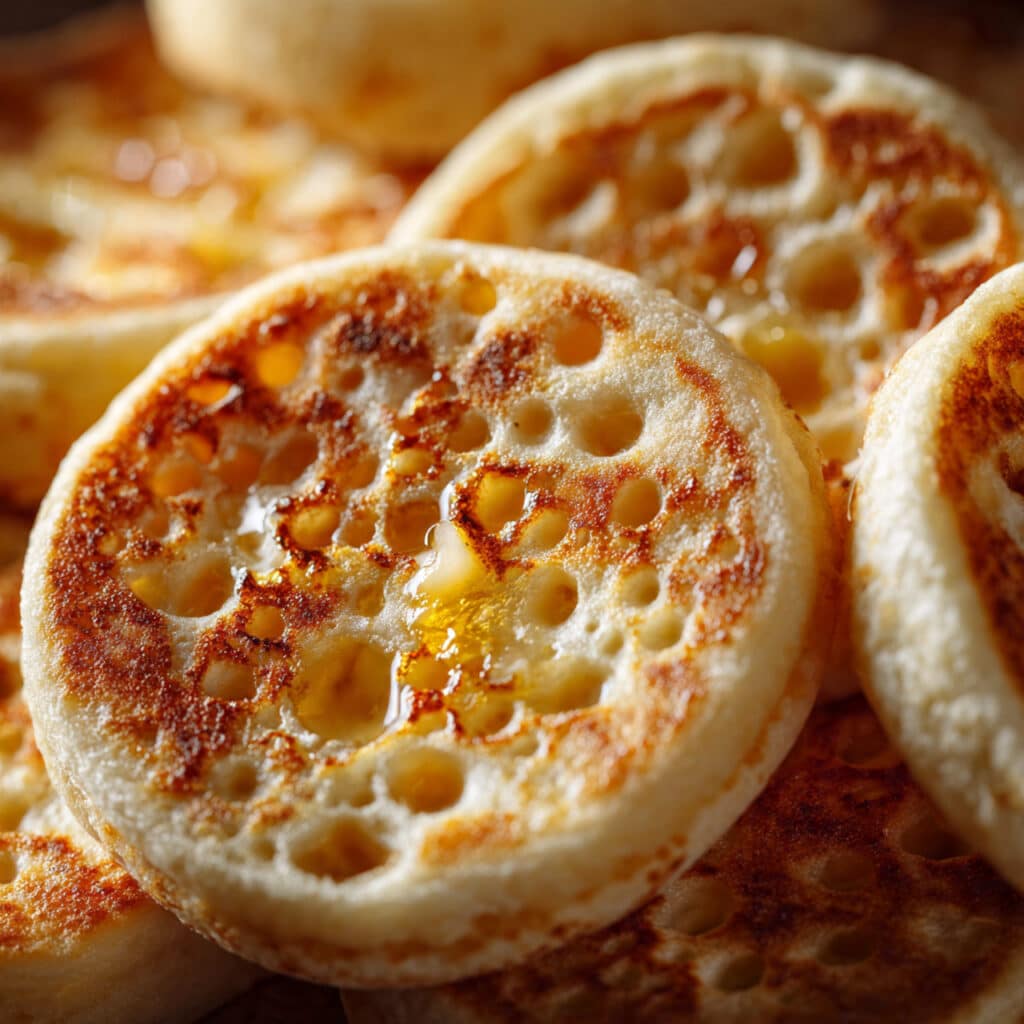
- Perfect honeycomb texture with those iconic holes that soak up butter like a dream
- Made with basic pantry staples you probably already have
- Fun to make and watch the bubbles work their magic
- Tastes even better the next day, so you can prep ahead for easy breakfasts
- That satisfying crispy-outside, tender-inside texture when toasted

Homemade Crumpets
- Total Time: 30-35 minutes
- Yield: 6 crumpets
Description
Traditional British crumpets made from scratch with a yeast and baking powder batter, cooked in rings on a griddle to create the signature spongy texture and holes that perfectly trap butter and toppings
Ingredients
Crumpet Batter
-
150g (1 cup) white flour, plain or all purpose
-
200ml (3/4 cup + 1 tbsp) warm water, just tap water (200g)
-
1/2 tsp salt, cooking or kosher salt (1/4 tsp if using table salt)
-
1/2 tsp white sugar
-
1 tsp baking powder
Yeast Mixture
-
1 tsp yeast, instant or rapid rise (dry active yeast works too)
-
1 tbsp warm water, just from the tap
For Cooking
-
2 tbsp unsalted butter, melted (or vegetable oil if you prefer)
Instructions
Place the flour, 200ml warm water, and salt in a bowl. Now here’s where the magic starts—whisk vigorously for a full 2 minutes by hand, or 1 minute with an electric beater on speed 5.
In a small bowl, dissolve the yeast into 1 tablespoon of warm water. Give it a quick stir and let it sit while you catch your breath from all that whisking. The water should be warm but not hot.
Add your yeast mixture, sugar, and baking powder to the flour mixture. Whisk for another 30 seconds by hand, or 15 seconds on speed 5 with your mixer. The batter should be smooth and pourable, about the consistency of thick pancake batter.
Cover the bowl with plastic wrap or a plate and place it somewhere very warm. The top of the fridge, near a sunny window, or even inside your oven with just the light on works beautifully. Let it sit for 15 to 30 minutes until the surface gets nice and foamy.
Grease 2 or 3 rings generously with butter. If you’re using non-stick rings, a light brush of melted butter works. For everything else, really smear that butter on to prevent sticking.
Brush your non-stick skillet lightly with melted butter and place the greased rings in the pan. Turn the stove to medium-high heat (or medium if you have a powerful stove). Let everything heat up together for a minute or two.
Pour 1/4 cup (65ml) of batter into each ring, filling them about 1cm or 2/5 inch deep. The batter will rise to about 60% more than where you started, so don’t overfill. You want room for those bubbles to do their thing.
Cook for 1 1/2 minutes on medium-high heat. You should start seeing bubbles appearing on the surface, but they won’t be popping yet. This initial blast of heat gets everything activated and sets the process in motion.
Turn the heat down to medium and cook for 1 minute. Now some bubbles should start popping around the edges. This is when things get exciting—you’re watching the crumpet magic happen in real time.
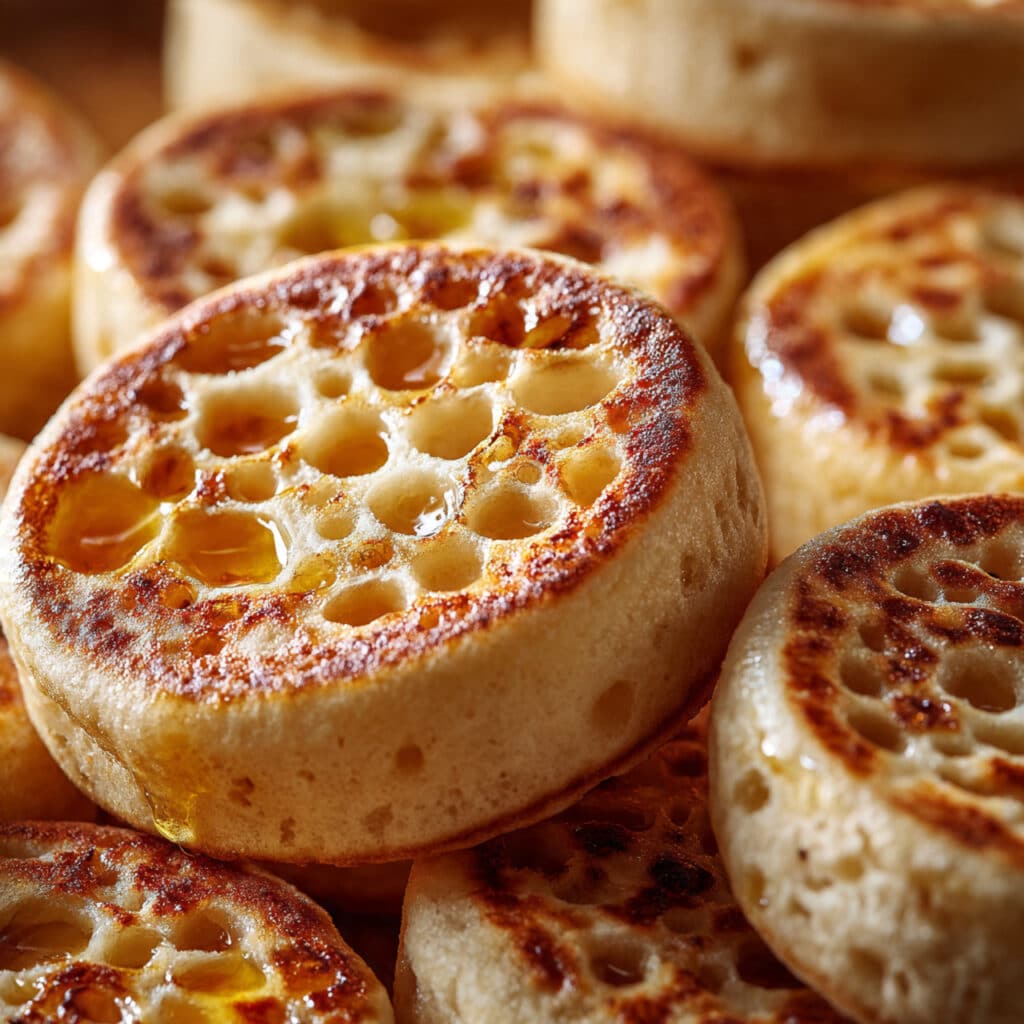
Turn the heat down to medium-low and cook for another 2 1/2 to 4 minutes. The surface should set and most of the bubbles will have popped, leaving behind those iconic holes. If a few stubborn bubbles remain, you can gently pop them with a skewer.
Carefully remove the rings (you might need to run a knife around the edges to loosen them). Flip the crumpets and cook the other side for just 20 to 30 seconds to get a light blush of color.
Transfer the crumpets to a wire rack with the golden side facing down. Let them cool completely. This is harder than it sounds because they smell amazing, but cooling is crucial. They’ll be a bit moist and doughy inside if you eat them warm.
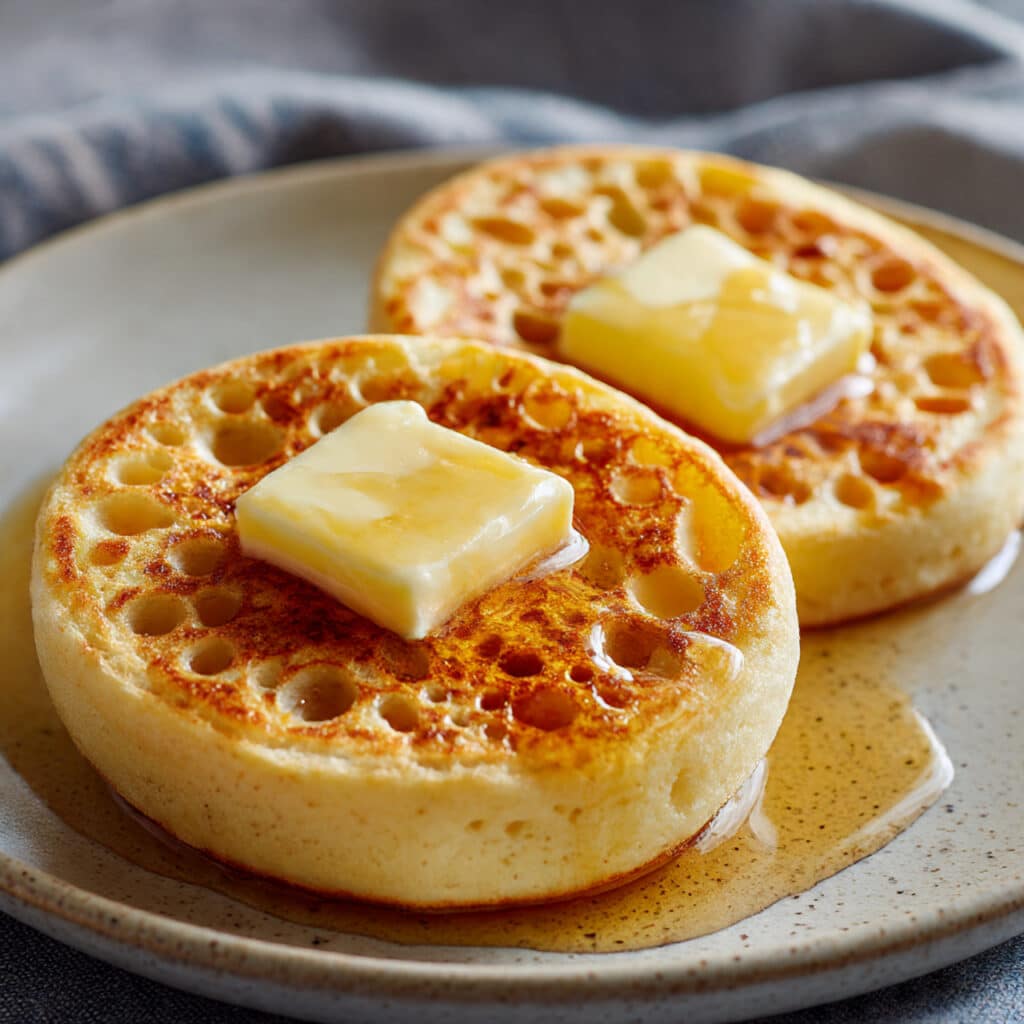
When you’re ready to eat, pop your crumpets in the toaster until the base is crispy and golden. The holes will open up even more, creating perfect little butter reservoirs.
Slather with butter while they’re hot. Watch it melt down into all those beautiful holes. Add your spread of choice (honey is absolute perfection, but jam works too), and eat immediately while everything is warm and melty.
Notes
Don’t be discouraged if your first attempt isn’t picture-perfect. Crumpets have a learning curve, just like pancakes did when you first started making them. The key is watching how the bubbles form and adjusting your heat accordingly.
If you don’t have proper crumpet rings, clean tuna cans with both ends removed work in a pinch. Make sure everything is the same height for even cooking.
Keep your batter warm between batches by leaving it in that warm spot—cold batter won’t bubble as nicely. If bubbles aren’t forming well, give the batter a gentle stir before pouring the next batch.
- Prep Time: 10 minutes
- Cook Time: 15-30 minutes
- Category: Beakfast
- Method: Griddle/Stovetop
- Cuisine: British
Ingredients You’ll Need
Crumpet Batter
- 150g (1 cup) white flour, plain or all purpose
- 200ml (3/4 cup + 1 tbsp) warm water, just tap water (200g)
- 1/2 tsp salt, cooking or kosher salt (1/4 tsp if using table salt)
- 1/2 tsp white sugar
- 1 tsp baking powder
Yeast Mixture
- 1 tsp yeast, instant or rapid rise (dry active yeast works too)
- 1 tbsp warm water, just from the tap
For Cooking
- 2 tbsp unsalted butter, melted (or vegetable oil if you prefer)
Why These Ingredients Work
The combination of yeast and baking powder is the real secret here, it’s the dynamic duo that creates those gorgeous holes.
Yeast alone won’t give you enough rise, and baking powder by itself won’t create the right texture. Together, they’re magic. The warm water activates the yeast while keeping the batter thin enough to spread properly in the rings.
A touch of sugar feeds the yeast and helps with browning, while salt balances everything out and strengthens the gluten structure. That gluten development from whisking the flour and water is what gives crumpets their signature chewy texture.
The melted butter for cooking adds flavor and helps the crumpets release from the rings without sticking.
Essential Tools and Equipment
You’ll need crumpet rings or metal egg rings (about 9cm or 3.5 inches wide), though any metal ring shaper will work.
A non-stick skillet makes life easier, along with a whisk for mixing the batter. Keep a pastry brush handy for greasing, and have a small bowl ready for your yeast mixture.
A wire cooling rack is important for letting the crumpets cool properly, and you’ll want a butter knife to help loosen them from the rings. If you have an electric mixer, it’ll save your arm, but hand whisking works perfectly fine.
Step-by-Step Instructions
Step 1: Mix the Batter
Place the flour, 200ml warm water, and salt in a bowl. Now here’s where the magic starts—whisk vigorously for a full 2 minutes by hand, or 1 minute with an electric beater on speed 5.
Step 2: Wake Up the Yeast
In a small bowl, dissolve the yeast into 1 tablespoon of warm water. Give it a quick stir and let it sit while you catch your breath from all that whisking. The water should be warm but not hot.
Step 3: Bring It All Together
Add your yeast mixture, sugar, and baking powder to the flour mixture. Whisk for another 30 seconds by hand, or 15 seconds on speed 5 with your mixer. The batter should be smooth and pourable, about the consistency of thick pancake batter.
Step 4: Let It Rise
Cover the bowl with plastic wrap or a plate and place it somewhere very warm. The top of the fridge, near a sunny window, or even inside your oven with just the light on works beautifully. Let it sit for 15 to 30 minutes until the surface gets nice and foamy.
Step 5: Prepare Your Rings
Grease 2 or 3 rings generously with butter. If you’re using non-stick rings, a light brush of melted butter works. For everything else, really smear that butter on to prevent sticking.
Step 6: Heat Your Skillet
Brush your non-stick skillet lightly with melted butter and place the greased rings in the pan. Turn the stove to medium-high heat (or medium if you have a powerful stove). Let everything heat up together for a minute or two.
Step 7: Pour the Batter
Pour 1/4 cup (65ml) of batter into each ring, filling them about 1cm or 2/5 inch deep. The batter will rise to about 60% more than where you started, so don’t overfill. You want room for those bubbles to do their thing.
Step 8: Cook Phase 1
Cook for 1 1/2 minutes on medium-high heat. You should start seeing bubbles appearing on the surface, but they won’t be popping yet. This initial blast of heat gets everything activated and sets the process in motion.
Step 9: Cook Phase 2
Turn the heat down to medium and cook for 1 minute. Now some bubbles should start popping around the edges. This is when things get exciting—you’re watching the crumpet magic happen in real time.
Step 10: Cook Phase 3
Turn the heat down to medium-low and cook for another 2 1/2 to 4 minutes. The surface should set and most of the bubbles will have popped, leaving behind those iconic holes. If a few stubborn bubbles remain, you can gently pop them with a skewer.
Step 11: Remove and Flip
Carefully remove the rings (you might need to run a knife around the edges to loosen them). Flip the crumpets and cook the other side for just 20 to 30 seconds to get a light blush of color.
Step 12: Cool Completely
Transfer the crumpets to a wire rack with the golden side facing down. Let them cool completely. This is harder than it sounds because they smell amazing, but cooling is crucial. They’ll be a bit moist and doughy inside if you eat them warm.
Step 13: Toast to Perfection
When you’re ready to eat, pop your crumpets in the toaster until the base is crispy and golden. The holes will open up even more, creating perfect little butter reservoirs.
Step 14: Serve and Devour
Slather with butter while they’re hot. Watch it melt down into all those beautiful holes. Add your spread of choice (honey is absolute perfection, but jam works too), and eat immediately while everything is warm and melty.
You Must Know
Heat control is absolutely everything with crumpets. Starting on high heat activates those bubbles, but you need to turn it down progressively or the bottoms will burn before the tops set. Don’t skip the initial 2-minute whisking of the flour and water—this builds the gluten that gives crumpets their characteristic chew.
The batter won’t rise dramatically like bread dough, so don’t wait for it to double. Just look for that foamy surface with bubbles. Your first crumpet will likely be a learning experience, and that’s perfectly fine. Adjust your heat based on what you see happening.
The crumpets need to cool completely, and they truly are better the next day when that texture fully develops. Be patient with yourself, this is a technique recipe, and practice makes perfect.
Personal Secret: I test my pan temperature before pouring the first batch by dropping a tiny bit of batter from a butter knife onto the skillet. If it sizzles immediately, I’m good to go. If it just sits there, I wait another minute.
Pro Tips & Cooking Hacks
Don’t be discouraged if your first attempt isn’t picture-perfect. Crumpets have a learning curve, just like pancakes did when you first started making them. The key is watching how the bubbles form and adjusting your heat accordingly. If you’re not getting enough holes, your pan might be too cool or your batter too thick.
If the bottoms are burning before the tops set, reduce your heat sooner in the process. Greasing those rings generously is non-negotiable—I learned this the hard way with crumpets that refused to release. If you don’t have proper crumpet rings, clean tuna cans with both ends removed work in a pinch.
Make sure everything is the same height for even cooking. Keep your batter warm between batches by leaving it in that warm spot—cold batter won’t bubble as nicely. If bubbles aren’t forming well, give the batter a gentle stir before pouring the next batch.
Flavor Variations & Suggestions
While traditional crumpets are plain and perfect, you can absolutely play around once you’ve mastered the basic technique. Try adding a tablespoon of honey to the batter for a subtle sweetness, or stir in some cinnamon for a warming spice.
Whole wheat flour can replace up to half the white flour for a nuttier flavor and more fiber, though the texture will be slightly denser. For a savory twist, add some grated cheese and herbs to the batter—cheddar and chives work beautifully.
You could even fold in some cooked crumbled bacon for an indulgent breakfast treat. Just remember that add-ins can affect how the bubbles form, so start with small amounts. The toppings are where you can really get creative—try cream cheese and smoked salmon, peanut butter and banana, or even Nutella for the kids.
Make-Ahead Options
Crumpets are actually better when made ahead, which makes them perfect for meal prep. Mix up the batter and cook all your crumpets in one session, then let them cool completely.
Store them in an airtight container or zip-top bag at room temperature for up to 3 days. They’ll develop that authentic texture overnight. For longer storage, freeze them in a single layer on a baking sheet, then transfer to a freezer bag once solid. They’ll keep for up to 3 months frozen.
Toast them straight from frozen—no need to thaw. Some people even prefer the texture of previously frozen crumpets because they crisp up so beautifully.
If you want to prep just the batter ahead, you can mix everything except the baking powder, cover it, and refrigerate overnight. Add the baking powder right before cooking for the best rise and bubble formation.
What to Serve With Homemade Crumpets
Crumpets are incredibly versatile for breakfast or brunch. Serve them alongside scrambled eggs and crispy bacon for a full English-style breakfast.
Fresh fruit and yogurt make a lighter accompaniment, while a pot of hot tea is practically mandatory.
For a sweet brunch spread, set out an assortment of jams, honey, lemon curd, and Nutella so everyone can customize their own.
Crumpets also pair wonderfully with soups for lunch, try them with tomato soup or cream of mushroom. They make an excellent vehicle for poached eggs and hollandaise if you’re feeling fancy.
For afternoon tea, serve them with clotted cream and preserves. Don’t forget the butter—lots and lots of butter is really the only requirement.
Allergy Information
Traditional crumpets contain gluten from wheat flour and may contain dairy if you use butter for cooking and serving.
The recipe is naturally egg-free and nut-free. For gluten-free crumpets, you’ll need a specialized gluten-free flour blend designed for yeast baking, and results will vary. The texture won’t be quite the same, but you can still achieve decent bubbles.
For dairy-free needs, substitute the butter with vegetable oil or vegan butter for cooking. The main batter is already dairy-free, so you’re mostly dealing with the cooking fat and serving toppings.
Make sure your yeast is labeled gluten-free if you have celiac disease, as some yeasts can have cross-contamination. If you have issues with regular yeast, you might try using only baking powder, though you won’t get the same authentic flavor and texture that yeast provides.
Storage & Reheating
Let crumpets cool completely before storing to prevent them from becoming soggy. Store in an airtight container or zip-top bag at room temperature for 2-3 days. They actually improve in texture after the first day. For longer storage, freeze them in a single layer on a baking sheet until solid, then transfer to a freezer bag.
Frozen crumpets will keep for up to 3 months. Always reheat by toasting, never microwave, as this makes them rubbery in the wrong way. Toast straight from frozen or from room temperature until the outside is crispy and golden.
The holes should open up nicely during toasting. If your toaster doesn’t fit them well, you can also toast them under the broiler or in a toaster oven, watching carefully to prevent burning.
Questions I Get Asked A Lot
Why didn’t my crumpets get those signature holes?
This usually comes down to three things: not enough heat initially to activate the bubbles, batter that’s too thick, or not whisking long enough at the beginning to develop gluten. Make sure you’re starting on medium-high heat and whisking that flour and water mixture for the full 2 minutes. The batter should be pourable, not thick like regular pancake batter.
My bottoms are burning before the tops cook through—what am I doing wrong?
Your heat is too high for too long. Remember to reduce the temperature in stages: start medium-high for 1 1/2 minutes, drop to medium for 1 minute, then down to medium-low for the final cooking. Every stove is different, so you might need to go even lower. The crumpets need time to cook through gently.
Do I really have to wait overnight to eat them?
You can eat them once they’ve cooled completely, but they genuinely are better the next day. That slightly chewy, rubbery texture that makes crumpets so distinctive develops as they sit. If you can’t wait, at least let them cool fully—warm crumpets are disappointingly doughy inside.
💬 Tried this recipe? I’d love to hear how your crumpets turned out! Leave a comment below and let me know if you nailed them on the first try or if you’re like me and needed a practice round or two. What’s your favorite topping?