
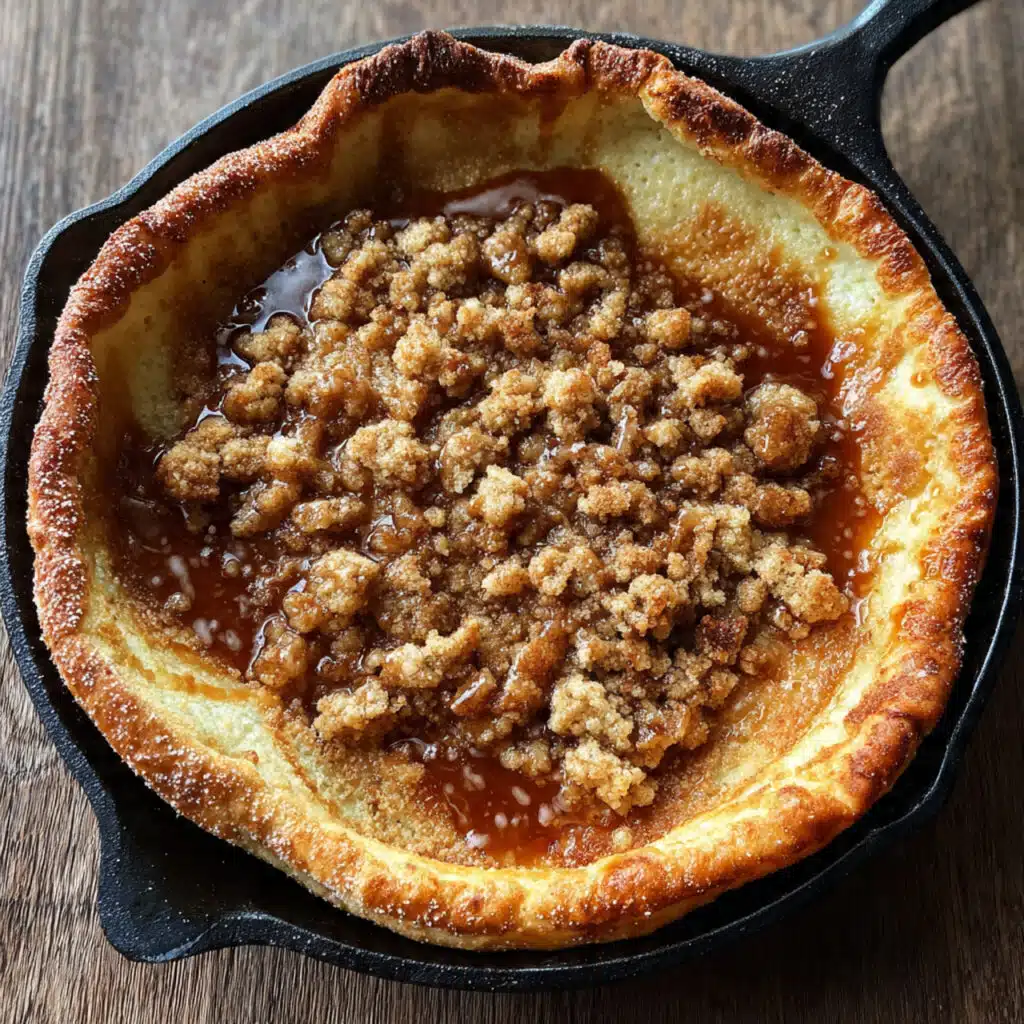
Cinnamon Sugar Dutch Baby that bakes up light, puffy, and golden in the oven. Topped with buttery crumble, cinnamon sugar, and a sweet glaze, this easy breakfast treat looks impressive but comes together in just 30 minutes. Perfect for weekend brunches, holiday mornings, or any time you want to make breakfast feel special.
Why You’ll Love This Recipe
- Impressive but effortless – It looks like you spent hours, but it’s actually one of the easiest breakfast treats you’ll ever make
- Perfectly sweet and comforting – The cinnamon sugar creates a caramelized crust that tastes like childhood mornings and lazy Sundays all wrapped into one
- A family favorite that feeds a crowd – One skillet serves everyone at once, and there’s something magical about watching it puff up in the oven
- Customizable and fun – Top it with fresh berries, whipped cream, or keep it simple with just the glaze
- No flipping required – Unlike regular pancakes, you just pour, top, and bake!

Cinnamon Sugar Dutch Baby
- Total Time: 30–32 minutes
Description
This Cinnamon Sugar Dutch Baby is an easy, impressive breakfast that bakes up golden and puffy in just 25 minutes. Topped with buttery crumble and sweet glaze
Ingredients
Crumble Topping
- 4 tablespoons cold unsalted butter, cubed – Cold butter is key here; it creates those perfect crumbly bits
- ⅓ cup all-purpose flour
- 3 tablespoons powdered sugar – Adds sweetness and helps the crumble stay tender
Dutch Baby Batter
- 1 cup all-purpose flour – The foundation of your puffy pancake
- ½ teaspoon kosher salt
- 4 large eggs, room temperature – This is important! Cold eggs won’t puff as well
- 1 cup whole milk, room temperature – Again, room temp makes all the difference
Cinnamon Sugar Topping
- 3 tablespoons unsalted butter, melted
- ⅓ cup granulated sugar
- 1½ teaspoons ground cinnamon – Feel free to add a little extra if you’re a cinnamon lover like me!
Glaze
- 1 cup powdered sugar
- 2–3 tablespoons whole milk – Add gradually until you reach drizzling consistency
Optional for Serving
- Fresh berries (strawberries, blueberries, or raspberries are beautiful)
- Whipped cream
Instructions
Add your cold cubed butter, flour, and powdered sugar to a bowl. Using your fingertips, work the butter into the dry ingredients—it’s a little like making pie dough, but faster and easier. You’ll know it’s ready when the mixture looks like coarse crumbs with pea-sized pieces of butter throughout.
Move your oven rack to the lowest position and preheat your oven to 425°F. While it’s heating, generously grease your 12-inch oven-safe skillet with butter or cooking spray.
In a medium bowl, whisk together the flour, salt, eggs, and milk until completely smooth. The batter will be thin—almost like heavy cream—and that’s exactly what you want.
Pour your smooth batter into the prepared skillet. It should spread out evenly across the bottom. See how simple this is? No stovetop flipping, no watching multiple pans—just pour and move on to the fun part.
In a small bowl, stir together your melted butter, granulated sugar, and cinnamon until well combined. Drizzle this mixture evenly over the batter in the skillet.
Grab your chilled crumble from the fridge and sprinkle it evenly over the top of the batter. Those buttery bits are going to turn golden and crispy in the oven
Slide your skillet into the oven and bake for 20–22 minutes. Here’s the hardest part: resist the urge to open that oven door! I know you’ll want to peek, but opening it can cause your Dutch baby to deflate.
While the Dutch baby is baking, whisk together the powdered sugar and milk in a small bowl until you have a smooth, pourable glaze. As soon as your masterpiece comes out of the oven, drizzle the glaze over the top. Slice it into wedges and serve immediately while it’s still warm and puffy.
Notes
- Don’t skip the room temp ingredients – Cold eggs and milk won’t create enough steam, which means less puff. It’s worth the wait!
- Use a cast iron skillet if you have one – Cast iron retains heat beautifully and creates the crispiest edges
- Adjust the glaze consistency – If your glaze is too thick, add milk a teaspoon at a time. Too thin? Add more powdered sugar
- Serve it immediately – Dutch babies are best enjoyed fresh from the oven while they’re still puffy and warm
- Common mistake to avoid: Don’t overmix the batter. Whisk just until smooth—overworking it can make your Dutch baby tough instead of tender
- Prep Time: 10 minutes
- Cook Time: 20–22 minutes
- Category: Brunch
- Method: Baking
- Cuisine: German
Ingredients You’ll Need
Crumble Topping
- 4 tablespoons cold unsalted butter, cubed – Cold butter is key here; it creates those perfect crumbly bits
- ⅓ cup all-purpose flour
- 3 tablespoons powdered sugar – Adds sweetness and helps the crumble stay tender
Dutch Baby Batter
- 1 cup all-purpose flour – The foundation of your puffy pancake
- ½ teaspoon kosher salt
- 4 large eggs, room temperature – This is important! Cold eggs won’t puff as well
- 1 cup whole milk, room temperature – Again, room temp makes all the difference
Cinnamon Sugar Topping
- 3 tablespoons unsalted butter, melted
- ⅓ cup granulated sugar
- 1½ teaspoons ground cinnamon – Feel free to add a little extra if you’re a cinnamon lover like me!
Glaze
- 1 cup powdered sugar
- 2–3 tablespoons whole milk – Add gradually until you reach drizzling consistency
Optional for Serving
- Fresh berries (strawberries, blueberries, or raspberries are beautiful)
- Whipped cream
Why These Ingredients Work
The magic of a Dutch baby is all in the technique and the ingredients working together. Room-temperature eggs and milk are absolutely essential because they blend more smoothly and create steam in the oven, which is what makes the pancake puff up into those dramatic, golden walls.
The batter itself is incredibly simple—almost like a thin crepe batter—but the heat does all the work, transforming it into something spectacular.
The cold butter in the crumble topping creates pockets of richness that melt into buttery, sweet clusters as it bakes. When you use your fingers to work it into the flour and powdered sugar, you’re creating texture—those pea-sized crumbs that add a delightful contrast to the soft pancake beneath.
The cinnamon sugar mixture melted in butter doesn’t just sit on top; it seeps into the batter as it bakes, creating caramelized spots and a sweet crust that’s absolutely irresistible.
And that glaze? It’s the final touch that makes everything glisten and adds just enough extra sweetness to balance the eggy richness of the Dutch baby. It soaks into the warm pancake in the best possible way.
Essential Tools and Equipment
- 12-inch oven-safe skillet (cast iron is ideal, but any oven-safe skillet works)
- Mixing bowls (one for the crumble, one for the batter)
- Whisk (for smooth, lump-free batter)
- Measuring cups and spoons
- Pastry brush or spoon (for greasing the skillet)
- Small bowl (for mixing the cinnamon sugar)
Step-by-Step Instructions
Step 1: Make the Crumble Topping
Add your cold cubed butter, flour, and powdered sugar to a bowl. Using your fingertips, work the butter into the dry ingredients—it’s a little like making pie dough, but faster and easier. You’ll know it’s ready when the mixture looks like coarse crumbs with pea-sized pieces of butter throughout.
Step 2: Preheat and Prep Your Skillet
Move your oven rack to the lowest position and preheat your oven to 425°F. While it’s heating, generously grease your 12-inch oven-safe skillet with butter or cooking spray.
Step 3: Mix the Dutch Baby Batter
In a medium bowl, whisk together the flour, salt, eggs, and milk until completely smooth. The batter will be thin—almost like heavy cream—and that’s exactly what you want.
Step 4: Pour the Batter
Pour your smooth batter into the prepared skillet. It should spread out evenly across the bottom. See how simple this is? No stovetop flipping, no watching multiple pans—just pour and move on to the fun part.
Step 5: Add the Cinnamon Sugar
In a small bowl, stir together your melted butter, granulated sugar, and cinnamon until well combined. Drizzle this mixture evenly over the batter in the skillet.
Step 6: Top with Crumble
Grab your chilled crumble from the fridge and sprinkle it evenly over the top of the batter. Those buttery bits are going to turn golden and crispy in the oven
Step 7: Bake Until Puffed and Golden
Slide your skillet into the oven and bake for 20–22 minutes. Here’s the hardest part: resist the urge to open that oven door! I know you’ll want to peek, but opening it can cause your Dutch baby to deflate.
Step 8: Make the Glaze and Serve
While the Dutch baby is baking, whisk together the powdered sugar and milk in a small bowl until you have a smooth, pourable glaze. As soon as your masterpiece comes out of the oven, drizzle the glaze over the top. Slice it into wedges and serve immediately while it’s still warm and puffy.
You Must Know
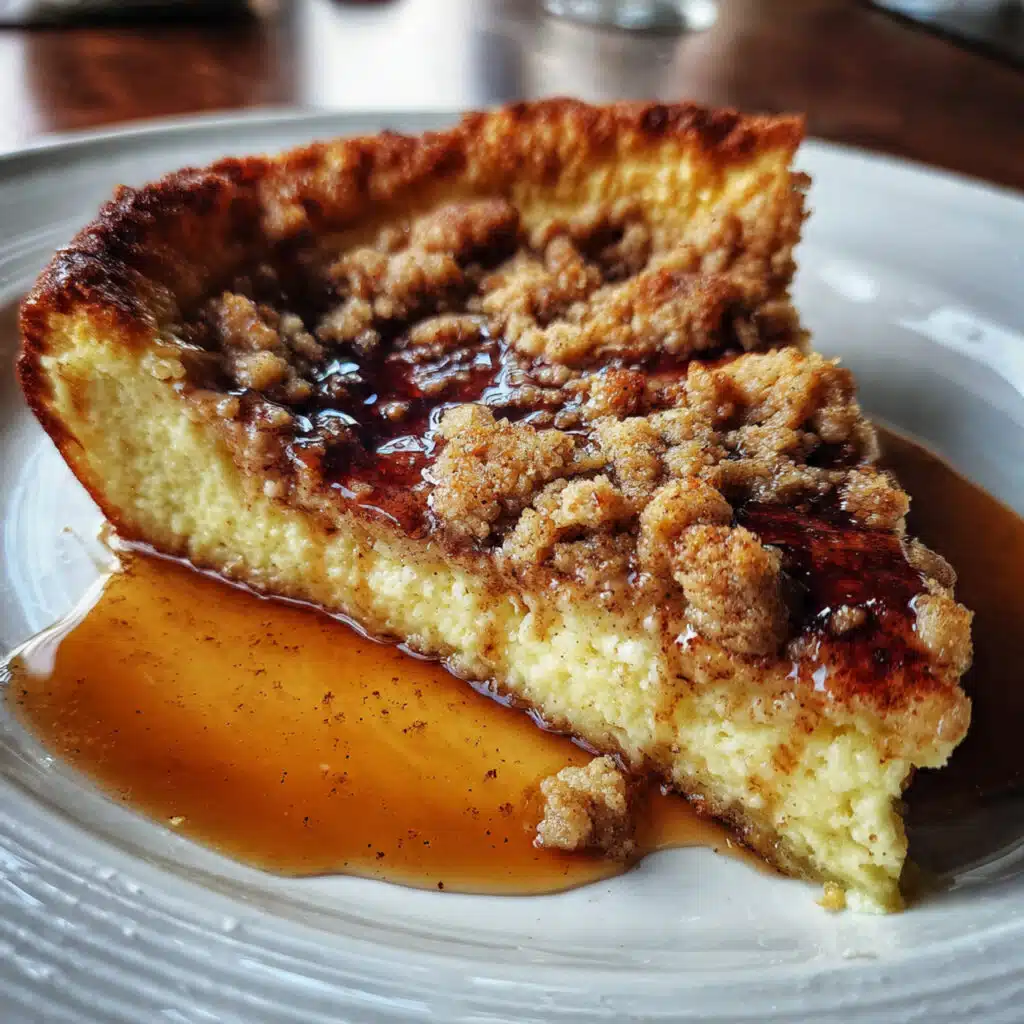
The single most important thing for Dutch baby success is never opening the oven door while it’s baking. I know it’s tempting—watching it puff up is like magic—but that rush of cool air will cause it to deflate before it has a chance to set. Your Dutch baby will naturally fall a bit after you remove it from the oven, and that’s completely normal! It’s supposed to do that. What you want to avoid is it deflating while it’s still baking.
Personal Secret: I always let my eggs and milk sit out on the counter for about 30 minutes before I start. If you forget (we’ve all been there!), place the eggs in a bowl of warm water for 5–10 minutes and microwave the milk for just 10–15 seconds.
Pro Tips & Cooking Hacks
- Make the crumble ahead – You can prepare the crumble topping the night before and keep it refrigerated. It actually works even better when it’s super cold!
- Preheat your skillet – For extra-crispy edges, put your greased skillet in the oven for 2–3 minutes before adding the batter
- Don’t skip the room temp ingredients – Cold eggs and milk won’t create enough steam, which means less puff. It’s worth the wait!
- Use a cast iron skillet if you have one – Cast iron retains heat beautifully and creates the crispiest edges
- Adjust the glaze consistency – If your glaze is too thick, add milk a teaspoon at a time. Too thin? Add more powdered sugar
- Serve it immediately – Dutch babies are best enjoyed fresh from the oven while they’re still puffy and warm
- Common mistake to avoid: Don’t overmix the batter. Whisk just until smooth—overworking it can make your Dutch baby tough instead of tender
Flavor Variations & Suggestions
This recipe is wonderfully versatile! For a citrus twist, add a teaspoon of vanilla extract and a tablespoon of fresh lemon zest to the batter—it pairs beautifully with the cinnamon. If you’re a chocolate lover, swap half the cinnamon sugar for mini chocolate chips sprinkled on top before baking. They’ll melt into pockets of chocolatey goodness.
You can also play with the spices in the cinnamon sugar mixture. Try adding a pinch of nutmeg or cardamom for a more complex, warming flavor that’s perfect for fall mornings. For a fruit-forward version, scatter fresh blueberries or sliced strawberries over the batter before adding the crumble topping.
If you want to make this a little lighter, you can use 2% milk instead of whole milk, though the texture won’t be quite as rich. And for a truly decadent brunch, drizzle with maple syrup instead of the powdered sugar glaze, or do both if you’re feeling indulgent!
Make-Ahead Options
While Dutch babies are definitely best served fresh and hot from the oven, you can do some prep work ahead of time to make your morning easier. The crumble topping can be made up to three days in advance and stored in an airtight container in the refrigerator. You can also whisk together your dry ingredients for the batter the night before and store them in a covered bowl.
The morning of, just add your room-temperature eggs and milk, whisk until smooth, and you’re ready to bake. The whole process from start to finish only takes about 30 minutes, so even without advance prep, this is still a wonderfully manageable weekend breakfast.
I don’t recommend making the full batter ahead of time, as it works best when freshly mixed. The leavening power comes from the eggs and the steam they create, so you want to go straight from mixing to baking for the best puff.
What to Serve With Cinnamon Sugar Dutch Baby
This Dutch baby is hearty enough to be the star of your breakfast table, but it pairs beautifully with some simple sides. I love serving it alongside crispy bacon or breakfast sausage for a sweet-and-savory combination. Fresh fruit salad with seasonal berries adds a bright, refreshing contrast to the rich, cinnamon-sugar sweetness.
For drinks, hot coffee is a must—something about the warmth just completes the cozy morning vibe. Fresh-squeezed orange juice or a creamy latte would also be lovely. If you’re hosting brunch, consider setting out a little toppings bar with whipped cream, maple syrup, fresh berries, chopped nuts, and maybe even a jar of Nutella for spreading.
This also makes a wonderful addition to a holiday breakfast spread. Serve it alongside a simple egg casserole and some fresh pastries, and you’ve got a feast that feels special but didn’t stress you out to prepare.
Allergy Information
This recipe contains common allergens including eggs, dairy (butter and milk), and gluten (wheat flour). For those with dairy sensitivities, you can substitute the milk with your favorite non-dairy alternative like oat milk or almond milk—just make sure it’s room temperature. Dairy-free butter can replace the regular butter in both the crumble and the cinnamon sugar topping.
For a gluten-free version, use a good-quality 1-to-1 gluten-free baking flour blend. The texture may be slightly different, but it will still puff up beautifully. Unfortunately, eggs are essential to the structure and rise of a Dutch baby, so this recipe isn’t easily adaptable for egg-free diets. The eggs are what create the airy, puffy texture that makes a Dutch baby so special.
If you have nut allergies, this recipe is naturally nut-free as written, though if you’re serving it with toppings, just be mindful of cross-contamination.
Storage & Reheating
Dutch babies are truly at their best when served fresh from the oven, but I understand that sometimes you have leftovers (though in my house, that rarely happens!). If you do have any remaining, let it cool completely, then cover tightly and refrigerate for up to 2 days.
To reheat, place slices in a 350°F oven for about 5–7 minutes, or pop them in the toaster oven. The microwave will work in a pinch, but it won’t restore that lovely crispy texture on the edges. Just know that reheated Dutch baby won’t puff up again—it’ll be more like a thick, sweet pancake, which is still delicious, just different from the original drama of that fresh-from-the-oven puff.
I don’t recommend freezing Dutch babies, as the texture really doesn’t hold up well. This is one of those treats that’s meant to be enjoyed in the moment, ideally with people you love gathered around the table.
Questions I Get Asked A Lot
Can I use a different size skillet?
Yes, but you’ll need to adjust the baking time. A 10-inch skillet will give you a thicker Dutch baby that may need an extra 3–5 minutes. A larger skillet will create a thinner pancake that might bake a bit faster. The 12-inch is ideal for that perfect balance of crispy edges and tender center.
Why didn’t my Dutch baby puff up?
The most common reasons are: using cold eggs and milk (they must be room temperature!), opening the oven door during baking, or your oven temperature being off. Make sure your oven is fully preheated to 425°F before the skillet goes in, and resist peeking until the timer goes off.
Can I make this without the crumble topping?
Absolutely! The Dutch baby is delicious with just the cinnamon sugar and glaze. The crumble adds a wonderful texture, but it’s totally optional. You could also substitute with a streusel topping or leave it plain and top with fresh fruit instead.
My Dutch baby deflated as soon as I took it out—what happened?
That’s completely normal! Dutch babies always deflate a bit when they come out of the oven. What matters is that it held its puff while baking. As long as it was tall and golden when you pulled it out, you did everything right. The slight collapse is just physics—the steam escapes and gravity wins!
💬 Tried this Cinnamon Sugar Dutch Baby? I’d love to hear how it turned out! Leave a comment and rating below