
Chimichurri sauce is bright, herby, and unbelievably versatile. With fresh parsley, garlic, a splash of tangy vinegar, and good olive oil, this classic Argentine sauce comes together in just 10 minutes. It’s the perfect way to elevate grilled steak, chicken, fish, or even a simple bowl of roasted vegetables.
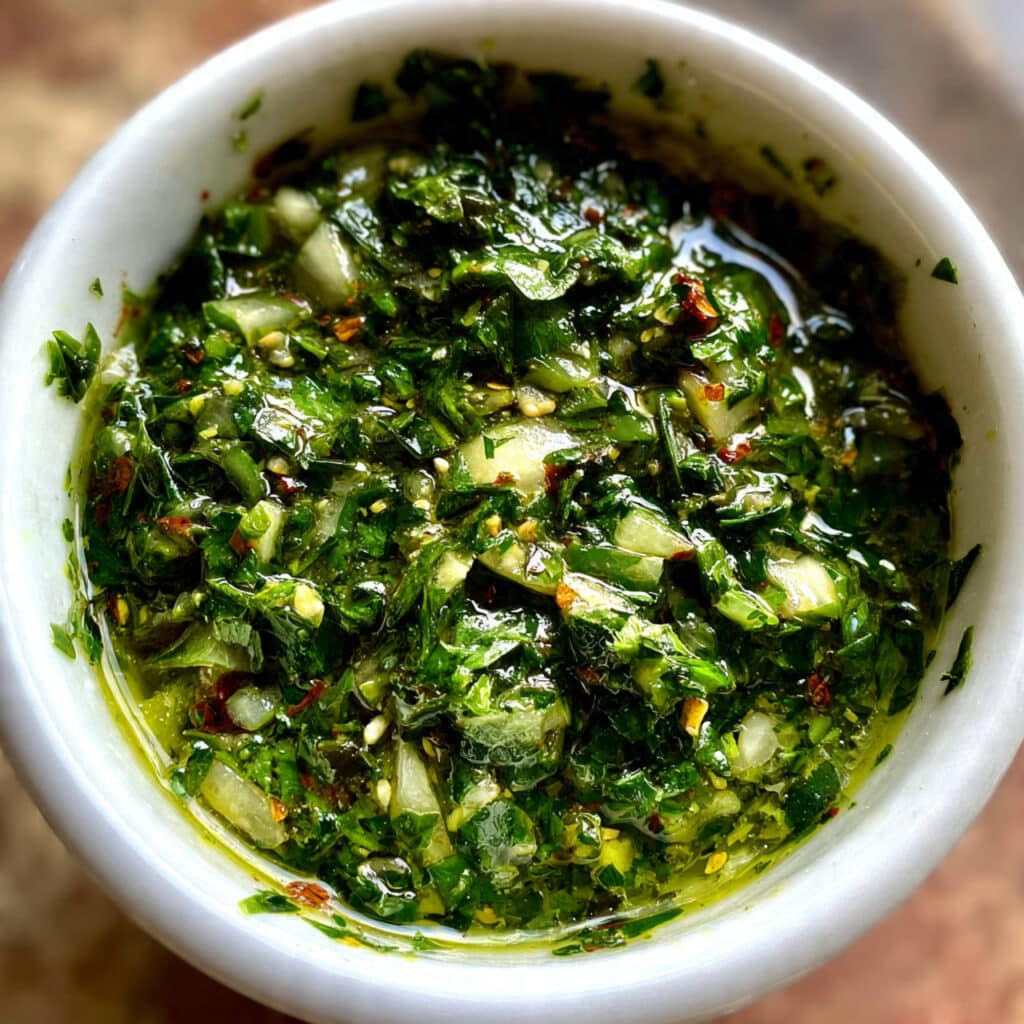
Why You’ll Love This Recipe
- Ready in 10 minutes — no cooking required, just chop and stir
- Bursting with fresh, bold flavor — parsley, garlic, and a tangy kick that wakes up any dish
- Incredibly versatile — use it as a sauce, marinade, or salad dressing
- Made with simple, wholesome ingredients — no fancy pantry items needed
- Tastes even better after it sits — the flavors meld beautifully, making it perfect for meal prep
Easy Homemade Chimichurri Sauce
- Total Time: 10 minutes (plus 15–30 minutes resting time)
Description
This easy homemade chimichurri sauce is bursting with fresh parsley, cilantro, garlic, and tangy red wine vinegar. It’s the perfect vibrant, herbaceous condiment for grilled steak, chicken, fish, vegetables, and more. Ready in just 10 minutes with simple ingredients!
Ingredients
For the Sauce:
- 1 cup fresh parsley, finely chopped (the star of the show — use flat-leaf if you can)
- ½ cup fresh cilantro, finely chopped (optional, but it adds such a lovely brightness)
- 3–4 garlic cloves, minced (don’t be shy with the garlic!)
- 2 tablespoons fresh oregano leaves, finely chopped (or 2 teaspoons dried oregano in a pinch)
- ½ teaspoon red pepper flakes (adjust based on your heat preference)
- ½ teaspoon salt (taste and adjust as you go)
- ¼ teaspoon black pepper
- 2–3 tablespoons red wine vinegar (this gives it that signature tang)
- ⅓–½ cup extra-virgin olive oil (the good stuff — it makes a difference)
- Optional: juice of ½ lemon (for an extra pop of citrus)
Instructions
Wash and dry the parsley, cilantro, and oregano really well — this is important because wet herbs will make your sauce watery. Pat them dry with a clean kitchen towel or use a salad spinner.
Finely chop the herbs and transfer them to a medium bowl. The finer you chop, the better the flavors will blend together.
Add the minced garlic, red pepper flakes, salt, and black pepper to the bowl with the herbs. Give it a quick stir so everything starts getting acquainted.
Stir in the red wine vinegar and lemon juice if you’re using it. This bright, tangy kick is what makes chimichurri so addictive — it balances all that richness and brings out the flavors of the fresh herbs.
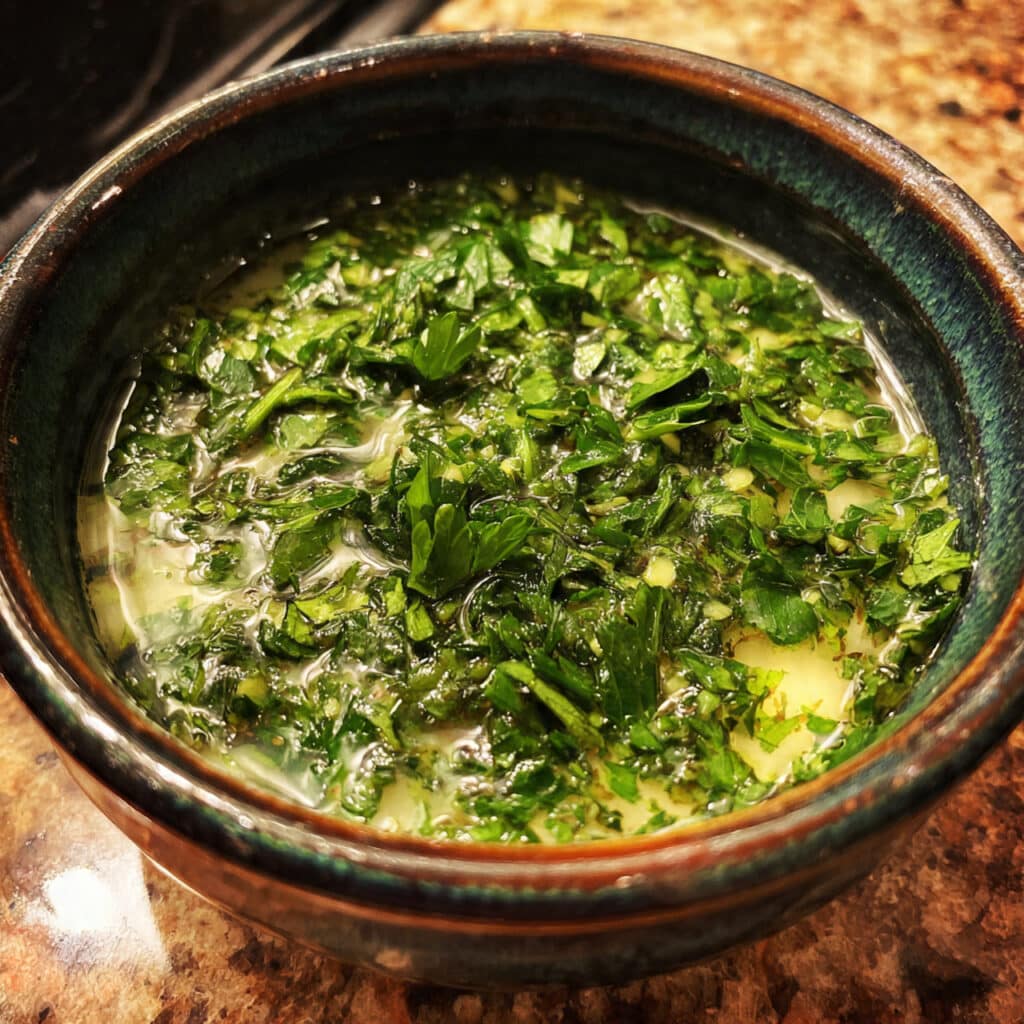
Slowly pour in the extra-virgin olive oil while stirring gently to combine. You want the sauce to be well blended but still a bit loose and spoonable — not too thick, not too runny.
Taste it and adjust the seasoning if needed. More salt? A little more vinegar? Trust your instincts.
For the best flavor, let the chimichurri sit at room temperature for 15–30 minutes before serving. This gives all those gorgeous flavors time to meld together and really develop.
Serve it alongside grilled meats, roasted vegetables, chicken, fish, or use it as a marinade or bright, zippy salad dressing.
Notes
- Taste as you go — chimichurri should be bright, tangy, and well-seasoned. Adjust the vinegar, salt, or red pepper flakes to suit your taste.
- Don’t skip the resting time — 15–30 minutes makes all the difference in flavor.
- Save your herb stems — parsley stems have tons of flavor! Chop them finely and toss them in.
- Make it spicier — add a fresh jalapeño or serrano pepper for extra heat.
- Keep extra olive oil handy — if your sauce is too thick or intense, thin it out with a little more oil.
- Prep Time: 10 minutes
- Cook Time: 0 minutes
- Category: Condiment, Sauce
- Method: No-cook
- Cuisine: Argentinian
Ingredients You’ll Need
For the Sauce:
- 1 cup fresh parsley, finely chopped (the star of the show — use flat-leaf if you can)
- ½ cup fresh cilantro, finely chopped (optional, but it adds such a lovely brightness)
- 3–4 garlic cloves, minced (don’t be shy with the garlic!)
- 2 tablespoons fresh oregano leaves, finely chopped (or 2 teaspoons dried oregano in a pinch)
- ½ teaspoon red pepper flakes (adjust based on your heat preference)
- ½ teaspoon salt (taste and adjust as you go)
- ¼ teaspoon black pepper
- 2–3 tablespoons red wine vinegar (this gives it that signature tang)
- ⅓–½ cup extra-virgin olive oil (the good stuff — it makes a difference)
- Optional: juice of ½ lemon (for an extra pop of citrus)
Why These Ingredients Work
Fresh parsley is the heart and soul of chimichurri, giving it that vibrant green color and earthy, herbaceous flavor. Cilantro adds a bright, citrusy note that makes the sauce sing, though you can skip it if you’re not a fan.
Garlic brings savory depth and a little punch, while red pepper flakes add just enough heat to keep things interesting without overwhelming the fresh herbs.
Red wine vinegar cuts through the richness of the olive oil and balances all those bold flavors with its tangy bite. Extra-virgin olive oil binds everything together into a luscious, spoonable sauce that clings beautifully to grilled meats and veggies.
A squeeze of lemon juice at the end is optional, but it adds a lovely brightness that makes the whole thing pop.
Essential Tools and Equipment
- Sharp chef’s knife (for finely chopping all those fresh herbs)
- Cutting board
- Medium mixing bowl
- Small whisk or spoon (for mixing everything together)
- Measuring cups and spoons
- Optional: food processor or blender (if you prefer a smoother consistency)
Step-by-Step Instructions
Step 1: Chop the Herbs
Wash and dry the parsley, cilantro, and oregano really well — this is important because wet herbs will make your sauce watery. Pat them dry with a clean kitchen towel or use a salad spinner.
Finely chop the herbs and transfer them to a medium bowl. The finer you chop, the better the flavors will blend together.
Step 2: Add Garlic & Seasoning
Add the minced garlic, red pepper flakes, salt, and black pepper to the bowl with the herbs. Give it a quick stir so everything starts getting acquainted.
Step 3: Add Acid
Stir in the red wine vinegar and lemon juice if you’re using it. This bright, tangy kick is what makes chimichurri so addictive — it balances all that richness and brings out the flavors of the fresh herbs.
Step 4: Add Olive Oil
Slowly pour in the extra-virgin olive oil while stirring gently to combine. You want the sauce to be well blended but still a bit loose and spoonable — not too thick, not too runny.
Taste it and adjust the seasoning if needed. More salt? A little more vinegar? Trust your instincts.
Step 5: Rest & Serve
For the best flavor, let the chimichurri sit at room temperature for 15–30 minutes before serving. This gives all those gorgeous flavors time to meld together and really develop.
Serve it alongside grilled meats, roasted vegetables, chicken, fish, or use it as a marinade or bright, zippy salad dressing.
You Must Know
The key to great chimichurri is making sure your herbs are completely dry before you start chopping. Even a little bit of water will dilute the sauce and make it taste flat. Take the extra minute to pat them dry — it really matters.
Don’t skip the resting time. Letting the sauce sit for even 15 minutes makes a huge difference in flavor. The garlic mellows slightly, the vinegar softens, and everything comes together in this beautiful, harmonious way.
Personal Secret: I always make my chimichurri a few hours ahead (or even the night before) and let it hang out in the fridge. The flavors deepen and intensify, and it tastes even better the next day.
Pro Tips & Cooking Hacks
- Use a food processor for speed — pulse the herbs, garlic, and seasonings, then drizzle in the oil and vinegar. Just don’t overprocess or you’ll end up with a paste instead of a chunky sauce.
- Taste as you go — chimichurri should be bright, tangy, and well-seasoned. Adjust the vinegar, salt, or red pepper flakes to suit your taste.
- Don’t skip the resting time — 15–30 minutes makes all the difference in flavor.
- Save your herb stems — parsley stems have tons of flavor! Chop them finely and toss them in.
- Make it spicier — add a fresh jalapeño or serrano pepper for extra heat.
- Keep extra olive oil handy — if your sauce is too thick or intense, thin it out with a little more oil.
Flavor Variations & Suggestions
If you’re not a cilantro fan, just use all parsley — the sauce will still be delicious and deeply herby. For a smoky twist, add a pinch of smoked paprika or a finely chopped chipotle pepper in adobo.
Want it more citrusy? Swap the red wine vinegar for fresh lime juice and add some lime zest for an extra pop. You can also play with different fresh herbs — try adding a little fresh mint or basil for a fun twist.
If you like things really garlicky, go ahead and add another clove or two. And if you want a creamier version, stir in a tablespoon of Greek yogurt or sour cream at the end.
Make-Ahead Options
Chimichurri is one of those magical sauces that actually gets better with time. You can make it up to 3 days ahead and store it in an airtight container in the fridge. In fact, I highly recommend making it at least a few hours before you plan to serve it — the flavors really bloom and deepen as they sit.
Just remember to bring it back to room temperature before serving, since the olive oil will solidify in the fridge. Give it a good stir, and you’re ready to go.
If you want to freeze it, pour the sauce into ice cube trays and freeze until solid, then pop the cubes into a freezer bag. They’ll keep for up to 3 months, and you can just thaw a cube or two whenever you need a quick flavor boost.
What to Serve With Chimichurri Sauce
Chimichurri is traditionally served with grilled steak, and honestly, there’s nothing better than a perfectly charred ribeye topped with this bright, herby sauce. But don’t stop there — it’s incredible on grilled chicken, shrimp, or fish, especially salmon.
Drizzle it over roasted vegetables like sweet potatoes, carrots, or cauliflower for a flavor explosion. It also makes a fantastic marinade for chicken or pork before grilling.
Try it spooned over scrambled eggs for breakfast, tossed with warm pasta, or used as a dip for crusty bread. And if you’re having a cookout, set out a bowl of chimichurri alongside grilled sausages, corn on the cob, and a fresh tomato salad — it ties everything together beautifully.
Allergy Information
This chimichurri sauce is naturally gluten-free, dairy-free, and vegan, making it a great option for guests with dietary restrictions. The only common allergen might be garlic, which some people are sensitive to. If that’s the case, you can reduce the amount or leave it out entirely, though the flavor will be milder.
There are no nuts, soy, or other major allergens in this recipe. If you’re serving someone who avoids nightshades, simply skip the red pepper flakes and add a little extra black pepper for a hint of spice.
Storage & Reheating
Store leftover chimichurri in an airtight container or jar in the refrigerator for up to 5 days. The olive oil will solidify when cold, so let it sit at room temperature for about 20 minutes before using, and give it a good stir.
The garlic flavor will intensify over time, which I love, but if you prefer a milder taste, use it within the first couple of days. You don’t need to reheat chimichurri — it’s meant to be served at room temperature or even slightly cool.
If you’ve frozen it in ice cube trays, just thaw a cube or two in the fridge overnight or at room temperature for about 30 minutes.
Questions I Get Asked A Lot
Can I use dried herbs instead of fresh?
Fresh herbs are really what make chimichurri special, so I don’t recommend swapping them out. Dried parsley and cilantro just don’t have the same bright, vibrant flavor. If you must, you can use dried oregano (which the recipe already includes as an option), but definitely keep the parsley and cilantro fresh.
My chimichurri tastes too sharp — what can I do?
If it’s too tangy or vinegary, add a little more olive oil to mellow it out. You can also let it sit for longer — the flavors will soften and blend as it rests. A small pinch of sugar can also help balance the acidity if needed.
Can I make this in a blender or food processor?
Absolutely! Just pulse the herbs, garlic, and seasonings until finely chopped, then drizzle in the vinegar and olive oil while pulsing. Be careful not to overprocess, or you’ll end up with a smooth paste instead of a chunky, rustic sauce. Traditional chimichurri has texture, so aim for finely chopped, not pureed.
How long does chimichurri last in the fridge?
It will keep for up to 5 days in an airtight container. The garlic flavor gets stronger over time, so if you prefer a milder taste, enjoy it within the first 2–3 days.
What’s the best type of olive oil to use?
Use a good-quality extra-virgin olive oil — it really makes a difference since the oil is such a big part of the sauce. Look for one that’s fruity and not too peppery or bitter. You want it to complement the herbs, not overpower them.
💬 Tried this recipe? Leave a comment and rating below! I’d love to hear how you used your chimichurri and what you served it with.