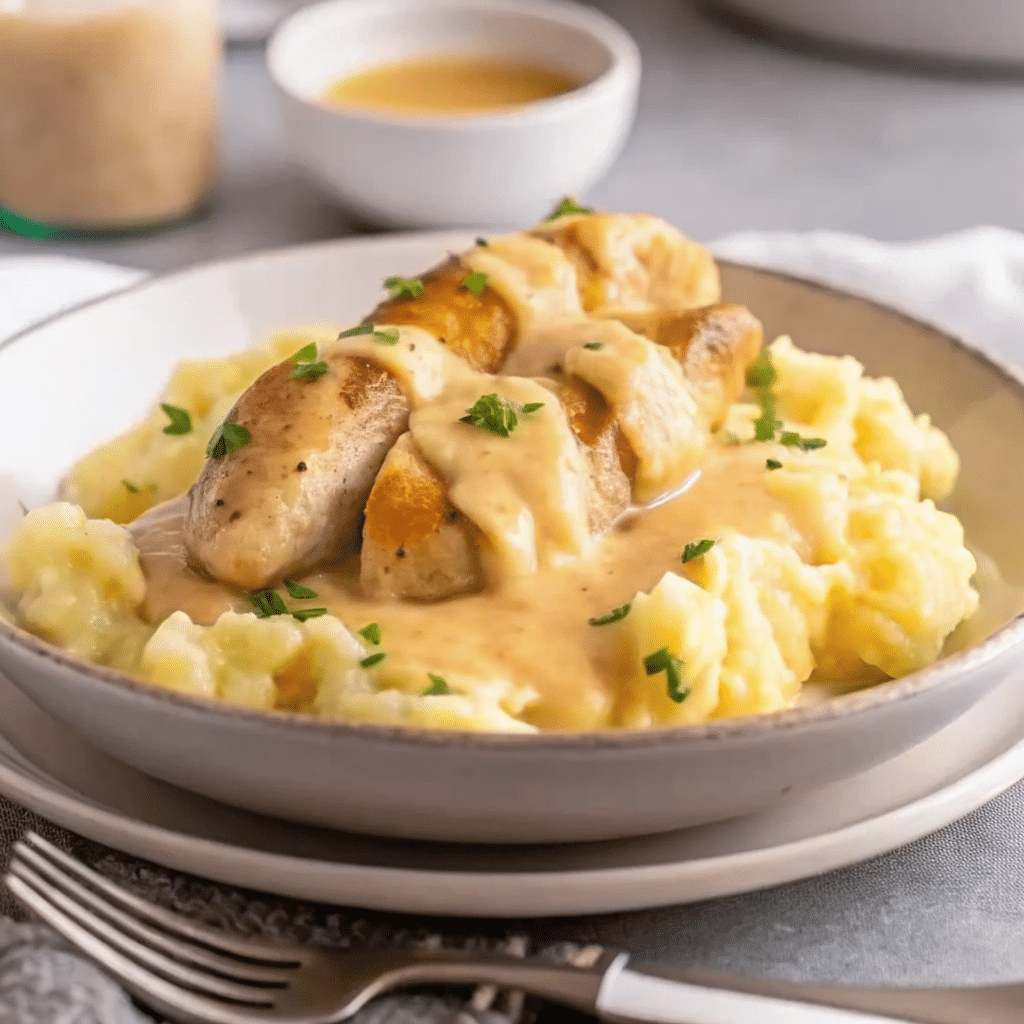
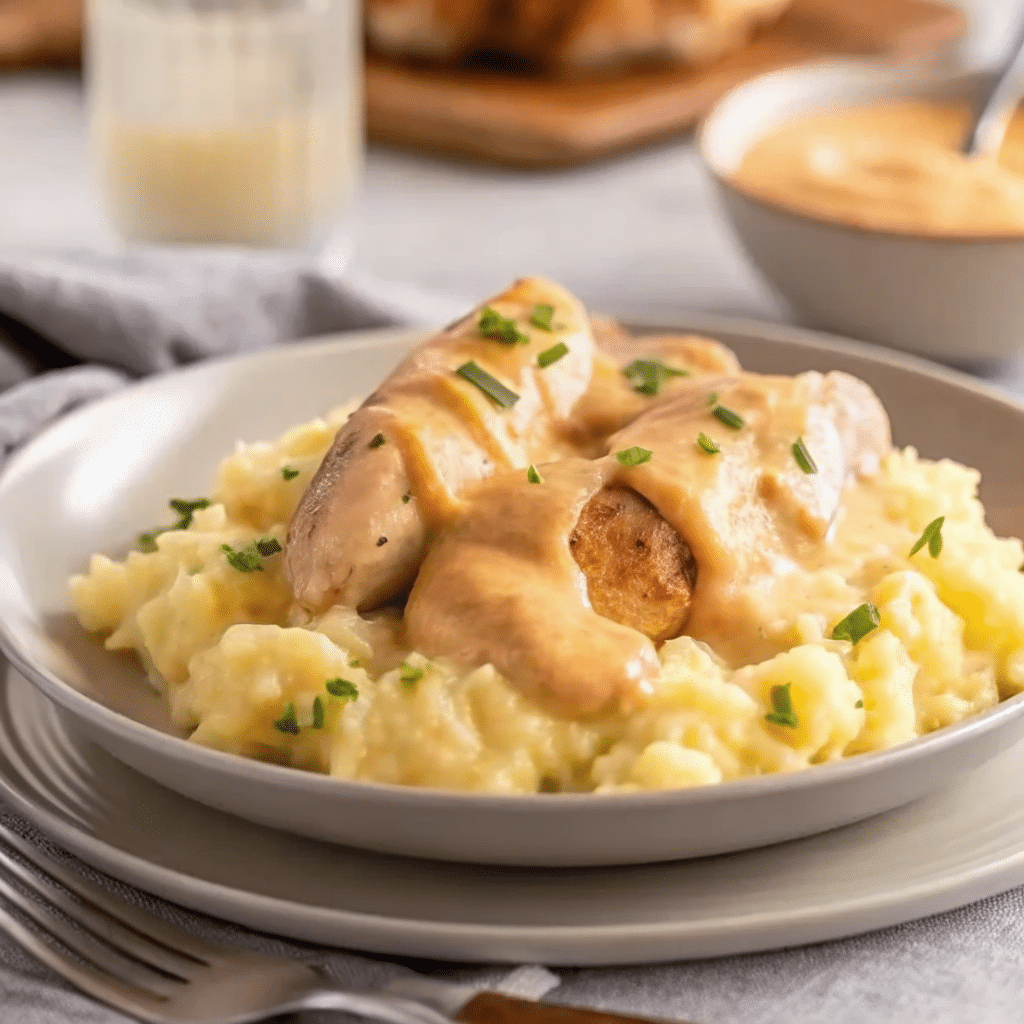
Chicken with Mashed Potatoes is the ultimate comfort meal that brings warmth to your dinner table with tender, juicy chicken breasts smothered in a rich mustard cream sauce, served over fluffy homemade mashed potatoes. This one-skillet wonder transforms simple ingredients into a restaurant-quality dish that feels like a warm hug on a plate, and the tangy mustard gravy perfectly balances the buttery potatoes.
Love More Dinner Ideas? Try My Salisbury Steak with Mushroom Gravy or this Hamburger Gravy Over Mashed Potatoes next.
Why You’ll Love This Recipe
The chicken stays incredibly tender thanks to the creamy sauce it bakes in, while the mashed potatoes turn out fluffy every single time. What I love most is that it uses one skillet for the chicken and sauce, which means fewer dishes.
Print
Chicken with Mashed Potatoes
- Total Time: 55 minutes
- Yield: 2 servings
Description
This Chicken with Mashed Potatoes recipe features perfectly seared chicken breasts baked in a tangy mustard cream sauce and served over fluffy homemade mashed potatoes. Ready in under an hour with simple pantry ingredients, it’s the ultimate comfort food for busy weeknights or cozy family dinners. The combination of buttery potatoes, tender chicken, and rich creamy gravy creates an irresistible meal that tastes like it came from a fancy restaurant.
Ingredients
For the Mashed Potatoes:
1 lb russet potatoes
1½ tablespoons butter
¼ cup heavy cream
Salt to taste
For the Chicken:
2 chicken breasts
1½ tablespoons butter
½ tablespoon olive oil
¼ teaspoon garlic powder
Salt and black pepper to taste
Chopped fresh parsley for garnish
For the Cream Sauce:
1½ tablespoons butter
1 tablespoon mustard (I use Dijon, but yellow works too!)
1 teaspoon garlic paste
½ tablespoon all-purpose flour
½ cup chicken broth
Salt and pepper to taste
½ cup heavy cream
Substitutions:
Heavy cream: Use half-and-half for a lighter version, or full-fat coconut milk for dairy-free
Russet potatoes: Yukon Golds work beautifully and give a buttery flavor
Chicken breasts: Boneless thighs are juicier and more forgiving if you’re worried about dryness
Mustard: Whole grain mustard adds texture, or use honey mustard for sweetness
Chicken broth: Vegetable broth works in a pinch
Instructions
Peel the potatoes which is annoying but necessary, then chop them into chunks. I shoot for 2-inch pieces but mine always end up random sizes and it’s fine as long as they’re not wildly different. Throw them in your biggest pot, cover with cold water from the tap, add salt. My mom always said start with cold water but I honestly don’t know why, something about even cooking. Bring it up to a boil then turn it down to medium. Cook for 15-20 minutes depending on how big your chunks are. Stick a fork in the biggest piece—if it slides through easy they’re done. If there’s resistance give it a few more minutes.
Drain them really well in a colander. I shake mine around a bunch because extra water makes them runny and sad. Put them back in the hot pot off the heat. Drop the butter in and just let it melt for a minute while you pour yourself some coffee or check your phone or whatever. Then add the cream and salt. Now grab your potato masher and go to town. Mash until they’re smooth and fluffy. Do NOT—and I cannot stress this enough—use an electric mixer. I did this exactly one time in 2020 thinking I’d be efficient and they turned into what can only be described as paste. Like actual paste you’d use for crafts. My husband still brings it up when he wants to tease me. Hand mashing only. Stop when they look good. Put a lid on the pot to keep them warm.
Get paper towels and pat the chicken breasts dry. Wet chicken won’t brown right, it just steams and looks gray which is gross. Season both sides with salt, pepper, and garlic powder. Don’t be shy here because under-seasoned chicken is depressing. If your breasts are those gigantic Costco ones that are basically half a chicken each, whack them with something heavy to flatten them out. I’ve used a rolling pin, a wine bottle, the bottom of a small saucepan. Whatever’s nearby.
Turn your oven to 375°F. Put your oven-safe skillet on medium heat with the butter and olive oil in it. When the butter melts and starts bubbling, carefully add the chicken breasts. Now this is the part where you have to resist checking on them. I know it’s hard. I’m a chronic checker. But leave them alone for a full 5 minutes. Set a timer on your phone if you have to. Then flip them over—they should have this gorgeous golden-brown crust—and cook another 5 minutes on the other side. Take them out and put them on a plate. They’re not cooked through yet which is fine and on purpose.
Same skillet with all those brown crusty bits stuck to the bottom—those are called fond and they’re pure flavor so don’t wash them off. Keep the heat at medium and add another chunk of butter. When it melts throw in the garlic paste. It’ll sizzle and smell incredible for like 30 seconds. Then sprinkle in the flour and whisk it around constantly for about a minute. You’ll get this paste-looking thing which is your roux. Looks weird but it’s right.
Pour in your chicken broth slowly while whisking. Key word slowly because if you dump it all at once you’ll get lumps everywhere. Though honestly even if you get lumps just whisk harder and they usually smooth out eventually. Add the mustard, salt, pepper, then the cream. Let the whole thing bubble gently for maybe 2 minutes until it thickens up a bit. Should coat the back of a spoon but still drizzle off. Too thick add more broth. Too thin let it simmer longer.
Put your chicken back in the skillet right into that sauce. Spoon some sauce over the tops so they’re coated. Stick the whole skillet in the oven for 15 minutes. This finishes cooking the chicken while letting it hang out in that sauce absorbing all the flavor. Check it with your meat thermometer in the thickest part—needs to hit 165°F or you’re asking for trouble. Before I got a thermometer I was just guessing and hoping and probably giving everyone mild food poisoning half the time. Now I know for sure.
Scoop a huge pile of mashed potatoes onto plates. I’m talking like small mountain-sized. Add a chicken breast on top or beside it depending on how you feel about presentation. Then just pour that sauce all over like you’re trying to drown it. The sauce is honestly the best part so be generous. Chop up some parsley and sprinkle it on top. Makes it look fancy like you saw it in a magazine. My sister always takes pictures of her plate when I make this which is flattering I guess. Takes my family about 90 seconds to demolish the whole thing.
Notes
Use a potato ricer instead of a masher if you want the silkiest, fluffiest mashed potatoes you’ve ever experienced. It’s a game-changer! If your sauce becomes too thick while baking, just whisk in a tablespoon or two of warm chicken broth to loosen it up. For extra flavor, add fresh thyme or rosemary to the sauce.
Common mistakes to avoid: Don’t over-mash your potatoes or they’ll turn gluey. Don’t crowd the skillet when searing chicken—if using more than 2 breasts, work in batches. And never add cold cream to hot potatoes; warm it slightly first or let the butter melt before adding it.
Smart shortcut: Use store-bought rotisserie chicken! Just skip the searing step, shred the chicken, and add it to the finished sauce. Warm everything through in the oven for 10 minutes.
Flavor Variations & Suggestions
Herb Lovers: Add fresh thyme, rosemary, or sage to the sauce. Stir in at the end for maximum flavor.
Cheesy Dream: Fold ½ cup shredded sharp cheddar or Parmesan into the mashed potatoes. You can also sprinkle cheese over the chicken before baking.
Lemon Brightness: Add the zest of one lemon to the sauce and a squeeze of juice at the end for a fresh, zingy version.
Bacon Everything: Crumble cooked bacon over the finished dish. Because bacon makes everything better.
Mushroom Magic: Sauté sliced mushrooms in the skillet before making the sauce, then add them back in. Earthy and delicious!
- Prep Time: 15 minutes
- Cook Time: 40 minutes
- Category: Main Dish
- Method: Stovetop and Oven
- Cuisine: American
Ingredient List
For the Mashed Potatoes:
- 1 lb russet potatoes
- 1½ tablespoons butter
- ¼ cup heavy cream
- Salt to taste
For the Chicken:
- 2 chicken breasts
- 1½ tablespoons butter
- ½ tablespoon olive oil
- ¼ teaspoon garlic powder
- Salt and black pepper to taste
- Chopped fresh parsley for garnish
For the Cream Sauce:
- 1½ tablespoons butter
- 1 tablespoon mustard (the Trader Joe’s Dijon is my favorite but seriously whatever)
- 1 teaspoon garlic paste
- ½ tablespoon all-purpose flour
- ½ cup chicken broth
- Salt and pepper to taste
- ½ cup heavy cream
Substitutions:
- Heavy cream: Half-and-half when I’m out, even whole milk with extra butter if I’m desperate
- Russet potatoes: Yukon Golds are creamier but cost like $2 more so depends on my mood
- Chicken breasts: Thighs are honestly better because I always overcook breasts by accident
- Mustard: Found honey mustard in the back of my fridge once and used that, was actually really good
- Chicken broth: Bouillon cube dissolved in hot water works, I do this all the time
Why These Ingredients Work
Russet potatoes get fluffy when you mash them because they’re super starchy. My mom always used red potatoes growing up and they were kind of gummy? Dense? Not great. Tried them here once and my husband was like “these aren’t your normal potatoes” in that polite way that means they’re not good. Stuck with russets after that. The butter and cream situation makes them taste expensive even though potatoes are like the cheapest thing at the store.
That mustard though—game changer. My friend Rachel’s secret ingredient that she learned from her ex-boyfriend’s mom who was French Canadian or something. Without mustard the sauce is just bland cream. With mustard suddenly there’s this tang that wakes up your whole mouth. I tried making it without once because I ran out and the kids were like “this tastes different” in a disappointed way.
The butter and olive oil combo for cooking chicken came from my aunt Lisa who went to culinary school for one semester before she quit to become a dental hygienist. But she picked up some solid tips in those few months. Butter tastes amazing but burns if you look at it wrong. Olive oil can take the heat. Together you get that crispy golden crust without setting off the smoke alarm.
Essential Tools and Equipment
- Big pot for potatoes
- Potato masher—NOT a mixer, learned that the hard way
- Heavy oven-safe skillet, I use cast iron that I got from my grandma
- Whisk
- Meat thermometer changed my entire cooking life, got mine at Target
- Regular measuring cups and spoons
- Knife and cutting board
- Oven mitts because I’ve burned my hand on that cast iron handle at least four times
How To Make Chicken with Mashed Potatoes
Step 1: Prepare and Boil the Potatoes
Peel the potatoes which is annoying but necessary, then chop them into chunks. I shoot for 2-inch pieces but mine always end up random sizes and it’s fine as long as they’re not wildly different. Throw them in your biggest pot, cover with cold water from the tap, add salt. My mom always said start with cold water but I honestly don’t know why, something about even cooking. Bring it up to a boil then turn it down to medium. Cook for 15-20 minutes depending on how big your chunks are. Stick a fork in the biggest piece—if it slides through easy they’re done. If there’s resistance give it a few more minutes.
Step 2: Make the Mashed Potatoes
Drain them really well in a colander. I shake mine around a bunch because extra water makes them runny and sad. Put them back in the hot pot off the heat. Drop the butter in and just let it melt for a minute while you pour yourself some coffee or check your phone or whatever. Then add the cream and salt. Now grab your potato masher and go to town. Mash until they’re smooth and fluffy. Do NOT—and I cannot stress this enough—use an electric mixer. I did this exactly one time in 2020 thinking I’d be efficient and they turned into what can only be described as paste. Like actual paste you’d use for crafts. My husband still brings it up when he wants to tease me. Hand mashing only. Stop when they look good. Put a lid on the pot to keep them warm.
Step 3: Season the Chicken
Get paper towels and pat the chicken breasts dry. Wet chicken won’t brown right, it just steams and looks gray which is gross. Season both sides with salt, pepper, and garlic powder. Don’t be shy here because under-seasoned chicken is depressing. If your breasts are those gigantic Costco ones that are basically half a chicken each, whack them with something heavy to flatten them out. I’ve used a rolling pin, a wine bottle, the bottom of a small saucepan. Whatever’s nearby.
Step 4: Sear the Chicken
Turn your oven to 375°F. Put your oven-safe skillet on medium heat with the butter and olive oil in it. When the butter melts and starts bubbling, carefully add the chicken breasts. Now this is the part where you have to resist checking on them. I know it’s hard. I’m a chronic checker. But leave them alone for a full 5 minutes. Set a timer on your phone if you have to. Then flip them over—they should have this gorgeous golden-brown crust—and cook another 5 minutes on the other side. Take them out and put them on a plate. They’re not cooked through yet which is fine and on purpose.
Step 5: Create the Cream Sauce Base
Same skillet with all those brown crusty bits stuck to the bottom—those are called fond and they’re pure flavor so don’t wash them off. Keep the heat at medium and add another chunk of butter. When it melts throw in the garlic paste. It’ll sizzle and smell incredible for like 30 seconds. Then sprinkle in the flour and whisk it around constantly for about a minute. You’ll get this paste-looking thing which is your roux. Looks weird but it’s right.
Step 6: Build the Sauce
Pour in your chicken broth slowly while whisking. Key word slowly because if you dump it all at once you’ll get lumps everywhere. Though honestly even if you get lumps just whisk harder and they usually smooth out eventually. Add the mustard, salt, pepper, then the cream. Let the whole thing bubble gently for maybe 2 minutes until it thickens up a bit. Should coat the back of a spoon but still drizzle off. Too thick add more broth. Too thin let it simmer longer.
Step 7: Finish in the Oven
Put your chicken back in the skillet right into that sauce. Spoon some sauce over the tops so they’re coated. Stick the whole skillet in the oven for 15 minutes. This finishes cooking the chicken while letting it hang out in that sauce absorbing all the flavor. Check it with your meat thermometer in the thickest part—needs to hit 165°F or you’re asking for trouble. Before I got a thermometer I was just guessing and hoping and probably giving everyone mild food poisoning half the time. Now I know for sure.
Step 8: Plate and Serve
Scoop a huge pile of mashed potatoes onto plates. I’m talking like small mountain-sized. Add a chicken breast on top or beside it depending on how you feel about presentation. Then just pour that sauce all over like you’re trying to drown it. The sauce is honestly the best part so be generous. Chop up some parsley and sprinkle it on top. Makes it look fancy like you saw it in a magazine. My sister always takes pictures of her plate when I make this which is flattering I guess. Takes my family about 90 seconds to demolish the whole thing.
You Must Know
Buy a meat thermometer if you don’t have one. They’re $10 at Target next to the kitchen gadgets. Single best thing I’ve bought for cooking besides my good knife. No more guessing games with chicken. No more dry overcooked disaster. No more worrying someone’s gonna get sick. 165°F is the magic number and then you’re golden. Also pat that chicken dry before you season it or forget about getting a crispy crust. And take it out of the fridge 15 minutes before you start cooking. Room temp chicken cooks way more evenly than cold-in-the-middle chicken.
Personal Secret: I add a splash of white wine after the garlic paste before the flour goes in. Maybe 2 tablespoons, maybe more if I’m feeling generous. Let it bubble for 30 seconds to cook off the alcohol. My mom taught me this years ago after she learned it from some French lady at church who brought amazing food to potlucks. Nobody can ever figure out what makes the sauce taste different but they always say mine’s better than other cream sauces. That’s the wine. Secret’s out now I guess.
Pro Tips & Cooking Hacks
If you have a potato ricer that’s been collecting dust somewhere, dig it out. I found one at Goodwill for $2.50 and it makes the absolute fluffiest potatoes. Like cloud-level fluff. If your sauce gets too thick while baking which happens sometimes especially if your oven runs hot, just whisk in a couple tablespoons of warm broth when you take it out. Thin it right back down.
Things that’ll mess you up: Over-mashing potatoes turns them into paste. Using a mixer or food processor releases way too much starch. Crowding chicken in the pan makes them steam instead of sear. Adding freezing cold cream to hot potatoes shocks them and the texture gets weird. I’ve done all of these at least once so learn from my mistakes.
Exhausted version: Grab a rotisserie chicken from the grocery store, shred all the meat, skip the entire searing process, and just warm it in the finished sauce in the oven for 10 minutes. I’ve done this on particularly brutal Thursdays when work was hell and I just cannot deal with raw chicken. Works perfectly fine and nobody knows the difference.
Flavor Variations & Suggestions
Herbs: Fresh thyme or rosemary in the sauce. I keep both in my freezer in little baggies and just crumble frozen pieces right in while cooking.
Cheese: My husband waits until I’m not looking and stirs shredded cheddar into the mashed potatoes. Melts right in. I pretend to be annoyed but it’s actually delicious.
Lemon: Zest a whole lemon into the sauce and squeeze in the juice at the very end. Makes everything taste brighter and fancier. My sister does it this way every time.
Bacon: Cook bacon first thing, set it aside, use some of the bacon grease to cook the chicken in. Crumble the bacon on top at the end. I mean come on.
Mushrooms: My friend Beth who’s vegetarian makes me do a version with sautéed mushrooms and no chicken. Just mushrooms in the sauce with extra potatoes. She’s obsessed with it.
Spicy: Red pepper flakes in the sauce or use hot brown mustard instead of Dijon. My dad does this because he puts hot sauce on literally everything including ice cream once which was disturbing.
Make-Ahead Options
Make potatoes up to 2 hours early and keep them in the covered pot on the stove with the burner off. If they cool down too much reheat them over low heat with more cream stirred in.
You can season the chicken and refrigerate it up to 4 hours before cooking. Just remember to take it out 15 minutes before you start so it’s not ice cold.
Full make-ahead situation: Cook everything completely, let it cool down to room temp, refrigerate in separate containers. Lasts 3 days. Reheat potatoes with extra cream in the microwave, stopping every 30 seconds to stir. Chicken and sauce go in a 350°F oven for 15-20 minutes til they’re hot.
Freezing this is a bad idea. Cream sauces separate when you freeze and thaw them and the texture looks curdled and broken even though it’s technically safe. Just doesn’t look appetizing at all. The mashed potatoes by themselves freeze okay for a month or two if you’re desperate.
Recipe Notes & Baker’s Tips
Those massive thick chicken breasts take forever to cook through. Cut them in half horizontally so they’re thinner. Otherwise the outside’s done and the inside’s still raw.
Sauce thickens as it sits which is totally normal. Just happens. Thin it back out with warm broth or cream when reheating.
Room temperature chicken cooks evenly. Fridge-cold chicken cooks unevenly. Worth waiting 15 minutes while it sits on the counter.
Yellow mustard makes it milder and sweeter. Dijon’s tangier and more classic French. Stone ground mustard looks fancy with all the seeds. They all taste good just different.
Serving Suggestions
This is honestly plenty of food by itself but sometimes I add stuff when I’m trying to pretend I care about vegetables:
- Green beans tossed with olive oil and roasted until crispy
- Bagged salad with whatever dressing’s in the fridge door
- French bread from the bakery section for soaking up sauce
- Brussels sprouts roasted with balsamic if I’m feeling motivated
- Frozen broccoli microwaved because let’s be honest that’s more realistic
How to Store Your Chicken with Mashed Potatoes
Fridge: Chicken and sauce in one container, potatoes in another. Keeps 3-4 days. Sauce gets thicker sitting in the fridge which is normal. Add liquid back when heating it up.
Reheating: Chicken and sauce in a covered skillet over medium-low with some broth or cream stirred in. Or microwave portions for 2-3 minutes, stop halfway to stir. Potatoes in the microwave with butter or cream, stir every 30 seconds until hot all the way through.
Freezing: Don’t freeze this. Cream sauces separate and get grainy when thawed. Looks weird even if it’s safe. Plain cooked chicken freezes for 3 months. Mashed potatoes for 1-2 months. Make fresh sauce later when you eat them.
Safety stuff: Get leftovers in the fridge within 2 hours. Reheat to 165°F so you don’t make anyone sick.
Allergy Information
Contains: Dairy (butter, heavy cream), gluten (flour)
Dairy-free: Dairy-free butter or just extra olive oil. Coconut milk instead of cream but tastes coconutty. Cashew cream is closer to real cream.
Gluten-free: Use cornstarch instead of flour—half as much. Mix it with cold broth first before adding so you don’t get clumps everywhere.
Other allergens: No eggs, nuts, soy, or shellfish unless your broth has something weird. Check the label if you’re worried.
Questions I Get Asked A Lot
My sauce is too thin—how do I fix it?
Simmer it on the stove longer before adding chicken back in. If you already baked everything take the chicken out, put the sauce in a small pan, and let it bubble over medium heat until it thickens up. Or whisk ½ teaspoon cornstarch with cold water and stir it in. That’ll thicken it fast.
Can I make this without an oven-safe skillet?
Yep no problem. Make the sauce in whatever pan, then dump everything into a regular baking dish, nestle the chicken in, bake as usual. One extra dish to wash but works fine. I use my 9×13 Pyrex when I do this.
The mashed potatoes turned out gluey—what happened?
You over-mixed them or used an electric mixer. I did this too my first time. Potatoes release starch when you work them too much and they turn into this paste-like texture that’s honestly disgusting. Hand mash only with a potato masher. Stop as soon as they’re smooth. Also drain them really thoroughly before mashing or they’ll be watery.
Can I use milk instead of heavy cream?
You can but it’s not gonna be as rich. Use whole milk and add extra butter. Sauce will be thinner too so maybe use slightly more flour. Won’t be exactly the same but still tastes good enough.
💬 Made this yet? Drop a comment and tell me everything! Your comments help other people decide if they should make it!