
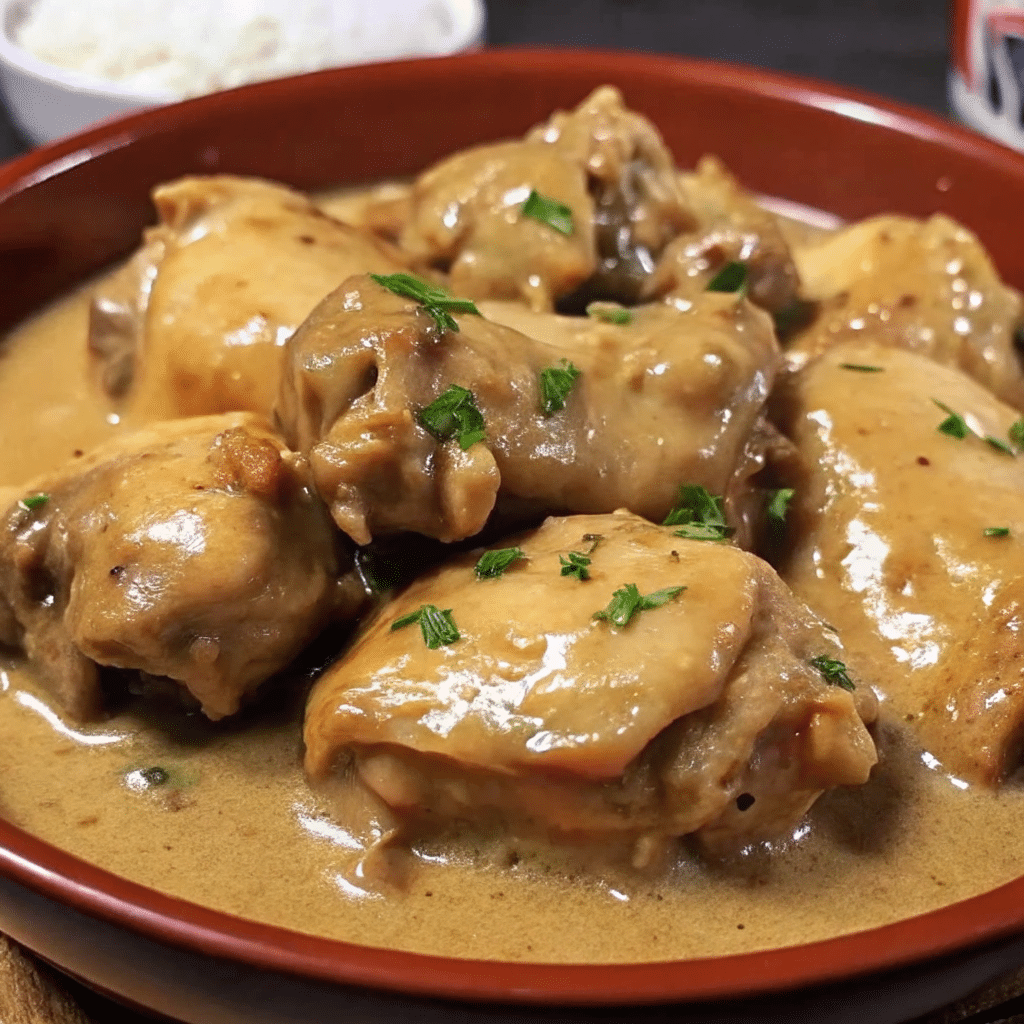
Chicken Adobo With Coconut Milk is pure comfort in a bowl, tangy, savory, and wrapped in creamy coconut richness that makes everything better. This Filipino classic combines tender chicken simmered in soy sauce, vinegar, and garlic, then finished with velvety coconut milk for a sauce that’s absolutely irresistible.
Love More Chicken Recipes? Try My One Pot Jamaican Curry Chicken or this One Pot Queso Chicken and Rice next.
Why You’ll Love This Recipe
- Deeply flavorful with the perfect balance of tangy, savory, and subtly sweet notes
- The coconut milk adds incredible richness without being heavy
- Gets better as it sits—leftovers are pure gold
- Simple ingredients that come together effortlessly
- Perfect for meal prep

Chicken Adobo With Coconut Milk
- Total Time: 1 hour 45 minutes
- Yield: 6 pieces of chicken with sauce
Description
This Filipino Chicken Adobo With Coconut Milk features tender chicken thighs and drumsticks marinated in soy sauce, vinegar, and garlic, then simmered with bay leaves and peppercorns before being enriched with creamy coconut milk. The result is a perfectly balanced dish that’s tangy, savory, and luxuriously creamy—served over fluffy rice for the ultimate comfort meal.
Ingredients
For the Chicken
-
2 pounds chicken thighs and drumsticks (mixture), skin optional to remove
-
Oil for browning (optional—chicken skin renders enough fat)
For the Marinade
-
⅓ cup cane vinegar (apple cider vinegar or white vinegar work great too)
-
⅓ cup low-sodium soy sauce (or tamari if you’re going gluten-free)
-
4 tablespoons brown sugar (coconut sugar is a lovely swap)
-
8 garlic cloves, smashed (don’t be shy—garlic is everything here)
-
3 bay leaves
-
1 teaspoon whole black peppercorns (or freshly ground pepper in a pinch)
For Cooking
-
1 small can full-fat coconut milk (160ml or about ⅔ cup—trust me, full-fat is the way)
For Serving
-
White rice or brown rice (absolutely essential)
-
Sliced green onions or scallions for garnish
-
Optional: jasmine rice for extra fragrance
Instructions
Combine the vinegar, soy sauce, brown sugar, smashed garlic, bay leaves, and peppercorns in a bowl with a lid. Give it a good stir until the sugar dissolves. This mixture is where all the magic starts.
Remove the skin from your chicken pieces if you’re feeling health-conscious (though leaving it on adds extra richness). Add the chicken to the marinade, turning each piece to coat thoroughly. Cover and pop it in the fridge for at least 1 hour, but honestly? Overnight is when the flavors really sink in deep and make everything taste incredible.
Heat your large skillet or Dutch oven over medium heat. Working in batches so you don’t crowd the pan, brown your chicken pieces on all sides until they’re golden and gorgeous. If you removed the skin, add about a tablespoon of oil. Otherwise, the chicken skin will render enough fat naturally.
Once all your chicken is beautifully browned, return it all to the pan and pour in every drop of that marinade—including the garlic, bay leaves, and peppercorns. Bring everything to a rolling boil.
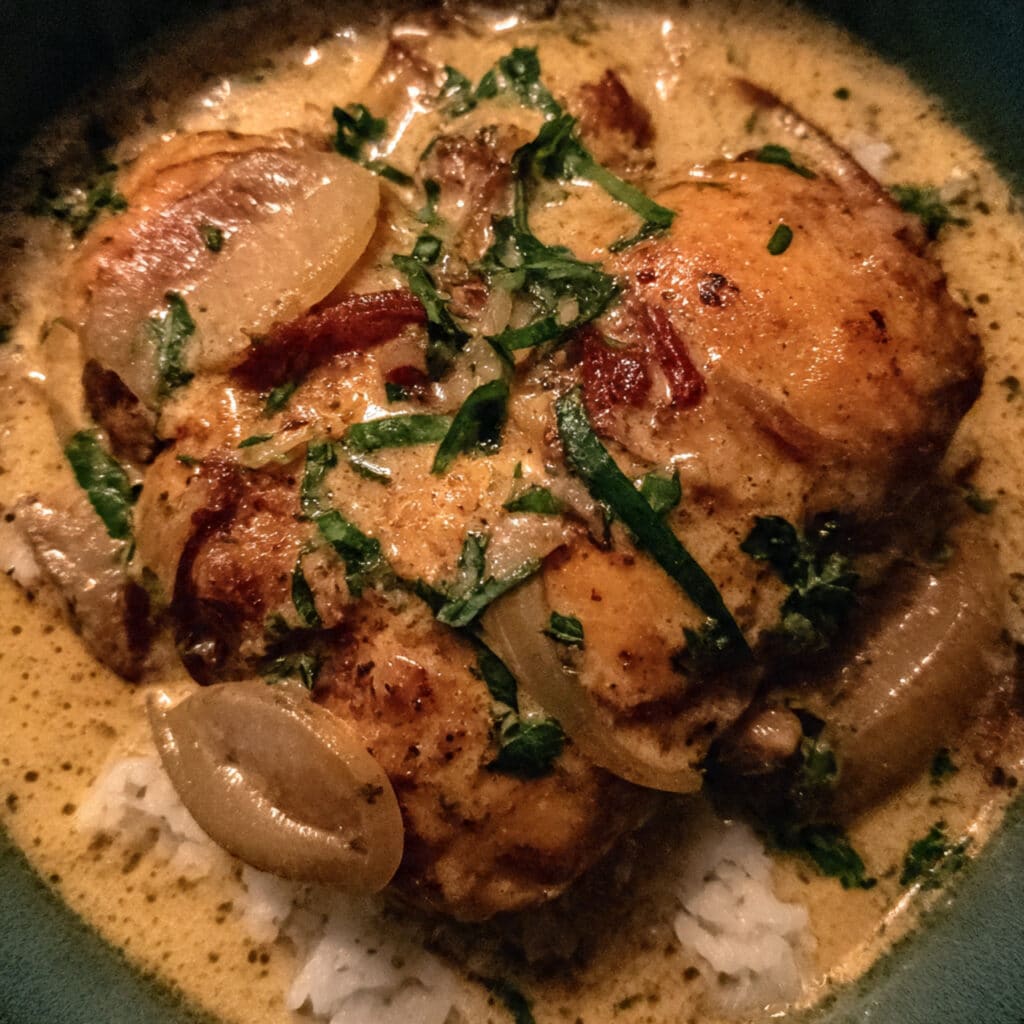
When the mixture is bubbling away, reduce the heat to a gentle simmer. Pour in that gorgeous coconut milk and stir it through until everything looks smooth and dreamy. Let it simmer for 20 minutes until the sauce thickens beautifully and your chicken reaches 165°F internally. The sauce should coat a spoon and look absolutely luscious.
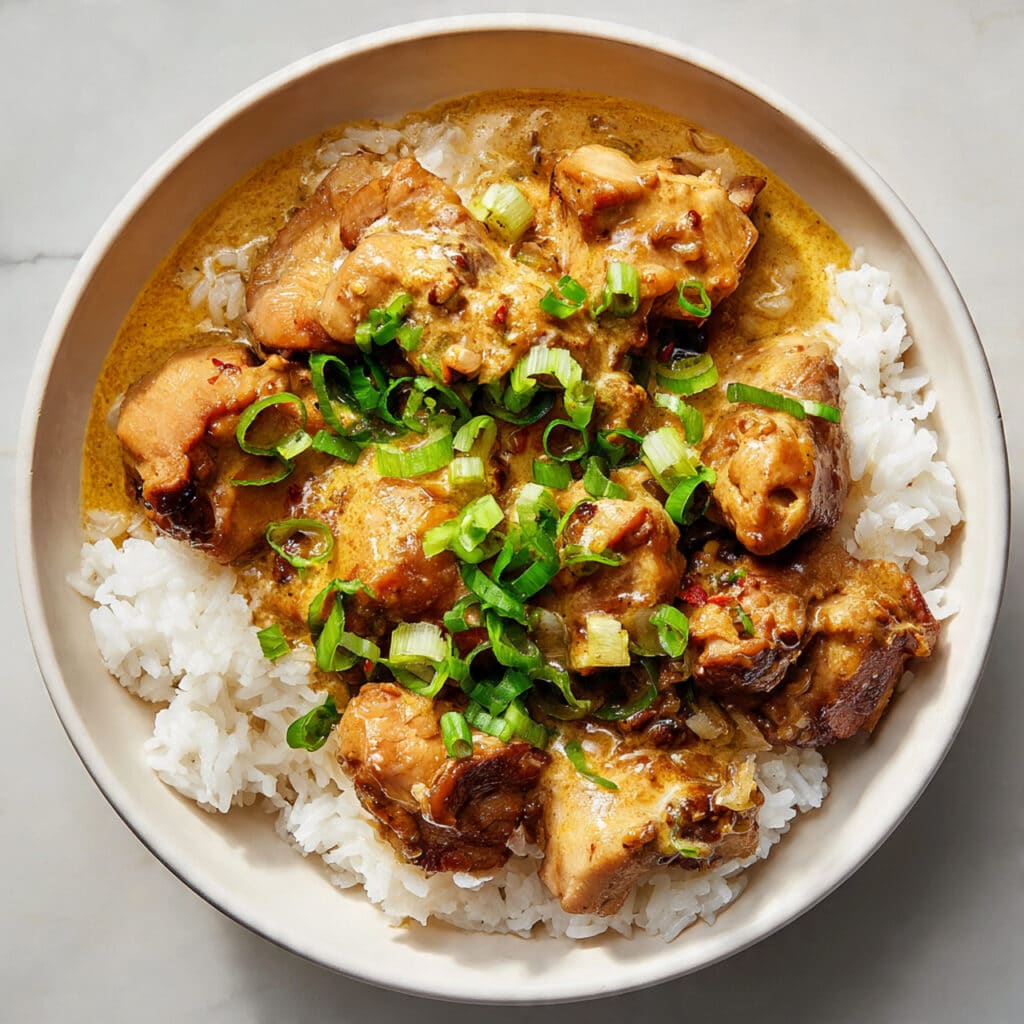
Spoon that tender chicken and silky sauce over a big bowl of fluffy white rice. Scatter some sliced green onions on top for a pop of color and freshness.
Notes
The biggest mistake people make is adding coconut milk too early or boiling it too hard. Add it midway through cooking at a simmer, and you’ll get that silky texture every single time. Another common mistake is using light coconut milk—just don’t. The full-fat version makes all the difference in richness and mouthfeel.
For a shortcut, use pre-minced garlic from a jar if you’re really pressed for time, but fresh smashed cloves are infinitely better. You can also marinate while you’re at work—prep the night before, let it sit all day, and dinner practically makes itself.
- Prep Time: 10 minutes + Marinating Time: 1 hour minimum
- Cook Time: 30-35 minutes
- Category: Main Dish
- Method: Braising
- Cuisine: Filipino
Ingredients You’ll Need
For the Chicken
- 2 pounds chicken thighs and drumsticks (mixture), skin optional to remove
- Oil for browning (optional—chicken skin renders enough fat)
For the Marinade
- ⅓ cup cane vinegar (apple cider vinegar or white vinegar work great too)
- ⅓ cup low-sodium soy sauce (or tamari if you’re going gluten-free)
- 4 tablespoons brown sugar (coconut sugar is a lovely swap)
- 8 garlic cloves, smashed (don’t be shy—garlic is everything here)
- 3 bay leaves
- 1 teaspoon whole black peppercorns (or freshly ground pepper in a pinch)
For Cooking
- 1 small can full-fat coconut milk (160ml or about ⅔ cup—trust me, full-fat is the way)
For Serving
- White rice or brown rice (absolutely essential)
- Sliced green onions or scallions for garnish
- Optional: jasmine rice for extra fragrance
Why These Ingredients Work
The combination of vinegar and soy sauce creates that signature adobo tang that’s bright and bold without being overwhelming. Brown sugar balances the acidity and adds a hint of caramel sweetness that deepens as it cooks. Smashed garlic cloves release their oils slowly, infusing every bit of the sauce with that warm, aromatic flavor we all crave.
Bay leaves and peppercorns add layers of earthy, slightly floral notes that make the sauce complex and interesting. The coconut milk is the game-changer—it mellows the tanginess, adds body, and creates a sauce so silky you’ll want to spoon it over everything. Full-fat coconut milk is essential here because light versions won’t give you that luxurious creaminess.
Bone-in chicken thighs and drumsticks stay incredibly juicy during the long simmer and add richness to the sauce. The bones release gelatin as they cook, making the sauce even more velvety and satisfying.
Essential Tools and Equipment
- Large skillet or Dutch oven (something with high sides to prevent splattering)
- Mixing bowl with lid (for marinating)
- Tongs (for turning chicken pieces)
- Measuring cups and spoons
- Meat thermometer (to ensure perfectly cooked chicken)
Step-by-Step Instructions
Step 1: Prepare the Marinade
Combine the vinegar, soy sauce, brown sugar, smashed garlic, bay leaves, and peppercorns in a bowl with a lid. Give it a good stir until the sugar dissolves. This mixture is where all the magic starts.
Step 2: Marinate the Chicken
Remove the skin from your chicken pieces if you’re feeling health-conscious (though leaving it on adds extra richness). Add the chicken to the marinade, turning each piece to coat thoroughly. Cover and pop it in the fridge for at least 1 hour, but honestly? Overnight is when the flavors really sink in deep and make everything taste incredible.
Step 3: Brown the Chicken
Heat your large skillet or Dutch oven over medium heat. Working in batches so you don’t crowd the pan, brown your chicken pieces on all sides until they’re golden and gorgeous. If you removed the skin, add about a tablespoon of oil. Otherwise, the chicken skin will render enough fat naturally.
Step 4: Add the Marinade
Once all your chicken is beautifully browned, return it all to the pan and pour in every drop of that marinade—including the garlic, bay leaves, and peppercorns. Bring everything to a rolling boil.
Step 5: Simmer with Coconut Milk
When the mixture is bubbling away, reduce the heat to a gentle simmer. Pour in that gorgeous coconut milk and stir it through until everything looks smooth and dreamy. Let it simmer for 20 minutes until the sauce thickens beautifully and your chicken reaches 165°F internally. The sauce should coat a spoon and look absolutely luscious.
Step 6: Serve and Enjoy
Spoon that tender chicken and silky sauce over a big bowl of fluffy white rice. Scatter some sliced green onions on top for a pop of color and freshness.
You Must Know
The marinating time is non-negotiable for flavor—give it at least an hour, but overnight transforms this dish completely. The vinegar needs time to tenderize the chicken and let all those flavors meld together. Room temperature chicken cooks more evenly, so pull it from the fridge about 20 minutes before you start browning.
Don’t skip the browning step even though the chicken will cook through during simmering. That caramelization adds depth and complexity you just can’t get any other way. When you add the coconut milk, make sure the marinade is already boiling—this helps the sauce emulsify properly and prevents curdling.
Personal Secret: Save about a tablespoon of the coconut milk to drizzle over the finished dish right before serving. That little swirl on top makes it look restaurant-fancy and adds an extra hit of creaminess.
Pro Tips & Cooking Hacks
Use a meat thermometer to check doneness—165°F is your magic number. Dark meat is forgiving, but you still want to nail it. If your sauce isn’t thickening enough, remove the chicken once it’s cooked and let the sauce reduce for a few extra minutes on its own.
The biggest mistake people make is adding coconut milk too early or boiling it too hard. Add it midway through cooking at a simmer, and you’ll get that silky texture every single time. Another common mistake is using light coconut milk—just don’t. The full-fat version makes all the difference in richness and mouthfeel.
For a shortcut, use pre-minced garlic from a jar if you’re really pressed for time, but fresh smashed cloves are infinitely better. You can also marinate while you’re at work—prep the night before, let it sit all day, and dinner practically makes itself.
Flavor Variations & Suggestions
Swap the brown sugar for honey or maple syrup for a different kind of sweetness. Add a teaspoon of fish sauce to the marinade for extra umami depth—it sounds funky but trust the process. If you like heat, throw in a couple of Thai chilies or a teaspoon of red pepper flakes with the marinade.
For a citrusy twist, add the zest of one lime along with the coconut milk. Some folks love adding chunks of potato or hard-boiled eggs during the last 10 minutes of simmering—both soak up the sauce beautifully. You can also use chicken breasts if that’s what you have, just watch them carefully as they cook faster and can dry out.
Try different vinegars to change the flavor profile—rice vinegar makes it mellower, while coconut vinegar adds a subtle tropical note. For a richer version, use coconut cream instead of coconut milk.
Make-Ahead Options
This dish is a meal-prepper’s dream. Marinate the chicken up to 24 hours in advance for maximum flavor development. You can even brown the chicken a day ahead, refrigerate it, then finish the cooking when you’re ready to eat.
The fully cooked dish keeps beautifully in the fridge for 3-4 days and honestly tastes better on day two when all the flavors have had time to become best friends. Portion it into individual containers with rice for grab-and-go lunches that’ll make your coworkers jealous.
Unfortunately, this particular recipe doesn’t freeze well because of the coconut milk—it can separate and get grainy when thawed. But it reheats so perfectly on the stovetop or in the microwave that you won’t mind eating it within a few days.
What to Serve With Chicken Adobo With Coconut Milk
White jasmine rice is traditional and perfect for soaking up all that glorious sauce. Brown rice works beautifully if you want something heartier and more wholesome. For a complete Filipino feast, serve it alongside pancit (Filipino noodles) or a simple cucumber and tomato salad dressed with vinegar.
Steamed or sautéed green beans make a light, crisp contrast to the rich sauce. A side of lumpia (Filipino spring rolls) turns this into a proper celebration meal. For drinks, serve it with cold calamansi juice or just plain iced water—the food is rich enough that you want something refreshing.
A simple cabbage slaw with lime juice and a touch of fish sauce adds crunch and brightness. Some folks love serving this with fried plantains on the side for a sweet-savory combination.
Allergy Information
This recipe contains soy (in the soy sauce) and coconut. For a soy-free version, use coconut aminos instead of soy sauce, it’ll be slightly less salty but still delicious. Tamari works if you need gluten-free but can handle soy.
If coconut is an issue, you can make traditional adobo without it—just skip the coconut milk and simmer the chicken in the marinade alone. It’ll be tangier and less creamy but equally delicious. The dish is naturally dairy-free, egg-free, and nut-free.
For those avoiding sugar, use a sugar substitute like monk fruit or erythritol, though the flavor will be slightly different. The recipe is naturally low-carb if you serve it over cauliflower rice instead of regular rice.
Storage & Reheating
Store leftover Chicken Adobo in an airtight container in the refrigerator for up to 3-4 days. The flavors deepen and meld beautifully, making leftovers even more craveable than the first serving. Like the best stews and braises, this dish actually improves overnight.
Reheat gently on the stovetop over low heat, stirring occasionally until warmed through. Add a splash of water or coconut milk if the sauce has thickened too much. In the microwave, use 50% power and stir halfway through to ensure even heating. The chicken should be piping hot all the way through.
Freezing isn’t recommended because the coconut milk can separate and become grainy when thawed. But honestly, with how good this tastes as leftovers, it probably won’t last long enough to need freezing anyway.
Questions I Get Asked A Lot
Can I use chicken breasts instead of thighs and drumsticks?
You can, but they’ll cook faster and can dry out more easily. If using breasts, check for doneness around the 15-minute mark after adding the coconut milk. Bone-in, skin-on breasts work better than boneless skinless.
My sauce is too thin—how do I fix it?
Remove the cooked chicken and let the sauce simmer uncovered for 5-10 minutes to reduce and thicken. You can also mix a teaspoon of cornstarch with a tablespoon of cold water and stir it in, then simmer for 2 minutes.
What if I don’t have cane vinegar?
Apple cider vinegar is the best substitute and what most home cooks use anyway. White vinegar works but is sharper. Rice vinegar makes it mellower. Avoid balsamic or red wine vinegar as they’ll change the flavor profile too much.
Why did my coconut milk look curdled or grainy?
This usually happens when the coconut milk is boiled too hard or added when the marinade isn’t hot enough. Make sure your marinade is boiling before adding coconut milk, then immediately reduce to a gentle simmer. Low-quality coconut milk can also separate more easily.
💬 Tried this Chicken Adobo With Coconut Milk? Leave a comment and rating below! I’d love to hear how it turned out and if you added your own special twist!