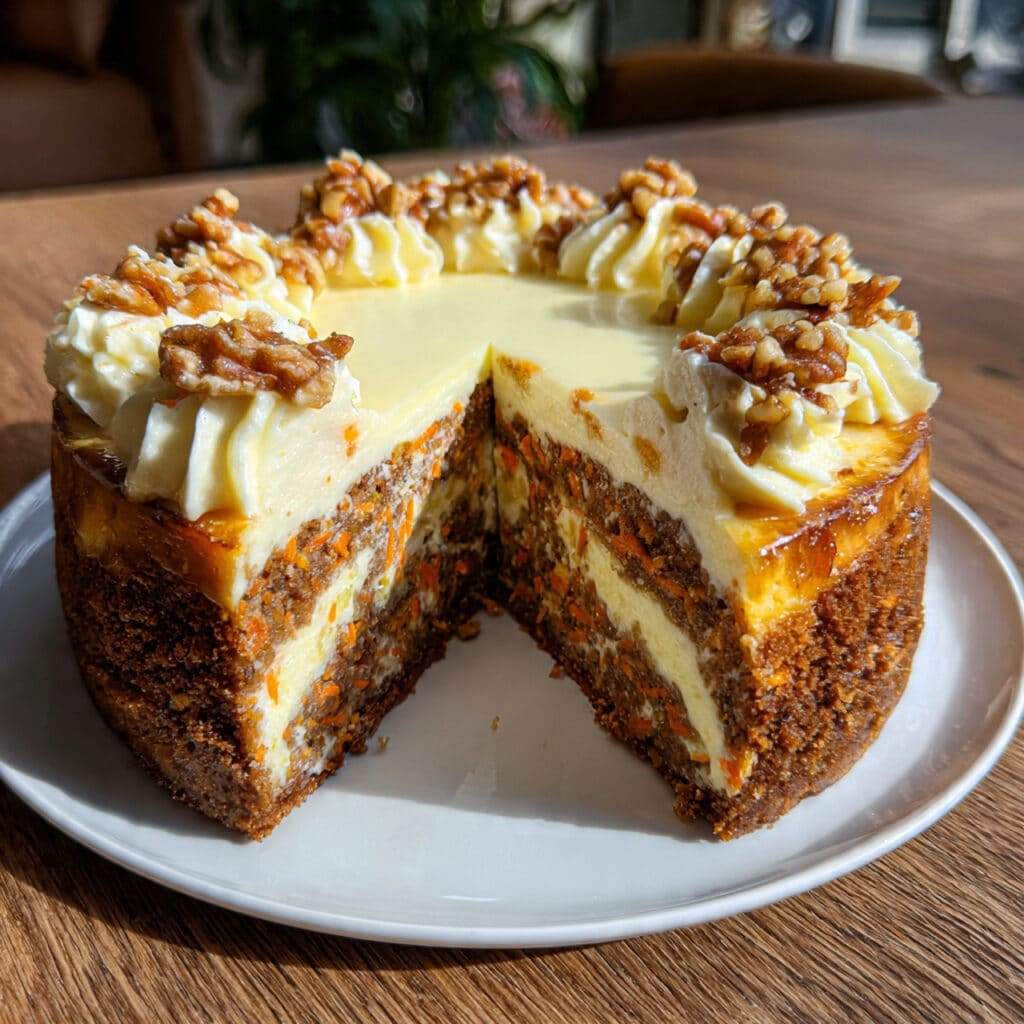
Carrot Cake Cheesecake is a dreamy, show stopping dessert that brings together two beloved classics in one unforgettable bite. Imagine layers of moist, spiced carrot cake swirled with rich, creamy cheesecake, all topped with luscious cream cheese frosting.
Why You’ll Love This Recipe
- Two desserts in one – You get all the cozy spice of carrot cake AND the creamy richness of cheesecake without having to choose
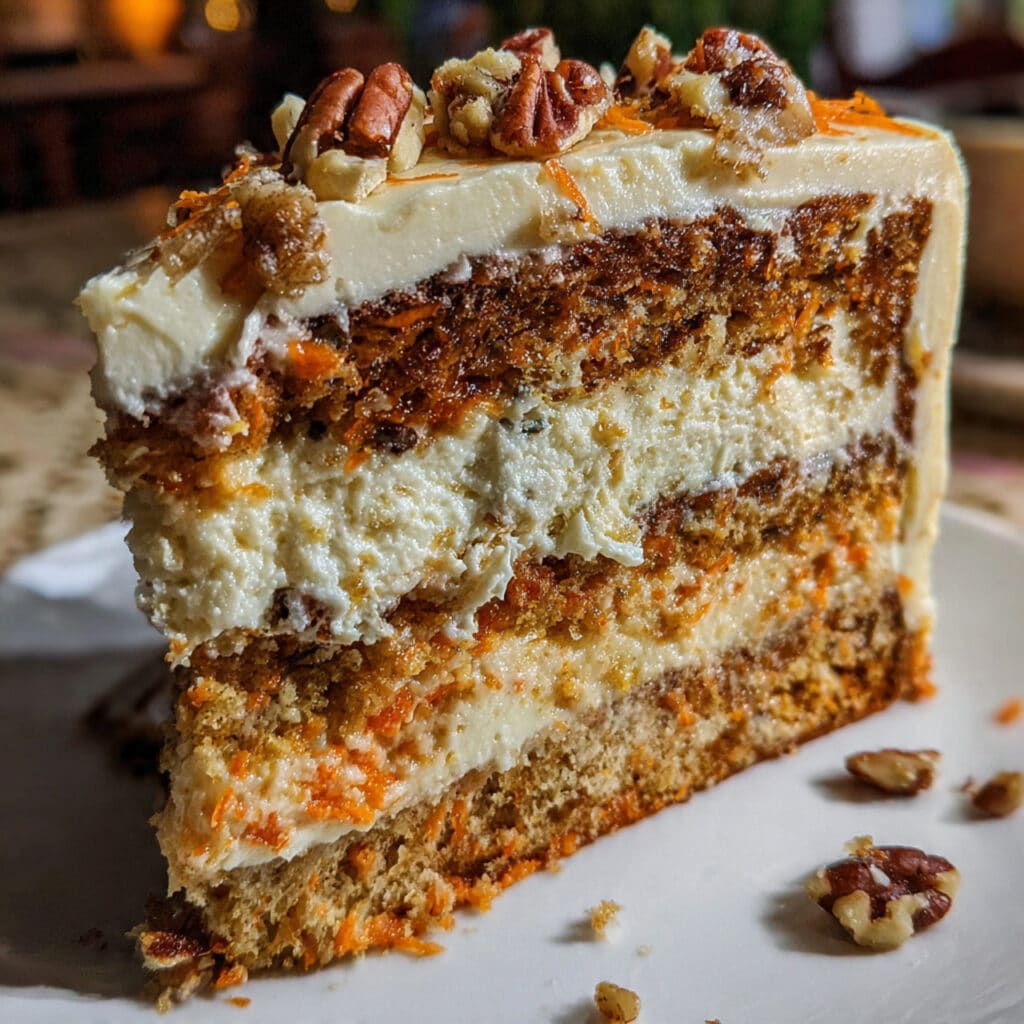
- Absolutely stunning presentation – The marbled layers look bakery-fancy but come together with simple home baking techniques
- Perfect make-ahead dessert – It actually needs to chill overnight, so you can cross it off your to-do list the day before your gathering
- Crowd-pleaser guaranteed – Even picky eaters can’t resist this combination of flavors and textures
- Worth the wait – Yes, there’s chilling time, but the payoff is pure dessert magic
Carrot Cake Cheesecake
- Total Time: 7 hours 50 minutes
- Yield: One 9-inch cheesecake
Description
This Carrot Cake Cheesecake combines the best of both worlds—tender, spiced carrot cake layered and marbled with rich, creamy cheesecake, then topped with luscious cream cheese frosting. It’s a make-ahead dessert that looks bakery-fancy but comes together with simple home baking techniques.
Ingredients
Carrot Cake Layer
- 1¾ cups all-purpose flour
- 1 teaspoon baking soda
- 1 teaspoon baking powder
- ¼ teaspoon salt
- 1 teaspoon ground cinnamon
- ¼ teaspoon ground nutmeg (freshly grated if you have it!)
- ½ cup vegetable oil (canola works beautifully)
- ½ cup unsweetened applesauce (keeps it so moist)
- ¾ cup granulated sugar
- ½ cup packed brown sugar (light or dark both work)
- 2 large eggs (room temperature is best)
- 2 cups finely grated carrots (about 3–4 medium carrots)
Cheesecake Layer
- 16 ounces cream cheese, softened (two 8-oz blocks)
- ⅔ cup granulated sugar
- 2 teaspoons all-purpose flour (helps prevent cracks)
- 2 large eggs (room temperature)
- ½ cup sour cream (full-fat for best flavor)
- 1 teaspoon vanilla extract (pure, not imitation)
Frosting (Cream Cheese Topping)
- ½ cup unsalted butter, softened
- 4 ounces cream cheese, softened
- 1½ cups powdered sugar (sifted if lumpy)
- 1 teaspoon vanilla extract
- Pinch of salt (optional, but it balances the sweetness)
Optional Garnish
- Chopped pecans or walnuts (toasted for extra flavor)
Instructions
Preheat your oven to 350°F and grease your 9-inch springform pan really well. I like to use butter or nonstick spray, making sure to get into all the corners.
In a mixing bowl, beat the softened cream cheese with the sugar and flour until it’s completely smooth and creamy—no lumps allowed! Add the eggs one at a time, beating well after each addition.
Mix in the sour cream and vanilla extract until just combined. Set this bowl aside while you make the carrot cake batter.
In a separate bowl, whisk together the flour, baking soda, baking powder, salt, cinnamon, and nutmeg. Give it a good whisking so all those spices are evenly distributed throughout. Set this aside.
In another large bowl, combine the oil, applesauce, granulated sugar, brown sugar, and eggs. Mix until everything is smooth and well blended—the mixture should look glossy and unified.
Slowly add your dry ingredients to the wet ingredients, mixing just until combined. Don’t overmix or your cake will be tough—stop as soon as you don’t see dry flour anymore.
Gently stir in those finely grated carrots. The batter will be thick and studded with orange flecks of carrot. Beautiful!
Spread about 1½ cups of the carrot cake batter into the bottom of your prepared springform pan, smoothing it into an even layer.
Now comes the fun part: dollop about one-third of the cheesecake mixture over this carrot cake layer. Don’t try to spread it—just let it sit there in dollops. It’ll melt and swirl as it bakes.
Spoon the remaining carrot cake batter over the cheesecake dollops as evenly as you can. Then drizzle or spoon the remaining cheesecake mixture over the very top, covering as much surface area as possible.
It doesn’t have to be perfect—the swirls and marbling are part of the charm!
Slide your pan into the oven and bake for 60 to 65 minutes. The center should still have a slight jiggle when you gently shake the pan, but the edges should be set and pulling away slightly.
After about 40 minutes of baking, tent the top lightly with aluminum foil to prevent the top from getting too dark. Trust me on this—it makes a difference.
Remove the pan from the oven and let it cool on a wire rack for at least 1 hour at room temperature. Don’t rush this step!
Then cover the pan and transfer it to the refrigerator. Let it chill for at least 6 hours, but overnight is even better. This chilling time lets all the layers set up properly so you get clean, gorgeous slices.
When you’re ready to frost, beat together the softened butter and cream cheese in a bowl until smooth and creamy. Add the powdered sugar, vanilla extract, and that little pinch of salt.
Beat on medium-high speed for about 4 to 5 minutes, until the frosting is pale, fluffy, and absolutely gorgeous. This extra beating time incorporates air and makes the frosting light as a cloud.
Spread the frosting evenly over your chilled cheesecake using an offset spatula or the back of a spoon. If you’re using nuts, sprinkle chopped pecans or walnuts around the edges for that classic carrot cake look.
Carefully run a thin knife around the edge of the pan, then release the springform ring. Transfer to a serving plate, slice with a sharp knife.
Notes
- Prevent cracks in the cheesecake – Don’t open the oven door during the first 45 minutes of baking, and let it cool gradually. Sudden temperature changes cause cracks
- Make slicing easier – Use a sharp knife dipped in hot water and wiped dry between each cut for bakery-perfect slices
- Don’t skip the foil tent – That carrot cake layer on top will get too dark without it, and nobody wants a burnt-tasting dessert
- Room temperature matters – Cold eggs won’t incorporate well into either layer. Set them out 30 minutes before baking, or place them in warm water for 5 minutes
- Prep Time: 45 minutes
- Cook Time: 60-65 minutes + Chill Time: 6 hours (or overnight)
- Category: Dessert
- Method: Baking
- Cuisine: American
Ingredients You’ll Need
Carrot Cake Layer
- 1¾ cups all-purpose flour
- 1 teaspoon baking soda
- 1 teaspoon baking powder
- ¼ teaspoon salt
- 1 teaspoon ground cinnamon
- ¼ teaspoon ground nutmeg (freshly grated if you have it!)
- ½ cup vegetable oil (canola works beautifully)
- ½ cup unsweetened applesauce (keeps it so moist)
- ¾ cup granulated sugar
- ½ cup packed brown sugar (light or dark both work)
- 2 large eggs (room temperature is best)
- 2 cups finely grated carrots (about 3-4 medium carrots)
Cheesecake Layer
- 16 ounces cream cheese, softened (two 8-oz blocks)
- ⅔ cup granulated sugar
- 2 teaspoons all-purpose flour (helps prevent cracks)
- 2 large eggs (room temperature)
- ½ cup sour cream (full-fat for best flavor)
- 1 teaspoon vanilla extract (pure, not imitation)
Frosting (Cream Cheese Topping)
- ½ cup unsalted butter, softened
- 4 ounces cream cheese, softened
- 1½ cups powdered sugar (sifted if lumpy)
- 1 teaspoon vanilla extract
- Pinch of salt (optional, but it balances the sweetness)
Optional Garnish
- Chopped pecans or walnuts (toasted for extra flavor)
Why These Ingredients Work
The applesauce in this carrot cake is my secret weapon. It adds moisture without making the cake heavy or oily, and it lets us use a bit less oil while keeping everything tender.
The combination of granulated and brown sugar gives you sweetness plus that deep, molasses-y warmth that makes carrot cake taste like home. Those warm spices—cinnamon and nutmeg—are what make your kitchen smell like a hug while this bakes.
For the cheesecake layer, room temperature cream cheese is absolutely essential. Cold cream cheese will give you lumps no matter how long you beat it, and nobody wants that. The little bit of flour mixed into the cheesecake helps stabilize it so you get clean, beautiful slices. Sour cream adds tanginess and keeps the cheesecake ultra-creamy instead of dense.
The cream cheese frosting brings everything together with just the right amount of sweetness. Beating the butter and cream cheese together until they’re really fluffy—we’re talking 4 to 5 minutes—makes all the difference between a frosting that just sits there and one that’s cloud-like and dreamy.
Essential Tools and Equipment
- 9-inch springform pan (non-negotiable—you need that removable ring)
- Electric mixer (stand or hand mixer both work)
- Large mixing bowls (at least 3)
- Whisk
- Box grater or food processor (for the carrots)
- Measuring cups and spoons
- Rubber spatula
- Aluminum foil (for tenting during baking)
- Wire cooling rack
- Offset spatula or butter knife (for frosting)
Step-by-Step Instructions
Step 1: Prep & Preheat
Preheat your oven to 350°F and grease your 9-inch springform pan really well. I like to use butter or nonstick spray, making sure to get into all the corners.
Step 2: Make the Cheesecake Filling
In a mixing bowl, beat the softened cream cheese with the sugar and flour until it’s completely smooth and creamy—no lumps allowed! Add the eggs one at a time, beating well after each addition.
Mix in the sour cream and vanilla extract until just combined. Set this bowl aside while you make the carrot cake batter.
Step 3: Mix the Carrot Cake Dry Ingredients
In a separate bowl, whisk together the flour, baking soda, baking powder, salt, cinnamon, and nutmeg. Give it a good whisking so all those spices are evenly distributed throughout. Set this aside.
Step 4: Mix the Carrot Cake Wet Ingredients
In another large bowl, combine the oil, applesauce, granulated sugar, brown sugar, and eggs. Mix until everything is smooth and well blended—the mixture should look glossy and unified.
Step 5: Combine and Add Carrots
Slowly add your dry ingredients to the wet ingredients, mixing just until combined. Don’t overmix or your cake will be tough—stop as soon as you don’t see dry flour anymore.
Gently stir in those finely grated carrots. The batter will be thick and studded with orange flecks of carrot. Beautiful!
Step 6: Create the First Layers
Spread about 1½ cups of the carrot cake batter into the bottom of your prepared springform pan, smoothing it into an even layer.
Now comes the fun part: dollop about one-third of the cheesecake mixture over this carrot cake layer. Don’t try to spread it—just let it sit there in dollops. It’ll melt and swirl as it bakes.
Step 7: Add Remaining Layers
Spoon the remaining carrot cake batter over the cheesecake dollops as evenly as you can. Then drizzle or spoon the remaining cheesecake mixture over the very top, covering as much surface area as possible.
It doesn’t have to be perfect—the swirls and marbling are part of the charm!
Step 8: Bake Low and Slow
Slide your pan into the oven and bake for 60 to 65 minutes. The center should still have a slight jiggle when you gently shake the pan, but the edges should be set and pulling away slightly.
After about 40 minutes of baking, tent the top lightly with aluminum foil to prevent the top from getting too dark. Trust me on this—it makes a difference.
Step 9: Cool Completely
Remove the pan from the oven and let it cool on a wire rack for at least 1 hour at room temperature. Don’t rush this step!
Then cover the pan and transfer it to the refrigerator. Let it chill for at least 6 hours, but overnight is even better. This chilling time lets all the layers set up properly so you get clean, gorgeous slices.
Step 10: Make the Frosting
When you’re ready to frost, beat together the softened butter and cream cheese in a bowl until smooth and creamy. Add the powdered sugar, vanilla extract, and that little pinch of salt.
Beat on medium-high speed for about 4 to 5 minutes, until the frosting is pale, fluffy, and absolutely gorgeous. This extra beating time incorporates air and makes the frosting light as a cloud.
Step 11: Frost and Garnish
Spread the frosting evenly over your chilled cheesecake using an offset spatula or the back of a spoon. If you’re using nuts, sprinkle chopped pecans or walnuts around the edges for that classic carrot cake look.
Step 12: Release and Serve
Carefully run a thin knife around the edge of the pan, then release the springform ring. Transfer to a serving plate, slice with a sharp knife.
You Must Know
The most important thing about this recipe is patience. That overnight chill isn’t optional—it’s what transforms this from a messy, hard-to-slice dessert into clean, beautiful layers that hold their shape perfectly. I know it’s tempting to dig in after just a few hours, but resist! Your patience will be rewarded.
Also, make absolutely sure your cream cheese and butter are truly softened to room temperature before you start. If they’re cold, you’ll end up with lumps in both your cheesecake and frosting, and no amount of beating will smooth them out.
Personal Secret: I always use a box grater to shred my carrots super fine—not the food processor. When the carrots are too chunky, they can make the cake dense and interrupt the tender crumb. Fine shreds distribute evenly and almost melt into the batter, keeping everything light and moist.
Pro Tips & Cooking Hacks
- Test for doneness carefully – The center should jiggle like Jello when you gently shake the pan. If it’s liquid-wobbly, give it 5 more minutes. If it’s firm, you’ve gone too far (but it’ll still taste great!)
- Prevent cracks in the cheesecake – Don’t open the oven door during the first 45 minutes of baking, and let it cool gradually. Sudden temperature changes cause cracks
- Make slicing easier – Use a sharp knife dipped in hot water and wiped dry between each cut for bakery-perfect slices
- Don’t skip the foil tent – That carrot cake layer on top will get too dark without it, and nobody wants a burnt-tasting dessert
- Room temperature matters – Cold eggs won’t incorporate well into either layer. Set them out 30 minutes before baking, or place them in warm water for 5 minutes
- Lighten up the frosting – If your kitchen is warm and the frosting seems too soft, pop it in the fridge for 10 minutes, then re-whip it before spreading
Flavor Variations & Suggestions
Want to make this recipe your own? Fold a half cup of crushed pineapple (well-drained) into the carrot cake batter for a tropical twist—it adds extra moisture and a subtle sweetness that’s absolutely divine. You can also stir in a handful of raisins or sweetened shredded coconut if that’s your thing.
If you’re a spice lover like me, try adding a quarter teaspoon of ground ginger or a tiny pinch of ground cloves to really amp up that warm, cozy flavor. For extra crunch and richness, fold half a cup of chopped toasted pecans right into the carrot cake batter before layering.
Want to make it a little fancy for special occasions? Drizzle some salted caramel sauce over each slice, or add a teaspoon of orange zest to the frosting for a bright, citrusy note that cuts through all that richness beautifully.
Make-Ahead Options
This is one of the best make-ahead desserts you’ll ever make. In fact, it HAS to be made ahead, which takes all the stress out of entertaining. You can bake the whole thing up to two days before you need it—just hold off on adding the frosting until the day you’re serving.
The unfrosted cheesecake keeps beautifully in the fridge, covered tightly with plastic wrap or in an airtight container. If you want to get even further ahead, you can freeze the unfrosted cheesecake for up to one month. Wrap it really well in plastic wrap, then aluminum foil, and let it thaw overnight in the refrigerator before frosting and serving.
The frosting can also be made a day ahead and kept in an airtight container in the fridge. Just let it come to room temperature and give it a quick re-whip before spreading it on the cheesecake to restore that fluffy texture.
What to Serve With Carrot Cake Cheesecake
This dessert is so rich and indulgent that it really doesn’t need much alongside it. A simple cup of coffee or hot tea is perfect for cutting through the sweetness. If you’re serving this at Easter or a spring celebration, fresh berries on the side add a bright pop of color and a tart contrast to all that creamy sweetness.
For a dinner party, I love serving this after a lighter main course like roasted chicken or grilled salmon with vegetables. The dessert is the star, so keep everything else simple and let it shine. A scoop of vanilla ice cream on the side never hurt anyone, especially if you’re serving this to kids or anyone with a serious sweet tooth.
If you’re making this for a holiday gathering, pair it with spiced apple cider or a creamy coffee drink. The warm spices in the cake echo beautifully with those cozy fall and winter flavors.
Allergy Information
This recipe contains common allergens including dairy (cream cheese, butter, sour cream), eggs, and gluten (all-purpose flour). It also often includes tree nuts as a garnish, though those are optional.
For a gluten-free version, you can substitute a 1-to-1 gluten-free baking flour for the all-purpose flour in both the cake and cheesecake layers. Make sure your baking powder and baking soda are certified gluten-free as well.
For dairy-free needs, there are some good dairy-free cream cheese alternatives available now, though I’ll be honest—the texture won’t be quite the same. You can also try using dairy-free butter and a dairy-free sour cream substitute.
For egg-free baking, this particular recipe is tricky because both layers rely heavily on eggs for structure, so I’d recommend looking for a specifically egg-free carrot cake cheesecake recipe rather than trying to substitute.
Storage & Reheating
Store any leftover Carrot Cake Cheesecake covered in the refrigerator for up to 5 days. The flavors actually deepen and improve after a day or two, so don’t worry if you have leftovers—they’ll be even more delicious! I like to cover the cut edge with plastic wrap to prevent it from drying out.
This dessert is best served cold, straight from the fridge, so there’s no need to reheat. In fact, please don’t heat it up—the cheesecake layer will get runny and the whole thing will fall apart. Just let individual slices sit at room temperature for about 10 minutes before serving if you want to take the chill off.
You can freeze individual slices wrapped tightly in plastic wrap and then aluminum foil for up to 2 months. Thaw them overnight in the refrigerator, still wrapped, to prevent condensation from making the frosting weepy.
Questions I Get Asked A Lot
Can I use pre-shredded carrots from the store?
You can, but I really don’t recommend it. Pre-shredded carrots are usually too thick and dry, and they won’t incorporate into the batter as nicely. Freshly grated carrots have more moisture and a finer texture that makes the cake incredibly tender. It only takes 5 minutes to grate your own, and the difference is worth it!
My cheesecake layer cracked on top—did I do something wrong?
Cracks happen to the best of us, and the good news is they’ll be completely hidden under that gorgeous cream cheese frosting! Cracks usually form when the cheesecake cools too quickly or when the oven temperature was a bit too high. Next time, try letting it cool in the oven with the door cracked open for 10 minutes before moving it to the counter.
Do I really need a springform pan, or can I use a regular cake pan?
A springform pan is really important for this recipe. Because the cheesecake layer is so creamy and delicate, you need that removable ring to get clean slices without the whole thing falling apart. If you use a regular pan, you’ll have a really hard time getting it out in one piece, and it won’t look nearly as pretty.
Can I leave out the applesauce and just use all oil?
You could use ¾ cup of oil total and skip the applesauce, but the cake will be a bit more dense and oily-tasting. The applesauce adds moisture and keeps the crumb light without adding extra fat. If you don’t have applesauce, you could try using an equal amount of crushed pineapple (well-drained) or even plain Greek yogurt instead.
How do I know when the cheesecake is done baking?
The center should still have a slight wobble when you gently shake the pan—think Jello, not liquid. The edges should look set and might be just slightly puffed. Don’t wait for the center to look completely firm or you’ll overbake it and end up with a dry, cracked cheesecake. It will continue to set as it cools and chills.
💬 Tried this recipe? Leave a comment and rating below! I’d love to hear how your Carrot Cake Cheesecake turned out, and whether you added any special twists.