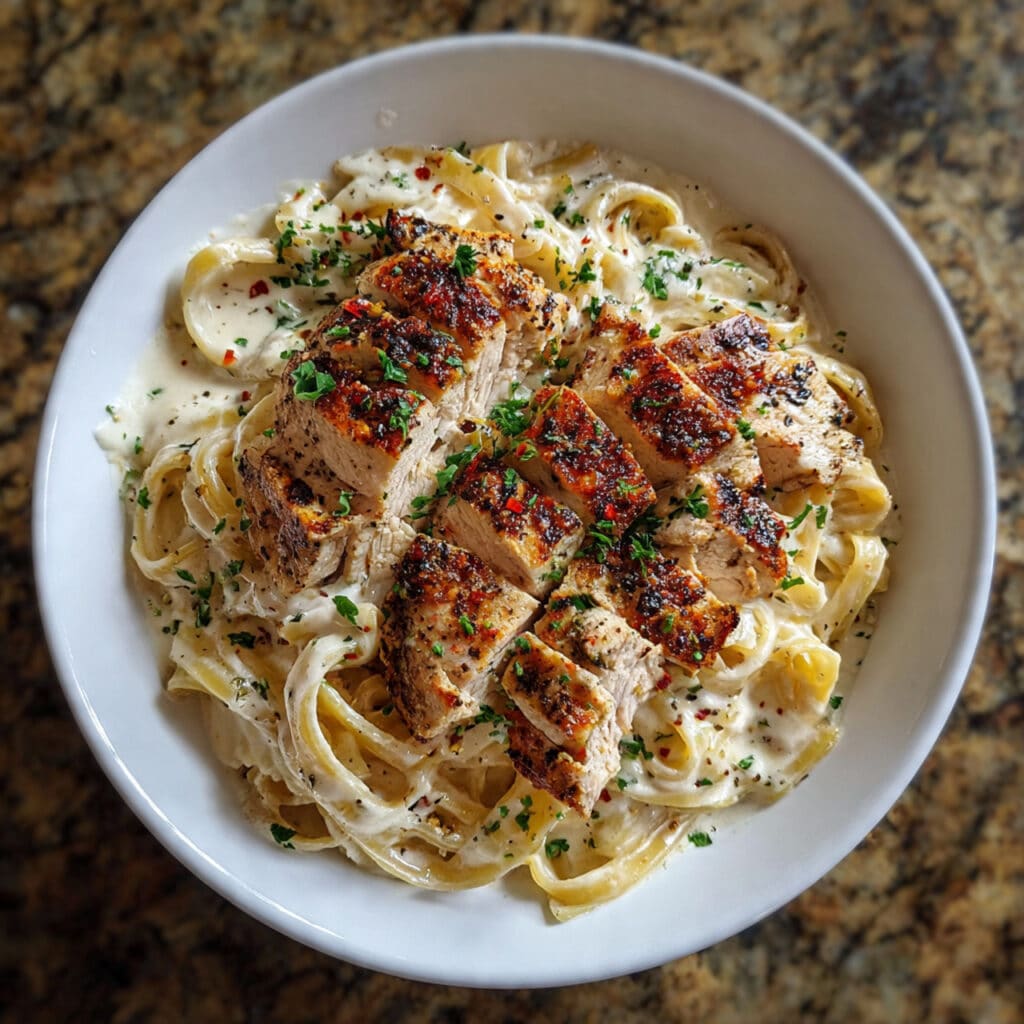
Cajun Chicken Alfredo is pure comfort with a kick! This creamy, indulgent pasta brings together tender, seasoned chicken, silky homemade Alfredo sauce, and just the right amount of Cajun spice to wake up your taste buds. The Cajun spices add a delicious kick to classic creamy pasta, making this dish a family favorite that’s ready in under 30 minutes.
Why You’ll Love This Recipe
- Bold flavor meets creamy comfort – The spicy Cajun seasoning transforms classic Alfredo into something exciting and new
- Restaurant-quality at home – You’ll save money and impress everyone with a dish that tastes like it came from your favorite Italian-Cajun fusion spot
- Flexible and forgiving – Adjust the heat level to your family’s taste, swap chicken for shrimp, or use whatever pasta shape you have on hand
- Ready in under 30 minutes – From stovetop to table faster than you could order takeout
- Crowd-pleasing comfort – Even picky eaters love this creamy, satisfying dinner
Cajun Chicken Alfredo
- Total Time: 30 minutes
Description
Cajun Chicken Alfredo combines juicy, seasoned chicken with silky homemade Alfredo sauce and perfectly cooked fettuccine for a restaurant-quality meal you can make at home. The Cajun spices add a delicious kick to classic creamy pasta, making this dish a family favorite that’s ready in under 30 minutes.
Ingredients
For the Chicken:
- 1 lb (450 g) boneless, skinless chicken breasts or thighs (thighs stay juicier, but breasts work beautifully too)
- 1 tablespoon Cajun seasoning
- 1 teaspoon garlic powder
- ½ teaspoon black pepper
- 1–2 tablespoons olive oil
For the Pasta:
- 12–16 oz (340–450 g) fettuccine or your favorite pasta (penne and bowtie also work great)
- Salted water for boiling (make it taste like the sea!)
For the Alfredo Sauce:
- 4 tablespoons unsalted butter
- 3–4 cloves garlic, minced (fresh is best)
- 1 cup heavy cream
- 1 cup whole milk (don’t skimp—low-fat won’t give you that silky texture)
- 1½ cups grated Parmesan cheese (freshly grated for the smoothest sauce)
- ½–1 teaspoon Cajun seasoning (adjust to your spice preference)
- ¼ teaspoon black pepper
- Salt, to taste
- Optional: pinch of red pepper flakes (for the brave souls who like extra heat)
Optional Garnishes:
- Chopped fresh parsley (adds a pop of color and freshness)
- Extra Cajun seasoning
- Grated Parmesan on top
- Lemon zest (a little brightness cuts through the richness)
Instructions
Bring a large pot of salted water to a rolling boil—it should taste pleasantly salty, like the ocean. Add your pasta and cook according to the package directions until al dente (that means it still has a little bite to it). Before you drain, scoop out about ½ cup of that starchy pasta water and set it aside.
Pat your chicken dry with paper towels, then season both sides generously with the Cajun seasoning, garlic powder, and black pepper. Don’t be shy—you want flavor in every bite! Heat the olive oil in your large skillet over medium-high heat until it shimmers.
Add the seasoned chicken and let it cook undisturbed for 4–6 minutes per side. Remove the chicken from the skillet, let it rest for a couple minutes, then slice it into strips. Set it aside while you make the sauce.
Using the same skillet (don’t wash it—all those flavorful browned bits will make your sauce even better), melt the butter over medium heat. Add the minced garlic and sauté for just 30–60 seconds, stirring constantly. You want it fragrant and golden, not brown and bitter. Pour in the heavy cream and milk, stirring everything together.
Now comes the important part: add the Parmesan cheese gradually, a handful at a time, whisking constantly until each addition melts into silky smoothness. Stir in the extra Cajun seasoning, black pepper, and red pepper flakes if you’re using them. Taste and adjust the salt and spice to your liking.
Add your cooked pasta right into that beautiful sauce and toss everything together with tongs until every strand is coated. Top with your sliced Cajun chicken, sprinkle with fresh parsley and extra Parmesan if you like, and serve immediately while it’s hot and gorgeous.
Notes
- Don’t overcrowd the pan – Cook chicken in batches if needed; crowding causes steaming instead of browning
- Taste as you go – Cajun seasoning brands vary in heat and saltiness, so adjust gradually
- Add cheese off the heat – If your sauce gets too hot, remove it from the burner before adding cheese to prevent clumping
- Use a pasta water safety net – That reserved pasta water is your best friend for fixing sauce that’s too thick
- Let chicken rest – Even just 3–4 minutes lets the juices redistribute for more tender meat
- Prep Time: 10 minutes
- Cook Time: 20 minutes
- Category: Main Dish
- Method: Stovetop
- Cuisine: Italian-American
Ingredients You’ll Need
For the Chicken:
- 1 lb (450 g) boneless, skinless chicken breasts or thighs (thighs stay juicier, but breasts work beautifully too)
- 1 tablespoon Cajun seasoning
- 1 teaspoon garlic powder
- ½ teaspoon black pepper
- 1–2 tablespoons olive oil
For the Pasta:
- 12–16 oz (340–450 g) fettuccine or your favorite pasta (penne and bowtie also work great)
- Salted water for boiling (make it taste like the sea!)
For the Alfredo Sauce:
- 4 tablespoons unsalted butter
- 3–4 cloves garlic, minced (fresh is best)
- 1 cup heavy cream
- 1 cup whole milk (don’t skimp—low-fat won’t give you that silky texture)
- 1½ cups grated Parmesan cheese (freshly grated for the smoothest sauce)
- ½–1 teaspoon Cajun seasoning (adjust to your spice preference)
- ¼ teaspoon black pepper
- Salt, to taste
- Optional: pinch of red pepper flakes (for the brave souls who like extra heat)
Optional Garnishes:
- Chopped fresh parsley (adds a pop of color and freshness)
- Extra Cajun seasoning
- Grated Parmesan on top
- Lemon zest (a little brightness cuts through the richness)
Why These Ingredients Work
The magic of this dish starts with the chicken. Cajun seasoning brings that smoky, spicy warmth that makes every bite interesting, while the garlic powder adds depth without overpowering. I like using chicken thighs when I can because they stay tender and juicy, but breasts work just fine if that’s what you have.
Heavy cream and whole milk together create the perfect balance—rich enough to coat every strand of pasta, but not so thick that it feels heavy. The butter adds silky smoothness and helps the garlic bloom into something fragrant and irresistible. And here’s the secret: freshly grated Parmesan cheese melts into the sauce like a dream, giving you that restaurant-quality creaminess.
The pre-shredded stuff has anti-caking agents that can make your sauce grainy, so take the extra minute to grate it yourself.
The Cajun seasoning in the sauce ties everything together, echoing the flavors in the chicken and turning ordinary Alfredo into something special. A little black pepper adds warmth, and if you’re feeling adventurous, those red pepper flakes will give you a pleasant tingle on your tongue.
Essential Tools and Equipment
- Large pot for boiling pasta
- Large skillet (12-inch works best)
- Sharp knife and cutting board
- Whisk or wooden spoon
- Measuring cups and spoons
- Box grater (for fresh Parmesan)
- Tongs or pasta fork
- Small bowl for reserved pasta water
Step-by-Step Instructions
Step 1: Cook the Pasta
Bring a large pot of salted water to a rolling boil—it should taste pleasantly salty, like the ocean. Add your pasta and cook according to the package directions until al dente (that means it still has a little bite to it). Before you drain, scoop out about ½ cup of that starchy pasta water and set it aside.
Step 2: Prepare the Chicken
Pat your chicken dry with paper towels, then season both sides generously with the Cajun seasoning, garlic powder, and black pepper. Don’t be shy—you want flavor in every bite! Heat the olive oil in your large skillet over medium-high heat until it shimmers.
Add the seasoned chicken and let it cook undisturbed for 4–6 minutes per side. Remove the chicken from the skillet, let it rest for a couple minutes, then slice it into strips. Set it aside while you make the sauce.
Step 3: Make the Alfredo Sauce
Using the same skillet (don’t wash it—all those flavorful browned bits will make your sauce even better), melt the butter over medium heat. Add the minced garlic and sauté for just 30–60 seconds, stirring constantly. You want it fragrant and golden, not brown and bitter. Pour in the heavy cream and milk, stirring everything together.
Now comes the important part: add the Parmesan cheese gradually, a handful at a time, whisking constantly until each addition melts into silky smoothness. Stir in the extra Cajun seasoning, black pepper, and red pepper flakes if you’re using them. Taste and adjust the salt and spice to your liking.
Step 4: Combine Pasta, Sauce & Chicken
Add your cooked pasta right into that beautiful sauce and toss everything together with tongs until every strand is coated. Top with your sliced Cajun chicken, sprinkle with fresh parsley and extra Parmesan if you like, and serve immediately while it’s hot and gorgeous.

You Must Know
The most critical thing about making this dish is temperature control. Your cream needs to simmer gently, never boil. High heat will cause the dairy to separate and curdle, leaving you with a broken, grainy sauce instead of silky perfection. Keep it at medium or medium-low and be patient.
Another game-changer: use freshly grated Parmesan cheese. I know it’s tempting to grab the green can or the pre-shredded bag, but those contain anti-caking agents that prevent the cheese from melting smoothly. Buy a block of good Parmesan and grate it yourself—it only takes a couple minutes and makes all the difference.
Personal Secret: I always reserve more pasta water than I think I’ll need. That starchy water is like magic for adjusting sauce consistency, and it helps the sauce cling to the pasta instead of pooling at the bottom of the bowl.
Pro Tips & Cooking Hacks
- Pound your chicken evenly – If using breasts, pound them to an even thickness so they cook at the same rate and stay juicy
- Don’t overcrowd the pan – Cook chicken in batches if needed; crowding causes steaming instead of browning
- Taste as you go – Cajun seasoning brands vary in heat and saltiness, so adjust gradually
- Add cheese off the heat – If your sauce gets too hot, remove it from the burner before adding cheese to prevent clumping
- Use a pasta water safety net – That reserved pasta water is your best friend for fixing sauce that’s too thick
- Let chicken rest – Even just 3–4 minutes lets the juices redistribute for more tender meat
- Double the sauce – If you love extra saucy pasta (like me!), make 1.5x the sauce recipe
Flavor Variations & Suggestions
Want to switch things up? Try swapping the chicken for large shrimp or even blackened salmon for a seafood twist. The Cajun seasoning works beautifully with both. If you’re not a fan of too much heat, cut the Cajun seasoning in half and add extra garlic powder and Italian herbs instead—you’ll still get tons of flavor without the spice.
For a lighter version, you can replace half the heavy cream with half-and-half, though the sauce won’t be quite as rich and luxurious. Some folks like to stir in sautéed bell peppers and onions for extra vegetables and that classic Cajun trinity flavor. Sun-dried tomatoes are another wonderful addition that adds tangy sweetness to balance the richness.
If you want to dial up the indulgence, add crispy bacon crumbles on top or stir in a handful of fresh spinach at the end for some color and nutrition. A squeeze of fresh lemon juice right before serving brightens everything up and cuts through the cream beautifully.
Make-Ahead Options
This dish is definitely best served fresh, when the sauce is silky and the pasta is perfectly coated. But life gets busy, so here’s how to make it work with your schedule.
You can season and cook the chicken up to two days ahead. Let it cool completely, then store it sliced in an airtight container in the fridge. When you’re ready to serve, just reheat it gently in a skillet or the microwave. The Alfredo sauce doesn’t hold well on its own—it tends to separate and thicken too much in the fridge—so I recommend making it fresh when you’re ready to eat.
If you absolutely need to prep ahead, cook the pasta al dente, toss it with a tiny bit of olive oil to prevent sticking, and refrigerate it. Make the sauce fresh, then toss everything together with the reheated chicken.
It’s not quite as perfect as making it all at once, but it’ll still taste delicious. This isn’t really a freezer-friendly recipe since cream sauces don’t thaw well, so plan to enjoy it within a couple days of making it.
What to Serve With Cajun Chicken Alfredo
This pasta is rich and filling, so you want sides that balance it out. A crisp Caesar salad with crunchy romaine and garlicky croutons is perfect—the acidity cuts through the cream beautifully. Garlic bread is practically mandatory in my house; there’s nothing better for soaking up every last bit of that sauce. If you want to keep it lighter, roasted asparagus or green beans with lemon add a fresh, bright contrast.
For drinks, I love a crisp white wine like Pinot Grigio or Sauvignon Blanc, but if you prefer red, a light Pinot Noir won’t overpower the dish. Sweet tea or lemonade are wonderful non-alcoholic options that echo those Southern Cajun flavors. And for dessert? Keep it simple with something light and sweet like lemon sorbet or fresh berries with whipped cream. After such a rich main course, you’ll want something refreshing to finish.
Allergy Information
This recipe contains several common allergens: dairy (butter, cream, milk, Parmesan cheese), gluten (pasta), and garlic. For dairy-free alternatives, you can make the sauce with full-fat coconut cream (though the flavor will be different) and nutritional yeast instead of Parmesan, though I’ll be honest—it won’t taste quite the same. Use dairy-free butter or olive oil in place of regular butter.
For gluten-free needs, simply swap in your favorite gluten-free pasta. Brown rice pasta or chickpea pasta work especially well and hold up nicely to the sauce. Make sure your Cajun seasoning blend is gluten-free, as some brands use wheat-based fillers. This recipe is naturally nut-free, but always check your Cajun seasoning blend to be sure. If you’re watching carbs, try serving the chicken and sauce over spiralized zucchini noodles or spaghetti squash instead of regular pasta.
Storage & Reheating
Store any leftovers in an airtight container in the refrigerator for up to 3 days. I won’t lie to you—Alfredo sauce doesn’t reheat perfectly because the cream and cheese can separate. But here’s how to make it work: add a splash of milk or cream to the pasta before reheating, and warm it gently over low heat on the stovetop, stirring frequently. You can also microwave it in 30-second intervals, stirring between each, and adding a little milk to loosen the sauce.
The sauce will thicken as it sits in the fridge, so don’t be alarmed. Just thin it out with milk, cream, or even a bit of chicken broth when reheating. I don’t recommend freezing this dish since cream-based sauces tend to separate and get grainy when thawed. If you do have leftover cooked chicken without sauce, that freezes beautifully for up to 3 months and can be used in other recipes.
Questions I Get Asked A Lot
Can I use chicken tenders instead of breasts or thighs?
Absolutely! Chicken tenders cook even faster—usually just 3–4 minutes per side. They’re naturally tender and portion-sized, which makes them perfect for this recipe. Just keep an eye on them so they don’t overcook.
My sauce turned out grainy—what happened?
This usually happens when the heat is too high or when you use pre-shredded Parmesan cheese. The anti-caking agents in pre-shredded cheese prevent it from melting smoothly. Next time, use freshly grated Parmesan and keep your heat at medium or medium-low. If it does happen, try whisking in a little warm milk to smooth it out.
Can I make this spicier?
You bet! Add more Cajun seasoning to both the chicken and the sauce, toss in extra red pepper flakes, or even add a few dashes of hot sauce at the end. Taste as you go so you don’t overdo it—you can always add more heat, but you can’t take it away.
What if I don’t have heavy cream?
In a pinch, you can use all whole milk, but your sauce will be much thinner and less rich. For a better substitute, try using half-and-half, which will give you a creamier result than milk alone. You could also mix ¾ cup whole milk with ¼ cup cream cheese, whisked until smooth.
How do I know when my chicken is fully cooked?
The safest way is to use an instant-read thermometer—chicken is done at 165°F (74°C) in the thickest part. Visually, the juices should run clear (not pink) when you cut into it, and the meat should be white throughout with no pink spots. When in doubt, it’s better to slightly overcook than undercook.
💬 Tried this recipe? Leave a comment and rating below! I’d love to hear how it turned out and what your family thought. Did you add any special touches or variations? Share your experience.