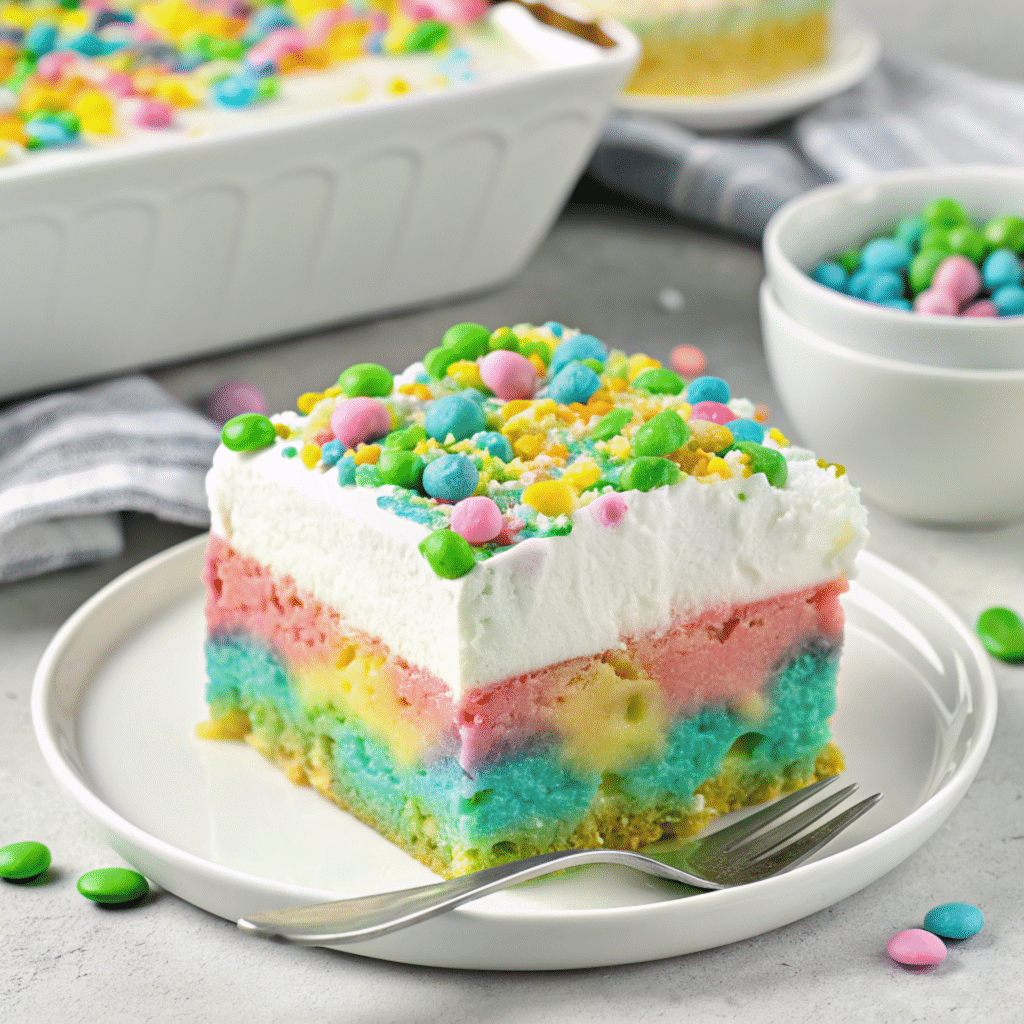
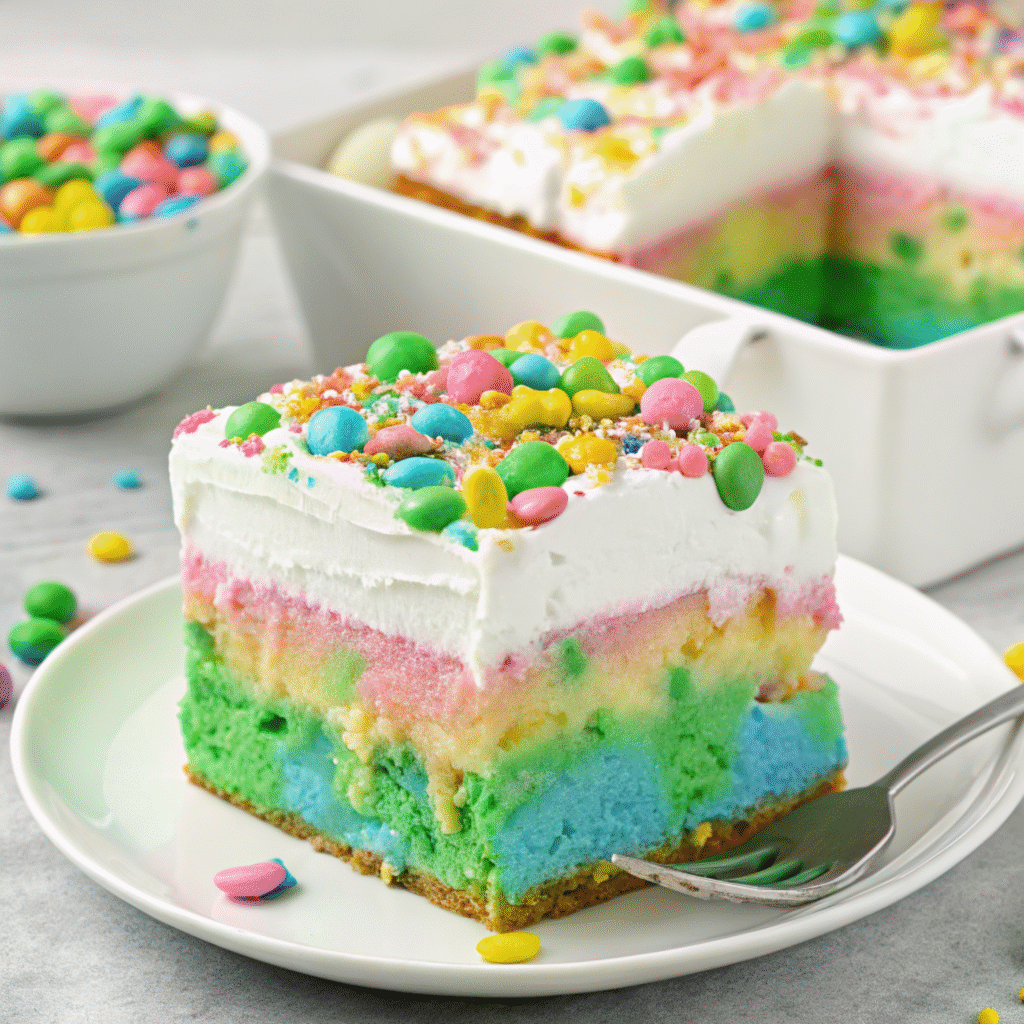
Easter Poke Cake is a showstopping, colorful dessert that’s surprisingly simple to make! With tender white cake soaked with bright, fruity gelatin and topped with creamy frosting and festive pastel decorations, this spring dessert brings smiles to everyone gathered around your table. It’s the perfect centerpiece for Easter Sunday dinner, spring potlucks, or any celebration that calls for something sweet and cheerful.
Why You’ll Love This Recipe
- Absolutely gorgeous: Those vibrant gelatin swirls make every slice a work of art
- Deceptively easy: Starts with a simple cake mix, so you’re not spending all day in the kitchen
- Crowd-pleaser guaranteed: Kids adore the bright colors and candy toppings; adults love the nostalgic, fruity flavor
- Make-ahead friendly: Perfect for busy hosts who want to prep the day before
- Endlessly customizable: Switch up colors, flavors, and toppings to match any spring celebration
Easter Poke Cake Recipe
- Total Time: 2 hours 50 minutes
- Yield: 2 hours 50 minutes
Description
Easter Poke Cake is a stunning spring dessert featuring moist white cake soaked with fruity gelatin and topped with rich cream cheese frosting and festive pastel decorations. This easy, make-ahead cake is perfect for Easter celebrations, spring potlucks, and family gatherings. With just a box cake mix and simple ingredients
Ingredients
For the Cake
- 1 box white cake mix (or yellow cake mix—both work beautifully)
- Ingredients called for on the cake mix box (usually eggs, oil, and water—check your specific mix)
Note: I prefer white cake mix for that clean, bright look, but yellow cake adds a buttery richness that’s just lovely too.
For the Poke Filling
- 1 (3 oz) package flavored gelatin (strawberry or raspberry gives that perfect pastel pink)
- 1 cup boiling water
- Optional: ½–1 cup fruit juice (try white grape or apple juice for extra sweetness and deeper color)
For the Frosting
- 8 oz cream cheese, softened to room temperature
- ½ cup unsalted butter, softened
- 3–4 cups powdered sugar (start with 3, add more to taste)
- 1 teaspoon vanilla extract
- 2–3 tablespoons milk or cream
For the Easter Toppings
- Pastel sprinkles
- Mini chocolate eggs or candy coated chocolates
- Shredded sweetened coconut (this becomes the cutest “grass”)
- Peeps or pastel marshmallows
- Optional: pastel sanding sugar for extra sparkle
Instructions
Preheat your oven according to the cake mix box directions—that’s usually 350°F (175°C). While it’s heating, prepare your cake batter exactly as the package instructs. I know it seems too simple, but trust me, those cake mix engineers know what they’re doing! Grease your 9×13-inch pan really well (I use butter and a light dusting of flour, but nonstick spray works beautifully too), then pour in that batter.
Bake until a toothpick inserted in the center comes out clean—typically 25 to 35 minutes depending on your oven. You’ll know it’s ready when the top springs back lightly when touched and the edges just start pulling away from the pan. Let it cool in the pan for about 10 to 15 minutes.
Here comes the fun part! Using the handle end of a wooden spoon or a thick straw, poke holes all over your warm cake, spacing them about an inch apart. Don’t be shy—really get in there! These holes are what make a poke cake a poke cake.
In a heatproof bowl, dissolve your flavored gelatin in 1 cup of boiling water, stirring continuously until every single crystal disappears. This takes about 2 minutes of good stirring—be patient here. If you want even more flavor and a slightly deeper color, stir in up to ½ cup of fruit juice (I love using white grape juice with strawberry gelatin).
Now, slowly and evenly pour this beautiful liquid all over your cake, making sure it flows into those holes you worked so hard to create. Take your time—if you pour too fast, it might pool on top instead of soaking in.
Pop that cake into the refrigerator and let it chill for at least 2 hours, but ideally 3 to 4 hours or even overnight. This gives the gelatin time to fully set and those flavors time to really marry together. I know it’s hard to wait, but this patience pays off in those stunning, jewel-like pockets of color you’ll see when you slice into it.
In a large bowl, beat your softened cream cheese and butter together until they’re smooth, fluffy, and completely combined—about 2 to 3 minutes. This step is crucial for avoiding lumps! Add your vanilla extract and give it another quick mix.
Now gradually add your powdered sugar, about one cup at a time, beating well after each addition. Start with 3 cups and taste it—if you like things a bit sweeter, add that fourth cup. Finally, add your milk one tablespoon at a time, mixing between additions, until you reach that perfect spreadable consistency.
Once your cake is completely chilled and that gelatin is set, it’s frosting time! Using an offset spatula or butter knife, spread that gorgeous cream cheese frosting evenly over the top of the cake.
This is where you get to play! Scatter those pastel sprinkles all over the frosting—I like to be generous here because they catch the light so prettily. Arrange your mini chocolate eggs, candy coated chocolates, or Peeps in a fun pattern or just scatter them randomly (there’s no wrong way!).
If you’re using shredded coconut for that “Easter grass” look, sprinkle it generously around the candies. And if you want extra sparkle, a light dusting of pastel sanding sugar makes everything look absolutely magical.
Notes
- Easy hole-poking: Use a chopstick or the handle of a wooden spoon—the thicker the tool, the more gelatin can seep through.
- Color coordination: Match your gelatin flavor to your sprinkles and candies for a beautifully coordinated look (raspberry gelatin + pink and purple decorations = perfection).
- Prevent soggy cake: Don’t add more than 1 cup of total liquid for the gelatin—any more and your cake can become waterlogged.
- Frosting too thick? Add milk a teaspoon at a time. Too thin? Add more powdered sugar, ¼ cup at a time.
- No cream cheese? You can use a store-bought vanilla frosting in a pinch, though the homemade cream cheese version really takes this to the next level.
- Prep Time: 20 minutes
- Cook Time: 30 minutes + Chill Time: 2-3 hours
- Category: Dessert
- Method: Baking
- Cuisine: American
Ingredients You’ll Need
For the Cake
- 1 box white cake mix (or yellow cake mix—both work beautifully)
- Ingredients called for on the cake mix box (usually eggs, oil, and water—check your specific mix)
Note: I prefer white cake mix for that clean, bright look, but yellow cake adds a buttery richness that’s just lovely too.
For the Poke Filling
- 1 (3 oz) package flavored gelatin (strawberry or raspberry gives that perfect pastel pink)
- 1 cup boiling water
- Optional: ½–1 cup fruit juice (try white grape or apple juice for extra sweetness and deeper color)
For the Frosting
- 8 oz cream cheese, softened to room temperature
- ½ cup unsalted butter, softened
- 3–4 cups powdered sugar (start with 3, add more to taste)
- 1 teaspoon vanilla extract
- 2–3 tablespoons milk or cream
For the Easter Toppings
- Pastel sprinkles
- Mini chocolate eggs or candy coated chocolates
- Shredded sweetened coconut (this becomes the cutest “grass”)
- Peeps or pastel marshmallows
- Optional: pastel sanding sugar for extra sparkle
Why These Ingredients Work
The cake mix base keeps things stress-free while still delivering that tender, fluffy crumb everyone loves. White cake especially acts like a beautiful blank canvas for those vibrant gelatin colors to really pop. The gelatin itself is the star of the show—when you poke those holes and pour it over the warm cake, it seeps down into every little pocket, creating these gorgeous bursts of fruity flavor and color in every single bite. It’s like a surprise with every forkful!
Now, that cream cheese frosting? Pure heaven. The tanginess of the cream cheese balances the sweetness of the cake and gelatin perfectly, and when you whip it with butter and powdered sugar, it becomes this cloud-like topping that’s both rich and light at the same time. The milk helps you control the consistency—a little goes a long way, so add it gradually until you get that dreamy, spreadable texture.
And those toppings? They’re not just for looks (though they sure are pretty). The shredded coconut adds a subtle tropical sweetness and that fun texture, while the chocolate eggs and sprinkles bring pure joy and whimsy. This is a cake that makes people smile before they even taste it!
Essential Tools and Equipment
- 9×13-inch baking pan (metal or glass both work)
- Large mixing bowl (for the cake batter)
- Electric mixer (hand mixer or stand mixer for the frosting)
- Wooden spoon handle or thick straw (for poking those all-important holes)
- Whisk (for dissolving the gelatin)
- Offset spatula or butter knife (for spreading frosting smoothly)
- Measuring cups and spoons
- Cooling rack (optional, but helpful)
Step-by-Step Instructions
Step 1: Bake Your Cake Base
Preheat your oven according to the cake mix box directions—that’s usually 350°F (175°C). While it’s heating, prepare your cake batter exactly as the package instructs. I know it seems too simple, but trust me, those cake mix engineers know what they’re doing! Grease your 9×13-inch pan really well (I use butter and a light dusting of flour, but nonstick spray works beautifully too), then pour in that batter.
Bake until a toothpick inserted in the center comes out clean—typically 25 to 35 minutes depending on your oven. You’ll know it’s ready when the top springs back lightly when touched and the edges just start pulling away from the pan. Let it cool in the pan for about 10 to 15 minutes.
Step 2: Create the Magic Poke Holes
Here comes the fun part! Using the handle end of a wooden spoon or a thick straw, poke holes all over your warm cake, spacing them about an inch apart. Don’t be shy—really get in there! These holes are what make a poke cake a poke cake.
Step 3: Make and Pour the Poke Filling
In a heatproof bowl, dissolve your flavored gelatin in 1 cup of boiling water, stirring continuously until every single crystal disappears. This takes about 2 minutes of good stirring—be patient here. If you want even more flavor and a slightly deeper color, stir in up to ½ cup of fruit juice (I love using white grape juice with strawberry gelatin).
Now, slowly and evenly pour this beautiful liquid all over your cake, making sure it flows into those holes you worked so hard to create. Take your time—if you pour too fast, it might pool on top instead of soaking in.
Step 4: Let It Set
Pop that cake into the refrigerator and let it chill for at least 2 hours, but ideally 3 to 4 hours or even overnight. This gives the gelatin time to fully set and those flavors time to really marry together. I know it’s hard to wait, but this patience pays off in those stunning, jewel-like pockets of color you’ll see when you slice into it.
Step 5: Whip Up That Dreamy Frosting
In a large bowl, beat your softened cream cheese and butter together until they’re smooth, fluffy, and completely combined—about 2 to 3 minutes. This step is crucial for avoiding lumps! Add your vanilla extract and give it another quick mix.
Now gradually add your powdered sugar, about one cup at a time, beating well after each addition. Start with 3 cups and taste it—if you like things a bit sweeter, add that fourth cup. Finally, add your milk one tablespoon at a time, mixing between additions, until you reach that perfect spreadable consistency.
Step 6: Frost Your Beautiful Cake
Once your cake is completely chilled and that gelatin is set, it’s frosting time! Using an offset spatula or butter knife, spread that gorgeous cream cheese frosting evenly over the top of the cake.
Step 7: Decorate for Easter
This is where you get to play! Scatter those pastel sprinkles all over the frosting—I like to be generous here because they catch the light so prettily. Arrange your mini chocolate eggs, candy coated chocolates, or Peeps in a fun pattern or just scatter them randomly (there’s no wrong way!).
If you’re using shredded coconut for that “Easter grass” look, sprinkle it generously around the candies. And if you want extra sparkle, a light dusting of pastel sanding sugar makes everything look absolutely magical.
You Must Know
The single most important thing about making a perfect poke cake is timing—you absolutely must poke those holes while the cake is still warm. If you wait until it’s completely cool, the cake’s structure firms up and the gelatin just sits on top instead of soaking through. Trust me, I learned this the hard way one Easter when I got distracted by the kids’ egg hunt!
Also, make sure your cream cheese and butter are truly softened to room temperature before making the frosting. Cold cream cheese creates lumps that no amount of mixing will fully smooth out. I usually set mine out on the counter about an hour before I need it.
Personal Secret: For the most evenly colored and flavorful cake, I mix my gelatin with ¾ cup boiling water and ¼ cup cold fruit juice instead of a full cup of water. The slight temperature drop means it doesn’t absorb quite as quickly, giving you more control as you pour, and that extra fruit juice really amps up the flavor.
Pro Tips & Cooking Hacks
- Prevent gelatin overflow: Pour the gelatin mixture slowly and pause occasionally to let it absorb. If you see pooling on top, wait 30 seconds before continuing.
- Stabilize your frosting: If you’re making this on a warm day, add 1 tablespoon of cornstarch to your frosting to help it hold up better.
- Easy hole-poking: Use a chopstick or the handle of a wooden spoon—the thicker the tool, the more gelatin can seep through.
- Color coordination: Match your gelatin flavor to your sprinkles and candies for a beautifully coordinated look (raspberry gelatin + pink and purple decorations = perfection).
- Prevent soggy cake: Don’t add more than 1 cup of total liquid for the gelatin—any more and your cake can become waterlogged.
- Frosting too thick? Add milk a teaspoon at a time. Too thin? Add more powdered sugar, ¼ cup at a time.
- No cream cheese? You can use a store-bought vanilla frosting in a pinch, though the homemade cream cheese version really takes this to the next level.
Flavor Variations & Suggestions
The beauty of this Easter Poke Cake is how easily you can make it your own! If strawberry or raspberry isn’t your thing, try lime gelatin for a bright green spring look, or mix strawberry and blue raspberry gelatin (poured in sections) for a gorgeous tie-dye effect. Orange gelatin with a hint of orange zest in the frosting creates a creamsicle vibe that’s absolutely divine.
Want to make it extra fruity? Fold some diced fresh strawberries or mandarin orange segments into the frosting before spreading. For chocolate lovers, use chocolate cake mix instead of white and try cherry or strawberry gelatin—it tastes like a chocolate-covered strawberry in cake form! You could even swirl some strawberry preserves into the frosting for pockets of jammy sweetness.
If you’re feeling adventurous, try using flavored sparkling water instead of regular water in your gelatin for a subtle fizzy effect, or add a teaspoon of lemon or almond extract to your frosting to complement the fruit flavors. And those toppings? Swap the traditional Easter candies for fresh berries, edible flowers, or even crushed freeze-dried strawberries for a more sophisticated spring look.
Make-Ahead Options
This cake is actually better when made ahead, which makes it perfect for busy Easter hosts! You can bake the cake, add the gelatin filling, and refrigerate it up to 2 days before serving. Just wait to add the frosting and toppings until the day you plan to serve it—this keeps everything looking fresh and prevents the decorations from getting soggy.
If you want to go even further ahead, the unfrosted cake (with gelatin) freezes beautifully for up to 2 months. Wrap it tightly in plastic wrap and then aluminum foil. Thaw it overnight in the refrigerator, then frost and decorate as directed. The frosting can also be made up to 3 days ahead and kept in an airtight container in the fridge—just let it come to room temperature and give it a quick stir before spreading.
For the smoothest entertaining experience, I like to bake and poke the cake two days before, refrigerate it overnight, frost it the morning of the event, and add the final candy decorations just an hour or two before guests arrive. This way everything looks perfect without any last-minute stress!
What to Serve With Easter Poke Cake
This cake is rich and sweet, so I love pairing it with some lighter, refreshing sides. A big bowl of fresh fruit salad with strawberries, blueberries, and pineapple provides a nice balance. For beverages, serve it alongside freshly brewed coffee, mint iced tea, or a light sparkling lemonade.
If you’re putting together a full Easter dessert spread, this cake plays beautifully with other spring treats like lemon bars, carrot cake cookies, or coconut macaroons. The bright fruitiness of the poke cake contrasts nicely with richer, more indulgent desserts. And of course, a scoop of vanilla ice cream or a dollop of fresh whipped cream never hurt anyone—though honestly, this cake is plenty decadent on its own!
For a complete Easter dinner menu, serve this after a traditional ham with roasted vegetables, scalloped potatoes, and a crisp spring salad. The sweet, fruity cake is the perfect finale to a savory meal.
Allergy Information
This Easter Poke Cake contains several common allergens, so it’s important to be aware if you’re serving guests with dietary restrictions. The cake mix typically contains wheat (gluten), eggs, and sometimes dairy depending on the brand. The frosting contains dairy in the form of cream cheese and butter, and the cake preparation usually calls for eggs.
For a gluten-free version, simply swap in your favorite gluten-free cake mix and check that your gelatin is certified gluten-free (most are, but always verify). For dairy-free guests, you can use a dairy-free cake mix and substitute the cream cheese frosting with a dairy-free whipped topping or coconut cream-based frosting. Earth Balance or another vegan butter works well in place of regular butter.
If you need an egg-free version, look for egg-free cake mix options or use an egg replacer according to the cake mix package directions. The gelatin itself is not vegetarian-friendly, so if you have vegetarian or vegan guests, consider using agar-agar as a substitute, though the texture will be slightly different.
Always check your candy and decoration ingredients too—some contain dairy, nuts, or other allergens. When in doubt, keep decorations simple with just sprinkles and fresh fruit!
Storage & Reheating
Store your Easter Poke Cake covered tightly with plastic wrap or aluminum foil in the refrigerator for up to 4 days. The gelatin and cream cheese frosting both need to stay chilled, so this isn’t a cake you can leave out on the counter. I always keep mine in the pan it was baked in and just cover the top well—no need to transfer it unless you want to.
The cake actually tastes even better on day two and three after all those flavors have had time to really meld together. Just know that the decorations might soften slightly after a day or so, especially if you’ve used marshmallow Peeps or certain types of chocolate eggs. If you want your cake to look picture-perfect, add those final candy toppings the day you plan to serve it.
This cake doesn’t need reheating—in fact, it’s meant to be served cold, straight from the fridge. That chilled, creamy frosting against the moist, fruity cake is absolute perfection. If you’ve frozen the unfrosted cake, let it thaw completely in the refrigerator overnight before frosting and serving.
Questions I Get Asked A Lot
Can I use a homemade cake instead of a box mix?
Absolutely! Any white or vanilla cake recipe will work beautifully. Just bake it in a 9×13-inch pan and proceed with the poke and gelatin steps as directed. Homemade cake sometimes has a slightly denser crumb, which actually holds up wonderfully to the gelatin soaking process.
My gelatin is pooling on top instead of soaking in—what should I do?
This usually means either your cake cooled too much before poking, or your holes aren’t deep or plentiful enough. If you catch it early, try poking a few more holes in the areas where it’s pooling. If the cake has already cooled completely, you can still poke more holes and the gelatin will eventually absorb, it just takes longer. For next time, remember to poke while the cake is still warm!
Can I make this with sugar-free gelatin or cake mix?
Yes! Sugar-free gelatin works perfectly and tastes just as good. Sugar-free or reduced-sugar cake mixes also work fine, though they sometimes have a slightly different texture. The frosting is where most of the sweetness comes from anyway, so reducing sugar elsewhere can actually create a nice balance.
How do I prevent the frosting from melting into the cake?
Make sure your cake is completely chilled before frosting—at least 2 hours in the refrigerator after adding the gelatin. Also ensure your frosting is at a good spreading consistency (not too soft). If your kitchen is very warm, chill the frosted cake for another 30 minutes before adding decorations to let that frosting firm up.
Can I use different gelatin flavors or mix them?
Definitely! Orange, lime, blue raspberry, or even lemon gelatin all work beautifully. For a fun rainbow effect, you can even use two different flavors—just poke holes in sections and carefully pour each flavor over different areas of the cake. Just be careful where the colors meet so you don’t create muddy brown spots!
💬 Tried this Easter Poke Cake recipe? I’d absolutely love to hear how it turned out! Leave a comment and rating below, and don’t forget to share a photo—I always get so excited seeing your beautiful creations.