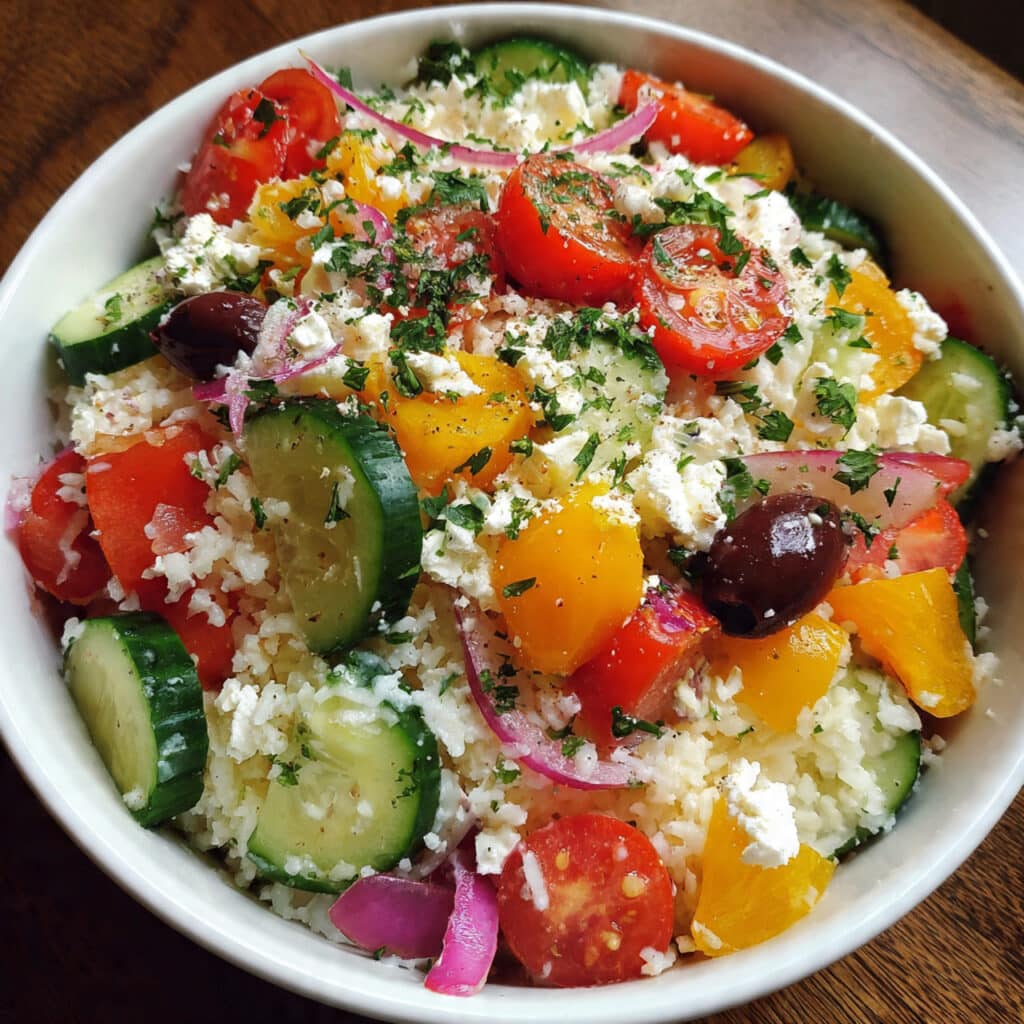
Greek Salad instantly transports you to sun-drenched Mediterranean afternoons with its crisp vegetables, briny olives, creamy feta, and bright, tangy dressing. It’s effortlessly simple, comes together in minutes. A touch of fresh mint and homemade dressing take this timeless classic from good to truly unforgettable.
Why You’ll Love This Recipe
- Ready in 15 minutes – Perfect for those nights when you need something fresh and healthy without the hassle
- Bursting with fresh Mediterranean flavors – Every bite is crisp, tangy, and satisfying with those classic Greek ingredients we all love
- A crowd-pleaser for potlucks and gatherings – This salad always disappears first at parties, and everyone asks for the recipe
- Naturally vegetarian and gluten-free – It fits so many dietary needs without any special modifications
- Make-ahead friendly – The vegetables stay crisp and the flavors actually get better as they mingle
Greek Salad Recipe
- Total Time: 15 minutes
- Yield: 6 cups
Description
A classic Greek Salad recipe featuring fresh cucumber, cherry tomatoes, bell pepper, feta cheese, Kalamata olives, and red onion, all tossed in a tangy homemade dressing with olive oil, red wine vinegar, garlic, and oregano. Finished with fresh mint for an authentic Mediterranean flavor. This easy, healthy salad is perfect as a side dish or light meal.
Ingredients
For the Salad
- 1 English cucumber, seeded and sliced about ¼-inch thick (English cucumbers are less watery and have thinner skins)
- 1 green bell pepper, chopped into 1-inch pieces (red or yellow bell peppers work beautifully too)
- 2 cups cherry tomatoes, halved (or use grape tomatoes—they’re so sweet and juicy)
- 5 ounces feta cheese, cut into ½-inch cubes (block feta is best; pre-crumbled just doesn’t have the same creamy texture)
- ⅓ cup thinly sliced red onion (soak in cold water for 10 minutes if you want a milder bite)
- ⅓ cup pitted Kalamata olives (these briny beauties are essential for authentic flavor)
- ⅓ cup fresh mint leaves, or more to taste (don’t skip this—it’s the secret ingredient!)
For the Dressing
- ¼ cup extra-virgin olive oil (use the good stuff here; it really matters)
- 3 tablespoons red wine vinegar (this gives that classic tangy brightness)
- 1 garlic clove, minced (fresh garlic is key)
- ½ teaspoon dried oregano, plus extra for sprinkling (Greek oregano if you can find it)
- ¼ teaspoon Dijon mustard (helps emulsify the dressing)
- ¼ teaspoon salt
- Freshly ground black pepper, to taste
Instructions
In a small bowl, whisk together the olive oil, red wine vinegar, minced garlic, dried oregano, Dijon mustard, salt, and freshly ground black pepper until combined. The Dijon helps everything come together into a smooth, glossy dressing. Don’t worry if it looks separated at first—just keep whisking! Set this aside while you prep your vegetables so the garlic has time to infuse all those beautiful flavors.
On a large platter or in a bowl, combine the cucumber slices, green bell pepper pieces, halved cherry tomatoes, feta cheese cubes, red onion slices, and Kalamata olives. I love using a big, shallow platter for this because it looks so gorgeous and inviting, but a large bowl works perfectly too. Arrange everything in a way that lets you see all those beautiful colors.
Drizzle the dressing over the salad, making sure to get it all over the vegetables. Now here’s the important part—gently toss everything together so the vegetables, olives, and cheese are all coated with that tangy dressing. Be gentle with the feta so it doesn’t crumble too much; you want those nice cubes to stay intact.
Sprinkle with a pinch of extra dried oregano and add the fresh mint leaves on top. Give it one more gentle toss if you’d like, or just leave the mint beautifully arranged on top. Taste and adjust the salt and pepper as needed—every batch of feta has different salt levels, so this is your moment to make it perfect.
Notes
- Seed your cucumber by slicing it lengthwise and scooping out the seeds with a spoon—this keeps your salad from getting watery
- Soak your red onion slices in ice water for 10 minutes before adding them to the salad if you want a milder, sweeter flavor
- Let the dressing sit for 10–15 minutes before using it so the garlic mellows and all the flavors marry together
- Chill your serving bowl in the fridge beforehand on hot summer days—it keeps everything crisp and refreshing longer
- Add the dressing just before serving if you’re making this ahead; dressed salad can get soggy if it sits too long
- Prep Time: 15 minutes
- Cook Time: 0 minutes
- Category: Salad
- Method: No-cook
- Cuisine: Greek
Ingredients You’ll Need
For the Salad
- 1 English cucumber, seeded and sliced about ¼-inch thick (English cucumbers are less watery and have thinner skins)
- 1 green bell pepper, chopped into 1-inch pieces (red or yellow bell peppers work beautifully too)
- 2 cups cherry tomatoes, halved (or use grape tomatoes—they’re so sweet and juicy)
- 5 ounces feta cheese, cut into ½-inch cubes (block feta is best; pre-crumbled just doesn’t have the same creamy texture)
- ⅓ cup thinly sliced red onion (soak in cold water for 10 minutes if you want a milder bite)
- ⅓ cup pitted Kalamata olives (these briny beauties are essential for authentic flavor)
- ⅓ cup fresh mint leaves, or more to taste (don’t skip this—it’s the secret ingredient!)
For the Dressing
- ¼ cup extra-virgin olive oil (use the good stuff here; it really matters)
- 3 tablespoons red wine vinegar (this gives that classic tangy brightness)
- 1 garlic clove, minced (fresh garlic is key)
- ½ teaspoon dried oregano, plus extra for sprinkling (Greek oregano if you can find it)
- ¼ teaspoon Dijon mustard (helps emulsify the dressing)
- ¼ teaspoon salt
- Freshly ground black pepper, to taste
Why These Ingredients Work
The beauty of a Greek Salad lies in the careful balance of textures and flavors. The crisp English cucumber and crunchy bell pepper give you that satisfying bite, while the juicy cherry tomatoes burst with sweetness in every forkful. The sharp red onion adds just the right amount of zing without overpowering everything else.
Then you have the stars of the show—the creamy, tangy feta cheese and those briny Kalamata olives that bring that unmistakable Mediterranean flavor. Block feta is so much better than pre-crumbled because it stays firm and adds these wonderful pockets of creaminess throughout the salad.
The homemade dressing is where everything comes together. Extra-virgin olive oil and red wine vinegar create that classic Greek tang, while the garlic, oregano, and Dijon mustard add depth and help everything blend beautifully. And that fresh mint? It’s the ingredient that makes people say, “What IS that amazing flavor?”
Essential Tools and Equipment
- Large mixing bowl or serving platter
- Small bowl for whisking the dressing
- Whisk or fork
- Sharp knife and cutting board
- Measuring cups and spoons
Step-by-Step Instructions
Step 1: Make the Dressing
In a small bowl, whisk together the olive oil, red wine vinegar, minced garlic, dried oregano, Dijon mustard, salt, and freshly ground black pepper until combined. The Dijon helps everything come together into a smooth, glossy dressing. Don’t worry if it looks separated at first—just keep whisking! Set this aside while you prep your vegetables so the garlic has time to infuse all those beautiful flavors.
Step 2: Assemble the Salad
On a large platter or in a bowl, combine the cucumber slices, green bell pepper pieces, halved cherry tomatoes, feta cheese cubes, red onion slices, and Kalamata olives. I love using a big, shallow platter for this because it looks so gorgeous and inviting, but a large bowl works perfectly too. Arrange everything in a way that lets you see all those beautiful colors.
Step 3: Dress and Toss
Drizzle the dressing over the salad, making sure to get it all over the vegetables. Now here’s the important part—gently toss everything together so the vegetables, olives, and cheese are all coated with that tangy dressing. Be gentle with the feta so it doesn’t crumble too much; you want those nice cubes to stay intact.
Step 4: Finish and Serve
Sprinkle with a pinch of extra dried oregano and add the fresh mint leaves on top. Give it one more gentle toss if you’d like, or just leave the mint beautifully arranged on top. Taste and adjust the salt and pepper as needed—every batch of feta has different salt levels, so this is your moment to make it perfect.
You Must Know
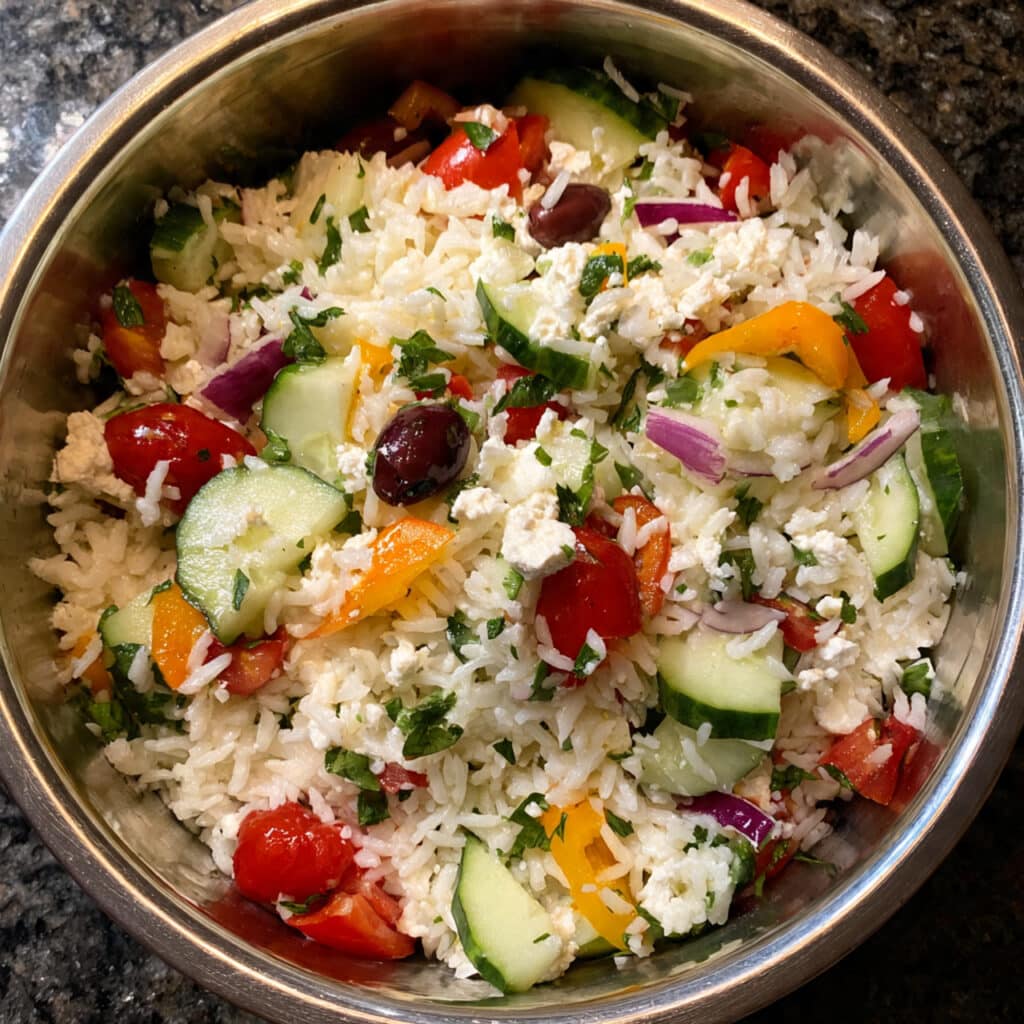
The biggest secret to an amazing Greek Salad is using the freshest vegetables you can find and not overdressing it. You want the dressing to coat everything lightly, not drown it. If you’re worried about having too much dressing, start with three-quarters of it, toss, and add more if needed. You can always add more, but you can’t take it away.
Here’s my personal tip that makes all the difference: cut your vegetables into similar-sized pieces so every forkful has a perfect balance of flavors and textures. And please, please use block feta cheese, not the pre-crumbled kind. The block feta stays creamy and adds these wonderful pockets of tanginess, while pre-crumbled feta can be dry and chalky.
Don’t be tempted to skip the fresh mint. I know it might seem unusual if you’ve never had it in salad before, but trust me on this one—it’s the ingredient that elevates this from a good salad to an unforgettable one. It adds a brightness that you just can’t get from any other herb.
Pro Tips & Cooking Hacks
- Seed your cucumber by slicing it lengthwise and scooping out the seeds with a spoon—this keeps your salad from getting watery
- Soak your red onion slices in ice water for 10 minutes before adding them to the salad if you want a milder, sweeter flavor
- Let the dressing sit for 10–15 minutes before using it so the garlic mellows and all the flavors marry together
- Chill your serving bowl in the fridge beforehand on hot summer days—it keeps everything crisp and refreshing longer
- Add the dressing just before serving if you’re making this ahead; dressed salad can get soggy if it sits too long
- Save leftover dressing in a jar in the fridge for up to a week—it’s fantastic on grilled chicken or roasted vegetables
- Toast your oregano in a dry pan for 30 seconds to wake up the flavor before adding it to the dressing
Flavor Variations & Suggestions
While this classic version is absolutely perfect as is, there are some lovely ways to make it your own. Try adding chickpeas or white beans for extra protein and heartiness—it turns the salad into a complete meal. Some people love adding thinly sliced fennel for an extra layer of crunch and a subtle licorice note that’s surprisingly wonderful with the other Mediterranean flavors.
If you can’t find fresh mint or you’re not a mint person (though I really encourage you to try it!), fresh dill or parsley work beautifully too. Dill gives it that authentic Greek taverna feeling, while parsley keeps things fresh and bright. You could also add some marinated artichoke hearts or roasted red peppers from a jar for extra Mediterranean flair.
For a heartier version, serve this over a bed of crisp romaine lettuce or add some cooked quinoa or orzo pasta to make it more substantial. A handful of toasted pine nuts or slivered almonds on top adds a wonderful crunch that everyone loves.
Make-Ahead Options
This Greek Salad is actually one of those rare dishes that benefits from a little advance preparation. You can chop all your vegetables up to a day ahead and store them separately in airtight containers in the fridge. The dressing can be made up to three days in advance and kept in a jar—just give it a good shake before using.
If you want to assemble the whole salad ahead of time, combine everything except the dressing and mint, cover tightly, and refrigerate for up to four hours. Add the dressing and fresh mint right before serving so everything stays crisp and vibrant. The salad doesn’t freeze well because of the fresh vegetables and feta, but honestly, it’s so quick to make that you don’t need to freeze it anyway.
Leftover dressed salad will keep in the fridge for up to two days, though the vegetables will soften a bit and release some water. It’s still delicious, just not quite as crisp. I actually love leftover Greek Salad stuffed into a pita pocket for lunch the next day!
What to Serve With
Greek Salad is incredibly versatile and pairs beautifully with so many dishes. It’s perfect alongside grilled chicken, lamb kebabs, or baked salmon for a complete Mediterranean feast. I love serving it with warm pita bread and hummus for a light vegetarian dinner that feels special but comes together in no time.
It’s also wonderful at summer barbecues alongside burgers and hot dogs—it brings such a fresh, bright contrast to all that rich, grilled food. For a truly authentic Greek experience, serve it with some lemon roasted potatoes, tzatziki sauce, and grilled halloumi cheese. Don’t forget a crisp white wine or some sparkling water with lemon!
Allergy Information
This Greek Salad contains dairy from the feta cheese. If you need a dairy-free version, you can either omit the feta entirely or use a plant-based feta alternative—there are some good ones out there now. The salad is naturally gluten-free, nut-free, and egg-free, making it safe for many common allergies.
The olives and feta both contain quite a bit of sodium, so if you’re watching your salt intake, you might want to use less feta and olives or choose a reduced-sodium feta. You can also rinse the olives before adding them to reduce the salt content.
Storage & Reheating
Store any undressed salad components in airtight containers in the refrigerator for up to three days. Keep the dressing separate in a jar or small container. Once dressed, the salad will keep for up to two days in the fridge, but the vegetables will release moisture and soften, so it’s best enjoyed fresh.
Since this is a cold salad, there’s no reheating needed—just give it a gentle toss before serving if it’s been sitting for a bit. If your leftover salad seems watery, simply drain off the excess liquid and give it a taste. You might want to add a tiny drizzle of olive oil and a pinch of oregano to freshen it up.
Pro tip: Don’t store your leftover salad in metal containers, as the vinegar in the dressing can react with the metal and give everything a slightly metallic taste. Stick with glass or plastic containers for the best results.
Questions I Get Asked A Lot
Can I use regular cucumbers instead of English cucumbers?
Absolutely! Regular cucumbers work just fine. Just peel them if the skin is thick or waxy, and make sure to scoop out all those seeds with a spoon. Regular cucumbers have more seeds and water content, so seeding them is extra important to keep your salad from getting soggy.
Do I have to use Kalamata olives?
Kalamata olives really do have a unique flavor that’s perfect for Greek Salad—they’re fruity, rich, and not too salty. But if you can’t find them, any good-quality black olives will work. Just avoid the canned California black olives if you can; they don’t have nearly as much flavor.
Can I make this salad without onions?
Of course! If you’re not an onion person, you can leave them out entirely or substitute with thinly sliced scallions for a milder onion flavor. Some people use chopped fresh chives instead, which adds a gentle onion-y note without being overwhelming.
What’s the best feta cheese to use?
Look for block feta cheese packed in brine—it’s so much creamier and more flavorful than pre-crumbled feta. Greek or Bulgarian feta tends to be the most authentic and delicious. If you can find sheep’s milk feta, grab it! It has the most amazing tangy, creamy flavor.
How do I keep the salad from getting watery?
The key is seeding your cucumber and making sure your tomatoes are very fresh and firm. Don’t dress the salad until right before serving, and if you’re making it ahead, keep the dressing separate. Pat your vegetables dry with a paper towel after washing them, and don’t add salt directly to the tomatoes before serving, as that draws out moisture.
I’d love to hear how your Greek Salad turns out! Do you add any special ingredients or have your own twist on it? Drop a comment below and let me know.