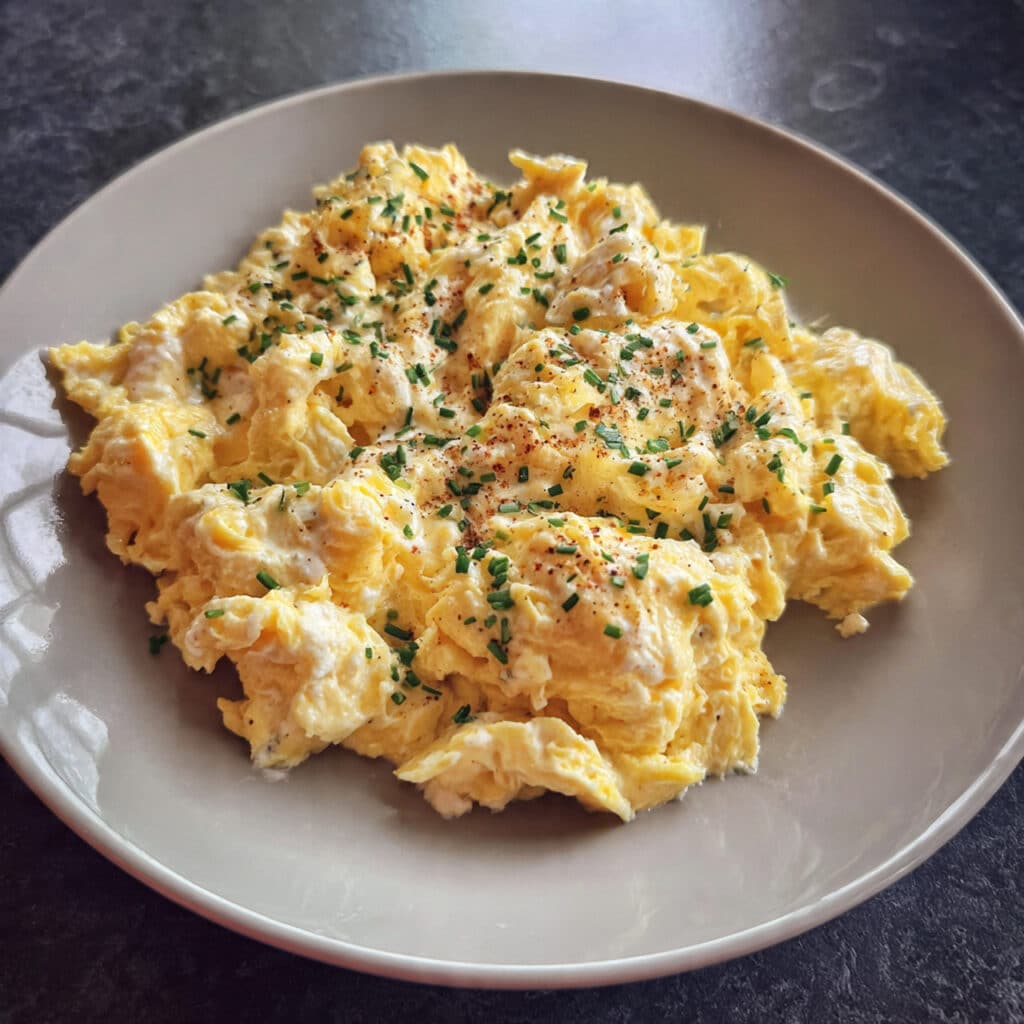
Scrambled eggs with cottage cheese are creamy, fluffy, and the kind of simple breakfast that instantly feels special. The cottage cheese melts right into the eggs, creating soft, cloud-like curds that are rich, comforting, and incredibly satisfying. Best of all, they come together in under 5 minutes, making them perfect for quiet mornings or busy days alike.

Why You’ll Love This Recipe
- Creamy and fluffy – The cottage cheese creates a texture you didn’t know scrambled eggs could have
- Packed with protein – Over 30 grams per serving keeps you satisfied all morning long
- Takes just 5 minutes – Perfect for busy weekday mornings when you still want something special
- Only 5 simple ingredients – You probably have everything in your fridge right now
- Family-approved – Even picky eaters love how soft and mild these eggs taste

Scrambled Eggs with Cottage Cheese
- Total Time: 5 minutes
- Yield: 2 servings
Description
Creamy scrambled eggs made with cottage cheese for added protein and the most incredible fluffy texture. This easy 5-minute breakfast recipe uses just 5 simple ingredients and creates restaurant-quality eggs at home. Perfect for busy mornings when you want something special and satisfying.
Ingredients
For the Eggs (2 servings):
- 4 large eggs (the fresher, the better)
- ½ cup cottage cheese (full-fat makes them extra luxurious, but low-fat works too)
- Salt, to taste (I use about ¼ teaspoon)
- Black pepper, to taste (freshly cracked is lovely)
- Olive oil or cooking spray (just enough to coat the pan)
Instructions
Crack your eggs into a medium bowl. Add the cottage cheese, a good pinch of salt, and a few grinds of black pepper. Now whisk it all together until everything’s combined—don’t worry if it looks a little chunky from the cottage cheese curds. That’s exactly what you want! Those little pockets will create the most amazing creamy texture as they cook.
Set your nonstick skillet over medium-low heat and let it warm up for about a minute. This is important—we’re not rushing these eggs. Give your pan a light coating of olive oil or a quick spritz of cooking spray. You want just enough to prevent sticking without making the eggs greasy.
Pour your egg mixture into the warm pan and here’s the trick: resist the urge to immediately start stirring. Let those eggs sit undisturbed for about 10-15 seconds. This gives them a chance to start setting on the bottom, which creates those beautiful soft curds.
Now comes the magic. Using your spatula, gently push the eggs from the edges toward the center, then fold them over on themselves. It’s more of a folding motion than stirring—like you’re tucking them in. Keep doing this slowly and patiently for about 1½ to 2 minutes.
Here’s the secret to perfect eggs: take them off the heat when they still look slightly underdone. They should be softly set and a little glossy, with just a bit of moisture still visible. They’ll continue cooking from their own heat for another 30 seconds or so. Trust me on this one—slightly underdone in the pan means perfectly creamy on the plate.
Slide those gorgeous eggs onto your plate right away.
Notes
- Don’t over-whisk – A few lumps of cottage cheese are good; they create those creamy pockets
- Keep the heat low – If your eggs are sizzling, your pan is too hot
- Use a rubber spatula – Metal can be too harsh and break up the curds too much
- Season at the start – Salt added before cooking actually makes eggs more tender
- Want them extra smooth? – Blend the egg mixture in a blender for 10 seconds before cooking
- Common mistake to avoid – Don’t crowd the pan; if doubling the recipe, use a larger skillet
- Prep Time: 2 minutes
- Cook Time: 3 minutes
- Category: Breakfast
- Method: Stovetop
- Cuisine: American
Ingredients You’ll Need
For the Eggs (2 servings):
- 4 large eggs (the fresher, the better)
- ½ cup cottage cheese (full-fat makes them extra luxurious, but low-fat works too)
- Salt, to taste (I use about ¼ teaspoon)
- Black pepper, to taste (freshly cracked is lovely)
- Olive oil or cooking spray (just enough to coat the pan)
Note: Don’t skimp on the cottage cheese—it’s what makes these eggs so incredibly creamy and adds that extra protein boost.
Why These Ingredients Work
The cottage cheese is truly the secret ingredient here. As it heats, those little curds melt right into the eggs, creating pockets of creamy goodness throughout. It’s like built-in moisture insurance—your eggs will never be dry again.
Cooking with just a touch of olive oil over gentle heat lets the eggs cook slowly and evenly. That’s what gives you those soft, tender curds instead of the rubbery texture that happens when eggs cook too fast. Think of it like a gentle simmer instead of a rolling boil.
The simple seasoning lets the natural richness of the eggs and tang of the cottage cheese shine through. Sometimes the simplest ingredients create the most comforting flavors.
Essential Tools and Equipment
- Medium mixing bowl
- Whisk or fork
- Nonstick skillet (8 or 10-inch works perfectly)
- Silicone or rubber spatula (for gentle folding)
- Measuring cup
Step-by-Step Instructions
Step 1: Mix the Eggs
Crack your eggs into a medium bowl. Add the cottage cheese, a good pinch of salt, and a few grinds of black pepper. Now whisk it all together until everything’s combined—don’t worry if it looks a little chunky from the cottage cheese curds. That’s exactly what you want! Those little pockets will create the most amazing creamy texture as they cook.
Step 2: Heat Your Pan
Set your nonstick skillet over medium-low heat and let it warm up for about a minute. This is important—we’re not rushing these eggs. Give your pan a light coating of olive oil or a quick spritz of cooking spray. You want just enough to prevent sticking without making the eggs greasy.
Step 3: Pour and Wait
Pour your egg mixture into the warm pan and here’s the trick: resist the urge to immediately start stirring. Let those eggs sit undisturbed for about 10-15 seconds. This gives them a chance to start setting on the bottom, which creates those beautiful soft curds.
Step 4: The Gentle Fold
Now comes the magic. Using your spatula, gently push the eggs from the edges toward the center, then fold them over on themselves. It’s more of a folding motion than stirring—like you’re tucking them in. Keep doing this slowly and patiently for about 1½ to 2 minutes.
Step 5: Know When to Stop
Here’s the secret to perfect eggs: take them off the heat when they still look slightly underdone. They should be softly set and a little glossy, with just a bit of moisture still visible. They’ll continue cooking from their own heat for another 30 seconds or so. Trust me on this one—slightly underdone in the pan means perfectly creamy on the plate.
Step 6: Serve Immediately
Slide those gorgeous eggs onto your plate right away.
You Must Know
The single most important thing about this recipe is the heat level. Medium-low might feel painfully slow when you’re hungry, but it’s the difference between eggs that are soft and creamy versus dry and rubbery. I’ve rushed it before, and I always regret it.
Remove the eggs from heat when they still look a touch wet. This feels wrong at first—I get it. But eggs keep cooking even after you take them off the burner, and if you wait until they look “done” in the pan, they’ll be overcooked on your plate.
Here’s my personal secret: I add an extra tablespoon of cottage cheese right at the very end, stirring it in during the last few seconds. It creates these cool pockets of creamy goodness that don’t fully melt, and it makes every bite a little surprise.
Pro Tips & Cooking Hacks
- Use room temperature eggs – They cook more evenly and blend better with the cottage cheese
- Don’t over-whisk – A few lumps of cottage cheese are good; they create those creamy pockets
- Keep the heat low – If your eggs are sizzling, your pan is too hot
- Use a rubber spatula – Metal can be too harsh and break up the curds too much
- Season at the start – Salt added before cooking actually makes eggs more tender
- Want them extra smooth? – Blend the egg mixture in a blender for 10 seconds before cooking
- Common mistake to avoid – Don’t crowd the pan; if doubling the recipe, use a larger skillet
Flavor Variations & Suggestions
Once you’ve mastered the basic recipe, the world opens up! Stir in a handful of fresh herbs right at the end—chives, basil, or dill are my favorites. The herbs stay bright and fresh when you add them after cooking.
For a heartier version, fold in some sautéed mushrooms or a handful of baby spinach during the last 30 seconds of cooking. The spinach will wilt perfectly, and the mushrooms add this lovely earthy flavor that pairs beautifully with the tangy cottage cheese.
Feeling fancy? A sprinkle of everything bagel seasoning on top is absolutely divine. Or go the classic route with a few crumbles of feta cheese and sun-dried tomatoes mixed in. Cherry tomatoes and fresh basil make it feel like summer morning, no matter the season.
Make-Ahead Options
Honestly, these eggs are so quick that I usually just make them fresh. But life gets busy, and I understand needing options.
You can whisk together the egg and cottage cheese mixture the night before and keep it in the fridge in a covered bowl. Just give it a quick whisk again before cooking. The eggs might be slightly less fluffy than if mixed fresh, but they’ll still be delicious.
Already cooked eggs can be refrigerated for up to two days in an airtight container. Reheat them gently in a pan over low heat with a tiny splash of milk, stirring constantly. The microwave works in a pinch—use 50% power in 15-second intervals, stirring between each one.
What to Serve With
These creamy eggs pair beautifully with buttered whole grain toast or a toasted English muffin for soaking up every last bit. A side of sliced avocado with a squeeze of lemon and a sprinkle of sea salt makes it feel like brunch at your favorite café.
I love adding some fresh fruit on the side—berries or sliced melon keep things light and refreshing. On weekend mornings, I’ll sometimes add turkey bacon or chicken sausage for the family. A simple arugula salad with lemon vinaigrette alongside these eggs makes an unexpectedly perfect lunch too.
Allergy Information
This recipe contains eggs and dairy (from the cottage cheese), which are common allergens. Unfortunately, there’s no great substitute for the eggs in this particular recipe since they’re the main ingredient.
If you’re lactose intolerant, good news—many people with lactose sensitivity can tolerate cottage cheese well because it’s lower in lactose than other dairy products. You can also look for lactose-free cottage cheese at most grocery stores. For a dairy-free version, try using dairy-free cottage cheese alternatives, though the texture will be slightly different.
Storage & Reheating
Store leftover scrambled eggs in an airtight container in the refrigerator for up to 2 days. Let them cool completely before covering and storing.
To reheat, use low heat on the stovetop with a small splash of milk or water, stirring gently until warmed through. The microwave works too—heat at 50% power in 15-second intervals, stirring between each burst, until just warm. Don’t overheat or they’ll become rubbery.
Quick kitchen tips:
- These eggs don’t freeze well—the texture becomes watery and grainy
- Always reheat gently to maintain that creamy texture
- If they seem dry after reheating, stir in a tiny bit of extra cottage cheese
Questions I Get Asked A Lot
Can I use egg whites only?
You absolutely can, though you’ll lose some of that rich, creamy texture that the yolks provide. If you’re watching cholesterol, try using 2 whole eggs and 2 egg whites as a compromise. You’ll still get great flavor with less cholesterol.
What type of cottage cheese works best?
I prefer full-fat (4%) cottage cheese for the creamiest results, but 2% or low-fat works just fine too. Small curd or large curd is totally your preference—both melt beautifully into the eggs. Some brands are tangier than others, so find one you love.
Why are my eggs watery?
This usually happens from cooking at too high heat or adding the cottage cheese after the eggs start cooking. Make sure you whisk everything together first, cook over medium-low heat, and remove from the pan when they still look slightly wet. They’ll firm up perfectly off the heat.
Can I add cheese?
Of course! A little shredded cheddar, crumbled goat cheese, or grated parmesan stirred in at the end is absolutely delicious. Just remember the cottage cheese already adds creaminess, so go light on additional cheese or it might become too rich.
Have you tried this recipe? I’d love to hear how it turned out for you! Drop a comment below and let me know if you added any special touches or flavor variations.