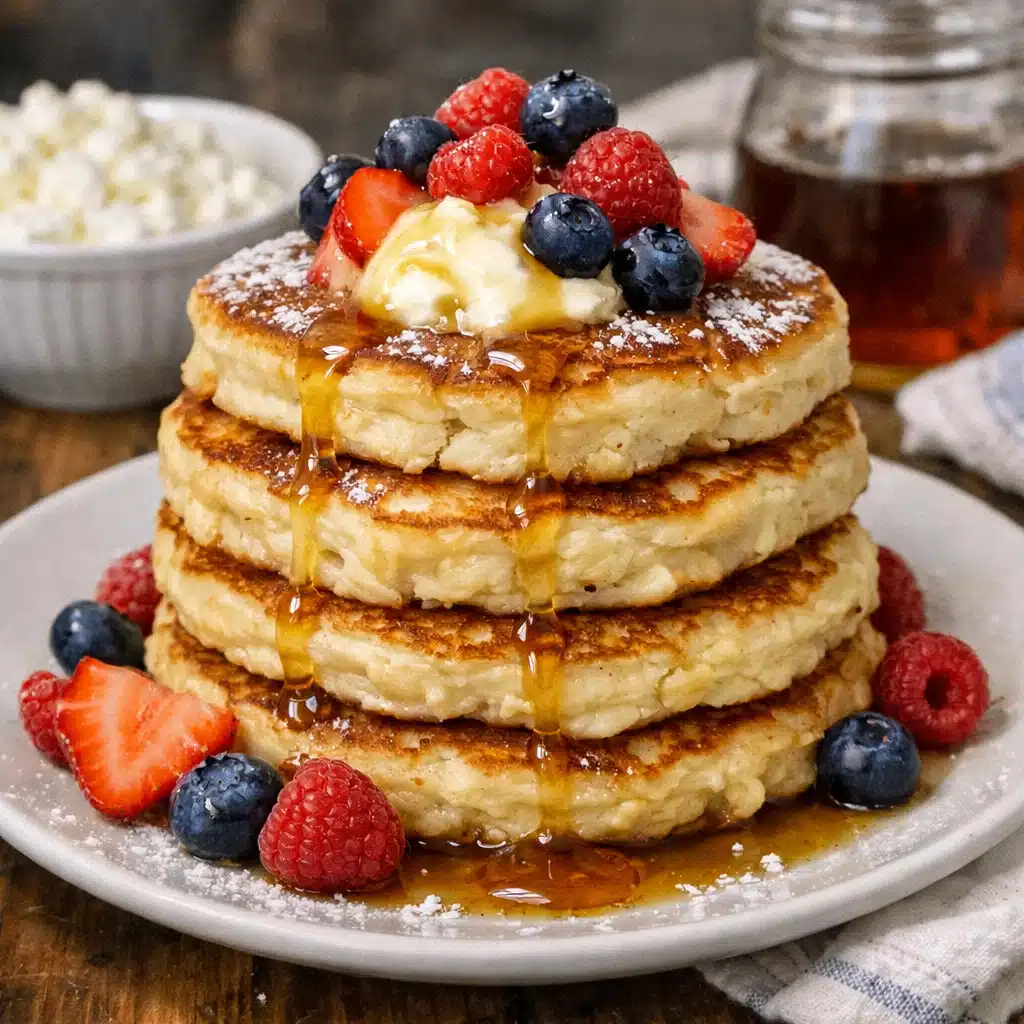
Cottage Cheese Pancakes are fluffy, protein packed, and a delicious twist on classic breakfast favorites. They’re lightly tangy, perfectly tender, and cook up golden on the griddle with minimal effort. Ideal for busy mornings or weekend brunches.
Love More Pancakes? Try My Chocolate Chip Pancakes or this Greek Yogurt Pancakes next.
Why You’ll Love This Recipe
- Protein-rich and satisfying – Cottage cheese adds a nutritious boost that keeps you full longer
- Incredibly tender texture – Light, fluffy, and never heavy or dense
- Simple pantry ingredients – No special shopping trip required
- Quick weekday breakfast – Ready in under 30 minutes from start to finish
- Kid-approved comfort food – Even picky eaters ask for seconds
Cottage Cheese Pancakes
- Total Time: 25 minutes
- Yield: 16 small pancakes
Description
These cottage cheese pancakes are incredibly fluffy, protein-rich, and wonderfully tender. Made with simple ingredients like cottage cheese, eggs, and flour, they create a satisfying breakfast that’s both nutritious and comforting. Perfect for weekend brunch or busy weekday mornings.
Ingredients
For the Pancakes:
- 1½ cups cottage cheese (any fat content works, though whole milk creates the richest flavor)
- 4 large eggs (room temperature blend more easily)
- 1 teaspoon vanilla extract
- 2 tablespoons sugar (just enough sweetness to balance the tang)
- 1 tablespoon baking powder (the secret to that lovely fluff)
- 1 cup all-purpose flour (measure carefully – don’t pack it)
- ¼ cup neutral oil for frying (vegetable, canola, or avocado oil work beautifully)
For Serving:
- Maple syrup, honey, jam, or fresh berries (whatever your heart desires!)
Instructions
Start by adding the cottage cheese to your large mixing bowl. Don’t worry if it looks a little lumpy – that’s exactly what we want! Crack in those eggs and mix everything together with a whisk or fork until well combined. It should look creamy with little curds throughout.
Stir in your vanilla extract and sugar until they’re nicely incorporated. The sugar will dissolve quickly, and you’ll start to smell that lovely vanilla warmth. This is when your kitchen starts to feel like home.
Sprinkle the baking powder over your mixture and stir it in thoroughly. This is your secret weapon for fluffy pancakes, so make sure it’s evenly distributed throughout the batter.
Here’s where gentle hands make all the difference. Add your flour and stir just until you can’t see any dry streaks anymore. The batter will be thicker than regular pancake batter, and that’s perfect. A few small lumps are fine – overmixing will make your pancakes tough instead of tender.
Place your skillet over medium heat and let it warm up for a couple of minutes. Add just enough oil to lightly coat the bottom – about a tablespoon or so. You’ll know it’s ready when a drop of water sizzles gently on the surface.
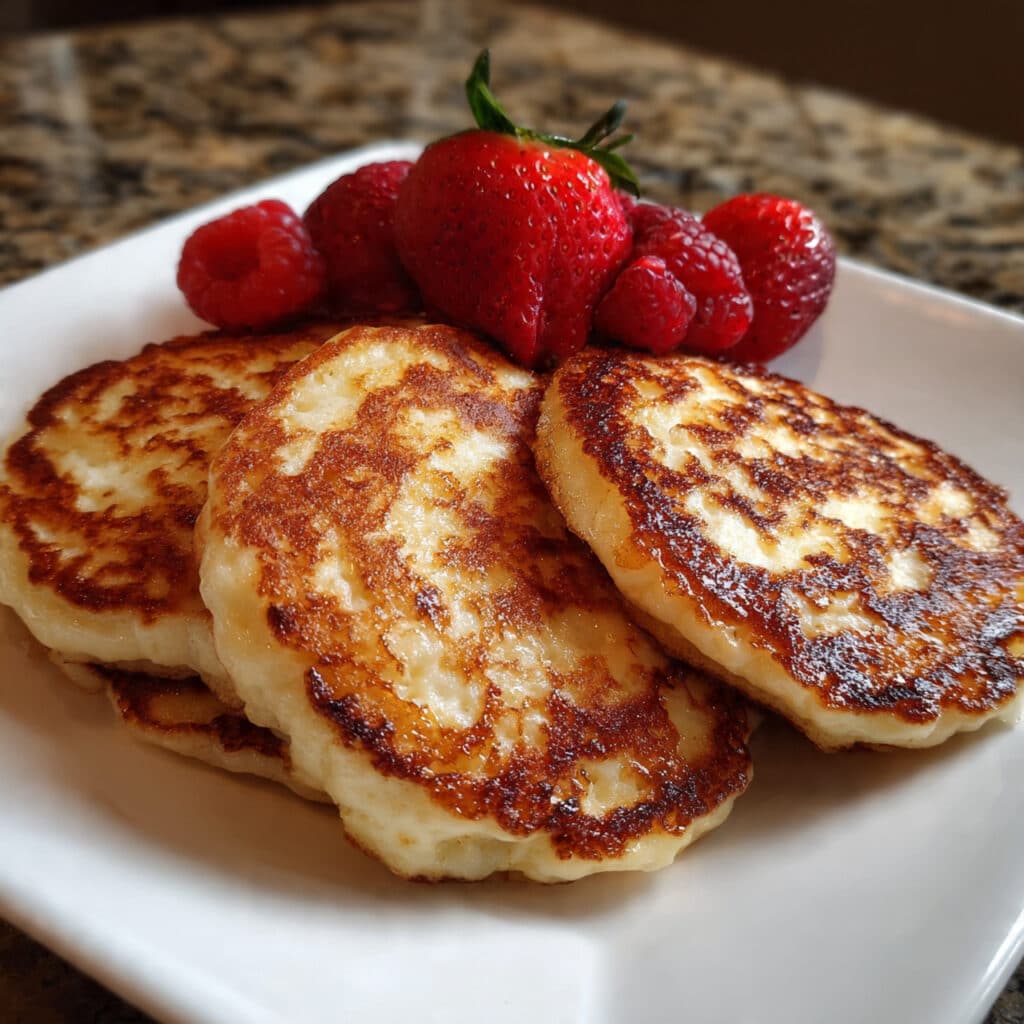
Scoop about 3 tablespoons of batter per pancake into your hot skillet. Don’t crowd them – leave plenty of space between each one so you can flip them easily. Let them cook undisturbed for 2 to 3 minutes. You’ll see little bubbles forming around the edges, and the bottoms should be a beautiful golden brown.
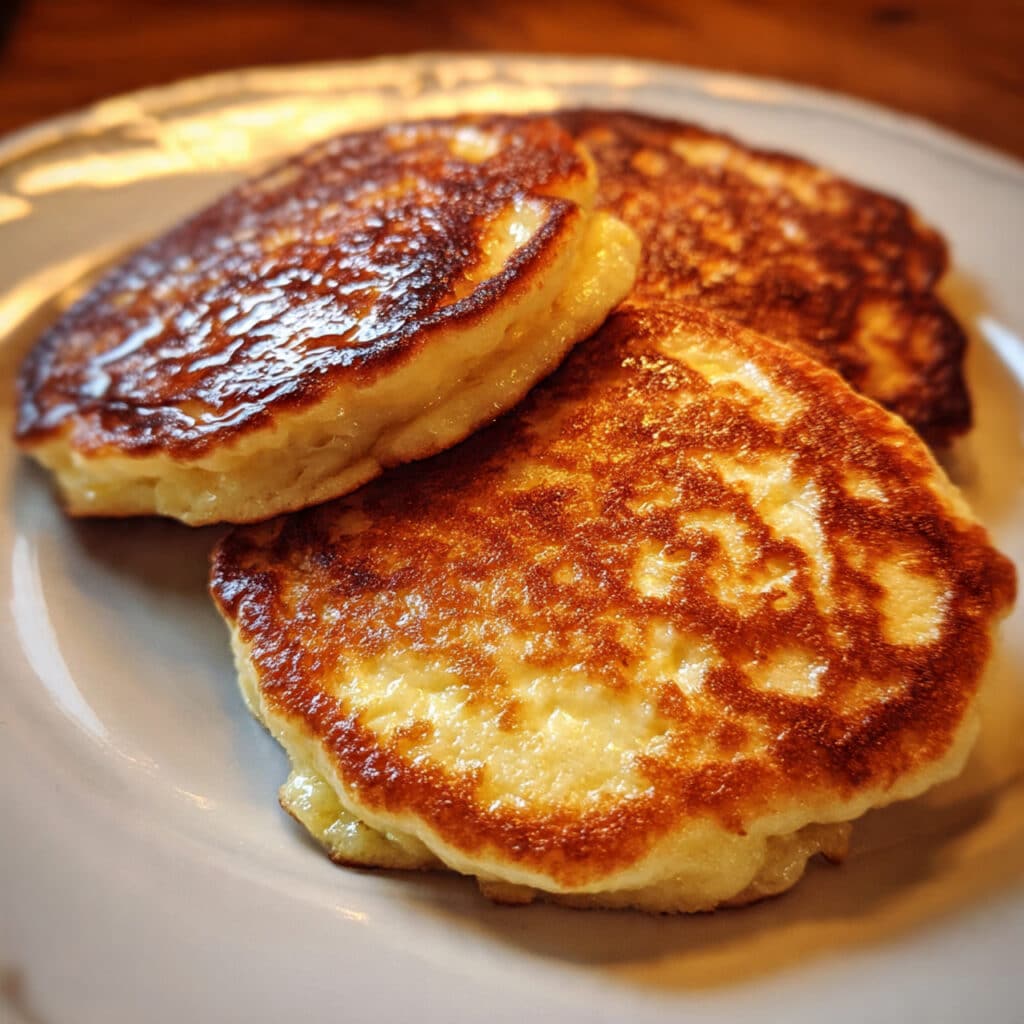
This is the fun part! Slide your spatula under each pancake and flip it over with confidence. Cook the second side for another 2 to 3 minutes until it’s golden and the pancake feels set when you gently press the center. If you’re making a big batch, keep finished pancakes warm in a 200°F oven.
Transfer your gorgeous pancakes to a plate and serve them while they’re still warm and fluffy.
Notes
- Test your heat first – Cook one test pancake before committing to a full batch. This lets you adjust the temperature if needed
- Blend for smoothness – If you’re not a fan of cottage cheese curds, give the batter a quick blitz in the blender before adding the flour
- Add more oil as needed – Don’t let your pan get too dry between batches, or the pancakes will stick and tear
- Watch for doneness – The pancake is ready to flip when the edges look set and the bottom is golden brown, not when bubbles appear on top like regular pancakes
- Avoid pressing down – Resist the urge to press on your pancakes with the spatula while they cook – this squeezes out air and makes them dense
- Prep Time: 10 minutes
- Cook Time: 15 minutes
- Category: Breakfast
- Method: Pan-Fried
- Cuisine: American
Ingredients You’ll Need
For the Pancakes:
- 1½ cups cottage cheese (any fat content works, though whole milk creates the richest flavor)
- 4 large eggs (room temperature blend more easily)
- 1 teaspoon vanilla extract
- 2 tablespoons sugar (just enough sweetness to balance the tang)
- 1 tablespoon baking powder (the secret to that lovely fluff)
- 1 cup all-purpose flour (measure carefully – don’t pack it)
- ¼ cup neutral oil for frying (vegetable, canola, or avocado oil work beautifully)
For Serving:
- Maple syrup, honey, jam, or fresh berries (whatever your heart desires!)
Why These Ingredients Work
Cottage cheese is the star here, and it does double duty in the most wonderful way. It adds protein to keep these pancakes satisfying and substantial, while its moisture creates that signature tender, almost custardy interior that makes each bite melt in your mouth. The small curds give lovely little pockets of creamy texture throughout.
The eggs work hand-in-hand with the cottage cheese to bind everything together and create structure. They help the pancakes puff up beautifully on the griddle and give them that golden color we all love. Together with the baking powder, they create just enough lift to keep things light without being cakey.
A touch of sugar balances the slight tang from the cottage cheese, and vanilla extract adds warmth and depth. The flour is there to give structure, but we use it sparingly so these stay tender rather than tough. And that neutral oil? It helps create those crispy, golden edges that make you reach for just one more pancake.
Essential Tools and Equipment
- Large mixing bowl – for combining all your ingredients
- Whisk or fork – to blend the batter gently
- Non-stick skillet or griddle – a 10-inch or 12-inch pan works perfectly
- Spatula – preferably a thin, flexible one for easy flipping
- Measuring cups and spoons – accuracy matters for the best texture
- Small ladle or ¼ cup scoop – keeps your pancakes uniform in size
Step-by-Step Instructions
Step 1: Prepare Your Batter
Start by adding the cottage cheese to your large mixing bowl. Don’t worry if it looks a little lumpy – that’s exactly what we want! Crack in those eggs and mix everything together with a whisk or fork until well combined. It should look creamy with little curds throughout.
Step 2: Add the Flavorings
Stir in your vanilla extract and sugar until they’re nicely incorporated. The sugar will dissolve quickly, and you’ll start to smell that lovely vanilla warmth. This is when your kitchen starts to feel like home.
Step 3: Mix in the Baking Powder
Sprinkle the baking powder over your mixture and stir it in thoroughly. This is your secret weapon for fluffy pancakes, so make sure it’s evenly distributed throughout the batter.
Step 4: Fold in the Flour
Here’s where gentle hands make all the difference. Add your flour and stir just until you can’t see any dry streaks anymore. The batter will be thicker than regular pancake batter, and that’s perfect. A few small lumps are fine – overmixing will make your pancakes tough instead of tender.
Step 5: Heat Your Skillet
Place your skillet over medium heat and let it warm up for a couple of minutes. Add just enough oil to lightly coat the bottom – about a tablespoon or so. You’ll know it’s ready when a drop of water sizzles gently on the surface.
Step 6: Cook the First Side
Scoop about 3 tablespoons of batter per pancake into your hot skillet. Don’t crowd them – leave plenty of space between each one so you can flip them easily. Let them cook undisturbed for 2 to 3 minutes. You’ll see little bubbles forming around the edges, and the bottoms should be a beautiful golden brown.
Step 7: Flip and Finish
This is the fun part! Slide your spatula under each pancake and flip it over with confidence. Cook the second side for another 2 to 3 minutes until it’s golden and the pancake feels set when you gently press the center. If you’re making a big batch, keep finished pancakes warm in a 200°F oven.
Step 8: Serve Warm
Transfer your gorgeous pancakes to a plate and serve them while they’re still warm and fluffy.
You Must Know
Temperature control is everything with these pancakes. Medium heat gives the inside time to cook through without burning those beautiful golden bottoms. If your heat is too high, you’ll end up with pancakes that are dark on the outside but still raw in the middle – and nobody wants that.
Don’t overmix the batter once you add the flour. Treat it gently, like you’re folding whipped cream into a dessert. Those few extra stirs might seem harmless, but they develop the gluten in the flour and turn your tender pancakes into tough little hockey pucks. Mix just until the flour disappears, then stop.
Personal Secret: Let your batter rest for 5 minutes after mixing. I know it’s tempting to start cooking right away, but this short rest lets the flour hydrate fully and the baking powder start working its magic.
Pro Tips & Cooking Hacks
- Keep your pancakes uniform – Use a ¼ cup measure or small ice cream scoop so they all cook at the same rate and look professionally made
- Test your heat first – Cook one test pancake before committing to a full batch. This lets you adjust the temperature if needed
- Blend for smoothness – If you’re not a fan of cottage cheese curds, give the batter a quick blitz in the blender before adding the flour
- Add more oil as needed – Don’t let your pan get too dry between batches, or the pancakes will stick and tear
- Watch for doneness – The pancake is ready to flip when the edges look set and the bottom is golden brown, not when bubbles appear on top like regular pancakes
- Avoid pressing down – Resist the urge to press on your pancakes with the spatula while they cook – this squeezes out air and makes them dense
Flavor Variations & Suggestions
These pancakes are wonderfully versatile and love a little creative twist. Fold in a handful of fresh blueberries or diced strawberries right before cooking for fruity bursts in every bite. The berries add natural sweetness and make them feel extra special for weekend brunch.
For a warm, cozy variation, add half a teaspoon of cinnamon and a pinch of nutmeg to the batter. This turns them into something that tastes like morning comfort wrapped in fall spices. Top them with sautéed apples and a drizzle of caramel for an absolutely dreamy breakfast.
Chocolate lovers can stir in a handful of mini chocolate chips or cocoa powder for a dessert-like treat. Lemon zest and a squeeze of fresh lemon juice brighten everything up and pair beautifully with a dusting of powdered sugar. You can even make them savory by skipping the sugar and vanilla, then adding fresh herbs and shredded cheese to serve alongside eggs and bacon.
Make-Ahead Options
While these pancakes are absolutely best eaten fresh and warm, I understand that busy mornings sometimes call for make-ahead solutions. You can mix the dry ingredients together the night before and keep them covered on the counter. In the morning, just whisk together the wet ingredients and combine everything quickly.
If you want to go all the way and cook them ahead, let the pancakes cool completely on a wire rack, then stack them with small pieces of parchment paper between each one. Store them in an airtight container in the refrigerator for up to three days. Reheat them in a toaster or toaster oven for the best texture – the microwave works in a pinch but makes them a bit soft.
For longer storage, freeze the cooled pancakes in a single layer on a baking sheet until solid, then transfer them to a freezer bag. They’ll keep beautifully for up to two months. Pull out just what you need and reheat straight from frozen in the toaster. It’s like having a homemade breakfast on standby for those rushed mornings.
What to Serve With Cottage Cheese Pancakes
These tender pancakes pair wonderfully with classic maple syrup, but don’t stop there. Fresh berries with a dollop of whipped cream turn breakfast into something special. A drizzle of warm honey and a sprinkle of cinnamon feels like comfort in every bite.
For a heartier breakfast spread, serve them alongside crispy bacon or savory breakfast sausage. The sweet and salty combination is absolutely perfect. Scrambled eggs with fresh herbs make a lovely protein-rich companion, and a bowl of fresh fruit salad adds brightness and color to the table.
Don’t forget the drinks! These pancakes are beautiful with a hot cup of coffee or a frothy cappuccino. Fresh orange juice is always a classic choice, and for something cozy, try hot chocolate or a vanilla chai latte. If you’re hosting brunch, mimosas or bellinis make everything feel celebratory.
Allergy Information
These pancakes contain several common allergens, so it’s good to be aware if you’re cooking for a crowd. They include dairy from the cottage cheese, eggs, and wheat from the all-purpose flour. For those with gluten sensitivities, you can substitute a good-quality gluten-free flour blend cup-for-cup, though the texture will be slightly different.
If dairy is the concern, there are dairy-free cottage cheese alternatives available now, though I haven’t tested them personally in this recipe. Ricotta cheese can work as a substitute and creates a similar tender texture. For egg allergies, flax eggs typically don’t work well here since eggs provide so much structure, but a commercial egg replacer might do the trick.
Always check labels on your baking powder and vanilla extract if you’re dealing with severe allergies, as some brands contain unexpected additives. When in doubt, communicate with your guests about ingredients and offer alternative breakfast options to ensure everyone can enjoy the meal together.
Storage & Reheating
Store any leftover pancakes in an airtight container in the refrigerator for up to three days. They taste best when reheated properly rather than eaten cold. Pop them in a toaster or toaster oven for a few minutes to crisp up the edges and warm them through. The microwave works if you’re in a hurry, but use 15-second intervals to avoid making them rubbery.
For freezing, lay the completely cooled pancakes in a single layer on a baking sheet and freeze until solid, then transfer to a freezer-safe bag with parchment paper between each pancake. This prevents them from sticking together and lets you grab just one or two at a time. They’ll keep their lovely texture for up to two months in the freezer.
Kitchen Secret: Before freezing, slightly undercook your pancakes by about 30 seconds per side. When you reheat them later, they’ll finish cooking and taste like they just came off the griddle instead of being dried out. This little trick makes such a difference in quality!
Frequently Asked Questions
Can I use low-fat or fat-free cottage cheese?
Yes, absolutely! Any fat content of cottage cheese will work in this recipe. Whole milk cottage cheese creates the richest, creamiest texture, but low-fat and fat-free versions still make delicious pancakes. They might be slightly less tender, but the difference is minimal and you probably won’t notice.
Why are my pancakes falling apart when I flip them?
This usually happens when the heat is too high or you’re flipping too early. Make sure your skillet is at medium heat, and wait until the edges look set and the bottom is golden brown before attempting to flip. Also, use a thin, flexible spatula and get it completely under the pancake before flipping in one smooth, confident motion.
Can I make these without a blender for smooth cottage cheese?
Of course! The recipe doesn’t require a blender at all. The small curds from cottage cheese add lovely texture to the pancakes. If you prefer them smoother, you can press the cottage cheese through a fine-mesh strainer before mixing, or just mash it really well with a fork.
How do I know when the pancakes are fully cooked inside?
The center should feel firm when you gently press it with your finger, and the pancake should bounce back slightly. If it feels mushy or liquid squishes out, it needs more time. Also, the second side typically takes a bit less time than the first, so watch carefully after about 2 minutes.
💬 Tried this recipe? I’d love to hear how it turned out! Leave a comment and rating below, and don’t forget to share your favorite topping combinations.