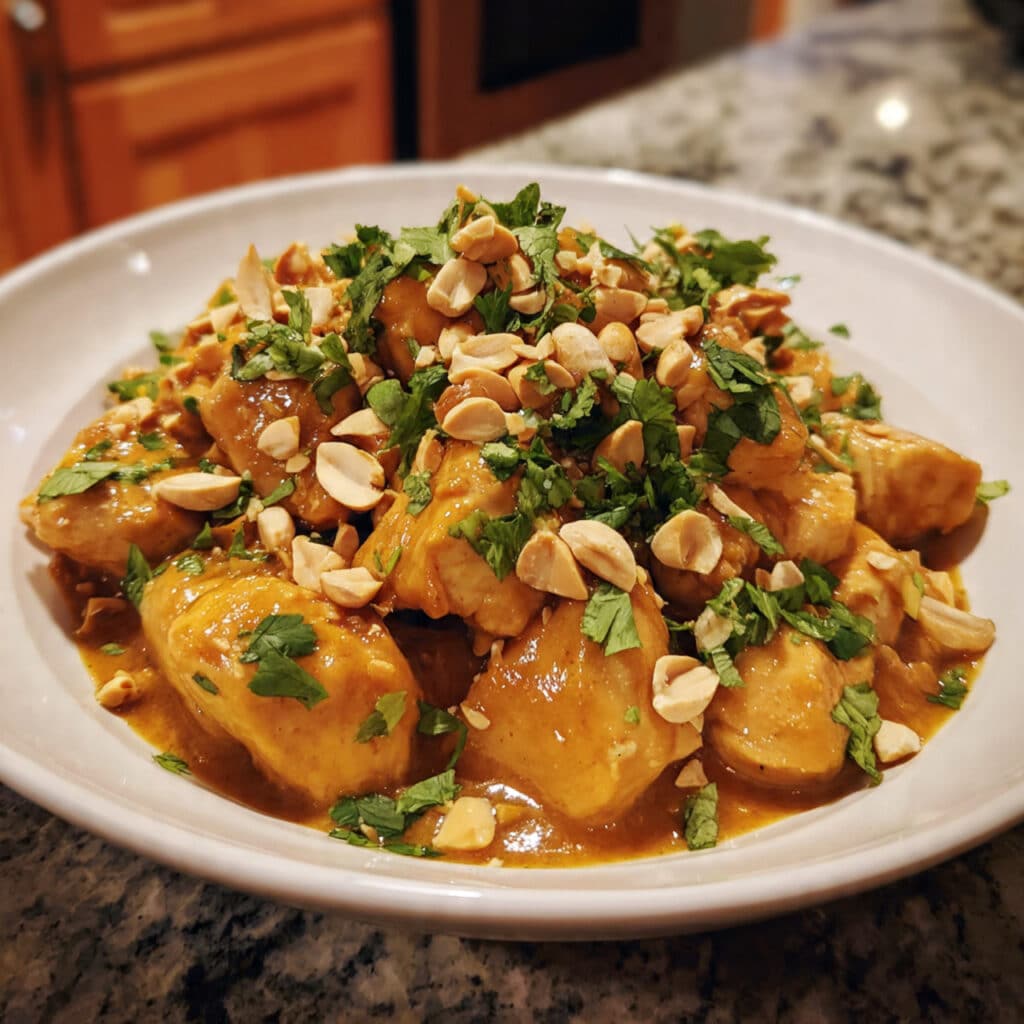
Thai peanut chicken is easy, flavorful, and absolutely irresistible comfort food! With tender chicken pieces coated in a rich, creamy peanut sauce made from simple pantry staples like peanut butter, soy sauce, and honey, this dish comes together in about 30 minutes.
Love More Chicken Recipes? Try My Thai Green Curry Chicken or this Kung Pao Chicken Noodles next.
Why You’ll Love This Recipe
- Quick and Easy: Ready in 30 minutes with straightforward steps that anyone can follow.
- Restaurant-Quality Flavor at Home: That rich, nutty, slightly sweet sauce tastes just like takeout, but you know exactly what’s going into it.
- Incredibly Versatile: Works beautifully with chicken, shrimp, tofu, or even just vegetables—it’s a recipe that adapts to what you have on hand.
- Family-Friendly: Even picky eaters love the creamy peanut sauce, and you can easily adjust the spice level.
- Budget-Friendly: Uses affordable ingredients you probably already have in your pantry.

Thai Peanut Chicken
- Total Time: 30 minutes
- Yield: 4 servings
Description
This Thai Peanut Chicken features tender chicken pieces coated in a luscious homemade peanut sauce made with creamy peanut butter, soy sauce, lime juice, honey, and fresh ginger. It’s a quick, family-friendly weeknight dinner that tastes like takeout but is made with simple pantry ingredients. Serve over rice or noodles with fresh garnishes for a satisfying meal everyone will love.
Ingredients
For the Chicken:
- 1½–2 pounds boneless, skinless chicken breasts or thighs, cut into bite-size pieces — I prefer thighs for extra juiciness, but breasts work beautifully too
- Salt and pepper, to taste
- Olive oil or neutral oil for cooking — vegetable or canola oil works perfectly
For the Peanut Sauce:
- ⅓ cup creamy peanut butter — the smooth kind is key for a silky sauce
- 3 tablespoons soy sauce — or tamari if you’re going gluten-free
- 2 tablespoons lime juice — fresh is always best for that bright, zingy flavor
- 2 tablespoons honey or brown sugar — honey adds a lovely floral sweetness
- 1 tablespoon rice vinegar — adds a subtle tang
- 1 teaspoon sesame oil — optional, but it adds wonderful depth
- 1 tablespoon fresh ginger, minced — don’t skip this if you can help it!
- 2–3 cloves garlic, minced
- Warm water or broth — for thinning to your preferred consistency
Instructions
Start by patting your chicken pieces dry with paper towels—this helps them get a beautiful golden color when they hit the pan.
Cut them into bite-size pieces (about 1-inch chunks work perfectly) and season generously with salt and pepper on all sides. Don’t be shy here; this is your chance to add foundational flavor.
Heat a tablespoon or two of oil in your large skillet over medium-high heat. Once the oil is shimmering (that’s how you know it’s hot enough), add the chicken pieces in a single layer.
Don’t overcrowd the pan—work in batches if needed. Let them cook undisturbed for about 3-4 minutes on the first side until they develop a nice golden-brown crust.
Flip and cook another 3-4 minutes until cooked through. The internal temperature should reach 165°F if you’re checking with a thermometer. Remove the chicken to a plate and set aside.
While the chicken rests, grab your mixing bowl. Add the peanut butter, soy sauce, lime juice, honey, rice vinegar, sesame oil (if using), minced ginger, and garlic.
Whisk vigorously until everything comes together in a smooth, creamy sauce. This takes a little elbow grease, but keep whisking—it’ll come together!
If the sauce seems too thick (peanut butter can vary in consistency), add warm water or chicken broth one tablespoon at a time until you reach a pourable but still creamy consistency. Think of it like thick cream—it should coat the back of a spoon but still flow easily.
Return your cooked chicken to the skillet over medium heat. Pour that beautiful peanut sauce right over the top and use your wooden spoon to toss everything together.
Make sure every piece of chicken gets coated in that glossy, gorgeous sauce. Let it cook for 2-3 minutes, stirring occasionally, until the sauce thickens slightly and clings to the chicken.
You’ll know it’s ready when it looks shiny and thick enough to coat the chicken without pooling at the bottom of the pan.
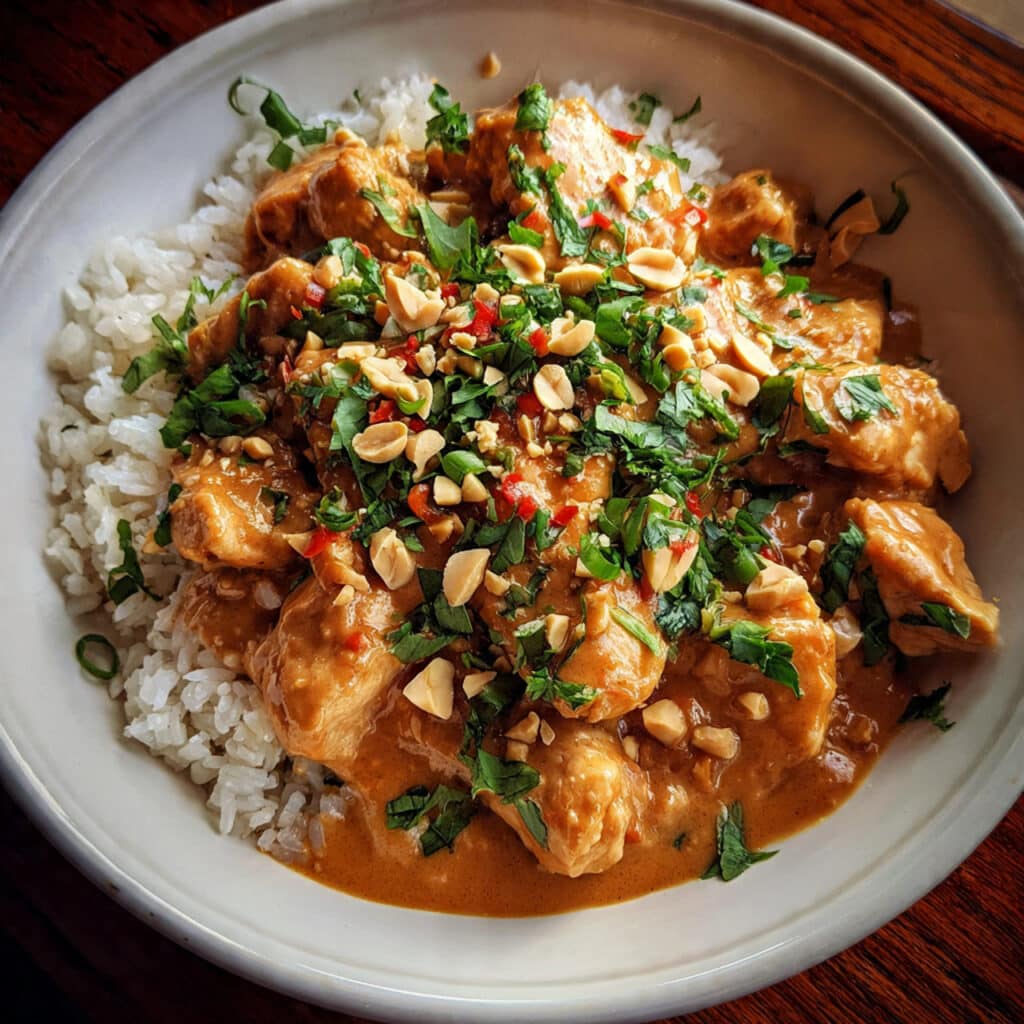
Spoon your Thai peanut chicken over fluffy rice or tender rice noodles. Now comes the fun part—the toppings!
Sprinkle generously with chopped peanuts for crunch, fresh cilantro for brightness, and those lime wedges for anyone who wants an extra squeeze of citrus.
Notes
- Make it spicier: Add sriracha, red pepper flakes, or a spoonful of Thai red curry paste to the sauce. Start with a little and taste as you go.
- Avoid dry chicken: Don’t overcook your chicken! Use a meat thermometer if you’re unsure—165°F is your magic number. Chicken thighs are more forgiving than breasts and stay juicier.
- One-pan dinner: After cooking the chicken, use the same pan to quickly sauté some snap peas, bell peppers, or broccoli before making the sauce. Everything gets that delicious fond from the bottom of the pan.
- Sauce too thick? Thin it with coconut milk instead of water for an extra creamy, slightly sweet variation.
- Prep Time: 10 minutes
- Cook Time: 20 minutes
- Category: Main Dish
- Method: Stovetop
- Cuisine: Thai
Ingredients You’ll Need
For the Chicken:
- 1½–2 pounds boneless, skinless chicken breasts or thighs, cut into bite-size pieces — I prefer thighs for extra juiciness, but breasts work beautifully too
- Salt and pepper, to taste
- Olive oil or neutral oil for cooking — vegetable or canola oil works perfectly
For the Peanut Sauce:
- ⅓ cup creamy peanut butter — the smooth kind is key for a silky sauce
- 3 tablespoons soy sauce — or tamari if you’re going gluten-free
- 2 tablespoons lime juice — fresh is always best for that bright, zingy flavor
- 2 tablespoons honey or brown sugar — honey adds a lovely floral sweetness
- 1 tablespoon rice vinegar — adds a subtle tang
- 1 teaspoon sesame oil — optional, but it adds wonderful depth
- 1 tablespoon fresh ginger, minced — don’t skip this if you can help it!
- 2–3 cloves garlic, minced
- Warm water or broth — for thinning to your preferred consistency
To Serve:
- Cooked rice or rice noodles — jasmine rice is my favorite
- Fresh cilantro, chopped
- Chopped peanuts — for that perfect crunch
- Lime wedges
- Sliced green onions — optional but lovely
- Shredded carrots, cucumbers, or bell peppers — for color and freshness
Why These Ingredients Work
The magic of this dish is all about balance. Creamy peanut butter forms the base of our sauce, giving it that rich, nutty flavor and velvety texture that coats every piece of chicken.
Soy sauce brings the salty, umami depth that makes you keep going back for another bite, while lime juice cuts through all that richness with bright acidity. Honey or brown sugar adds just enough sweetness to round everything out—it’s that sweet-salty combination that makes Thai food so crave-worthy.
Fresh ginger and garlic are your aromatic powerhouses here. They add warmth and complexity without overwhelming the peanut flavor.
Rice vinegar provides a subtle tang that enhances the lime juice, and if you add that little drizzle of sesame oil, you get this gorgeous, toasted nuttiness that makes the whole dish sing. The chicken becomes tender and juicy, soaking up all those incredible flavors.
Essential Tools and Equipment
- Large skillet or sauté pan — something with high sides works best for tossing everything together
- Mixing bowl — for whisking together that gorgeous sauce
- Whisk — essential for getting the peanut butter smooth and lump-free
- Sharp knife and cutting board — for prepping chicken and garnishes
- Measuring cups and spoons
- Wooden spoon or spatula — for stirring and coating the chicken
Step-by-Step Instructions
Step 1: Season and Prep the Chicken
Start by patting your chicken pieces dry with paper towels—this helps them get a beautiful golden color when they hit the pan.
Cut them into bite-size pieces (about 1-inch chunks work perfectly) and season generously with salt and pepper on all sides. Don’t be shy here; this is your chance to add foundational flavor.
Step 2: Cook the Chicken Until Golden
Heat a tablespoon or two of oil in your large skillet over medium-high heat. Once the oil is shimmering (that’s how you know it’s hot enough), add the chicken pieces in a single layer.
Don’t overcrowd the pan—work in batches if needed. Let them cook undisturbed for about 3-4 minutes on the first side until they develop a nice golden-brown crust.
Flip and cook another 3-4 minutes until cooked through. The internal temperature should reach 165°F if you’re checking with a thermometer. Remove the chicken to a plate and set aside.
Step 3: Whisk Together Your Peanut Sauce
While the chicken rests, grab your mixing bowl. Add the peanut butter, soy sauce, lime juice, honey, rice vinegar, sesame oil (if using), minced ginger, and garlic.
Whisk vigorously until everything comes together in a smooth, creamy sauce. This takes a little elbow grease, but keep whisking—it’ll come together!
If the sauce seems too thick (peanut butter can vary in consistency), add warm water or chicken broth one tablespoon at a time until you reach a pourable but still creamy consistency. Think of it like thick cream—it should coat the back of a spoon but still flow easily.
Step 4: Bring It All Together
Return your cooked chicken to the skillet over medium heat. Pour that beautiful peanut sauce right over the top and use your wooden spoon to toss everything together.
Make sure every piece of chicken gets coated in that glossy, gorgeous sauce. Let it cook for 2-3 minutes, stirring occasionally, until the sauce thickens slightly and clings to the chicken.
You’ll know it’s ready when it looks shiny and thick enough to coat the chicken without pooling at the bottom of the pan.
Step 5: Serve and Garnish with Love
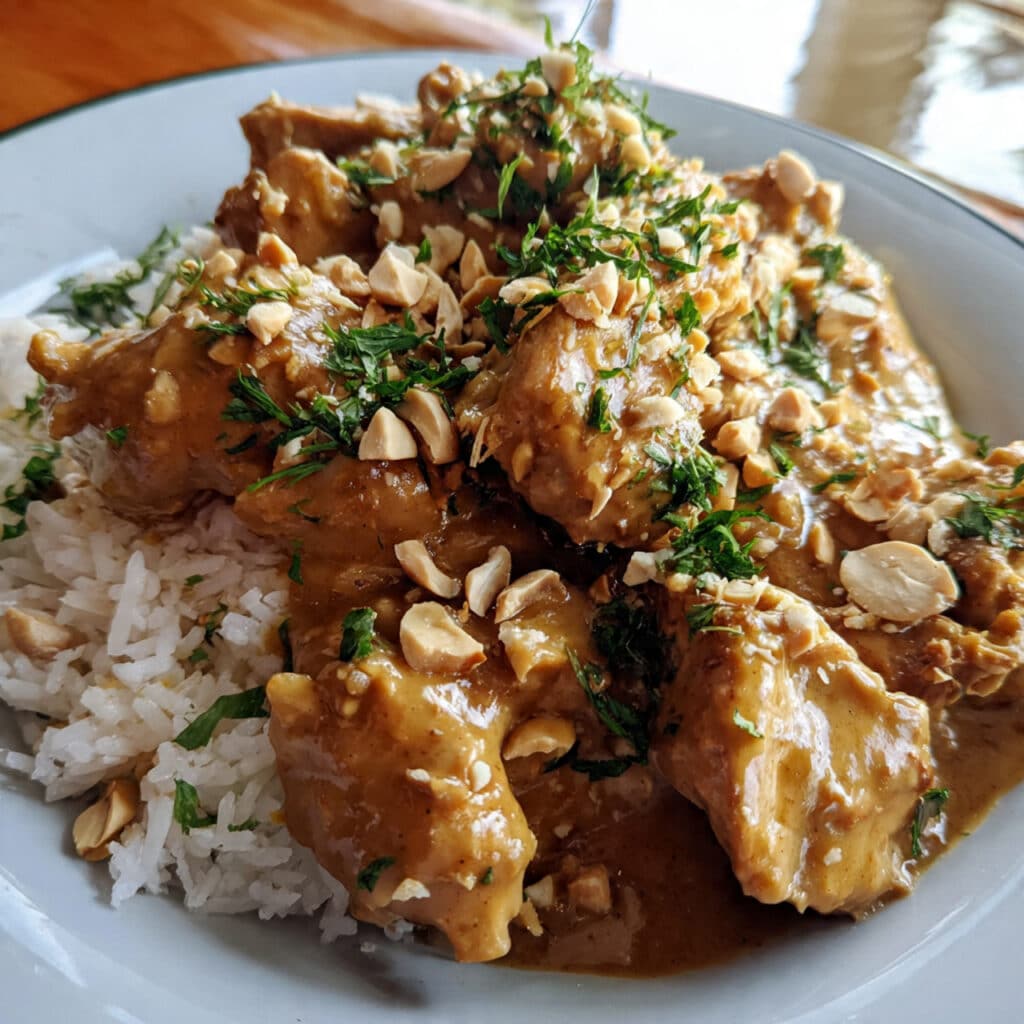
Spoon your Thai peanut chicken over fluffy rice or tender rice noodles. Now comes the fun part—the toppings!
Sprinkle generously with chopped peanuts for crunch, fresh cilantro for brightness, and those lime wedges for anyone who wants an extra squeeze of citrus.
You Must Know
The key to a perfect peanut sauce is getting the consistency just right. If your sauce is too thick, it won’t coat the chicken properly and might taste overly intense. If it’s too thin, it’ll slide right off and pool on the plate.
Add your thinning liquid gradually—you can always add more, but you can’t take it back. I usually start with 2-3 tablespoons of warm water and go from there.
Personal Secret: Before whisking your peanut sauce, microwave the peanut butter for about 15-20 seconds until it’s slightly warm and loosened up.
Also, always taste your sauce before adding it to the chicken. It should taste a bit stronger than you think.
Pro Tips & Cooking Hacks
- For extra tender chicken: Marinate your chicken pieces in a little soy sauce and cornstarch for 15 minutes before cooking. The cornstarch creates a velvety texture and helps the sauce cling even better.
- Make it spicier: Add sriracha, red pepper flakes, or a spoonful of Thai red curry paste to the sauce. Start with a little and taste as you go.
- Avoid dry chicken: Don’t overcook your chicken! Use a meat thermometer if you’re unsure—165°F is your magic number. Chicken thighs are more forgiving than breasts and stay juicier.
- One-pan dinner: After cooking the chicken, use the same pan to quickly sauté some snap peas, bell peppers, or broccoli before making the sauce.
- Sauce too thick? Thin it with coconut milk instead of water for an extra creamy, slightly sweet variation.
- No fresh ginger? Ground ginger works in a pinch—use about ½ teaspoon. Fresh is better, but we work with what we have!
Flavor Variations & Suggestions
This recipe is wonderfully flexible and loves to be customized. If you want a coconut twist, swap half the peanut butter for coconut milk and add a splash of fish sauce for depth.
For a sweeter version, increase the honey to 3 tablespoons and add a pinch of cinnamon—it sounds unusual but tastes amazing. Craving heat? Stir in some sambal oelek or a finely chopped Thai chili pepper.
You can also play with different proteins. Shrimp cooks even faster than chicken—just sauté for 2-3 minutes per side. Firm tofu cut into cubes and pan-fried until crispy makes this vegetarian-friendly.
I’ve even made it with leftover rotisserie chicken for a super quick weeknight dinner—just skip the cooking step and toss the shredded chicken directly in the warm sauce.
For a fun presentation, serve it in lettuce cups instead of over rice. Or turn it into a salad by tossing cold rice noodles with shredded cabbage, carrots, and the chicken, then drizzling with extra peanut sauce.
Make-Ahead Options
This dish is perfect for meal prep and actually tastes even better the next day after the flavors have had time to meld.
You can cook the chicken and make the sauce separately up to 3 days ahead, storing them in airtight containers in the refrigerator. When you’re ready to eat, simply reheat the chicken in a skillet and toss with the sauce.
For even easier weeknight meals, prep all your ingredients on Sunday—cut the chicken, mince the garlic and ginger, whisk together the sauce—and store everything in the fridge. Then dinner comes together in just 15 minutes when you walk in the door tired and hungry.
The sauce itself keeps beautifully in the fridge for up to a week and can be used on everything from grain bowls to salads.
If you want to freeze it, cook the dish completely, let it cool, and freeze in portion-sized containers for up to 3 months. Thaw overnight in the fridge and reheat gently on the stovetop, adding a splash of water or broth if needed to loosen the sauce.
What to Serve With Thai Peanut Chicken
This dish is hearty enough to stand on its own over rice, but there are so many delicious ways to round out the meal.
A simple cucumber salad with rice vinegar and a touch of sugar provides cool, crunchy contrast to the rich sauce. Fresh spring rolls or summer rolls make a light and fresh starter that keeps with the Thai theme.
For something warm, try a quick Asian-style slaw with cabbage, carrots, and a sesame dressing, or serve steamed edamame on the side for extra protein.
If you’re feeding kids, simple steamed broccoli or snap peas work wonderfully and they can dip them right in that delicious peanut sauce.
For drinks, iced jasmine tea or a crisp white wine like Riesling complements the dish beautifully. And if you’re feeling indulgent, finish with fresh mango slices or coconut ice cream for dessert.
Allergy Information
This recipe contains several common allergens. Peanuts are obviously the star ingredient, but if you or someone you’re cooking for has a peanut allergy, you can substitute with almond butter, cashew butter, or sunflower seed butter for a nut-free version. The flavor will be different but still delicious.
Soy sauce contains both soy and gluten, so use tamari or coconut aminos for a gluten-free and soy-free alternative.
Sesame oil contains sesame, which is a common allergen—you can simply omit it or replace it with a neutral oil with a drop of toasted sesame seeds for flavor.
Always check labels on store-bought ingredients, as some brands of peanut butter or sauces may contain unexpected allergens. For a dairy-free option, this recipe is already naturally dairy-free, which makes it perfect for those with lactose intolerance or milk allergies.
Storage & Reheating
Store leftover Thai peanut chicken in an airtight container in the refrigerator for up to 4 days. The sauce may thicken as it sits, which is completely normal.
When reheating, add a splash of water, broth, or even coconut milk to loosen it back up to the right consistency.
To reheat, I prefer using the stovetop over medium-low heat, stirring occasionally until warmed through. This keeps the chicken tender and prevents it from drying out.
You can also microwave it in 30-second intervals, stirring between each, until hot. If you stored the rice separately, reheat it with a damp paper towel over the top to keep it moist and fluffy.
The peanut sauce alone keeps for up to a week in the fridge and can be drizzled over grain bowls, used as a salad dressing, or served as a dipping sauce for fresh vegetables or spring rolls throughout the week.
Questions I Get Asked A Lot
Can I use crunchy peanut butter instead of creamy?
You can, but your sauce will have a slightly grainy texture rather than being smooth and silky. If you love texture, go for it! Otherwise, stick with creamy for the best results, and add whole chopped peanuts at the end for crunch.
My sauce separated or looks oily—what happened?
This usually happens if the peanut butter was natural (the kind where the oil separates on top) and wasn’t mixed well first, or if the sauce got too hot too quickly. Whisk in a tablespoon of warm water and stir vigorously to bring it back together. A little cornstarch slurry (½ teaspoon cornstarch mixed with 1 tablespoon cold water) can help emulsify it too.
Can I make this in a slow cooker?
Absolutely! Place raw chicken in the slow cooker, whisk together the sauce ingredients, and pour over the chicken. Cook on low for 3-4 hours or high for 2-3 hours. The chicken will be incredibly tender and fall-apart delicious. Just be aware the sauce will be thinner, so you might want to thicken it with a cornstarch slurry at the end.
Is this recipe spicy?
As written, it’s not spicy at all—just savory, sweet, and nutty. It’s perfect for families with kids or anyone who prefers mild flavors. If you want heat, add sriracha, red pepper flakes, or fresh chili peppers to taste.
Can I use chicken thighs instead of breasts?
Definitely! In fact, I prefer chicken thighs for this recipe. They’re juicier, more flavorful, and more forgiving if you accidentally cook them a minute or two longer. They take about the same amount of time to cook as breasts.
💬 Tried this recipe? Leave a comment and rating below! I’d love to hear how it turned out and what variations you tried.