Marinara sauce is the kind of recipe that fills your kitchen with warmth, your home with the most incredible aroma, and your heart with those slow sunday afternoon feelings. This isn’t just tomato sauce, it’s comfort in a pot, made with simple pantry ingredients, a little patience, and all the love of a proper family recipe.
Why You’ll Love This Recipe
- Pure comfort food — It tastes like the kind of sauce your Italian grandmother would simmer all afternoon (even if you’re not Italian!)
- Simple, wholesome ingredients — No fancy pantry items needed, just tomatoes, garlic, onions, and herbs
- Better than store-bought — You control the flavor, sweetness, and seasoning—and it costs less too
- Makes your house smell amazing — That slow-simmered tomato and garlic scent is pure kitchen magic
- Perfect for meal prep — This sauce freezes beautifully and tastes even better the next day
Homemade Marinara Sauce
- Total Time: 55 minutes
- Yield: About 4 cups of sauce
Description
This homemade marinara sauce is a simple, comforting recipe made with crushed tomatoes, garlic, onions, and herbs. It simmers low and slow to create a rich, flavorful sauce that’s perfect for pasta, pizza, chicken parmesan, or dipping crusty bread. Easy to make, freezer-friendly, and tastes even better than store-bought.
Ingredients
For the Sauce:
- ¼ cup olive oil (use a good one—it makes a difference)
- 1 large onion, finely chopped
- 3 cloves garlic, minced (fresh is best, but jarred works in a pinch)
- 2 (28-ounce / 800 g) cans crushed tomatoes (quality matters here—look for San Marzano if you can)
- 1 teaspoon sugar, optional (helps balance acidity, especially if your tomatoes are tart)
- 1 teaspoon dried oregano
- 1 teaspoon dried basil
- 1 bay leaf
- Salt, to taste
- Freshly ground black pepper, to taste
Optional Additions:
- Red pepper flakes (for a little kick)
- Fresh basil or parsley (tear it right over the top before serving)
Instructions
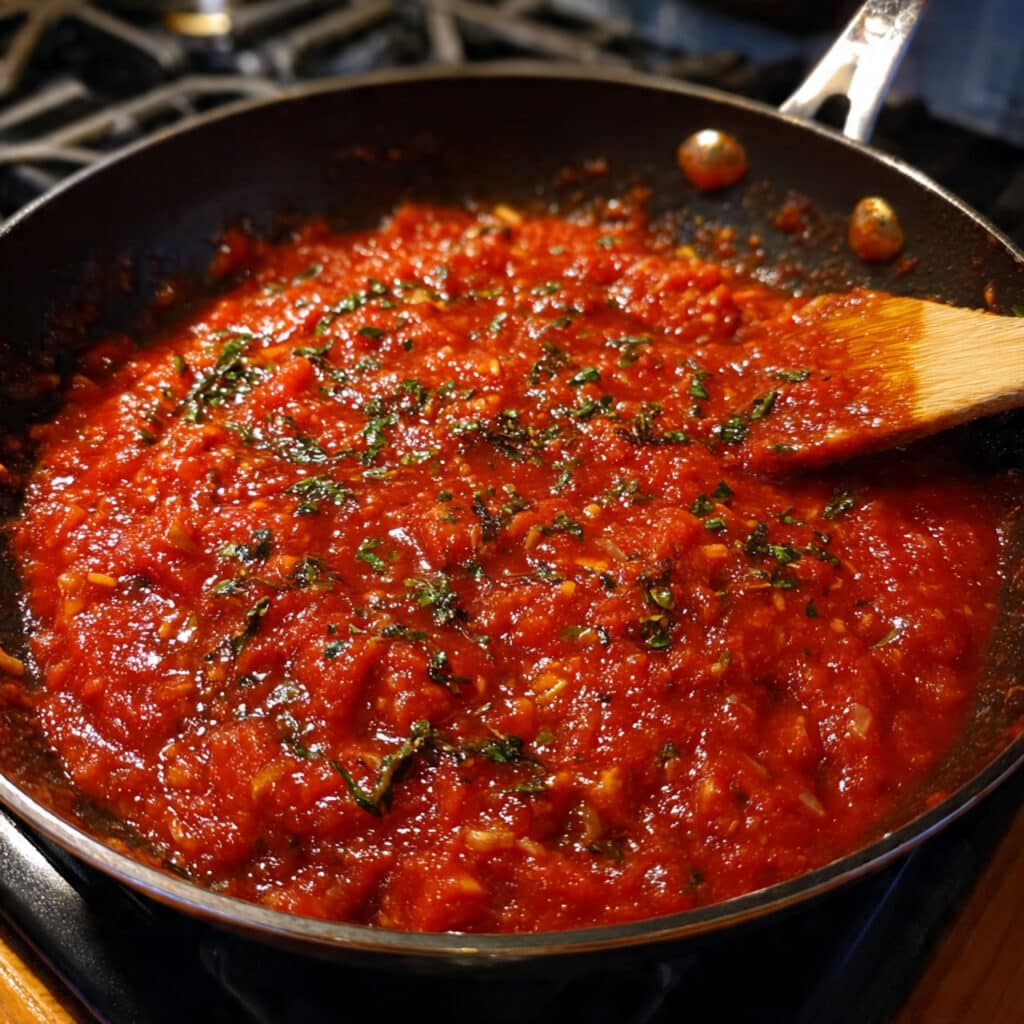
Pour the olive oil into a large saucepan and heat it over medium heat. You’ll know it’s ready when it shimmers slightly but isn’t smoking. This is your flavor base, so don’t skip ahead!
Add the finely chopped onion and cook for 6–8 minutes, stirring often, until it’s soft, translucent, and starting to turn golden at the edges. Don’t rush this step—it’s where you’re building sweetness and depth. If the onion starts to brown too fast, lower the heat a bit.
Stir in the minced garlic and cook for about 30 seconds, just until it smells incredible and fragrant. Be careful not to let it brown or it’ll turn bitter.
Pour in both cans of crushed tomatoes, then add the sugar (if using), oregano, basil, bay leaf, salt, and black pepper. Stir everything together until well combined. This is when your kitchen starts smelling like an Italian grandmother moved in.
Bring the sauce to a gentle simmer, then reduce the heat to low. Leave the pot uncovered and let it simmer for 30–45 minutes, stirring occasionally. The sauce will thicken as the liquid evaporates and the flavors concentrate. The longer it simmers, the richer it gets.
Taste your sauce and adjust the salt or pepper as needed. Every batch of tomatoes is a little different, so trust your taste buds. Fish out the bay leaf and discard it before serving.
Use your marinara immediately over your favorite pasta, or let it cool completely and store it for later.
Notes
- Use San Marzano tomatoes if you can find them — They’re sweeter, less acidic, and make a noticeable difference in flavor
- Don’t skip the onion step — Cooking them slowly builds the natural sweetness that makes this sauce taste so good
- Taste your tomatoes first — If they’re already sweet, you can skip the sugar entirely
- Stir occasionally, but not constantly — You want the sauce to reduce and thicken, so leave it alone most of the time
- Add a parmesan rind while simmering — It adds a subtle umami richness (just remember to fish it out before serving!)
- Avoid burning the garlic — It only needs 30 seconds. Burnt garlic = bitter sauce
- Prep Time: 10 minutes
- Cook Time: 45 minutes
- Category: Sauce
- Method: Stovetop
- Cuisine: Italian
Ingredients You’ll Need
For the Sauce:
- ¼ cup olive oil (use a good one—it makes a difference)
- 1 large onion, finely chopped
- 3 cloves garlic, minced (fresh is best, but jarred works in a pinch)
- 2 (28-ounce / 800 g) cans crushed tomatoes (quality matters here—look for San Marzano if you can)
- 1 teaspoon sugar, optional (helps balance acidity, especially if your tomatoes are tart)
- 1 teaspoon dried oregano
- 1 teaspoon dried basil
- 1 bay leaf
- Salt, to taste
- Freshly ground black pepper, to taste
Optional Additions:
- Red pepper flakes (for a little kick)
- Fresh basil or parsley (tear it right over the top before serving)
Why These Ingredients Work
Olive oil is the foundation of this sauce—it carries flavor and gives the marinara that rich, silky texture. The onion is where the magic starts. Cooking it low and slow releases natural sweetness that balances the tomatoes without needing much (or any) sugar. Garlic adds warmth and depth, but we add it after the onion so it doesn’t burn and turn bitter. Crushed tomatoes give you the perfect consistency—not too chunky, not too smooth—and good-quality canned tomatoes are actually better than fresh in most cases because they’re picked and packed at peak ripeness. The dried herbs (oregano and basil) bring that classic Italian flavor, while the bay leaf adds a subtle earthiness you’ll miss if you skip it. A pinch of sugar is optional, but it works wonders if your tomatoes taste sharp or acidic. And salt and pepper? They’re the final touch that pulls everything together and makes the flavors sing.
Essential Tools and Equipment
- Large saucepan or deep skillet (at least 4-quart capacity)
- Wooden spoon or silicone spatula for stirring
- Sharp knife and cutting board
- Can opener
- Ladle for serving
Step-by-Step Instructions
Step 1: Heat the Oil
Pour the olive oil into a large saucepan and heat it over medium heat. You’ll know it’s ready when it shimmers slightly but isn’t smoking. This is your flavor base, so don’t skip ahead!
Step 2: Cook the Onion
Add the finely chopped onion and cook for 6–8 minutes, stirring often, until it’s soft, translucent, and starting to turn golden at the edges. Don’t rush this step—it’s where you’re building sweetness and depth. If the onion starts to brown too fast, lower the heat a bit.
Step 3: Add the Garlic
Stir in the minced garlic and cook for about 30 seconds, just until it smells incredible and fragrant. Be careful not to let it brown or it’ll turn bitter.
Step 4: Add Tomatoes and Seasonings
Pour in both cans of crushed tomatoes, then add the sugar (if using), oregano, basil, bay leaf, salt, and black pepper. Stir everything together until well combined. This is when your kitchen starts smelling like an Italian grandmother moved in.
Step 5: Simmer the Sauce
Bring the sauce to a gentle simmer, then reduce the heat to low. Leave the pot uncovered and let it simmer for 30–45 minutes, stirring occasionally. The sauce will thicken as the liquid evaporates and the flavors concentrate. The longer it simmers, the richer it gets.
Step 6: Adjust and Finish
Taste your sauce and adjust the salt or pepper as needed. Every batch of tomatoes is a little different, so trust your taste buds. Fish out the bay leaf and discard it before serving.
Step 7: Serve or Store
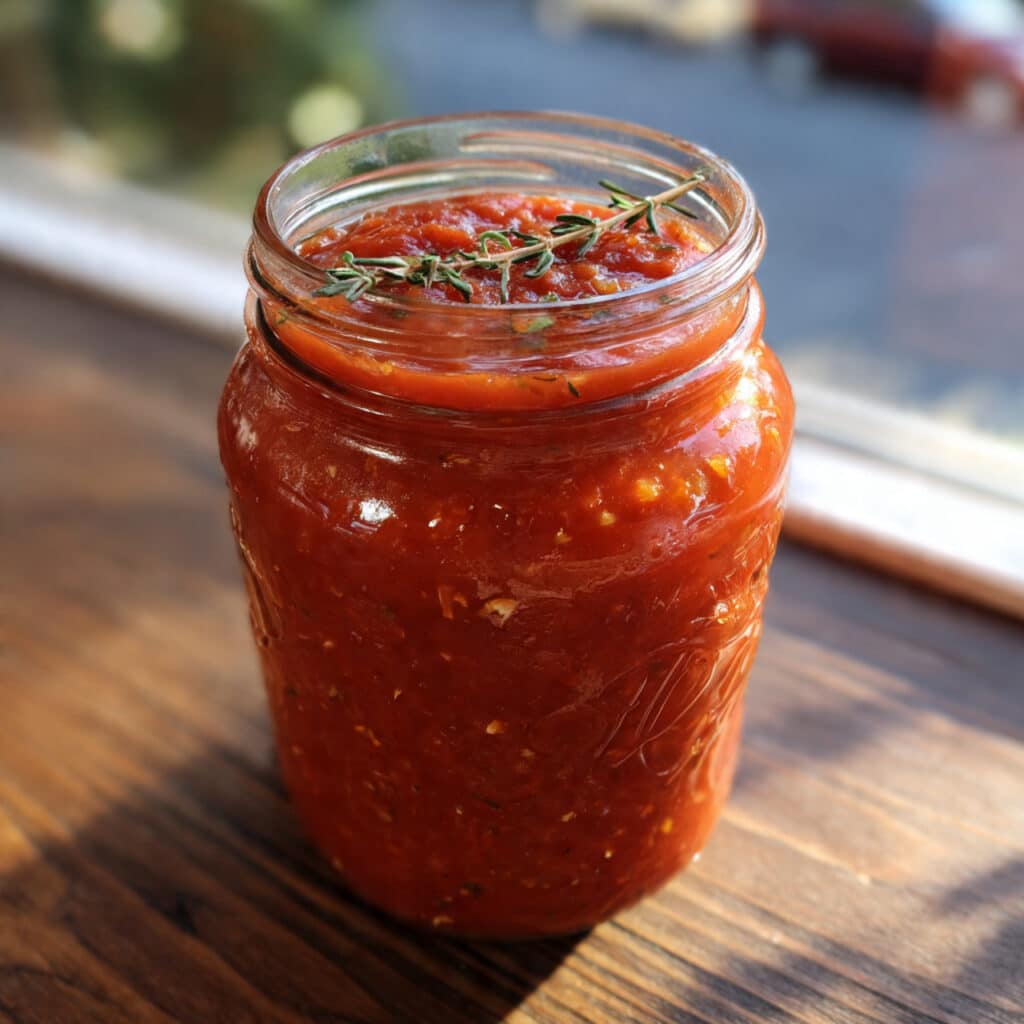
Use your marinara immediately over your favorite pasta, or let it cool completely and store it for later.
You Must Know
The key to incredible marinara is patience. Don’t crank up the heat to speed things along—you’ll end up with a thin, flat-tasting sauce. Letting it simmer low and slow is what transforms simple ingredients into something truly comforting and rich. Also, always remove that bay leaf before serving. I’ve fished more than one out of someone’s bowl at the dinner table, and it’s not cute!
Personal Secret: I always make a double batch and freeze half in quart-sized containers. On those crazy weeknights when dinner feels impossible, I pull one out, thaw it in a pot, and boom—homemade marinara in minutes.
Pro Tips & Cooking Hacks
- Use San Marzano tomatoes if you can find them — They’re sweeter, less acidic, and make a noticeable difference in flavor
- Don’t skip the onion step — Cooking them slowly builds the natural sweetness that makes this sauce taste so good
- Taste your tomatoes first — If they’re already sweet, you can skip the sugar entirely
- Stir occasionally, but not constantly — You want the sauce to reduce and thicken, so leave it alone most of the time
- Add a parmesan rind while simmering — It adds a subtle umami richness (just remember to fish it out before serving!)
- Avoid burning the garlic — It only needs 30 seconds. Burnt garlic = bitter sauce
Flavor Variations & Suggestions
This marinara is wonderfully versatile and loves a little creativity. If you want a spicy kick, add a generous pinch of red pepper flakes when you add the tomatoes—it gives the sauce a gentle heat that’s so satisfying. For a heartier, richer sauce, brown some ground beef or Italian sausage before adding the onions, then proceed with the recipe.
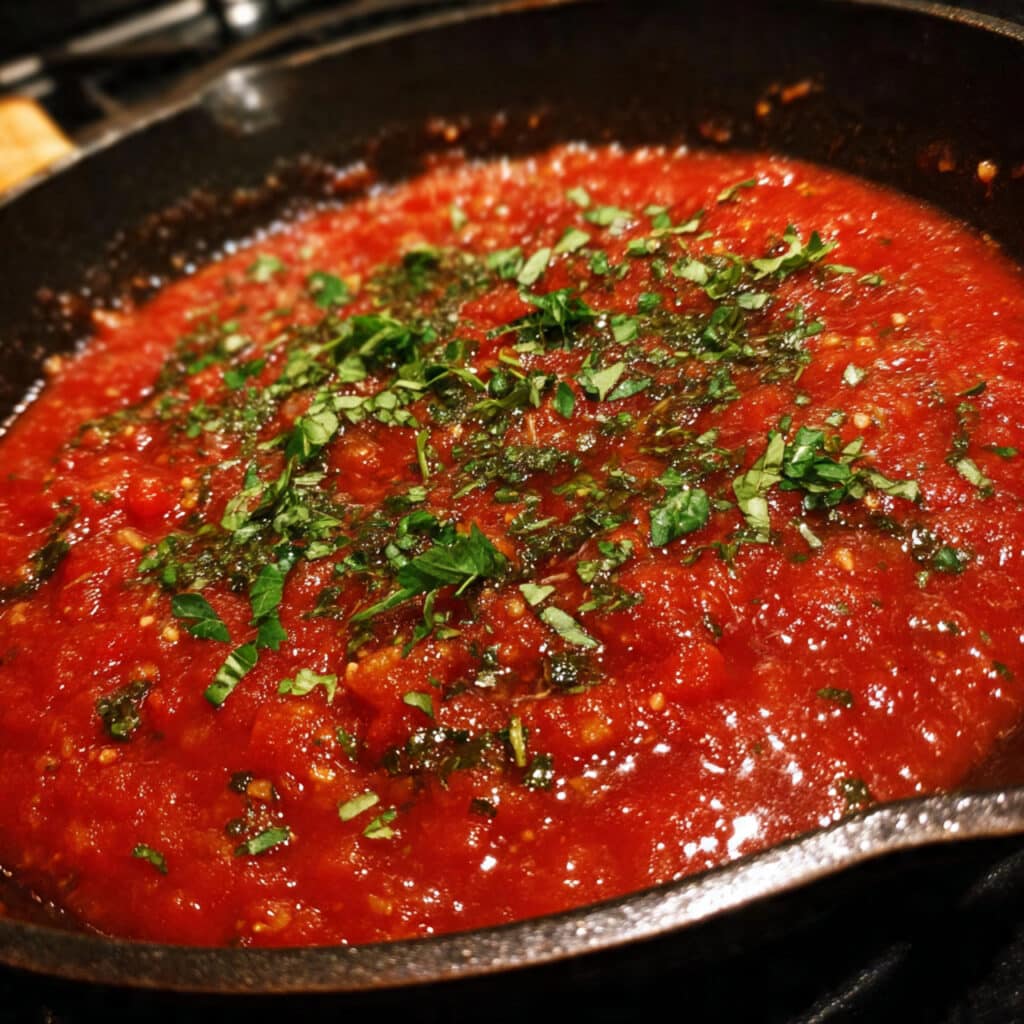
If you love fresh herbs, stir in a handful of torn fresh basil or parsley right at the end for a bright, garden-fresh finish. You can also add a splash of red wine after the garlic for a deeper, more complex flavor—let it simmer for a minute before adding the tomatoes.
And if you’re feeling fancy, try adding a tablespoon of tomato paste along with the crushed tomatoes for an even more concentrated, intense tomato flavor. This sauce is forgiving and always delicious, so don’t be afraid to make it your own.
Make-Ahead Options
Marinara sauce is one of those magical recipes that actually gets better with time. You can make it up to three days ahead and store it in an airtight container in the fridge. The flavors deepen and meld together beautifully overnight. Let it cool completely before transferring to your storage container to avoid condensation.
For longer storage, this sauce freezes like a dream. I portion mine into quart-sized freezer bags or containers and lay them flat in the freezer for easy stacking. It’ll keep for up to three months, and you can thaw it overnight in the fridge or gently reheat it from frozen in a saucepan over low heat.
This is the kind of recipe I make on a lazy Sunday so I have homemade sauce ready to go on those hectic weeknights when cooking from scratch feels impossible.
What to Serve With Marinara Sauce
This marinara is incredibly versatile and pairs beautifully with so many dishes. Obviously, it’s perfect tossed with any pasta you love—spaghetti, penne, rigatoni, or even stuffed shells. Spoon it over chicken parmesan, eggplant parmesan, or meatballs for a classic Italian dinner that feels special.
It’s also wonderful as a dipping sauce for garlic bread, mozzarella sticks, or crispy fried ravioli. Use it as a pizza sauce for homemade pizza night, or spread it on a sub roll for meatball or sausage sandwiches. I love serving it alongside a simple green salad with Italian vinaigrette and a glass of red wine for an easy, cozy dinner that feels like you spent hours in the kitchen (even though you didn’t).
Allergy Information
This marinara sauce is naturally vegan, dairy-free, and gluten-free, making it a safe and delicious option for many dietary needs. The main allergens to be aware of are the garlic and onion, which some people with sensitivities may need to avoid.
If you’re cooking for someone with an onion or garlic intolerance, you can infuse the olive oil with whole garlic cloves and onion chunks, then remove them before adding the tomatoes—you’ll still get flavor without the texture. For those avoiding nightshades, unfortunately, marinara isn’t a good fit since tomatoes are the star ingredient.
Always check your canned tomatoes for any unexpected additives if you’re dealing with specific allergies or intolerances.
Storage & Reheating
Store leftover marinara sauce in an airtight container in the refrigerator for up to 5 days. To reheat, pour it into a saucepan over medium-low heat and warm it gently, stirring occasionally. If it’s thickened up too much in the fridge, add a splash of water or broth to loosen it.
You can also reheat individual portions in the microwave in 30-second intervals, stirring between each one. For frozen sauce, thaw it overnight in the fridge, then reheat as directed. Pro tip: I always keep a jar of this in the fridge because it makes weeknight dinners so much easier. Pasta night, pizza night, or “I need dinner in 15 minutes” night—this sauce has you covered.
Questions I Get Asked A Lot
Can I use fresh tomatoes instead of canned?
You can, but honestly, canned crushed tomatoes work better for marinara. They’re picked at peak ripeness and have a consistent flavor and texture. If you do use fresh, you’ll need about 4 pounds of ripe tomatoes, blanched, peeled, and crushed—and the sauce may need a longer simmer time.
Why does my sauce taste too acidic?
Tomatoes vary in acidity depending on the brand and harvest. If your sauce tastes sharp or tangy, add the teaspoon of sugar—it balances the acidity beautifully without making the sauce taste sweet. You can also add a pinch of baking soda, but go easy (just ⅛ teaspoon) or it can affect the texture.
Can I make this in a slow cooker?
Absolutely! Sauté the onion and garlic in a skillet first, then transfer everything to your slow cooker and cook on low for 4–6 hours. The flavor will be even richer and more concentrated.
How do I thicken my marinara if it’s too thin?
Let it simmer uncovered for an additional 10–15 minutes to reduce the liquid. You can also stir in a tablespoon of tomato paste for extra body and deeper tomato flavor.
Can I double this recipe?
Yes! This recipe doubles beautifully. Just use a larger pot and keep an eye on the simmer time—it may take a bit longer to thicken with more volume.
💬 Tried this marinara sauce? Leave a comment and rating below! I’d love to hear how it turned out and what you served it with. Did you add any special touches?