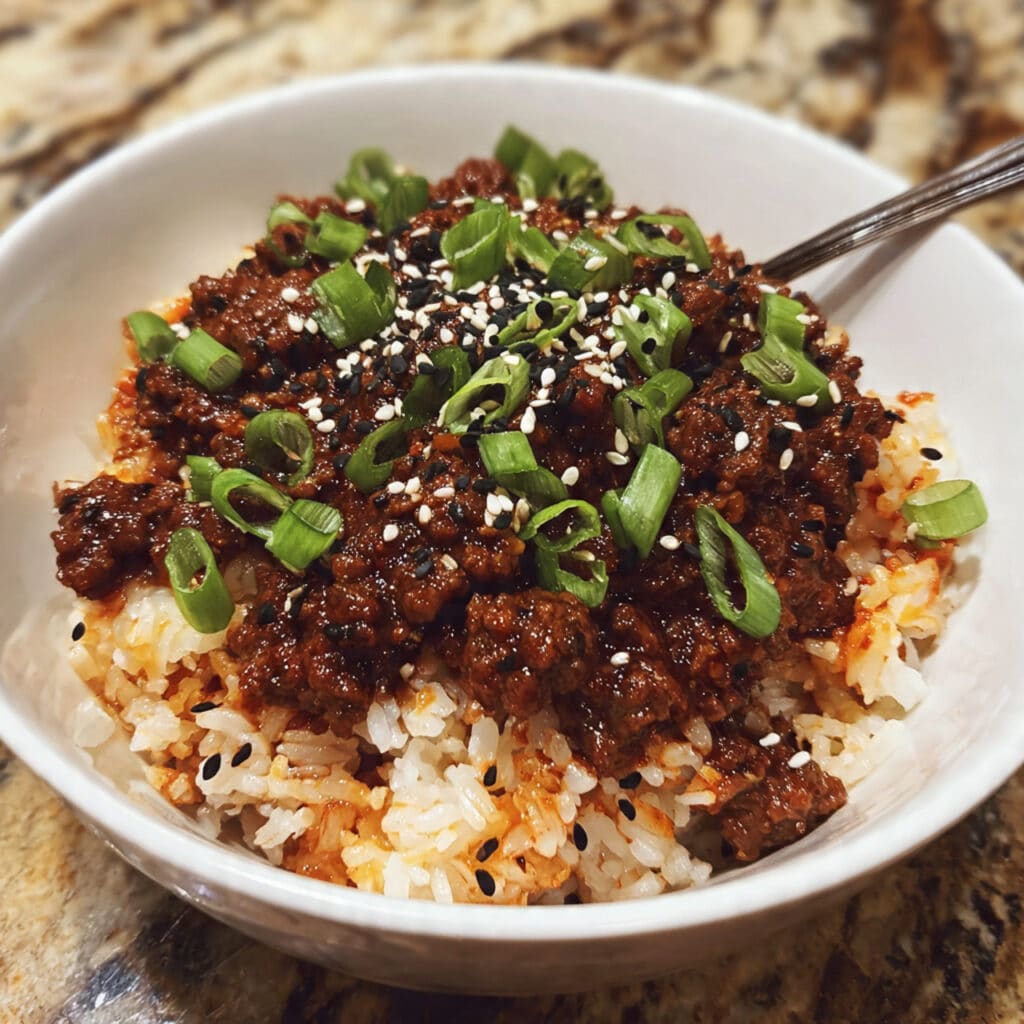
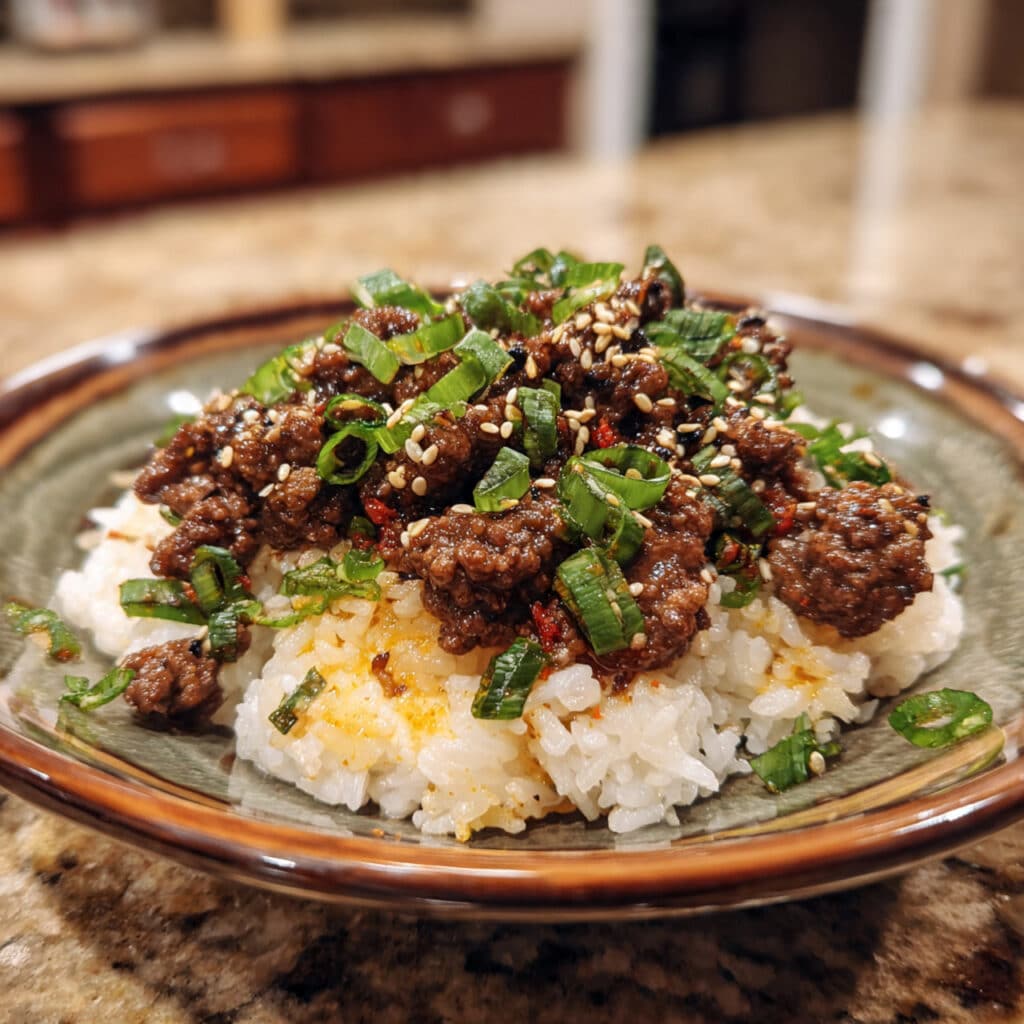
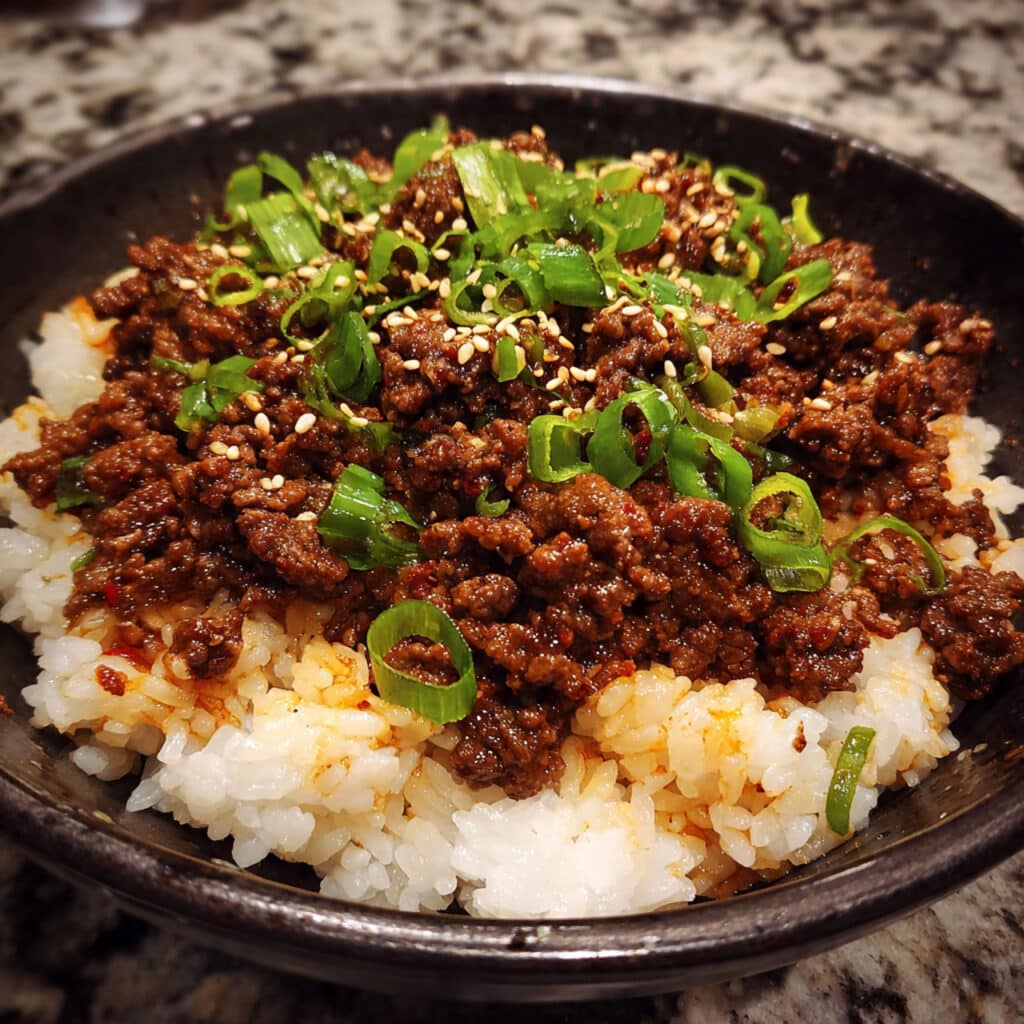
Korean beef and rice is savory, sweet, and comes together in one skillet with simple ingredients you probably already have in your pantry. Think tender ground beef glazed in a glossy sauce made with brown sugar, soy sauce, and sesame oil, all piled over fluffy rice and topped with bright green onions. It’s comfort food that tastes like you ordered takeout, but you made it yourself in about 20 minutes.
Love More Dinner Recipes? Try My Korean Ground Beef Bowl or this Oven Baked Coconut Rice next.
Why You’ll Love This Recipe
- Incredibly quick and easy — ready in about 20 minutes from start to finish
- Sweet and savory perfection — the brown sugar and soy sauce create an irresistible glaze
- Budget-friendly comfort — uses affordable ground beef and pantry staples
- Customizable heat level — adjust the red pepper flakes to suit your family’s taste
- Minimal cleanup — just one skillet and a pot of rice

Korean Beef and Rice
- Total Time: 20 minutes
- Yield: 6 bowls
Description
This Easy Korean Beef and Rice recipe is a quick, flavorful weeknight dinner made with ground beef, brown sugar, soy sauce, and sesame oil. It’s sweet, savory, and ready in just 20 minutes. Serve it over rice with green onions for a comforting, family-friendly meal everyone will love.
Ingredients
For the Korean Beef:
- 1 lb lean ground beef (85/15 or 90/10 works beautifully)
- 3 garlic cloves, minced (fresh is best for that punch of flavor)
- 1 tablespoon sesame oil (this is the secret ingredient—don’t skip it!)
- ½ cup brown sugar (light or dark both work)
- ¼ cup soy sauce (low-sodium recommended so you can control the salt)
- ¼ teaspoon ground ginger (or use 1 teaspoon fresh grated ginger)
- Salt and pepper, to taste
- ½–1 teaspoon crushed red pepper flakes (start with less if you’re not sure about spice)
For Serving:
- 2 cups cooked rice (white, brown, or jasmine all work)
- 1 bunch green onions, diced
Instructions
Place a large skillet over medium heat and add the sesame oil. Let it warm up for about 30 seconds—you’ll start to smell that gorgeous, nutty aroma. This is your flavor base, so don’t rush it.
Add the ground beef and minced garlic to the skillet. Use a wooden spoon or spatula to break the beef into small, bite-sized crumbles as it cooks.
Stir occasionally and cook until the beef is fully browned with no pink remaining, about 5–7 minutes. The garlic will become fragrant and golden—that’s exactly what you want.
Once the beef is cooked through, carefully drain off most of the excess fat from the skillet. You can tilt the pan and use a spoon to scoop it out, or blot it with paper towels.
This step keeps your sauce from getting greasy and helps the sweet-savory glaze really shine.
Return the skillet to the heat and add the brown sugar, soy sauce, ground ginger, a pinch of salt and pepper, and the crushed red pepper flakes.
Stir everything together until the brown sugar dissolves into the sauce and coats the beef. Let it simmer gently for 3–4 minutes so all those flavors can meld together and the sauce thickens slightly. You’ll see it become glossy and gorgeous.
Spoon the warm, seasoned beef over bowls of cooked rice. Top generously with the diced green onions for a pop of color and freshness.
Notes
- Use cold rice if you have leftovers — it actually works even better because it’s less sticky and soaks up the sauce beautifully
- Don’t overcrowd the pan — if your skillet is small, cook the beef in two batches so it browns instead of steams
- Add veggies for extra nutrition — toss in shredded carrots, snap peas, or broccoli florets during the last few minutes of cooking
- Double the sauce if you love it saucy — just keep the ratios the same (double everything)
- Make it less sweet — cut the brown sugar down to ⅓ cup if you prefer a more savory profile
- Prep Time: 5 minutes
- Cook Time: 15 minutes
- Category: Main Dish
- Method: Stovetop
- Cuisine: Korean
Ingredients You’ll Need
For the Korean Beef:
- 1 lb lean ground beef (85/15 or 90/10 works beautifully)
- 3 garlic cloves, minced (fresh is best for that punch of flavor)
- 1 tablespoon sesame oil (this is the secret ingredient—don’t skip it!)
- ½ cup brown sugar (light or dark both work)
- ¼ cup soy sauce (low-sodium recommended so you can control the salt)
- ¼ teaspoon ground ginger (or use 1 teaspoon fresh grated ginger)
- Salt and pepper, to taste
- ½–1 teaspoon crushed red pepper flakes (start with less if you’re not sure about spice)
For Serving:
- 2 cups cooked rice (white, brown, or jasmine all work)
- 1 bunch green onions, diced (these add color and a fresh bite)
Why These Ingredients Work
The magic of this dish is in how just a few simple ingredients come together to create something that tastes complex and restaurant-worthy.
The sesame oil is the aromatic foundation—it has a deep, toasty flavor that fills your kitchen and makes everything taste richer. Brown sugar balances the salty soy sauce with a caramelized sweetness that clings to every bite of beef.
Garlic and ginger bring warmth and depth, while the red pepper flakes add just enough heat to wake up your taste buds without overwhelming the dish. Lean ground beef is perfect here because it cooks quickly and absorbs all that gorgeous sauce without making the dish greasy.
And those green onions? They’re the fresh, bright finish that makes the whole plate feel vibrant and complete.
Essential Tools and Equipment
- Large skillet or frying pan — something with enough room to break up the beef easily
- Wooden spoon or spatula — for browning and stirring
- Medium saucepan with lid — for cooking the rice
- Measuring cups and spoons — for accuracy with the sauce
- Knife and cutting board — for mincing garlic and slicing green onions
- Slotted spoon or paper towels — for draining excess fat
Step-by-Step Instructions
Step 1: Heat the Skillet and Add Sesame Oil
Place a large skillet over medium heat and add the sesame oil. Let it warm up for about 30 seconds—you’ll start to smell that gorgeous, nutty aroma. This is your flavor base, so don’t rush it.
Step 2: Brown the Beef and Garlic
Add the ground beef and minced garlic to the skillet. Use a wooden spoon or spatula to break the beef into small, bite-sized crumbles as it cooks.
Stir occasionally and cook until the beef is fully browned with no pink remaining, about 5–7 minutes. The garlic will become fragrant and golden—that’s exactly what you want.
Step 3: Drain the Excess Fat
Once the beef is cooked through, carefully drain off most of the excess fat from the skillet. You can tilt the pan and use a spoon to scoop it out, or blot it with paper towels.
This step keeps your sauce from getting greasy and helps the sweet-savory glaze really shine.
Step 4: Add the Sauce Ingredients
Return the skillet to the heat and add the brown sugar, soy sauce, ground ginger, a pinch of salt and pepper, and the crushed red pepper flakes.
Stir everything together until the brown sugar dissolves into the sauce and coats the beef. Let it simmer gently for 3–4 minutes so all those flavors can meld together and the sauce thickens slightly. You’ll see it become glossy and gorgeous.
Step 5: Serve Over Rice and Garnish
Spoon the warm, seasoned beef over bowls of cooked rice. Top generously with the diced green onions for a pop of color and freshness.
You Must Know
The key to getting that perfect sweet-savory balance is to not skip the step of draining the fat after browning the beef. If you leave too much grease in the pan, the sauce won’t cling properly and the dish can taste heavy.
Also, make sure your brown sugar fully dissolves into the soy sauce—give it a good stir and let it simmer for a few minutes. If you rush this step, you’ll have grainy bits of sugar instead of a smooth, glossy glaze.
Personal Secret: I always taste the sauce before serving and adjust it to my mood. If I want it a little sweeter, I add another tablespoon of brown sugar.
Pro Tips & Cooking Hacks
- Use cold rice if you have leftovers — it actually works even better because it’s less sticky and soaks up the sauce beautifully
- Don’t overcrowd the pan — if your skillet is small, cook the beef in two batches so it browns instead of steams
- Add veggies for extra nutrition — toss in shredded carrots, snap peas, or broccoli florets during the last few minutes of cooking
- Double the sauce if you love it saucy — just keep the ratios the same (double everything)
- Make it less sweet — cut the brown sugar down to ⅓ cup if you prefer a more savory profile
- Fresh ginger makes a difference — if you have it, swap the ground ginger for 1 teaspoon of freshly grated ginger for a brighter, zingier flavor
Flavor Variations & Suggestions
This recipe is like a blank canvas—you can make it your own in so many ways.
If you want to add more vegetables, try stirring in thinly sliced bell peppers, shredded cabbage, or even frozen edamame during the last few minutes of cooking. For a citrusy twist, squeeze fresh lime juice over the top just before serving—it brightens everything up.
You can also swap the ground beef for ground turkey or ground chicken if you want a leaner option. If you’re feeling adventurous, add a tablespoon of hoisin sauce or a drizzle of sriracha to the glaze for extra depth and heat.
And if you want to make it feel a little fancier, serve it in lettuce cups instead of over rice for a fun, fresh presentation.
Make-Ahead Options
This Korean beef is best when it’s freshly made, but it also reheats beautifully, which makes it perfect for meal prep.
You can cook the beef mixture up to three days ahead and store it in an airtight container in the refrigerator. When you’re ready to eat, just reheat it gently in a skillet or in the microwave, adding a splash of water or soy sauce if it looks dry.
The rice can also be cooked ahead and stored separately—just reheat it with a damp paper towel in the microwave to bring back its fluffy texture.
If you want to freeze the beef, let it cool completely, then transfer it to a freezer-safe container or bag. It will keep for up to three months. Thaw it overnight in the fridge before reheating.
What to Serve With Korean Beef and Rice
This dish is hearty enough to stand on its own, but it also pairs beautifully with simple, fresh sides.
I love serving it with a crisp cucumber salad dressed with rice vinegar and a pinch of sugar—it adds a cool, crunchy contrast to the warm, savory beef. Steamed or roasted broccoli, bok choy, or green beans also work wonderfully.
If you want to make it a bigger spread, add some quick pickled vegetables, a bowl of miso soup, or even some crispy egg rolls. For dessert, keep it light with fresh fruit or a scoop of mango sorbet.
Allergy Information
This recipe contains soy (from the soy sauce) and sesame (from the sesame oil), which are common allergens.
If you need to make it soy-free, you can substitute coconut aminos for the soy sauce—it has a similar savory-sweet flavor. For a sesame-free version, replace the sesame oil with a neutral oil like avocado or grapeseed oil, though you’ll lose some of that toasty, nutty depth.
The recipe is naturally gluten-free if you use tamari or gluten-free soy sauce instead of regular soy sauce. It’s also dairy-free and nut-free as written, which makes it friendly for many dietary needs.
Storage & Reheating
Store any leftover Korean beef in an airtight container in the refrigerator for up to 4 days. Keep the rice separate if possible—it reheats better that way.
To reheat the beef, warm it gently in a skillet over medium-low heat with a splash of water or broth to loosen the sauce. You can also microwave it in 30-second intervals, stirring in between, until heated through.
The rice can be reheated in the microwave with a damp paper towel on top to add moisture, or steamed briefly in a pot. If the beef looks dry after storing, just add a teaspoon of soy sauce and a pinch of brown sugar while reheating to refresh the glaze.
Questions I Get Asked A Lot
Can I use a different cut of beef instead of ground beef?
Absolutely! Thinly sliced sirloin, flank steak, or ribeye work beautifully if you want a more traditional Korean beef bowl.
Just slice the beef against the grain into thin strips and cook it quickly over high heat before adding the sauce. It’ll be a little more tender and fancy, but just as delicious.
My sauce seems too thin, how do I thicken it?
If your sauce isn’t as thick as you’d like, let it simmer for an extra minute or two to reduce and concentrate.
You can also mix 1 teaspoon of cornstarch with 1 tablespoon of cold water, then stir it into the beef and let it cook for another minute. It’ll thicken up beautifully and cling to the meat.
Can I make this in the slow cooker or Instant Pot?
You can! For the slow cooker, brown the beef and garlic in a skillet first, then transfer everything to the slow cooker with the sauce ingredients. Cook on low for 2–3 hours.
For the Instant Pot, use the sauté function to brown the beef, then add the sauce and cook on manual high pressure for 5 minutes with a quick release. Just know that the texture will be a bit softer than the skillet version.
Is this recipe spicy?
It’s as spicy as you want it to be! With ½ teaspoon of red pepper flakes, it has a gentle warmth that most people find mild.
If you’re sensitive to spice, start with just a pinch. If you love heat, go up to a full teaspoon or even more. You can always add extra at the table, too.
What’s the best type of rice to serve with this?
White jasmine or long-grain white rice is classic and soaks up the sauce perfectly. Brown rice adds a nutty flavor and extra fiber.
Even cauliflower rice works if you’re looking for a low-carb option. Just make sure whatever rice you use is hot and fluffy when you serve it.
💬 Tried this recipe? Leave a comment and rating below! I’d love to hear how it turned out for you—and if you added your own special twist.