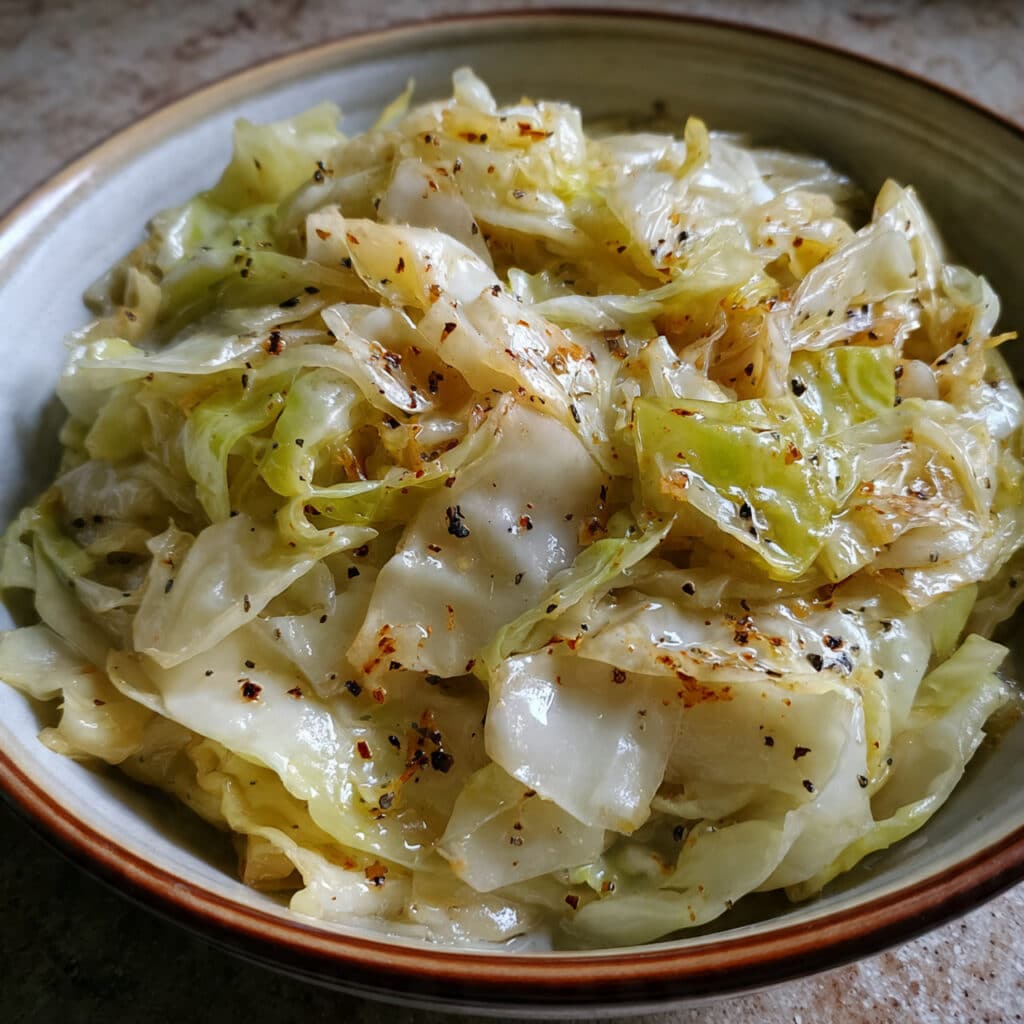
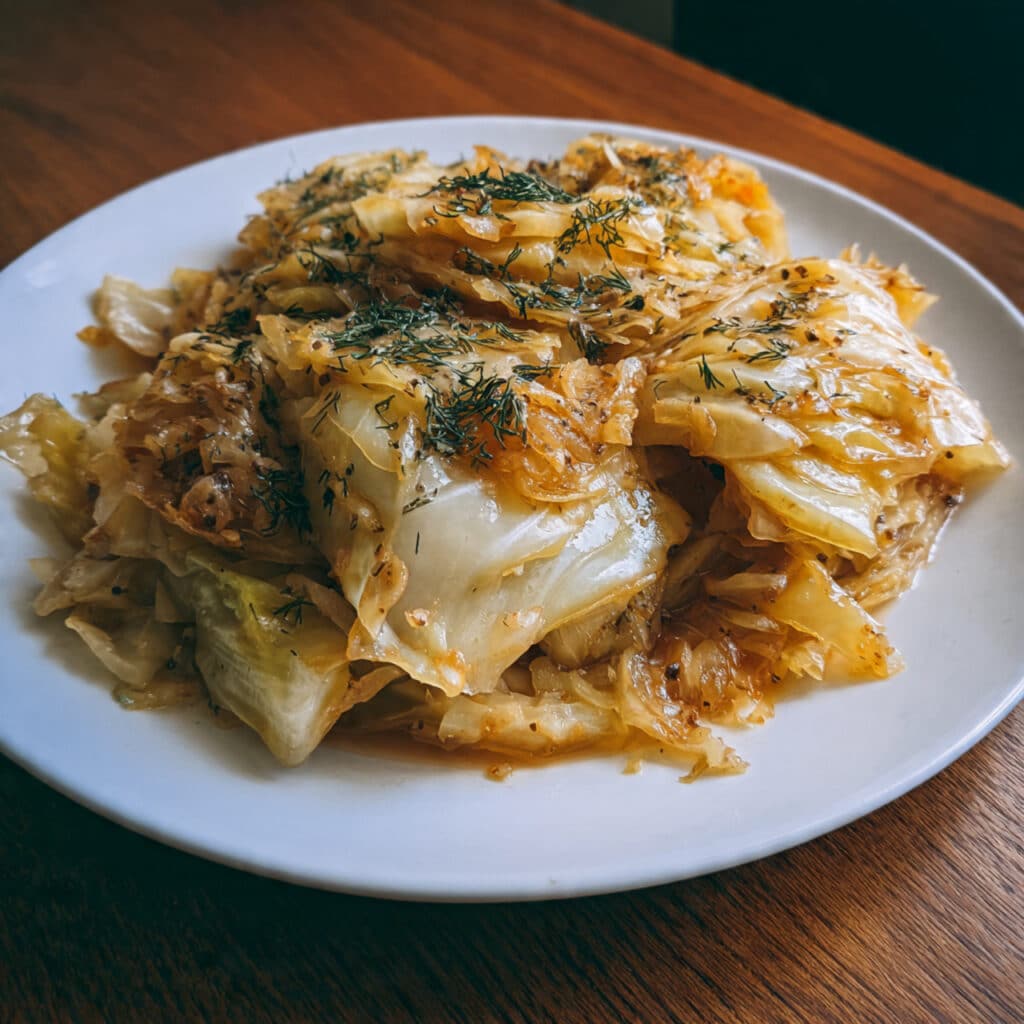
Braised Cabbage is simple, soul warming side dish that takes you straight back to Sunday dinners at Grandma’s table. With just a handful of pantry staples, butter, onion, a splash of vinegar, and that secret touch of caraway seeds. This humble cabbage transforms into something tender, slightly sweet, and absolutely irresistible.
Love More Dinner Recipes? Try My Ground Beef and Cabbage Soup or this Slow Cooker Unstuffed Cabbage Rolls next.
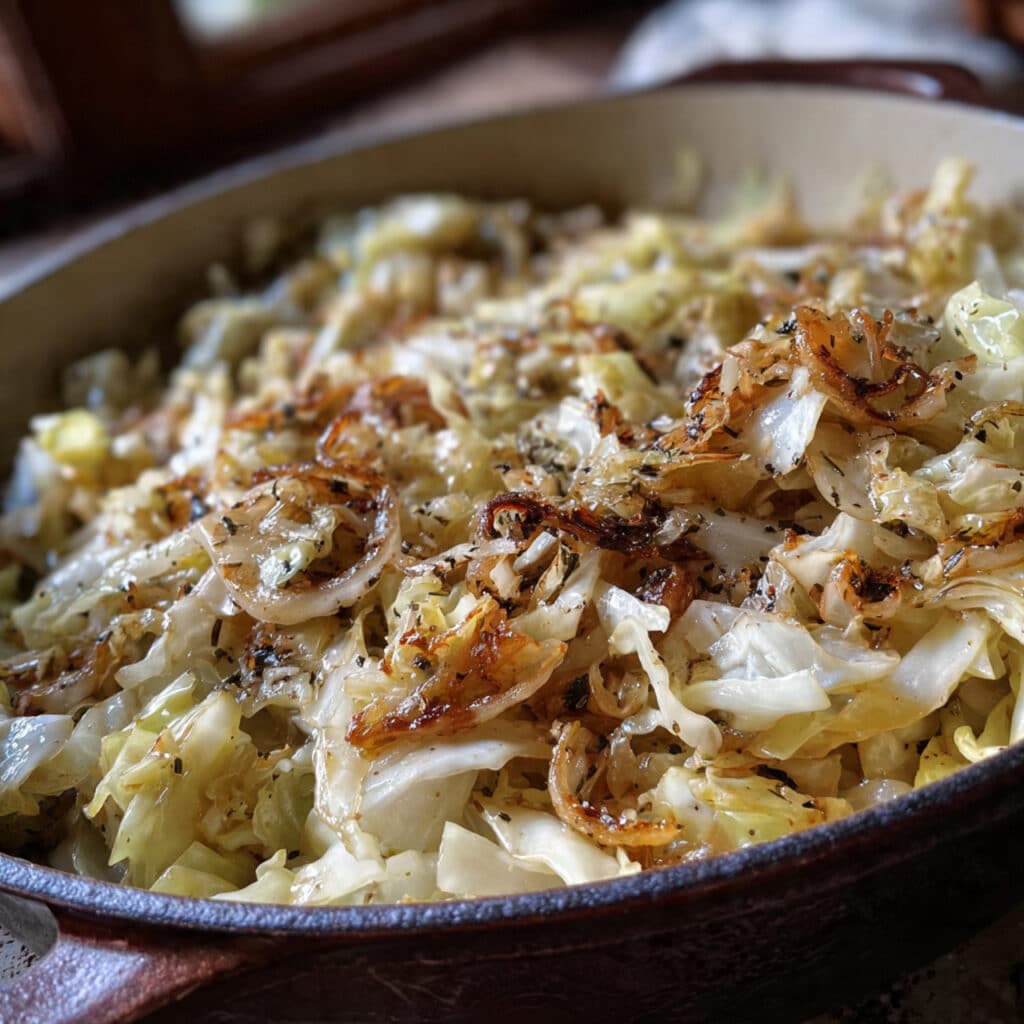
Why You’ll Love This Recipe
- Pure comfort food — Soft, buttery cabbage with a hint of sweetness and tang that tastes like home
- Ridiculously easy — Just slice, simmer, and serve. No fancy techniques or hard-to-find ingredients
- Budget-friendly magic — Transforms an inexpensive head of cabbage into something special
- Perfectly versatile — Pairs beautifully with pork chops, roasted chicken, sausages, or serves as a cozy vegetarian side
- Old-world charm — Those caraway seeds add a nostalgic, European flair that makes it feel extra special

Braised Cabbage
- Total Time: 35 minutes
- Yield: About 3 cups
Description
This old-fashioned Braised Cabbage recipe transforms humble cabbage into a tender, flavorful side dish with butter, onions, vinegar, and caraway seeds. Sweet, tangy, and perfectly comforting, it pairs beautifully with pork, chicken, or beef. Simple ingredients, cozy flavors, and easy enough for weeknight dinners!
Ingredients
For the Braised Cabbage:
- ½ head green cabbage — cored and sliced into ~¼-inch slices (about 6–8 cups sliced)
- ½ onion — sliced into ~¼-inch slices (yellow or white onion works beautifully)
- 2 tablespoons butter (or more, because butter makes everything better)
- 1 tablespoon white vinegar (the secret to that perfect tang)
- 2 teaspoons caraway seeds (this is what gives it that nostalgic flavor)
- 1 cup water
- 1 tablespoon white (granulated) sugar (balances the vinegar perfectly)
- 1 teaspoon salt
Instructions
Start by coring your cabbage and slicing it into roughly ¼-inch slices. Don’t worry about making them perfect—rustic is beautiful here!
Slice your onion the same way. The key is keeping them similar in size so everything cooks evenly and gets tender at the same time.
In your large skillet or heavy pot, melt the butter over medium heat. Once it’s bubbling gently, add your sliced onion.
Sauté for just a few minutes until the onion starts to soften and turn translucent. Your kitchen is already starting to smell amazing, isn’t it?
Now add all that beautiful sliced cabbage to the pot. It might look like a mountain at first, but trust me—it’ll cook down!
Stir everything gently to combine, then sprinkle in the caraway seeds, salt, and sugar. Give it another gentle stir to distribute those seasonings throughout.
Pour in the cup of water and that tablespoon of white vinegar. Stir everything together so the cabbage is well-coated and the seasonings are evenly distributed.
This is where the magic starts to happen.
Bring the mixture to a gentle simmer, then cover your pot with the lid. Let it simmer away for about 20–30 minutes, stirring occasionally.
You’ll know it’s done when the cabbage is tender and has soaked up all those wonderful flavors. The cabbage should be soft but not mushy, with just a little bite left if you like it that way.
Give it a taste and adjust the seasonings as needed. Want it a bit tangier? Add a splash more vinegar. Prefer it sweeter? A pinch more sugar does the trick.
Need more salt? Go for it! This is your chance to make it just right for your family’s taste buds. Once it’s perfect, remove from heat.
Transfer your beautiful braised cabbage to a serving dish and bring it to the table while it’s still warm.
Notes
- Don’t overcrowd your pot — If you’re doubling the recipe, use a larger pot or cook in batches. Overcrowding means steaming instead of braising
- Taste as you go — Everyone’s palate is different. Start with the recipe amounts, then adjust the vinegar and sugar balance to your liking
- Low and slow wins the race — Medium to medium-low heat is your friend. High heat will make the cabbage bitter and unpleasantly soft
- Save that cooking liquid — If there’s flavorful liquid left in the pan, don’t drain it! Spoon it over the cabbage when serving for extra flavor
- Fresh vs. old cabbage matters — Fresher cabbage will be sweeter and cook faster. Older cabbage might need a few extra minutes
- No caraway seeds? — Try a pinch of fennel seeds or even a bay leaf for a different but still delicious flavor profile
- Prep Time: 10 minutes
- Cook Time: 25 minutes
- Category: Side Dish
- Method: Braising
- Cuisine: German-inspired
Ingredients You’ll Need
For the Braised Cabbage:
- ½ head green cabbage — cored and sliced into ~¼-inch slices (about 6–8 cups sliced)
- ½ onion — sliced into ~¼-inch slices (yellow or white onion works beautifully)
- 2 tablespoons butter (or more, because butter makes everything better)
- 1 tablespoon white vinegar (the secret to that perfect tang)
- 2 teaspoons caraway seeds (this is what gives it that nostalgic flavor)
- 1 cup water
- 1 tablespoon white (granulated) sugar (balances the vinegar perfectly)
- 1 teaspoon salt (plus more to taste)
Why These Ingredients Work
The butter creates that silky, rich base that makes each bite feel like a warm hug. It melts into the cabbage as it braises, adding depth and comfort to every forkful.
The onion softens and sweetens as it cooks, becoming almost jammy and adding another layer of flavor that complements the mild cabbage beautifully.
Those caraway seeds are truly the secret weapon here. They add a slightly nutty, earthy flavor with hints of anise that’s traditional in European cabbage dishes. If you’ve ever wondered what makes braised cabbage taste so distinctly nostalgic and cozy, it’s those little seeds working their magic.
The combination of vinegar and sugar is pure genius. The vinegar cuts through the richness and adds brightness, while the sugar balances it out and enhances the natural sweetness of the cabbage. Together, they create that perfect sweet-and-tangy flavor that keeps you coming back for another bite.
The water helps everything braise gently, turning tough cabbage leaves into something melt-in-your-mouth tender.
Essential Tools and Equipment
- Large skillet or heavy pot with a lid — A 12-inch skillet or Dutch oven works perfectly
- Sharp knife — For slicing the cabbage and onion
- Cutting board — Your trusty prep station
- Wooden spoon or spatula — For stirring and mixing
- Measuring spoons — To keep those flavors balanced
Step-by-Step Instructions
Step 1: Prepare Your Vegetables
Start by coring your cabbage and slicing it into roughly ¼-inch slices. Don’t worry about making them perfect—rustic is beautiful here!
Slice your onion the same way. The key is keeping them similar in size so everything cooks evenly and gets tender at the same time.
Step 2: Melt Butter and Sauté the Onion
In your large skillet or heavy pot, melt the butter over medium heat. Once it’s bubbling gently, add your sliced onion.
Sauté for just a few minutes until the onion starts to soften and turn translucent. Your kitchen is already starting to smell amazing, isn’t it?
Step 3: Add Cabbage and Seasonings
Now add all that beautiful sliced cabbage to the pot. It might look like a mountain at first, but trust me—it’ll cook down!
Stir everything gently to combine, then sprinkle in the caraway seeds, salt, and sugar. Give it another gentle stir to distribute those seasonings throughout.
Step 4: Add the Liquids
Pour in the cup of water and that tablespoon of white vinegar. Stir everything together so the cabbage is well-coated and the seasonings are evenly distributed.
This is where the magic starts to happen.
Step 5: Simmer Until Tender
Bring the mixture to a gentle simmer, then cover your pot with the lid. Let it simmer away for about 20–30 minutes, stirring occasionally.
You’ll know it’s done when the cabbage is tender and has soaked up all those wonderful flavors. The cabbage should be soft but not mushy, with just a little bite left if you like it that way.
Step 6: Adjust and Finish
Give it a taste and adjust the seasonings as needed. Want it a bit tangier? Add a splash more vinegar. Prefer it sweeter? A pinch more sugar does the trick.
Need more salt? Go for it! This is your chance to make it just right for your family’s taste buds. Once it’s perfect, remove from heat.
Step 7: Serve Warm
Transfer your beautiful braised cabbage to a serving dish and bring it to the table while it’s still warm.
You Must Know
The key to perfect braised cabbage is patience—don’t rush the simmering process. That 20–30 minute braise time is when the cabbage transforms from raw and crunchy to tender and flavorful, soaking up all that buttery, tangy goodness.
If you try to rush it on high heat, you’ll end up with unevenly cooked cabbage that’s brown on the outside and still tough inside.
Also, resist the urge to skip the caraway seeds if you have them. Yes, the dish will still be good without them, but they add that authentic, old-world flavor that makes this dish taste like it came from a grandmother’s kitchen in Europe.
If you’ve never used caraway seeds before, this recipe is the perfect introduction—they’re subtle but magical.
Personal Secret: I always add an extra tablespoon of butter at the very end, right before serving. Just stir it in and let it melt over the hot cabbage. It adds an extra layer of richness and makes the dish taste even more luxurious. Some things are worth the extra calories, and this is definitely one of them!
Pro Tips & Cooking Hacks
- Don’t overcrowd your pot — If you’re doubling the recipe, use a larger pot or cook in batches. Overcrowding means steaming instead of braising
- Taste as you go — Everyone’s palate is different. Start with the recipe amounts, then adjust the vinegar and sugar balance to your liking
- Low and slow wins the race — Medium to medium-low heat is your friend. High heat will make the cabbage bitter and unpleasantly soft
- Save that cooking liquid — If there’s flavorful liquid left in the pan, don’t drain it! Spoon it over the cabbage when serving for extra flavor
- Fresh vs. old cabbage matters — Fresher cabbage will be sweeter and cook faster. Older cabbage might need a few extra minutes
- No caraway seeds? — Try a pinch of fennel seeds or even a bay leaf for a different but still delicious flavor profile
Flavor Variations & Suggestions
This recipe is wonderfully adaptable! For a German-style version, add half a peeled, diced apple along with the cabbage and reduce the sugar slightly—the apple adds natural sweetness and a lovely texture.
If you want a richer, more indulgent dish, stir in a few tablespoons of heavy cream at the end for a creamy braised cabbage that’s absolutely decadent.
Craving something with more depth? Add a splash of white wine instead of some of the water, or toss in a couple strips of bacon before adding the onion. Let the bacon crisp up, then proceed with the recipe—the smoky flavor is incredible.
For a vegetarian version with more umami, add a teaspoon of soy sauce or a splash of vegetable broth instead of plain water.
Want to make it spicier? A pinch of red pepper flakes or a dash of hot sauce stirred in at the end adds a nice kick. Or go the opposite direction and make it sweeter and more kid-friendly by increasing the sugar to 2 tablespoons and reducing the vinegar slightly.
Some families even like adding raisins or dried cranberries during the last 10 minutes of cooking for pops of sweetness throughout.
Make-Ahead Options
This is one of those wonderful dishes that actually tastes even better the next day, making it perfect for meal prep or getting ahead for a big family dinner. You can make the entire dish up to three days in advance.
Just let it cool completely, then store it in an airtight container in the refrigerator. When you’re ready to serve, simply reheat it gently on the stovetop with a splash of water or in the microwave.
If you want to prep but not fully cook, you can slice your cabbage and onion up to a day ahead and store them in separate containers in the fridge. This makes the actual cooking process super quick when dinner time rolls around.
The flavors will meld and deepen as the cabbage sits, so leftovers are genuinely delicious—sometimes even better than freshly made.
For longer storage, braised cabbage freezes beautifully for up to three months. Cool it completely, portion it into freezer-safe containers, and freeze. Thaw overnight in the refrigerator before reheating.
The texture might be slightly softer after freezing, but the flavor remains wonderful, making it a great option for batch cooking.
What to Serve With Braised Cabbage
This tender, tangy cabbage is the perfect sidekick to so many comfort food classics. It’s absolutely heavenly alongside pork chops, pork roast, or bratwurst—the traditional pairing that never fails. The sweet-and-sour notes cut through rich, fatty meats beautifully.
It’s also wonderful with roasted chicken, beef brisket, or even a simple grilled steak.
For a complete comfort food spread, serve it with creamy mashed potatoes and your favorite protein. The combination of buttery potatoes and tangy cabbage is pure magic.
It also pairs beautifully with roasted root vegetables, crusty bread for soaking up those delicious juices, and a simple green salad to lighten things up.
If you’re going for a German or Eastern European themed meal, serve it alongside spaetzle, potato dumplings, or rye bread. And don’t forget it makes a wonderful vegetarian main course when served over rice or quinoa with a fried egg on top.
The runny yolk mixing with the braised cabbage is absolutely divine.
Allergy Information
This recipe contains dairy (butter) and is naturally gluten-free, nut-free, and egg-free. For those with dairy allergies or following a vegan diet, you can easily substitute the butter with olive oil, vegan butter, or coconut oil.
The flavor will be slightly different, but still delicious—just use a good quality oil with flavor you enjoy.
The recipe is naturally low in common allergens, making it a safe choice for most dietary restrictions. If you’re watching your sodium intake, you can reduce or eliminate the salt and use low-sodium broth instead of water for flavor.
For those following a low-FODMAP diet, be aware that both cabbage and onion can be triggers, though cooking them thoroughly as in this recipe may make them more tolerable for some people.
Storage & Reheating
Store any leftover braised cabbage in an airtight container in the refrigerator for up to 4–5 days. The flavors continue to develop as it sits, so those leftovers are truly delicious!
To reheat, simply warm it gently on the stovetop over medium-low heat, stirring occasionally. Add a splash of water or broth if it seems dry.
For microwave reheating, place the cabbage in a microwave-safe bowl, cover with a damp paper towel, and heat in 30-second intervals, stirring between each, until warmed through. The cabbage might release some liquid as it reheats—that’s normal and totally fine. Just stir it back in for extra flavor.
Quick Tip: Leftover braised cabbage makes an amazing addition to other meals! Stir it into scrambled eggs for breakfast, use it as a topping for baked potatoes, toss it with pasta and a bit of cream for a quick dinner, or pile it onto sandwiches for extra flavor and nutrition. Waste not, want not!
Questions I Get Asked A Lot
Can I use red cabbage instead of green?
Absolutely! Red cabbage works beautifully in this recipe. Just know that it will turn the dish a gorgeous purple color, and you might want to add an extra splash of vinegar to help preserve that pretty hue.
My cabbage is still tough after 30 minutes, what should I do?
No problem! Just keep cooking. Some older or denser cabbages take longer to become tender. Add a splash more water if the pot is getting dry, cover it back up, and give it another 10–15 minutes.
Can I make this without caraway seeds?
Yes, though the flavor will be noticeably different. Caraway seeds give this dish its traditional, nostalgic taste, but you can substitute fennel seeds, dill seeds, or even just omit them entirely.
Is this dish supposed to be sweet or sour?
It’s meant to be beautifully balanced—both sweet and tangy! That’s what makes it so special. If yours tastes too vinegary, add a bit more sugar. If it’s too sweet, add another splash of vinegar.
💬 Tried this recipe? Leave a comment and rating below! I’d love to hear how it turned out and what you served it with. Did you make any fun variations?