
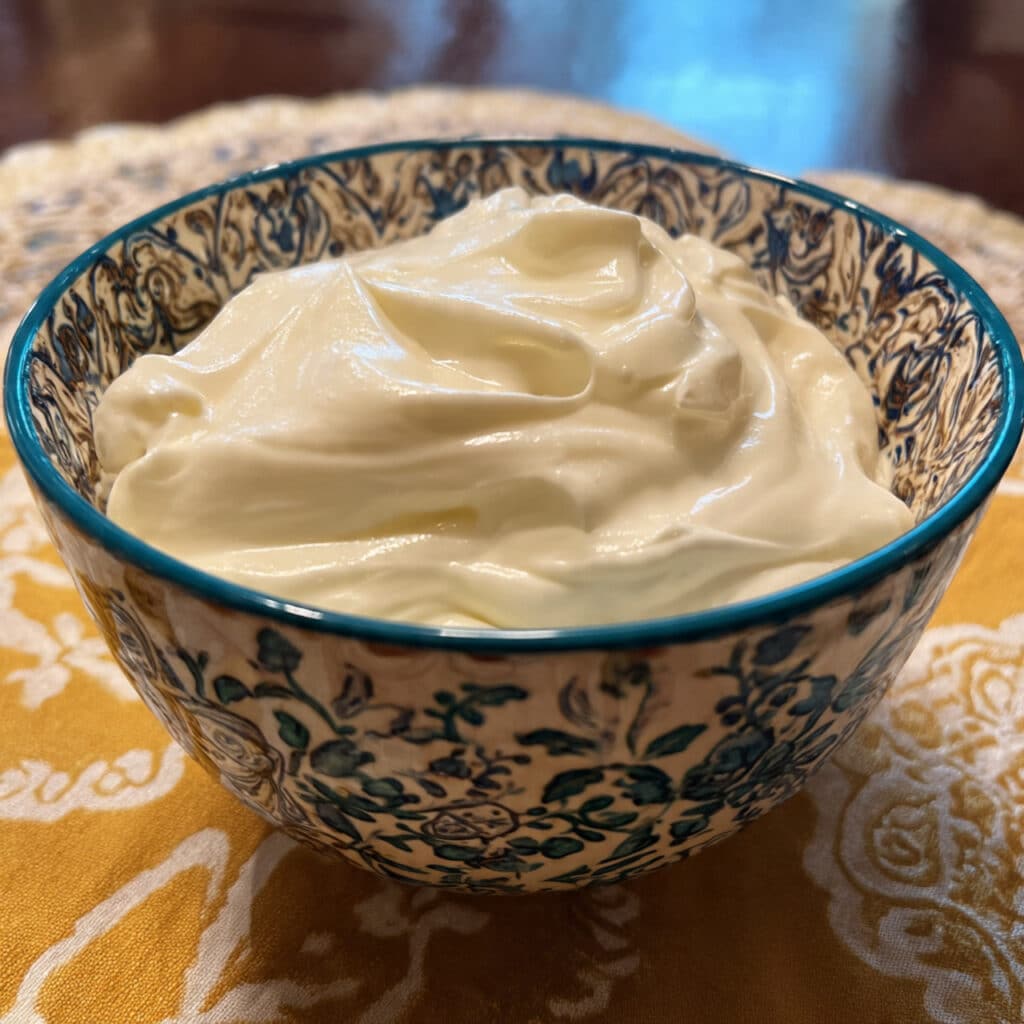
Homemade Greek yogurt is thick, creamy, protein-packed comfort in a bowl that you can make it right in your own kitchen with just one ingredient! This simple straining method transforms regular yogurt into luxuriously thick Greek yogurt that’s perfect for breakfast bowls, smoothies, or even as a healthier swap for sour cream.
Why You’ll Love This Recipe
- One ingredient and so simple — If you can pour yogurt into a strainer, you can make this!
- Healthier and more affordable — Homemade Greek yogurt costs a fraction of what you’d pay at the store, with no additives or preservatives.
- Customize the thickness — Want it slightly thick or almost cream-cheese consistency? You control it by how long you strain.
- Higher in protein — Straining removes excess whey, concentrating the protein and making it more satisfying.
- So versatile — Use it in sweet breakfasts, savory dips, baking, or as a healthier alternative to mayo or sour cream.

How to Make Homemade Greek Yogurt
- Total Time: 6-12 hours
- Yield: About 2 cups Greek yogurt
Description
Learn how to make authentic Greek yogurt at home using a simple straining method. This thick, creamy, protein-rich yogurt requires just plain yogurt and a few hours of hands-off time. Perfect for breakfast bowls, smoothies, dips, or as a healthy substitute for sour cream. Customize the thickness to your preference and save money compared to store-bought versions.
Ingredients
Main Ingredient:
- Plain yogurt (store-bought or homemade) — 4 cups (32 oz) yields about 2 cups Greek yogurt
- Tip: Whole milk yogurt gives the creamiest, richest result. You can use low-fat, but it won’t be quite as luscious.
Equipment:
- Fine mesh sieve or colander
- Cheesecloth, paper towels, or coffee filters
- Large bowl (to catch the whey)
- Airtight container for storage
Instructions
Step 1: Set Up Your Straining Station
Line your mesh sieve or colander with a layer of cheesecloth, paper towels (2-3 layers work great), or a coffee filter. Place it over a large bowl, making sure there’s enough space underneath for the whey to collect without touching the bottom of your strainer.
Step 2: Add Your Yogurt
Pour your plain yogurt into the lined strainer. Don’t worry about spreading it around or making it perfect — just pour it in gently.
You’ll notice it might look like a lot of yogurt now, but remember, it’s going to reduce in volume as the liquid drains out.
Step 3: Refrigerate and Let Time Do Its Thing
Cover the whole setup loosely with plastic wrap or a clean kitchen towel, then pop it in the refrigerator. Now comes the easy part — just let it sit! The longer you strain, the thicker your yogurt becomes:
- 2–3 hours → You’ll get a slightly thicker yogurt, great for smoothies or lighter parfaits
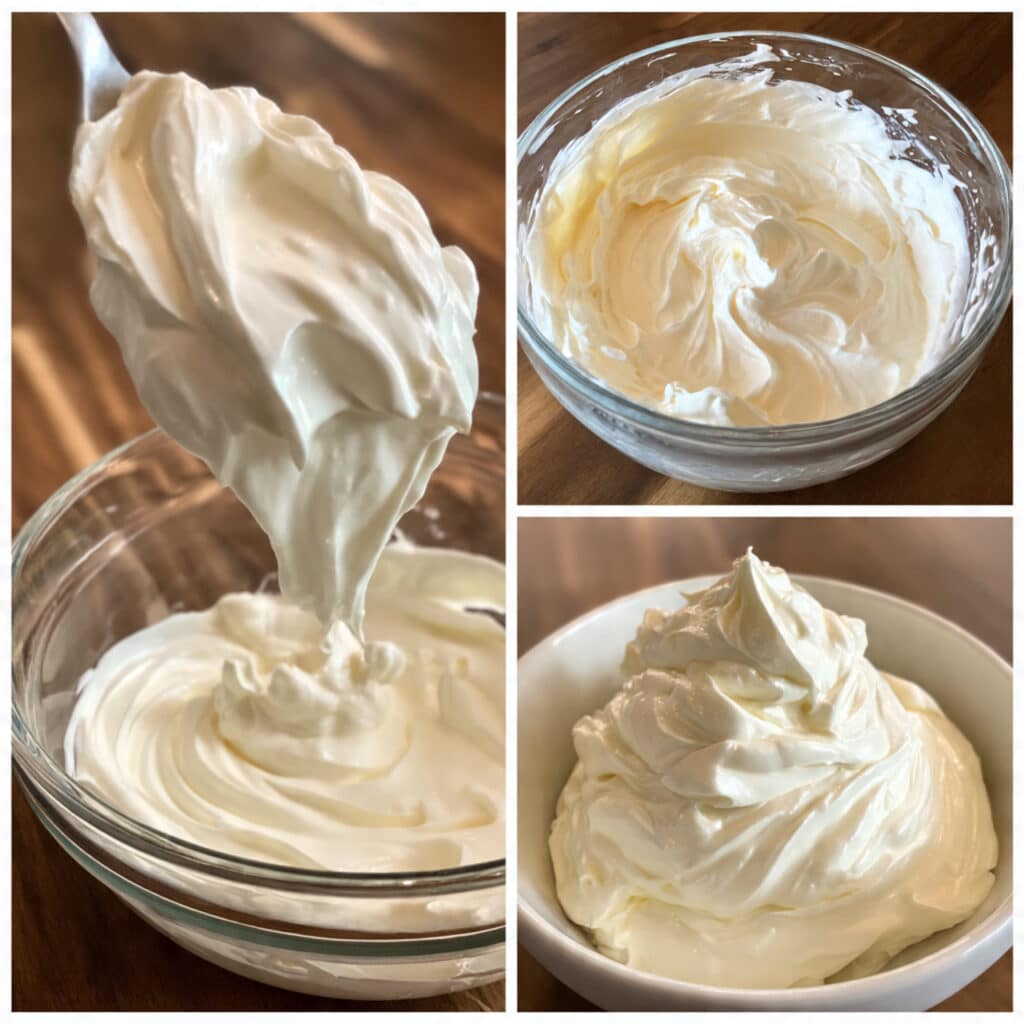
- 6–8 hours → This is the sweet spot for classic Greek yogurt thickness, perfect for breakfast bowls
- 10–12 hours (overnight) → Super thick and creamy, almost like cream cheese, ideal for dips or frosting
Note: Check on it after a few hours. You’ll see the whey collecting in the bowl below — that’s exactly what you want!
Step 4: Transfer and Store
Once your yogurt has reached your desired thickness, use a rubber spatula to scrape it out of the cheesecloth into an airtight container. Give it a gentle stir to make it smooth and creamy.
Seal it up and store it in the refrigerator for up to one week. The whey that drained out can be saved for other uses or discarded.
Notes
- Don’t press or squeeze — Let gravity do the work naturally. Pressing can force yogurt through the cloth and make it watery.
- Test the thickness — After 4-5 hours, take a peek and give it a gentle stir. This helps you gauge if you need more time.
- Save and use the whey — That liquid gold is full of nutrients! Use it in smoothies, soups, or to ferment vegetables.
- Make it in bulk — This recipe is perfect for meal prep. Strain a big batch on Sunday and you’ll have Greek yogurt all week long.
- Prep Time: 5 minutes
- Cook Time: Straining Time: 6-12 hours
- Category: Condiment
- Method: Straining
- Cuisine: Greek
Ingredients You’ll Need
Main Ingredient:
- Plain yogurt (store-bought or homemade) — 4 cups (32 oz) yields about 2 cups Greek yogurt
- Tip: Whole milk yogurt gives the creamiest, richest result. You can use low-fat, but it won’t be quite as luscious.
Equipment:
- Fine mesh sieve or colander
- Cheesecloth, paper towels, or coffee filters
- Large bowl (to catch the whey)
- Airtight container for storage
Why These Ingredients Work
The beauty of this recipe is in its simplicity — you really only need one ingredient: plain yogurt. When you choose whole milk yogurt, you’re starting with a base that’s already rich and creamy, which means your final Greek yogurt will be thick, velvety, and satisfying.
The straining process is what transforms regular yogurt into Greek yogurt by removing the whey (that watery liquid). As the whey drains away, what’s left behind is concentrated yogurt that’s higher in protein, lower in lactose, and has that signature thick texture we all love.
It’s like magic, but it’s really just gravity doing all the work while you go about your day!
Essential Tools and Equipment
- Fine mesh sieve or colander — This holds your yogurt while it drains
- Cheesecloth, paper towels, or coffee filters — Acts as a liner to catch the yogurt while letting whey pass through
- Large bowl — Positioned under the sieve to catch all that liquid whey
- Rubber spatula — For transferring yogurt
- Airtight container — For storing your beautiful Greek yogurt once it’s ready
Step-by-Step Instructions
Step 1: Set Up Your Straining Station
Line your mesh sieve or colander with a layer of cheesecloth, paper towels (2-3 layers work great), or a coffee filter. Place it over a large bowl, making sure there’s enough space underneath for the whey to collect without touching the bottom of your strainer.
Step 2: Add Your Yogurt
Pour your plain yogurt into the lined strainer. Don’t worry about spreading it around or making it perfect — just pour it in gently.
You’ll notice it might look like a lot of yogurt now, but remember, it’s going to reduce in volume as the liquid drains out.
Step 3: Refrigerate and Let Time Do Its Thing
Cover the whole setup loosely with plastic wrap or a clean kitchen towel, then pop it in the refrigerator. Now comes the easy part — just let it sit! The longer you strain, the thicker your yogurt becomes:
- 2–3 hours → You’ll get a slightly thicker yogurt, great for smoothies or lighter parfaits
- 6–8 hours → This is the sweet spot for classic Greek yogurt thickness, perfect for breakfast bowls
- 10–12 hours (overnight) → Super thick and creamy, almost like cream cheese, ideal for dips or frosting
Note: Check on it after a few hours. You’ll see the whey collecting in the bowl below — that’s exactly what you want!
Step 4: Transfer and Store
Once your yogurt has reached your desired thickness, use a rubber spatula to scrape it out of the cheesecloth into an airtight container. Give it a gentle stir to make it smooth and creamy.
Seal it up and store it in the refrigerator for up to one week. The whey that drained out can be saved for other uses or discarded.
You Must Know
The most important thing to remember is that straining time is everything. If you want that authentic Greek yogurt texture, don’t rush it — give it at least 6 hours, or better yet, set it up before bed and let it work overnight.
Your yogurt needs to be kept cold during the straining process, so always do this in the refrigerator, not on the counter. Also, the type of yogurt you start with matters more than you might think. Look for plain yogurt without added thickeners or gelatin — these ingredients can interfere with the straining process and give you inconsistent results.
Personal Secret: I always start with the best quality whole milk yogurt I can find, and I strain mine for exactly 8 hours. This gives me that perfect spoonable texture that holds its shape on a spoon but still feels luxurious and creamy.
I also save that whey liquid! It’s packed with protein and probiotics, I add it to smoothies, use it in place of buttermilk in baking, or even mix it into pancake batter. Nothing goes to waste!
Pro Tips & Cooking Hacks
- Double up on cheesecloth — Using 2-3 layers prevents any yogurt from seeping through and gives you the cleanest strain.
- Start with cold yogurt — If your yogurt has been sitting at room temperature, pop it in the fridge for 30 minutes before straining for best results.
- Don’t press or squeeze — Let gravity do the work naturally. Pressing can force yogurt through the cloth and make it watery.
- Test the thickness — After 4-5 hours, take a peek and give it a gentle stir. This helps you gauge if you need more time.
- Save and use the whey — That liquid gold is full of nutrients! Use it in smoothies, soups, or to ferment vegetables.
- Make it in bulk — This recipe is perfect for meal prep. Strain a big batch on Sunday and you’ll have Greek yogurt all week long.
Flavor Variations & Suggestions
Once you’ve mastered the basic technique, the flavor possibilities are endless! For a vanilla Greek yogurt, stir in a teaspoon of pure vanilla extract and a tablespoon of honey or maple syrup after straining. Love fruity yogurt? Swirl in your favorite jam or fresh berry compote — strawberry and blueberry are family favorites in my house.
If you’re feeling adventurous, try a honey lavender version by infusing your starting yogurt with dried culinary lavender and sweetening with honey. For savory applications, you can mix in fresh herbs like dill and chives, a squeeze of lemon, and a pinch of salt to create an incredible base for dips or as a topping for baked potatoes.
You can even make chocolate Greek yogurt by stirring in cocoa powder and a touch of sweetener — my grandkids go crazy for this one!
Make-Ahead Options
This recipe is actually designed to be made ahead, which makes it perfect for busy weeks. You can start the straining process any evening, let it work its magic overnight, and wake up to fresh Greek yogurt in the morning.
If you want to prep even further in advance, Greek yogurt keeps beautifully in an airtight container in the refrigerator for up to one week, so you can make a large batch on Sunday and use it throughout the week.
For longer storage, Greek yogurt freezes surprisingly well for up to two months — portion it into ice cube trays or small containers, then thaw overnight in the fridge when you’re ready to use it. Just give it a good stir after thawing since it may separate slightly. I love having a stash in the freezer for those mornings when I run out!
What to Serve With Homemade Greek Yogurt
Homemade Greek yogurt is one of those magical ingredients that works beautifully at any time of day. For breakfast, top it with fresh berries, a drizzle of honey, and crunchy granola for a classic parfait, or swirl it into overnight oats for extra creaminess and protein. It’s wonderful alongside warm blueberry muffins or banana bread fresh from the oven.
For lunch or dinner, use it as a cooling accompaniment to spicy dishes like curry, tacos, or Mediterranean grilled chicken. It makes an incredible base for tzatziki sauce served with pita chips and fresh vegetables, or dollop it on top of chili or baked potatoes in place of sour cream.
My favorite way to use it is in smoothies — it makes them so thick and satisfying, almost like a milkshake. And don’t forget about baking! Greek yogurt keeps cakes and muffins incredibly moist.
Allergy Information
Contains: Dairy (milk)
This recipe is naturally gluten-free and vegetarian. Since Greek yogurt is made from regular yogurt, it does contain lactose, though the straining process removes some of it, making it easier to digest than regular yogurt for those with mild lactose sensitivity.
However, if you have a dairy allergy or severe lactose intolerance, this recipe isn’t suitable as written. For a dairy-free alternative, you can use the same straining method with coconut yogurt or almond milk yogurt — just note that the texture and protein content will be different. The process works the same way, but plant-based yogurts tend to be less thick to begin with, so you may need to strain them a bit longer.
Storage & Reheating
Store your homemade Greek yogurt in an airtight container in the refrigerator for up to one week. Make sure your container is clean and dry before adding the yogurt, and always use a clean spoon when scooping it out to prevent contamination.
You might notice a little liquid pooling on top after a few days — that’s just whey separating out again, which is totally normal. You can either stir it back in or pour it off.
If you notice any off smells, mold, or pink discoloration, it’s time to toss it and make a fresh batch. For longer storage, freeze Greek yogurt in portions for up to two months, then thaw in the refrigerator overnight before using.
Questions I Get Asked A Lot
What should I do with all that whey liquid?
Don’t throw it away — whey is packed with protein, probiotics, and nutrients! You can add it to smoothies for an extra protein boost, use it in place of water or milk in bread recipes, mix it into pancake or waffle batter, or even use it as a facial toner (yes, really!).
My Greek yogurt turned out too thick and almost cheese-like. What happened?
You just strained it too long! If your Greek yogurt is thicker than you wanted, you can easily thin it out by stirring in a little bit of the reserved whey or even a splash of milk until you reach your desired consistency. Next time, check on it a bit earlier in the straining process.
How is Greek yogurt different from regular yogurt?
The main difference is that Greek yogurt has been strained to remove most of the whey, which makes it thicker, creamier, and higher in protein. It also has less lactose and fewer carbs than regular yogurt. Regular yogurt is thinner and has a tangier taste, while Greek yogurt is milder, richer, and more versatile in both sweet and savory recipes.
💬 Tried this recipe? Leave a comment and rating below! I’d love to hear how your homemade Greek yogurt turned out and how you’re using it.