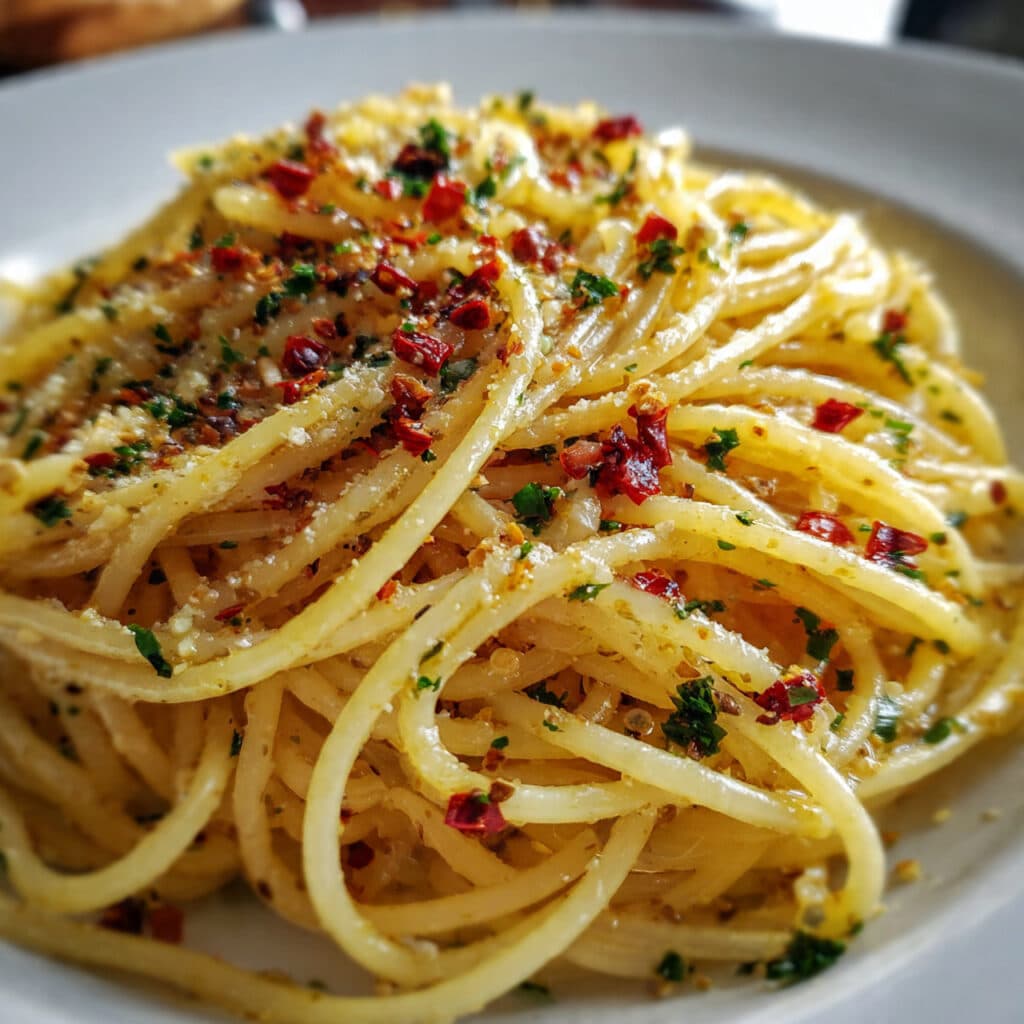
Spaghetti Aglio e Olio is easy, irresistible, and beautifully simple comfort food! It has just a handful of pantry staples like garlic, olive oil, red pepper flakes, and Parmigiano-Reggiano cheese. This classic Italian dish comes together in under 25 minutes.
Love More Spaghetti Recipes? Try My One Pot Cowboy Spaghetti or this Spaghetti with Meat Sauce next.
Why You’ll Love This Recipe
- Minimal ingredients, maximum flavor – Just pasta, garlic, olive oil, and cheese create restaurant-quality results
- Ready in 20 minutes – Perfect for those nights when you need dinner fast but still want something special
- Pantry-friendly – Everything you need is probably already in your kitchen
- Crowd-pleaser – Even picky eaters love this garlicky, buttery pasta
- Endlessly customizable – Add protein, veggies, or keep it beautifully simple
Spaghetti Aglio e Olio
- Total Time: 20-25 minutes
- Yield: 4 servings
Description
This authentic Spaghetti Aglio e Olio recipe features perfectly toasted garlic in olive oil with red pepper flakes and Parmigiano-Reggiano cheese. A classic Italian pasta dish that’s simple, quick, and absolutely delicious for busy weeknights or elegant dinner parties.
Ingredients
For the Pasta:
1 pound uncooked spaghetti (linguine or fettuccine work too)
Salt for pasta water (be generous—this is where your pasta gets its flavor)
For the Garlic Oil:
½ cup olive oil (use the good stuff—extra virgin makes all the difference)
6 garlic cloves, thinly sliced (adjust based on how much you love garlic)
¼ teaspoon red pepper flakes, or to taste (start small if you’re heat-sensitive)
For Finishing:
Salt and freshly ground black pepper to taste
¼ cup fresh Italian parsley, chopped
1 cup Parmigiano-Reggiano cheese, finely grated (divided—half for tossing, half for topping)
Instructions
Bring a large pot of lightly salted water to a boil. Cook spaghetti in boiling water, stirring occasionally, until cooked through but firm to the bite (al dente), about 10-12 minutes.
Before draining, reserve ½ cup of the starchy pasta water—you’ll need this later. Drain the pasta and transfer to a pasta bowl.
While your pasta cooks, combine olive oil and sliced garlic in a cold skillet. This is the secret to perfectly golden garlic that never burns.
Cook over medium heat to slowly toast the garlic, about 10 minutes. You’ll start to smell that amazing aroma filling your kitchen.
Reduce heat to medium-low when the olive oil begins to bubble. Cook and stir until the garlic turns a gorgeous golden brown, about another 5 minutes.
Watch it carefully, there’s a fine line between golden perfection and burnt bitterness. Do not let the garlic burn. Remove from heat once it’s perfectly toasted.
Stir red pepper flakes, salt, and black pepper into the drained pasta while it’s still hot. This ensures the seasonings distribute evenly before the oil goes on.
Pour the hot olive oil and garlic over the seasoned pasta. The sizzle and aroma at this moment is pure magic. Use tongs or a wooden spoon to start tossing everything together.
Sprinkle with Italian parsley and half of the Parmigiano-Reggiano cheese. Toss until combined, adding a splash of reserved pasta water if the pasta seems dry or the sauce isn’t coating the noodles well.
Serve the pasta hot, topped with the remaining Parmigiano-Reggiano cheese. This dish is best enjoyed right away when the garlic oil is still glistening and the pasta is piping hot.
Notes
Use bronze-cut pasta if you can find it – The rough texture helps the sauce cling better than smooth pasta
Keep a close eye on that garlic – Set a timer if you need to; burnt garlic will make the whole dish taste bitter
Add a pat of butter at the end – This creates extra richness and helps the sauce emulsify beautifully
Toss vigorously – Don’t be shy when mixing; aggressive tossing helps create that restaurant-style glossy coating
Taste and adjust – Everyone’s garlic tolerance is different; start with 4 cloves if you’re nervous, or go up to 8 if you’re a garlic lover
- Prep Time: 5 minutes
- Cook Time: 15-20 minutes
- Category: Main Dish
- Method: Stovetop
- Cuisine: Italian
Ingredients You’ll Need
For the Pasta:
- 1 pound uncooked spaghetti (linguine or fettuccine work too)
- Salt for pasta water (be generous—this is where your pasta gets its flavor)
For the Garlic Oil:
- ½ cup olive oil (use the good stuff—extra virgin makes all the difference)
- 6 garlic cloves, thinly sliced (adjust based on how much you love garlic)
- ¼ teaspoon red pepper flakes, or to taste (start small if you’re heat-sensitive)
For Finishing:
- Salt and freshly ground black pepper to taste
- ¼ cup fresh Italian parsley, chopped
- 1 cup Parmigiano-Reggiano cheese, finely grated (divided—half for tossing, half for topping)
Why These Ingredients Work
The beauty of Spaghetti Aglio e Olio lies in the quality and balance of each ingredient. Extra virgin olive oil becomes the silky base that coats every strand of pasta, carrying the flavor throughout the dish.
Slowly toasting the garlic in cold oil allows it to release its sweet, nutty essence without burning. This gentle approach transforms sharp raw garlic into something mellow and golden.
Red pepper flakes add just enough warmth to wake up your taste buds without overwhelming the delicate garlic flavor. The starchy pasta water acts like liquid gold, helping the oil cling to the noodles and creating a light sauce rather than a greasy coating.
Fresh parsley brightens everything with its herbaceous pop, while Parmigiano-Reggiano adds salty, umami depth that makes each bite irresistible.
Essential Tools and Equipment
- Large pot for boiling pasta
- Large skillet or sauté pan for the garlic oil
- Colander for draining pasta
- Sharp knife for slicing garlic
- Wooden spoon or tongs for tossing
- Measuring cups and spoons
- Pasta bowl for serving
Step-by-Step Instructions
Step 1: Cook the Pasta
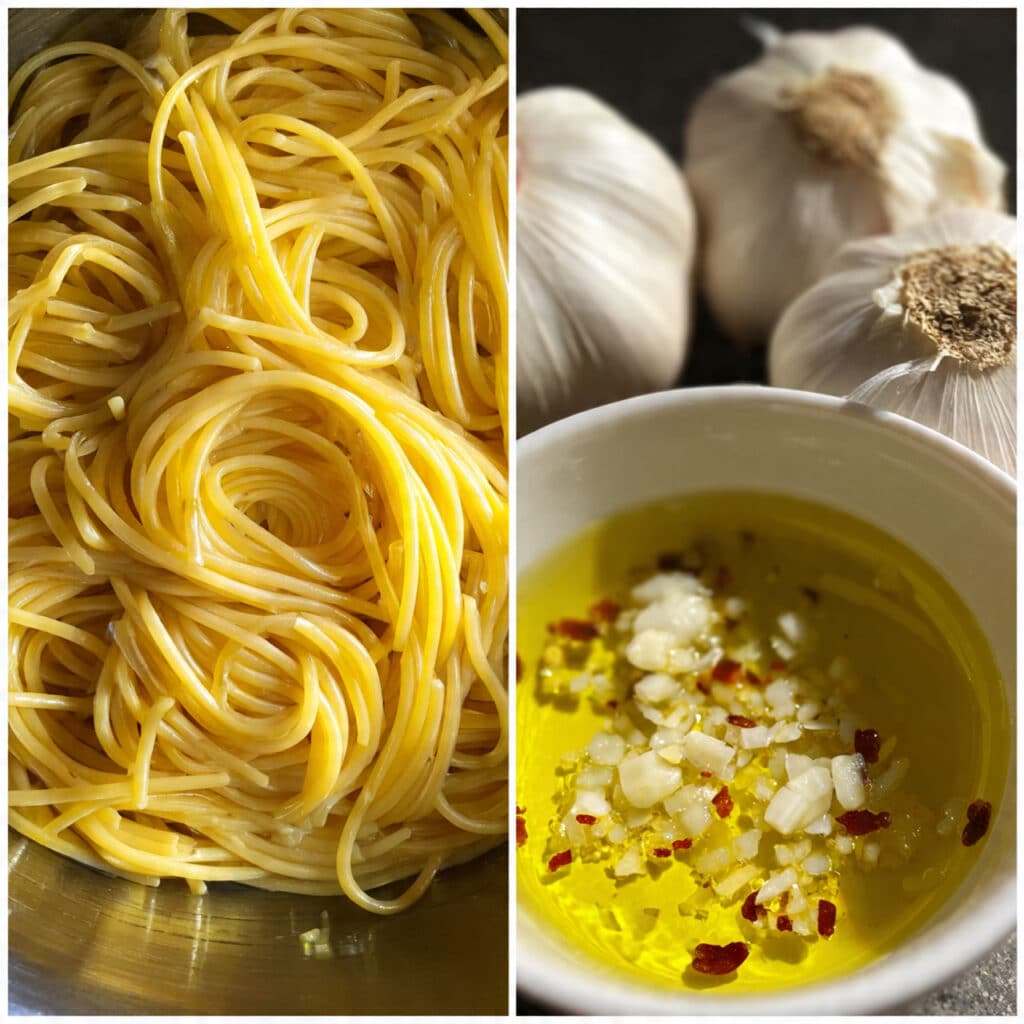
Bring a large pot of lightly salted water to a boil. Cook spaghetti in boiling water, stirring occasionally, until cooked through but firm to the bite (al dente), about 10-12 minutes.
Before draining, reserve ½ cup of the starchy pasta water—you’ll need this later. Drain the pasta and transfer to a pasta bowl.
Step 2: Start the Garlic Oil
While your pasta cooks, combine olive oil and sliced garlic in a cold skillet. This is the secret to perfectly golden garlic that never burns.
Cook over medium heat to slowly toast the garlic, about 10 minutes. You’ll start to smell that amazing aroma filling your kitchen.
Step 3: Toast Until Golden
Reduce heat to medium-low when the olive oil begins to bubble. Cook and stir until the garlic turns a gorgeous golden brown, about another 5 minutes.
Watch it carefully, there’s a fine line between golden perfection and burnt bitterness. Do not let the garlic burn. Remove from heat once it’s perfectly toasted.
Step 4: Season the Pasta
Stir red pepper flakes, salt, and black pepper into the drained pasta while it’s still hot. This ensures the seasonings distribute evenly before the oil goes on.
Step 5: Add the Golden Garlic Oil
Pour the hot olive oil and garlic over the seasoned pasta. The sizzle and aroma at this moment is pure magic. Use tongs or a wooden spoon to start tossing everything together.
Step 6: Add Cheese and Parsley
Sprinkle with Italian parsley and half of the Parmigiano-Reggiano cheese. Toss until combined, adding a splash of reserved pasta water if the pasta seems dry or the sauce isn’t coating the noodles well.
Step 7: Serve Immediately
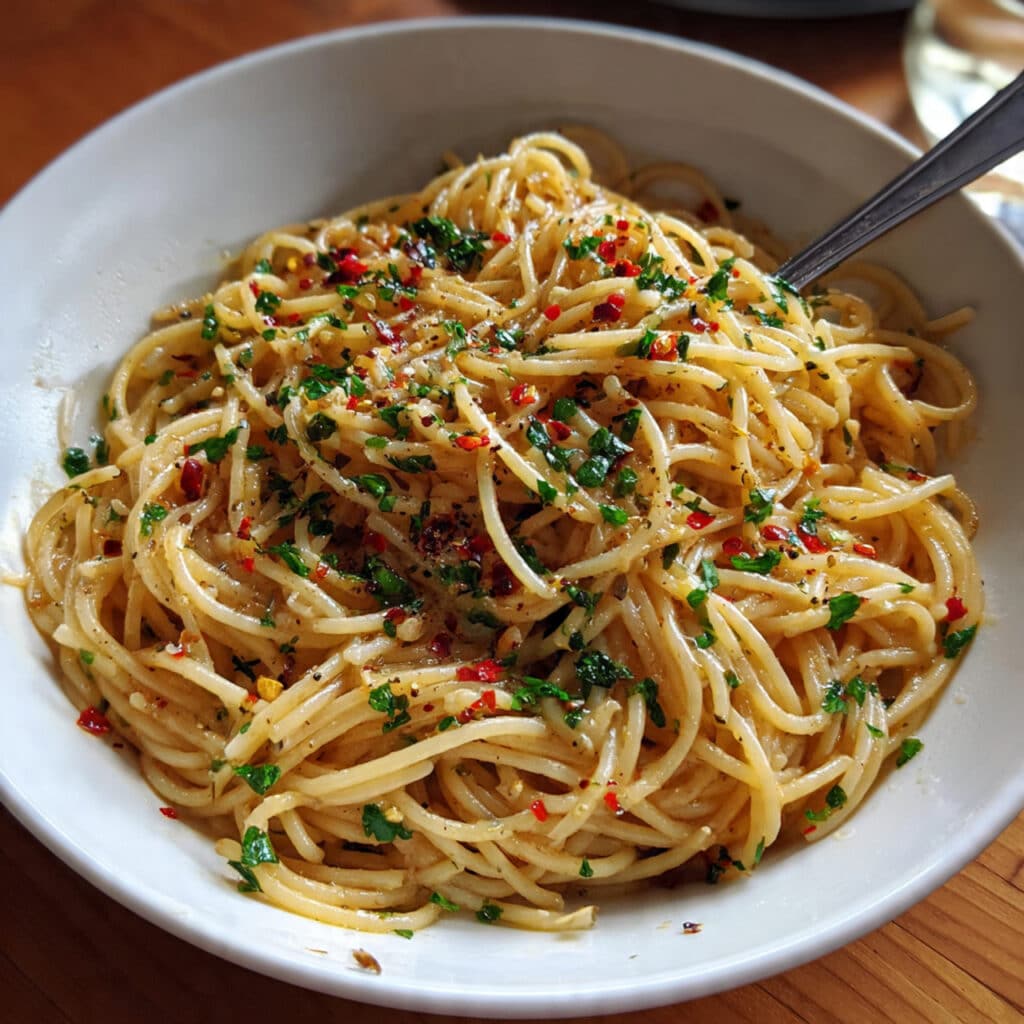
Serve the pasta hot, topped with the remaining Parmigiano-Reggiano cheese. This dish is best enjoyed right away when the garlic oil is still glistening and the pasta is piping hot
You Must Know
The most critical step in this recipe is starting your garlic in cold oil and heating it slowly. This gentle approach prevents the garlic from burning before it develops that sweet, nutty flavor we’re after.
If your garlic browns before your pasta is ready, simply remove the pan from the heat. It will continue cooking in the residual warmth, so timing matters.
Generously salting your pasta water is equally important. This is your only chance to season the pasta itself from the inside out.
Don’t skip reserving pasta water. It’s the secret ingredient that transforms oil into a silky sauce that actually clings to the noodles instead of pooling at the bottom of the bowl.
Personal Secret: I always use high-quality extra virgin olive oil for this dish because it’s not just a cooking medium—it’s the star. The flavor of the oil shines through in every bite, so choose one you’d be happy to drizzle on bread.
Pro Tips & Cooking Hacks
- Use bronze-cut pasta if you can find it – The rough texture helps the sauce cling better than smooth pasta
- Keep a close eye on that garlic – Set a timer if you need to; burnt garlic will make the whole dish taste bitter
- Add a pat of butter at the end – This creates extra richness and helps the sauce emulsify beautifully
- Toss vigorously – Don’t be shy when mixing; aggressive tossing helps create that restaurant-style glossy coating
- Taste and adjust – Everyone’s garlic tolerance is different; start with 4 cloves if you’re nervous, or go up to 8 if you’re a garlic lover
- Serve in warm bowls – This keeps the dish at the perfect temperature longer
Flavor Variations & Suggestions
While the classic version is perfection on its own, this dish loves company. Stir in cooked shrimp, sliced chicken breast, or crumbled Italian sausage for a protein-packed dinner that still feels light and fresh.
Sautéed mushrooms add an earthy, meaty texture that makes the dish feel more substantial without being heavy. For a brighter, zestier twist, add lemon zest and a squeeze of fresh lemon juice just before serving—it cuts through the richness beautifully.
Anchovies are a traditional Italian addition that melt into the oil and add incredible umami depth without tasting fishy. If you want more vegetables, toss in blanched broccoli florets, halved cherry tomatoes, or fresh arugula that wilts right into the hot pasta.
You can even swap the spaghetti for linguine, fettuccine, or angel hair—each brings a slightly different texture but works wonderfully with the garlic oil.
Make-Ahead Options
Honestly, this dish is so quick that there’s not much need to prep ahead, but you can absolutely make parts of it earlier in the day. Slice your garlic and chop your parsley in the morning and store them covered in the refrigerator.
You can even make the garlic oil a few hours ahead—just leave it in the pan at room temperature and gently rewarm it when you’re ready to cook. Don’t combine the pasta with the oil until you’re ready to serve, though, or it will absorb too much and become greasy.
If you have leftovers, they’ll keep in a sealed container in the refrigerator for up to 3 days, though the pasta does lose some of its magic when reheated. It’s actually delicious served cold as a pasta salad the next day—just drizzle with a little extra olive oil and a squeeze of lemon to freshen it up.
What to Serve With Spaghetti Aglio e Olio
This pasta is rich and garlicky, so it pairs beautifully with light, fresh sides that won’t compete with those bold flavors. A crisp green salad with a simple lemon vinaigrette cuts through the richness and adds a refreshing contrast.
Garlic bread might seem redundant, but honestly, you can never have too much garlic—just make sure it’s crusty and golden. Roasted vegetables like zucchini, bell peppers, or asparagus bring color and nutrition to the plate without overwhelming the star of the show.
A glass of crisp white wine like Pinot Grigio or Sauvignon Blanc complements the garlic and cheese perfectly. For a heartier meal, serve it alongside grilled chicken or pan-seared fish. If you’re feeding a crowd, set out a big bowl of this pasta family-style with a platter of antipasti and let everyone dig in.
Allergy Information
This recipe contains gluten (from the pasta), dairy (from the Parmigiano-Reggiano cheese), and garlic. For gluten-free diets, simply swap in your favorite gluten-free spaghetti—just watch the cooking time as gluten-free pasta can become mushy quickly.
To make it dairy-free or vegan, omit the Parmesan cheese or use a plant-based alternative. The dish will still be flavorful thanks to the garlic and olive oil.
If you have a garlic intolerance (though that would be heartbreaking for this dish), you could try using garlic-infused oil instead of fresh garlic cloves, though the flavor won’t be quite as robust. The red pepper flakes can be adjusted or omitted entirely if you’re sensitive to spice. This recipe is naturally nut-free and egg-free.
Storage & Reheating
Store any leftover Spaghetti Aglio e Olio in a sealed container in the refrigerator for up to 3 days. The pasta will absorb more of the oil as it sits, so it won’t be quite as saucy when you reheat it.
To bring it back to life, add a splash of olive oil or a tablespoon of water and reheat gently in a skillet over medium-low heat, tossing frequently. You can also microwave it in 30-second intervals, stirring between each burst, until warmed through.
Some people actually prefer eating the leftovers cold, straight from the fridge—it becomes almost like a pasta salad with a punch of garlic. This dish doesn’t freeze particularly well since the texture of the pasta changes and the oil can separate, so it’s best enjoyed fresh or within a few days.
Questions I Get Asked A Lot
Can I use pre-minced garlic from a jar instead of fresh?
Fresh garlic is really best for this recipe since the flavor of the garlic is so central to the dish. Jarred minced garlic tends to be sharper and can turn bitter when cooked this way. If you must use it in a pinch, reduce the amount slightly and watch it even more carefully while cooking.
Do I really need to use the pasta water?
Yes! The starchy pasta water is what helps transform the oil into a light sauce that coats the noodles instead of sliding off. It also helps the cheese melt smoothly and everything come together. Don’t skip this step.
What if I don’t have Parmigiano-Reggiano?
You can use Pecorino Romano for a sharper, saltier flavor, or regular Parmesan cheese works just fine too. Some traditional versions actually don’t include any cheese at all, so feel free to omit it if needed—the dish will still be delicious.
💬 Tried this recipe? Leave a comment and rating below! I’d love to hear how your Spaghetti Aglio e Olio turned out and any fun variations you tried.