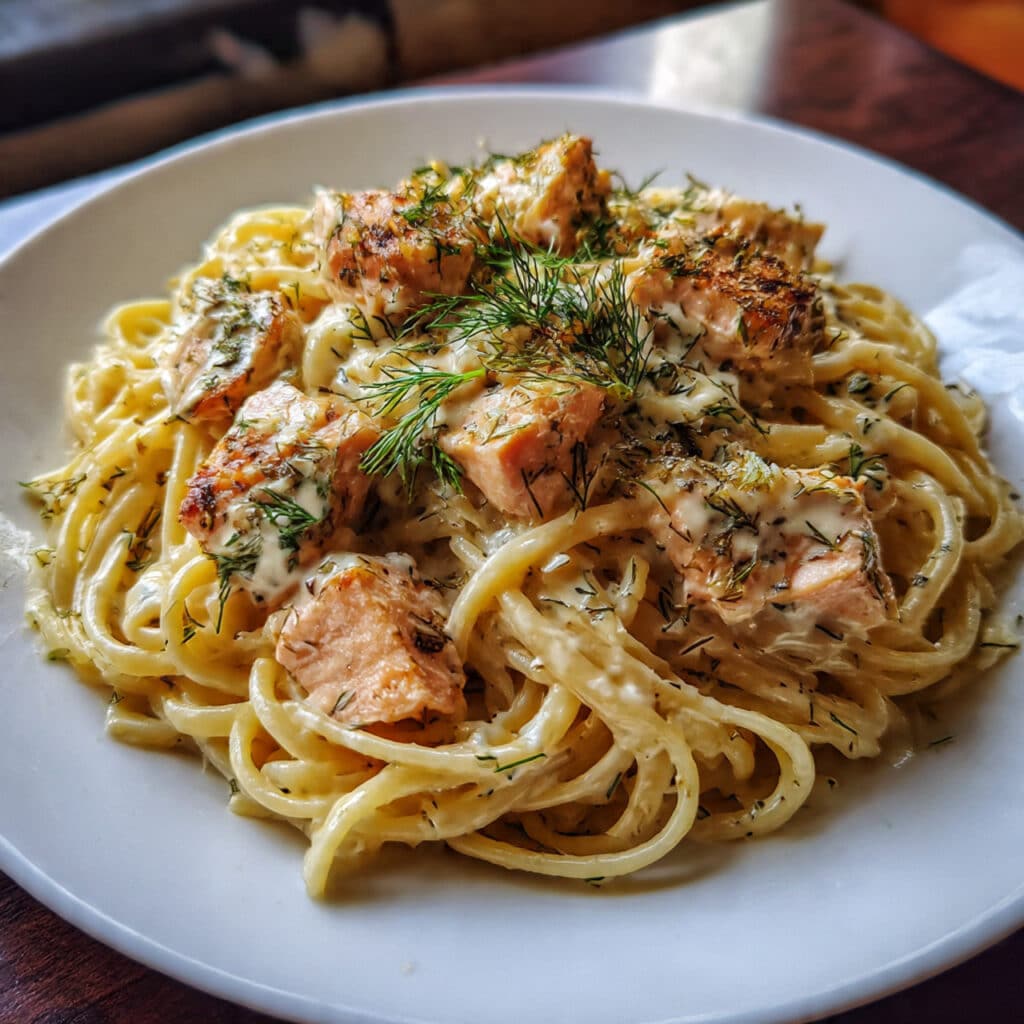
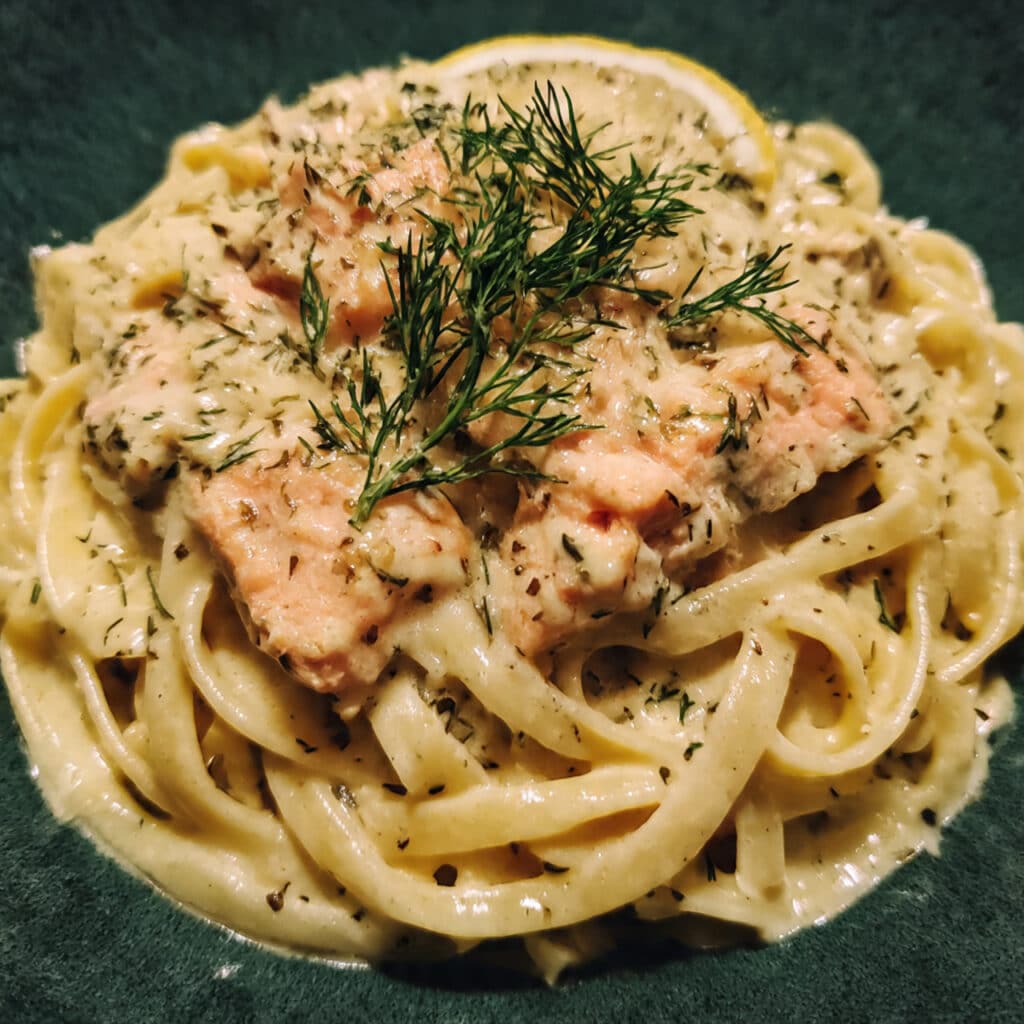
Lemon Dill Salmon Pasta is creamy, bright, and elegant enough for date night but easy enough for a busy Tuesday. This recipe combines tender salmon, silky cream sauce, fresh dill, and a hint of lemon in one gorgeous skillet ready in 20 minutes.
Why You’ll Love This Recipe
- Takes 20 minutes start to finish – I’ve timed it, and that includes boiling water
- One skillet does all the work – fewer dishes makes everyone happy
- Tastes like you spent hours – guests always ask for the recipe
- Great for leftovers – if there are any, they reheat pretty well
- Fresh flavors without being fussy – the lemon and dill just work together

Lemon Dill Salmon Pasta (Ready in 20 Minutes!)
- Total Time: 20 minutes
- Yield: 2 servings
Description
Quick and elegant Lemon Dill Salmon Pasta features tender salmon in a creamy garlic sauce with fresh dill and lemon. Ready in just 20 minutes, this restaurant-quality dinner is perfect for busy weeknights or special occasions. The combination of buttery salmon, silky cream sauce, and bright herbs creates an irresistible meal the whole family will love.
Ingredients
For the Pasta & Salmon:
- 4 ounces uncooked pasta (linguini or fettuccine recommended – but penne or rigatoni work too!)
- ½ pound fresh salmon (skin-on or skinless, your choice)
- Salt and pepper to taste
- Flour for dredging (just a few tablespoons in a shallow dish)
- 1 tablespoon olive oil
- 1 tablespoon butter (this combo gives the best flavor)
For the Sauce:
- ¼ cup chicken broth or dry white wine (I love pinot grigio or sauvignon blanc here)
- 1 teaspoon lemon juice (freshly squeezed is best)
- 2 cloves garlic, minced (or ½ teaspoon garlic powder in a pinch)
- ½ cup heavy/whipping cream
- 1 tablespoon chopped fresh dill (fresh really makes a difference here!)
Optional Garnishes:
- Fresh parsley, chopped
- Parmesan cheese, grated
Instructions
Get a big pot of salted water going. Once it’s boiling hard, throw in your pasta and cook it like the box says. You want it al dente. Don’t dump the water yet—save a cup of it before you drain, just in case your sauce needs loosening up later.
Pat your salmon dry with paper towels. Season both sides with salt and pepper. Put some flour in a shallow dish and drag the salmon through it on both sides. Shake off any big clumps.
Heat your olive oil and butter in the skillet over medium-high heat. When it’s hot and shimmering, lay the salmon down gently. Leave it alone for 2 minutes per side. You want it golden and crispy. Take it out and set it on a plate. It’s not cooked all the way through yet, but that’s the plan.
Turn the heat down to medium. Pour in your broth or wine, lemon juice, and garlic. Scrape the bottom of the pan with a wooden spoon to get all those stuck-on bits up. Let it bubble for about 30 seconds.
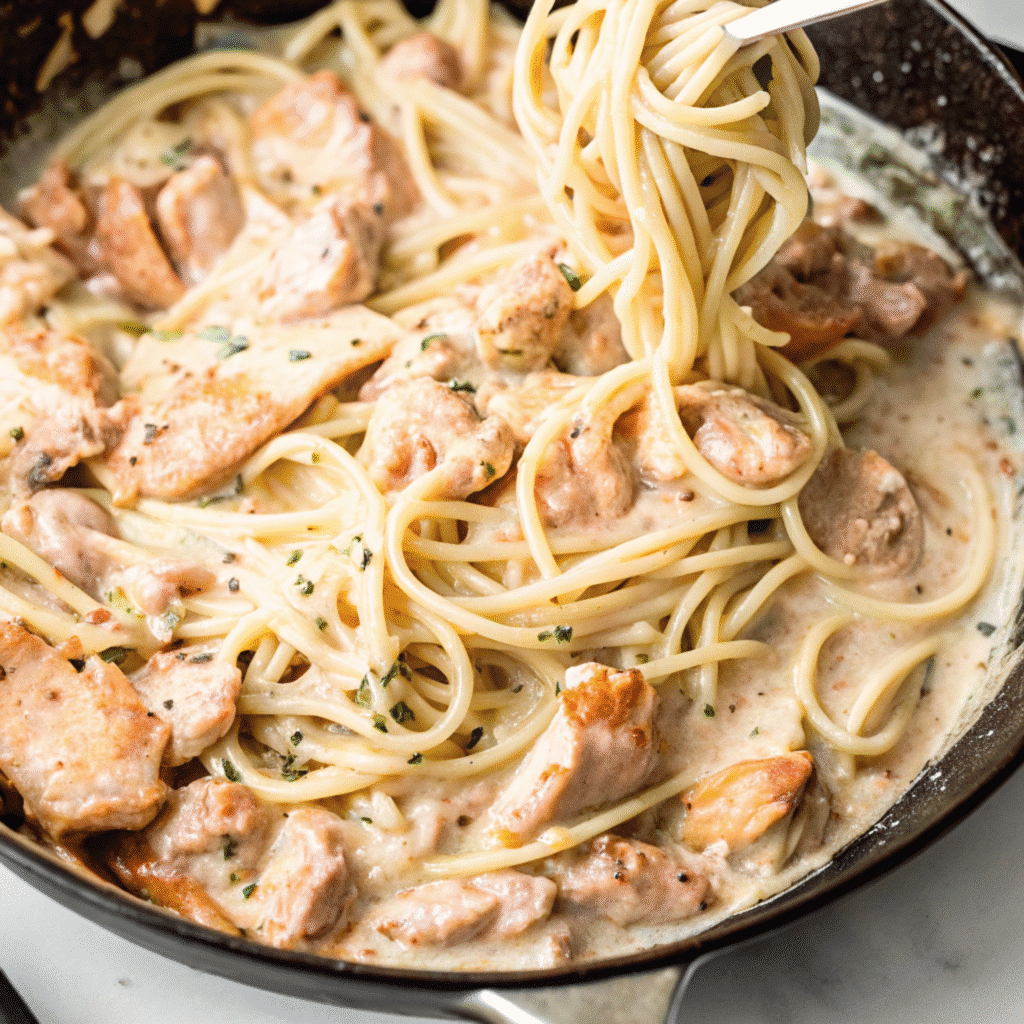
Lower the heat to medium-low. Add the cream and dill, then put the salmon back in. Use your spoon to break it into big chunks. Let everything simmer together for a few minutes until the salmon’s cooked and the sauce has thickened a little. Taste it. Add more salt if it needs it.
Drain your pasta and dump it right into the skillet. Toss everything together with tongs until every piece is coated. Taste again. Maybe squeeze more lemon or add another pinch of salt. Serve it hot with parsley and parmesan if you want.
Notes
Don’t crowd the pan when you sear the salmon. If your skillet is small, cook the salmon in batches or cut it into smaller portions. You need space for that beautiful crust to form.
If your sauce seems too thick, add a splash of pasta water or extra broth to loosen it. And here’s a time-saver: you can mince the garlic and chop the dill while the pasta water comes to a boil.
Fresh herbs are your friend here. Oh, and if you’re feeling fancy, a little lemon zest at the end adds an extra pop of brightness without more acidity.
- Prep Time: 5 minutes
- Cook Time: 15 minutes
- Category: Main Dish
- Method: Stovetop
- Cuisine: American
Ingredients You’ll Need
For the Pasta & Salmon:
- 4 ounces uncooked pasta (linguini or fettuccine work best, but use what you’ve got)
- ½ pound fresh salmon (I grab whatever looks good at the store)
- Salt and pepper to taste
- Flour for dredging (just throw some in a shallow dish)
- 1 tablespoon olive oil
- 1 tablespoon butter (real butter, not margarine)
For the Sauce:
- ¼ cup chicken broth or dry white wine (I usually have pinot grigio open)
- 1 teaspoon lemon juice (squeeze a fresh one if you can)
- 2 cloves garlic, minced (or use the jarred stuff, no judgment)
- ½ cup heavy cream (the good stuff)
- 1 tablespoon chopped fresh dill (dried just doesn’t cut it here)
Optional Garnishes:
- Fresh parsley
- Parmesan cheese
Quick note: Skin-on or skinless salmon both work. The skin peels right off after cooking if you want to get rid of it.
Why These Ingredients Work
That light flour coating on the salmon does two things, gives you a nice crust and helps thicken up the sauce a bit. I use both olive oil and butter because olive oil can handle the heat and butter makes everything taste richer. The broth or wine picks up all those browned bits stuck to the pan, which is where half the flavor comes from.
Lemon juice brightens everything without taking over. Heavy cream makes the sauce stick to the pasta the way it should. Fresh dill has this sweet, tangy thing going on that dried dill just can’t match. It loves salmon and lemon, so the three of them together just make sense.
Essential Tools and Equipment
- Big pot for pasta water
- Large skillet with sides tall enough to toss everything together
- Tongs for pasta wrangling
- Shallow dish for the flour
- Measuring cups and spoons
- Knife and cutting board
- Colander
Step-by-Step Instructions
Step 1: Boil the Pasta
Get a big pot of salted water going. Once it’s boiling hard, throw in your pasta and cook it like the box says. You want it al dente. Don’t dump the water yet—save a cup of it before you drain, just in case your sauce needs loosening up later.
Step 2: Prepare the Salmon
Pat your salmon dry with paper towels. Season both sides with salt and pepper. Put some flour in a shallow dish and drag the salmon through it on both sides. Shake off any big clumps.
Step 3: Sear the Salmon
Heat your olive oil and butter in the skillet over medium-high heat. When it’s hot and shimmering, lay the salmon down gently. Leave it alone for 2 minutes per side. You want it golden and crispy. Take it out and set it on a plate. It’s not cooked all the way through yet, but that’s the plan.
Step 4: Make the Sauce Base
Turn the heat down to medium. Pour in your broth or wine, lemon juice, and garlic. Scrape the bottom of the pan with a wooden spoon to get all those stuck-on bits up. Let it bubble for about 30 seconds.
Step 5: Finish the Sauce
Lower the heat to medium-low. Add the cream and dill, then put the salmon back in. Use your spoon to break it into big chunks. Let everything simmer together for a few minutes until the salmon’s cooked and the sauce has thickened a little. Taste it. Add more salt if it needs it.
Step 6: Combine and Serve
Drain your pasta and dump it right into the skillet. Toss everything together with tongs until every piece is coated. Taste again. Maybe squeeze more lemon or add another pinch of salt. Serve it hot with parsley and parmesan if you want.
You Must Know
Don’t overcook the salmon in that first sear. It finishes cooking in the sauce, so pulling it when it’s still a little pink inside is the right move. Overcooked salmon gets chalky and dry. Also, fresh dill is non-negotiable here. Dried dill tastes like dust compared to fresh. If you can’t find fresh dill, use fresh parsley instead and maybe a tiny bit of dried dill mixed in.
Pro Tips & Cooking Hacks
Give your salmon room to breathe in the pan. If it’s crowded, it steams instead of searing.
Cut it into smaller pieces if your skillet’s small. When you break up the salmon in the sauce, be gentle about it. You want chunks, not mush. If the sauce gets too thick, splash in some of that pasta water you saved.
Prep your garlic and dill while the water heats up so you’re not scrambling later. Biggest mistake I see is people thinking dried dill works the same, it doesn’t. Buy the fresh stuff. And if you want extra lemon flavor without more acid, grate in some zest at the end.
Flavor Variations & Suggestions
Swap dill for fresh basil or tarragon if that’s what you’ve got. Throw in a handful of spinach or frozen peas in the last minute for some green. A spoonful of cream cheese mixed into the sauce makes it even richer and silkier. Want it lighter? Use half-and-half instead of heavy cream, though you’ll lose some thickness.
Sun-dried tomatoes or capers would give it a Mediterranean vibe. Double the garlic if you’re into that. Not a salmon person? Use shrimp or cut-up chicken breast instead—the sauce loves them too.
Make-Ahead Options
This is so quick I don’t usually prep ahead, but you can season and flour the salmon an hour early and keep it in the fridge.
Chop your garlic and dill ahead too if you want. The sauce doesn’t keep well on its own, but leftovers of the whole dish will last two days in the fridge. Just know the pasta soaks up sauce as it sits, so you’ll need to add cream or broth when you reheat it. I wouldn’t freeze this, cream sauces get weird and separated when you thaw them. Make it fresh or eat it within a couple days.
What to Serve With Lemon Dill Salmon Pasta
This is pretty rich on its own, so I like a simple arugula salad with lemon vinaigrette on the side. The peppery greens cut through all that cream.
Garlic bread is always a good call for sauce-soaking purposes.
Roasted asparagus or green beans add crunch and color. For wine, stick with whatever white you cooked with, pinot grigio or sauvignon blanc both work. Keep dessert light if you’re doing one.
Lemon sorbet or panna cotta would be nice.
Allergy Information
This has gluten in the pasta and flour. Dairy’s in the butter and cream. And obviously there’s fish. For gluten-free, use gluten-free pasta and swap cornstarch or gluten-free flour for the dredging.
For dairy-free, use all olive oil instead of butter and swap the cream for full-fat coconut cream. It’ll taste different but still good. No nuts in this recipe. Check your broth label if you have severe allergies—some brands share equipment with allergens.
Storage & Reheating
Leftovers keep in the fridge for up to 2 days in an airtight container. The pasta absorbs sauce as it sits, so it won’t be as saucy the next day.
Reheat it in a skillet over medium-low heat with a splash of cream, milk, or broth to loosen things up.
Stir gently until it’s hot. You can microwave it in 30-second bursts too, adding a little liquid if needed. Don’t freeze this, cream sauces separate and get grainy when you thaw them.
Questions I Get Asked A Lot
Can I use dried dill instead of fresh?
Technically yes, but it won’t taste the same. Fresh dill is bright and herby. Dried dill tastes flat. If you’re stuck, use 1 teaspoon dried and add it with the cream. Or just use fresh parsley with a pinch of dried dill.
What if I don’t have heavy cream?
Half-and-half works but your sauce will be thinner. You could mix whole milk with a tablespoon of cream cheese to thicken it up. Sour cream mixed with milk works too, just add it off the heat so it doesn’t curdle.
My sauce is too thin—what do I do?
Let it simmer longer to reduce. Or mix a teaspoon of cornstarch with a tablespoon of cold water, stir it in, and it’ll thicken in about a minute. A spoonful of cream cheese works too.
What type of pasta works best?
Long flat noodles like linguini and fettuccine are classic because they hold sauce well. But honestly, whatever pasta you like works. Penne, rigatoni, shells—they’re all fine. Just cook it al dente so it doesn’t turn to mush when you toss it in the sauce.
💬 Tried this Lemon Dill Salmon Pasta? Leave a comment and rating below! Tell me how it turned out, what you served with it, or if you changed anything up.