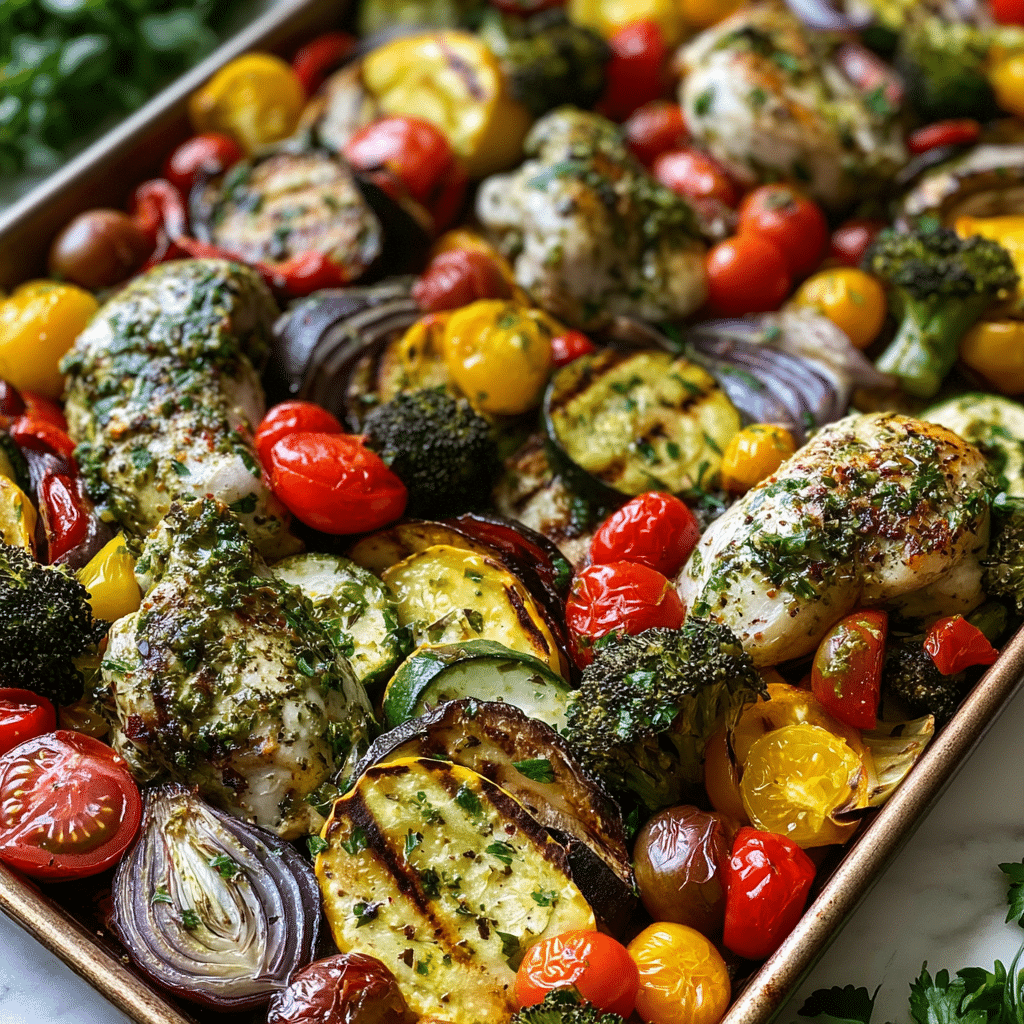
Sheet Pan Pesto Chicken and Veggies is a bright, herb-forward dinner made on one pan in under 35 minutes. Tender chicken pieces and colorful vegetables tossed in a bold basil pesto mixture and roasted until golden, fragrant, and finished with Parmesan and fresh lemon.
Why You’ll Love This Recipe
The basil pesto coats every piece of chicken and vegetable in a rich, herby, garlicky glaze that roasts into a deeply fragrant golden crust that tastes far more complex than the four minutes it takes to mix.
It delivers that fresh, summery Italian flavor you crave year-round — bright basil, sweet roasted tomatoes, and caramelized bell pepper together make every bite taste like peak summer regardless of the season.
You mix one pesto sauce, toss everything in one bowl, spread it on one pan, and walk away for 25 minutes — this is genuinely one of the simplest dinners in any weekly rotation.
The colorful combination of zucchini, cherry tomatoes, bell pepper, and red onion makes this a dinner the whole family cleans their plates for, especially once the Parmesan melts over the top straight out of the oven.
From fridge to table in under 35 minutes, this recipe fits into the busiest weeknight without cutting a single corner on flavor, color, or satisfaction.
Ingredient List
For the Chicken
- 1 pound boneless, skinless chicken breasts (or chicken thighs), cut into bite-sized pieces
For the Vegetables
- 1 medium zucchini, sliced
- 1 red bell pepper, sliced
- 1 cup cherry tomatoes, halved
- ½ red onion, sliced
For the Pesto Mixture
- ⅓ cup basil pesto (store-bought or homemade)
- 2 tablespoons olive oil
- 2 cloves garlic, minced
- 1 teaspoon Italian seasoning
- ½ teaspoon salt
- ¼ teaspoon black pepper
Optional Garnish
- ¼ cup grated Parmesan cheese
- Juice of ½ lemon
- Fresh basil or parsley, chopped
Why These Ingredients Work
Basil pesto carries the entire dish. It is a concentrated blend of fresh basil, garlic, pine nuts, Parmesan, and olive oil that coats every surface of the chicken and vegetables in a single step, delivering layers of herbaceous, nutty, and savory flavor that no dry spice rub can match in speed or depth.
Cherry tomatoes burst in the oven during roasting, releasing sweet, concentrated juices that pool on the pan and blend with the pesto into a natural, bright sauce. Halving them before roasting accelerates this process and creates more surface area for caramelization at the cut edges.
Red bell pepper adds natural sweetness and vivid color that balances the bold herbaceousness of the pesto. At 400°F it softens into tender, jammy strips with lightly charred edges that contrast beautifully with the firmer zucchini pieces.
Parmesan cheese scattered over the pan straight out of the oven is the finishing touch that pulls the Italian flavor profile into sharp focus. It melts slightly from the residual heat of the chicken and vegetables, adding a salty, nutty layer that amplifies the pesto and ties the entire dish together.
Essential Tools and Equipment
- Large rimmed sheet pan (18×13 inch recommended)
- Parchment paper or aluminum foil
- Large mixing bowl
- Small bowl or measuring cup
- Whisk or fork
- Instant-read meat thermometer
- Sharp chef’s knife
- Cutting board
- Tongs or spatula
How To Make Sheet Pan Pesto Chicken and Veggies
Phase 1: Prep and Make the Pesto Mixture
- Preheat the oven to 400°F (200°C) and line a large sheet pan with parchment paper.
- Slice the zucchini, red bell pepper, and red onion into bite-sized pieces.
- Halve the cherry tomatoes and cut the chicken into evenly sized bite-sized pieces.
- Combine the basil pesto, olive oil, minced garlic, Italian seasoning, salt, and black pepper in a large bowl and stir until fully mixed.
Phase 2: Coat Everything
- Add the chicken pieces and all the vegetables to the bowl with the pesto mixture.
- Toss until every piece of chicken and every vegetable is thoroughly and evenly coated.
Phase 3: Roast
- Spread the chicken and vegetables in a single even layer on the prepared sheet pan, making sure nothing overlaps or crowds the pan.
- Roast for 20–25 minutes, stirring or flipping everything halfway through, until the chicken reaches an internal temperature of 165°F (74°C) and the vegetables are tender.
Phase 4: Finish and Serve
- Remove the pan from the oven and sprinkle with grated Parmesan cheese if using.
- Squeeze fresh lemon juice over everything.
- Garnish with chopped fresh basil or parsley and serve immediately.
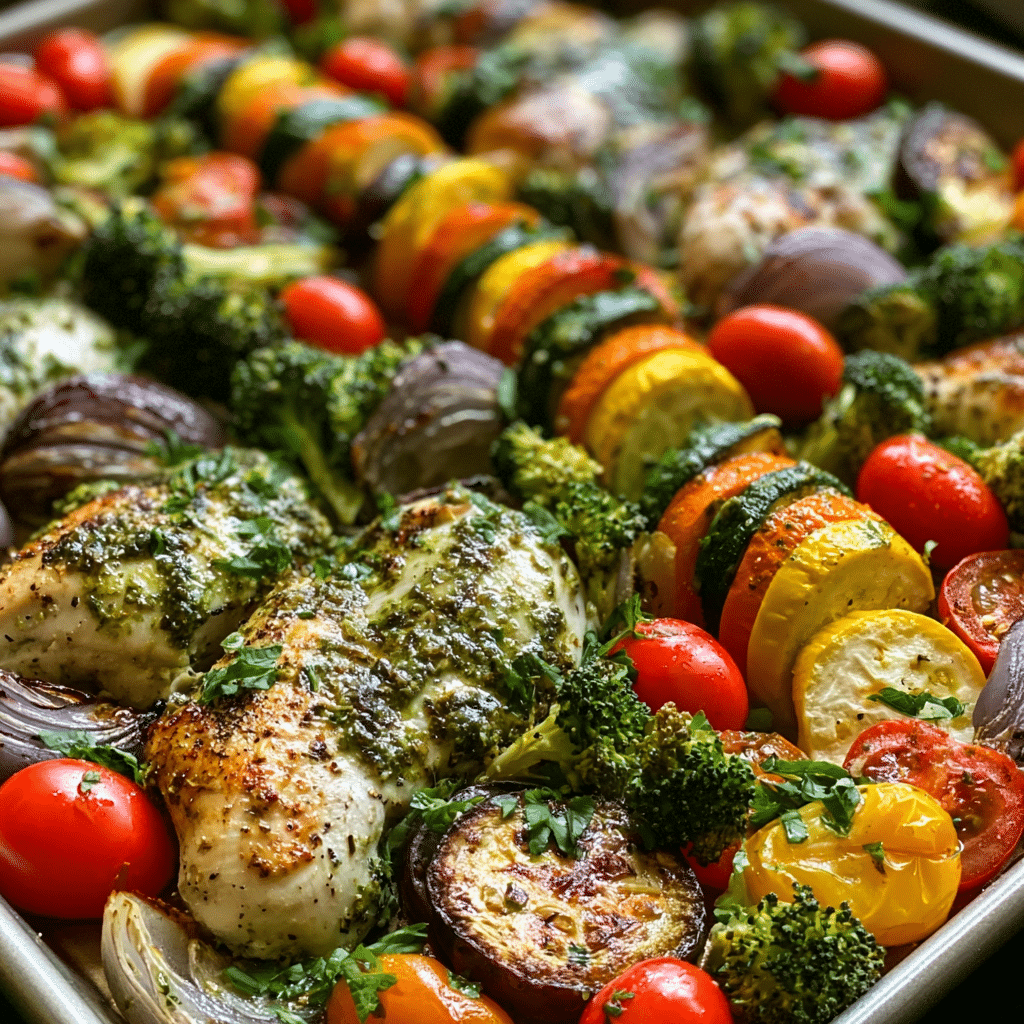
Chef Tips for Perfect Results
- Cut the chicken into uniform pieces — inconsistent sizes mean some pieces dry out while others stay undercooked; aim for roughly 1¼-inch cubes so everything finishes at the same moment.
- Use a good-quality pesto — the pesto is 90% of the flavor in this recipe; a high-quality store-bought or fresh homemade pesto delivers dramatically better results than a cheap, oily jar version.
- Spread in a strict single layer — pesto contains oil and moisture that creates steam when pieces overlap; spacing everything out ensures the pesto caramelizes onto the chicken rather than pooling on the pan.
- Stir or flip halfway through roasting — this exposes a second side of every piece to direct oven heat and produces more even browning across the entire pan.
- Add the Parmesan after pulling from the oven — adding it during roasting causes the cheese to over-brown and turn bitter; adding it to the hot pan after lets it melt softly without burning.
- Finish with lemon juice every time — the acid from the fresh lemon brightens the basil pesto and cuts through the richness of the olive oil, lifting the entire flavor profile before the first bite.
You Must Know
Do not skip the halfway stir. Unlike whole chicken thighs or large cuts that need undisturbed contact time to develop a seared crust, bite-sized chicken pieces and sliced vegetables benefit enormously from being turned at the midpoint. The bottom sides get direct pan heat for the first 10–12 minutes; turning them gives the top sides the same treatment and prevents the pesto coating from burning on one side while the other remains pale.
Always toss everything in a bowl first, never directly on the sheet pan. Drizzling pesto over a loaded sheet pan and stirring on the surface leaves uncoated patches on every piece. Mixing in a large bowl guarantees that the pesto mixture reaches every surface of every piece of chicken and vegetable before the pan goes into the oven, and the result is visibly and noticeably better in both flavor and appearance.
Pro Tips & Cooking Hacks
- Shortcut: Use store-bought pre-cut zucchini and bell pepper strips to reduce prep time to under 5 minutes — most grocery stores carry pre-sliced stir-fry vegetable mixes that work perfectly here.
- Upgrade: Use homemade basil pesto made with fresh basil, toasted pine nuts, garlic, Parmesan, and extra-virgin olive oil — the fresh flavor is noticeably brighter and more vibrant than any jarred version.
- Mistake to avoid: Do not use pesto straight from a refrigerated jar without the additional olive oil — undiluted pesto is thick and sticky, coats unevenly, and scorches on the pan before the chicken finishes cooking.
- Smart substitution: Swap the zucchini for asparagus spears or broccoli florets with no change to the cook time or method.
- Hack: Line the pan with foil under the parchment for near-zero cleanup — pesto drippings caramelize directly on unlined pans and require soaking to remove.
- Upgrade: Stir 1 tablespoon of sun-dried tomato paste into the pesto mixture for a deeper, richer Italian flavor that pairs beautifully with the cherry tomatoes on the pan.
Flavor Variations & Suggestions
Sun-Dried Tomato Pesto: Replace the basil pesto with sun-dried tomato pesto for a bolder, earthier, slightly sweeter Italian profile that pairs especially well with the red onion and bell pepper.
Spinach Walnut Pesto: Use a homemade spinach and walnut pesto in place of basil pesto for a milder, nuttier flavor that keeps this recipe bright and herby without the distinctly sweet basil note.
Spicy Pesto: Stir ½ teaspoon red pepper flakes and a pinch of cayenne into the pesto mixture before tossing for a version with gentle heat that builds with each bite alongside the herbaceous basil.
Caprese Style: Add fresh mozzarella balls torn directly over the finished hot pan alongside the Parmesan and fresh basil for a melted, creamy caprese finish that elevates this dish into something truly special.
Make-Ahead Options
Make the pesto mixture ahead: Combine the pesto, olive oil, garlic, Italian seasoning, salt, and pepper up to 3 days in advance and store in a sealed jar in the refrigerator. The garlic infuses into the pesto as it sits and the flavor deepens with each passing day.
Toss and marinate ahead: Coat the chicken and vegetables in the pesto mixture, cover tightly, and refrigerate for up to 8 hours before roasting. The pesto penetrates the chicken more deeply with a longer rest and delivers a more intensely flavored result straight from the oven.
Prep the vegetables ahead: Slice the zucchini, bell pepper, and onion and halve the cherry tomatoes up to 24 hours in advance. Store them in an airtight container in the refrigerator and toss everything together in the pesto mixture right before building the sheet pan.
Freeze cooked chicken: Cool the cooked chicken pieces completely and freeze in an airtight bag for up to 2 months. Thaw overnight in the refrigerator and reheat on a sheet pan at 375°F (190°C) for 8–10 minutes. The vegetables do not freeze well after roasting and taste best eaten fresh or refrigerated for up to 3 days.
Recipe Notes & Baker’s Tips
- Chicken thighs are a great substitute for breasts and stay juicier at 400°F — cut them to the same bite-sized pieces and roast for the same amount of time, pulling at exactly 165°F (74°C).
- Store-bought pesto varies widely in quality — look for brands that list fresh basil as the first ingredient and use extra-virgin olive oil rather than sunflower oil for the best flavor.
- The cherry tomatoes release juice as they burst during roasting — this is intentional and creates a light, natural sauce on the pan; do not drain or wipe the pan before adding the Parmesan.
- If your pesto mixture seems too thick to coat evenly, add 1 extra tablespoon of olive oil and stir until it loosens to a pourable, sauce-like consistency.
- Fresh lemon juice squeezed over the finished pan is not truly optional — it brightens basil pesto significantly and the dish tastes noticeably flat without it.
Serving Suggestions
Serve this dish over al dente pasta tossed with a drizzle of olive oil and a crack of black pepper — the pesto pan juices and burst cherry tomatoes create a natural sauce that coats every strand and turns this into a full Italian pasta bowl.
Warm garlic bread or toasted ciabatta pressed directly onto the sheet pan soaks up the pesto and tomato juices pooled at the bottom and turns cleanup into the most delicious part of the meal.
A light arugula salad dressed with lemon juice and olive oil makes the ideal side — the peppery bitterness of fresh arugula cuts through the richness of the pesto and mirrors the bright lemon finish you squeeze over the pan.
For a heartier serving, spoon the pesto chicken and vegetables over creamy polenta or steamed white rice — both absorb the herb-forward pan juices beautifully and add satisfying substance to what is otherwise a lean, vegetable-forward plate.
Storage & Reheating
Store leftovers in an airtight container in the refrigerator for up to 3 days. Reheat on a sheet pan at 375°F (190°C) for 8–10 minutes to restore the roasted edges and revive the pesto aroma — this prevents the chicken from drying out and keeps the vegetables from turning soggy. If reheating in the microwave, cover loosely with a damp paper towel and heat in 30-second bursts on medium power; add a fresh squeeze of lemon juice after reheating to brighten the pesto flavor that mellows slightly in the fridge.
Allergy Information
Dairy (Parmesan, pesto): Most store-bought pesto contains Parmesan cheese. Use a certified dairy-free pesto — several good plant-based versions are widely available — and skip the Parmesan garnish, or replace it with 2 tablespoons of nutritional yeast for a similar savory, umami-forward finish.
Tree nuts (pesto): Traditional basil pesto contains pine nuts. Use a nut-free pesto made with sunflower seeds or pepitas, or blend a quick homemade pesto with fresh basil, garlic, olive oil, and a nut-free hard cheese to eliminate this allergen entirely.
Gluten: This recipe contains no gluten ingredients as written. Always check the label on your store-bought pesto, as some brands add thickeners or use shared equipment with gluten-containing products.
Questions I Get Asked A Lot
Can I use store-bought pesto?
Yes — store-bought basil pesto works perfectly in this recipe; choose a brand with fresh basil listed first and extra-virgin olive oil in the ingredients for the best flavor and texture on the pan.
How do I know when the chicken is done?
Insert an instant-read thermometer into the thickest piece — it must read 165°F (74°C) to be fully cooked; the pesto coating can make the outside look done before the center is safe to eat.
My pesto turned dark and slightly bitter in the oven. What went wrong?
The oven temperature was too high or the pan was left in too long without stirring — stir or flip everything at the halfway mark and pull the pan the moment the chicken hits 165°F (74°C) to prevent the basil in the pesto from over-browning.
Can I add other vegetables to this sheet pan?
Yes — asparagus spears, broccoli florets, mushrooms, and snap peas all work well; add tender vegetables like cherry tomatoes and snap peas in the final 10 minutes only to prevent them from collapsing completely.
Can I meal prep this recipe?
Yes — portion cooked chicken and vegetables into airtight containers and refrigerate for up to 3 days; add a fresh squeeze of lemon juice before reheating to revive the pesto flavor and keep each portion tasting bright.
💬 Tried this recipe? Leave a comment and rating below!
Print
Sheet Pan Pesto Chicken and Veggies
- Total Time: 35 minutes
- Yield: 4 servings
- Diet: Gluten Free
Description
Sheet Pan Pesto Chicken and Veggies is a bright, herb-forward dinner made on one pan in under 35 minutes. One bowl, one pan, one outstanding weeknight dinner.
Ingredients
For the Chicken:
1 pound boneless, skinless chicken breasts (or chicken thighs), cut into bite-sized pieces
For the Vegetables:
1 medium zucchini, sliced
1 red bell pepper, sliced
1 cup cherry tomatoes, halved
½ red onion, sliced
For the Pesto Mixture:
⅓ cup basil pesto (store-bought or homemade)
2 tablespoons olive oil
2 cloves garlic, minced
1 teaspoon Italian seasoning
½ teaspoon salt
¼ teaspoon black pepper
Optional Garnish:
¼ cup grated Parmesan cheese
Juice of ½ lemon
Fresh basil or parsley, chopped
Instructions
1. Preheat the oven to 400°F (200°C) and line a large sheet pan with parchment paper.
2. Slice the zucchini, red bell pepper, and red onion into bite-sized pieces. Halve the cherry tomatoes and cut the chicken into evenly sized bite-sized pieces.
3. Combine the basil pesto, olive oil, minced garlic, Italian seasoning, salt, and black pepper in a large bowl and stir until fully mixed.
4. Add the chicken pieces and all the vegetables to the bowl and toss until every piece is thoroughly and evenly coated in the pesto mixture.
5. Spread the chicken and vegetables in a single even layer on the prepared sheet pan, making sure nothing overlaps or crowds the pan.
6. Roast for 20–25 minutes, stirring or flipping everything halfway through, until the chicken reaches an internal temperature of 165°F (74°C) and the vegetables are tender.
7. Remove the pan from the oven and sprinkle with grated Parmesan cheese if using.
8. Squeeze fresh lemon juice over everything, garnish with chopped fresh basil or parsley, and serve immediately.
Notes
Cut the chicken into uniform bite-sized pieces — aim for roughly 1¼-inch cubes so everything finishes cooking at the same moment.
Spread everything in a strict single layer — pesto contains oil and moisture that creates steam when pieces overlap, preventing caramelization.
Stir or flip halfway through roasting — this exposes a second side of every piece to direct oven heat and produces more even browning across the pan.
Add the Parmesan after pulling from the oven, not during roasting — adding it to the hot pan lets it melt softly without burning or turning bitter.
Finish with fresh lemon juice every time — the acid brightens the basil pesto and cuts through the richness of the olive oil before the first bite.
Store leftovers in an airtight container in the refrigerator for up to 3 days. Reheat on a sheet pan at 375°F (190°C) for 8–10 minutes; add a fresh squeeze of lemon juice after reheating to revive the pesto flavor.
VariationHow to Make It
Sun-Dried Tomato PestoReplace basil pesto with sun-dried tomato pesto for a bolder, earthier Italian profile.
Spinach Walnut PestoUse homemade spinach and walnut pesto for a milder, nuttier flavor without the sweet basil note.
Spicy PestoStir ½ teaspoon red pepper flakes and a pinch of cayenne into the pesto mixture before tossing.
Caprese StyleTear fresh mozzarella balls over the finished hot pan alongside the Parmesan and fresh basil.
- Prep Time: 10 minutes
- Cook Time: 25 minutes
- Category: Dinner
- Method: Roasting
- Cuisine: Italian