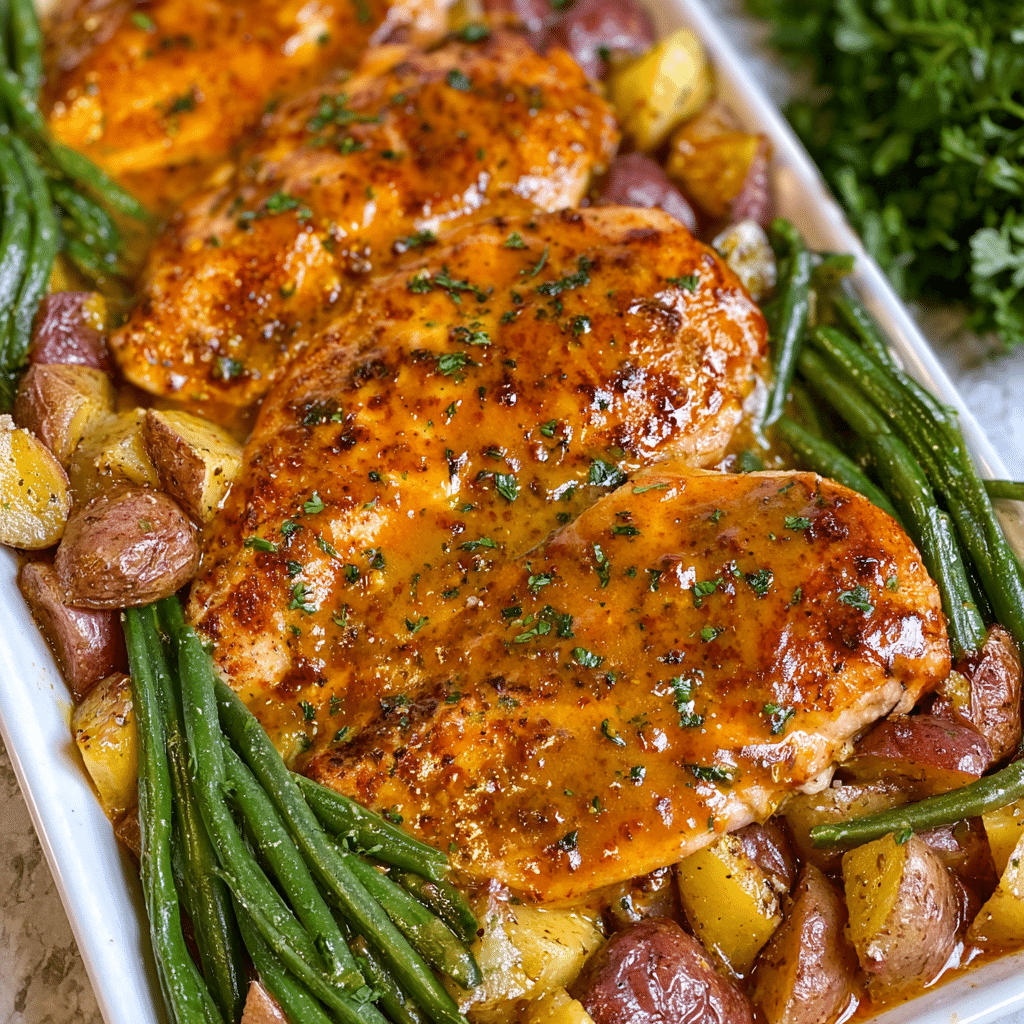
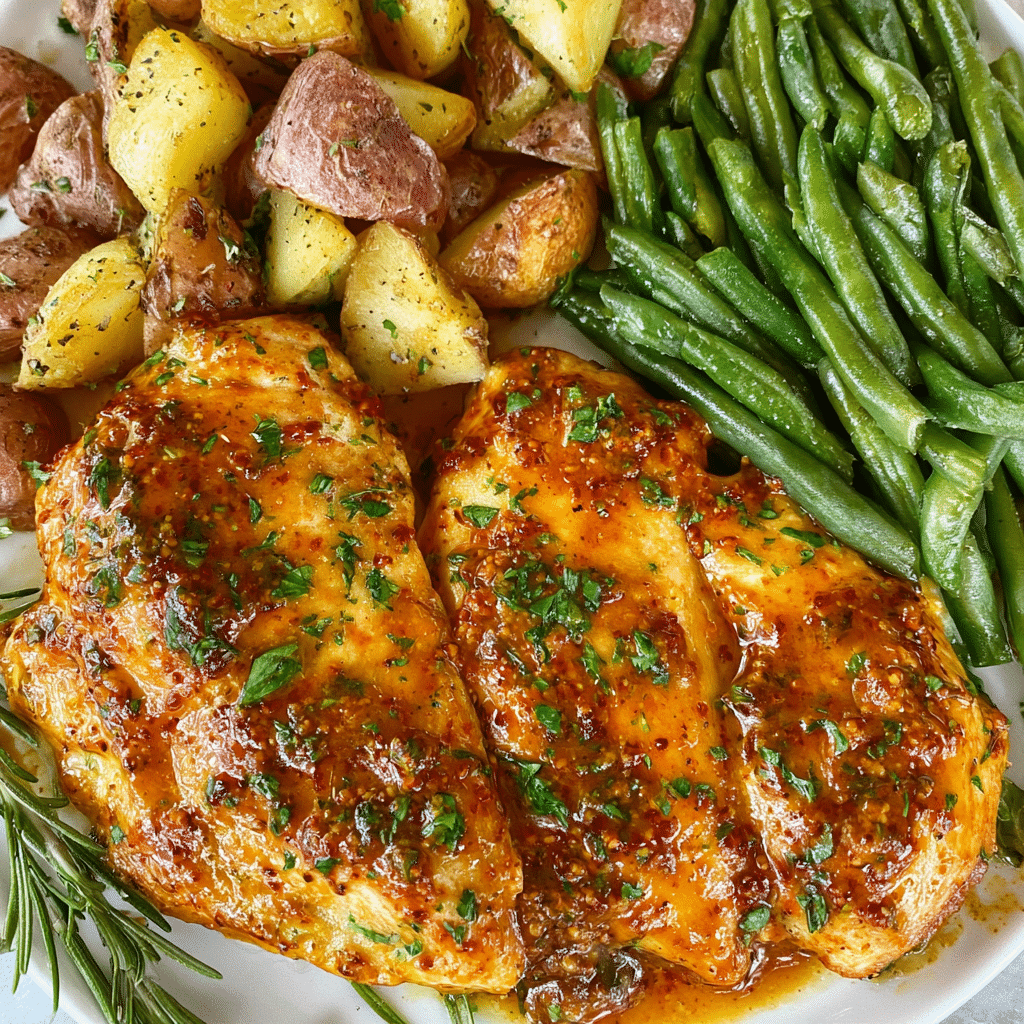
Sheet Pan Honey Mustard Chicken is a bold, high-heat dinner of sliced chicken breasts fully coated in a double-mustard honey glaze, roasted at 450°F alongside crispy potatoes and tender-crisp green beans. The sauce caramelizes into a thick, sticky lacquer under the intense heat and delivers rich, layered flavor.
Why You’ll Love This Recipe
The double-mustard sauce — yellow mustard for sweetness and tang, Dijon for sharpness and depth — caramelizes under 450°F heat into a thick, sticky glaze with a layered flavor profile that coats every surface of every piece of chicken. No thin, pale sauce here — this one sets and locks.
Honey mustard is one of those instantly recognizable flavors that hits with immediate familiarity and comfort, now roasted under high heat into something genuinely impressive. The whole kitchen smells like something worth gathering everyone for.
The sauce takes one bowl and a whisk. The vegetables take one toss. Everything goes across two pans and the oven handles the rest without any stirring, flipping, or monitoring required from you.
Slicing the chicken in half horizontally means more surface area for the glaze, more even cooking, and more servings from fewer pieces — four chicken breasts feed six to eight people, making this one of the most efficient crowd-feeding sheet pan dinners in the rotation.
From prep to table in 55 minutes, with only 15 of those minutes requiring any hands-on attention, this recipe fits into any weeknight schedule without cutting corners on flavor, portion size, or presentation.
Ingredient List
For the Chicken & Vegetables:
- 4 large boneless, skinless chicken breasts, trimmed and sliced in half horizontally
- 2 pounds potatoes, cut into 1-inch pieces
- 1 pound fresh or frozen green beans, trimmed if fresh
- 3 tablespoons olive oil, divided
- 2¼ teaspoons kosher salt, divided
- ½ teaspoon black pepper, divided
Honey Mustard Sauce:
- ⅓ cup honey
- 3 tablespoons yellow mustard
- 3 tablespoons Dijon or stone-ground mustard
- 1½ teaspoons garlic, minced
- 1 teaspoon onion powder
- 1 teaspoon paprika
- 1 teaspoon dried parsley
- 1 teaspoon dried thyme
- 1 tablespoon olive oil
Why These Ingredients Work
Chicken breasts sliced in half horizontally become two thin, flat cutlets from a single breast — a technique that solves the single biggest problem with roasting chicken breasts at high heat. Thinner cutlets cook faster, more evenly, and without the dry, chalky texture that thick breasts develop when the exterior overcooks before the center reaches temperature.
The double-mustard combination — yellow mustard and Dijon together — produces a sauce with significantly more dimension than either alone. Yellow mustard delivers a bright, vinegary sweetness and a familiar, accessible tang. Dijon brings sharpness, a slight heat, and the complex, fermented depth that comes from brown mustard seeds. Together they create a sauce with a front note, a middle note, and a long finish that holds up against the caramelizing heat of the oven.
Honey does two jobs in this sauce. Raw, it binds and emulsifies the mustard and olive oil into a cohesive, thick glaze. Under 450°F, it caramelizes rapidly — faster than at lower temperatures — building the sticky, golden-brown lacquer on the surface of the chicken that makes this dish visually striking and texturally satisfying. The higher oven temperature is what converts honey from a sweetener into a glaze.
Potatoes cut to 1 inch are the workhorse of the vegetable pan. At this size, they roast to a crispy, golden exterior and a fluffy, creamy interior within the 35–40 minute total roasting time. They absorb the seasoned olive oil fully, develop a caramelized crust on the pan-side surface, and hold their structure well enough to plate and serve without falling apart.
Essential Tools and Equipment
- 2 large rimmed sheet pans (18×13 inches each)
- Parchment paper or aluminum foil
- Nonstick cooking spray
- Large mixing bowl
- Small bowl for the sauce
- Whisk
- Sharp chef’s knife and cutting board
- Pastry brush for applying the sauce
- Instant-read meat thermometer
- Tongs for plating and serving
How To Make Sheet Pan Honey Mustard Chicken
Phase 1: Prep and Start the Potatoes
- Preheat the oven to 450°F (230°C). Line both sheet pans with foil or parchment paper and lightly coat with nonstick cooking spray.
- Toss the potatoes with 1 tablespoon olive oil, 1 teaspoon kosher salt, and ¼ teaspoon black pepper until evenly coated. Spread in a single layer on one sheet pan and roast for 20 minutes.
Phase 2: Prepare the Green Beans, Chicken, and Sauce
- Trim the fresh green beans if using fresh. Toss the green beans with 1 tablespoon olive oil, ½ teaspoon kosher salt, and ¼ teaspoon black pepper. Set aside.
- Sprinkle the chicken breast cutlets evenly with the remaining ¾ teaspoon kosher salt and allow them to rest while you prepare the sauce.
- Whisk together the honey, yellow mustard, Dijon mustard, minced garlic, onion powder, paprika, dried parsley, dried thyme, and 1 tablespoon olive oil in a small bowl until smooth and fully combined.
Phase 3: Add Everything and Roast Together
- After the potatoes have roasted for 20 minutes, remove the pan and add the green beans directly alongside the potatoes in a single layer.
- Arrange the chicken cutlets on the second prepared sheet pan. Brush the full batch of honey mustard sauce generously over every piece, using all of the sauce.
- Return both sheet pans to the oven simultaneously and bake for 15–20 minutes, until the potatoes are golden and crispy, the green beans are tender-crisp, and the chicken reaches an internal temperature of 165°F (74°C) — or remove at 160°F (71°C) and rest to let carryover cooking finish.
Phase 4: Rest and Serve
- Rest the chicken for 5 minutes, then serve alongside the roasted potatoes and green beans.
Chef Tips for Perfect Results
- Roast at 450°F without compromise — lower temperatures will not caramelize the honey mustard sauce into the thick, sticky glaze this recipe produces; the high heat is the mechanism that transforms the sauce from a coating into a lacquer.
- Pat the chicken completely dry before applying the salt — surface moisture dilutes the sauce adhesion and prevents the caramelized crust from forming uniformly across the cutlets.
- Use every drop of the sauce — the recipe is calibrated for complete coverage across all eight cutlets; holding any back produces a thinner, paler, less flavorful result.
- Pull the chicken at 160°F (71°C) — carryover cooking during the 5-minute rest brings it to a safe 165°F without the dry, chalky texture that comes from leaving it in the oven to the full target temperature.
- Cut the potatoes uniformly at 1 inch — larger pieces remain undercooked when the chicken finishes; smaller pieces overcook and turn mushy before developing a crispy crust.
- Rotate the pans halfway through the second roasting period if your oven has uneven heat distribution — both pans need to reach the same level of caramelization for the best result.
You Must Know
Two sheet pans are a requirement, not a preference. The chicken needs its own dedicated pan because the full batch of honey mustard sauce belongs entirely on the chicken — applied to vegetables, that much honey at 450°F chars rather than caramelizes. A single overcrowded pan also traps steam between the pieces and converts what should be a roasting environment into a braising one, preventing both the chicken glaze and the potato crust from forming.
The chicken reaches 165°F (74°C) during its 5-minute rest if you pull it from the oven at 160°F (71°C). Carryover cooking in a rested piece of chicken is reliable and consistent. Leaving the cutlets in the oven until the thermometer reads the full 165°F risks overcooking the outer layers of a thin cutlet while the center just reaches temperature — the rest method produces a juicier, more evenly cooked result every time.
Pro Tips & Cooking Hacks
- Lightly spray the parchment paper in addition to lining the pan — honey caramelizes aggressively at 450°F and can bond to parchment; the spray keeps the glaze on the chicken rather than the paper.
- Brush a second coat of sauce at the 10-minute mark of the chicken’s roasting period for a thicker, deeper caramelized finish on the surface.
- Let the potatoes develop a deep golden color during the initial 20-minute roast before adding anything — pale, undercooked potatoes won’t hold up through the second roasting period.
- Use stone-ground mustard in place of Dijon for a more rustic texture — the whole mustard seeds remain visible in the finished glaze and add a pleasant pop of sharpness.
- Add frozen green beans directly without thawing — they shed surface moisture quickly in the hot oven and reach tender-crisp in the same 15–20 minute window as the fresh variety.
- Make a double batch of the sauce and store the extra in the refrigerator for up to 5 days — it doubles as a dipping sauce, sandwich spread, or salad dressing.
Flavor Variations & Suggestions
Spicy honey mustard: Add 1–2 teaspoons of your preferred hot sauce or ½ teaspoon of cayenne pepper directly to the sauce before whisking. The heat builds slowly against the sweetness of the honey and the sharpness of the mustard, creating a sauce with a satisfying slow burn that intensifies on the finish.
Maple mustard chicken: Replace the honey with an equal amount of pure maple syrup for a deeper, earthier sweetness in the glaze. Maple caramelizes at a slightly lower temperature than honey and produces a richer, more complex glaze with a warm, slightly smoky character that pairs especially well with the thyme.
Herb-crusted honey mustard: After brushing the sauce onto the chicken, press a mix of fresh thyme leaves, rosemary, and finely chopped flat-leaf parsley directly into the surface of each cutlet. The fresh herbs form a fragrant crust that browns and crisps beautifully under the high heat.
Lemon honey mustard: Add the zest of one lemon and 1 tablespoon of fresh lemon juice to the sauce before whisking. The citrus brightens the whole glaze, cuts through the richness of the mustard and oil, and adds a brightness that makes the finished chicken taste noticeably lighter.
Make-Ahead Options
Honey mustard sauce: Whisk together the full sauce batch up to 5 days in advance and store it in a sealed jar in the refrigerator. The flavors meld and deepen as it sits — a day-old sauce is actually more cohesive and complex than a freshly made one. Stir well before using.
Seasoned potatoes: Toss the potatoes with olive oil, salt, and pepper and store in an airtight container in the refrigerator for up to 24 hours before roasting. Bring to room temperature for 10 minutes before spreading on the pan.
Sauced chicken: Brush the honey mustard sauce onto the chicken cutlets, cover tightly, and refrigerate for up to 24 hours before roasting. The sauce continues to penetrate the meat during refrigeration and produces a noticeably more flavorful, more deeply glazed result.
Freezing cooked leftovers: Cool the chicken and vegetables completely, then store in a freezer-safe container for up to 2 months. Thaw overnight in the refrigerator and reheat in a 375°F oven for 12–15 minutes. The glaze on the chicken softens slightly after freezing but firms back up under the oven heat during reheating.
Recipe Notes & Baker’s Tips
- Both yellow and Dijon mustard together are what make this sauce exceptional — using only one type produces a noticeably flatter, less layered result; the combination is the point.
- Parchment paper is preferable to foil — the honey glaze releases cleanly from parchment but can bond aggressively to foil and pull the caramelized crust off the chicken when you try to plate it.
- The recipe produces 8 thin cutlets from 4 large breasts — if your chicken breasts are smaller (under 8 ounces each), reduce the second roasting period by 3–5 minutes and check temperature early.
- Fresh green beans need their ends trimmed; frozen green beans go straight in from the freezer with no prep required and no change in final texture.
- The full 2¼ teaspoons of kosher salt across the whole recipe seasons the potatoes, green beans, and chicken separately — do not add all the salt at once or to one component.
Serving Suggestions
Warm dinner rolls or crusty bread: The caramelized honey mustard pan drippings that pool on the chicken pan are intensely flavorful — warm bread or rolls are the best tool for capturing every last drop before the pan goes to the sink.
Simple arugula or mixed green salad: A lightly dressed green salad with lemon vinaigrette provides a peppery, fresh contrast to the richness of the caramelized glaze and the starchy potatoes, balancing the plate without adding any competing flavors.
Reserved honey mustard sauce for dipping: Set out a small bowl of the sauce alongside the plated chicken — the same glaze works as a dipping sauce and reinforces the flavor of the dish with every bite of potato and green bean.
Chilled Riesling or sparkling water with citrus: A glass of off-dry Riesling mirrors the sweet-tangy balance of the honey mustard glaze beautifully, while sparkling water with fresh lemon slices provides a clean, refreshing non-alcoholic contrast to the richness of the dish.
Storage & Reheating
- Refrigerator: Store the chicken and vegetables together in an airtight container for up to 4 days; the glaze firms back up in the fridge but softens again with reheating.
- Oven reheating (recommended): Reheat at 375°F for 12–15 minutes — this re-crisps the potato edges and restores some of the caramelized texture to the honey mustard glaze on the chicken.
- Freezer: Store in a sealed freezer-safe container for up to 2 months; thaw overnight in the refrigerator before reheating in the oven.
Allergy Information
Gluten: This recipe uses mustard, which can contain wheat-derived vinegar in some commercial brands. Verify both the yellow mustard and Dijon mustard labels for gluten-free certification if serving guests with celiac disease or gluten sensitivity. The remaining ingredients are naturally gluten-free.
Mustard allergy: Mustard is a recognized top allergen in many countries and forms the entire base of the sauce here. For a mustard-free version, substitute the full sauce with a honey-garlic glaze — whisk ⅓ cup honey, 2 tablespoons olive oil, 2 teaspoons minced garlic, and 1 teaspoon paprika together and use in the same way.
Low-sodium needs: The recipe uses 2¼ teaspoons of kosher salt across the full batch, plus sodium from the mustards. Reduce the total kosher salt to 1 teaspoon and use a low-sodium or sodium-free mustard blend to cut the overall sodium content significantly without losing the core flavor structure.
Questions I Get Asked A Lot
Can I use chicken thighs instead of chicken breasts?
Yes, boneless skinless chicken thighs work well and stay juicier than breasts — use them whole rather than sliced, and add 5–8 minutes to the second roasting period; check for 165°F (74°C) with a thermometer before removing from the oven.
Can I cook this on one sheet pan instead of two?
The two pans are necessary — the honey mustard sauce belongs entirely on the chicken and would char aggressively onto vegetables at 450°F, and a single pan large enough for everything would overcrowd and steam the ingredients rather than roasting them.
Do I need both yellow and Dijon mustard, or can I use just one?
Both mustards are what give the sauce its layered complexity — using all Dijon produces a sharper, more intense result, while all yellow mustard produces a sweeter, milder one; if you substitute with all Dijon, add an extra teaspoon of honey to balance the sharpness.
Why does this recipe use 450°F when most sheet pan recipes use 400°F?
The higher temperature is specifically what caramelizes the honey in the sauce into a thick, sticky glaze rather than a thin, wet coating — at 400°F the honey stays runny and the sauce never fully sets onto the chicken surface the way it does at 450°F.
Can I make the honey mustard sauce ahead of time?
Yes, whisk the full sauce batch together and store it in a sealed jar in the refrigerator for up to 5 days — the ingredients meld together as it sits and the day-old sauce is actually more cohesive and flavorful than a freshly made batch; stir well before brushing onto the chicken.
💬 Tried this recipe? Leave a comment and rating below!
Print
Sheet Pan Honey Mustard Chicken
- Total Time: 55 minutes
- Yield: 6–8 servings
- Diet: Gluten Free
Description
Sheet Pan Honey Mustard Chicken is a bold, high-heat dinner of sliced chicken breasts fully coated in a double-mustard honey glaze, roasted at 450°F alongside crispy potatoes and tender-crisp green beans . The sauce caramelizes into a thick, sticky lacquer under the intense heat and delivers rich, layered flavor.
Ingredients
4 large boneless, skinless chicken breasts, trimmed and sliced in half horizontally
2 pounds potatoes, cut into 1-inch pieces
1 pound fresh or frozen green beans, trimmed if fresh
3 tablespoons olive oil, divided
2¼ teaspoons kosher salt, divided
½ teaspoon black pepper, divided
⅓ cup honey
3 tablespoons yellow mustard
3 tablespoons Dijon or stone-ground mustard
1½ teaspoons garlic, minced
1 teaspoon onion powder
1 teaspoon paprika
1 teaspoon dried parsley
1 teaspoon dried thyme
1 tablespoon olive oil (for the sauce)
Instructions
1. Preheat the oven to 450°F (230°C). Line 2 sheet pans with foil or parchment paper and lightly coat with nonstick cooking spray.
2. Toss the potatoes with 1 tablespoon olive oil, 1 teaspoon kosher salt, and ¼ teaspoon black pepper until evenly coated. Spread in a single layer on one sheet pan and roast for 20 minutes.
3. Trim the fresh green beans if using fresh. Toss the green beans with 1 tablespoon olive oil, ½ teaspoon kosher salt, and ¼ teaspoon black pepper. Set aside.
4. Sprinkle the chicken cutlets evenly with the remaining ¾ teaspoon kosher salt and allow them to rest while preparing the sauce.
5. Whisk together the honey, yellow mustard, Dijon mustard, minced garlic, onion powder, paprika, dried parsley, dried thyme, and 1 tablespoon olive oil in a small bowl until smooth and fully combined.
6. After the potatoes have roasted for 20 minutes, remove the pan and add the green beans alongside the potatoes in a single layer.
7. Arrange the chicken cutlets on the second prepared sheet pan. Brush the full batch of honey mustard sauce generously over every piece, using all of the sauce.
8. Return both sheet pans to the oven simultaneously and bake for 15–20 minutes, until the potatoes are golden and crispy, the green beans are tender-crisp, and the chicken reaches an internal temperature of 165°F (74°C) — or remove at 160°F (71°C) and rest to allow carryover cooking to finish.
9. Rest the chicken for 5 minutes, then serve alongside the roasted potatoes and green beans.
Notes
Two sheet pans are required — the honey mustard sauce belongs exclusively on the chicken and would char aggressively onto vegetables at 450°F; a single overcrowded pan also steams rather than roasts the ingredients.
Pull the chicken from the oven at 160°F (71°C) and rest for 5 minutes — carryover cooking brings it to a safe 165°F without the dry, chalky texture that results from leaving thin cutlets in the oven to the full target temperature.
Use every drop of the sauce on the chicken — the recipe calibrates the full batch for complete coverage across all 8 cutlets; holding back any produces a thinner, paler, less caramelized result.
Lightly spray the parchment paper in addition to lining the pan — honey caramelizes aggressively at 450°F and can bond to parchment; the spray keeps the glaze on the chicken rather than the liner.
Both yellow and Dijon mustard together are what make this sauce layered and complex — using only one produces a noticeably flatter result; the combination is the point.
| Storage method | Duration | Reheating instructions |
|---|---|---|
| Refrigerator | Up to 4 days | Reheat in a 375°F oven for 12–15 minutes to re-crisp the potatoes and restore the caramelized glaze on the chicken |
| Freezer | Up to 2 months | Thaw overnight in the refrigerator, then reheat in a 375°F oven for 15 minutes until warmed through |
| Microwave | Use within 4 days | Reheat in 60-second intervals on medium power — oven reheating produces significantly better texture and restores the glaze |
- Prep Time: 15 minutes
- Cook Time: 40 minutes
- Category: Dinner
- Method: Roasting
- Cuisine: American