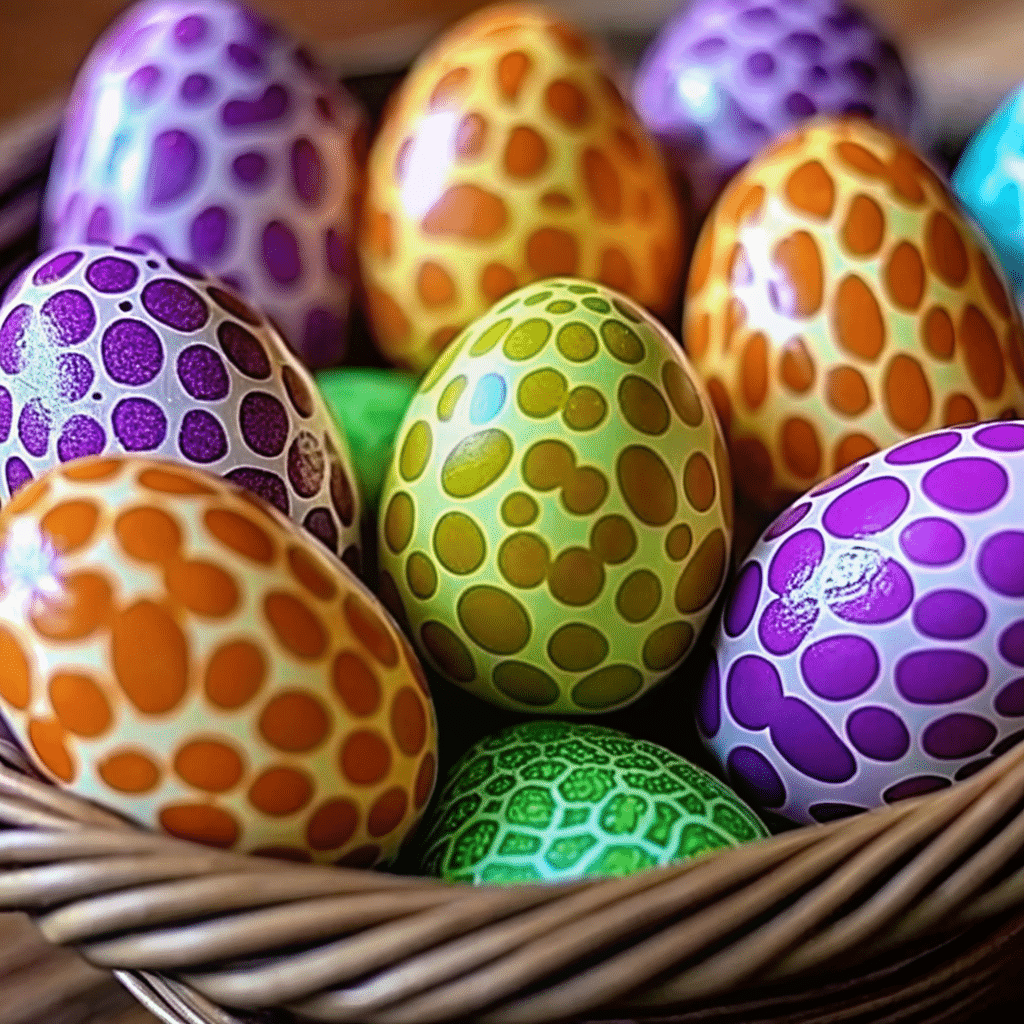
Baking Soda Dinosaur Eggs are a fun, fizzy kitchen project that brings pure joy to kids of all ages! These magical eggs hide tiny dinosaur toys inside and create an exciting eruption when cracked open with vinegar.
Why You’ll Love This Recipe
- Pure magic for kids – The fizzing reaction never gets old
- Screen-free fun – Gets everyone into hands-on creativity
- Simple ingredients – Everything’s already in your pantry
- Educational value – Teaches about chemical reactions
- Perfect for parties – Birthday parties, playdates, rainy days
Baking Soda Dinosaur Eggs
- Total Time: 20 minutes
- Yield: 12
Description
Baking Soda Dinosaur Eggs are a fun, fizzy kitchen project that brings pure joy to kids of all ages! These magical eggs hide tiny dinosaur toys inside and create an exciting eruption when cracked open with vinegar.
Ingredients
2 cups baking soda,
1/2 cup water,
1/2 cup cornstarch,
1 teaspoon white vinegar,
Food coloring,
Small plastic dinosaur toys,
Spray bottle filled with vinegar,
Optional: glitter for sparkle.
Instructions
Combine baking soda and cornstarch in a large bowl. Slowly add water, stirring as you go. The mixture should feel like wet sand. Add the teaspoon of vinegar and watch it fizz slightly – this is normal!
Divide your mixture into separate bowls. Add a few drops of food coloring to each bowl and mix well until the color is evenly distributed. Kids can help with this fun part!
Take a handful of colored mixture and press it firmly in your palm. Place a small dinosaur toy in the center, then add more mixture around it, pressing firmly to completely encase your dinosaur. Shape it into an egg form. Pack it tightly! Set each egg on your parchment-lined baking sheet.
This is the hardest part for impatient kids! Let your dinosaur eggs dry completely at room temperature for 24-48 hours. They’re ready when they feel completely hard and dry to the touch.
Place eggs in a large plastic basin or tray. Give each child a spray bottle filled with white vinegar. Let them spray the eggs and watch as they fizz, bubble, and slowly dissolve to reveal the hidden dinosaurs inside!
Notes
The mixture should feel like damp sand at the beach – perfect for building sandcastles. That’s the consistency you’re looking for. Pack the eggs TIGHTLY!
Loose eggs will crumble before they even dry. If eggs keep crumbling as you form them, add water just a teaspoon at a time until the right consistency. Smaller eggs dry faster (12-24 hours) but bigger eggs create more dramatic fizzing. Speed up drying by placing eggs in a sunny window or using a fan to circulate air.
Store completely dried eggs in an airtight container for up to 2 weeks before use. Make a few extra eggs without dinosaurs as “test eggs” for kids to practice spraying technique.
- Prep Time: 20 minutes
- Cook Time: 0 minutes
- Category: Kids Activity
- Method: No Cook
- Cuisine: Activity
Ingredients You’ll Need
2 cups baking soda,
1/2 cup water,
1/2 cup cornstarch,
1 teaspoon white vinegar,
Food coloring,
Small plastic dinosaur toys,
Spray bottle filled with vinegar,
Optional: glitter for sparkle.
Why These Ingredients Work
Baking soda is the star! When it meets vinegar, it creates that amazing fizzing reaction. The cornstarch acts as a binder, helping everything stick together. The small amount of vinegar in the mixture helps activate the baking soda just enough to make the eggs hold together. Water brings everything together into a moldable paste. Food colors make your eggs vibrant and fun!
Essential Tools and Equipment
- Large mixing bowl – For combining dry ingredients
- Measuring cups and spoons – Accuracy matters
- Small bowls – For dividing and coloring
- Baking sheet with parchment paper – For drying
- Spray bottle – Filled with vinegar for hatching
- Plastic basin or tray – To contain the fizzy mess
Step-by-Step Instructions
Step 1: Mix Your Base
Combine baking soda and cornstarch in a large bowl. Slowly add water, stirring as you go. The mixture should feel like wet sand. Add the teaspoon of vinegar and watch it fizz slightly – this is normal!
Step 2: Add Your Colors
Divide your mixture into separate bowls. Add a few drops of food coloring to each bowl and mix well until the color is evenly distributed. Kids can help with this fun part!
Step 3: Form Your Dinosaur Eggs
Take a handful of colored mixture and press it firmly in your palm. Place a small dinosaur toy in the center, then add more mixture around it, pressing firmly to completely encase your dinosaur. Shape it into an egg form. Pack it tightly! Set each egg on your parchment-lined baking sheet.
Step 4: Let Them Dry
This is the hardest part for impatient kids! Let your dinosaur eggs dry completely at room temperature for 24-48 hours. They’re ready when they feel completely hard and dry to the touch.
Step 5: The Big Reveal
Place eggs in a large plastic basin or tray. Give each child a spray bottle filled with white vinegar. Let them spray the eggs and watch as they fizz, bubble, and slowly dissolve to reveal the hidden dinosaurs inside!

You Must Know
The secret to eggs that don’t fall apart is all in the consistency and how well you pack them. The mixture should feel like damp sand at the beach. If your eggs keep crumbling as you form them, add a tiny bit more water, just a teaspoon at a time. And please, pack them tightly!
Personal Secret: I always make a few extra eggs without the dinosaurs inside and use them as “test eggs” for the kids to practice their spraying technique on.
Pro Tips & Cooking Hacks
- Make it sparkly – Add glitter to your mixture
- Size matters – Smaller eggs dry faster
- Speed up drying – Place in sunny window or use a fan
- Storage hack – Store dried eggs in airtight container
- Reuse the mixture – Leftover fizzy mixture makes great sensory play
- Theme it up – Use different small toys for different themes
Flavor Variations & Suggestions
While we’re calling these “Dinosaur Eggs,” the concept works for any theme! Hide small ocean creatures for “Mermaid Eggs,” little plastic bugs for “Dragon Eggs,” or small candy eggs for Easter. Around holidays, hide small crystals or gems inside. The possibilities are endless!
Make-Ahead Options
These eggs are perfect for making ahead!
Once completely dry, they can be stored in an airtight container for up to two weeks before use.
Just make sure they’re bone dry before storing, or they might get soft and stick together.
What to Serve With Baking Soda Dinosaur Eggs
If you’re doing this as part of a dinosaur-themed party, pair it with fun snacks!
“Dinosaur food” like veggie sticks with ranch, “dino nuggets,” and “fossil cookies.” Serve “lava juice” (red fruit punch) in clear cups for a complete prehistoric experience!
Allergy Information
The great news is that this activity is completely non-toxic and safe for kids of all ages! Baking soda and vinegar are both food-safe ingredients. However, this isn’t meant to be eaten.
Some children might have slight skin irritation from prolonged contact with baking soda, so wash hands well afterward.
Storage & Reheating
Dried eggs can be kept in an airtight container in a cool, dry place for up to 2 weeks. Keep them away from moisture or humidity. The spray bottles of vinegar can be reused for multiple sessions.
FAQs
Why are my eggs falling apart?
This usually means your mixture was too dry or you didn’t pack them tightly enough. The mixture should feel like wet sand, and you need to squeeze firmly when forming the eggs.
How long do I really need to wait for them to dry?
In normal humidity, 24-48 hours is typical. The eggs need to be completely hard before the hatching process works properly.
Can we eat these?
While all the ingredients are non-toxic and food-safe, these eggs aren’t meant to be eaten. They’re for play only!
💬 Made these with your kids? Leave a comment below!