Thai Green Curry Chicken is aromatic, creamy, and bursting with bold flavors. This recipe uses simple ingredients like coconut milk, green curry paste, tender chicken thighs, and fresh Thai basil to create an authentic, restaurant quality dish in just 30 minutes.
Love More Recipes? Try My Coconut Curry Chicken or this Thai Red Curry next.
Why You’ll Love This Recipe
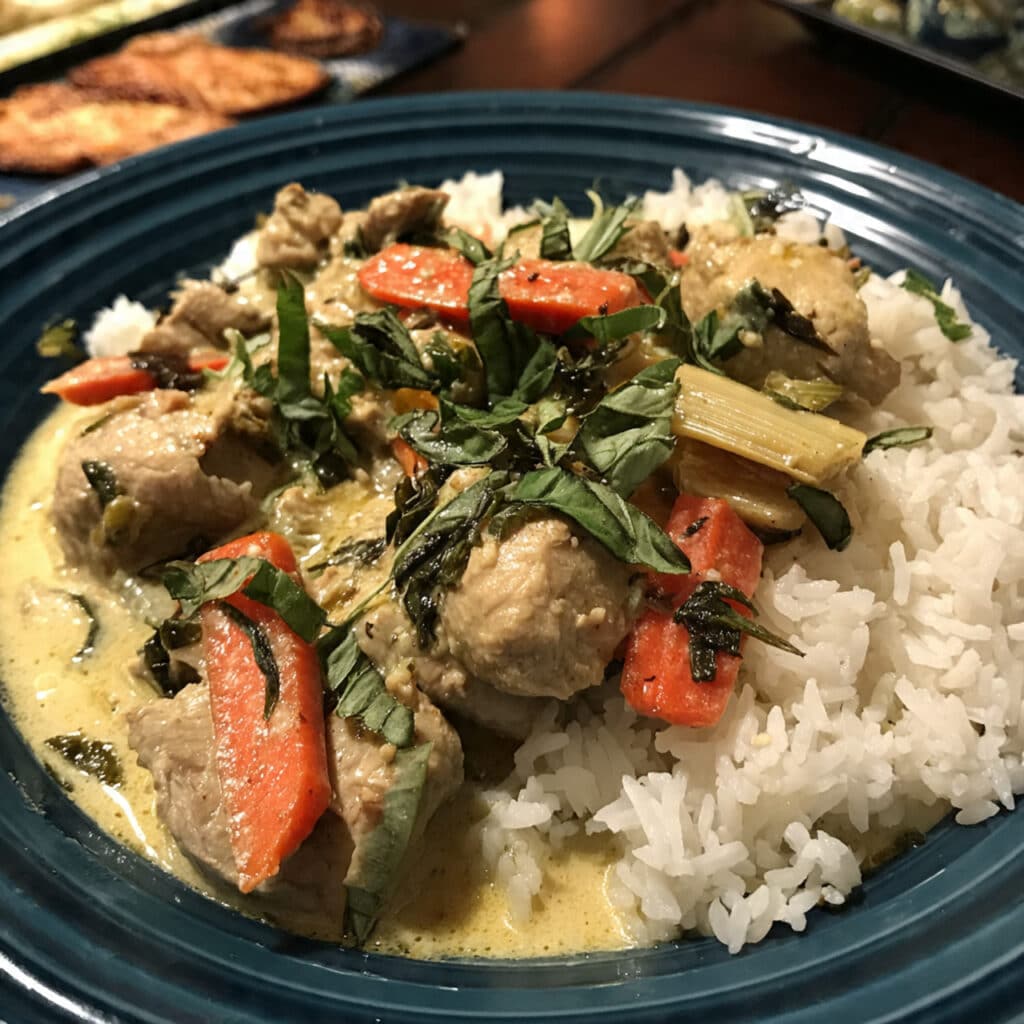
Creamy, and full of bold flavor, this Thai Green Curry Chicken is a comforting yet vibrant meal. Tender chicken simmers in a rich coconut milk sauce infused with green curry paste, fresh herbs, and crisp vegetables for the perfect balance of heat and freshness. Easy enough for weeknights but impressive enough to feel special, it’s a cozy dish that brings restaurant-style flavor straight to your kitchen.
Print
Thai Green Curry Chicken
- Total Time: 30 minutes
Description
This Thai Green Curry Chicken is an aromatic, creamy, and authentic curry made with coconut milk, green curry paste, tender chicken thighs, bamboo shoots, and fresh Thai basil. Ready in just 30 minutes, it’s the perfect weeknight dinner that tastes like it came from your favorite Thai restaurant!
Ingredients
Main Curry:
- 1¾ cups coconut milk, divided
- 3 tablespoons green curry paste
- 1 cup chicken stock or broth
- 1 pound boneless, skinless chicken thighs, cut into bite-size pieces
- 2 tablespoons palm sugar or brown sugar
- 1½–2 tablespoons fish sauce
- 3–4 kaffir lime leaves, torn
- 1½ cups bamboo shoots, drained
- 1 cup Thai basil leaves
- 1 chili or thinly sliced red bell pepper
Optional Additions:
- Eggplant chunks
- Bell peppers (any color)
- Zucchini slices
- Snow peas
- Firm tofu cubes
For Serving:
- Steamed jasmine rice
Instructions
Heat about ½ cup of the coconut milk in a large pot over medium heat. Let it bubble gently until you see it start to separate slightly—this usually takes 2-3 minutes. This step is CRUCIAL! When the coconut milk splits, the oil comes out and helps bloom the curry paste, releasing all those incredible aromatics.
Note: Don’t rush this step. If your coconut milk isn’t separating, turn up the heat slightly and be patient. You’ll know it’s ready when you see tiny oil droplets on the surface.
Add the green curry paste and cook for about 1 minute, stirring constantly. Your kitchen should smell absolutely AMAZING right now—fragrant, spicy, and aromatic. You’ll see the paste darken slightly and become super fragrant. This is where the magic begins!
Stir in your bite-size chicken pieces and cook for 2-3 minutes, tossing them until they’re completely coated with that gorgeous green curry paste. The chicken doesn’t need to be cooked through yet—it’ll finish cooking in the sauce.
Pour in the remaining coconut milk (about 1¼ cups) and the chicken broth. Stir everything together and bring it to a gentle simmer. See how the sauce comes together into that creamy, dreamy consistency? That’s exactly what you want!
Important: Keep it at a gentle simmer, not a rolling boil. Boiling can cause the coconut milk to separate and become grainy.
Stir in the bamboo shoots, torn kaffir lime leaves (tear them to release more aroma!), sugar, fish sauce, and your sliced chili or bell pepper. Let everything simmer together for 8-10 minutes until the chicken is cooked through and the vegetables are tender. Taste and adjust—add more fish sauce for saltiness or more sugar for sweetness.
Remove the pot from heat and stir in those beautiful Thai basil leaves. They’ll wilt in the residual heat and release their incredible aroma. Don’t cook the basil, just let it wilt naturally to keep that fresh, bright flavor.
Notes
Make it spicier: Add extra curry paste at the beginning OR throw in a couple of sliced Thai bird’s eye chilies. You can also serve with chili oil on the side for those who like it HOT.
Control the consistency: Want it thicker? Simmer longer uncovered to reduce the sauce. Too thick? Add a splash more broth or coconut milk.
Prep ahead shortcut: Cut your chicken and prep your vegetables in the morning. When dinner time hits, you’re literally 15 minutes away from eating!
Common mistake to avoid: Adding the basil too early. Those delicate leaves turn dark and lose their vibrant flavor if cooked too long. Always add them at the very end!
- Prep Time: 10 minutes
- Cook Time: 20 minutes
- Category: Main Dish
- Method: Stovetop
- Cuisine: Thai
Ingredients You’ll Need
Main Curry:
- 1¾ cups coconut milk, divided
- 3 tablespoons green curry paste
- 1 cup chicken stock or broth
- 1 pound boneless, skinless chicken thighs, cut into bite-size pieces
- 2 tablespoons palm sugar or brown sugar
- 1½–2 tablespoons fish sauce
- 3–4 kaffir lime leaves, torn
- 1½ cups bamboo shoots, drained
- 1 cup Thai basil leaves
- 1 chili or thinly sliced red bell pepper
Optional Additions:
- Eggplant chunks
- Bell peppers (any color)
- Zucchini slices
- Snow peas
- Firm tofu cubes
For Serving:
- Steamed jasmine rice
Substitution Notes:
- No palm sugar? Brown sugar works beautifully and adds a lovely caramel note.
- Can’t find kaffir lime leaves? Use the zest of one lime, though the authentic leaves add such incredible fragrance!
- Chicken breasts instead? Sure, but thighs stay much more tender and flavorful in the curry sauce.
- No Thai basil? Regular basil works in a pinch, though Thai basil has that distinctive anise-like flavor that makes it special.
Why These Ingredients Work
Coconut milk creates that signature creamy, luscious sauce and balances the heat from the curry paste. Using it in two stages—first to bloom the paste, then to create the sauce—builds incredible depth.
Green curry paste is where all the magic happens! It’s packed with green chilies, lemongrass, galangal, and aromatics that give this curry its authentic flavor. Don’t skip this—it’s the heart of the dish.
Chicken thighs are my non-negotiable choice here. They’re more forgiving than breasts, stay juicy even if you simmer a bit longer, and absorb all those gorgeous curry flavors.
Palm sugar or brown sugar balances the heat and saltiness with a subtle sweetness that’s essential in Thai cooking.
Fish sauce adds that umami depth and saltiness. Yes, it smells strong in the bottle, but it transforms into pure magic in the curry!
Kaffir lime leaves bring an irreplaceable citrusy, floral aroma. If you’ve only had curry without them, you’re in for a revelation!
Bamboo shoots add authentic texture and a slight crunch that contrasts beautifully with the tender chicken.
Thai basil goes in at the very end to keep it fresh and fragrant—it’s the final flourish that makes everything sing!
Essential Tools and Equipment
- Large pot or deep skillet (at least 3-quart capacity)
- Wooden spoon or silicone spatula for stirring
- Sharp knife and cutting board
- Measuring cups and spoons
- Can opener (for coconut milk and bamboo shoots)
You don’t need anything fancy—just your basic kitchen setup!
How To Make Thai Green Curry Chicken
Step 1: Bloom the Curry Paste
Heat about ½ cup of the coconut milk in a large pot over medium heat. Let it bubble gently until you see it start to separate slightly—this usually takes 2-3 minutes. This step is CRUCIAL! When the coconut milk splits, the oil comes out and helps bloom the curry paste, releasing all those incredible aromatics.
Note: Don’t rush this step. If your coconut milk isn’t separating, turn up the heat slightly and be patient. You’ll know it’s ready when you see tiny oil droplets on the surface.
Step 2: Awaken the Flavors
Add the green curry paste and cook for about 1 minute, stirring constantly. Your kitchen should smell absolutely AMAZING right now—fragrant, spicy, and aromatic. You’ll see the paste darken slightly and become super fragrant. This is where the magic begins!
Step 3: Add the Chicken
Stir in your bite-size chicken pieces and cook for 2-3 minutes, tossing them until they’re completely coated with that gorgeous green curry paste. The chicken doesn’t need to be cooked through yet—it’ll finish cooking in the sauce.
Step 4: Create the Curry Base
Pour in the remaining coconut milk (about 1¼ cups) and the chicken broth. Stir everything together and bring it to a gentle simmer. See how the sauce comes together into that creamy, dreamy consistency? That’s exactly what you want!
Important: Keep it at a gentle simmer, not a rolling boil. Boiling can cause the coconut milk to separate and become grainy.
Step 5: Add the Vegetables and Seasonings
Stir in the bamboo shoots, torn kaffir lime leaves (tear them to release more aroma!), sugar, fish sauce, and your sliced chili or bell pepper. Let everything simmer together for 8-10 minutes until the chicken is cooked through and the vegetables are tender. Taste and adjust—add more fish sauce for saltiness or more sugar for sweetness.
Step 6: Finish with Fresh Basil
Remove the pot from heat and stir in those beautiful Thai basil leaves. They’ll wilt in the residual heat and release their incredible aroma. Don’t cook the basil, just let it wilt naturally to keep that fresh, bright flavor.
You Must Know
Don’t skip the curry paste blooming step! This is what separates restaurant-quality curry from flat, one-dimensional curry. Cooking the paste in separated coconut milk releases the essential oils and deepens the flavor exponentially.
Use full-fat coconut milk! Light coconut milk just won’t give you that rich, creamy texture. I love Thai Kitchen or Aroy-D brands—they’re consistent and authentic.
Taste as you go! Thai cooking is all about balance—sweet, salty, spicy, and sour. Start with the measurements I’ve given, but adjust to your preference. Need more heat? Add more curry paste or fresh chilies. Want it saltier? Add fish sauce gradually.
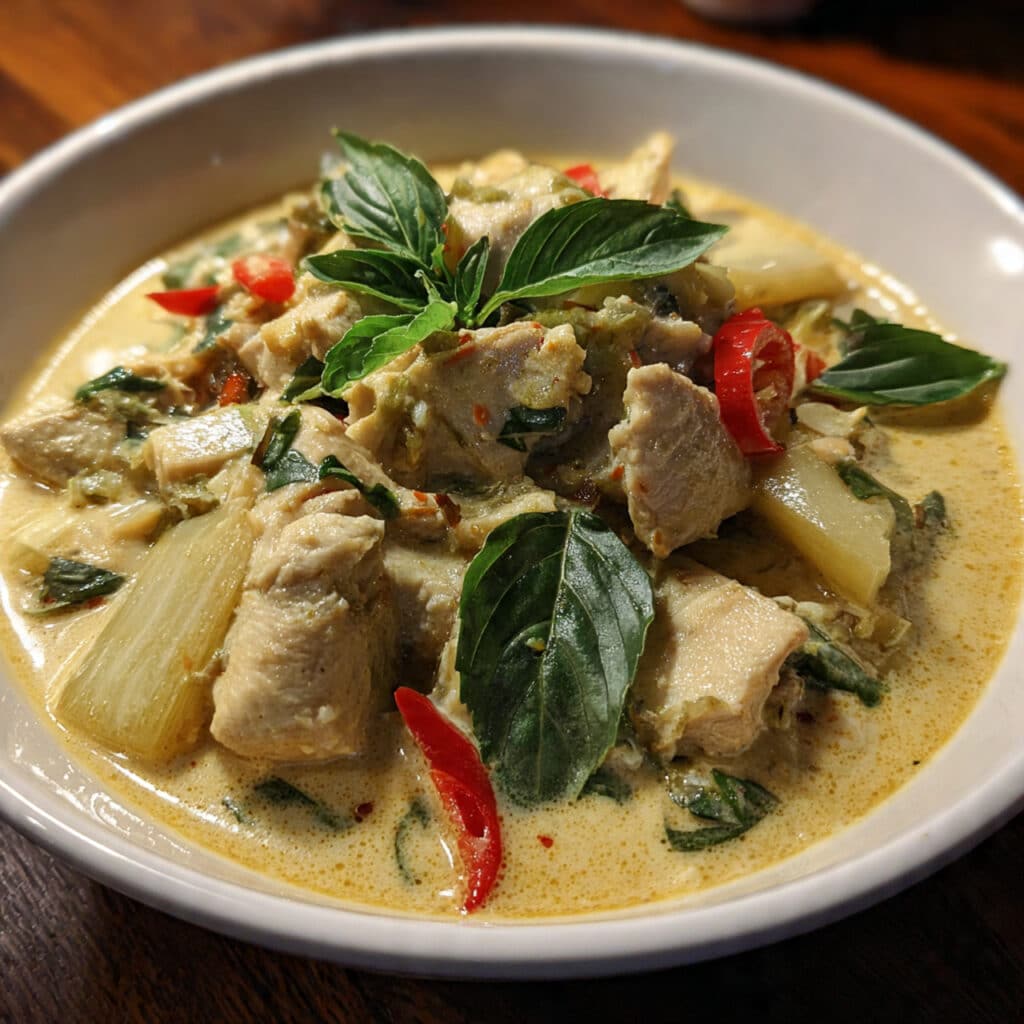
Personal Secret: I always reserve a few whole basil leaves to float on top when serving. It looks gorgeous and adds an extra burst of fresh aroma when your fork breaks through them!
Pro Tips & Cooking Hacks
Make it spicier: Add extra curry paste at the beginning OR throw in a couple of sliced Thai bird’s eye chilies. You can also serve with chili oil on the side for those who like it HOT.
Control the consistency: Want it thicker? Simmer longer uncovered to reduce the sauce. Too thick? Add a splash more broth or coconut milk.
Prep ahead shortcut: Cut your chicken and prep your vegetables in the morning. When dinner time hits, you’re literally 15 minutes away from eating!
Common mistake to avoid: Adding the basil too early. Those delicate leaves turn dark and lose their vibrant flavor if cooked too long. Always add them at the very end!
Restaurant trick: Some Thai restaurants add a splash of coconut cream at the very end for extra richness and a beautiful sheen on top.
Flavor Variations & Suggestions
Thai Green Curry Shrimp: Replace chicken with 1 pound large shrimp. Add them in the last 3-4 minutes of cooking so they don’t get rubbery.
Vegetarian Thai Green Curry: Use firm tofu, extra vegetables like eggplant and bell peppers, and substitute vegetarian fish sauce or soy sauce.
Extra Veggie-Packed Version: Add Thai eggplant, zucchini, snow peas, and green beans. Cut them into similar-sized pieces so everything cooks evenly.
Citrus Boost: Squeeze fresh lime juice over the finished curry for brightness and serve with lime wedges.
Coconut Cream Luxe: Swirl in 2-3 tablespoons of coconut cream just before serving for an ultra-rich, restaurant-style finish.
Make-Ahead Options
Curry paste mixture: You can bloom the curry paste in coconut milk ahead of time and refrigerate it for up to 2 days. When ready to cook, just heat it up and continue with the recipe.
Full curry: This actually tastes even better the next day! The flavors meld and deepen overnight. Make the entire curry, let it cool, and refrigerate for up to 3 days. Reheat gently on the stovetop, adding a splash of broth if needed.
Freezing: Freeze the cooked curry (without the basil) in airtight containers for up to 3 months. Thaw overnight in the fridge and reheat gently. Add fresh basil when reheating.
Meal prep tip: Cook a double batch and portion it into individual containers with rice. You’ve got lunch sorted for the week!
Recipe Notes & Baker’s Tips
The quality of your curry paste makes ALL the difference. Look for Thai brands like Mae Ploy or Maesri in the Asian section of your grocery store. The flavor is so much more authentic than generic brands.
If you can’t find fresh kaffir lime leaves, some Asian stores sell them frozen—these work beautifully! Just use them straight from the freezer.
Don’t be alarmed if your coconut milk looks separated in the can—this is totally normal! Just stir it together once it’s in the pot.
Palm sugar comes in hard disks or blocks. If yours is solid, microwave it for 10-15 seconds to soften, or grate it with a box grater.
The curry should have a thin, soup-like consistency, not a thick gravy. This is authentic! It’s meant to coat the rice beautifully.
Serving Suggestions
Serve your Thai Green Curry Chicken over a generous bed of steamed jasmine rice—the fragrant rice soaks up all that incredible sauce! I like to mound the rice in shallow bowls and ladle the curry over the top.
Perfect pairings:
- Fresh Thai spring rolls or summer rolls
- Simple cucumber salad with rice vinegar
- Crispy Thai fish cakes
- Coconut sticky rice for dessert
Garnish ideas:
- Extra Thai basil leaves
- Fresh sliced red chilies
- Lime wedges (a squeeze of lime is AMAZING!)
- Cilantro leaves
- Thinly sliced scallions
Beverage pairings: Ice-cold Thai iced tea, light lager beer, or a crisp Riesling that can handle the spice.
How to Store Your Thai Green Curry Chicken
Refrigerator: Store in an airtight container for up to 4 days. The flavors actually improve overnight as they meld together!
Freezer: Freeze in portion-sized containers for up to 3 months. Leave about an inch of headspace for expansion.
Reheating: Reheat gently on the stovetop over medium-low heat, stirring occasionally. Add a splash of chicken broth or coconut milk if it’s thickened too much. Microwave individual portions on 50% power, stirring halfway through. Don’t overheat or the coconut milk may separate!
Pro tip: Store the rice separately so it doesn’t absorb all the sauce and become mushy.
Allergy Information
Common allergens in this recipe:
- Fish/Shellfish: Fish sauce (contains fish)
- Tree nuts: Coconut milk (though coconut is typically safe for people with tree nut allergies, always check with your doctor)
Substitutions:
- Fish sauce alternative: Use soy sauce or tamari for a similar salty umami flavor, though the taste will be different. Some brands make vegan “fish sauce” from fermented soybeans.
- Coconut-free option: This is tricky since coconut milk is essential to the dish, but you could try making a Thai-inspired chicken dish with chicken broth and a bit of cream, though it won’t be authentic green curry.
- Gluten-free: This recipe is naturally gluten-free! Just make sure your curry paste and fish sauce brands are certified gluten-free.
Questions I Get Asked A Lot
Can I use chicken breasts instead of thighs?
You absolutely can, but I don’t recommend it! Chicken breasts tend to dry out in curry and just don’t have the same rich flavor. If you must use breasts, cut them into larger pieces and reduce the cooking time by 2-3 minutes. Check for doneness early!
My curry is too spicy! How do I tone it down?
Add more coconut milk or a dollop of coconut cream to mellow the heat. You can also add a bit more sugar to balance it out. For next time, start with 2 tablespoons of curry paste instead of 3, and taste as you go. Remember—you can always add more spice, but you can’t take it away!
What’s the difference between green, red, and yellow curry?
Green curry paste is made with fresh green chilies and is usually the spiciest. It has a brighter, more herbaceous flavor. Red curry uses dried red chilies and is slightly milder with an earthier taste. Yellow curry is the mildest, often made with turmeric and warming spices. Each one is delicious in its own way!
Can I make this in a slow cooker?
Yes! Bloom the curry paste in coconut milk on the stovetop first (this step is non-negotiable!), then transfer everything to your slow cooker. Cook on low for 4-5 hours or high for 2-3 hours. Add the basil in the last 10 minutes.
Where can I find kaffir lime leaves?
Check the freezer section of Asian grocery stores—they’re often sold frozen in small bags. Some stores also sell them fresh in the produce section. In a pinch, you can order them online, but I always keep a bag in my freezer because they last forever and add such incredible flavor!
My coconut milk won’t separate. What am I doing wrong?
Some brands of coconut milk are more homogenized than others. Try using Thai Kitchen or a brand that shows separated cream on top when you open it. Also, make sure you’re heating it long enough—it should be bubbling gently. If it still won’t separate after 5 minutes, don’t worry too much—just add the curry paste anyway and proceed!
💬 Tried this recipe? I’d LOVE to hear how it turned out! Leave a comment and rating below, and let me know if you tried any fun variations. Did you make it spicier?