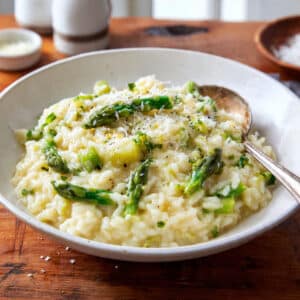
Shrimp and asparagus risotto is the recipe that proves you don’t need to go to a restaurant for a truly impressive meal. Creamy garlic-butter rice, plump jumbo shrimp, and crisp-tender asparagus come together in one pan with ingredients you probably already have. If you can stir, you can make this, it’s that simple.
Love More Recipes? Try My Oven Roasted Parmesan Asparagus or this Fettuccine with Spinach and Asparagus next.

Why You’ll Love This Recipe
- Rich, buttery, and deeply savory — it tastes like a restaurant splurge at home.
- One skillet, simple pantry ingredients, zero intimidation.
- Naturally gluten-free — great for guests with dietary restrictions.
- Fresh asparagus adds color and a bright, crisp contrast to the creamy rice.
- The entire recipe comes together in about 45–55 minutes.

Shrimp and Asparagus Risotto
- Total Time: 45 minutes
- Yield: 4 servings
- Diet: Gluten Free
Description
This Shrimp and Asparagus Risotto delivers genuine restaurant quality right in your own kitchen. Plump, sweet prawns and crisp asparagus tips nestle into a luxuriously creamy Arborio rice base that has been slowly coaxed to perfection with white wine and warm stock. The secret is the final mantecatura – beating in cold butter off the heat – which creates that signature glossy, flowing consistency you find in the best Italian restaurants. It takes patience and a wooden spoon, but every stir is worth it.
Ingredients
- 350g Arborio risotto rice
- 400g raw king prawns or shrimp, peeled and deveined
- 200g asparagus, woody ends removed, tips cut into 4cm lengths
- 150ml dry white wine
- 1.2 litres hot fish or vegetable stock
- 2 shallots, finely diced
- 3 garlic cloves, minced
- 40g cold unsalted butter, cubed
- 80g Parmesan cheese, finely grated
- 2 tablespoons olive oil
- Juice of half a lemon
- Salt and white pepper to taste
- Fresh chives or parsley to garnish
Instructions
1. Heat stock in a separate saucepan and keep at a gentle simmer throughout cooking.
2. Heat olive oil in a large, heavy-based pan over medium heat. Sauté shallots for 4 minutes until soft and translucent. Add garlic and cook 1 minute more.
3. Add Arborio rice to the pan. Toast, stirring constantly, for 2 minutes until the edges of the grains turn translucent.
4. Pour in the white wine and stir until completely absorbed. This step builds important flavour.
5. Add hot stock one ladle at a time, stirring constantly and only adding more when the previous ladle has been absorbed. This process takes 18 to 20 minutes. The rice should be al dente with a creamy sauce.
6. Stir asparagus tips into the risotto with the last ladle of stock. Cook for 3 minutes.
7. Add prawns and cook 3 to 4 minutes until pink and just cooked through. Do not overcook.
8. Remove pan from heat. Add cold butter cubes and Parmesan. Beat vigorously for 1 to 2 minutes until glossy and creamy. Add lemon juice and season to taste. Rest 2 minutes then serve immediately.
Notes
Never walk away from risotto – constant stirring releases the starch that creates creaminess.
The mantecatura (beating in cold butter off heat) is the most important step for a glossy finish.
Use the best quality stock you can – it makes an enormous difference to the final flavour.
Prawns cook quickly – they are done the moment they turn pink and curl. Overcooked prawns become rubbery.
Risotto waits for no one – serve immediately as it continues to thicken as it sits.
- Prep Time: 10 minutes
- Cook Time: 35 minutes
- Category: Dinner
- Method: Stovetop
- Cuisine: Italian
Ingredients
- 6 cups chicken stock
- 4 tablespoons salted butter
- 1 shallot, minced
- 4 cloves garlic, pressed or minced
- 1 1/2 cups arborio rice
- 1/2 cup dry white wine (pinot grigio or sauvignon blanc)
- 1 cup asparagus, chopped into 1-inch pieces
- 1 lb jumbo shrimp (16/20 count), peeled and deveined
- 1 cup freshly grated Parmesan cheese
- Salt and freshly cracked black pepper, to taste
Why These Ingredients Work
Chicken stock is used instead of water because every ladle of it adds a savory backbone to the rice as it cooks.
Arborio rice releases its natural starch with every stir, which is what creates that signature creamy texture without adding a drop of cream.
Jumbo shrimp cook right in the hot risotto during the last few minutes, which means their natural seafood flavor melds into every grain.
Freshly grated Parmesan stirred in at the very end adds saltiness, richness, and a finishing silkiness that takes the whole dish over the top.
Tools Needed
- Medium saucepan (for the stock)
- Large 11–12-inch skillet
- Ladle (1/2 cup capacity is ideal)
- Wooden spoon or silicone spatula
- Microplane or box grater (for Parmesan)
How To Make Shrimp and Asparagus Risotto
Step 1: Heat the Stock
Bring the chicken stock to a boil in a medium saucepan, then turn off the heat and cover with a lid to keep it hot.
Step 2: Sauté Shallot and Garlic
Melt the butter in a large skillet over medium heat. Add the minced shallot and cook for 2–3 minutes until softened. Add the garlic and cook for 1 more minute until fragrant and golden.
Step 3: Toast the Rice
Add the arborio rice and stir to coat every grain in the butter. Cook while stirring for 1 minute
Step 4: Add the Wine
Pour in the white wine and stir slowly until it’s nearly absorbed by the rice. This happens quickly — about 1–2 minutes. The wine adds a complexity that water and stock alone can’t replicate.
Step 5: Add Stock, One Ladle at a Time
Add the hot stock one ladleful (1/2 cup) at a time, stirring gently and continuously after each addition. Wait until the stock is nearly fully absorbed before adding the next ladle. This process takes about 35–40 minutes total — and yes, the stirring is what makes it creamy.
Step 6: Add the Asparagus
When you have about 4 ladles of stock remaining, add the chopped asparagus to the skillet. Continue stirring and adding stock as usual. The asparagus will turn beautifully bright green.
Step 7: Add the Shrimp
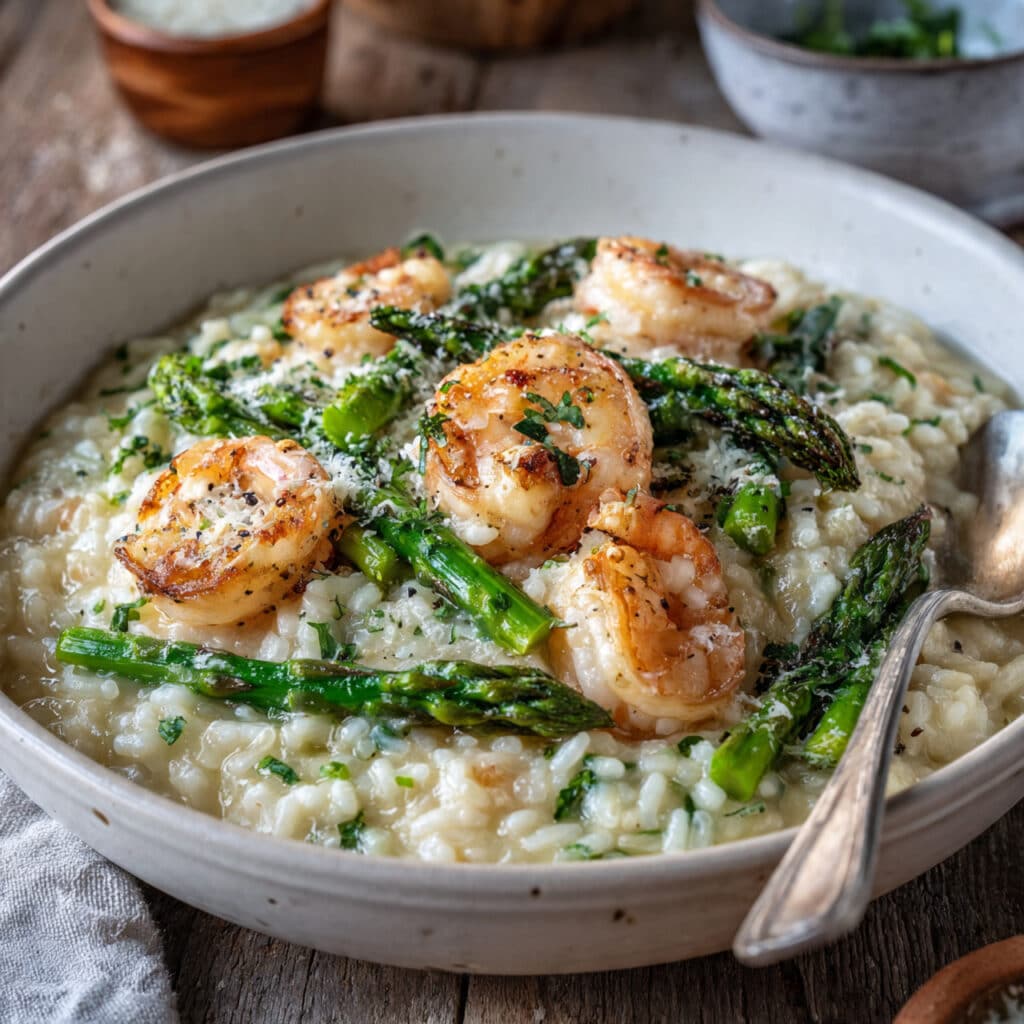
When about 2 ladles of stock remain, nestle the shrimp into the risotto. Keep stirring — the shrimp will cook through in just a few minutes as the remaining stock is absorbed.
Step 8: Finish with Parmesan
Turn off the heat and stir in the freshly grated Parmesan. Taste and season with salt and cracked black pepper.
You Must Know
Always use warm stock. Cold or room-temperature stock drops the pan temperature and causes uneven cooking. Keep it simmering on the burner next to you throughout the whole process.
Stir consistently, but gently. You don’t need to stir like a maniac — a slow, steady figure-8 motion is all you need. Constant gentle stirring is what releases the rice’s natural starch for that creamy finish.
Don’t walk away. Risotto rewards your attention. It’s 35–40 minutes of active cooking, and it’s worth every second.
Pro Tips & Mistakes to Avoid
Don’t add all the stock at once — that’s the number one risotto mistake. If the rice finishes cooking before all the stock is gone, that’s fine; not all batches absorb exactly the same amount.
Use thicker asparagus stalks over pencil-thin ones so they don’t fall apart. And always grate the Parmesan yourself — pre-shredded cheese doesn’t melt as smoothly.
Flavor Variations
Lemon Herb: Add the zest of one lemon and a handful of chopped fresh chives with the Parmesan at the end for a bright, springy finish.
Mushroom and Shrimp: Sauté 1 cup of sliced cremini mushrooms with the shallot for extra earthiness that complements the shrimp beautifully.
Spicy Cajun: Season the shrimp with a pinch of Cajun seasoning before adding them to the risotto for a bold Southern-inspired twist.
Pea and Mint: Swap the asparagus for frozen peas added right at the end, with a few fresh mint leaves torn over the top before serving.
Make-Ahead
Risotto is best enjoyed freshly made, but if you need to prep ahead, cook the risotto about 75% through and refrigerate it.
When ready to serve, warm it back up over medium-low heat and continue adding stock until it reaches the right consistency.
Add the shrimp and asparagus during this final stage. Don’t freeze risotto — the rice texture becomes grainy and loses its creaminess after thawing.
Serving Suggestions
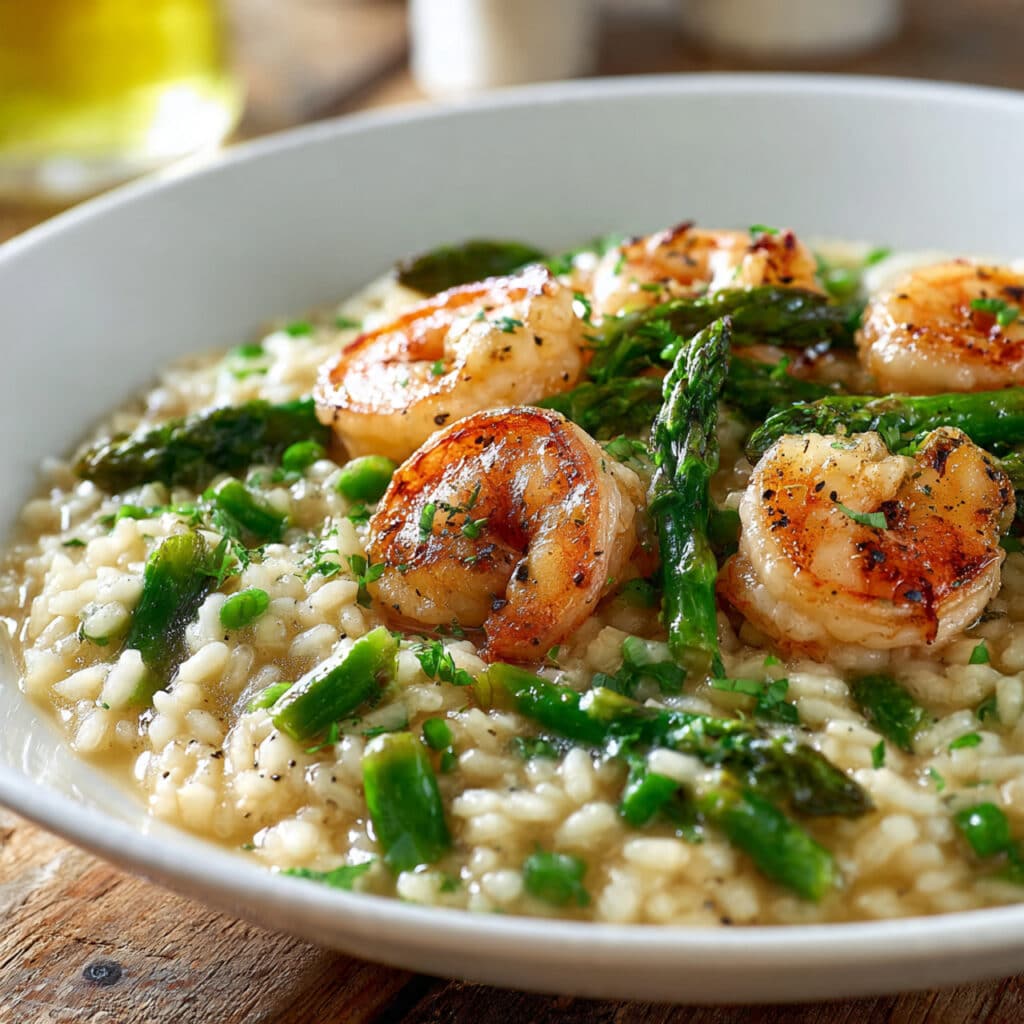
Serve in wide, shallow bowls to show off those gorgeous pink shrimp and green asparagus. A light drizzle of good olive oil over the top adds a beautiful sheen.
Pair with a crisp glass of whatever dry white wine you used in the cooking, and a simple arugula salad with lemon dressing on the side.
How to Store
Fridge: Store leftovers in an airtight container for up to 2 days.
Reheat: Warm gently on the stovetop over low heat with a splash of warm chicken stock, stirring until it loosens back to the right consistency.
Freezer: Not recommended — risotto texture does not survive freezing well.
Allergy Info
Common allergens: Contains shellfish (shrimp), dairy (butter, Parmesan), and may contain traces of sulfites (wine). Naturally gluten-free.
Substitution suggestions: For a dairy-free version, use olive oil instead of butter and nutritional yeast in place of Parmesan. Replace shrimp with scallops or firm white fish for a different seafood option. For a vegetarian dish, leave out the shrimp and use vegetable stock.
FAQs
I’ve never made risotto before. Is this really beginner-friendly?
Absolutely. If you can stir and pay attention, you can make this. The method is repetitive and relaxing once you get the hang of the rhythm. Don’t let the reputation intimidate you.
Can I use frozen shrimp?
Yes! Just thaw them completely in the fridge the night before and pat them dry before adding to the risotto. Wet shrimp can add extra liquid and dilute the flavor.
What if I don’t have arborio rice?
Arborio is important here — it’s the starch in this specific type of rice that creates the creamy texture. Regular long-grain rice won’t give you the same result. It’s widely available in most grocery stores, usually near the specialty grain section.
Why is my risotto not creamy?
This usually means either the stirring wasn’t consistent enough, or the stock wasn’t warm when added. Both of those factors are key to releasing the starch from the rice that creates creaminess.
Can I substitute the wine?
Yes — just use an extra 1/2 cup of warm chicken stock. The wine adds complexity and a slight acidity that’s nice, but the dish is still excellent without it.
💬 Tried it? Leave a comment and rating below!