
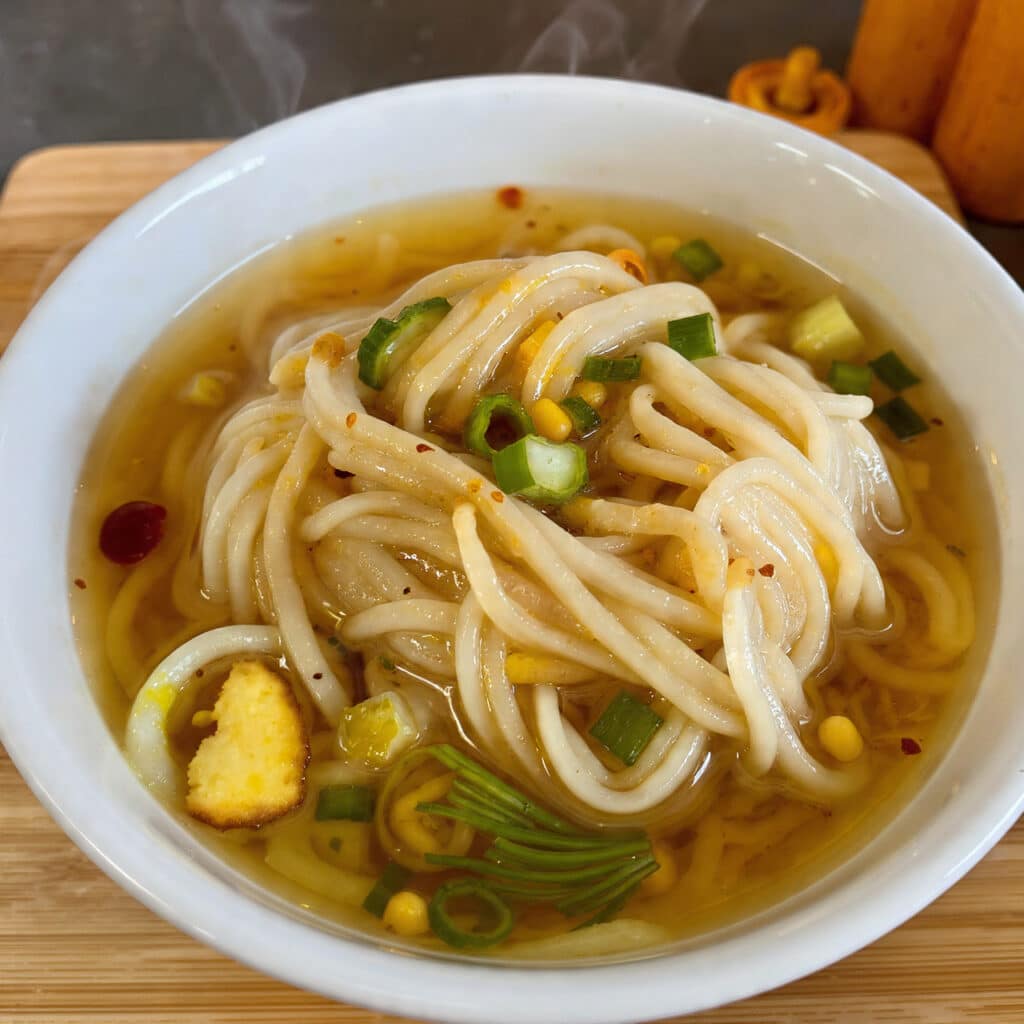
Ramen noodles are the ultimate quick comfort food that warms you from the inside out! This easy homemade version ditches the salty seasoning packet and uses real vegetable broth, fresh ginger, and aromatic sesame oil to create a bowl that’s both nourishing and deeply satisfying.
Why You’ll Love This Recipe
Comforting, savory, and endlessly customizable, these Ramen Noodles are the ultimate cozy meal. Springy noodles soak up a rich, flavorful broth and are finished with your favorite toppings for a satisfying bowl every time. Quick to prepare and perfect for busy days, it’s a simple dish that delivers big comfort with minimal effort.
Print
Ramen Noodles
- Total Time: 10 minutes
- Yield: 2 bowls of ramen
Description
Learn how to make easy homemade ramen noodles in just 10 minutes! This simple recipe uses real vegetable broth, fresh ginger, and aromatic sesame oil instead of the salty seasoning packet. Perfect for a quick weeknight dinner or cozy comfort food any time you need a warm hug in a bowl.
Ingredients
For the Ramen Soup:
- 3.5 cups vegetable broth
- 1 (3.5-ounce / ~100 g) package ramen noodles with dried vegetables (seasoning packet discarded)
- 2 green onions (scallions), sliced
- ½ teaspoon minced fresh ginger
- 2 teaspoons soy sauce
- ½ teaspoon chili oil (optional, for heat)
- 1 teaspoon sesame oil
Instructions
Pour the vegetable broth into a medium pot and bring it to a rolling boil over medium-high heat. This should take about 5 minutes.
Once boiling, add your package of ramen noodles along with any dried vegetables that came with them. Break up the noodle block gently with your spoon as it softens. Important: Discard that seasoning packet — we’re making something better!
Stir in the soy sauce, minced fresh ginger, and chili oil (if you like a little kick). Give everything a good stir to distribute the flavors throughout the broth.
Let the noodles simmer in the seasoned broth for 3–4 minutes, stirring occasionally. They’re done when they’re tender but still have a little bite to them. Don’t overcook or they’ll get mushy!
Remove the pot from the heat and stir in that gorgeous sesame oil. This is what makes the whole bowl smell like your favorite ramen shop!
Ladle the steaming ramen into bowls and top generously with sliced green onions. Serve immediately while it’s piping hot and slurp-worthy!
Notes
- Make it richer: Add a tablespoon of miso paste when you add the soy sauce for deeper umami flavor
- Control the salt: Start with less soy sauce and taste as you go — different broths have different sodium levels
- Fresh vs. instant noodles: This works with fresh ramen noodles too! Just adjust cooking time according to package directions
- Boost the protein: A soft-boiled egg is traditional, but leftover rotisserie chicken, cubed tofu, or even edamame work great
- Common mistake to avoid: Don’t add the sesame oil while it’s still cooking — heat destroys its delicate flavor. Always stir it in at the very end!
- Prep Time: 3 minutes
- Cook Time: 7 minutes
- Category: Soup
- Method: Stovetop
- Cuisine: Asian-Inspired
Ingredient List
For the Ramen Soup:
- 3.5 cups vegetable broth
- 1 (3.5-ounce / ~100 g) package ramen noodles with dried vegetables (seasoning packet discarded)
- 2 green onions (scallions), sliced
- ½ teaspoon minced fresh ginger
- 2 teaspoons soy sauce
- ½ teaspoon chili oil (optional, for heat)
- 1 teaspoon sesame oil
Substitution Notes:
- Broth: Chicken broth or bone broth work beautifully if you’re not vegetarian
- Ginger: ¼ teaspoon ground ginger in a pinch, though fresh is SO much better
- Chili oil: Sriracha, red pepper flakes, or your favorite hot sauce
- Sesame oil: Toasted sesame oil gives the best flavor, but regular works too
Why These Ingredients Work
Vegetable Broth creates the flavorful foundation and replaces that sodium-heavy seasoning packet with something actually nourishing.
Fresh Ginger brings a bright, warming quality that makes the broth taste restaurant-worthy. It cuts through the richness and adds complexity.
Soy Sauce provides that savory umami depth we all crave in a good bowl of ramen.
Sesame Oil is the secret weapon! Added at the end, it brings a nutty, toasted aroma that makes the whole bowl smell incredible.
Green Onions add freshness, color, and a mild oniony bite that balances the rich broth.
Chili Oil (if using) gives you that gentle heat and aromatic spice that makes each spoonful exciting.
Essential Tools and Equipment
- Medium pot (3-4 quart capacity)
- Wooden spoon or spatula for stirring
- Sharp knife and cutting board for prep
- Measuring spoons
- Ladle
- Serving bowls
How To Make Easy Homemade Ramen Noodles
Step 1: Heat the Broth
Pour the vegetable broth into a medium pot and bring it to a rolling boil over medium-high heat. This should take about 5 minutes.
Step 2: Add the Noodles
Once boiling, add your package of ramen noodles along with any dried vegetables that came with them. Break up the noodle block gently with your spoon as it softens. Important: Discard that seasoning packet — we’re making something better!
Step 3: Season Your Soup
Stir in the soy sauce, minced fresh ginger, and chili oil (if you like a little kick). Give everything a good stir to distribute the flavors throughout the broth.
Step 4: Cook the Noodles
Let the noodles simmer in the seasoned broth for 3–4 minutes, stirring occasionally. They’re done when they’re tender but still have a little bite to them. Don’t overcook or they’ll get mushy!
Step 5: Finish with Sesame Oil
Remove the pot from the heat and stir in that gorgeous sesame oil. This is what makes the whole bowl smell like your favorite ramen shop!
Step 6: Serve and Garnish
Ladle the steaming ramen into bowls and top generously with sliced green onions. Serve immediately while it’s piping hot and slurp-worthy!
You Must Know
Fresh ginger is non-negotiable. Yes, you can use ground ginger in a true emergency, but fresh ginger brings a brightness and warmth that makes this recipe sing. It’s worth the extra 30 seconds to mince it!
Don’t let the noodles sit. Ramen is best enjoyed immediately. If noodles sit in hot broth too long, they’ll continue absorbing liquid and get mushy. Make it, serve it, eat it — that’s the ramen way!
Personal Secret: I like to heat my serving bowls with hot water while the ramen cooks, then dump it out right before serving.
Pro Tips & Cooking Hacks
- Make it richer: Add a tablespoon of miso paste when you add the soy sauce for deeper umami flavor
- Control the salt: Start with less soy sauce and taste as you go — different broths have different sodium levels
- Fresh vs. instant noodles: This works with fresh ramen noodles too! Just adjust cooking time according to package directions
- Boost the protein: A soft-boiled egg is traditional, but leftover rotisserie chicken, cubed tofu, or even edamame work great
- Common mistake to avoid: Don’t add the sesame oil while it’s still cooking — heat destroys its delicate flavor. Always stir it in at the very end!
Flavor Variations & Suggestions
Miso Ramen: Stir in 1–2 tablespoons white or red miso paste with the soy sauce
Coconut Curry Ramen: Replace 1 cup of broth with coconut milk and add ½ teaspoon curry powder
Garlic Lover’s Ramen: Add 2 minced garlic cloves along with the ginger
Veggie-Loaded: Toss in baby spinach, sliced mushrooms, shredded carrots, or bok choy during the last minute of cooking
Spicy Kimchi Ramen: Add ½ cup chopped kimchi and an extra splash of its juice
Citrus Twist: Squeeze fresh lime juice over your finished bowl for brightness
Make-Ahead Options
Honestly, this recipe is so quick (under 10 minutes!) that I don’t recommend making it ahead. Ramen noodles don’t hold up well once cooked — they’ll absorb all the broth and get soggy.
What you CAN prep ahead:
- Slice your green onions and store in an airtight container in the fridge for up to 3 days
- Mince your ginger and keep it in a small jar in the fridge
- Measure out all your sauces and seasonings into small prep bowls
When you’re ready to eat, just heat and assemble! It’s so fast that prep work isn’t really necessary.
Recipe Notes & Baker’s Tips
- About the dried vegetables: Most instant ramen packages include a little packet of dried veggies (carrots, corn, peas). These are fine to use! They rehydrate as the noodles cook.
- Broth temperature matters: Starting with boiling broth means your noodles cook evenly and quickly
- Noodle texture: If you like your noodles with more bite (al dente style), cook for just 3 minutes. For softer noodles, go the full 4 minutes.
- Scaling up: This recipe doubles beautifully! Just use a larger pot.
Serving Suggestions
Serve your homemade ramen as a light lunch, cozy dinner, or midnight snack. Here’s what makes it even better:
Classic toppings:
- Soft-boiled egg halves (jammy yolk is perfection!)
- Extra green onions
- Nori (seaweed) strips
- Sesame seeds
Make it heartier:
- Grilled chicken breast, sliced
- Pan-fried tofu cubes
- Shrimp or crab meat
- Pulled pork
Add more veggies:
- Sautéed mushrooms
- Baby bok choy
- Fresh spinach
- Bean sprouts
- Corn kernels
On the side:
- Steamed edamame
- Asian-style cucumber salad
- Pot stickers or gyoza
- Spring rolls
How to Store Your Ramen Noodles
Best practice: This ramen is truly best enjoyed fresh and hot. However, if you have leftovers:
Refrigerator: Store broth and noodles separately if possible. The broth will keep in an airtight container for up to 3 days. Cooked noodles get mushy, but you can store them for 1–2 days max.
Reheating: Reheat the broth in a pot on the stove, then add the noodles just to warm through (about 1 minute). Don’t microwave the noodles directly in broth — they’ll get gummy.
Freezing: I don’t recommend freezing cooked ramen noodles as they become mushy when thawed.
Pro tip: If you want meal-prep-friendly ramen, cook fresh batches as needed. Keep your broth components (vegetable broth, soy sauce, ginger, oils) measured out and ready to go so you can whip up a fresh bowl in minutes!
Allergy Information
Contains:
- Soy (soy sauce)
- Sesame (sesame oil)
- Gluten (most ramen noodles contain wheat)
Allergy-Friendly Substitutions:
- Gluten-free: Use rice noodles or gluten-free ramen noodles, and use tamari instead of soy sauce
- Soy-free: Replace soy sauce with coconut aminos (use 2½–3 teaspoons as it’s less salty)
- Sesame-free: Skip the sesame oil and finish with a small pat of butter or a drizzle of olive oil instead
- Vegetarian/Vegan: This recipe is already vegetarian! To make it vegan, ensure your ramen noodles don’t contain eggs (many do)
Always check your specific ramen noodle package, as ingredients vary by brand!
Questions I Get Asked A Lot
Can I use the seasoning packet that comes with the ramen?
You certainly can, but I find it’s way too salty and doesn’t taste as fresh as making your own broth mixture. If you want to use it, I’d use only half the packet and skip the soy sauce in this recipe. But trust me — real broth and fresh ginger taste SO much better!
What if I don’t have fresh ginger?
Fresh ginger really makes this recipe special, but if you’re in a pinch, use ¼ teaspoon of ground ginger. Just know the flavor won’t be quite as bright and zingy. You could also add a splash of ginger juice or keep a tube of ginger paste in your fridge for emergencies!
Can I add protein to make this more filling?
Absolutely! This is such a versatile base. I love adding a soft-boiled egg (cook for 6–7 minutes for jammy yolks), leftover rotisserie chicken, cubed tofu, or even frozen shrimp. Just add them during the last minute of cooking to warm through, or top with them at the end!
My ramen got too salty — what happened?
Different vegetable broths have varying sodium levels. If your broth is already salty, start with just 1 teaspoon of soy sauce and taste before adding more. You can always add more salt, but you can’t take it away! If it’s already too salty, add a splash more broth or water to dilute it.
How do I make this spicier?
Love heat? Add more chili oil (up to 1 teaspoon), stir in some sriracha, sprinkle red pepper flakes, or add a spoonful of spicy kimchi. For even more kick, add a few slices of fresh jalapeño or serrano pepper when you add the ginger!
💬 Tried this recipe? Leave a comment and rating below! I’d love to hear what toppings you added to make it your own. And if you’re craving more cozy comfort food, check out my other soup recipes on the blog!