Introduction
One bowl banana bread is the easiest, most fuss-free way to turn those spotty bananas into something delicious without dirtying every dish in your kitchen. There’s no mixer, no separating bowls for wet and dry ingredients, and no complicated steps—just grab one bowl, a fork, and a wooden spoon, and you’re on your way to the most tender, flavorful banana bread. With minimal cleanup and maximum flavor, this recipe is perfect for those mornings when you want homemade goodness without the hassle. It’s become my go-to because sometimes simple really is best, and this bread proves it every single time.
Why You’ll Love This Recipe
- Minimal cleanup – Just one bowl means you’re not stuck washing a mountain of dishes
- No mixer required – Everything comes together with a fork and spoon, so simple anyone can make it
- Perfect texture every time – Moist, tender crumb that stays fresh for days
- Uses overripe bananas – Finally a delicious use for those brown bananas you almost threw away
- Beginner-friendly – If you can mash bananas and stir, you can make this bread
Ingredients You’ll Need
For the Banana Bread:
- 3 large very ripe bananas, mashed (about 1½ cups)
- ⅓ cup melted butter (or vegetable oil for dairy-free)
- ¾ cup granulated sugar
- 1 large egg, lightly beaten
- 1 teaspoon vanilla extract
- 1 teaspoon baking soda
- Pinch of salt
- 1½ cups all-purpose flour
- ½ teaspoon ground cinnamon (optional but recommended)
Note: You can use coconut oil instead of butter for a subtle tropical flavor, or vegetable oil for completely neutral taste.
Why These Ingredients Work
Very ripe bananas with plenty of brown spots are absolutely essential because they’re naturally sweeter, more aromatic, and mash easily into a smooth puree that creates moisture throughout the bread. The riper the banana, the more complex and intense the banana flavor becomes, which is exactly what you want. Melted butter adds richness and helps create that tender, cake-like crumb while also contributing to browning and flavor development.
Sugar does more than just sweeten—it helps keep the bread moist by attracting and holding onto water molecules, and it also helps create that beautiful golden-brown crust. The single egg binds everything together and adds structure without making the bread too dense or cake-like.
Baking soda is your leavening agent here, and it reacts with the natural acids in the bananas to create gentle lift and a tender crumb. Since everything goes in one bowl, the baking soda gets evenly distributed as you stir, which means no bitter pockets or uneven rise.
Flour provides structure, but the key is not to overmix it or you’ll develop too much gluten and end up with tough, chewy bread instead of tender slices. Cinnamon adds warmth and depth that makes your whole house smell like a cozy bakery.
Essential Tools and Equipment
- Large mixing bowl – big enough to hold all ingredients comfortably
- Fork or potato masher – for mashing bananas
- Wooden spoon or rubber spatula – for stirring
- 9×5-inch loaf pan – standard size for banana bread
- Measuring cups and spoons – for accuracy
- Parchment paper or cooking spray – to prevent sticking
Step-by-Step Instructions
Step 1: Preheat and Prep
Preheat your oven to 350°F and grease a 9×5-inch loaf pan with butter or cooking spray, or line it with parchment paper for easy removal. Having everything ready before you start mixing makes the whole process smoother and faster.
Step 2: Mash the Bananas
In your large mixing bowl, mash the very ripe bananas with a fork until they’re mostly smooth with just a few small lumps remaining. Don’t worry about getting them completely smooth—those little chunks add texture and intense banana flavor throughout the bread.
Step 3: Add Wet Ingredients
Pour the melted butter right into the bowl with the mashed bananas and stir together with your fork or wooden spoon. Add the sugar, beaten egg, and vanilla extract, stirring until everything is well combined and the mixture looks creamy and smooth.
Step 4: Add Baking Soda and Salt
Sprinkle the baking soda and salt directly over the wet mixture and stir well for about 10-15 seconds to make sure they’re evenly distributed throughout. You’ll notice the mixture might get a little foamy or bubbly—that’s the baking soda reacting with the bananas, and it’s totally normal.
Step 5: Fold in the Flour
Add all of the flour (and cinnamon if using) to the bowl at once and gently fold it in with your wooden spoon or spatula. Mix just until you can’t see any more dry flour streaks—the batter will be thick and a bit lumpy, and that’s exactly what you want because overmixing creates tough, dense bread.
Step 6: Bake to Golden Perfection
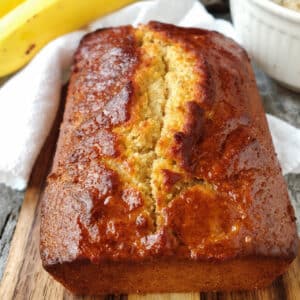
Pour the batter into your prepared loaf pan and smooth the top gently. Bake for 55-65 minutes, until the top is deeply golden brown and a toothpick inserted into the center comes out with just a few moist crumbs clinging to it. The bread might have a crack down the middle, which is totally normal and looks rustic and homemade.
Step 7: Cool and Enjoy
Let the bread cool in the pan for about 10 minutes, then turn it out onto a wire rack to cool completely. I know waiting is hard, but slicing into warm banana bread makes it gummy and fall apart—patience is rewarded with perfect slices that hold together beautifully.
You Must Know
The single most important thing is to not overmix once you add the flour—stir just until the flour disappears into the batter and then stop immediately, even if it looks lumpy. Overmixing develops the gluten in the flour and turns your tender banana bread into a tough, dense, tunnel-filled disappointment. Also, make absolutely sure your bananas are truly ripe with lots of brown spots or even completely black peels—yellow or slightly spotted bananas don’t have enough sweetness or flavor, and your bread will taste bland and starchy no matter how well you follow the rest of the recipe.
Personal Secret: I always mash one of my bananas really well until it’s almost liquid, but leave the other two just roughly mashed with visible chunks. This gives you the best of both worlds—the smooth banana creates moisture throughout the bread, while the chunks create pockets of intense banana flavor that burst in your mouth when you bite into them. It’s such a simple trick but it makes people wonder why your banana bread tastes so much better than everyone else’s.
Pro Tips & Cooking Hacks
- Speed-ripen bananas – Place unpeeled bananas on a baking sheet at 300°F for 15-20 minutes until the peels turn black
- Room temperature matters – Let your egg sit at room temperature for 20 minutes so it doesn’t solidify the melted butter
- Don’t trust the time – Start checking at 55 minutes since ovens vary, and look for that golden brown top
- Add mix-ins at the end – Fold in chocolate chips, nuts, or dried fruit after the flour for even distribution
- Tent with foil – If the top browns too quickly, loosely cover with foil for the last 15 minutes
- Cool completely – Wrap warm bread and the condensation will make it gummy; wait until it’s room temperature
- Make it ahead – This bread actually tastes better the next day when the flavors have melded
Flavor Variations & Suggestions
For chocolate chip banana bread, fold in 1 cup of semi-sweet or dark chocolate chips right after adding the flour—they’ll create melty pockets of chocolate that are absolutely irresistible. You can make it nutty by adding ¾ cup of chopped walnuts or pecans for crunch and earthy flavor that pairs beautifully with banana.
If you love warm spices, increase the cinnamon to 1 teaspoon and add ¼ teaspoon each of nutmeg and a tiny pinch of cloves for a chai-spiced version that’s perfect for fall mornings. For peanut butter banana bread, reduce the butter to 3 tablespoons and add ¼ cup of creamy peanut butter to the mashed bananas.
You can make blueberry banana bread by gently folding in 1 cup of fresh or frozen blueberries (don’t thaw frozen ones) right at the end. For a tropical twist, add ½ cup of shredded coconut and ¼ cup of chopped macadamia nuts for a bread that tastes like vacation.
Make-Ahead Options
This one bowl banana bread is perfect for making ahead since it actually improves with time as the flavors develop and deepen. Bake the bread completely, let it cool to room temperature, then wrap it tightly in plastic wrap and store at room temperature for up to 4 days—it stays incredibly moist and the banana flavor becomes even more pronounced. For longer storage, wrap the cooled loaf tightly in plastic wrap, then again in aluminum foil, and refrigerate for up to a week or freeze for up to 3 months. You can freeze the whole loaf or slice it first and freeze individual slices wrapped in plastic for grab-and-go breakfasts. When you’re ready to enjoy frozen bread, just thaw at room temperature for a few hours or overnight in the fridge. You can even bake two loaves at once since this recipe is so simple—keep one and gift the other, or freeze one for later when you need a quick treat.
What to Serve With One Bowl Banana Bread
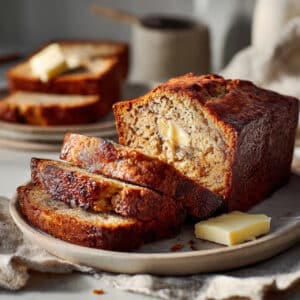
A thick slice of this banana bread is wonderful on its own, but spreading it with salted butter while it’s still slightly warm creates an amazing contrast between the sweet bread and salty, melting butter. Cream cheese is another classic topping that adds richness and tang, or try almond butter or peanut butter for protein-packed breakfasts.
For a simple breakfast, serve it alongside Greek yogurt and fresh berries for a balanced meal that feels indulgent but covers all your nutritional bases. A hot cup of coffee or tea is the perfect companion—the banana bread pairs beautifully with everything from bold dark roast to smooth chai or Earl Grey.
If you’re serving it for brunch, set out the loaf with an assortment of spreads like Nutella, honey, jam, or whipped cream cheese so everyone can customize their slice. Fresh fruit salad and scrambled eggs round out a lovely weekend spread that looks impressive but took minimal effort.
For an easy dessert, warm individual slices in the microwave for 15 seconds and top with vanilla ice cream and a drizzle of caramel or chocolate sauce. You can also make French toast with thick slices of day-old banana bread for an over-the-top indulgent breakfast that uses up any bread that’s starting to get a little dry.
Allergy Information
This recipe contains gluten (all-purpose flour), dairy (butter), and eggs. For a dairy-free version, simply substitute the melted butter with an equal amount of melted coconut oil, vegetable oil, or any neutral-flavored oil. To make it gluten-free, use a 1:1 gluten-free baking flour blend—the texture will be slightly different but still delicious. For an egg-free version, replace the egg with a flax egg (1 tablespoon ground flaxseed mixed with 3 tablespoons water, let sit for 5 minutes) or ¼ cup of unsweetened applesauce, though the bread will be slightly denser. This recipe is naturally nut-free unless you add them as mix-ins, making it safe for school lunches and gatherings.
Storage & Reheating
Store banana bread tightly wrapped in plastic wrap or in an airtight container at room temperature for up to 4 days—the single bowl method creates such a moist bread that it stays fresh without refrigeration. For longer storage, refrigerate for up to 1 week or freeze for up to 3 months. To reheat individual slices, microwave for 10-15 seconds until just warm, or toast in a skillet with a little butter for crispy, caramelized edges. You can warm the whole loaf wrapped in foil in a 300°F oven for 15 minutes if you’re serving a crowd. Many people actually prefer eating banana bread cold straight from the fridge—it has a denser, almost pound cake-like texture that’s incredibly satisfying.
FAQ
Can I use frozen bananas for this recipe?
Yes! Thaw them completely, drain off excess liquid, and mash as directed. Frozen bananas actually work beautifully because freezing breaks down the cell walls, making them even easier to mash and creating extra moisture.
My bread is raw in the middle but burnt on top – what happened?
Your oven temperature is likely too high. Use an oven thermometer to check accuracy, and try baking at 325°F for a longer time. Also, tent the loaf with foil halfway through to prevent over-browning while the center finishes baking.
Can I halve this recipe?
Absolutely! Use an 8×4-inch loaf pan or make muffins instead. The recipe halves perfectly—just reduce the baking time to 45-50 minutes for a smaller loaf or 18-22 minutes for muffins.
Why is my banana bread dense and heavy?
This usually happens from overmixing the batter once the flour is added, which develops too much gluten. It can also happen if you used bananas that weren’t ripe enough or if you measured flour incorrectly by packing it into the measuring cup instead of spooning it in lightly.
Do I really need to use a 9×5-inch pan?
Yes, pan size matters! An 8×4-inch pan will cause overflow, and a larger pan will give you flat, dry bread. If you only have a different size pan, adjust the baking time accordingly and watch closely for doneness.
💬 Tried this recipe? Leave a comment and rating below! I’d love to hear how your one bowl banana bread turned out and whether you’re as thrilled about the easy cleanup as I am. Share your favorite mix-ins or how you like to enjoy your slice! 🍌✨