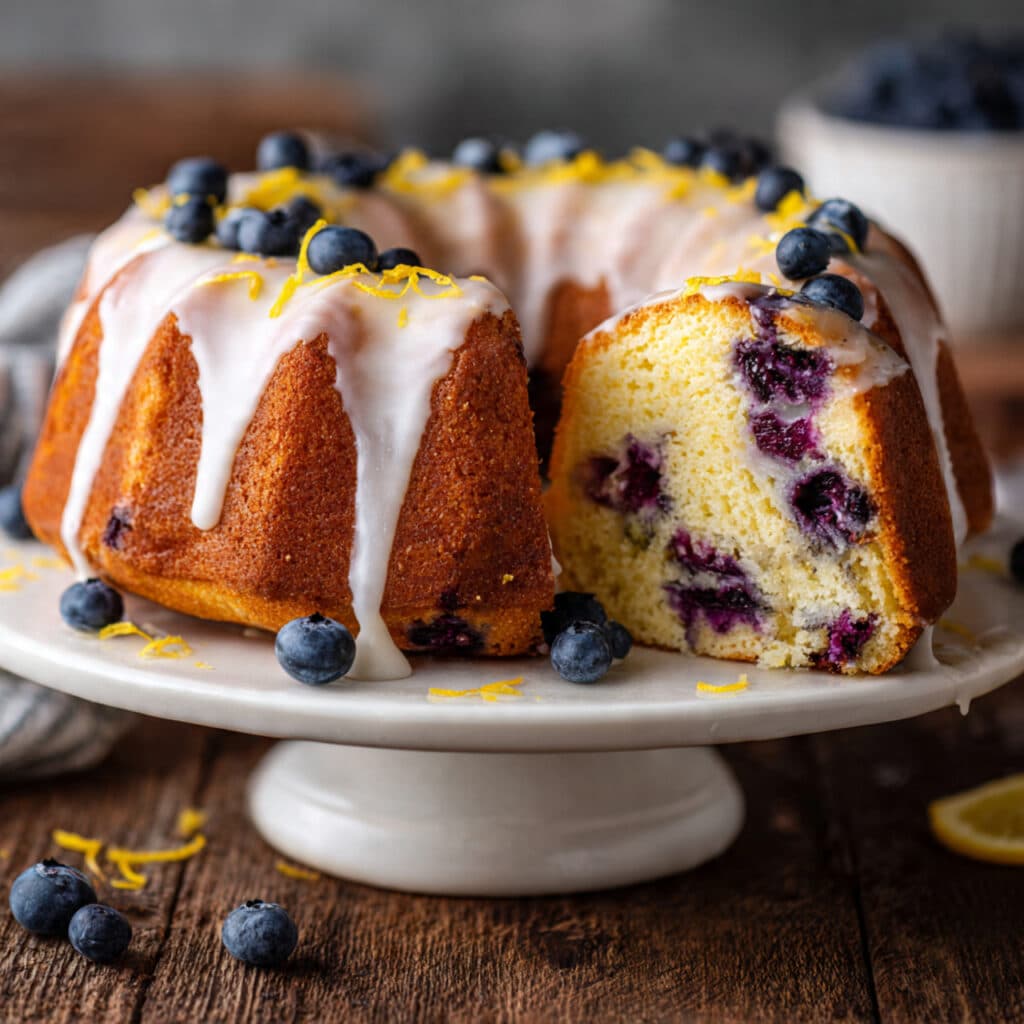
Lemon blueberry pound cake is the one recipe that I make in loaf form as holiday gifts, bring to every potluck, and slice for myself with my morning coffee more times than I’d like to admit. This buttery, deeply moist cake is packed with bright lemon flavor and plump blueberries, all drizzled with a glossy lemon glaze that makes it look absolutely bakery-perfect. And the whole thing comes together in about 10 minutes of hands-on work.

Why You’ll Love This
- That rich, dense, buttery crumb is exactly what pound cake should be — deeply satisfying in every bite.
- Lemon zest, lemon juice, AND lemon extract give you maximum bright citrus flavor that doesn’t fade after baking.
- Works as a bundt cake, tube pan, or two loaf pans — it’s flexible for whatever you have.
- The lemon glaze takes 2 minutes to make and makes it look absolutely gorgeous.
- Perfect for brunch, dessert, or wrapping as a gift — people go absolutely crazy for it.

Lemon Blueberry Pound Cake
- Total Time: 2 hours
- Yield: 16 slices
Description
Dense, buttery Southern-style pound cake packed with fresh blueberries and triple lemon flavor — zest in the batter, juice in the batter, and a tart lemon glaze drizzled on top. Gets better on day two. Stays moist at room temperature for 3 days. Serves 16.
Ingredients
LEMON BLUEBERRY POUND CAKE
3 cups (360g) all-purpose flour, plus 1 tablespoon for coating blueberries
1/2 teaspoon baking powder
1/2 teaspoon baking soda
1/2 teaspoon salt
1 cup (230g) unsalted butter, room temperature
2 1/2 cups (500g) granulated sugar
6 large eggs, room temperature
1/2 cup (120g) full-fat sour cream
1/3 cup (80ml) fresh lemon juice (about 3 lemons)
2 tablespoons lemon zest (about 2 large lemons)
1 teaspoon pure vanilla extract
2 cups (290g) fresh blueberries
LEMON GLAZE
1 1/2 cups (180g) powdered sugar
3–4 tablespoons fresh lemon juice
1 teaspoon lemon zest
Instructions
1. Preheat oven to 325°F. Coat a 10-cup Bundt pan very thoroughly with flour-based baking spray — cover every ridge, curve, and the center tube. Set the prepared pan aside.
2. Whisk the flour, baking powder, baking soda, and salt together in a large bowl. Set aside.
3. Beat butter and sugar together on medium-high speed for 4–5 minutes until very pale, light, and fluffy. Add the lemon zest and beat for 1 more minute. Do not rush this step — the extended creaming creates the lift and texture in the finished cake.
4. Add the eggs one at a time, beating 30 seconds after each one. Scrape down the sides and bottom of the bowl with a spatula after every two eggs.
5. Add the sour cream, lemon juice, and vanilla extract. Mix on low until just combined. The batter may look slightly curdled at this stage — that is normal and corrects itself when the flour goes in.
6. Add the flour mixture in three additions, mixing on low between each one until just combined. Toss blueberries with 1 tablespoon of flour until coated, then fold in gently with a rubber spatula using only 6–8 folds. Overmixing breaks the berries and turns the entire batter purple.
7. Spoon the batter into the prepared Bundt pan and smooth the top. Bake at 325°F for 60–70 minutes. At the 40-minute mark, loosely tent with foil if the top is browning too fast. The cake finishes when a wooden skewer inserted in the thickest part comes out completely clean.
8. Cool in the pan for exactly 15 minutes. Invert onto a wire rack and cool completely before glazing — at least 1 hour.
9. For the glaze: Whisk powdered sugar, lemon juice, and lemon zest together until smooth. Start with 3 tablespoons of lemon juice; add more a teaspoon at a time until the glaze drips slowly from a spoon. Drizzle over the completely cooled cake. Let set for 20 minutes before slicing.
Notes
Grease the Bundt pan thoroughly — this is the most important step. Use flour-based baking spray and coat every crevice. Alternatively, brush softened butter into every surface with a pastry brush and dust with flour. Under-greasing the pan is the number-one cause of a stuck pound cake.
Cool in the pan for exactly 15 minutes before inverting. Less than 10 minutes: the cake falls apart. More than 20 minutes: the sugars crystallize against the pan and the cake sticks. Set a timer.
Fold blueberries in with a rubber spatula only — never the mixer. The mixer breaks the berries and turns the batter blue-grey.
Pull all ingredients from the fridge at least 1 hour before starting. Cold butter, cold eggs, and cold sour cream don’t blend smoothly and the batter will look separated.
Bake at 325°F, not 350°F. Lower temperature gives the dense batter time to cook through without burning the outside while the center stays raw.
This cake tastes better on day 2 as the lemon flavor deepens into the crumb.
Store covered at room temperature up to 3 days. Refrigerate up to 1 week — pull out 30–60 minutes before serving.
Freeze unglazed cake (double-wrapped) up to 3 months. Thaw overnight at room temperature, then glaze.
- Prep Time: 25 minutes
- Cook Time: 1 hour 10 minutes
- Category: Dessert
- Method: Bake
- Cuisine: Southern American
Ingredients
Pound Cake
- 3 cups all-purpose flour
- 1/2 teaspoon baking soda
- 3/4 teaspoon salt
- 2 tablespoons lemon zest (about 2 lemons)
- 1 cup (2 sticks) salted butter, room temperature
- 2 1/2 cups granulated sugar
- 6 large eggs, room temperature
- 1 cup full-fat sour cream, room temperature
- 2 tablespoons fresh lemon juice
- 1 1/2 teaspoons lemon extract
- 2 cups fresh blueberries (washed and still damp)
- 1 tablespoon all-purpose flour (for coating blueberries)
Lemon Glaze
- 1 1/2 cups confectioner’s (powdered) sugar
- 1/4 cup fresh lemon juice
- 2 tablespoons milk
- Zest of 1/2 lemon (for sprinkling on top)
Why These Ingredients Work
Sour cream is the secret to a pound cake that stays moist and tender for days. Traditional pound cakes used a full pound of butter, but modern recipes like this one use sour cream to add richness and moisture without making it impossibly heavy. It also contributes a subtle tang that plays beautifully with the lemon.
Lemon zest added to the flour mixture (rather than just the wet ingredients) means the citrus flavor infuses throughout the entire crumb rather than just sitting in the batter. It’s a small step that makes the lemon flavor taste more integrated and natural.
Lemon extract alongside fresh juice is the flavor-layering trick that professional bakers use. Fresh juice gives brightness and acidity; extract gives depth and that unmistakable lemon intensity that doesn’t fade during baking.
A plain cake batter base in the pan first (before adding the floured blueberries to the remaining batter) is an extra step to keep berries evenly distributed throughout the cake from bottom to top.
Tools Needed
- 12-inch tube pan or bundt pan (or two 8×4 loaf pans)
- Stand mixer or hand mixer
- Large mixing bowl
- Knife or skewer to run around the pan edges after baking
- Wire cooling rack
- Large measuring cup or bowl (for the glaze)
How To Make Lemon Blueberry Pound Cake
Step 1: Prep and Mix Dry Ingredients
Preheat your oven to 325°F. Generously grease your tube pan or bundt pan (this is important — pound cake batter is thick and can stick). In a medium bowl, mix together the flour, salt, baking soda, and lemon zest, and set aside.
Step 2: Cream Butter and Sugar
Using a hand or stand mixer, cream the room-temperature butter and sugar together until light and fluffy — about 3 full minutes. Don’t rush this step. Add the eggs one at a time, fully incorporating each one before adding the next.
Step 3: Add Flour and Sour Cream Alternately
With the mixer on low, add half of the flour mixture and mix until just combined. Add half the sour cream, mix until just combined. Repeat with the remaining flour and sour cream. Mix in the lemon juice and lemon extract. Keep mixing to the minimum needed — stop as soon as each ingredient is incorporated.
Step 4: Add Batter Base First, Then Fold in Blueberries
Pour a thin layer of plain batter into the bottom of your prepared pan first — this creates a base that catches the blueberries. Toss the still-damp blueberries in the tablespoon of flour to coat, then gently fold them into the remaining batter. Pour and spread this berry-filled batter over the base layer in the pan.
Step 5: Bake
Bake at 325°F for about 1 hour and 15 minutes, or until a toothpick inserted in the center comes out clean. Every oven is different, so start checking around the 1-hour mark. Don’t rush it — a dense pound cake needs longer, lower-temperature baking to cook through evenly without burning the edges.
Step 6: Cool
Remove the pan from the oven. Run a knife carefully along the inside and outside edges of the cake while it’s still warm. Let it cool in the pan for 10 minutes, then turn it out onto a wire rack to finish cooling completely. Do not glaze a warm cake!
Step 7: Make the Glaze and Finish
Whisk together the powdered sugar, lemon juice, and milk until smooth and pourable. If it’s too thick, add a tiny bit more milk; too thin, add more powdered sugar. Drizzle over the completely cooled cake and let it run down the sides. Sprinkle the reserved lemon zest over the top while the glaze is still wet. Let the glaze set before slicing — about 20 minutes.
You Must Know
Room temperature everything. Butter, eggs, and sour cream all need to be fully at room temperature before you start. This is especially important in pound cake — cold ingredients don’t cream together properly and result in a dense, heavy texture rather than a tender, moist one.
Don’t overmix when alternating flour and sour cream. Use the lowest speed and stop the second each addition is incorporated. Overmixing develops too much gluten and creates a tough, rubbery cake. Low and slow is the key.
The cake is done when the toothpick is clean — not when the timer goes off. Every oven is calibrated differently, and a dense pound cake can take anywhere from 1:05 to 1:25 to bake fully. Trust the toothpick, not the clock.
Amelia’s Secret: I always toss the blueberries in flour while they’re still slightly damp from washing — that moisture is what makes the flour coating actually stick to the berries and do its job. Dry blueberries won’t hold the flour coating as well, and you’ll end up with berries sinking to the bottom.
Pro Tips & Mistakes to Avoid
Grease the pan generously. Pound cake batter is thick and sticky. A tube pan or bundt has lots of crevices that can trap batter. Use butter or shortening and get into every corner, or use a baking spray with flour.
Add the plain batter base first. This extra step of pouring a thin layer of plain batter in first, then adding the berry batter, helps keep the blueberries distributed more evenly throughout the cake from top to bottom instead of all sinking to the bottom.
Cool completely before glazing. I know it’s tempting to pour that glossy glaze over the warm cake — but it will just melt and run off completely. Wait until the cake is fully cooled for a beautiful thick drizzle that actually stays on top.
Flavor Variations
Lemon Coconut Pound Cake: Fold 1/2 cup of sweetened shredded coconut into the batter along with the blueberries, and add a few tablespoons of coconut to the glaze for a tropical twist. Reader-tested and absolutely delicious!
Loaf Cake Version: Divide the batter between two 8×4 inch loaf pans instead of a tube pan. Reduce the baking time — start checking at around 50–55 minutes. Loaf versions make wonderful homemade gifts.
Raspberry Lemon: Substitute fresh raspberries for the blueberries. Because raspberries are much lighter than blueberries, they distribute more evenly in the batter without any flour coating tricks.
Vanilla Glaze: Replace the lemon juice in the glaze with milk and add 1/2 teaspoon of vanilla extract for a sweeter, more neutral topping if you want to dial back the lemon intensity.
Make-Ahead
This pound cake actually gets better overnight as the flavors meld and the crumb softens slightly. Bake it the day before, cool completely, cover tightly, and store at room temperature. Glaze on the day you’re serving it. For longer storage, wrap the cooled (unglazed) cake tightly in plastic wrap and then foil, and freeze for up to 2–3 months. Thaw at room temperature, then glaze and serve.
Serving Suggestions
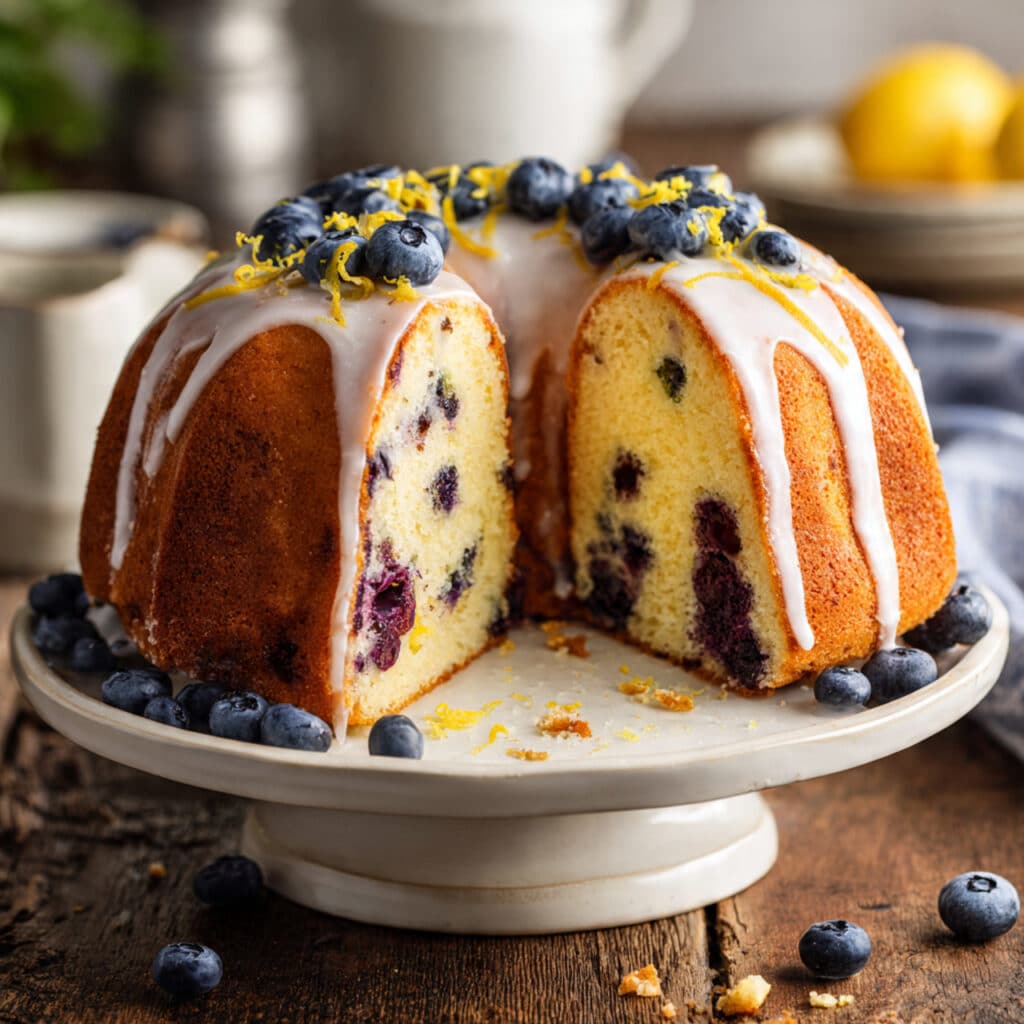
Slice with a sharp, thin knife for the cleanest cuts through those tender blueberries. This cake is sublime alongside a cup of hot coffee at breakfast or brunch, equally at home as a light dessert after dinner. It makes a stunning gift wrapped in a cellophane bag with a ribbon.
For something extra special, serve warm slices with a scoop of fresh vanilla ice cream and an extra drizzle of lemon glaze.
How to Store
Cover the glazed cake at room temperature for up to 2–3 days for the best texture and moisture.
You can also refrigerate it (covered) for up to 5 days — it stays wonderfully moist in the fridge.
To freeze, wrap the unglazed cake tightly in 2–3 layers of plastic wrap and then foil, and freeze for up to 2–3 months. Thaw overnight in the refrigerator, then bring to room temperature before glazing and serving.
Allergy Info
Contains dairy (butter, sour cream), eggs, and gluten (all-purpose flour).
For a gluten-free version, a 1:1 gluten-free flour blend may work — the cake will be slightly denser than the original.
For dairy-free, dairy-free butter and coconut cream or dairy-free sour cream can be substituted, but the texture and richness will differ from the original recipe.
Frequently Asked Questions
Why is it called pound cake?
The name goes all the way back to the 1700s when the original recipe used exactly one pound each of butter, eggs, flour, and sugar. Modern versions like this one adjust the ratios and add extras like sour cream and leaveners, but the spirit — and that characteristic dense, rich, buttery crumb — stays true to the original.
Can I use frozen blueberries instead of fresh?
Yes! Thaw the frozen blueberries first, then rinse off any excess juice and pat them somewhat dry — but not completely. You want them slightly damp so the flour coating sticks. They work beautifully in this recipe and are a great option when fresh blueberries are out of season.
Do I have to use a tube pan? Can I use a bundt pan?
A bundt pan works perfectly and gives the cake a beautiful decorative shape! You can also use two standard 8×4 inch loaf pans for a more giftable version. If you use loaf pans, start checking for doneness at 50–55 minutes.
My blueberries all sank to the bottom — how do I prevent that?
Two tricks: First, toss the damp berries in flour until well coated before folding them into the batter. Second, pour a thin layer of plain batter (without the berries) into the bottom of the pan first, then add the berry-filled batter on top. This two-layer approach keeps the berries from all settling at what becomes the top of the cake when you flip it out.
How long does this cake last?
At room temperature (covered), 2–3 days. In the refrigerator, up to 5 days. In the freezer (wrapped tightly before glazing), up to 2–3 months. Many bakers who make this as gifts bake a batch, freeze the loaves, then thaw and glaze before gifting — it’s a wonderful system!
💬 Tried it? Leave a comment and rating below!