
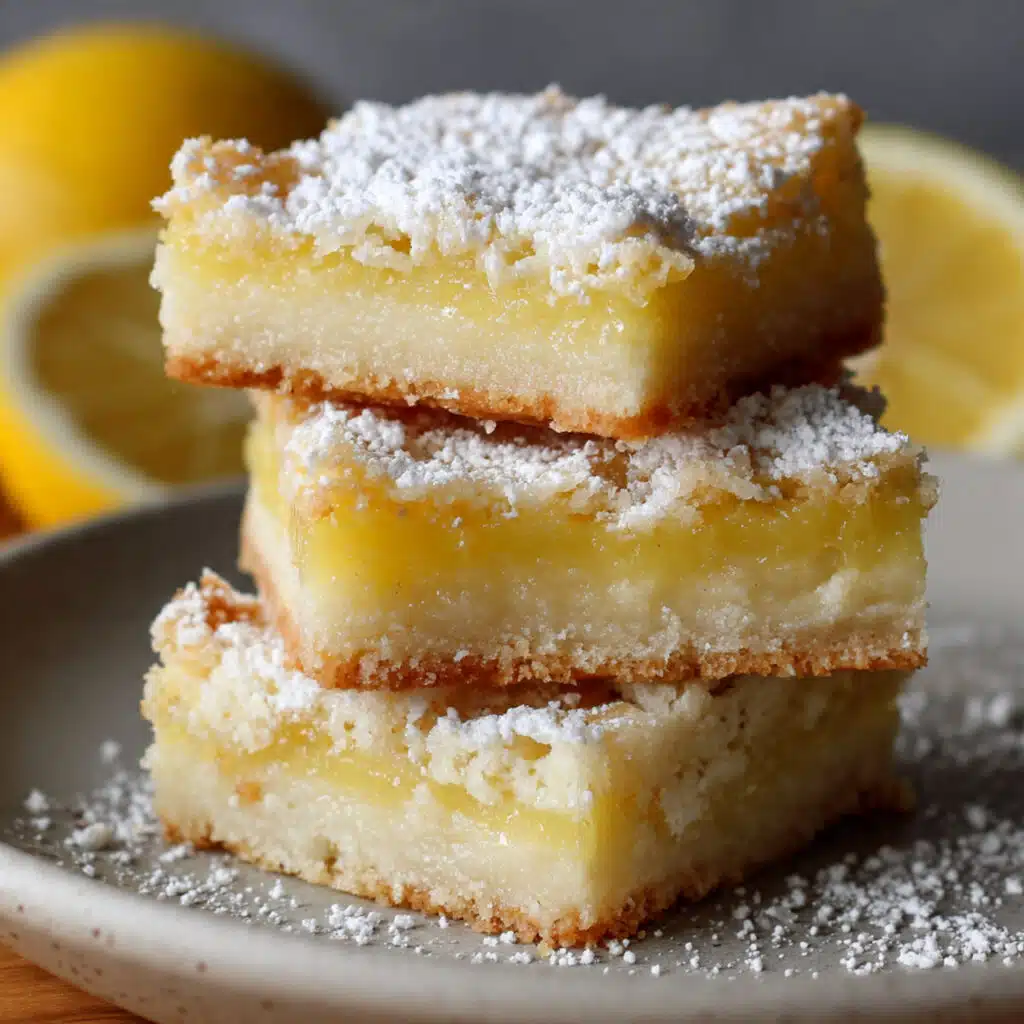
Lemon bars are bright, buttery, and absolutely irresistible! They have a tender shortbread crust and a tangy-sweet custard filling that’s pure sunshine in every bite. With simple ingredients like fresh lemons, butter, and eggs, these homemade lemon bars are easy enough for beginners but impressive enough to steal the show at any gathering.
Why You’ll Love This Recipe
These lemon bars are everything a citrus dessert should be! The buttery, melt-in-your-mouth crust pairs perfectly with the silky, tart lemon filling. They’re refreshing without being too sweet, gorgeous dusted with powdered sugar, and they remind me of lazy spring afternoons and family potlucks. Plus, they come together with just a handful of pantry staples and taste like you spent all day in the kitchen (when you totally didn’t). Trust me, once you make these, they’ll become your go-to recipe whenever you need something bright and beautiful!
Print
The Best Lemon Bars Recipe
- Total Time: 2 hours 55 minutes (including cooling and chilling time)
- Yield: One 9×13-inch pan
Description
These classic lemon bars feature a tender, buttery shortbread crust topped with a silky, tart lemon custard filling. Made with fresh lemon juice and zest, they’re the perfect balance of sweet and tangy. Easy to make, beautiful to serve, and absolutely irresistible!
Ingredients
For the Crust:
- 1 ¾ cups (220 g) all-purpose flour
- ½ cup (100 g) granulated sugar
- ½ teaspoon salt
- ¾ cup (1 ½ sticks / 170 g) unsalted butter, cold and cubed
For the Lemon Filling:
- 4 large eggs
- 1 ½ cups (300 g) granulated sugar
- ¼ cup (30 g) all-purpose flour
- 2 tablespoons lemon zest (from about 2 lemons)
- ⅔ cup (160 ml) fresh lemon juice (about 3–4 lemons)
- Optional: pinch of salt
For Finishing:
- Powdered sugar, for dusting
Instructions
Preheat your oven to 350°F (175°C). Line a 9×13-inch baking pan with parchment paper, making sure to leave some overhang on the sides—this will be your handle for lifting the bars out later.
In a medium bowl, whisk together the flour, sugar, and salt until combined. Add your cold, cubed butter and use a pastry cutter, fork, or your fingers to work it into the dry ingredients. You’re looking for a texture like coarse crumbs or wet sand—some bigger pieces of butter are totally fine! Press this mixture firmly and evenly into the bottom of your prepared pan.
Bake the crust for 15–18 minutes, until the edges are just starting to turn lightly golden. You don’t want it fully browned, just set. Remove it from the oven but keep the oven on—you’ll be using it again in just a minute!
While the crust is still warm, make your filling. In a large bowl, whisk together the eggs, sugar, and flour until the mixture is smooth and lump-free. Add the lemon zest and fresh lemon juice, then whisk until everything is beautifully combined.
Pour the lemon mixture evenly over your warm crust. Don’t worry if it looks really liquidy—it will set up as it bakes! Carefully transfer the pan back to the oven and bake for 18–22 minutes. You’ll know it’s done when the filling is set and doesn’t jiggle in the center.
This is the hardest part (I know, the waiting!). Let the lemon bars cool to room temperature on the counter, then pop them in the refrigerator for at least 2 hours.
Once chilled, use the parchment overhang to lift the whole slab out of the pan. Dust generously with powdered sugar (don’t be shy—it’s gorgeous!), then cut into 12–16 squares or rectangles depending on how big you like them.
Notes
- Room temperature eggs blend more smoothly into the filling, but if you forget to take them out, just place them in a bowl of warm water for 5 minutes.
- Strain your filling through a fine-mesh sieve before pouring it over the crust if you want an ultra-silky texture without any bits of zest or egg.
- Use a bench scraper or large chef’s knife to cut the bars—it gives you straighter edges than a small knife.
- Test your lemon juice: Taste it! If your lemons aren’t super juicy or flavorful, you might need an extra lemon or two. You want that bright, punchy flavor to shine through.
- Common mistake to avoid: Skipping the lemon zest! The zest has all those aromatic oils that give you that true lemon flavor. Juice alone isn’t enough.
- Prep Time: 15 minutes
- Cook Time: 40 minutes
- Category: Dessert
- Method: Baking
- Cuisine: American
Ingredient List
For the Crust:
- 1 ¾ cups (220 g) all-purpose flour
- ½ cup (100 g) granulated sugar
- ½ teaspoon salt
- ¾ cup (1 ½ sticks / 170 g) unsalted butter, cold and cubed
For the Lemon Filling:
- 4 large eggs
- 1 ½ cups (300 g) granulated sugar
- ¼ cup (30 g) all-purpose flour
- 2 tablespoons lemon zest (from about 2 lemons)
- ⅔ cup (160 ml) fresh lemon juice (about 3–4 lemons)
- Optional: pinch of salt
For Finishing:
- Powdered sugar, for dusting
Friendly Notes:
- Butter: Make sure it’s COLD! This is what gives you that perfect crumbly shortbread texture.
- Lemons: Fresh is best! You’ll need about 4 medium lemons total for both zest and juice.
- Substitutions: You can use salted butter if that’s what you have—just reduce or skip the added salt.
Why These Ingredients Work
Let me break down the magic happening in these lemon bars:
Cold Butter: This is the secret to a tender, crumbly crust. When cold butter hits the oven, it creates little pockets of steam that make the shortbread light and flaky instead of dense.
Flour in the Filling: Just ¼ cup does wonders! It helps thicken the custard so it sets beautifully without being gummy or too loose.
Fresh Lemon Juice & Zest: The juice gives you that bright, tangy flavor, while the zest adds aromatic oils that make the whole dessert smell incredible. Bottled juice just can’t compete!
Granulated Sugar in the Crust: Creates a slightly crisp, cookie-like base that holds up under all that lemony filling.
Eggs: They’re the backbone of the custard filling—they set it up beautifully and give you that smooth, silky texture.
Essential Tools and Equipment
Here’s what you’ll need to make perfect lemon bars:
- 9×13-inch baking pan (metal or glass both work)
- Parchment paper (for easy removal and clean slicing)
- Pastry cutter or fork (or just use your fingers!)
- Large mixing bowls
- Whisk
- Zester or microplane (for that lemon zest)
- Fine-mesh sieve (optional, but great for smooth filling)
How To Make Lemon Bars
Step 1: Prep Your Pan and Preheat
Preheat your oven to 350°F (175°C). Line a 9×13-inch baking pan with parchment paper, making sure to leave some overhang on the sides—this will be your handle for lifting the bars out later.
Step 2: Make the Shortbread Crust
In a medium bowl, whisk together the flour, sugar, and salt until combined. Add your cold, cubed butter and use a pastry cutter, fork, or your fingers to work it into the dry ingredients. You’re looking for a texture like coarse crumbs or wet sand—some bigger pieces of butter are totally fine! Press this mixture firmly and evenly into the bottom of your prepared pan.
Step 3: Par-Bake the Crust
Bake the crust for 15–18 minutes, until the edges are just starting to turn lightly golden. You don’t want it fully browned, just set. Remove it from the oven but keep the oven on—you’ll be using it again in just a minute!
Step 4: Whisk Up the Lemon Filling
While the crust is still warm, make your filling. In a large bowl, whisk together the eggs, sugar, and flour until the mixture is smooth and lump-free. Add the lemon zest and fresh lemon juice, then whisk until everything is beautifully combined.
Step 5: Pour and Bake Again
Pour the lemon mixture evenly over your warm crust. Don’t worry if it looks really liquidy—it will set up as it bakes! Carefully transfer the pan back to the oven and bake for 18–22 minutes. You’ll know it’s done when the filling is set and doesn’t jiggle in the center.
Step 6: Cool Completely and Chill
This is the hardest part (I know, the waiting!). Let the lemon bars cool to room temperature on the counter, then pop them in the refrigerator for at least 2 hours.
Step 7: Dust and Cut
Once chilled, use the parchment overhang to lift the whole slab out of the pan. Dust generously with powdered sugar (don’t be shy—it’s gorgeous!), then cut into 12–16 squares or rectangles depending on how big you like them.

You Must Know
The crust MUST be firm: Press it down really well with your hands or the bottom of a measuring cup. If it’s too loose, it won’t hold together when you cut the bars.
Don’t overbake the filling: The center should be just set, not firm. It will continue to set as it cools. Overbaked lemon bars turn dry and chalky instead of creamy.
Chill before cutting: I cannot stress this enough! Warm lemon bars are a slippery, messy disaster. Patience = perfection here.
Personal Secret: I always zest my lemons BEFORE juicing them—it’s so much easier! And I run a knife under hot water and wipe it clean between each cut for the prettiest, cleanest slices.
Pro Tips & Cooking Hacks
- Room temperature eggs blend more smoothly into the filling, but if you forget to take them out, just place them in a bowl of warm water for 5 minutes.
- Strain your filling through a fine-mesh sieve before pouring it over the crust if you want an ultra-silky texture without any bits of zest or egg.
- Use a bench scraper or large chef’s knife to cut the bars—it gives you straighter edges than a small knife.
- Test your lemon juice: Taste it! If your lemons aren’t super juicy or flavorful, you might need an extra lemon or two. You want that bright, punchy flavor to shine through.
- Common mistake to avoid: Skipping the lemon zest! The zest has all those aromatic oils that give you that true lemon flavor. Juice alone isn’t enough.
Flavor Variations / Suggestions
Want to mix things up? Here are some fun twists:
Lime Bars: Swap the lemon juice and zest for lime—SO refreshing and tropical!
Meyer Lemon Bars: If you can find Meyer lemons, use them! They’re sweeter and more floral than regular lemons.
Lemon-Blueberry Bars: Scatter ½ cup fresh blueberries over the crust before adding the lemon filling.
Lavender Lemon Bars: Add 1 teaspoon dried culinary lavender to the crust mixture for a fancy, floral touch.
Extra Citrusy: Add an extra tablespoon of lemon zest to the filling for even more lemon punch!
Coconut Crust: Replace ½ cup of the flour in the crust with shredded coconut for a tropical vibe.
Make-Ahead Options
These lemon bars are PERFECT for making ahead!
The Crust: You can make and bake the crust up to 1 day ahead. Just cover it tightly and keep it at room temperature, then add the filling when you’re ready to finish.
Fully Baked Bars: Make them completely up to 2 days in advance. Store them covered in the refrigerator and dust with powdered sugar just before serving for the freshest look.
Freezing: Yes! You can freeze the bars (without the powdered sugar) for up to 3 months. Wrap them individually in plastic wrap, then place in a freezer bag. Thaw in the fridge overnight and dust with sugar before serving.
Recipe Notes & Baker’s Tips
- The filling should be pourable but not watery. If it seems too thick, you can add a teaspoon or two of lemon juice.
- Some recipes call for baking the crust until fully golden, but I find that par-baking (just until lightly golden at the edges) prevents it from getting too hard.
- If your bars seem too tart, you can add an extra ¼ cup of sugar to the filling next time. If they’re not tart enough, add another tablespoon of lemon juice.
- The bars will firm up significantly as they cool and chill, so don’t panic if they seem a little soft right out of the oven!
Serving Suggestions
These lemon bars are perfect for:
- Spring and summer gatherings – they’re light, refreshing, and beautiful!
- Brunch spreads – pair them with coffee or mimosas
- Afternoon tea – serve alongside scones and fresh berries
- Picnics and potlucks – they travel well and everyone loves them
Optional toppings and garnishes:
- Extra lemon zest on top for a pop of color
- Fresh berries on the side
- A dollop of whipped cream for extra indulgence
- Candied lemon slices for a fancy presentation
How to Store Your Lemon Bars
Room Temperature: These bars can sit out for a few hours if you’re serving them at a party, but I don’t recommend storing them at room temp long-term—the filling needs to stay cool.
Refrigerator: Store in an airtight container or covered tightly with plastic wrap for up to 5 days. They actually taste even better the next day!
Freezer: Freeze for up to 3 months. Wrap individual bars in plastic wrap, then place in a freezer-safe bag or container. Thaw in the refrigerator overnight.
Reheating: No need! These are meant to be served chilled or at cool room temperature.
Allergy Information
Common allergens in this recipe:
- Dairy (butter)
- Eggs
- Gluten (all-purpose flour)
Substitution suggestions:
- Dairy-free: Use vegan butter or coconut oil in the crust. The texture will be slightly different but still delicious!
- Gluten-free: Use a 1:1 gluten-free flour blend in both the crust and filling. Make sure it contains xanthan gum for best results.
- Egg-free: This one’s tricky since eggs are essential to the custard filling. I haven’t tested an egg-free version, but you could try a commercial egg replacer designed for baking.
Questions I Get Asked A Lot
Can I use bottled lemon juice instead of fresh?
I really don’t recommend it. Fresh lemon juice has a brightness and flavor that bottled juice just can’t match. Plus, you need the zest anyway, so you might as well juice those lemons while you have them! It makes such a difference in the final taste.
My filling didn’t set—what happened?
This usually means the bars needed a bit more baking time, or they weren’t chilled long enough. Make sure the center doesn’t jiggle when you gently shake the pan, and always give them a full 2 hours (or more!) in the fridge. The filling sets up as it cools.
Can I make these in a different size pan?
You can, but you’ll need to adjust the baking time! An 8×8-inch pan will give you thicker bars (bake the crust a bit longer, about 20 minutes, and the filling about 25–30 minutes). A 9×9-inch pan is a nice middle ground.
Why is my crust hard instead of tender?
Two possible reasons: either the butter wasn’t cold enough when you mixed it in, or the crust was overbaked. Make sure your butter is straight from the fridge and cubed, and watch that crust carefully—you want just lightly golden edges, not brown all over.
How do I get such clean cuts?
Chill them completely (this is key!), then use a large sharp knife that you’ve run under hot water and wiped dry between each cut. A bench scraper also works beautifully for straight edges!
💬 Tried this recipe? Leave a comment and rating below! I’d love to hear how your lemon bars turned out! Did you try any fun variations?