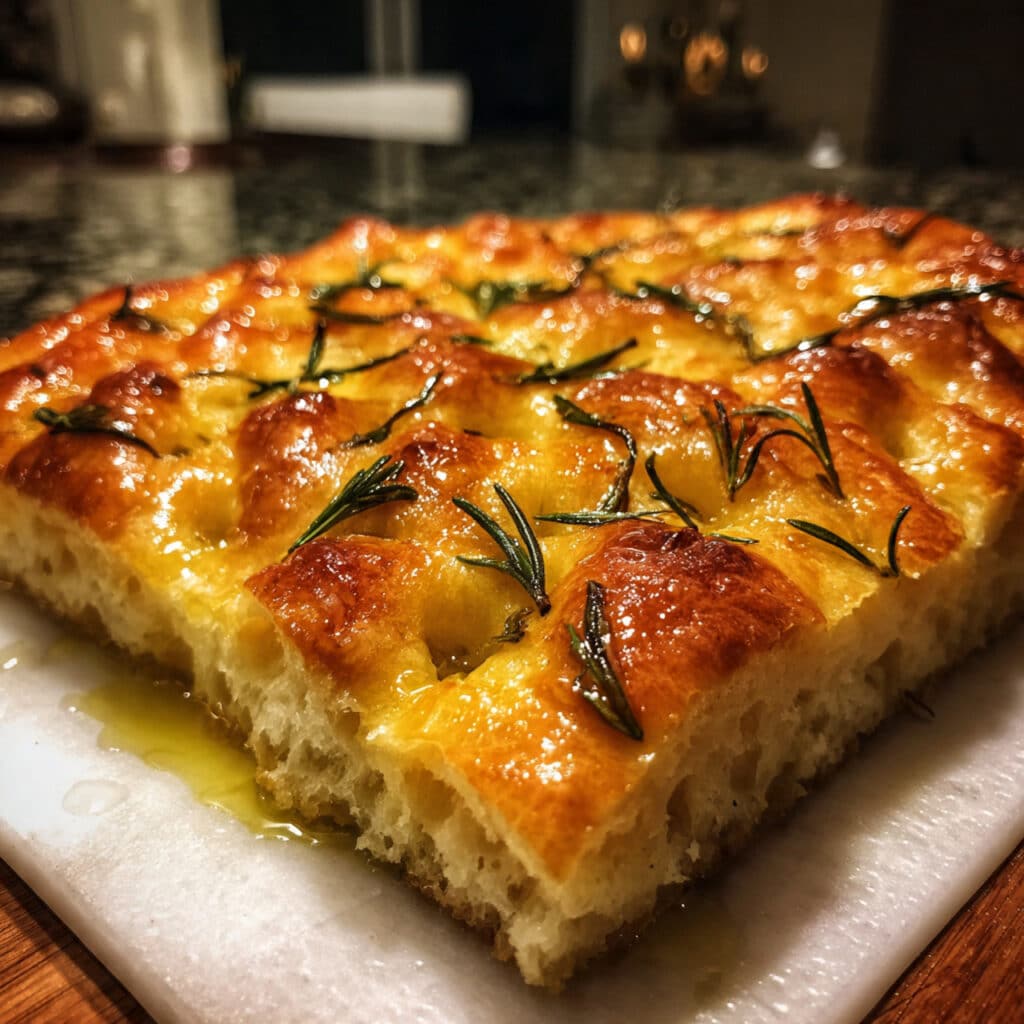
Focaccia bread is the pillowy, olive oil drenched Italian flatbread that’s about to become your new obsession! With a golden, crispy crust, airy interior, and those gorgeous dimples that hold pools of garlicky olive oil and sea salt, this bread is pure comfort. Most of the work happens while you sleep, making this an effortless showstopper for any occasion.
Love More Recipes? Try My Lemon Loaf Bread or this Lemon Blueberry Bread next.
Why You’ll Love This Recipe
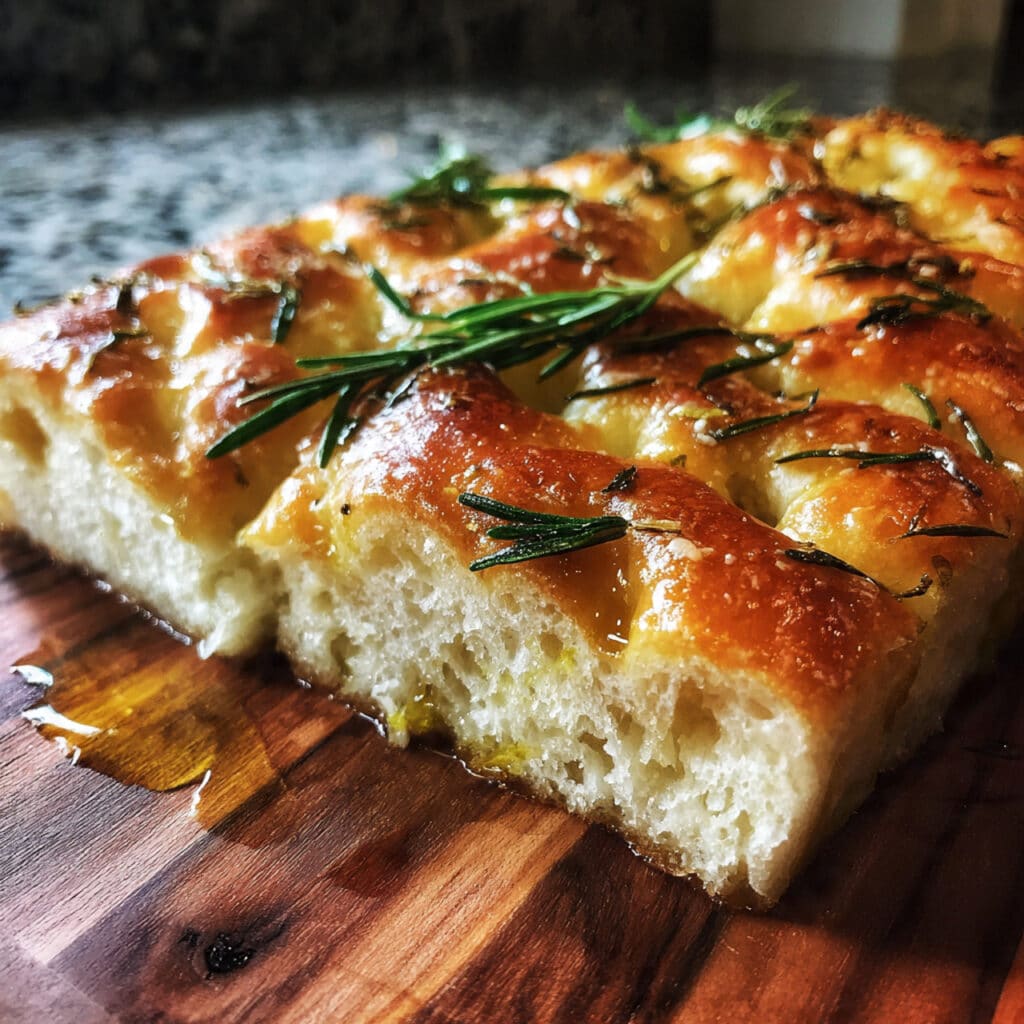
Soft, fluffy, and beautifully golden with a crisp, olive oil brushed crust. Its airy texture and savory flavor make it perfect for dipping, sandwiches, or serving alongside your favorite meals. Simple yet impressive, this classic bread brings bakery-style comfort right to your kitchen.
Print
Focaccia Bread
- Total Time: 13-19 hours (mostly hands-off!)
- Yield: 1 large pan
Description
This overnight focaccia bread recipe creates the most incredible golden, crispy, olive oil-drenched Italian flatbread with minimal effort. The cold fermentation develops amazing flavor while you sleep, and the dimpled top holds pools of garlicky oil and herbs. Perfect for serving as an appetizer, alongside soup, or for sandwiches!
Ingredients
Dough
- 4 cups (500 g) all-purpose flour
- 1 tablespoon instant yeast
- 1 tablespoon sugar
- 2 teaspoons fine salt
- 1⅔ cups (400 ml) warm water (about 105–115°F / 40–46°C)
- ¼–½ cup olive oil (for oiling pan and drizzling)
Topping (Classic)
- 2–3 tablespoons olive oil
- Flaky sea salt
- Fresh rosemary sprigs (optional)
- Freshly cracked black pepper (optional)
Instructions
In a large bowl, whisk together the flour, instant yeast, sugar, and salt until well combined. Add the warm water and stir with a wooden spoon or dough whisk until a shaggy dough forms. Cover the bowl with plastic wrap or a clean towel.
Place the covered bowl in the refrigerator overnight for about 12–18 hours. This slow, cold fermentation is where the magic happens! The dough will double in size and develop incredible flavor and texture.
The next day, here’s where we get generous with that olive oil! Pour ¼ to ½ cup of olive oil into your baking sheet or 9×13-inch pan — seriously, don’t be shy! This oil is what creates that gorgeous, crispy bottom crust. Transfer the chilled dough into the oiled pan. Using oiled fingers (yes, oil your hands!), gently press and stretch the dough so it spreads evenly to the edges.
Cover the pan loosely with a towel or plastic wrap and let the dough rise at room temperature for 30–45 minutes until it puffs up slightly. You’ll see it become lighter and airier.
Preheat your oven to 425°F (220°C). Now for the fun part! Drizzle 2-3 tablespoons of olive oil all over the surface of the dough. Using your fingertips, press deep dimples all over the dough — really go for it! Press down firmly to create those signature focaccia craters. These dimples will hold pools of olive oil and seasoning, creating amazing pockets of flavor.
Sprinkle flaky sea salt generously over the top, tuck in fresh rosemary sprigs, and add a few cracks of black pepper if you like a little warmth.
Bake in the preheated oven for 20–25 minutes, until the top is gorgeously golden and crisp, and the bottom sounds hollow when you tap it. The aroma will be absolutely intoxicating! Remove from the oven and let it cool slightly before slicing.
Notes
The Stretch Test: When stretching your dough in the pan, if it keeps shrinking back, it means the gluten is tight. Just let it rest for 5-10 minutes and try again. Patience is key!
Don’t Overbake: Watch your focaccia closely in the last few minutes. You want golden brown, not dark brown. The bottom should be crispy but not burnt.
Common Mistakes to Avoid:
- Using hot water (kills the yeast)
- Not using enough oil (results in dry, dense bread)
- Rushing the rises (flavor won’t develop properly)
- Shallow dimples (you need those deep pockets!)
- Prep Time: 15 minutes + First Rise Time: 12-18 hours (overnight, inactive)
- Cook Time: 20-25 minutes + Second Rise Time: 30-45 minutes
- Category: Bread
- Method: No-Knead
- Cuisine: Italian
Ingredient List
Dough
- 4 cups (500 g) all-purpose flour
- 1 tablespoon instant yeast
- 1 tablespoon sugar
- 2 teaspoons fine salt
- 1⅔ cups (400 ml) warm water (about 105–115°F / 40–46°C)
- ¼–½ cup olive oil (for oiling pan and drizzling)
Topping (Classic)
- 2-3 tablespoons olive oil
- Flaky sea salt
- Fresh rosemary sprigs (optional)
- Freshly cracked black pepper (optional)
Friendly Notes: Don’t have instant yeast? You can use active dry yeast, but you’ll need to proof it in the warm water with the sugar for 5-10 minutes first. And please, please use good quality olive oil — it really makes a difference in flavor!
Why These Ingredients Work
Let me break down the magic behind this recipe! The all-purpose flour gives you that perfect chewy-yet-airy texture that focaccia is famous for. The instant yeast combined with the sugar creates those beautiful air pockets during the long, slow rise. That overnight fermentation? Pure genius! It develops complex flavors you just can’t get with a quick rise.
The salt doesn’t just season the dough — it strengthens the gluten structure and controls the yeast activity. And oh, the olive oil! It’s the star of the show, creating that crispy, golden bottom crust and keeping the interior moist and tender. When you drizzle it on top and press those dimples, you create little flavor pockets that make every bite irresistible.
The warm water (not too hot, not too cold — just right!) activates the yeast gently without killing it. And those toppings? The flaky sea salt provides bursts of salinity, while fresh rosemary adds an earthy, aromatic note that screams Italian countryside. The black pepper adds just a hint of warmth that ties everything together beautifully.
Essential Tools and Equipment
- Large mixing bowl
- Wooden spoon or dough whisk
- Plastic wrap or clean kitchen towel
- 9×13-inch baking pan or large baking sheet
- Measuring cups and spoons
- Instant-read thermometer (helpful for checking water temperature)
- Your fingertips (seriously, they’re your best tool for dimpling!)
How To Make Focaccia Bread
Step 1: Make the Dough
In a large bowl, whisk together the flour, instant yeast, sugar, and salt until well combined. Add the warm water and stir with a wooden spoon or dough whisk until a shaggy dough forms. Cover the bowl with plastic wrap or a clean towel.
Step 2: First Rise (Overnight in the Fridge)
Place the covered bowl in the refrigerator overnight for about 12–18 hours. This slow, cold fermentation is where the magic happens! The dough will double in size and develop incredible flavor and texture.
Step 3: Prepare the Pan
The next day, here’s where we get generous with that olive oil! Pour ¼ to ½ cup of olive oil into your baking sheet or 9×13-inch pan — seriously, don’t be shy! This oil is what creates that gorgeous, crispy bottom crust. Transfer the chilled dough into the oiled pan. Using oiled fingers (yes, oil your hands!), gently press and stretch the dough so it spreads evenly to the edges.
Step 4: Second Rise
Cover the pan loosely with a towel or plastic wrap and let the dough rise at room temperature for 30–45 minutes until it puffs up slightly. You’ll see it become lighter and airier.
Step 5: Add Toppings & Dimple
Preheat your oven to 425°F (220°C). Now for the fun part! Drizzle 2-3 tablespoons of olive oil all over the surface of the dough. Using your fingertips, press deep dimples all over the dough — really go for it! Press down firmly to create those signature focaccia craters. These dimples will hold pools of olive oil and seasoning, creating amazing pockets of flavor.
Sprinkle flaky sea salt generously over the top, tuck in fresh rosemary sprigs, and add a few cracks of black pepper if you like a little warmth.
Step 6: Bake
Bake in the preheated oven for 20–25 minutes, until the top is gorgeously golden and crisp, and the bottom sounds hollow when you tap it. The aroma will be absolutely intoxicating! Remove from the oven and let it cool slightly before slicing.
You Must Know
The Water Temperature Matters: Your water should be warm to the touch (105–115°F) — like a nice bath. Too hot and you’ll kill the yeast. Too cold and it won’t activate properly. When in doubt, use a thermometer!
Overnight Is Non-Negotiable: Don’t skip the refrigerator rise! This slow fermentation is the secret to focaccia’s incredible flavor and airy texture. If you’re short on time, you can do 8 hours minimum, but 12–18 hours is ideal.
Oil Is Your Friend: I know it seems like a LOT of oil, but trust the process. That generous coating creates the crispy, golden crust that makes focaccia so addictive. Don’t skimp!
Personal Secret: After the bread comes out of the oven, I immediately brush the edges with a little more olive oil while it’s still hot. This creates an extra-crispy, flavorful crust that’ll make people think you went to culinary school.
Pro Tips & Cooking Hacks
Room Temperature Matters: Make sure your dough comes to room temperature during the second rise. Cold dough won’t puff up properly and won’t bake evenly.
The Stretch Test: When stretching your dough in the pan, if it keeps shrinking back, it means the gluten is tight. Just let it rest for 5-10 minutes and try again. Patience is key!
Don’t Overbake: Watch your focaccia closely in the last few minutes. You want golden brown, not dark brown. The bottom should be crispy but not burnt.
Common Mistakes to Avoid:
- Using hot water (kills the yeast)
- Not using enough oil (results in dry, dense bread)
- Rushing the rises (flavor won’t develop properly)
- Shallow dimples (you need those deep pockets!)
Smart Shortcut: Use instant yeast instead of active dry to skip the proofing step and get straight to mixing!
Flavor Variations / Suggestions
The classic rosemary and sea salt combo is perfection, but here are some of my favorite ways to jazz things up:
Garlic Lovers: Before baking, press thin slices of garlic into the dimples along with the rosemary. The garlic will roast and become sweet and mellow.
Mediterranean Style: Top with halved cherry tomatoes, kalamata olives, and crumbled feta cheese in the last 10 minutes of baking.
Caramelized Onion & Thyme: Spread caramelized onions over the dough before dimpling, then sprinkle with fresh thyme and parmesan.
Everything Bagel: Skip the rosemary and use everything bagel seasoning for a fun twist!
Sweet Focaccia: Brush with honey butter after baking and sprinkle with cinnamon sugar for a dessert version that’ll blow your mind.
Za’atar Focaccia: Replace rosemary with za’atar spice blend for a Middle Eastern-inspired version.
Make-Ahead Options
This recipe is MADE for planning ahead! The overnight rise is already built in, so you’re already winning. But here’s how to prep even further:
Make the Dough: You can keep the dough in the fridge for up to 24 hours after mixing. Just make sure it’s well-covered so it doesn’t dry out.
Freeze the Dough: After the first rise, you can freeze the dough in an oiled, freezer-safe container for up to 3 months. Thaw overnight in the fridge, then continue with the pan prep and second rise.
Freeze Baked Focaccia: Once completely cooled, wrap tightly in plastic wrap and then foil. Freeze for up to 3 months. Reheat at 350°F for 10-15 minutes until warmed through and crispy.
Partially Bake: You can bake the focaccia for 15 minutes, let it cool, wrap it well, and freeze. When ready to serve, finish baking at 425°F for 10-15 minutes. It’ll taste freshly baked!
Recipe Notes & Baker’s Tips
Dimpling Technique: Use all five fingers and press firmly down to the bottom of the pan. You want those dimples DEEP! They’ll puff up slightly during baking but will still hold onto that delicious olive oil.
Dough Consistency: The dough should be quite wet and sticky — this is what creates that airy, open crumb structure. Don’t add more flour thinking it’s too wet!
Pan Choice: A metal baking sheet works best for that crispy bottom. Glass or ceramic won’t get as crispy. If you have a rimmed baking sheet, that’s perfect!
Altitude Adjustments: If you’re baking at high altitude, you may need to reduce the yeast slightly (by about ¼ teaspoon) and increase the liquid by 1-2 tablespoons.
Why Instant Yeast: Instant yeast (also called rapid-rise or bread machine yeast) can be mixed directly into the flour without proofing. It’s more reliable and easier to use than active dry yeast.
Serving Suggestions
Focaccia is incredibly versatile! Here’s how I love to serve it:
As An Appetizer: Cut into squares and serve warm with high-quality olive oil mixed with balsamic vinegar for dipping. Add some roasted garlic cloves on the side for spreading!
For Sandwiches: Slice horizontally and fill with Italian meats, fresh mozzarella, tomatoes, and basil for the ultimate panini.
With Soup: This is THE bread to serve alongside minestrone, tomato soup, or any hearty Italian soup. It’s perfect for soaking up every last drop.
On A Cheese Board: Cut into small squares and serve as part of an antipasto spread with olives, cheeses, and cured meats.
For Breakfast: Top with scrambled eggs, avocado, and a sprinkle of red pepper flakes for a gourmet breakfast.
Optional Garnishes: A final drizzle of your best olive oil, a sprinkle of flaky salt, fresh herbs, or even a dusting of parmesan cheese right when it comes out of the oven.
How to Store Your Focaccia Bread
Room Temperature: Store in an airtight container or wrapped in foil at room temperature for up to 2 days. The crust will soften, but it’ll still be delicious!
Refrigerator: Not recommended, as refrigeration can make the bread stale faster.
Freezer: Wrap individual slices or the whole loaf tightly in plastic wrap, then aluminum foil. Freeze for up to 3 months.
Reheating Instructions:
- For room temperature focaccia: Warm in a 350°F oven for 5-10 minutes to crisp it back up.
- For frozen focaccia: Thaw at room temperature, then reheat at 350°F for 10-15 minutes until heated through and crispy.
- For a quick fix: Toast individual slices in a toaster or toaster oven until warmed and crispy.
Allergy Information
Contains: Wheat (gluten), may contain traces of soy depending on olive oil brand
Gluten-Free Option: You can try using a 1:1 gluten-free flour blend, but the texture will be different. Add 1 teaspoon of xanthan gum if your blend doesn’t include it. The result will be denser and less chewy.
Vegan-Friendly: Great news! This recipe is naturally vegan as written.
Low-Sodium Option: Reduce the salt in the dough to 1 teaspoon and use minimal or no salt on top. Be aware this will affect flavor development.
Oil-Free: Unfortunately, focaccia relies heavily on olive oil for its texture and flavor. Reducing the oil will result in a very different (and less delicious) bread.
Questions I Get Asked A Lot
Can I use active dry yeast instead of instant yeast?
Absolutely! Just dissolve it in the warm water with the sugar first and let it sit for 5-10 minutes until foamy before adding to the flour mixture. Everything else stays the same!
My dough didn’t rise much in the fridge. Is it ruined?
Not at all! Cold dough rises slowly. As long as you see SOME growth and it looks puffy, you’re good to go. The real rise happens during the second rise at room temperature and in the oven.
Can I skip the overnight rise and make this faster?
You CAN, but I don’t recommend it. For a same-day version, let the dough rise at room temperature for 1-2 hours until doubled, then proceed with the recipe. But you’ll miss out on that incredible depth of flavor that the cold fermentation creates!
Why is my focaccia dense instead of airy?
This usually happens when: (1) the water was too hot and killed the yeast, (2) you didn’t let it rise long enough, or (3) you added too much flour. Remember, the dough should be wet and sticky! Also, make sure your yeast is fresh and not expired.
Can I make this without a stand mixer?
You sure can! This recipe doesn’t require any kneading or a mixer at all. Just mix it by hand with a wooden spoon or dough whisk. The long fermentation does all the work for you!
The bottom of my focaccia isn’t crispy. What went wrong?
This usually means you didn’t use enough oil in the pan, or your oven wasn’t hot enough. Make sure you’re GENEROUS with that oil — at least ¼ cup! Also, bake on the lower rack of your oven for maximum bottom crispiness.
💬 Tried this recipe? Leave a comment and rating below! I’d love to hear what toppings you used and how your focaccia turned out. Did you go classic with rosemary, or did you get creative?