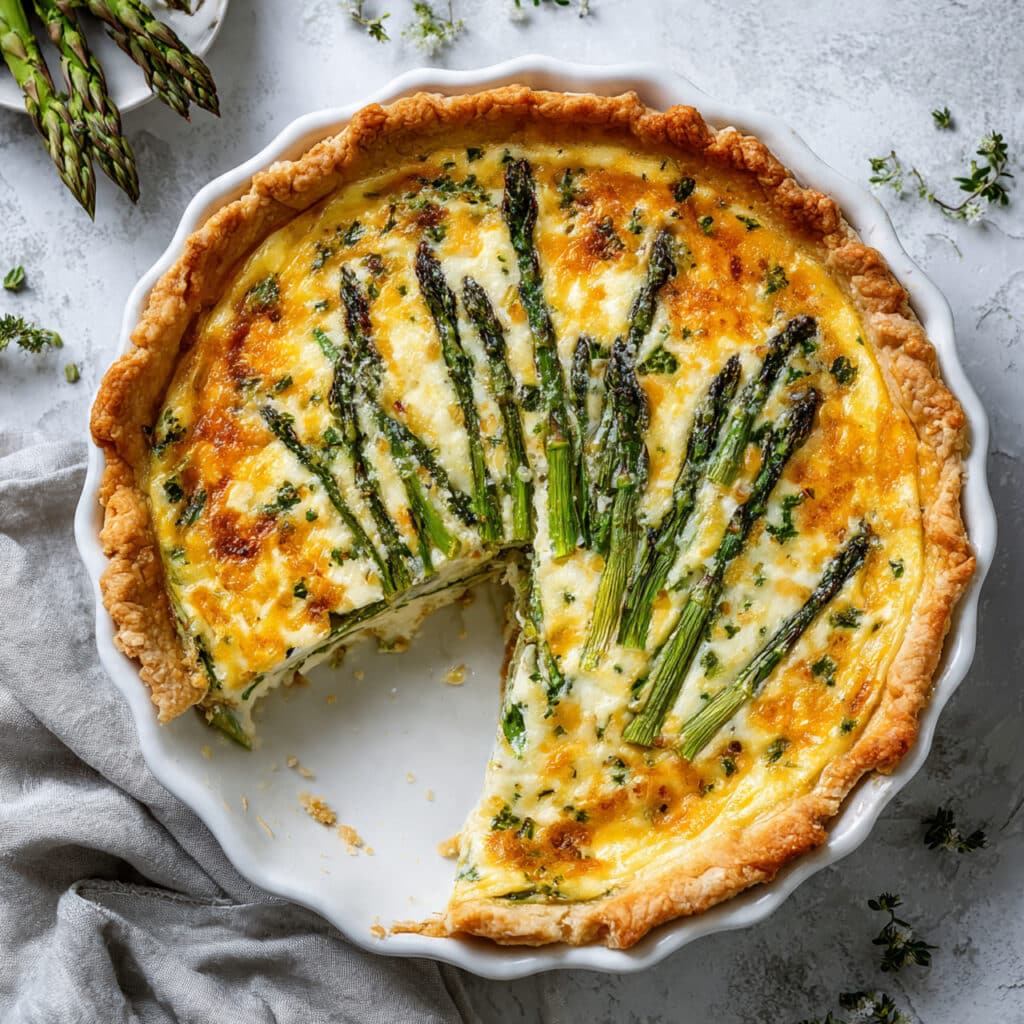
Cheddar Asparagus Quiche is the perfect spring brunch dish that combines tender fresh asparagus with sharp cheddar cheese in a buttery, flaky pie crust that melts in your mouth. It’s elegant enough to serve at Easter or Mother’s Day brunch, but easy enough to make for a lazy Sunday morning when you want something special without too much fuss.

Why You’ll Love This
- Impressive presentation with minimal effort – looks fancy on your brunch table but comes together easily in under an hour total
- Fresh asparagus screams springtime and makes this feel seasonal and special instead of something you could make any time of year
- Make-ahead friendly for stress-free entertaining – bake it the day before and reheat, or even assemble it the night before and bake fresh in the morning
- Works for breakfast, lunch, or dinner – it’s one of those wonderfully versatile dishes that fits any meal
- Feeds a crowd without breaking the bank – one quiche serves 6-8 people generously and uses affordable, everyday ingredients

Cheddar Asparagus Quiche
- Total Time: 1 hour 15 minutes
- Yield: 6 servings
Description
Elegant spring brunch quiche with fresh asparagus and sharp cheddar cheese in a buttery crust. Perfect for Easter or Mother’s Day.
Ingredients
1 prepared unbaked pie crust (9-inch)
1 tablespoon Dijon mustard
1 tablespoon butter
1 yellow onion, finely chopped
¼ cup finely chopped fresh dill (or 1 teaspoon dried)
1 pound asparagus, cooked and chopped
1½ cups shredded cheddar cheese
4 large eggs
1 cup milk
½ teaspoon salt
¼ teaspoon black pepper
¼ teaspoon nutmeg
Pinch cayenne pepper
Instructions
1. Preheat oven to 375°F. Place pie crust in pie plate. Brush inside with Dijon mustard.
2. Snap off woody ends. Steam 3-5 minutes until tender-crisp, or roast at 425°F for 10 minutes, or grill 2-3 minutes. Cool and chop into ½-1 inch pieces.
3. Melt butter in skillet. Add onion, cook 5 minutes until soft and translucent (not browned).
4. Mix cooked onion with dill and chopped asparagus. Spread in mustard-brushed crust. Sprinkle cheddar evenly over top.
5. Whisk eggs well. Add milk, salt, pepper, nutmeg, and cayenne. Whisk until smooth.
6. Pour egg mixture over vegetables and cheese.
7. Bake 35-45 minutes until center is just set but jiggles slightly.
8. Cool 10 minutes before slicing to allow custard to set.
Notes
Do not overbake. Center should slightly jiggle for best texture.
- Prep Time: 20 minutes
- Cook Time: 45 minutes
- Category: Breakfast
- Method: Baking
- Cuisine: French
Ingredients
- 1 prepared unbaked pie crust (9-inch)
- 1 tablespoon Dijon mustard
- 1 tablespoon butter
- 1 yellow onion, finely chopped
- ¼ cup finely chopped fresh dill (or 1 teaspoon dried)
- 1 pound asparagus, cooked and chopped
- 1½ cups shredded cheddar cheese
- 4 large eggs
- 1 cup milk (whole milk preferred)
- ½ teaspoon salt
- ¼ teaspoon black pepper
- ¼ teaspoon nutmeg
- Pinch cayenne pepper
Note: You must cook the asparagus before adding it to the quiche. Raw asparagus will be too tough, too watery, and won’t cook properly in the time it takes to bake the quiche. I’ve tested this both ways and cooked asparagus is non-negotiable.
Fresh dill is worth seeking out if you can find it – the bright, fresh flavor is noticeably better than dried. But if you only have dried dill, 1 teaspoon will work fine in a pinch.
Why These Ingredients Work
Dijon Mustard Layer: Brushing the unbaked crust with Dijon before adding the filling is a professional baker’s trick that serves two crucial purposes. First, it creates a moisture barrier that helps prevent the dreaded soggy bottom that can ruin a quiche.
Fresh Dill: Dill and asparagus are natural partners – they both have that fresh, slightly grassy, springtime quality that works beautifully together. The dill’s bright, anise-like flavor complements the asparagus without overpowering it.
Nutmeg and Cayenne Combination: This might seem like a weird spice duo for a savory dish, but trust me on this. The nutmeg adds warmth and depth without being identifiable – people taste it and think “wow, this is really good” without knowing why.
Sharp Cheddar: You need a cheese with personality here to stand up to the strong flavor of asparagus. Mild cheese would just disappear into the background. Sharp cheddar has enough tang and intensity to hold its own, creating that perfect savory, satisfying richness that makes quiche so comforting. Extra sharp works even better if you love cheese.
Whole Milk: The fat content in whole milk creates a creamier, richer custard that’s luxuriously smooth. Skim milk works if that’s all you have, but whole milk gives you that silky, restaurant-quality texture that makes this quiche special.
Tools Needed
- 9-inch pie plate
- Medium skillet for sautéing
- Medium mixing bowl
- Whisk
- Steamer basket, roasting pan, or grill for cooking asparagus
- Sharp knife and cutting board
- Pastry brush for the mustard
How To Make Cheddar Asparagus Quiche
Prep the Pie Crust
Preheat your oven to 375°F. If you’re using a refrigerated pie crust, unroll it and fit it into your pie plate, pressing it gently into the bottom and up the sides. If it’s already in a disposable pan, you’re all set. Trim any excess crust hanging over the edges or crimp it decoratively – your choice. Now here’s the important part: take that tablespoon of Dijon mustard and brush it all over the inside of the crust – bottom and sides. Use a pastry brush or the back of a spoon to spread it in a thin, even layer. This creates a protective barrier and adds flavor.
Cook the Asparagus
Grab each asparagus spear by the ends and bend it gently – it’ll snap naturally at the point where the tender part meets the tough woody end. Discard those woody ends (or save them for making asparagus soup!). You can also just cut off the bottom 1-2 inches if you prefer.
You have three great options for cooking the asparagus. To steam: fill a pot with about an inch of water, bring to a boil, add your steamer basket with the asparagus, cover, and steam for 3-5 minutes until tender-crisp. To roast: lay spears on a baking sheet, drizzle with olive oil and a pinch of salt, and roast at 425°F for about 10 minutes. To grill: brush spears with oil, grill for 2-3 minutes, turning once. Whichever method you choose, the asparagus should be tender but still have a little bite – not mushy.
Once cooked, let the asparagus cool slightly, then chop it into bite-sized pieces about ½ to 1 inch long. You want pieces small enough to distribute evenly throughout the quiche and easy to eat with a fork.
Sauté the Onions
Melt that tablespoon of butter in a medium skillet over medium heat. When it’s bubbling, add your finely chopped onion and cook, stirring occasionally, for about 5 minutes. You want the onion soft, translucent, and sweet – not browned or caramelized. Raw onion would be too sharp and crunchy in the finished quiche, but these softened, sweetened onions add the perfect flavor base.
Layer the Filling
Take your cooked onions and mix them together with the chopped fresh dill and your cooked, chopped asparagus in a bowl. Toss everything together so it’s evenly combined. Spread this vegetable mixture evenly across the bottom of your mustard-brushed pie crust. Try to distribute it relatively evenly so every slice will have a good mix of vegetables.
Sprinkle the shredded cheddar cheese over the vegetable layer, again distributing it evenly. You want cheese in every bite, not clumped all in one area.
Make the Custard
In a medium bowl, crack your eggs and whisk them really well until they’re completely beaten and uniform in color with no streaks of white. Add the milk, salt, pepper, nutmeg, and that tiny pinch of cayenne. Whisk everything together until it’s completely smooth and well combined. You want one homogeneous mixture with no pockets of seasoning or unmixed egg.
Pour and Bake
Carefully pour the egg mixture over your layered vegetables and cheese in the crust. Pour slowly and evenly, trying to distribute it across the whole surface. Give the pie plate a very gentle shake or tap to help the liquid settle into all the nooks and crannies around the vegetables. The cheese and vegetables might shift and float a bit – that’s totally normal and fine.
Carefully transfer the filled quiche to your preheated 375°F oven. Bake for 35-45 minutes. Start checking at 35 minutes. The quiche is done when the center is just set but still jiggles very slightly when you gently shake the pan – kind of like jello. It should not be liquid or soupy in the middle, but it also shouldn’t be completely firm and solid. The edges will puff up slightly and turn golden. If you insert a knife near (not in) the center, it should come out mostly clean.
Cool Before Slicing
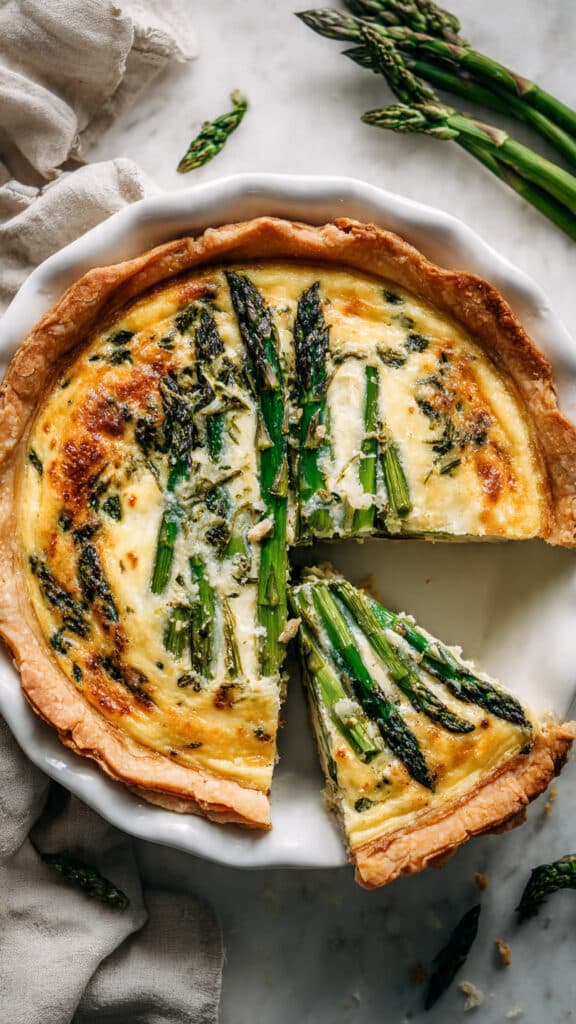
This is important: let the quiche cool for at least 10 minutes before slicing and serving. During this resting time, the custard continues to set up and firm, making it much easier to cut clean slices. If you cut into it immediately, the custard will be too soft and your slices will fall apart and look messy.
You Must Know
Cook the asparagus first – this is absolutely mandatory, not optional. I cannot stress this enough. Raw asparagus releases tons of water as it cooks, which would make your quiche watery and prevent the custard from setting properly. Plus, raw asparagus stays tough and fibrous even after the quiche bakes for 45 minutes – it simply won’t cook through. Cooked asparagus that’s been properly prepared is tender, flavorful, and perfect in texture.
Chop the asparagus into small, bite-sized pieces – not long spears. Big pieces of asparagus are beautiful to look at but impractical to eat. You want pieces small enough that they distribute evenly throughout every slice and can be easily cut and eaten with just a fork. Aim for ½ to 1-inch pieces maximum.
Don’t overbake or the eggs will become rubbery and dry. The center should still have a very slight jiggle when you remove it from the oven – almost like jello. It might seem underdone, but remember that carryover cooking will continue as it cools. A quiche continues cooking for several minutes after you take it out of the oven.
Pro Tips & Mistakes to Avoid
Don’t skip the Dijon mustard step even if it sounds weird. I know brushing mustard on your pie crust seems strange, but this is a classic French technique that’s been used for decades. The thin layer creates a moisture barrier that prevents sogginess while adding subtle depth. You absolutely will not taste mustard – I promise. But you will notice your quiche tastes more complex and interesting, and your bottom crust stays crisp instead of soggy.
Use whole milk for the richest, creamiest results. Yes, you can use skim or 2% milk and the quiche will still work, but whole milk creates that luxurious, silky custard texture that makes quiche special. The extra fat makes a noticeable difference in both texture and flavor. If you want to make it even richer, replace ¼ cup of the milk with heavy cream.
If cooking for kids, consider using less asparagus. Kids can be picky about asparagus’s flavor and texture. If you’re making this for a family with young children, cut the asparagus down to about ½ pound instead of a full pound, and make up the difference with other kid-friendly vegetables like chopped bell peppers or broccoli. They’ll be more likely to eat it and enjoy it.
Mistake to avoid: Using asparagus stalks that are really thick without halving them lengthwise. Super thick asparagus can be tough and fibrous even after cooking. If your asparagus spears are thicker than a pencil, slice them in half lengthwise before cooking to ensure they’re tender throughout.
Another common mistake: Forgetting to let the quiche rest before slicing. I know you’re hungry and it smells amazing, but cutting into it too soon means the custard hasn’t fully set and your beautiful quiche will fall apart into a messy pile instead of clean, elegant slices.
Flavor Variations
Gruyere Upgrade: Replace the cheddar with Gruyere cheese for a more sophisticated, nutty flavor that’s absolutely divine. Gruyere is the classic cheese used in French quiches and it melts beautifully into that custard.
Bacon Addition: Cook 4 strips of bacon until crispy, crumble them up, and sprinkle over the asparagus layer before adding the cheese. The smoky, salty bacon is an incredible pairing with asparagus and makes this heartier and more filling.
Herb Garden Blend: Add fresh thyme or tarragon along with (or instead of) the dill for complex herbal notes. Use about 1 tablespoon fresh thyme leaves or 1 teaspoon fresh tarragon, finely chopped.
Caramelized Onion Richness: Instead of just softening the onions for 5 minutes, cook them low and slow for about 20-25 minutes until they’re deeply caramelized and sweet. This adds incredible depth and sweetness that transforms the whole quiche.
Tomato Addition: Layer in some halved cherry tomatoes along with the asparagus. The tomatoes add pops of sweetness and acidity that brighten everything up beautifully.
Make-Ahead
Assemble the Night Before: You can prepare everything – brush the crust with mustard, layer in the vegetables and cheese, mix the custard – then pour the custard over everything, cover tightly with plastic wrap, and refrigerate overnight. In the morning, just uncover it and bake. It might need an extra 5 minutes of baking time since it’s starting cold.
Fully Baked and Ready: Bake the quiche completely up to 2 days ahead of time. Let it cool completely, cover it well, and refrigerate. Reheat individual slices in the microwave for 1-2 minutes, or reheat the whole quiche covered with foil at 325°F for 15-20 minutes until warmed through.
Freezing: Quiche freezes beautifully. Bake it completely, let it cool, wrap it tightly in plastic wrap and then aluminum foil. Freeze for up to 2 months. Thaw overnight in the refrigerator before reheating.
Serving Suggestions
Serve with a simple arugula salad dressed in lemon vinaigrette for a complete, elegant lunch. The peppery arugula and bright lemon cut through the rich quiche perfectly.
Pair with fresh fruit salad and crispy bacon for a stunning brunch spread. Add mimosas or Bloody Marys and you’ve got a restaurant-quality brunch at home.
Try it with roasted potatoes or hash browns for a heartier meal. Perfect for feeding a hungry crowd at breakfast or brunch.
Serve at room temperature with soup for an easy lunch. Tomato soup and quiche is a classic pairing that never gets old.
How to Store
Room Temperature: Quiche can sit out at room temperature for up to 2 hours maximum – no longer than that because of the eggs and dairy. Don’t leave it out all day.
Refrigerator: Cover leftover quiche and refrigerate for up to 4 days. It tastes great cold straight from the fridge, or you can reheat it. The crust may soften slightly in the fridge but it still tastes wonderful.
Freezer: Wrap individual slices in plastic wrap, then place in a freezer bag. Freeze for up to 2 months. Reheat individual frozen slices in the microwave for 2-3 minutes or in a 350°F oven for 20-25 minutes.
Reheating: For best texture, reheat in the oven at 325°F for 15 minutes covered with foil. Microwave works in a pinch (1-2 minutes for a slice) but can make the crust a bit soggy.
Allergy Info
Contains: Wheat (pie crust), dairy (cheese, milk, butter), eggs
Gluten-Free Option: Use a gluten-free pie crust. Everything else in the recipe is naturally gluten-free already.
Dairy-Free Option: Use dairy-free cheese (Daiya or Violife work well) and non-dairy milk like oat or soy. Skip the butter for sautéing the onions or use vegan butter. Make sure your pie crust is dairy-free too.
Vegetarian: This recipe is already vegetarian. If you’re strictly vegetarian, make sure your cheese is made with vegetable rennet, not animal rennet.
FAQs
Can I use a different vegetable instead of asparagus?
Absolutely! Broccoli, spinach, mushrooms, roasted bell peppers, or zucchini all work beautifully in quiche. Just make sure to cook any vegetables that release water (like mushrooms, zucchini, or spinach) first and drain them really well before adding to the quiche, or you’ll end up with a watery mess.
How do I know when the quiche is perfectly done?
Look for edges that are set and slightly puffed, while the center still has a very slight jiggle when you gently shake the pan – like jello. Insert a thin knife about an inch from the center (not in the dead center) and it should come out mostly clean with maybe a little bit of wet custard. The center will finish cooking as it rests.
Can I make this without a crust for a crustless quiche?
Yes! Grease your pie plate really well with butter and pour the filling directly in – no crust needed. It becomes more like a frittata. Bake at the same temperature but reduce the time to about 30-35 minutes since there’s no crust to cook through.
My quiche puffed up in the oven then sank – is that normal?
Completely normal! Quiches puff up from the steam created during baking, then deflate as they cool and that steam escapes. It doesn’t affect the flavor or texture at all – it’s just what happens with egg-based custards. Don’t worry about it.
What’s the best way to reheat leftover quiche without drying it out?
Oven reheating is best for maintaining the texture of both crust and filling. Cover the quiche loosely with foil and warm it at 325°F for 15-20 minutes. The foil keeps it from drying out. Microwave is faster (1-2 minutes for a slice) but can make the crust soggy and the eggs a bit rubbery.
💬 Tried it? Leave a comment and rating below!