Buttermilk pancakes are Easy homemade pancakes with simple ingredients like buttermilk, flour, and eggs to create tender, golden pancakes with crispy edges. Ready in 20 minutes with step by step instructions and expert tips.
Love More Pancakes? Try My Cottage Cheese Pancakes or this Fluffy Japanese Pancakes next.
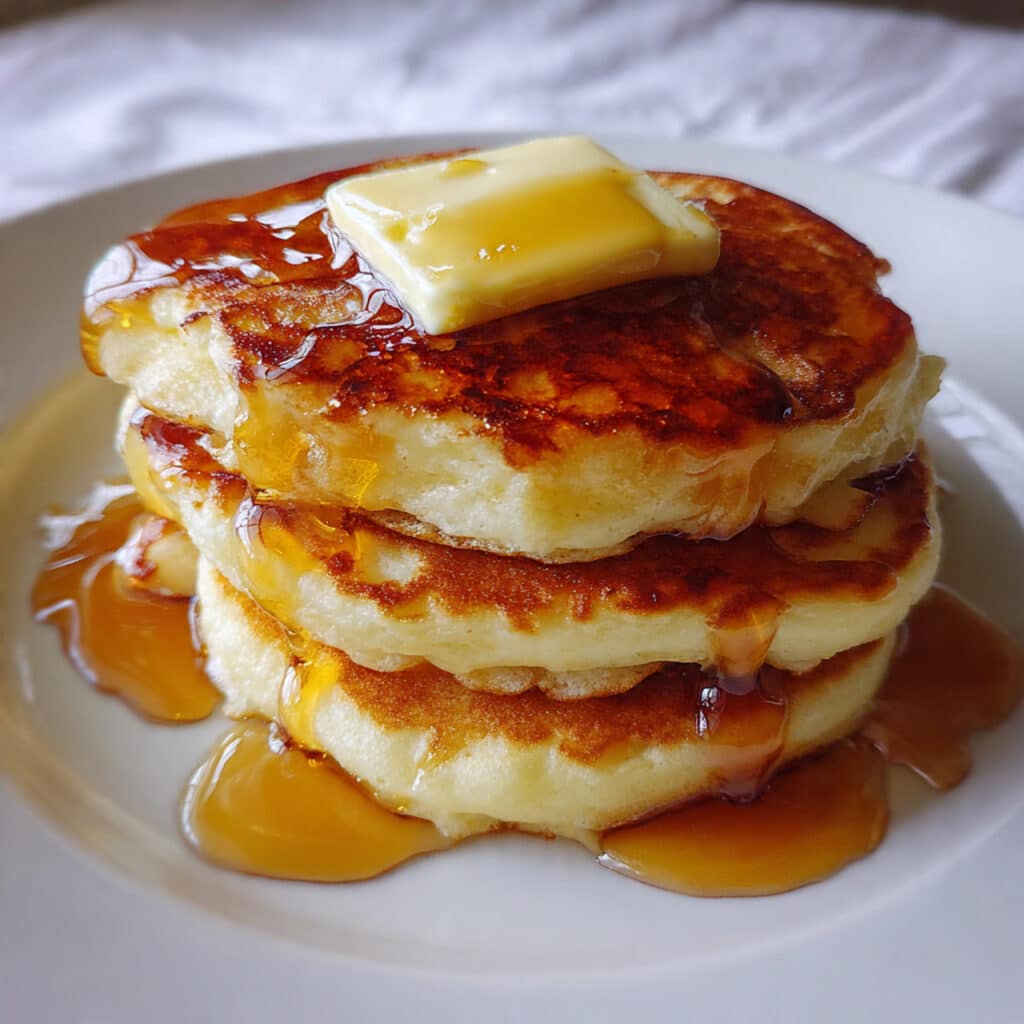
Why You’ll Love This Recipe
Soft, fluffy, and golden with that classic tangy flavor everyone loves. They cook up perfectly every time, making them ideal for cozy breakfasts or weekend brunches. Stack them high with butter and syrup for a comforting start to the day.
Print
Buttermilk Pancakes
- Total Time: 25 minutes
- Yield: 12 pancakes
Description
The best fluffy buttermilk pancakes recipe! Easy homemade pancakes with simple ingredients, perfect golden-brown color, and incredible flavor. Ready in 20 minutes with step-by-step instructions and expert tips.
Ingredients
Dry Ingredients:
- 2 cups all-purpose flour
- 2 tablespoons granulated sugar
- 2 teaspoons baking powder
- 1 teaspoon baking soda
- ½ teaspoon salt
Wet Ingredients:
- 2 cups buttermilk (shake well before measuring)
- 2 large eggs
- 4 tablespoons unsalted butter, melted and slightly cooled
- 1 teaspoon vanilla extract (optional, but I always add it!)
For Cooking:
- Butter or oil for the griddle
Instructions
In your large bowl, whisk together the flour, sugar, baking powder, baking soda, and salt until everything is evenly distributed. This step is important .
In your medium bowl, whisk together the buttermilk (make sure you shook it first!), eggs, melted butter, and vanilla until smooth and well combined. The mixture should look cohesive with no streaks of egg whites floating around.
Here’s where restraint is KEY, my friends. Pour the wet ingredients into the dry ingredients and gently stir with a spatula until just combined. You’ll still see a few small lumps in the batter — and that’s PERFECT. Resist the urge to keep stirring! Overmixing develops the gluten and makes tough, chewy pancakes instead of tender, fluffy ones. I usually count to about 15 stirs and then step away from the bowl.
Place your large skillet or griddle over medium heat and let it preheat for about 2-3 minutes. You want it hot enough that a drop of water sizzles on contact, but not SO hot that the pancakes burn before cooking through. Lightly grease the surface with butter or oil — I like butter for flavor, but oil works great too.
For each pancake, pour about ¼ cup of batter onto the hot surface. Don’t spread it around — let it naturally form a nice round circle. Now here’s the hardest part: WAIT. Cook until you see bubbles forming all over the surface and the edges start to look dry and set, about 2-3 minutes. This is your signal to flip!
Use your spatula to gently flip each pancake. They should be beautifully golden brown. Cook the second side for another 1-2 minutes until golden. The second side always cooks faster than the first.
Transfer your gorgeous pancakes to a plate and keep them warm while you cook the rest. I usually cover them loosely with foil.
Stack those beauties high on plates and serve them warm with all your favorite toppings!
Notes
Keep finished pancakes warm in a 200°F oven on a baking sheet while you cook the rest. This way everyone can eat together with hot pancakes!
Don’t press down on the pancakes with your spatula while cooking. I know it’s tempting, but you’ll squeeze out all those beautiful air bubbles you worked so hard to create.
Flip only once. More flipping = denser pancakes. Wait for those bubbles and set edges, then flip with confidence!
Grease between batches. After every 2-3 pancakes, add a little more butter or oil to your griddle. This prevents sticking and keeps those edges crispy.
Common mistake to avoid: Starting with a pan that’s too hot. Medium heat is your friend here. Too high and you’ll get burnt outsides with raw middles.
- Prep Time: 10 minutes
- Cook Time: 15 minutes
- Category: Breakfast
- Method: Griddle/Stovetop
- Cuisine: American
Ingredient List
Dry Ingredients:
- 2 cups all-purpose flour
- 2 tablespoons granulated sugar
- 2 teaspoons baking powder
- 1 teaspoon baking soda
- ½ teaspoon salt
Wet Ingredients:
- 2 cups buttermilk (shake well before measuring)
- 2 large eggs
- 4 tablespoons unsalted butter, melted and slightly cooled
- 1 teaspoon vanilla extract (optional, but I always add it!)
For Cooking:
- Butter or oil for the griddle
Substitution Notes:
- No buttermilk? Make your own by adding 2 tablespoons of lemon juice or white vinegar to 2 cups of regular milk. Let it sit for 5 minutes — boom, homemade buttermilk!
- Dairy-free? Try using almond milk with lemon juice for the buttermilk substitute, and coconut oil instead of butter.
- Want whole wheat? You can swap up to half the all-purpose flour with whole wheat flour, though they’ll be slightly denser.
Why These Ingredients Work
Let me break down the magic happening in this batter, because understanding WHY ingredients work makes you a better cook!
Buttermilk is the star of the show here. Its acidity reacts with the baking soda to create tons of air bubbles, which means FLUFFY pancakes. Plus, that tangy flavor is just chef’s kiss. It also tenderizes the gluten in the flour, keeping everything soft.
Baking powder AND baking soda — yes, we need both! The baking soda reacts immediately with the buttermilk’s acid, while the baking powder gives a second rise when the pancakes hit the hot griddle. Double rising action equals maximum fluffiness.
Melted butter adds richness and helps create those crispy, golden edges we all love. Make sure it’s slightly cooled though, or you’ll scramble those eggs!
Sugar isn’t just for sweetness — it helps with browning and gives you that gorgeous golden color.
Eggs provide structure and help bind everything together, while adding protein and richness.
Essential Tools and Equipment
You don’t need much to make pancake magic happen:
- Two mixing bowls (one large, one medium)
- Whisk for mixing
- Measuring cups and spoons
- Large skillet or griddle — I prefer a non-stick griddle because I can make 4 pancakes at once
- Spatula for flipping
- ¼ cup measuring cup or ladle for portioning batter
- Plate and foil for keeping finished pancakes warm
How To Make Buttermilk Pancakes
Step 1: Mix Dry Ingredients
In your large bowl, whisk together the flour, sugar, baking powder, baking soda, and salt until everything is evenly distributed. This step is important .
Step 2: Mix Wet Ingredients
In your medium bowl, whisk together the buttermilk (make sure you shook it first!), eggs, melted butter, and vanilla until smooth and well combined. The mixture should look cohesive with no streaks of egg whites floating around.
Step 3: Combine the Batter
Here’s where restraint is KEY, my friends. Pour the wet ingredients into the dry ingredients and gently stir with a spatula until just combined. You’ll still see a few small lumps in the batter — and that’s PERFECT. Resist the urge to keep stirring! Overmixing develops the gluten and makes tough, chewy pancakes instead of tender, fluffy ones. I usually count to about 15 stirs and then step away from the bowl.
Step 4: Heat the Pan
Place your large skillet or griddle over medium heat and let it preheat for about 2-3 minutes. You want it hot enough that a drop of water sizzles on contact, but not SO hot that the pancakes burn before cooking through. Lightly grease the surface with butter or oil — I like butter for flavor, but oil works great too.
Step 5: Cook the Pancakes
For each pancake, pour about ¼ cup of batter onto the hot surface. Don’t spread it around — let it naturally form a nice round circle. Now here’s the hardest part: WAIT. Cook until you see bubbles forming all over the surface and the edges start to look dry and set, about 2-3 minutes. This is your signal to flip!
Use your spatula to gently flip each pancake. They should be beautifully golden brown. Cook the second side for another 1-2 minutes until golden. The second side always cooks faster than the first.
Transfer your gorgeous pancakes to a plate and keep them warm while you cook the rest. I usually cover them loosely with foil.
Step 6: Serve
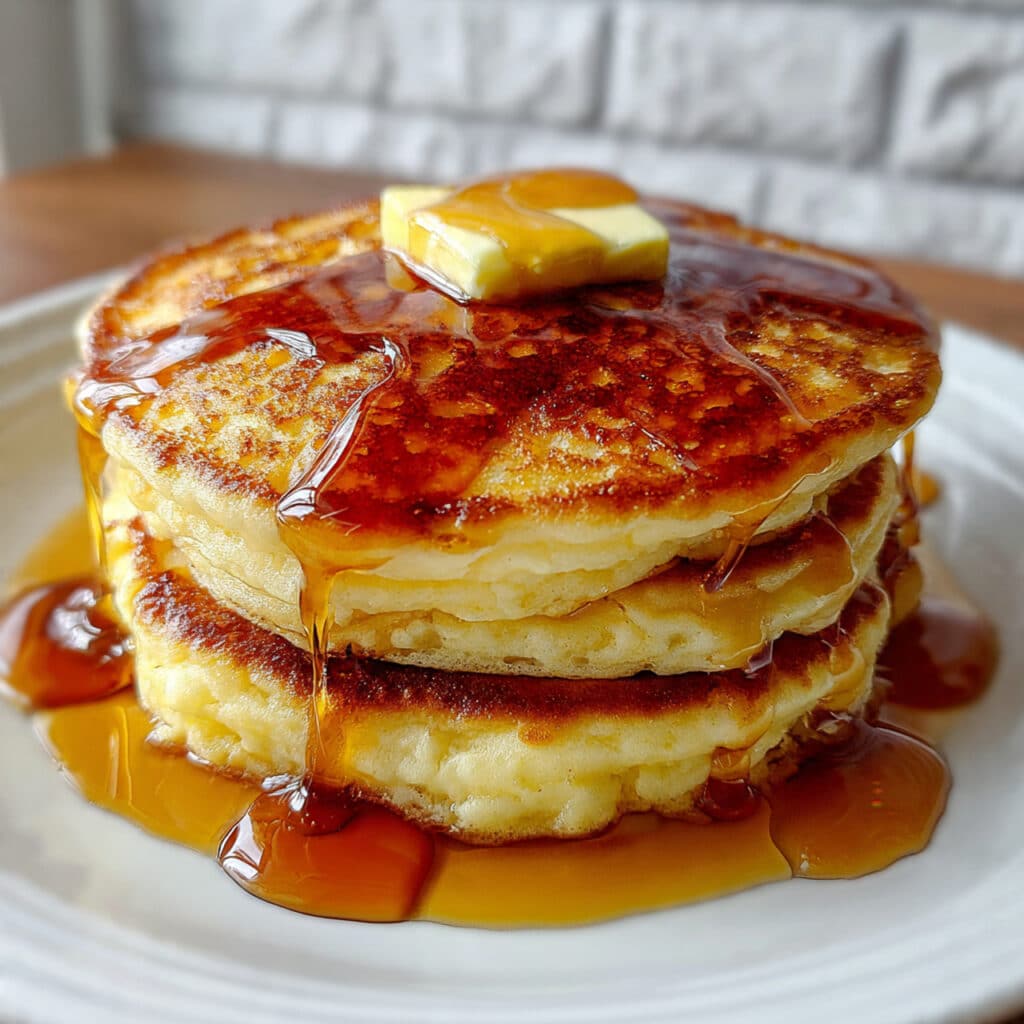
Stack those beauties high on plates and serve them warm with all your favorite toppings!
You Must Know
DO NOT OVERMIX THE BATTER. I’m putting this in all caps because it’s the #1 mistake people make with pancakes. See those lumps? Leave them! When you overmix, you develop the gluten in the flour, which makes your pancakes tough and dense instead of light and fluffy. Just stir until the flour is mostly incorporated and walk away. Your pancakes will thank you.
Let the batter rest for 5-10 minutes before cooking if you have time. This allows the flour to fully hydrate and the leavening agents to start working. You’ll get even fluffier pancakes!
Use room temperature eggs if possible. They mix more easily with the other wet ingredients and create a smoother batter.
Personal Secret: I add a tiny pinch of cinnamon to my dry ingredients — not enough that anyone can identify it, but it adds this warm, cozy undertone that makes people say “what IS that?” in the best way possible.
Pro Tips & Cooking Hacks
Test your griddle temperature with a small spoonful of batter first. If it burns immediately, turn down the heat. If it takes forever to bubble, turn it up slightly.
Keep finished pancakes warm in a 200°F oven on a baking sheet while you cook the rest. This way everyone can eat together with hot pancakes!
Don’t press down on the pancakes with your spatula while cooking. I know it’s tempting, but you’ll squeeze out all those beautiful air bubbles you worked so hard to create.
Flip only once. More flipping = denser pancakes. Wait for those bubbles and set edges, then flip with confidence!
Grease between batches. After every 2-3 pancakes, add a little more butter or oil to your griddle. This prevents sticking and keeps those edges crispy.
Common mistake to avoid: Starting with a pan that’s too hot. Medium heat is your friend here. Too high and you’ll get burnt outsides with raw middles.
Flavor Variations & Suggestions
The beauty of this base recipe is how well it plays with add-ins! Here are some of my favorite ways to switch things up:
Blueberry Pancakes: Gently fold ¾ cup fresh or frozen blueberries into the batter after mixing. If using frozen, don’t thaw them first or they’ll turn your batter purple.
Chocolate Chip Pancakes: Sprinkle chocolate chips onto each pancake right after pouring the batter on the griddle. Mini chips work better than regular-sized.
Banana Pancakes: Mash one ripe banana and fold it into the wet ingredients. Top with sliced bananas and a drizzle of honey when serving.
Lemon Poppyseed: Add the zest of one lemon and 1 tablespoon of poppy seeds to the dry ingredients. So spring-like!
Cinnamon Spice: Add 1 teaspoon cinnamon and ¼ teaspoon nutmeg to the dry ingredients for cozy fall vibes.
Make them savory: Reduce the sugar to 1 teaspoon, add some shredded cheddar cheese and chopped chives to the batter. Serve with sour cream!
Make-Ahead Options
The batter: You can mix the batter the night before and store it covered in the fridge. Give it a gentle stir before using, and note that the pancakes might not be quite as fluffy since the leavening agents have been sitting. I personally prefer mixing fresh, but it works in a pinch!
Cooked pancakes: These freeze beautifully! Let them cool completely, then stack them with parchment paper between each pancake. Store in a freezer bag for up to 2 months. Reheat in the toaster, toaster oven, or microwave for quick weekday breakfasts.
Dry mix: Want to make pancake mornings even easier? Multiply the dry ingredients by 4 and store in an airtight container. When you’re ready to cook, use ½ cup of mix per pancake serving and add the wet ingredients fresh.
Recipe Notes & Baker’s Tips
- Altitude adjustment: If you’re cooking at high altitude (above 3,000 feet), you might need to reduce the baking powder and baking soda slightly and add a tablespoon or two more liquid.
- Batter consistency: Your batter should be thick but pourable — think somewhere between cake batter and cookie dough. If it’s too thick, add buttermilk one tablespoon at a time. Too thin? Add a bit more flour.
- First pancake syndrome: The first pancake is always a test pancake. It helps you gauge if your temperature is right, so don’t worry if it’s not perfect!
- Brown butter upgrade: For an extra nutty, rich flavor, brown your butter before adding it to the wet ingredients. Just make sure to let it cool slightly first.
Serving Suggestions
These pancakes are delicious with just about anything, but here are my go-to pairings:
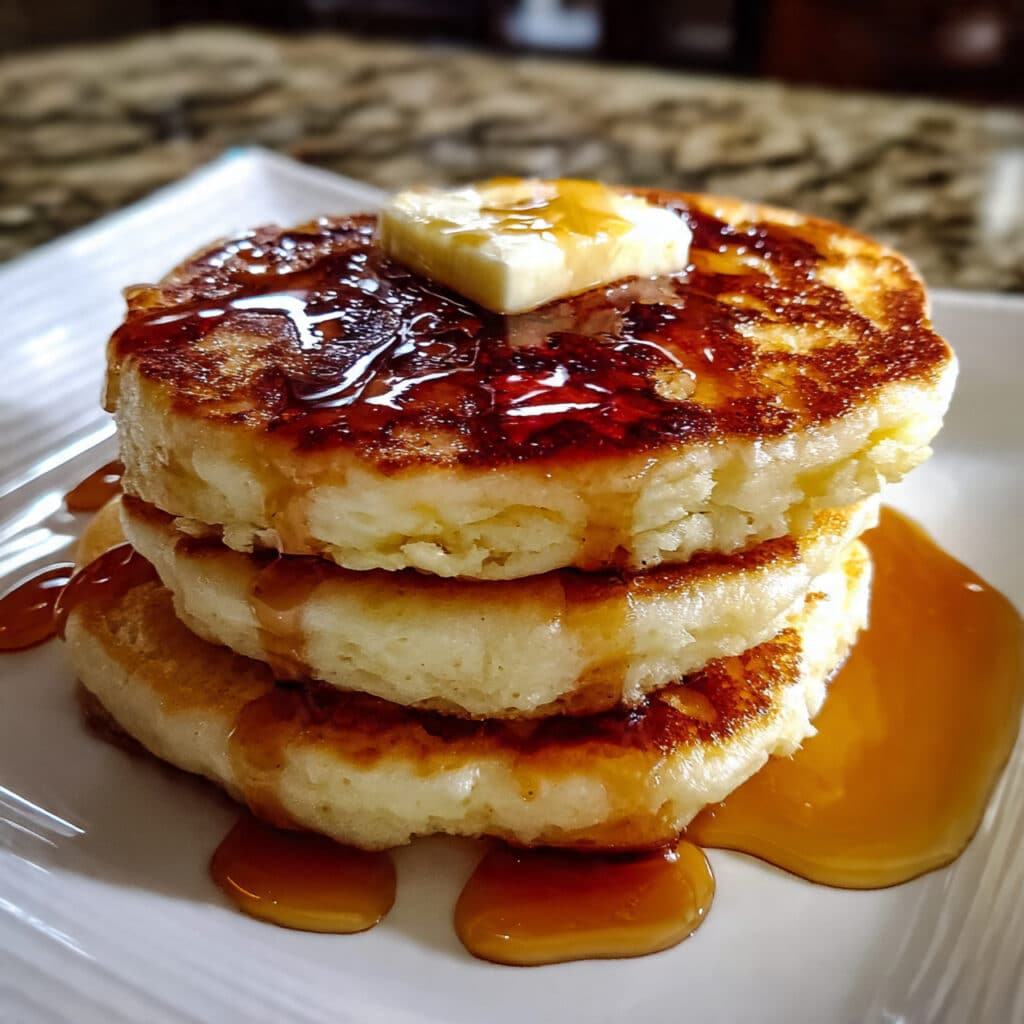
Classic: Warm maple syrup and a pat of butter melting over the top. Sometimes simple is best!
Fancy brunch: Fresh berries, whipped cream, and a light dusting of powdered sugar. Add a sprig of mint for Instagram-worthy plating.
Decadent: Nutella spread between layers, sliced strawberries, and more whipped cream on top.
Breakfast plate: Serve alongside crispy bacon, scrambled eggs, and fresh fruit for a complete breakfast spread.
Coffee pairing: These pancakes are perfect with a strong cup of coffee or a creamy latte. The buttermilk’s tang balances the sweetness beautifully.
Weekend luxury: Try them with homemade berry compote (just simmer berries with a little sugar until jammy) and a dollop of Greek yogurt.
How to Store Your Buttermilk Pancakes
Room temperature: Pancakes are best eaten fresh and hot, but they’ll stay good at room temperature for about 2 hours if you’re feeding a crowd.
Refrigerator: Store leftover pancakes in an airtight container in the fridge for up to 4 days. Place parchment paper between layers to prevent sticking.
Freezer: These freeze wonderfully! Cool completely, then stack with parchment paper between each pancake. Place in a freezer-safe bag or container for up to 2 months. Write the date on the bag so you remember!
Reheating instructions:
- From fridge: Microwave for 20-30 seconds, or pop in a toaster or toaster oven until warmed through.
- From frozen: Toast directly from frozen for 2-3 minutes, or microwave for 45-60 seconds. You can also reheat in a 350°F oven for about 10 minutes if you’re warming a big batch.
Allergy Information
Contains: Wheat (gluten), dairy (milk and butter), eggs
Gluten-free option: Use a 1:1 gluten-free flour blend instead of all-purpose flour. The texture will be slightly different, but still delicious! Add ½ teaspoon xanthan gum if your blend doesn’t include it.
Dairy-free option: Substitute the buttermilk with almond milk or oat milk mixed with 2 tablespoons lemon juice or vinegar. Replace butter with melted coconut oil or vegetable oil.
Egg-free option: Use flax eggs (1 tablespoon ground flaxseed mixed with 3 tablespoons water per egg, let sit 5 minutes) or try a commercial egg replacer. The texture will be slightly less fluffy.
Nut-free: This recipe is naturally nut-free! Just make sure any toppings you choose are also nut-free if needed.
Questions I Get Asked A Lot
Why are my pancakes flat and not fluffy?
This usually means either your baking powder/baking soda is old (test by dropping a pinch in hot water — it should fizz), or you overmixed the batter. Remember, lumps are your friends! Also make sure you’re measuring flour correctly by spooning it into the cup and leveling off, not scooping directly.
Can I use regular milk instead of buttermilk?
You can, but you’ll lose that signature tangy flavor and fluffy texture. The buttermilk’s acidity is really important for the chemistry here! If you don’t have buttermilk, definitely make the DIY version with milk + lemon juice or vinegar. It works beautifully.
My pancakes are burning on the outside but raw in the middle — help!
Your heat is too high! Turn it down to medium or even medium-low. Pancakes need gentle, even heat to cook through without burning. Also make sure you’re not making them too thick — ¼ cup batter gives you the perfect thickness.
How do I know when to flip the pancakes?
Watch for bubbles to form all over the surface and for the edges to look dry and set. When you see this happening (usually around 2-3 minutes), it’s flip time! The bubbles shouldn’t be wet and shiny anymore — they should look dry and starting to set.
Can I make these without eggs?
Yes, but the texture will be different. Try using flax eggs or a commercial egg replacer. They’ll be a bit denser but still tasty. I’ve also had success with ¼ cup unsweetened applesauce per egg, though this adds a hint of sweetness.
💬 Tried this recipe? Leave a comment and rating below! I’d absolutely love to hear how your pancakes turned out! Did you add chocolate chips? Try the blueberry version?