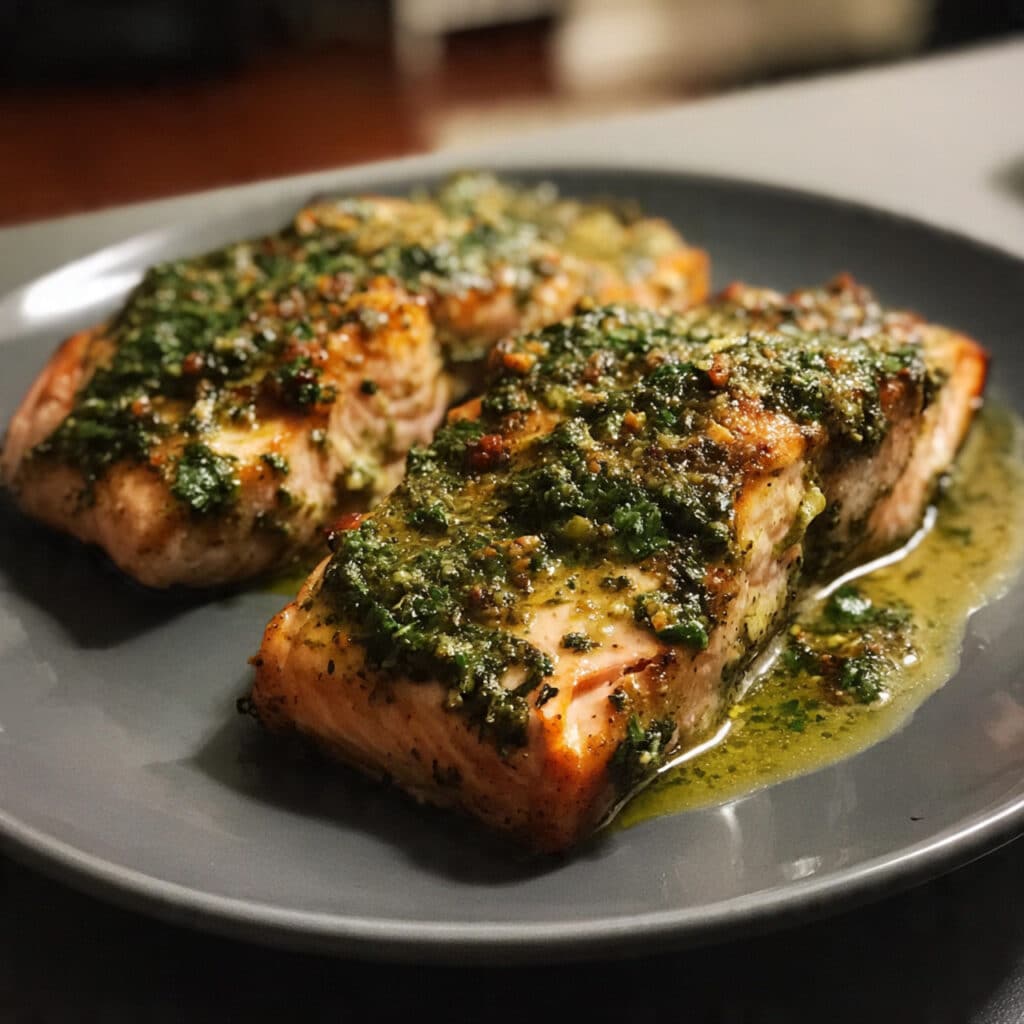
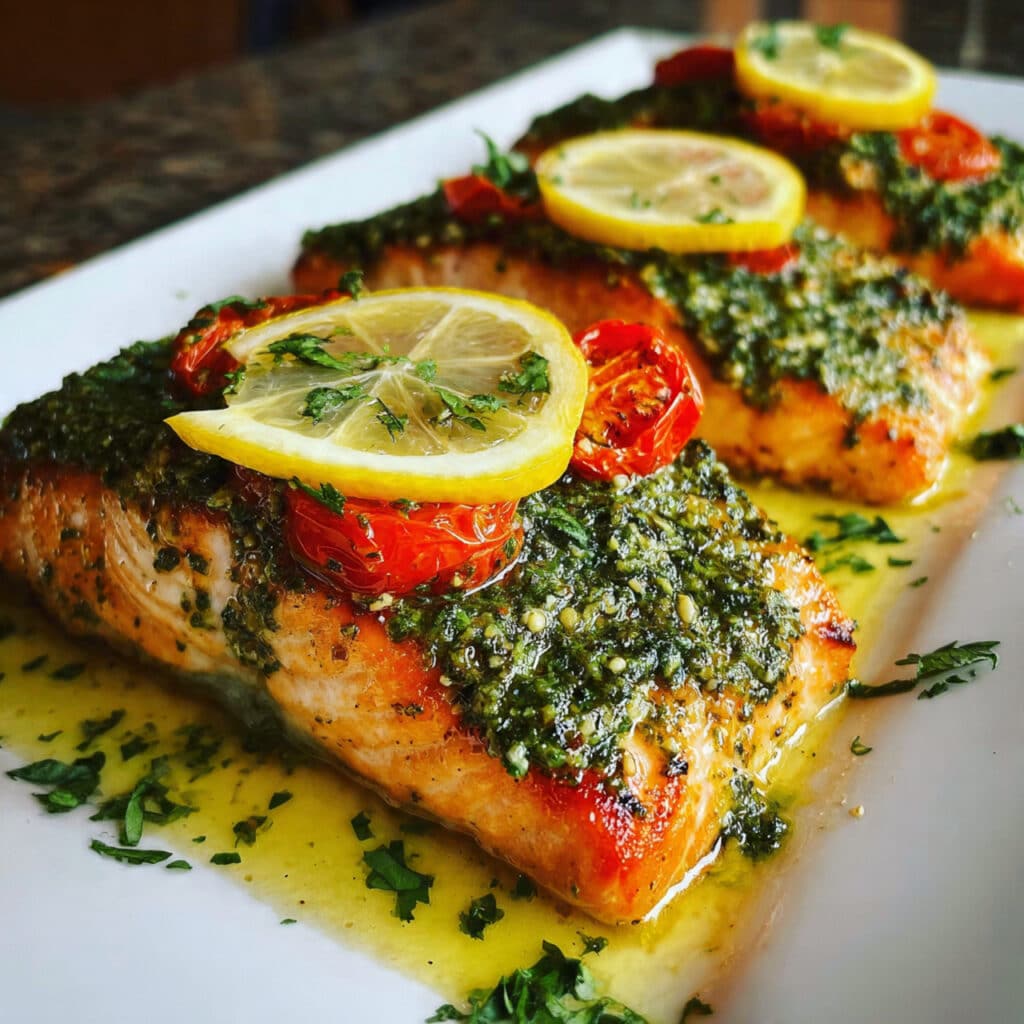
Baked Pesto Salmon is fresh, flavorful, and SO easy to make! With tender salmon fillets topped with homemade basil pesto and baked to perfection, this dish comes together in under 30 minutes. It’s healthy, elegant enough, and simple enough for a busy weeknight.
Love More Salmon Recipes? Try My Honey Glazed Salmon Rice Bowls or this Honey Garlic Glazed Salmon next.
Why You’ll Love This Recipe
Tender, flaky, and bursting with herby flavor, this Baked Pesto Salmon is an easy yet elegant dinner option. The salmon is baked until perfectly moist and topped with vibrant basil pesto that adds richness and freshness in every bite. Ready in minutes and made with simple ingredients.
Print
Easy Baked Pesto Salmon
- Total Time: 25 minutes
- Yield: 4 salmon fillets
Description
This Baked Pesto Salmon features tender salmon fillets topped with vibrant homemade basil pesto and baked until perfectly flaky. Ready in under 30 minutes, this healthy and flavorful dish is perfect for busy weeknights or elegant dinner parties. The fresh pesto keeps the salmon incredibly moist while adding bright, herbaceous flavor
Ingredients
For the Salmon:
- 4 salmon fillets (4–6 ounces each)
- Salt and black pepper
- 2 tablespoons olive oil
For the Homemade Pesto:
- 2 cups fresh basil leaves, packed
- 3 cloves garlic
- 1/3 cup pine nuts (or substitute walnuts/almonds)
- 1/2 cup grated Parmesan cheese (optional if dairy-free)
- 2 tablespoons fresh lemon juice
- 1/2 cup olive oil
- Salt and pepper to taste
Optional Garnishes:
- Lemon wedges
- Extra fresh herbs (parsley or basil)
Instructions
Preheat your oven to 400°F (200°C). This temperature is the sweet spot — hot enough to cook the salmon through without drying it out.
Line a baking sheet with parchment paper or lightly grease it with cooking spray. Place your salmon fillets on the prepared baking sheet, leaving a little space between each one. Drizzle about 2 tablespoons of olive oil over the fillets and season generously with salt and black pepper on both sides.
Quick tip: Pat your salmon dry with paper towels before seasoning. This helps the pesto stick better and gives you a better texture!
In a food processor or blender, combine the fresh basil leaves, garlic cloves, pine nuts, lemon juice, Parmesan cheese (if using), and a good pinch of salt and pepper. Pulse a few times to break everything down.
With the processor running, slowly drizzle in the 1/2 cup of olive oil through the feed tube. Process until the pesto is smooth but still has a bit of texture — you don’t want it completely liquified! Taste and adjust the seasoning if needed. Sometimes I add an extra squeeze of lemon for brightness.
Using a spoon or spatula, spread a generous layer of pesto over the top of each salmon fillet. Don’t be shy here — really coat the top! The pesto will create a flavorful crust and keep the salmon incredibly moist as it bakes.
Place the baking sheet in your preheated oven and bake for 12–15 minutes. The exact time will depend on the thickness of your fillets. The salmon is done when it flakes easily with a fork and is opaque in the center. The internal temperature should reach 145°F if you want to check with a meat thermometer.
Remove the salmon from the oven and let it rest for just a minute or two. Transfer to plates, garnish with fresh lemon wedges and extra herbs if you like, and serve immediately while it’s hot and beautiful!
Notes
- Uniform fillets: Try to choose salmon fillets that are similar in thickness so they all cook at the same rate.
- Test for doneness: Insert a fork into the thickest part and gently twist. If it flakes easily and looks opaque, it’s ready!
- Broil at the end (optional): For an extra golden, slightly crispy top, turn your broiler on high during the last 1–2 minutes of cooking. Watch it closely!
- Save that pesto oil: If your pesto separates a bit on the baking sheet, don’t throw away that herby oil! Drizzle it over your sides or save it for dipping bread.
- Prep Time: 10 minutes
- Cook Time: 15 minutes
- Category: Dinner
- Method: Baking
- Cuisine: Italian-American
Ingredient List
For the Salmon:
- 4 salmon fillets (4–6 ounces each)
- Salt and black pepper
- 2 tablespoons olive oil
For the Homemade Pesto:
- 2 cups fresh basil leaves, packed
- 3 cloves garlic
- 1/3 cup pine nuts (or substitute walnuts/almonds)
- 1/2 cup grated Parmesan cheese (optional if dairy-free)
- 2 tablespoons fresh lemon juice
- 1/2 cup olive oil
- Salt and pepper to taste
Optional Garnishes:
- Lemon wedges
- Extra fresh herbs (parsley or basil)
Note: If you’re short on time, you can absolutely use store-bought pesto! Just look for one with quality ingredients and brighten it up with a squeeze of fresh lemon juice.
Why These Ingredients Work
Salmon fillets: I prefer using skin-on fillets because the skin helps hold the fish together during baking, but skinless works just fine too. Look for wild-caught if possible — it has better flavor and texture.
Fresh basil: This is the star of the pesto! Fresh basil brings that aromatic, slightly peppery flavor that makes pesto so irresistible. Don’t skip it or substitute dried basil — it just won’t be the same.
Pine nuts: These little gems add a buttery richness and help create that classic pesto texture. Walnuts or almonds work beautifully as substitutes and are usually more budget-friendly!
Parmesan cheese: Adds a salty, umami depth to the pesto. If you’re dairy-free, you can skip it entirely or add nutritional yeast for a cheesy flavor.
Lemon juice: This brightens everything up and cuts through the richness of the salmon and pesto. It’s the secret ingredient that makes the flavors POP!
Olive oil: Use good quality extra virgin olive oil in your pesto — you’ll really taste the difference.
Essential Tools and Equipment
- Baking sheet — A rimmed baking sheet works best to catch any drippings
- Parchment paper or aluminum foil — Makes cleanup a breeze!
- Food processor or blender — For making the pesto smooth and creamy
- Measuring cups and spoons
- Sharp knife — For any prep work
- Spatula — For serving
How To Make Baked Pesto Salmon
Step 1: Preheat Your Oven
Preheat your oven to 400°F (200°C). This temperature is the sweet spot — hot enough to cook the salmon through without drying it out.
Step 2: Prepare the Salmon
Line a baking sheet with parchment paper or lightly grease it with cooking spray. Place your salmon fillets on the prepared baking sheet, leaving a little space between each one. Drizzle about 2 tablespoons of olive oil over the fillets and season generously with salt and black pepper on both sides.
Quick tip: Pat your salmon dry with paper towels before seasoning. This helps the pesto stick better and gives you a better texture!
Step 3: Make the Fresh Pesto
In a food processor or blender, combine the fresh basil leaves, garlic cloves, pine nuts, lemon juice, Parmesan cheese (if using), and a good pinch of salt and pepper. Pulse a few times to break everything down.
With the processor running, slowly drizzle in the 1/2 cup of olive oil through the feed tube. Process until the pesto is smooth but still has a bit of texture — you don’t want it completely liquified! Taste and adjust the seasoning if needed. Sometimes I add an extra squeeze of lemon for brightness.
Step 4: Spread the Pesto
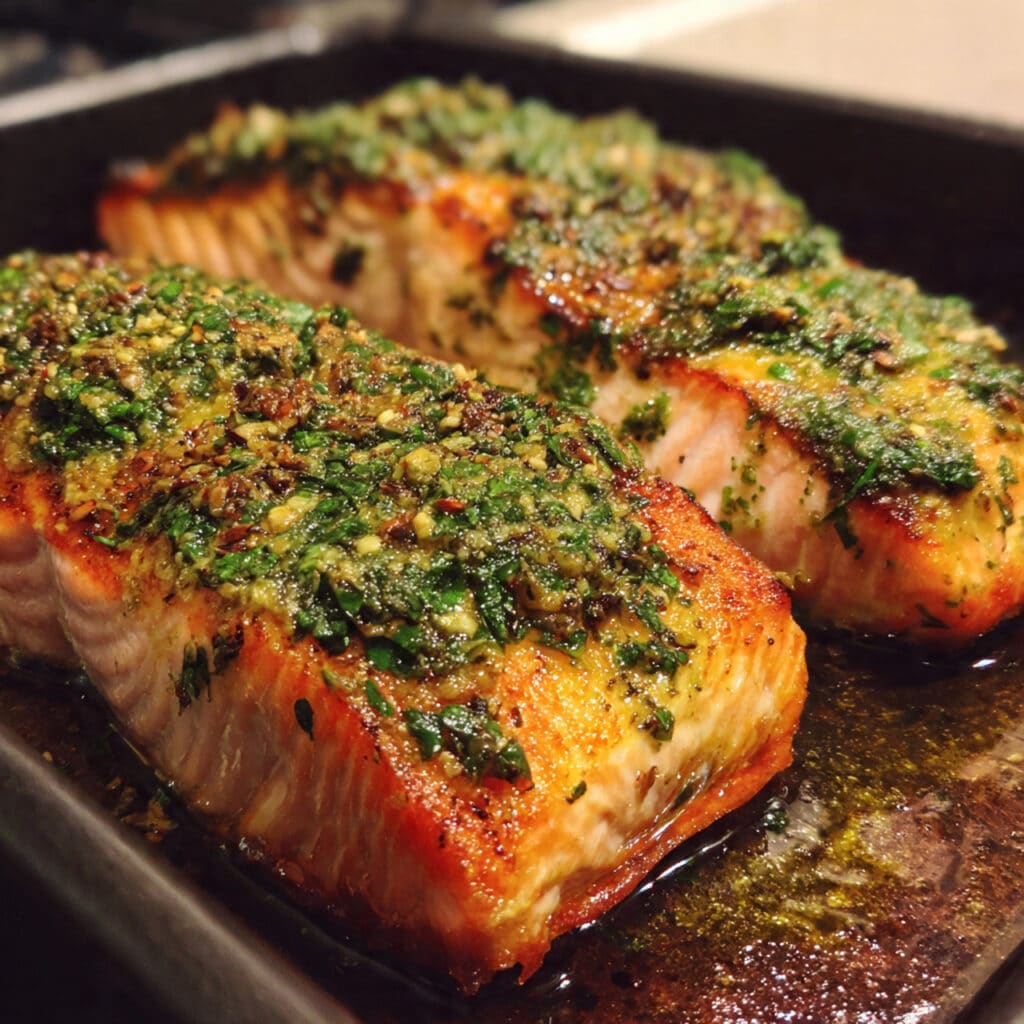
Using a spoon or spatula, spread a generous layer of pesto over the top of each salmon fillet. Don’t be shy here — really coat the top! The pesto will create a flavorful crust and keep the salmon incredibly moist as it bakes.
Step 5: Bake the Salmon
Place the baking sheet in your preheated oven and bake for 12–15 minutes. The exact time will depend on the thickness of your fillets. The salmon is done when it flakes easily with a fork and is opaque in the center. The internal temperature should reach 145°F if you want to check with a meat thermometer.
Step 6: Serve and Enjoy
Remove the salmon from the oven and let it rest for just a minute or two. Transfer to plates, garnish with fresh lemon wedges and extra herbs if you like, and serve immediately while it’s hot and beautiful!
You Must Know
Don’t overbake the salmon! This is the #1 mistake people make. Salmon continues to cook a bit after you remove it from the oven, so take it out when it’s just done. It should still be slightly translucent in the very center — it’ll finish cooking as it rests.
Personal Secret: I always make extra pesto and toss it with pasta or roasted vegetables for an easy side dish.
Pro Tips & Cooking Hacks
- Room temperature matters: Take your salmon out of the fridge 15–20 minutes before cooking. This helps it cook more evenly.
- Uniform fillets: Try to choose salmon fillets that are similar in thickness so they all cook at the same rate.
- Test for doneness: Insert a fork into the thickest part and gently twist. If it flakes easily and looks opaque, it’s ready!
- Broil at the end (optional): For an extra golden, slightly crispy top, turn your broiler on high during the last 1–2 minutes of cooking. Watch it closely!
- Save that pesto oil: If your pesto separates a bit on the baking sheet, don’t throw away that herby oil! Drizzle it over your sides or save it for dipping bread.
Flavor Variations / Suggestions
Sun-Dried Tomato Pesto Salmon: Add 1/4 cup of chopped sun-dried tomatoes to your pesto for a sweet, tangy twist.
Spicy Kick: Mix in a pinch of red pepper flakes or a small jalapeño to the pesto for some heat.
Herb Swap: Try using half basil and half cilantro or parsley for a different flavor profile.
Mediterranean Style: Top the baked salmon with halved cherry tomatoes, kalamata olives, and crumbled feta cheese before baking.
Nut-Free Option: Skip the nuts entirely and add extra Parmesan and a tablespoon of breadcrumbs for texture.
Asian-Inspired: Swap the pesto for a miso-ginger glaze if you want to change things up completely!
Make-Ahead Options
Pesto: Make your pesto up to 3 days ahead and store it in an airtight container in the fridge with a thin layer of olive oil on top to prevent browning. You can also freeze pesto in ice cube trays for up to 3 months!
Assembled dish: You can place the salmon fillets on your baking sheet, spread with pesto, cover tightly with plastic wrap, and refrigerate for up to 4 hours before baking. Just add a minute or two to the baking time since it’ll be cold.
Prep the salmon: Season your salmon and have it ready on the baking sheet (without pesto) up to 2 hours ahead. Keep it covered in the fridge, then add the pesto right before baking.
Recipe Notes & Baker’s Tips
- Skin-on vs. skinless: Both work great! If using skin-on, the skin will stick to the parchment paper, making it easy to slide the fish right off before serving.
- Wild vs. farmed: I prefer wild-caught salmon for its flavor and texture, but farmed salmon works perfectly fine and is often more affordable.
- Leftovers are delicious cold: Seriously! Cold pesto salmon on a salad or in a wrap the next day is incredible.
- The pesto might darken: Fresh basil pesto can darken slightly after baking — this is totally normal and doesn’t affect the taste at all.
- Watch for pin bones: Run your fingers over the salmon before cooking and use tweezers to remove any small bones you find.
Serving Suggestions
This Baked Pesto Salmon is so versatile! Here are my favorite ways to serve it:
- With grains: Serve over fluffy white rice, quinoa, couscous, or creamy risotto
- With vegetables: Pair with roasted asparagus, green beans, Brussels sprouts, or a medley of roasted vegetables
- With salad: A fresh arugula salad with lemon vinaigrette is perfection alongside this salmon
- With pasta: Toss angel hair or linguine in a little olive oil, lemon, and Parmesan for a complete Italian-inspired meal
- With potatoes: Roasted baby potatoes or garlic mashed potatoes are always a hit
Garnish ideas: Fresh lemon wedges are a must! I also love adding fresh herbs, a sprinkle of extra Parmesan, or even some toasted pine nuts on top.
How to Store Your Baked Pesto Salmon
Refrigerator: Store leftover salmon in an airtight container in the fridge for up to 3 days. The pesto will darken a bit, but the flavor stays delicious!
Freezer: I don’t recommend freezing cooked salmon with pesto as the texture can become mushy when thawed. However, you can freeze the pesto separately for up to 3 months.
Reheating: Gently reheat in a 275°F oven for about 10 minutes, or enjoy it cold! I actually prefer leftover pesto salmon cold on salads or in sandwiches. If using a microwave, heat on 50% power in 30-second intervals to prevent drying out.
Make it last: Store any extra pesto separately with a thin layer of olive oil on top to keep it bright green.
Allergy Information
Contains:
- Fish (salmon)
- Tree nuts (pine nuts, or walnuts/almonds if substituted)
- Dairy (Parmesan cheese)
- Garlic
Dairy-Free: Simply omit the Parmesan cheese from the pesto. You can add a tablespoon of nutritional yeast for a cheesy flavor, or just add a few extra pine nuts and a bit more lemon juice.
Nut-Free: Replace the pine nuts with sunflower seeds or pumpkin seeds (pepitas). You can also use 2 tablespoons of breadcrumbs for texture.
Gluten-Free: This recipe is naturally gluten-free! Just double-check your Parmesan cheese label if you’re highly sensitive.
Low-Carb/Keto: This recipe is already low-carb and keto-friendly!
Questions I Get Asked A Lot
Can I use store-bought pesto instead of homemade?
Absolutely! While homemade pesto has that fresh, vibrant flavor that’s hard to beat, a good quality jarred pesto works perfectly in a pinch. Just brighten it up with a squeeze of fresh lemon juice and maybe a drizzle of extra olive oil to loosen it up.
My salmon is cooking unevenly — what’s happening?
This usually means your fillets are different thicknesses. Try to buy fillets that are similar in size, or if you have thicker and thinner pieces, place the thinner ones toward the edges of the baking sheet where it’s slightly cooler. You can also check the thinner pieces a minute or two early.
How do I know when the salmon is perfectly done?
The salmon should flake easily when you insert a fork and gently twist. It should look opaque (not translucent) throughout, with perhaps just a tiny bit of translucency in the very center. An instant-read thermometer should register 145°F. Remember, it’s better to slightly undercook than overcook — salmon continues cooking after you remove it from the oven!
Can I make this on the grill instead of baking it?
Yes! Preheat your grill to medium-high heat (about 400°F). Place the salmon on a piece of foil or a cedar plank, spread with pesto, and grill for 10-12 minutes with the lid closed. The foil prevents the pesto from burning and makes it easier to remove the salmon.
My pesto turned brown — is it still good to use?
Yes, it’s perfectly safe! Basil oxidizes and darkens when exposed to air, just like an apple. The flavor is still delicious. To prevent this, you can blanch your basil leaves in boiling water for 5 seconds before making pesto, or store pesto with a thin layer of olive oil on top to keep air out.
💬 Tried this recipe? Leave a comment and rating below! I’d love to hear how your Baked Pesto Salmon turned out! Did you try any of the variations?